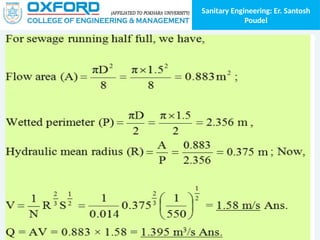
Sanitary Engineering: Er. Santosh
Poudel
Chapter-4
Design and Construction of Sewer
Generally Sewage contains 99.9 percent water and
0.1 percent solid particles. The design of sewer is
similar to that of water supply mains but here in
sewer lines clogging may occur So, they should be
designed to achieve no silting and self cleansing
velocity.
Sanitary Engineering: Er. Santosh
Poudel
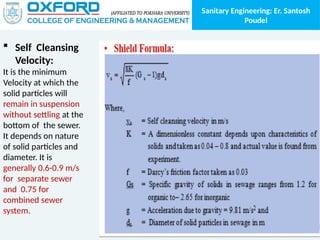
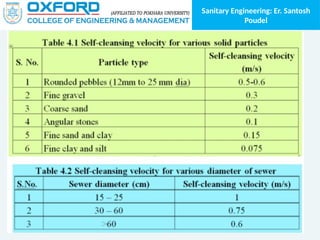
 Self Cleansing
Velocity:
It is the minimum
Velocity at which the
solid particles will
remain in suspension
without settling at the
bottom of the sewer.
It depends on nature
of solid particles and
diameter. It is
generally 0.6-0.9 m/s
for separate sewer
and 0.75 for
combined sewer
system.
Sanitary Engineering: Er. Santosh
Poudel
Sanitary Engineering: Er. Santosh
Poudel
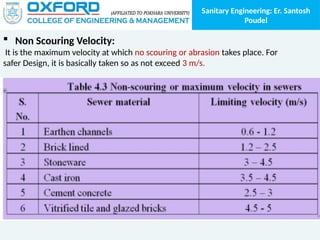
 Non Scouring Velocity:
It is the maximum velocity at which no scouring or abrasion takes place. For
safer Design, it is basically taken so as not exceed 3 m/s.
Sanitary Engineering: Er. Santosh
Poudel
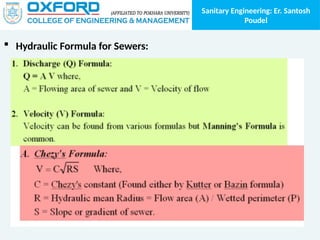
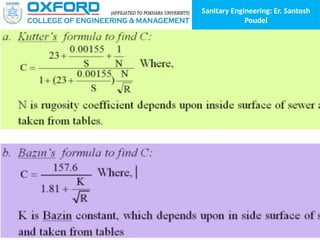
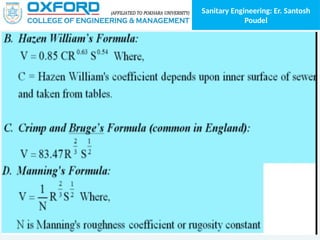
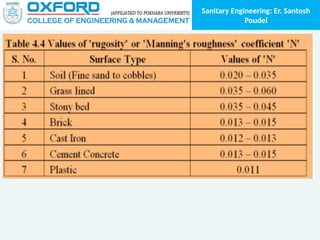
 Hydraulic Formula for Sewers:
Sanitary Engineering: Er. Santosh
Poudel
Sanitary Engineering: Er. Santosh
Poudel
Sanitary Engineering: Er. Santosh
Poudel
Sanitary Engineering: Er. Santosh
Poudel
 Circular Sewer
Advantages of circular Sewer
‱ Easily manufactured
‱ Least perimeter of cross-section so least construction material is required
‱ Uniform curvature so least chance of deposition of materials.
‱ Provides maximum hydraulic mean depth when running partially full or
half full.
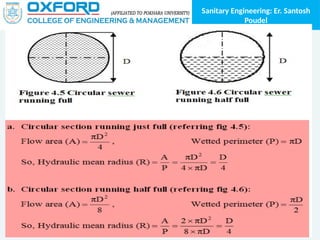
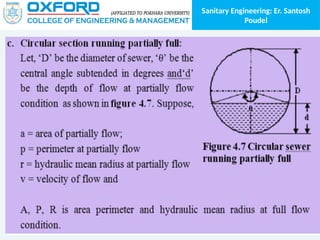
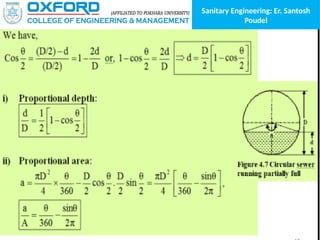
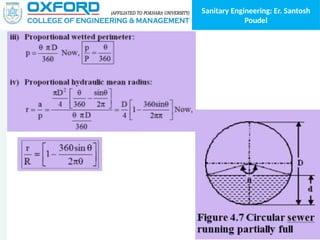
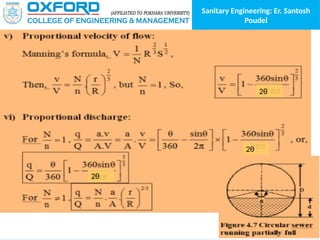
 Hydraulic Elements of Circular Sewer:
Sanitary Engineering: Er. Santosh
Poudel
Sanitary Engineering: Er. Santosh
Poudel
Sanitary Engineering: Er. Santosh
Poudel
Sanitary Engineering: Er. Santosh
Poudel
Sanitary Engineering: Er. Santosh
Poudel
2Ξ
2Ξ
2Ξ
Sanitary Engineering: Er. Santosh
Poudel
Sanitary Engineering: Er. Santosh
Poudel
Sanitary Engineering: Er. Santosh
Poudel
Sanitary Engineering: Er. Santosh
Poudel
Sanitary Engineering: Er. Santosh
Poudel
Sanitary Engineering: Er. Santosh
Poudel
Sanitary Engineering: Er. Santosh
Poudel
Sanitary Engineering: Er. Santosh
Poudel
Material of sewer: ( Requirement of a sewer material)
Sewage consists of various chemical and non-chemical constituents coming out of
home or factories. So while choosing appropriate material, its workability, strength
for internal and external pressure, corrosive nature, should be studied. Following
things should be considered in general:
1. It should be easily cast able and moldable .
2. It should be economical.
3. It should be resistive to chemical reaction/corrosion.
4. Should be able to sustain internal pressure , external ad abrasion.
5. It should be such that water tight joints could be easily constructed.
6. It should be easily transportable and easy handling.
7. Shape and size should be uniform
8. It should be lightweight and durable
9. It should be flexible in design, easy for repair in maintenance and environment
friendly.
10.It should be impact resistant.
Sanitary Engineering: Er. Santosh
Poudel
Types of sewer pipes based on materials:
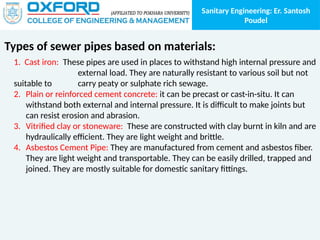
1. Cast iron: These pipes are used in places to withstand high internal pressure and
external load. They are naturally resistant to various soil but not
suitable to carry peaty or sulphate rich sewage.
2. Plain or reinforced cement concrete: it can be precast or cast-in-situ. It can
withstand both external and internal pressure. It is difficult to make joints but
can resist erosion and abrasion.
3. Vitrified clay or stoneware: These are constructed with clay burnt in kiln and are
hydraulically efficient. They are light weight and brittle.
4. Asbestos Cement Pipe: They are manufactured from cement and asbestos fiber.
They are light weight and transportable. They can be easily drilled, trapped and
joined. They are mostly suitable for domestic sanitary fittings.
Sanitary Engineering: Er. Santosh
Poudel
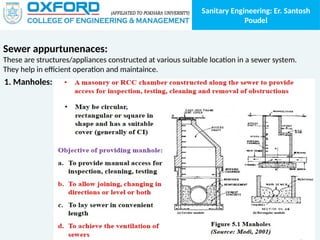
Sewer appurtunenaces:
These are structures/appliances constructed at various suitable location in a sewer system.
They help in efficient operation and maintaince.
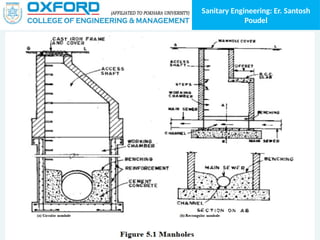
1. Manholes:
Sanitary Engineering: Er. Santosh
Poudel
Sanitary Engineering: Er. Santosh
Poudel
Sanitary Engineering: Er. Santosh
Poudel
Sanitary Engineering: Er. Santosh
Poudel
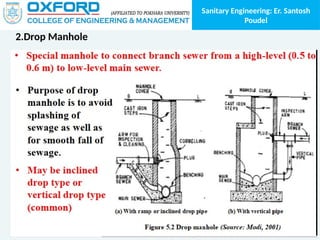
2.Drop Manhole
Sanitary Engineering: Er. Santosh
Poudel
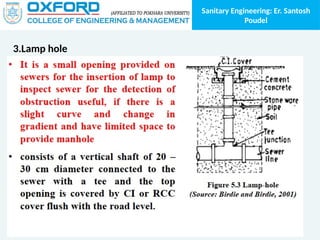
3.Lamp hole
Sanitary Engineering: Er. Santosh
Poudel
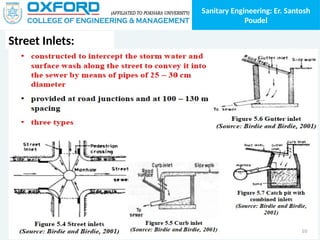
4.Street Inlets:
Street Inlets:
Sanitary Engineering: Er. Santosh
Poudel
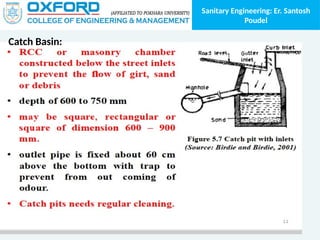
Catch Basin:
Sanitary Engineering: Er. Santosh
Poudel
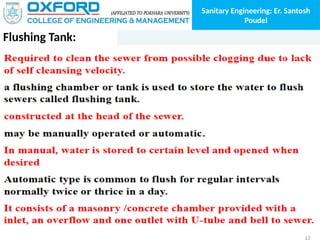
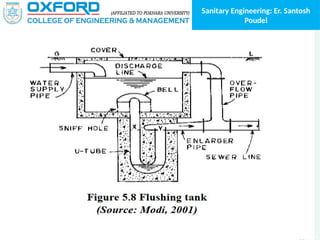
Flushing Tank:
Sanitary Engineering: Er. Santosh
Poudel
Sanitary Engineering: Er. Santosh
Poudel
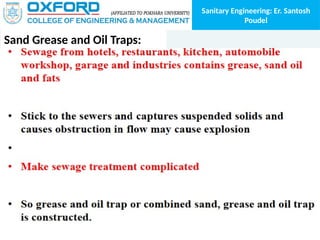
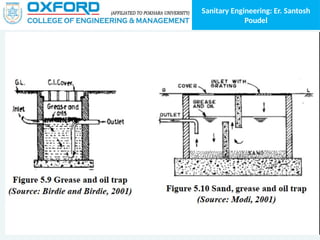
Sand Grease and Oil Traps:
Sanitary Engineering: Er. Santosh
Poudel
Sanitary Engineering: Er. Santosh
Poudel
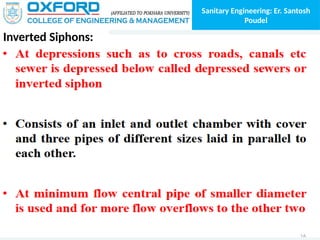
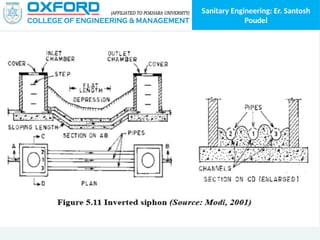
Inverted Siphons:
Sanitary Engineering: Er. Santosh
Poudel
Sanitary Engineering: Er. Santosh
Poudel
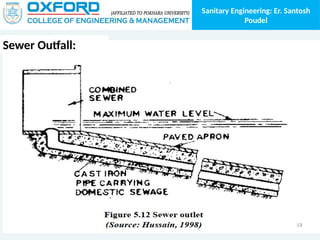
Sewer Outfall:
Sanitary Engineering: Er. Santosh
Poudel
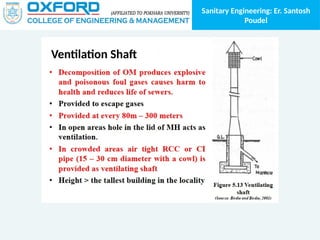
Ventilation Shaft
Sanitary Engineering: Er. Santosh
Poudel
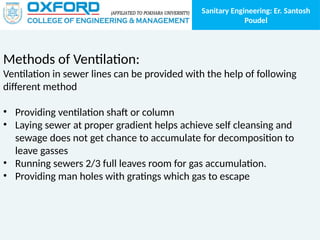
Methods of Ventilation:
Ventilation in sewer lines can be provided with the help of following
different method
‱ Providing ventilation shaft or column
‱ Laying sewer at proper gradient helps achieve self cleansing and
sewage does not get chance to accumulate for decomposition to
leave gasses
‱ Running sewers 2/3 full leaves room for gas accumulation.
‱ Providing man holes with gratings which gas to escape
Sanitary Engineering: Er. Santosh
Poudel
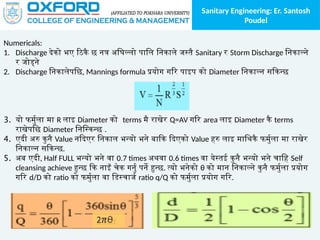
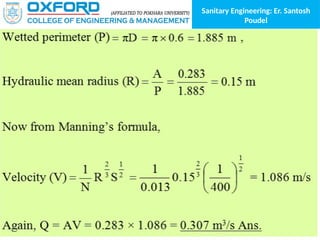
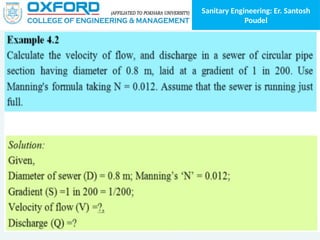
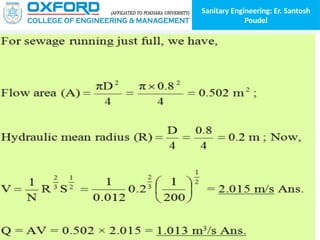
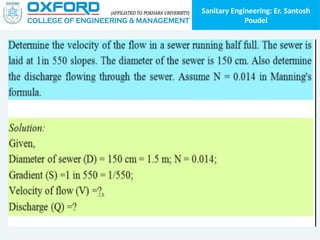
Numericals:
1. Discharge à€Šà„‡à€•à„‹ à€­à€ à€ à€żà€•à„ˆ à€› à€šà€€à„à€° à€…à€˜à€żà€Čà„à€Čà„‹ à€Șà€Ÿà€Čà€ż à€šà€żà€•à€Ÿà€Čà„‡ à€œà€žà„à€€à„ˆ Sanitary à€° Storm Discharge à€šà€żà€•à€Ÿà€Čà„à€šà„‡
à€° à€œà„‹à€Ąà„à€šà„‡
2. Discharge à€šà€żà€•à€Ÿà€Čà„‡à€Șà€›à€ż, Mannings formula à€Șà„à€°à€Żà„‹à€— à€—à€°à€ż à€Șà€Ÿà€‡à€Ș à€•à„‹ Diameter à€šà€żà€•à€Ÿà€Čà„à€š à€žà€•à€żà€šà„à€›
3. à€Żà„‹ à€«à€°à„à€źà„à€Čà€Ÿ à€źà€Ÿ R à€Čà€Ÿà€‡ Diameter à€•à„‹ terms à€źà„ˆ à€°à€Ÿà€–à„‡à€° Q=AV à€—à€°à€ż area à€Čà€Ÿà€‡ Diameter à€•à„ˆ terms
à€°à€Ÿà€–à„‡à€Șà€›à€ż Diameter à€šà€żà€žà„à€•à€żà€šà„à€› .
4. à€à€Šà„€ à€…à€°à„ à€•à„à€šà„ˆ Value à€šà€Šà€żà€à€° à€šà€żà€•à€Ÿà€Č à€­à€šà„à€Żà„‹ à€­à€šà„‡ à€Źà€Ÿà€•à€ż à€Šà€żà€à€•à„‹ Value à€čà€°à„ à€Čà€Ÿà€‡ à€źà€Ÿà€„à€żà€•à„ˆ à€«à€°à„à€źà„à€Čà€Ÿ à€źà€Ÿ à€°à€Ÿà€–à„‡à€°
à€šà€żà€•à€Ÿà€Čà„à€š à€žà€•à€żà€šà„à€›.
5. à€…à€Ź à€à€Šà„€, Half FULL à€­à€šà„à€Żà„‹ à€­à€šà„‡ à€”à€Ÿ 0.7 times à€…à€„à€”à€Ÿ 0.6 times à€”à€Ÿ à€Żà„‡à€žà„à€€à€ˆ à€•à„à€šà„ˆ à€­à€šà„à€Żà„‹ à€­à€šà„‡ à€šà€Ÿà€čà€ż Self
cleansing achieve à€čà„à€šà„à€› à€•à€ż à€šà€Ÿà€‡à€ à€šà„‡à€• à€—à€°à„à€šà„ à€Șà€°à„à€šà„‡ à€čà„à€šà„à€›. à€€à„à€Żà„‹ à€­à€šà„‡à€•à„‹ Ξ à€•à„‹ à€źà€Ÿà€š à€šà€żà€•à€Ÿà€Čà„à€šà„‡ à€•à„à€šà„ˆ à€«à€°à„à€źà„à€Čà€Ÿ à€Șà„à€°à€Żà„‹à€—
à€—à€°à€ż d/D à€•à„‹ ratio à€•à„‹ à€«à€°à„à€źà„à€Čà€Ÿ à€”à€Ÿ à€Ąà€żà€žà„à€šà€Ÿà€°à„à€œ ratio q/Q à€•à„‹ à€«à€°à„à€źà„à€Čà€Ÿ à€Șà„à€°à€Żà„‹à€— à€—à€°à€ż.
Sanitary Engineering: Er. Santosh
Poudel
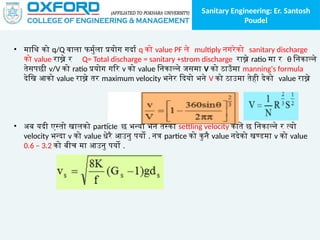
‱ à€źà€Ÿà€„à€ż à€•à„‹ q/Q à€”à€Ÿà€Čà€Ÿ à€«à€°à„à€źà„à€Čà€Ÿ à€Șà„à€°à€Żà„‹à€— à€—à€°à„à€Šà€Ÿ q à€•à„‹ value PF à€Čà„‡ multiply à€šà€—à€°à„‡à€•à„‹ sanitary discharge
à€•à„‹ value à€°à€Ÿà€–à„à€šà„‡ à€° Q= Total discharge = sanitary +strom discharge à€°à€Ÿà€–à„à€šà„‡ ratio à€źà€Ÿ à€° Ξ à€šà€żà€•à€Ÿà€Čà„à€šà„‡
à€€à„‡à€žà€Șà€›à„€ v/V à€•à„‹ ratio à€Șà„à€°à€Żà„‹à€— à€—à€°à€ż v à€•à„‹ value à€šà€żà€•à€Ÿà€Čà„à€šà„‡ à€œà€žà€źà€Ÿ V à€•à„‹ à€ à€Ÿà€‰à€à€źà€Ÿ manning's formula
à€Šà„‡à€–à€ż à€†à€•à„‹ value à€°à€Ÿà€–à„à€šà„‡ à€€à€° maximum velocity à€­à€šà„‡à€° à€Šà€żà€Żà„‹ à€­à€šà„‡ V à€•à„‹ à€ à€Ÿà€‰à€źà€Ÿ à€€à„‡à€čà„€ à€Šà„‡à€•à„‹ value à€°à€Ÿà€–à„à€šà„‡
‱ à€…à€Ź à€Żà€Šà„€ à€à€žà„à€€à„‹ à€–à€Ÿà€Čà€•à„‹ particle à€› à€­à€šà„à€Żà„‹ à€­à€šà„‡ à€€à„‡à€žà„à€•à„‹ settling velocity à€•à€€à€ż à€› à€šà€żà€•à€Ÿà€Čà„à€šà„‡ à€° à€€à„à€Żà„‹
velocity à€­à€šà„à€Šà€Ÿ v à€•à„‹ value à€§à„‡à€°à„ˆ à€†à€‰à€šà„ à€Șà€°à„à€Żà„‹ . à€šà€€à„à€° partice à€•à„‹ à€•à„à€šà„ˆ value à€šà€Šà„‡à€•à„‹ à€–à€Łà„à€Ąà€źà€Ÿ v à€•à„‹ value
0.6 – 3.2 à€•à„‹ à€Źà„€à€š à€źà€Ÿ à€†à€‰à€šà„ à€Șà€°à„à€Żà„‹ .
Sanitary Engineering: Er. Santosh
Poudel
Sanitary Engineering: Er. Santosh
Poudel
Sanitary Engineering: Er. Santosh
Poudel
Sanitary Engineering: Er. Santosh
Poudel
Sanitary Engineering: Er. Santosh
Poudel
Sanitary Engineering: Er. Santosh
Poudel
Sanitary Engineering: Er. Santosh
Poudel
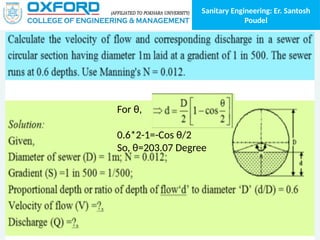
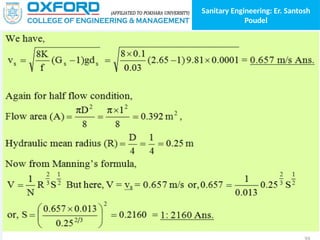
For Ξ,
0.6*2-1=-Cos Ξ/2
So, Ξ=203.07 Degree
Sanitary Engineering: Er. Santosh
Poudel
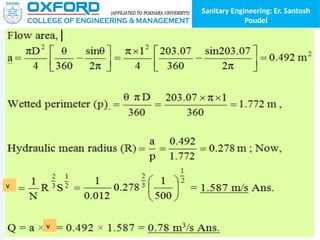
v
v
Sanitary Engineering: Er. Santosh
Poudel
Sanitary Engineering: Er. Santosh
Poudel
Sanitary Engineering: Er. Santosh
Poudel
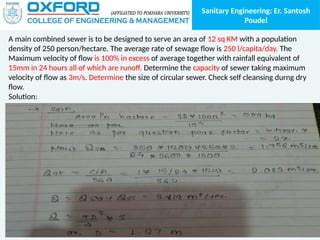
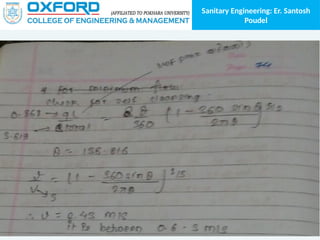
A main combined sewer is to be designed to serve an area of 12 sq KM with a population
density of 250 person/hectare. The average rate of sewage flow is 250 l/capita/day. The
Maximum velocity of flow is 100% in excess of average together with rainfall equivalent of
15mm in 24 hours all of which are runoff. Determine the capacity of sewer taking maximum
velocity of flow as 3m/s. Determine the size of circular sewer. Check self cleansing durng dry
flow.
Solution:
Sanitary Engineering: Er. Santosh
Poudel
Sanitary Engineering: Er. Santosh
Poudel
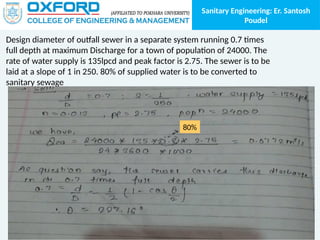
Design diameter of outfall sewer in a separate system running 0.7 times
full depth at maximum Discharge for a town of population of 24000. The
rate of water supply is 135lpcd and peak factor is 2.75. The sewer is to be
laid at a slope of 1 in 250. 80% of supplied water is to be converted to
sanitary sewage
80%
Sanitary Engineering: Er. Santosh
Poudel
Sanitary Engineering: Er. Santosh
Poudel
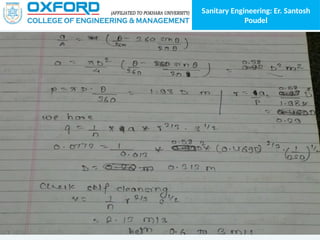
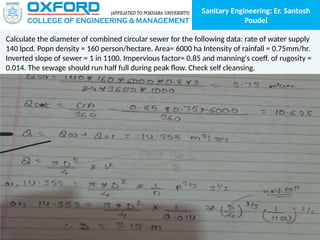
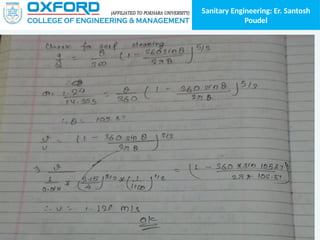
Calculate the diameter of combined circular sewer for the following data: rate of water supply
140 lpcd. Popn density = 160 person/hectare. Area= 6000 ha Intensity of rainfall = 0.75mm/hr.
Inverted slope of sewer = 1 in 1100. Impervious factor= 0.85 and manning's coeff. of rugosity =
0.014. The sewage should run half full during peak flow. Check self cleansing.
Sanitary Engineering: Er. Santosh
Poudel
Sanitary Engineering: Er. Santosh
Poudel
If you don’t have any
questions, please do
solve all numerical
questions related to
this chapter, in the
question bank.

note of SANITARY ENGINEERING Chapter-4-1.pptx

  • 1.
    Sanitary Engineering: Er.Santosh Poudel Chapter-4 Design and Construction of Sewer Generally Sewage contains 99.9 percent water and 0.1 percent solid particles. The design of sewer is similar to that of water supply mains but here in sewer lines clogging may occur So, they should be designed to achieve no silting and self cleansing velocity.
  • 2.
    Sanitary Engineering: Er.Santosh Poudel  Self Cleansing Velocity: It is the minimum Velocity at which the solid particles will remain in suspension without settling at the bottom of the sewer. It depends on nature of solid particles and diameter. It is generally 0.6-0.9 m/s for separate sewer and 0.75 for combined sewer system.
  • 3.
  • 4.
    Sanitary Engineering: Er.Santosh Poudel  Non Scouring Velocity: It is the maximum velocity at which no scouring or abrasion takes place. For safer Design, it is basically taken so as not exceed 3 m/s.
  • 5.
    Sanitary Engineering: Er.Santosh Poudel  Hydraulic Formula for Sewers:
  • 6.
  • 7.
  • 8.
  • 9.
    Sanitary Engineering: Er.Santosh Poudel  Circular Sewer Advantages of circular Sewer ‱ Easily manufactured ‱ Least perimeter of cross-section so least construction material is required ‱ Uniform curvature so least chance of deposition of materials. ‱ Provides maximum hydraulic mean depth when running partially full or half full.  Hydraulic Elements of Circular Sewer:
  • 10.
  • 11.
  • 12.
  • 13.
  • 14.
    Sanitary Engineering: Er.Santosh Poudel 2Ξ 2Ξ 2Ξ
  • 15.
  • 16.
  • 17.
  • 18.
  • 19.
  • 20.
  • 21.
  • 22.
    Sanitary Engineering: Er.Santosh Poudel Material of sewer: ( Requirement of a sewer material) Sewage consists of various chemical and non-chemical constituents coming out of home or factories. So while choosing appropriate material, its workability, strength for internal and external pressure, corrosive nature, should be studied. Following things should be considered in general: 1. It should be easily cast able and moldable . 2. It should be economical. 3. It should be resistive to chemical reaction/corrosion. 4. Should be able to sustain internal pressure , external ad abrasion. 5. It should be such that water tight joints could be easily constructed. 6. It should be easily transportable and easy handling. 7. Shape and size should be uniform 8. It should be lightweight and durable 9. It should be flexible in design, easy for repair in maintenance and environment friendly. 10.It should be impact resistant.
  • 23.
    Sanitary Engineering: Er.Santosh Poudel Types of sewer pipes based on materials: 1. Cast iron: These pipes are used in places to withstand high internal pressure and external load. They are naturally resistant to various soil but not suitable to carry peaty or sulphate rich sewage. 2. Plain or reinforced cement concrete: it can be precast or cast-in-situ. It can withstand both external and internal pressure. It is difficult to make joints but can resist erosion and abrasion. 3. Vitrified clay or stoneware: These are constructed with clay burnt in kiln and are hydraulically efficient. They are light weight and brittle. 4. Asbestos Cement Pipe: They are manufactured from cement and asbestos fiber. They are light weight and transportable. They can be easily drilled, trapped and joined. They are mostly suitable for domestic sanitary fittings.
  • 24.
    Sanitary Engineering: Er.Santosh Poudel Sewer appurtunenaces: These are structures/appliances constructed at various suitable location in a sewer system. They help in efficient operation and maintaince. 1. Manholes:
  • 25.
  • 26.
  • 27.
  • 28.
    Sanitary Engineering: Er.Santosh Poudel 2.Drop Manhole
  • 29.
    Sanitary Engineering: Er.Santosh Poudel 3.Lamp hole
  • 30.
    Sanitary Engineering: Er.Santosh Poudel 4.Street Inlets: Street Inlets:
  • 31.
    Sanitary Engineering: Er.Santosh Poudel Catch Basin:
  • 32.
    Sanitary Engineering: Er.Santosh Poudel Flushing Tank:
  • 33.
  • 34.
    Sanitary Engineering: Er.Santosh Poudel Sand Grease and Oil Traps:
  • 35.
  • 36.
    Sanitary Engineering: Er.Santosh Poudel Inverted Siphons:
  • 37.
  • 38.
    Sanitary Engineering: Er.Santosh Poudel Sewer Outfall:
  • 39.
    Sanitary Engineering: Er.Santosh Poudel Ventilation Shaft
  • 40.
    Sanitary Engineering: Er.Santosh Poudel Methods of Ventilation: Ventilation in sewer lines can be provided with the help of following different method ‱ Providing ventilation shaft or column ‱ Laying sewer at proper gradient helps achieve self cleansing and sewage does not get chance to accumulate for decomposition to leave gasses ‱ Running sewers 2/3 full leaves room for gas accumulation. ‱ Providing man holes with gratings which gas to escape
  • 41.
    Sanitary Engineering: Er.Santosh Poudel Numericals: 1. Discharge à€Šà„‡à€•à„‹ à€­à€ à€ à€żà€•à„ˆ à€› à€šà€€à„à€° à€…à€˜à€żà€Čà„à€Čà„‹ à€Șà€Ÿà€Čà€ż à€šà€żà€•à€Ÿà€Čà„‡ à€œà€žà„à€€à„ˆ Sanitary à€° Storm Discharge à€šà€żà€•à€Ÿà€Čà„à€šà„‡ à€° à€œà„‹à€Ąà„à€šà„‡ 2. Discharge à€šà€żà€•à€Ÿà€Čà„‡à€Șà€›à€ż, Mannings formula à€Șà„à€°à€Żà„‹à€— à€—à€°à€ż à€Șà€Ÿà€‡à€Ș à€•à„‹ Diameter à€šà€żà€•à€Ÿà€Čà„à€š à€žà€•à€żà€šà„à€› 3. à€Żà„‹ à€«à€°à„à€źà„à€Čà€Ÿ à€źà€Ÿ R à€Čà€Ÿà€‡ Diameter à€•à„‹ terms à€źà„ˆ à€°à€Ÿà€–à„‡à€° Q=AV à€—à€°à€ż area à€Čà€Ÿà€‡ Diameter à€•à„ˆ terms à€°à€Ÿà€–à„‡à€Șà€›à€ż Diameter à€šà€żà€žà„à€•à€żà€šà„à€› . 4. à€à€Šà„€ à€…à€°à„ à€•à„à€šà„ˆ Value à€šà€Šà€żà€à€° à€šà€żà€•à€Ÿà€Č à€­à€šà„à€Żà„‹ à€­à€šà„‡ à€Źà€Ÿà€•à€ż à€Šà€żà€à€•à„‹ Value à€čà€°à„ à€Čà€Ÿà€‡ à€źà€Ÿà€„à€żà€•à„ˆ à€«à€°à„à€źà„à€Čà€Ÿ à€źà€Ÿ à€°à€Ÿà€–à„‡à€° à€šà€żà€•à€Ÿà€Čà„à€š à€žà€•à€żà€šà„à€›. 5. à€…à€Ź à€à€Šà„€, Half FULL à€­à€šà„à€Żà„‹ à€­à€šà„‡ à€”à€Ÿ 0.7 times à€…à€„à€”à€Ÿ 0.6 times à€”à€Ÿ à€Żà„‡à€žà„à€€à€ˆ à€•à„à€šà„ˆ à€­à€šà„à€Żà„‹ à€­à€šà„‡ à€šà€Ÿà€čà€ż Self cleansing achieve à€čà„à€šà„à€› à€•à€ż à€šà€Ÿà€‡à€ à€šà„‡à€• à€—à€°à„à€šà„ à€Șà€°à„à€šà„‡ à€čà„à€šà„à€›. à€€à„à€Żà„‹ à€­à€šà„‡à€•à„‹ Ξ à€•à„‹ à€źà€Ÿà€š à€šà€żà€•à€Ÿà€Čà„à€šà„‡ à€•à„à€šà„ˆ à€«à€°à„à€źà„à€Čà€Ÿ à€Șà„à€°à€Żà„‹à€— à€—à€°à€ż d/D à€•à„‹ ratio à€•à„‹ à€«à€°à„à€źà„à€Čà€Ÿ à€”à€Ÿ à€Ąà€żà€žà„à€šà€Ÿà€°à„à€œ ratio q/Q à€•à„‹ à€«à€°à„à€źà„à€Čà€Ÿ à€Șà„à€°à€Żà„‹à€— à€—à€°à€ż.
  • 42.
    Sanitary Engineering: Er.Santosh Poudel ‱ à€źà€Ÿà€„à€ż à€•à„‹ q/Q à€”à€Ÿà€Čà€Ÿ à€«à€°à„à€źà„à€Čà€Ÿ à€Șà„à€°à€Żà„‹à€— à€—à€°à„à€Šà€Ÿ q à€•à„‹ value PF à€Čà„‡ multiply à€šà€—à€°à„‡à€•à„‹ sanitary discharge à€•à„‹ value à€°à€Ÿà€–à„à€šà„‡ à€° Q= Total discharge = sanitary +strom discharge à€°à€Ÿà€–à„à€šà„‡ ratio à€źà€Ÿ à€° Ξ à€šà€żà€•à€Ÿà€Čà„à€šà„‡ à€€à„‡à€žà€Șà€›à„€ v/V à€•à„‹ ratio à€Șà„à€°à€Żà„‹à€— à€—à€°à€ż v à€•à„‹ value à€šà€żà€•à€Ÿà€Čà„à€šà„‡ à€œà€žà€źà€Ÿ V à€•à„‹ à€ à€Ÿà€‰à€à€źà€Ÿ manning's formula à€Šà„‡à€–à€ż à€†à€•à„‹ value à€°à€Ÿà€–à„à€šà„‡ à€€à€° maximum velocity à€­à€šà„‡à€° à€Šà€żà€Żà„‹ à€­à€šà„‡ V à€•à„‹ à€ à€Ÿà€‰à€źà€Ÿ à€€à„‡à€čà„€ à€Šà„‡à€•à„‹ value à€°à€Ÿà€–à„à€šà„‡ ‱ à€…à€Ź à€Żà€Šà„€ à€à€žà„à€€à„‹ à€–à€Ÿà€Čà€•à„‹ particle à€› à€­à€šà„à€Żà„‹ à€­à€šà„‡ à€€à„‡à€žà„à€•à„‹ settling velocity à€•à€€à€ż à€› à€šà€żà€•à€Ÿà€Čà„à€šà„‡ à€° à€€à„à€Żà„‹ velocity à€­à€šà„à€Šà€Ÿ v à€•à„‹ value à€§à„‡à€°à„ˆ à€†à€‰à€šà„ à€Șà€°à„à€Żà„‹ . à€šà€€à„à€° partice à€•à„‹ à€•à„à€šà„ˆ value à€šà€Šà„‡à€•à„‹ à€–à€Łà„à€Ąà€źà€Ÿ v à€•à„‹ value 0.6 – 3.2 à€•à„‹ à€Źà„€à€š à€źà€Ÿ à€†à€‰à€šà„ à€Șà€°à„à€Żà„‹ .
  • 43.
  • 44.
  • 45.
  • 46.
  • 47.
  • 48.
  • 49.
    Sanitary Engineering: Er.Santosh Poudel For Ξ, 0.6*2-1=-Cos Ξ/2 So, Ξ=203.07 Degree
  • 50.
    Sanitary Engineering: Er.Santosh Poudel v v
  • 51.
  • 52.
  • 53.
    Sanitary Engineering: Er.Santosh Poudel A main combined sewer is to be designed to serve an area of 12 sq KM with a population density of 250 person/hectare. The average rate of sewage flow is 250 l/capita/day. The Maximum velocity of flow is 100% in excess of average together with rainfall equivalent of 15mm in 24 hours all of which are runoff. Determine the capacity of sewer taking maximum velocity of flow as 3m/s. Determine the size of circular sewer. Check self cleansing durng dry flow. Solution:
  • 54.
  • 55.
    Sanitary Engineering: Er.Santosh Poudel Design diameter of outfall sewer in a separate system running 0.7 times full depth at maximum Discharge for a town of population of 24000. The rate of water supply is 135lpcd and peak factor is 2.75. The sewer is to be laid at a slope of 1 in 250. 80% of supplied water is to be converted to sanitary sewage 80%
  • 56.
  • 57.
    Sanitary Engineering: Er.Santosh Poudel Calculate the diameter of combined circular sewer for the following data: rate of water supply 140 lpcd. Popn density = 160 person/hectare. Area= 6000 ha Intensity of rainfall = 0.75mm/hr. Inverted slope of sewer = 1 in 1100. Impervious factor= 0.85 and manning's coeff. of rugosity = 0.014. The sewage should run half full during peak flow. Check self cleansing.
  • 58.
  • 59.
    Sanitary Engineering: Er.Santosh Poudel If you don’t have any questions, please do solve all numerical questions related to this chapter, in the question bank.