#CMGIndia

NoSQL Database Benchmarking
Prasoon Kumar
MongoDB
Agenda
•  What is NoSQL?
•  YCSB
•  Benchmarking parameters
•  Findings
•  Wrap up
What is NoSQL?
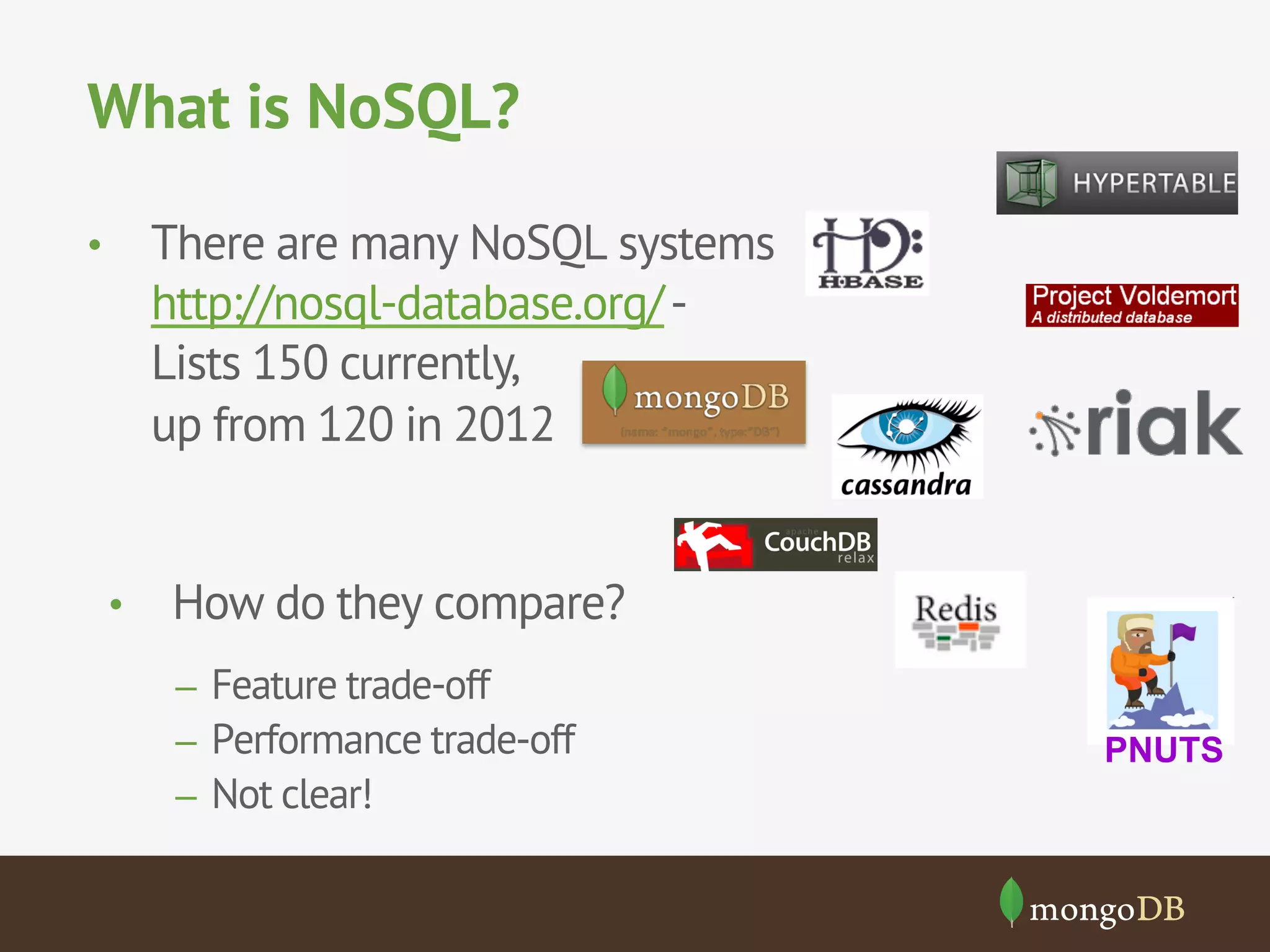
There are many NoSQL systems
http://nosql-database.org/ Lists 150 currently,
up from 120 in 2012

• 

• 

How do they compare?
–  Feature trade-off
–  Performance trade-off
–  Not clear!

PNUTS
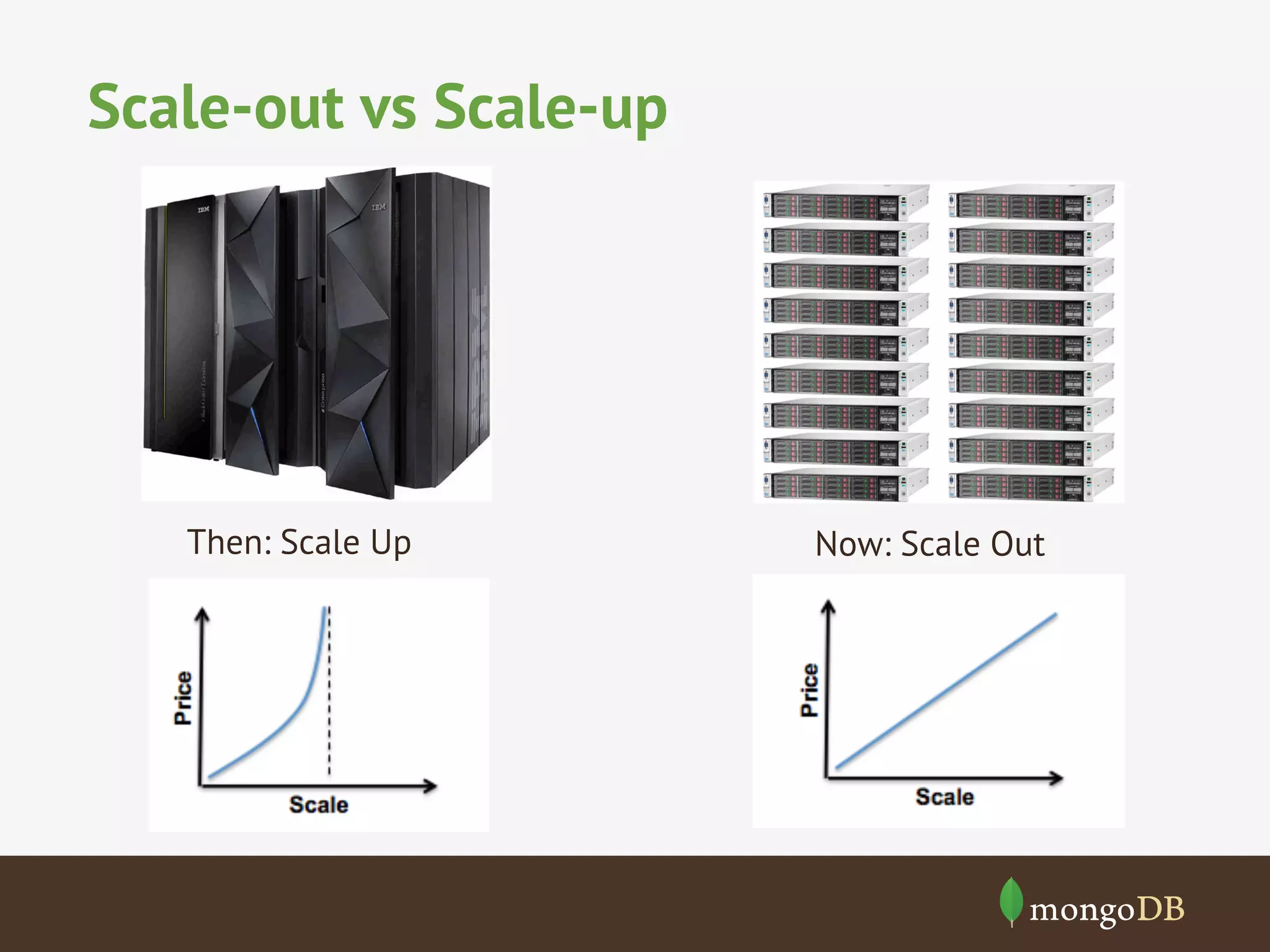
Scale-out vs Scale-up

Then: Scale Up

Now: Scale Out
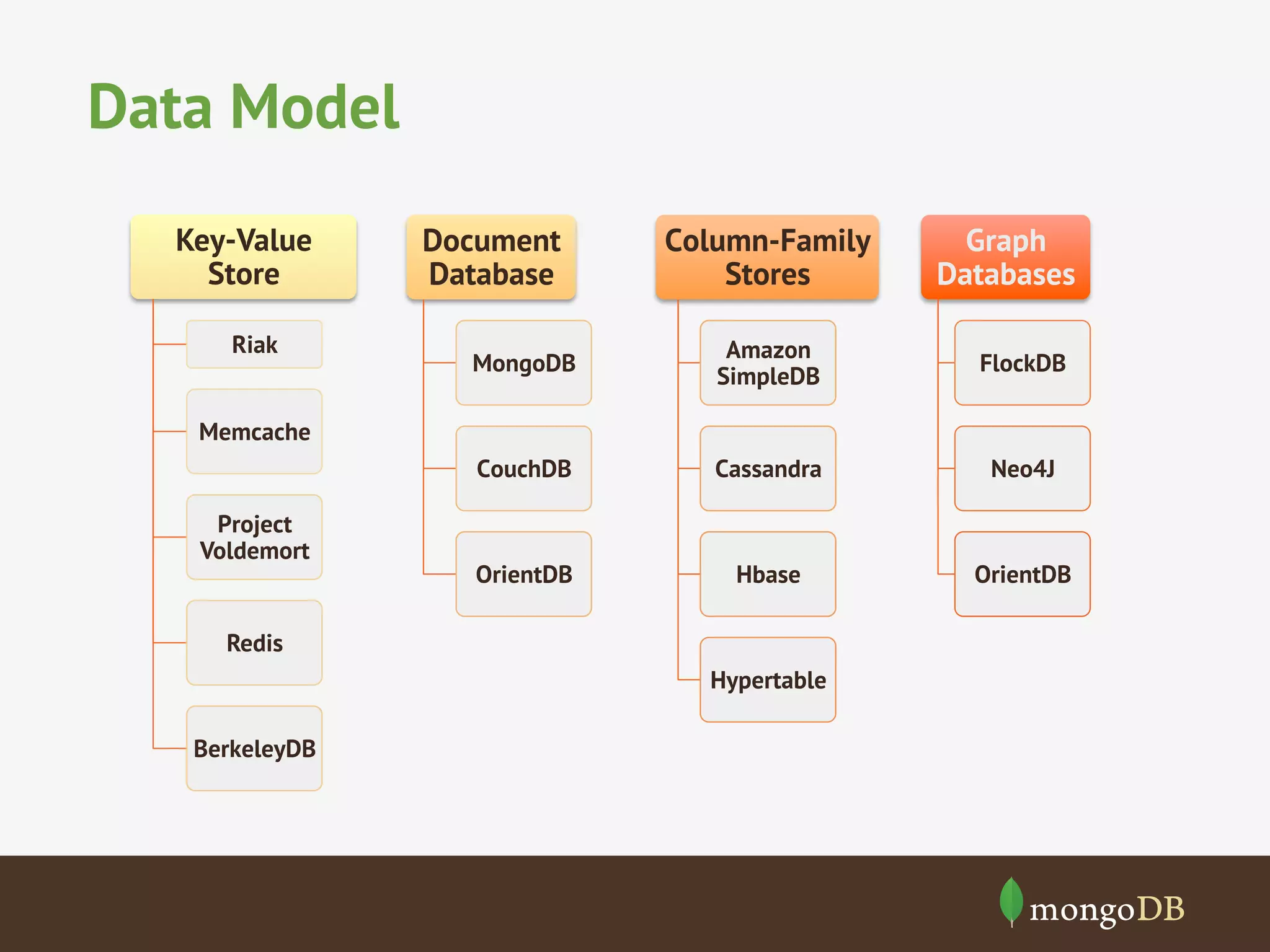
Data Model
Key-Value
Store
Riak

Document
Database

Column-Family
Stores

Graph
Databases

MongoDB

Amazon
SimpleDB

FlockDB

CouchDB

Cassandra

Neo4J

OrientDB

Hbase

OrientDB

Memcache

Project
Voldemort

Redis
Hypertable
BerkeleyDB
Yahoo! Cloud Serving Benchmark
aka ycsb
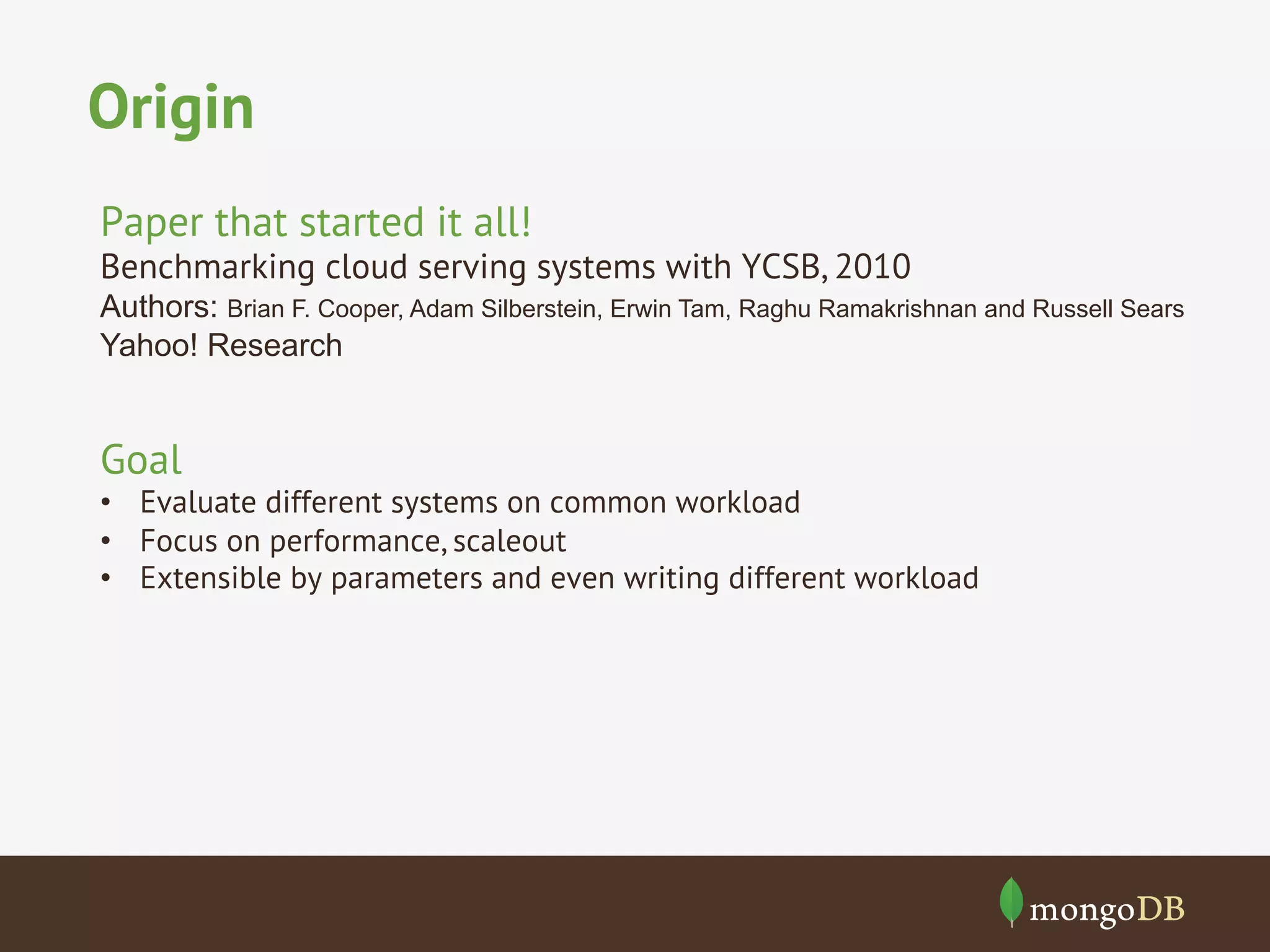
Origin
Paper that started it all!

Benchmarking cloud serving systems with YCSB, 2010
Authors: Brian F. Cooper, Adam Silberstein, Erwin Tam, Raghu Ramakrishnan and Russell Sears
Yahoo! Research

Goal

•  Evaluate different systems on common workload
•  Focus on performance, scaleout
•  Extensible by parameters and even writing different workload
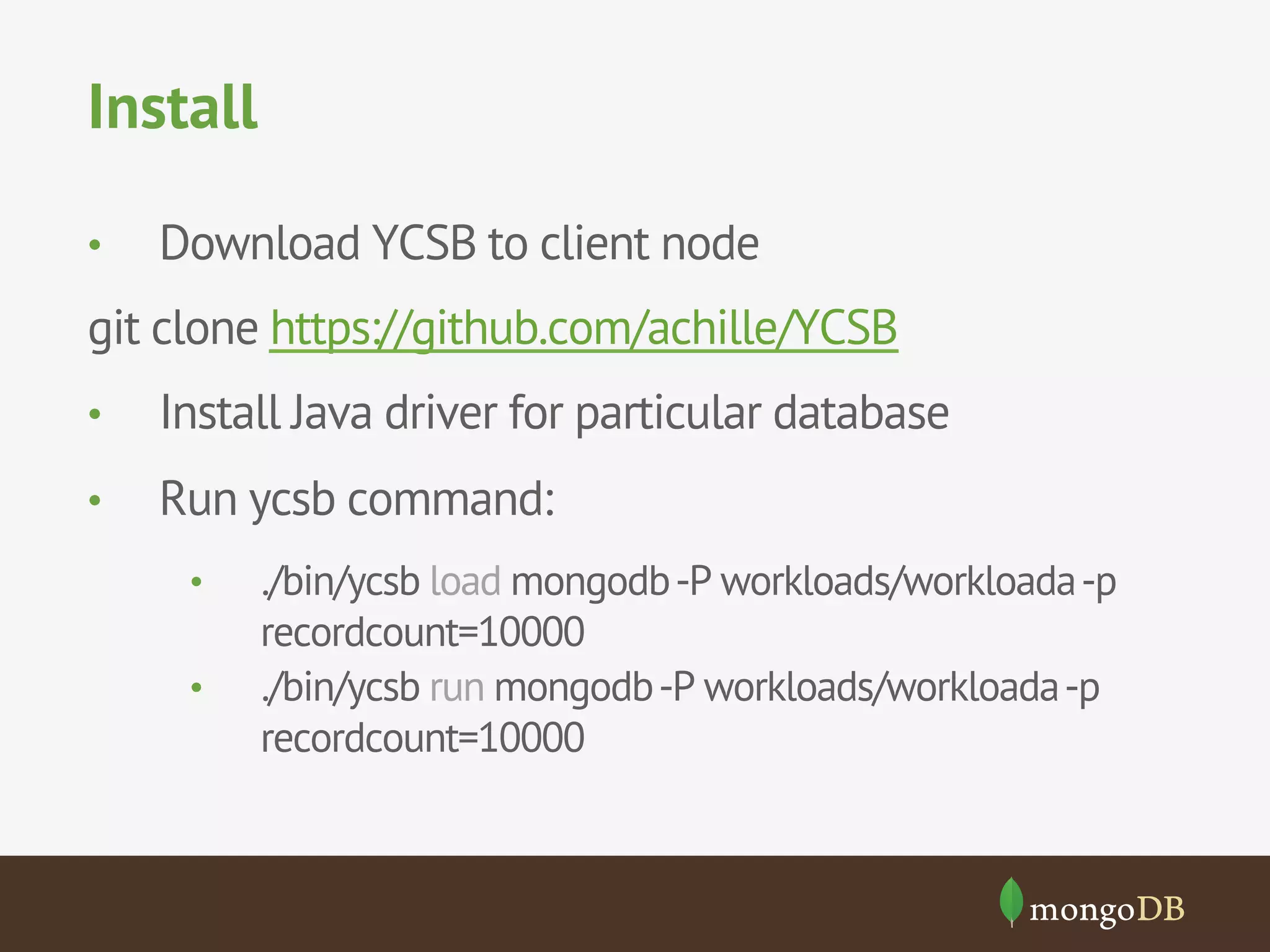
Install
• 

Download YCSB to client node

git clone https://github.com/achille/YCSB
• 

Install Java driver for particular database

• 

Run ycsb command:
• 
• 

./bin/ycsb load mongodb -P workloads/workloada -p
recordcount=10000
./bin/ycsb run mongodb -P workloads/workloada -p
recordcount=10000
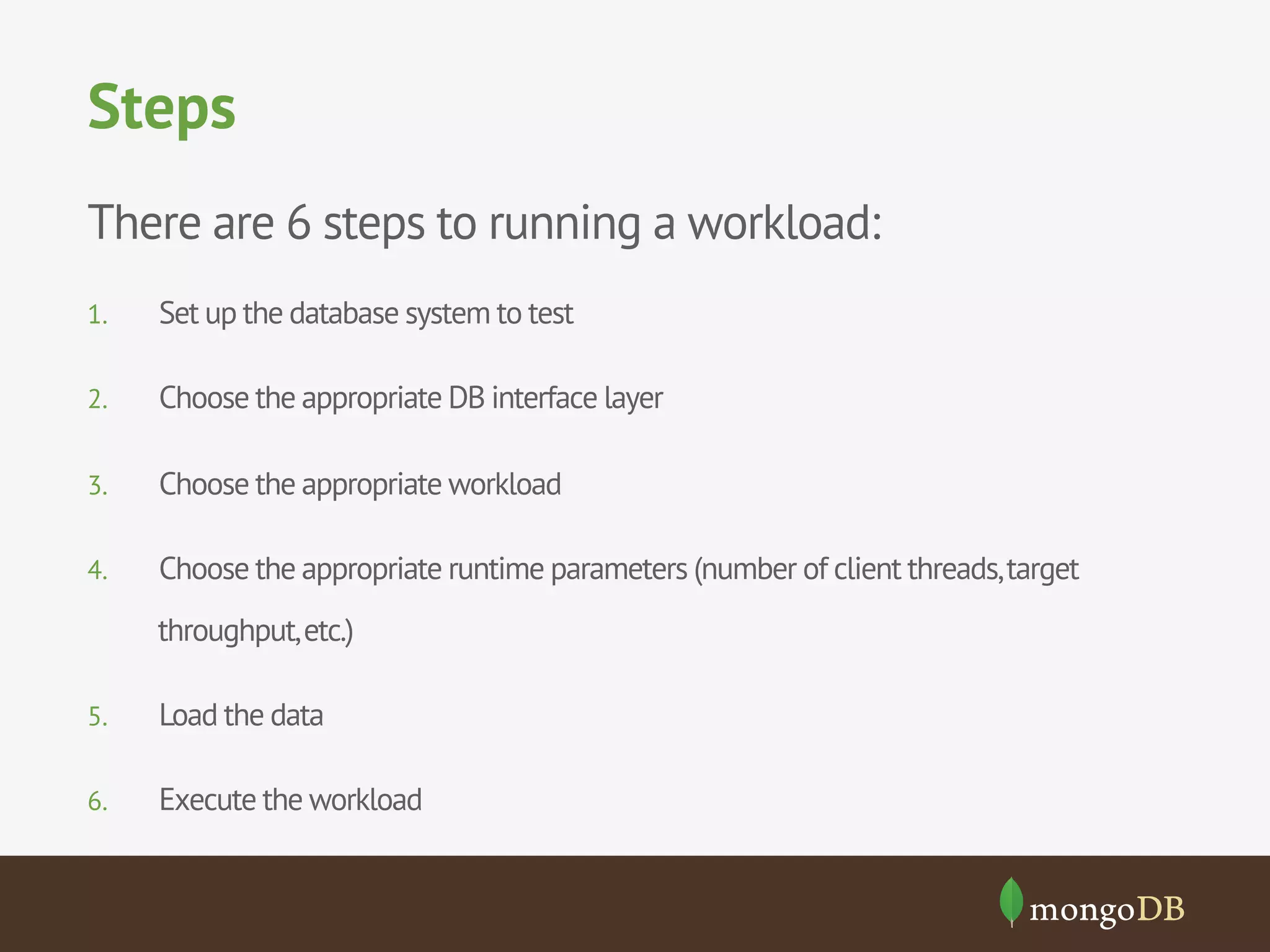
Steps
There are 6 steps to running a workload:
1. 

Set up the database system to test

2. 

Choose the appropriate DB interface layer

3. 

Choose the appropriate workload

4. 

Choose the appropriate runtime parameters (number of client threads, target
throughput, etc.)

5. 

Load the data

6. 

Execute the workload
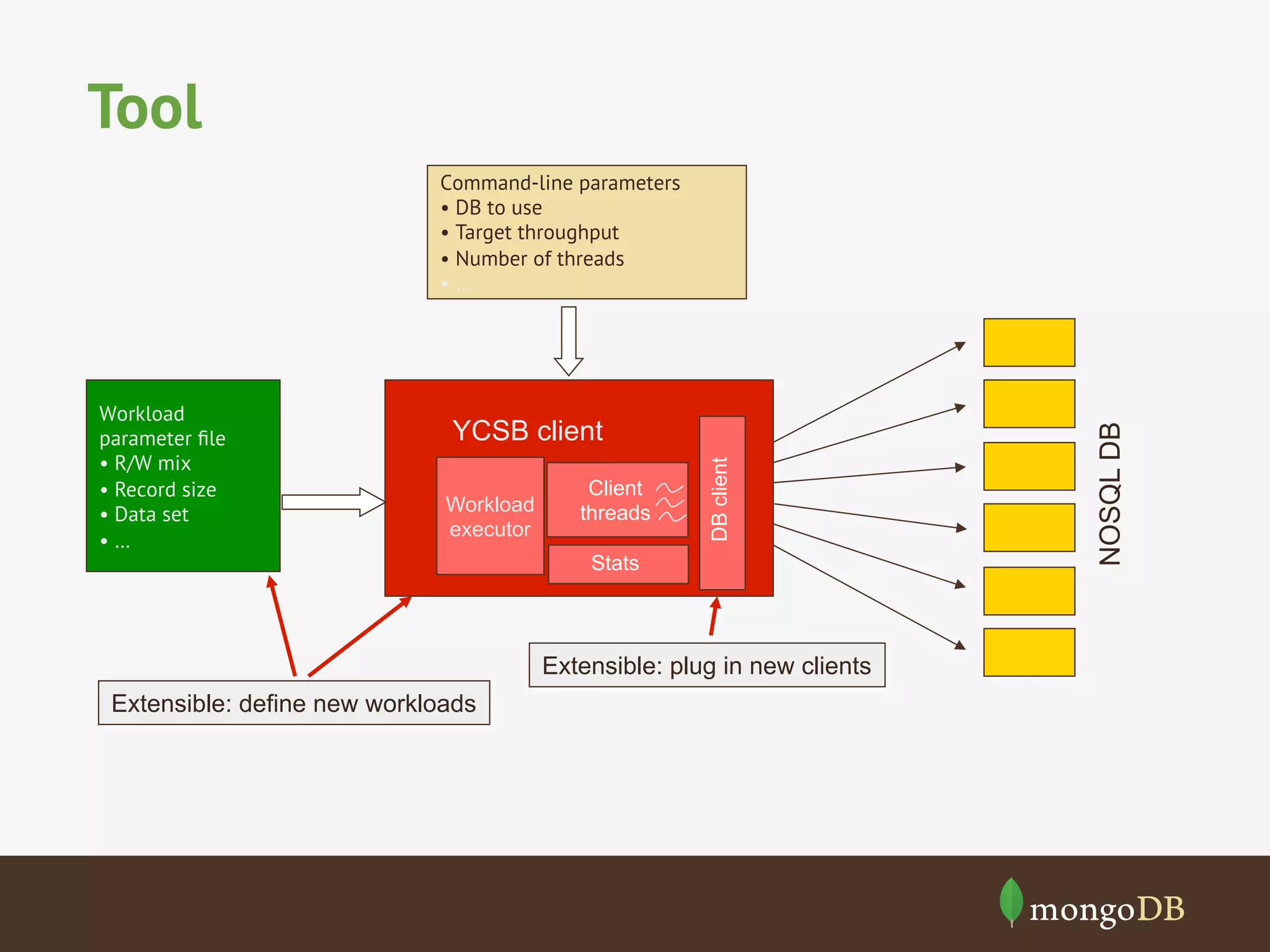
Tool

YCSB client
Workload
executor

Client
threads

DB client

Workload
parameter file
•  R/W mix
•  Record size
•  Data set
•  …

Stats

Extensible: plug in new clients
Extensible: define new workloads

NOSQL DB

Command-line parameters
•  DB to use
•  Target throughput
•  Number of threads
•  …
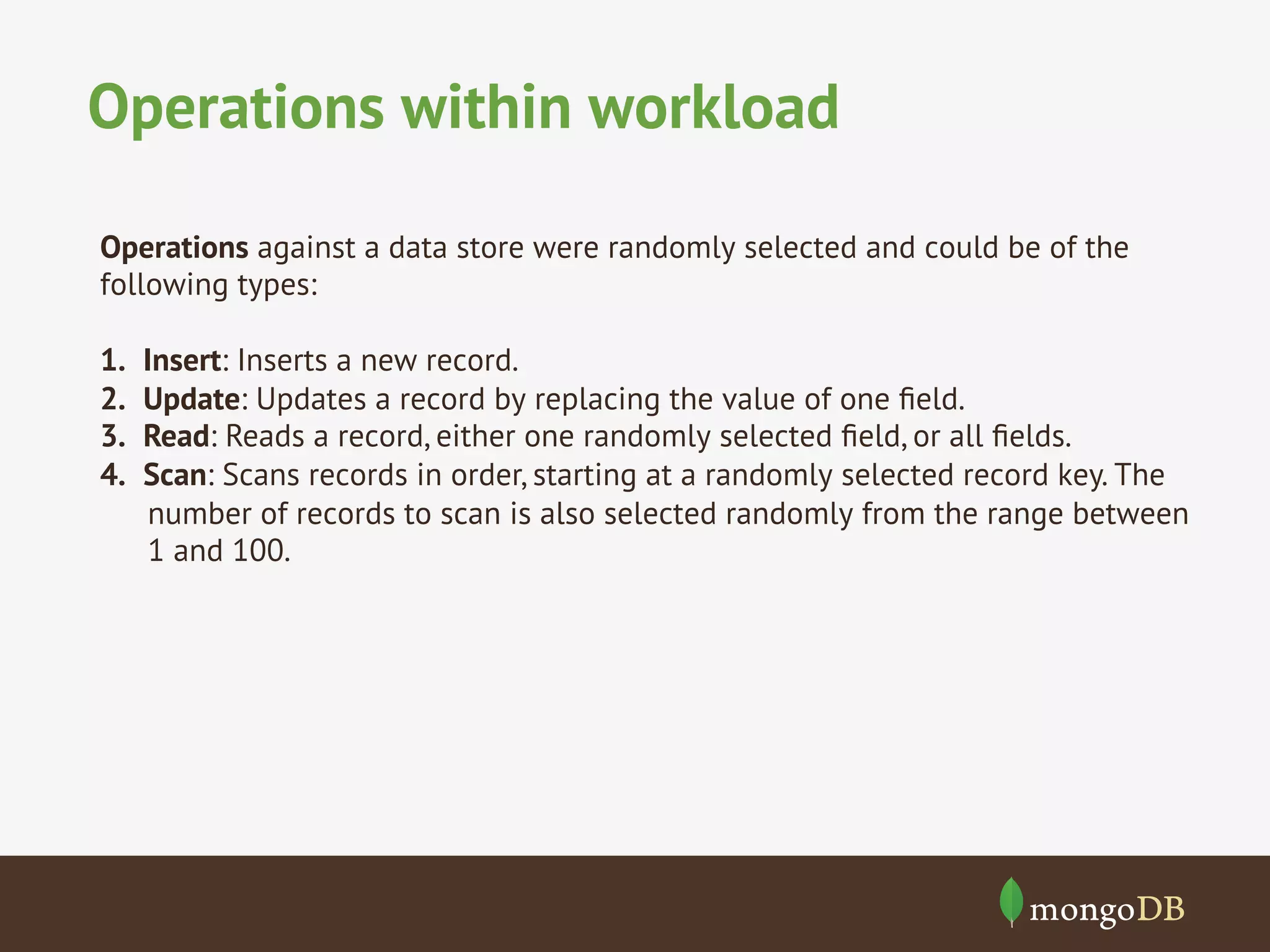
Operations within workload
Operations against a data store were randomly selected and could be of the
following types:
1. 
2. 
3. 
4. 

Insert: Inserts a new record.
Update: Updates a record by replacing the value of one field.
Read: Reads a record, either one randomly selected field, or all fields.
Scan: Scans records in order, starting at a randomly selected record key. The
number of records to scan is also selected randomly from the range between
1 and 100.
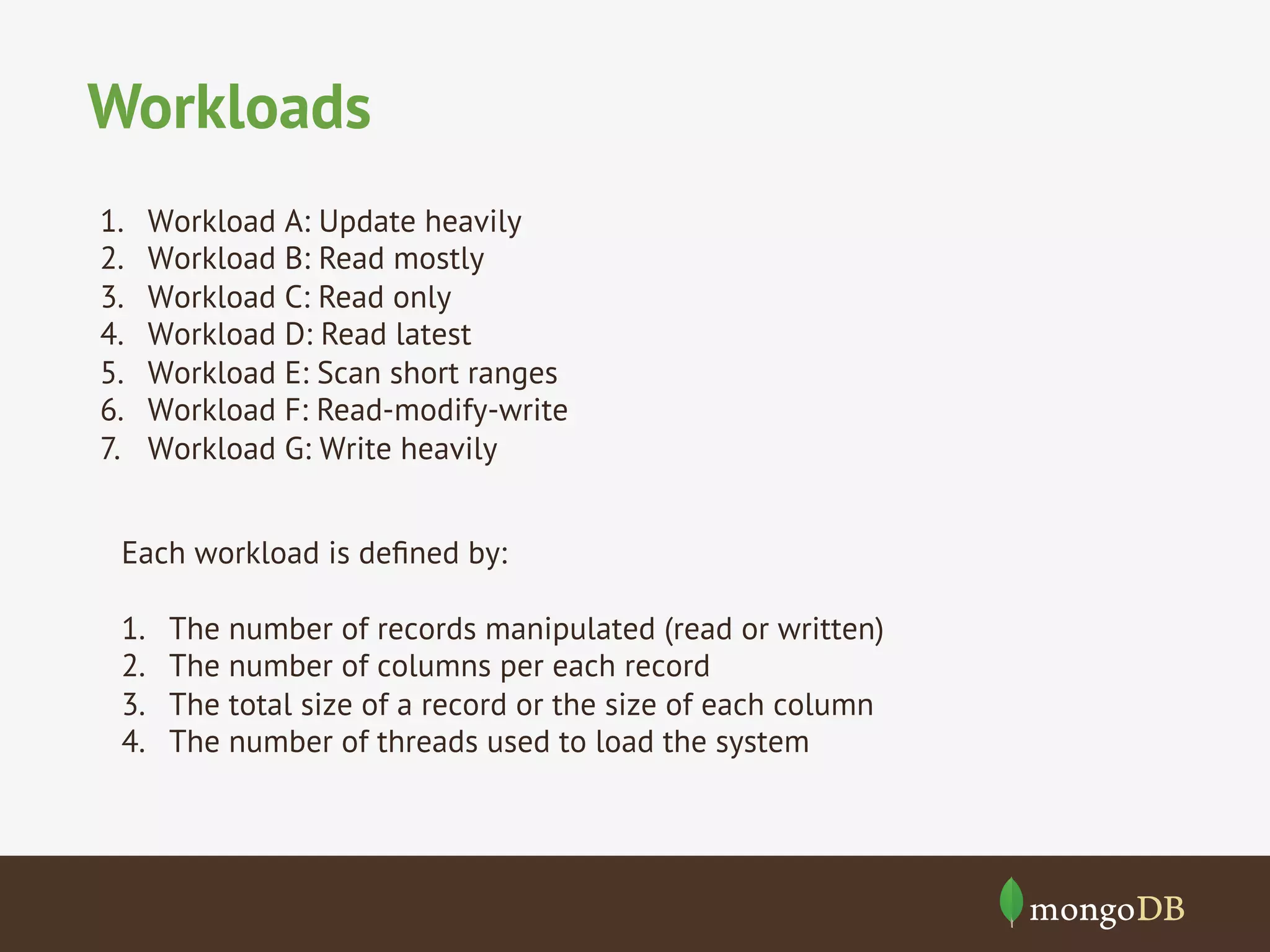
Workloads
1. 
2. 
3. 
4. 
5. 
6. 
7. 

Workload A: Update heavily
Workload B: Read mostly
Workload C: Read only
Workload D: Read latest
Workload E: Scan short ranges
Workload F: Read-modify-write
Workload G: Write heavily

Each workload is defined by:
1. 
2. 
3. 
4. 

The number of records manipulated (read or written)
The number of columns per each record
The total size of a record or the size of each column
The number of threads used to load the system
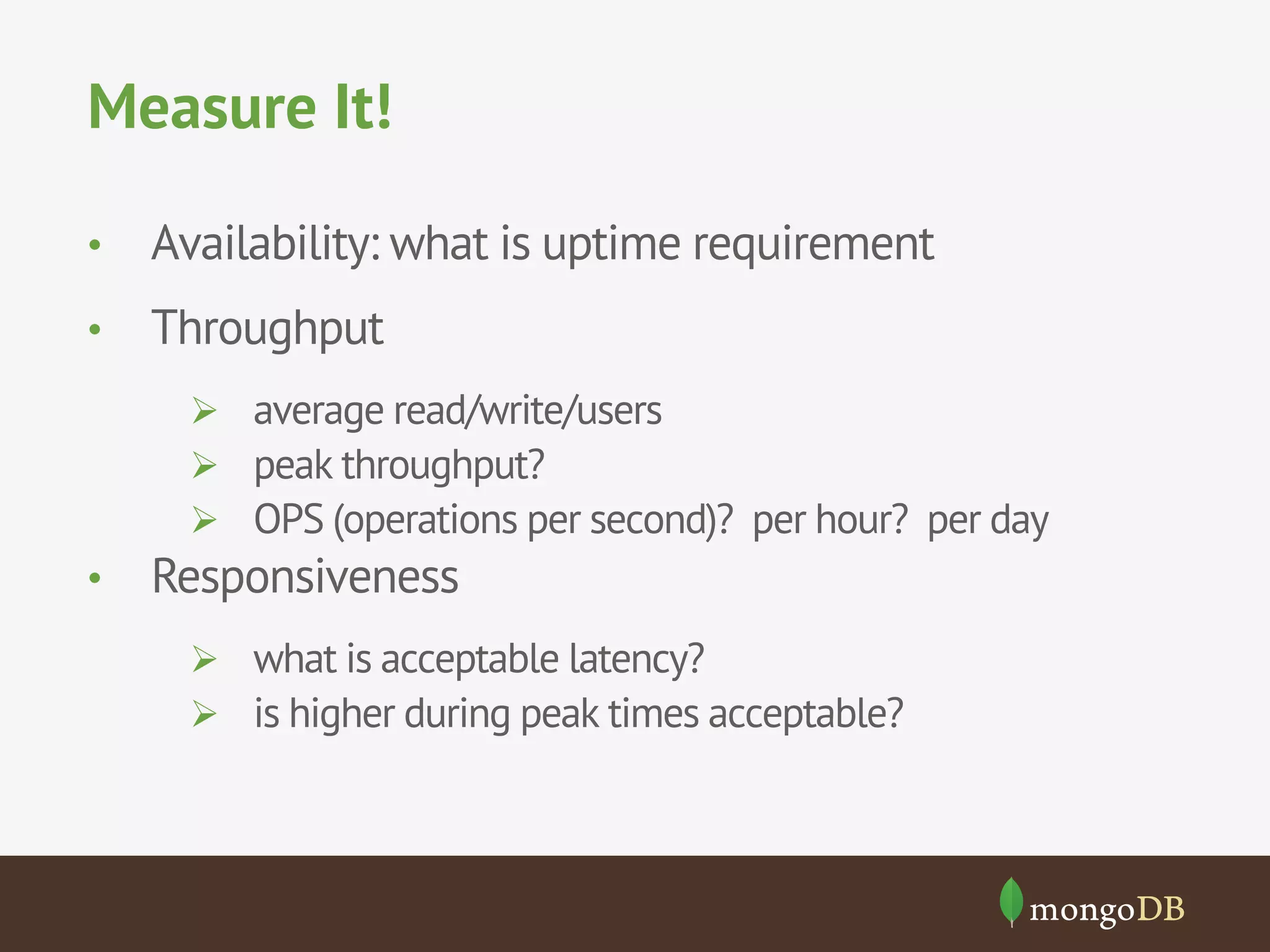
Measure It!
• 

Availability: what is uptime requirement

• 

Throughput
Ø  average read/write/users
Ø  peak throughput?
Ø  OPS (operations per second)? per hour? per day

• 

Responsiveness
Ø  what is acceptable latency?
Ø  is higher during peak times acceptable?
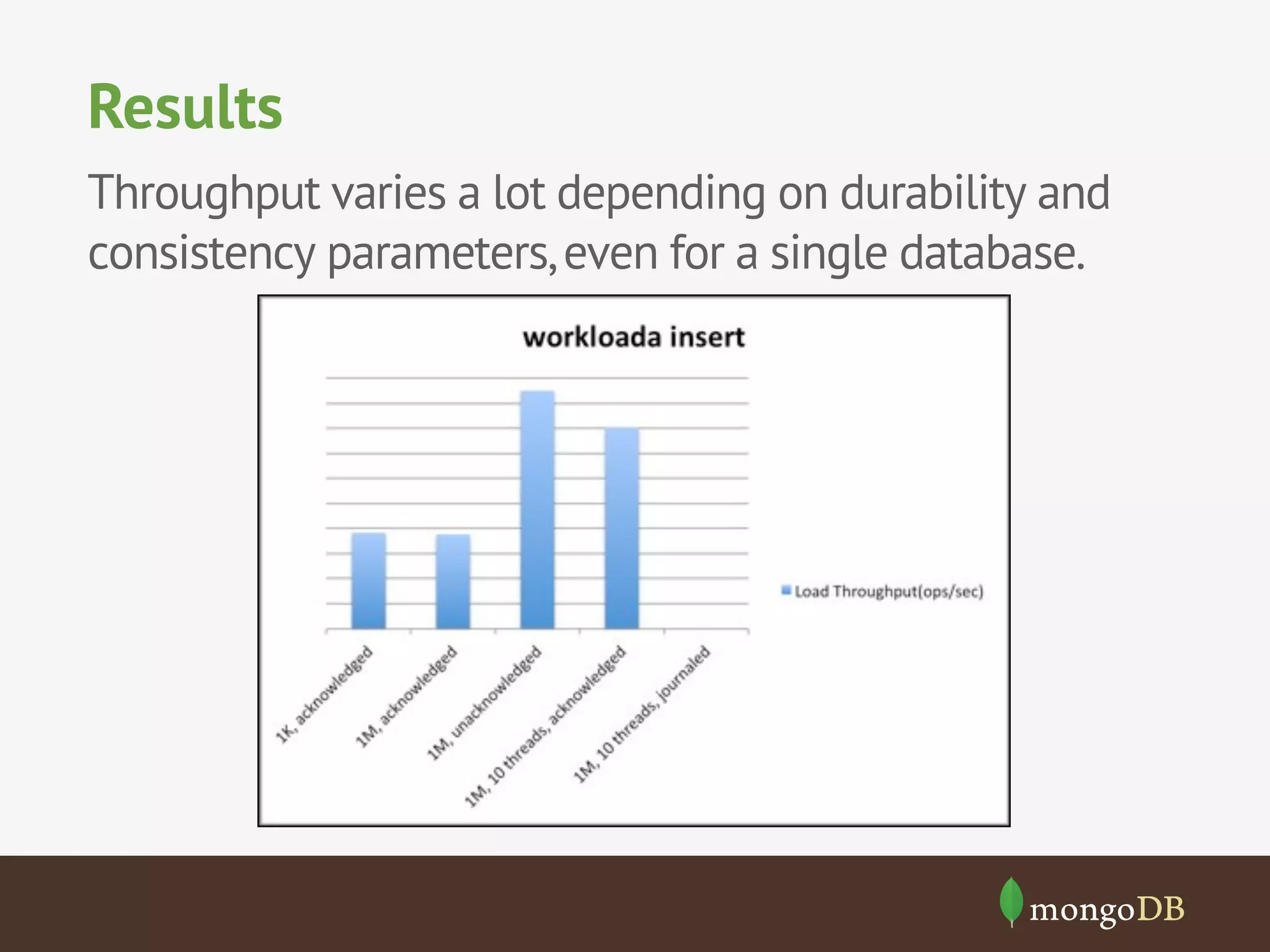
Results
Throughput varies a lot depending on durability and
consistency parameters, even for a single database.
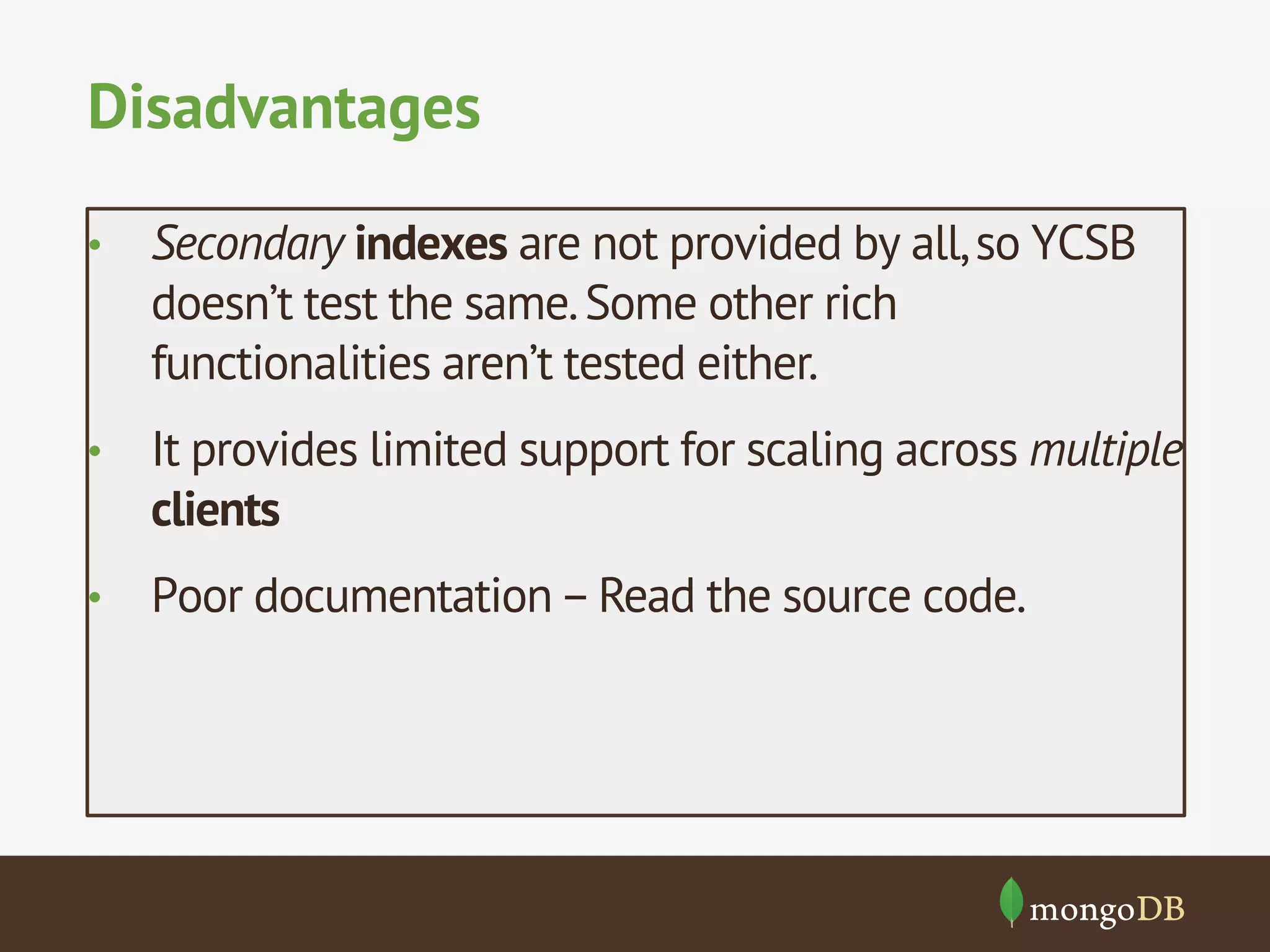
Disadvantages
• 

Secondary indexes are not provided by all, so YCSB
doesn’t test the same. Some other rich
functionalities aren’t tested either.

• 

It provides limited support for scaling across multiple
clients

• 

Poor documentation – Read the source code.
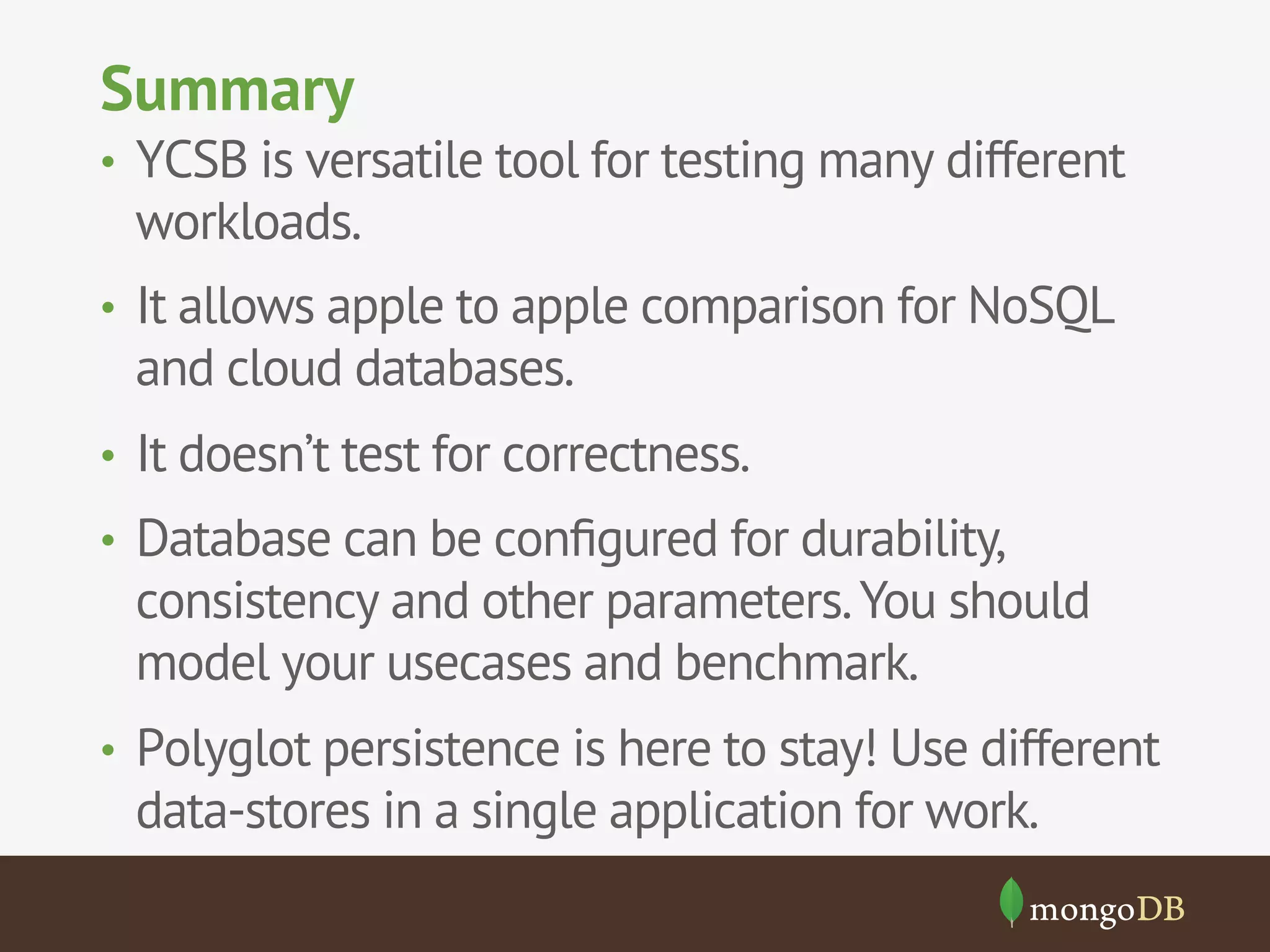
Summary
•  YCSB is versatile tool for testing many different

workloads.

•  It allows apple to apple comparison for NoSQL

and cloud databases.
•  It doesn’t test for correctness.
•  Database can be configured for durability,

consistency and other parameters. You should
model your usecases and benchmark.
•  Polyglot persistence is here to stay! Use different

data-stores in a single application for work.
#CMGIndia

Thank You
Prasoon Kumar, @prasoonk
MongoDB

NoSQL benchmarking

  • 1.
  • 2.
    Agenda •  What isNoSQL? •  YCSB •  Benchmarking parameters •  Findings •  Wrap up
  • 3.
    What is NoSQL? Thereare many NoSQL systems http://nosql-database.org/ Lists 150 currently, up from 120 in 2012 •  •  How do they compare? –  Feature trade-off –  Performance trade-off –  Not clear! PNUTS
  • 4.
    Scale-out vs Scale-up Then:Scale Up Now: Scale Out
  • 5.
  • 6.
    Yahoo! Cloud ServingBenchmark aka ycsb
  • 7.
    Origin Paper that startedit all! Benchmarking cloud serving systems with YCSB, 2010 Authors: Brian F. Cooper, Adam Silberstein, Erwin Tam, Raghu Ramakrishnan and Russell Sears Yahoo! Research Goal •  Evaluate different systems on common workload •  Focus on performance, scaleout •  Extensible by parameters and even writing different workload
  • 8.
    Install •  Download YCSB toclient node git clone https://github.com/achille/YCSB •  Install Java driver for particular database •  Run ycsb command: •  •  ./bin/ycsb load mongodb -P workloads/workloada -p recordcount=10000 ./bin/ycsb run mongodb -P workloads/workloada -p recordcount=10000
  • 9.
    Steps There are 6steps to running a workload: 1.  Set up the database system to test 2.  Choose the appropriate DB interface layer 3.  Choose the appropriate workload 4.  Choose the appropriate runtime parameters (number of client threads, target throughput, etc.) 5.  Load the data 6.  Execute the workload
  • 10.
    Tool YCSB client Workload executor Client threads DB client Workload parameterfile •  R/W mix •  Record size •  Data set •  … Stats Extensible: plug in new clients Extensible: define new workloads NOSQL DB Command-line parameters •  DB to use •  Target throughput •  Number of threads •  …
  • 11.
    Operations within workload Operationsagainst a data store were randomly selected and could be of the following types: 1.  2.  3.  4.  Insert: Inserts a new record. Update: Updates a record by replacing the value of one field. Read: Reads a record, either one randomly selected field, or all fields. Scan: Scans records in order, starting at a randomly selected record key. The number of records to scan is also selected randomly from the range between 1 and 100.
  • 12.
    Workloads 1.  2.  3.  4.  5.  6.  7.  Workload A: Updateheavily Workload B: Read mostly Workload C: Read only Workload D: Read latest Workload E: Scan short ranges Workload F: Read-modify-write Workload G: Write heavily Each workload is defined by: 1.  2.  3.  4.  The number of records manipulated (read or written) The number of columns per each record The total size of a record or the size of each column The number of threads used to load the system
  • 13.
    Measure It! •  Availability: whatis uptime requirement •  Throughput Ø  average read/write/users Ø  peak throughput? Ø  OPS (operations per second)? per hour? per day •  Responsiveness Ø  what is acceptable latency? Ø  is higher during peak times acceptable?
  • 14.
    Results Throughput varies alot depending on durability and consistency parameters, even for a single database.
  • 15.
    Disadvantages •  Secondary indexes arenot provided by all, so YCSB doesn’t test the same. Some other rich functionalities aren’t tested either. •  It provides limited support for scaling across multiple clients •  Poor documentation – Read the source code.
  • 16.
    Summary •  YCSB isversatile tool for testing many different workloads. •  It allows apple to apple comparison for NoSQL and cloud databases. •  It doesn’t test for correctness. •  Database can be configured for durability, consistency and other parameters. You should model your usecases and benchmark. •  Polyglot persistence is here to stay! Use different data-stores in a single application for work.
  • 17.