Style and Form
Sets and location

 “The uncanny atmosphere of the
   film derives from the way that
the naturalistic is subverted by the
               surreal.”
 An excessive visual style and a focus on the
          morbid side of human life
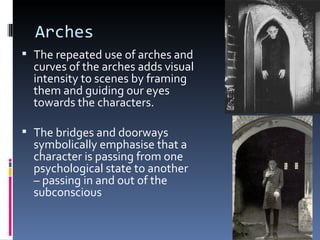
Arches
 The repeated use of arches and
  curves of the arches adds visual
  intensity to scenes by framing
  them and guiding our eyes
  towards the characters.

 The bridges and doorways
  symbolically emphasise that a
  character is passing from one
  psychological state to another
  – passing in and out of the
  subconscious
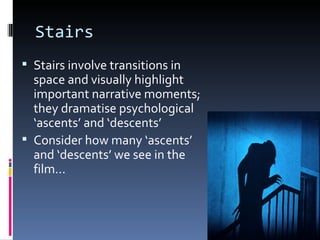
Stairs
 Stairs involve transitions in
  space and visually highlight
  important narrative moments;
  they dramatise psychological
  ‘ascents’ and ‘descents’
 Consider how many ‘ascents’
  and ‘descents’ we see in the
  film...
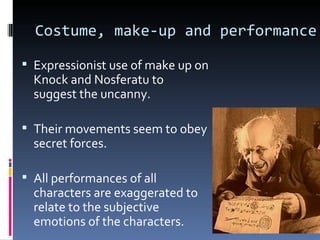
Costume, make-up and performance

 Expressionist use of make up on
  Knock and Nosferatu to
  suggest the uncanny.

 Their movements seem to obey
  secret forces.

 All performances of all
  characters are exaggerated to
  relate to the subjective
  emotions of the characters.
Cinematography

 Camera does not move – rather Murnau
  relied on different camera set ups, varying
  shot size and angles, lighting and the careful
  staging of the action in space.
 Scenes are constructed from relatively short
  shots – edited together so actions flow
  smoothly
 How do these techniques compare to those
  displayed in ‘Cabinet’?
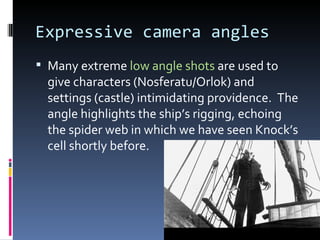
Expressive camera angles
 Many extreme low angle shots are used to
  give characters (Nosferatu/Orlok) and
  settings (castle) intimidating providence. The
  angle highlights the ship’s rigging, echoing
  the spider web in which we have seen Knock’s
  cell shortly before.
Expressive camera angles...

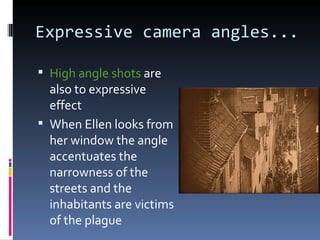
 High angle shots are
  also to expressive
  effect
 When Ellen looks from
  her window the angle
  accentuates the
  narrowness of the
  streets and the
  inhabitants are victims
  of the plague
Composition
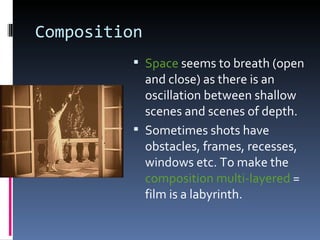
           Space seems to breath (open
            and close) as there is an
            oscillation between shallow
            scenes and scenes of depth.
           Sometimes shots have
            obstacles, frames, recesses,
            windows etc. To make the
            composition multi-layered =
            film is a labyrinth.
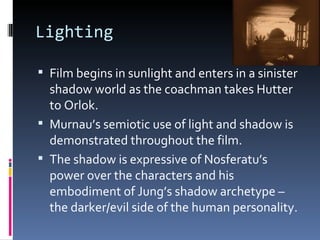
Lighting

 Film begins in sunlight and enters in a sinister
  shadow world as the coachman takes Hutter
  to Orlok.
 Murnau’s semiotic use of light and shadow is
  demonstrated throughout the film.
 The shadow is expressive of Nosferatu’s
  power over the characters and his
  embodiment of Jung’s shadow archetype –
  the darker/evil side of the human personality.
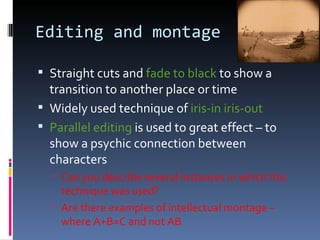
Editing and montage

 Straight cuts and fade to black to show a
  transition to another place or time
 Widely used technique of iris-in iris-out
 Parallel editing is used to great effect – to
  show a psychic connection between
  characters
   Can you describe several instances in which this
    technique was used?
   Are there examples of intellectual montage –
    where A+B=C and not AB
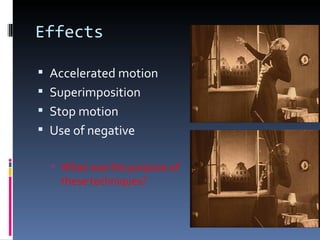
Effects

 Accelerated motion
 Superimposition
 Stop motion
 Use of negative

   What was the purpose of
    these techniques?
Inter-titles / sound

 75 inter-titles in total
 Important to our understanding of the
  narrative
 The absence of diegetic sound contributes to
  the film’s other-worldly atmosphere
 Interesting to note that the film does evoke
  sounds – the chiming of the clock, the
  breaking of the waves
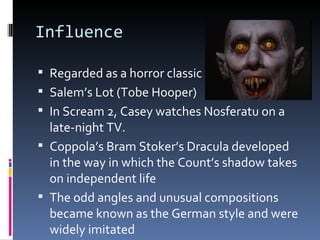
Influence

 Regarded as a horror classic
 Salem’s Lot (Tobe Hooper)
 In Scream 2, Casey watches Nosferatu on a
  late-night TV.
 Coppola’s Bram Stoker’s Dracula developed
  in the way in which the Count’s shadow takes
  on independent life
 The odd angles and unusual compositions
  became known as the German style and were
  widely imitated
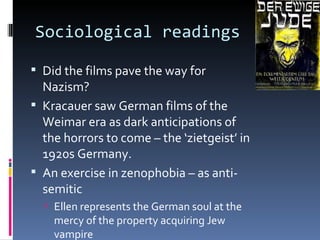
Sociological readings

 Did the films pave the way for
  Nazism?
 Kracauer saw German films of the
  Weimar era as dark anticipations of
  the horrors to come – the ‘zietgeist’ in
  1920s Germany.
 An exercise in zenophobia – as anti-
  semitic
   Ellen represents the German soul at the
    mercy of the property acquiring Jew
    vampire
Kracauer

 Kracauer never allowed for the possibility that a
  film might have an alternative reading or that
  audiences might read films in different ways.
 It is too simplistic to relate the films to the anti-
  semitism that brought Hitler to power as there
  were so many other factors.
 In addition – expressionist films were targeted at
  an intellectual elite rather than the German
  public who enjoyed romantic comedies, crime
  thrillers etc.
Themes

 The film does, however, portray a threat from
  outside, a threat from the East.
 Death, disease, social instability and
  disrupted relationships were rife.
 The streets and hospitals of Berlin must have
  contained figures as hocking as Orlok with
  ruined faces and near death looks.
Themes

 Marx used the figure of the vampire to
  dramatise exploitation.
 Nosferatu can be seen as a critical metaphor
  for how humanity had been bled dry by war
  and an aristocratic military elite
Psychological readings

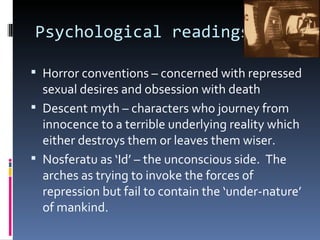
 Horror conventions – concerned with repressed
  sexual desires and obsession with death
 Descent myth – characters who journey from
  innocence to a terrible underlying reality which
  either destroys them or leaves them wiser.
 Nosferatu as ‘Id’ – the unconscious side. The
  arches as trying to invoke the forces of
  repression but fail to contain the ‘under-nature’
  of mankind.
Psychoanalytical

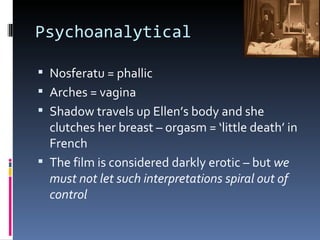
 Nosferatu = phallic
 Arches = vagina
 Shadow travels up Ellen’s body and she
  clutches her breast – orgasm = ‘little death’ in
  French
 The film is considered darkly erotic – but we
  must not let such interpretations spiral out of
  control

Nosferatu (Murnau 1922)

  • 1.
  • 2.
    Sets and location “The uncanny atmosphere of the film derives from the way that the naturalistic is subverted by the surreal.” An excessive visual style and a focus on the morbid side of human life
  • 3.
    Arches  The repeateduse of arches and curves of the arches adds visual intensity to scenes by framing them and guiding our eyes towards the characters.  The bridges and doorways symbolically emphasise that a character is passing from one psychological state to another – passing in and out of the subconscious
  • 4.
    Stairs  Stairs involvetransitions in space and visually highlight important narrative moments; they dramatise psychological ‘ascents’ and ‘descents’  Consider how many ‘ascents’ and ‘descents’ we see in the film...
  • 5.
    Costume, make-up andperformance  Expressionist use of make up on Knock and Nosferatu to suggest the uncanny.  Their movements seem to obey secret forces.  All performances of all characters are exaggerated to relate to the subjective emotions of the characters.
  • 6.
    Cinematography  Camera doesnot move – rather Murnau relied on different camera set ups, varying shot size and angles, lighting and the careful staging of the action in space.  Scenes are constructed from relatively short shots – edited together so actions flow smoothly  How do these techniques compare to those displayed in ‘Cabinet’?
  • 7.
    Expressive camera angles Many extreme low angle shots are used to give characters (Nosferatu/Orlok) and settings (castle) intimidating providence. The angle highlights the ship’s rigging, echoing the spider web in which we have seen Knock’s cell shortly before.
  • 8.
    Expressive camera angles... High angle shots are also to expressive effect  When Ellen looks from her window the angle accentuates the narrowness of the streets and the inhabitants are victims of the plague
  • 9.
    Composition  Space seems to breath (open and close) as there is an oscillation between shallow scenes and scenes of depth.  Sometimes shots have obstacles, frames, recesses, windows etc. To make the composition multi-layered = film is a labyrinth.
  • 10.
    Lighting  Film beginsin sunlight and enters in a sinister shadow world as the coachman takes Hutter to Orlok.  Murnau’s semiotic use of light and shadow is demonstrated throughout the film.  The shadow is expressive of Nosferatu’s power over the characters and his embodiment of Jung’s shadow archetype – the darker/evil side of the human personality.
  • 11.
    Editing and montage Straight cuts and fade to black to show a transition to another place or time  Widely used technique of iris-in iris-out  Parallel editing is used to great effect – to show a psychic connection between characters  Can you describe several instances in which this technique was used?  Are there examples of intellectual montage – where A+B=C and not AB
  • 12.
    Effects  Accelerated motion Superimposition  Stop motion  Use of negative  What was the purpose of these techniques?
  • 13.
    Inter-titles / sound 75 inter-titles in total  Important to our understanding of the narrative  The absence of diegetic sound contributes to the film’s other-worldly atmosphere  Interesting to note that the film does evoke sounds – the chiming of the clock, the breaking of the waves
  • 14.
    Influence  Regarded asa horror classic  Salem’s Lot (Tobe Hooper)  In Scream 2, Casey watches Nosferatu on a late-night TV.  Coppola’s Bram Stoker’s Dracula developed in the way in which the Count’s shadow takes on independent life  The odd angles and unusual compositions became known as the German style and were widely imitated
  • 15.
    Sociological readings  Didthe films pave the way for Nazism?  Kracauer saw German films of the Weimar era as dark anticipations of the horrors to come – the ‘zietgeist’ in 1920s Germany.  An exercise in zenophobia – as anti- semitic  Ellen represents the German soul at the mercy of the property acquiring Jew vampire
  • 16.
    Kracauer  Kracauer neverallowed for the possibility that a film might have an alternative reading or that audiences might read films in different ways.  It is too simplistic to relate the films to the anti- semitism that brought Hitler to power as there were so many other factors.  In addition – expressionist films were targeted at an intellectual elite rather than the German public who enjoyed romantic comedies, crime thrillers etc.
  • 17.
    Themes  The filmdoes, however, portray a threat from outside, a threat from the East.  Death, disease, social instability and disrupted relationships were rife.  The streets and hospitals of Berlin must have contained figures as hocking as Orlok with ruined faces and near death looks.
  • 18.
    Themes  Marx usedthe figure of the vampire to dramatise exploitation.  Nosferatu can be seen as a critical metaphor for how humanity had been bled dry by war and an aristocratic military elite
  • 19.
    Psychological readings  Horrorconventions – concerned with repressed sexual desires and obsession with death  Descent myth – characters who journey from innocence to a terrible underlying reality which either destroys them or leaves them wiser.  Nosferatu as ‘Id’ – the unconscious side. The arches as trying to invoke the forces of repression but fail to contain the ‘under-nature’ of mankind.
  • 20.
    Psychoanalytical  Nosferatu =phallic  Arches = vagina  Shadow travels up Ellen’s body and she clutches her breast – orgasm = ‘little death’ in French  The film is considered darkly erotic – but we must not let such interpretations spiral out of control