Download to read offline


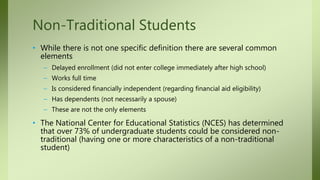

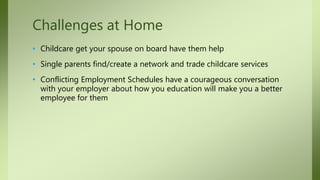
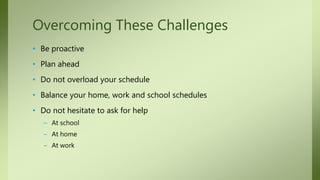


This document discusses challenges that non-traditional students may face in returning to school. It defines a non-traditional student as someone who delays college after high school, works full-time, is financially independent, has dependents, or has other characteristics. In the classroom, non-traditional students should come prepared to learn, respect instructors, and make friends. At home, they need to set boundaries and study times, get family support, and find childcare solutions. To overcome challenges, non-traditional students should plan ahead, avoid overloading their schedule, and ask for help from school, home, and work.


![Online High School and the Non-traditional Student [Infographic]](https://cdn.slidesharecdn.com/ss_thumbnails/onlinehighschool-140627144343-phpapp02-thumbnail.jpg?width=640&height=640&fit=bounds)


