Siedem przykazań dla potomków Noegoשבע מצות בני נח
Od AutoraAutor wykładu, Mirek Sopek, nie może byćtraktowany jako autorytet w sprawach praw Noego.
Wykład ten powstał na podstawie lektur i rozmów z ortodoksyjnymi Żydami z Hajfy.
Najważniejszą była książka Rabinów: Chaima Clorfene oraz Yakov’aRogalsky’ego:„ThePath of TheRighteous Gentile”
 Inne źródła: „Laws of Kings and their Wars” MaimonidesJudaizm a Jedność świataJudaizm zawsze był daleki od prozelityzmualeKażdy może zostać Żydem, choć nie jest to łatwe
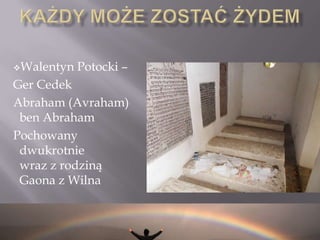
Jeśli część ludzkości pozostanie na zawsze nie-Żydami, jaka jest dla niej propozycja Judaizmu ?KażDY Może zostać żydemWalentyn Potocki –GerCedekAbraham (Avraham) ben AbrahamPochowany dwukrotnie wraz z rodziną Gaonaz Wilna
Dwie ścieżkiWiększość religii świata uważa iż trwały pokój nastanie gdy wszyscy nawrócą się na tę jedną jedyną religię.
 Judaizm podchodzi do kwestii jedności świata z zupełnie innej perspektywy:
 „One path is yours. The other one is mine.” Jedną ze ścieżek jest Twoja ścieżka. Inną jest moja ścieżka.ŚCIEŻka dla nie-żydówZgodnie z nauczaniem Talmudu (Traktat Sanhedrin): „Religiouspeople of allnationshave a shareintheworld to come” – Religijni ludzie ze wszystkich narodów mają swój udział w świecie, który ma nadejść.
Ponadto, zgodnie z nauczaniem Talmudu, B-g nałożył na Noego wiążący zestaw praw, który był przeznaczony dla całej ludzkości (Sanhedrin)
 Przestrzegający praw Noego, może osiągnąć poziom moralny i duchowy taki sam jak KohenGadol (najwyższy kapłan) (BavaKamma)HISTORIA PRAW NOEGO Prawa te obowiązywały ludzkość od czasu stworzenia pierwszego człowieka – Adama
Wg. Talmudu Źródłem 6 tych praw jest zapis z księgi rodzaju (Gen. 2:16-17)16I przykazał Wiekuisty, Bóg, człowiekowi i rzekł: „Z każdego drzewa ogrodu pożywać możesz;   17Ale z drzewa poznania dobrego i złego, — pożywać zeń nie będziesz; bo gdy spożyjesz z niego — umrzesz!”  Źródłem 7ego prawa jest zakaz spożywania żywego zwierzęcia dany Noemu (Gen. 9:4-6)
HISTORIA PRAW NOEGO Po Objawieniu i nadaniu Tory na górze Synaj, 7 praw Noego zostało ponownie nadanych ludzkości i włączonych do 613 przykazań nałożonych na dzieci Israela (Jakuba) (wraz z 10 przykazaniami, które stanowią nierozerwalną część 613 mizwot)
 Pokoleniom Israela nadano obowiązek nauczania innych narodów wprowadzania praw Noego (to stwierdzenie jest mocno dyskutowane)PRAWA NOEGOTosefta i Talmud podają siedem praw w postaci 6 zakazów i jednego nakazu:I – Zakaz bałwochwalstwa – nie będziesz miał żadnych bóstw przed BogiemII – Zakaz bluźnierstwaIII - Zakaz morderstwaIV – Zakaz rozwiązłościV- Zakaz kradzieżyVI – Zakaz jedzenia zwierzęcia żywego – nie zadawanie cierpienia żywym zwierzętomVII – Nakaz posiadania prawych Sądów
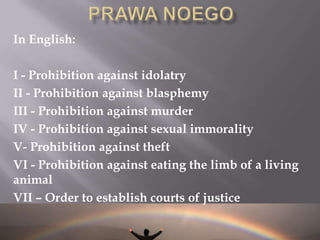
PRAWA NOEGOIn English:I - Prohibition against idolatryII - Prohibition against blasphemyIII - Prohibition against murderIV - Prohibition against sexual immoralityV-Prohibition against theftVI - Prohibition against eating the limb of a living animalVII – Order to establish courts of justice
PRAWA NOEGOPrawa Noego wg. Majmonidesa (Rambam)Źródło: MishnehTorah, Prawa Królów i ich Wojen, Rozdział 9:Adam HaRishon was commanded in six things: [the prohibition] concerning idolatry [the prohibition] concerning blasphemy [the prohibition] concerning spilling of blood [the prohibition] concerning forbidden relations [the prohibition] concerning robbery and [the injunction of establishing courts of] justice. Even though all these were received into our hands from Moshe Rabbenu, and the intelect naturally inclines towards them – from a general reading of the words of Torah, they can see that they were commanded in these. [G-d] added to Noah [the commandment] concerning a torn limb, as it is written "From the flesh, its life is in the blood, do not eat" (Genesis 9:4). This makes seven commandments. This is how matters stood in the world until Avraham. Avraham came and was commanded other things beyond this, in circumcision and he prayed the morning prayers. Yitzchak began tithing, and added the afternoon prayers. Yaakov added [the prohibition of not eating] the sciatic nerve and prayed the evening prayers. In Egypt, Amram was commanded other things, until Moshe Rabbenu came and completed [the giving] of the Torah, by his hand. I
PRAWA NOEGOPrawa Noego wg. Majmonidesa (Rambam)Źródło: MishnehTorah, Prawa Królów i ich Wojen, Rozdział 9:Adamowi HaRishonzakazano sześciu rzeczy: [zakaz]  bałwochwalstwa[zakaz] dotyczący bluźnierstwa[zakaz] dotyczący rozlewu krwi[zakaz] w sprawie stosunków zabronionych[zakaz] w sprawie napadui [nakaz] ustanowienia sądów sprawiedliwości.Nawet jeśli wszystkie te wpłynęły w nasze ręce z MosheRabbenu i intelekt naturalnie skłania się ku nim – ogólne czytanie słowa Tory, dowodzi, że były one nakazane w tym zakresie. B-g  dodał Noemu [przykazanie] rozrywanych  kończyn, jak jest napisane: "Z ciała, którego życie jest we krwi, nie wolno ci jeść" (Rdz 9,4). To sprawia, że jest siedem przykazań. To jest  w jaki sposób sprawy stały na świecie aż  do czasu Avrahama. Avrahamprzyszedł i miał nakazane inne sprawy poza tym, np. obrzezanie i modlitwy poranne. Izaak rozpoczął dziesięciny i dodał modlitwy popołudniowej. Jakub dodał [zakaz jedzenia] nerwu kulszowego i modlitwy wieczorne. W Egipcie, Amramowi (Ojcowi Mojżesza) nakazano wiele innych rzeczy aż do MosheRabbenuktóry przyszedł i zakończone zostało [udzielania] Tory, przez jego ręce.I
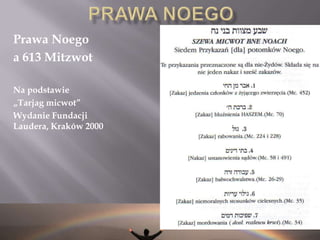
PRAWA NOEGOPrawa Noego a 613 MitzwotNa podstawie„Tarjagmicwot”Wydanie FundacjiLaudera, Kraków 2000I
PRAWA NOEGO – czy tylko ?Nagroda za spełnianie praw:When one of the Children of Noah resolves to fulfill the Seven Universal Commandments, his or her soul is elevated. This person becomes one of the ChasideiUmotha‑Olam, the Pious Ones of the Nations, and receives a share of the Eternal World. The Holy Scriptures call one who accepts the yoke of fulfilling the Seven Universal Laws a gertoshav, a proselyte of the gate. This person is permitted to live in the Land of Israel and to enter the Holy Temple in Jerusalem and to offer sacrifices to the God of Israel.When one of the Children of Noah engages in the study of the Seven Universal Laws, he is able to attain a spiritual level higher than the High Priest of the Jews, who alone has the sanctity to enter the Holy of Holies in the Temple in Jerusalem.I
PRAWA NOEGO – czy tylko ?Postawa w spełnianiu praw:The responsibility of The Seven Noahide Laws is a yoke of faith in God. This means that the laws must be observed solely because God commanded them. If the Children of Noah observe these Seven Universal Laws for any reason or intention other than to fulfill God's will, the performance is invalid and no divine reward is received. This means that if one of the Children of Noah says, "These laws seem sensible and beneficial, therefore I will observe them," his actions accomplish nothing and he receives no reward.I
PRAWA NOEGO – czy tylko ?Ale …. :Although the Children of Noah are commanded only concerning the Seven Universal Commandments, they are permitted to observe any of the 613 Commandments of the Torah for the sake of receiving divine reward. The exceptions to this are:a.Observing the Sabbath in the manner of the Jews (resting from the actions that were needed for the building of the Tabernacle during the Exodus from Egypt) b. Observing the Jewish holy days in the manner of the Jewsc.  Studying those parts of the Torah that do not apply to the Noahides’ service of God d. Writing a Torah scroll (the Five Books of Moses) or receiving an aliyahto the Torah (reading a portion of the Torah at a public gathering) e.  Making, writing, or wearing tefilin, the phylacteries worn during prayer that contain portions of the Torah f.   Writing or affixing a mezuzah, the parchment contain­ing portions of the Torah, to one's doorposts or gateposts I
PRAWA NOEGO – czy tylko ?Studiowanie świętych ksiąg:A prime purpose of the Seven Universal Laws is to teach the Children of Noah about the Oneness of God, and therefore those parts of Torah that pertain to this knowledge are permissible for him to study. This includes the entirety of the twenty‑four books of the Hebrew Scriptures. Also, the study of any part of the Torah that brings one to greater knowledge concerning the performance of the Seven NoahideCommandments is permissible. But Talmudic or Halakhic study of subjects that pertain exclusively to the Jew's service of God is forbidden. The Noahide who studies portions of the Torah that do not pertain to him damages his soul.I
ZAKAZ BAłWOCHWALSTWAJest równoznaczny z nakazemwiary w Jednego i Jedynego B-ga
Potomkowie Noego są wyznawcami konsekwentnego monoteizmu
Zakaz służenia i modlitw do jakichkolwiek stworzeń materialnych i niematerialnych (w tym aniołów)
Zakaz oddawania honoru posągowi lub obrazowi bożków i innych stworzeń
Zakaz wróżenia, astrologii, czarów, magii etc.ZAKAZ BLUŹNIERSTWAZakaz przeklinania B-gaZakaz przeklinania imieniem B-gaZakaz wiary w moc szatana (Bluźnierstwo jest wyrazem niekompletnej wiary w B-ga)Zakaz (choć niekaralny) złego mówienia o innych
ZAKAZ MORDERSTWA6Kto przeleje krew człowieka, przez człowieka krew jego przelaną będzie; bo na obraz Boży stworzył człowieka! (Bereszit 9:6)
Zakaz morderstwa (w tym morderstwa w łonie matki)
Zakaz samobójstwa
W zabójstwie przez pośrednika, pośrednik i ten kto go wysłał są winni.ZAKAZ ROZWIĄZŁOŚCI24Przeto opuszcza mąż ojca swojego i matkę swoją, a łączy się z żoną swoją, i stają się ciałem jedném.  

Noahide Laws

  • 1.
    Siedem przykazań dlapotomków Noegoשבע מצות בני נח
  • 2.
    Od AutoraAutor wykładu,Mirek Sopek, nie może byćtraktowany jako autorytet w sprawach praw Noego.
  • 3.
    Wykład ten powstałna podstawie lektur i rozmów z ortodoksyjnymi Żydami z Hajfy.
  • 4.
    Najważniejszą była książkaRabinów: Chaima Clorfene oraz Yakov’aRogalsky’ego:„ThePath of TheRighteous Gentile”
  • 5.
    Inne źródła:„Laws of Kings and their Wars” MaimonidesJudaizm a Jedność świataJudaizm zawsze był daleki od prozelityzmualeKażdy może zostać Żydem, choć nie jest to łatwe
  • 6.
    Jeśli część ludzkościpozostanie na zawsze nie-Żydami, jaka jest dla niej propozycja Judaizmu ?KażDY Może zostać żydemWalentyn Potocki –GerCedekAbraham (Avraham) ben AbrahamPochowany dwukrotnie wraz z rodziną Gaonaz Wilna
  • 7.
    Dwie ścieżkiWiększość religiiświata uważa iż trwały pokój nastanie gdy wszyscy nawrócą się na tę jedną jedyną religię.
  • 8.
    Judaizm podchodzido kwestii jedności świata z zupełnie innej perspektywy:
  • 9.
    „One pathis yours. The other one is mine.” Jedną ze ścieżek jest Twoja ścieżka. Inną jest moja ścieżka.ŚCIEŻka dla nie-żydówZgodnie z nauczaniem Talmudu (Traktat Sanhedrin): „Religiouspeople of allnationshave a shareintheworld to come” – Religijni ludzie ze wszystkich narodów mają swój udział w świecie, który ma nadejść.
  • 10.
    Ponadto, zgodnie znauczaniem Talmudu, B-g nałożył na Noego wiążący zestaw praw, który był przeznaczony dla całej ludzkości (Sanhedrin)
  • 11.
    Przestrzegający prawNoego, może osiągnąć poziom moralny i duchowy taki sam jak KohenGadol (najwyższy kapłan) (BavaKamma)HISTORIA PRAW NOEGO Prawa te obowiązywały ludzkość od czasu stworzenia pierwszego człowieka – Adama
  • 12.
    Wg. Talmudu Źródłem6 tych praw jest zapis z księgi rodzaju (Gen. 2:16-17)16I przykazał Wiekuisty, Bóg, człowiekowi i rzekł: „Z każdego drzewa ogrodu pożywać możesz;   17Ale z drzewa poznania dobrego i złego, — pożywać zeń nie będziesz; bo gdy spożyjesz z niego — umrzesz!”  Źródłem 7ego prawa jest zakaz spożywania żywego zwierzęcia dany Noemu (Gen. 9:4-6)
  • 13.
    HISTORIA PRAW NOEGOPo Objawieniu i nadaniu Tory na górze Synaj, 7 praw Noego zostało ponownie nadanych ludzkości i włączonych do 613 przykazań nałożonych na dzieci Israela (Jakuba) (wraz z 10 przykazaniami, które stanowią nierozerwalną część 613 mizwot)
  • 14.
    Pokoleniom Israelanadano obowiązek nauczania innych narodów wprowadzania praw Noego (to stwierdzenie jest mocno dyskutowane)PRAWA NOEGOTosefta i Talmud podają siedem praw w postaci 6 zakazów i jednego nakazu:I – Zakaz bałwochwalstwa – nie będziesz miał żadnych bóstw przed BogiemII – Zakaz bluźnierstwaIII - Zakaz morderstwaIV – Zakaz rozwiązłościV- Zakaz kradzieżyVI – Zakaz jedzenia zwierzęcia żywego – nie zadawanie cierpienia żywym zwierzętomVII – Nakaz posiadania prawych Sądów
  • 15.
    PRAWA NOEGOIn English:I- Prohibition against idolatryII - Prohibition against blasphemyIII - Prohibition against murderIV - Prohibition against sexual immoralityV-Prohibition against theftVI - Prohibition against eating the limb of a living animalVII – Order to establish courts of justice
  • 16.
    PRAWA NOEGOPrawa Noegowg. Majmonidesa (Rambam)Źródło: MishnehTorah, Prawa Królów i ich Wojen, Rozdział 9:Adam HaRishon was commanded in six things: [the prohibition] concerning idolatry [the prohibition] concerning blasphemy [the prohibition] concerning spilling of blood [the prohibition] concerning forbidden relations [the prohibition] concerning robbery and [the injunction of establishing courts of] justice. Even though all these were received into our hands from Moshe Rabbenu, and the intelect naturally inclines towards them – from a general reading of the words of Torah, they can see that they were commanded in these. [G-d] added to Noah [the commandment] concerning a torn limb, as it is written "From the flesh, its life is in the blood, do not eat" (Genesis 9:4). This makes seven commandments. This is how matters stood in the world until Avraham. Avraham came and was commanded other things beyond this, in circumcision and he prayed the morning prayers. Yitzchak began tithing, and added the afternoon prayers. Yaakov added [the prohibition of not eating] the sciatic nerve and prayed the evening prayers. In Egypt, Amram was commanded other things, until Moshe Rabbenu came and completed [the giving] of the Torah, by his hand. I
  • 17.
    PRAWA NOEGOPrawa Noegowg. Majmonidesa (Rambam)Źródło: MishnehTorah, Prawa Królów i ich Wojen, Rozdział 9:Adamowi HaRishonzakazano sześciu rzeczy: [zakaz] bałwochwalstwa[zakaz] dotyczący bluźnierstwa[zakaz] dotyczący rozlewu krwi[zakaz] w sprawie stosunków zabronionych[zakaz] w sprawie napadui [nakaz] ustanowienia sądów sprawiedliwości.Nawet jeśli wszystkie te wpłynęły w nasze ręce z MosheRabbenu i intelekt naturalnie skłania się ku nim – ogólne czytanie słowa Tory, dowodzi, że były one nakazane w tym zakresie. B-g dodał Noemu [przykazanie] rozrywanych kończyn, jak jest napisane: "Z ciała, którego życie jest we krwi, nie wolno ci jeść" (Rdz 9,4). To sprawia, że jest siedem przykazań. To jest w jaki sposób sprawy stały na świecie aż do czasu Avrahama. Avrahamprzyszedł i miał nakazane inne sprawy poza tym, np. obrzezanie i modlitwy poranne. Izaak rozpoczął dziesięciny i dodał modlitwy popołudniowej. Jakub dodał [zakaz jedzenia] nerwu kulszowego i modlitwy wieczorne. W Egipcie, Amramowi (Ojcowi Mojżesza) nakazano wiele innych rzeczy aż do MosheRabbenuktóry przyszedł i zakończone zostało [udzielania] Tory, przez jego ręce.I
  • 18.
    PRAWA NOEGOPrawa Noegoa 613 MitzwotNa podstawie„Tarjagmicwot”Wydanie FundacjiLaudera, Kraków 2000I
  • 19.
    PRAWA NOEGO –czy tylko ?Nagroda za spełnianie praw:When one of the Children of Noah resolves to fulfill the Seven Universal Commandments, his or her soul is elevated. This person becomes one of the ChasideiUmotha‑Olam, the Pious Ones of the Nations, and receives a share of the Eternal World. The Holy Scriptures call one who accepts the yoke of fulfilling the Seven Universal Laws a gertoshav, a proselyte of the gate. This person is permitted to live in the Land of Israel and to enter the Holy Temple in Jerusalem and to offer sacrifices to the God of Israel.When one of the Children of Noah engages in the study of the Seven Universal Laws, he is able to attain a spiritual level higher than the High Priest of the Jews, who alone has the sanctity to enter the Holy of Holies in the Temple in Jerusalem.I
  • 20.
    PRAWA NOEGO –czy tylko ?Postawa w spełnianiu praw:The responsibility of The Seven Noahide Laws is a yoke of faith in God. This means that the laws must be observed solely because God commanded them. If the Children of Noah observe these Seven Universal Laws for any reason or intention other than to fulfill God's will, the performance is invalid and no divine reward is received. This means that if one of the Children of Noah says, "These laws seem sensible and beneficial, therefore I will observe them," his actions accomplish nothing and he receives no reward.I
  • 21.
    PRAWA NOEGO –czy tylko ?Ale …. :Although the Children of Noah are commanded only concerning the Seven Universal Commandments, they are permitted to observe any of the 613 Commandments of the Torah for the sake of receiving divine reward. The exceptions to this are:a.Observing the Sabbath in the manner of the Jews (resting from the actions that were needed for the building of the Tabernacle during the Exodus from Egypt) b. Observing the Jewish holy days in the manner of the Jewsc.  Studying those parts of the Torah that do not apply to the Noahides’ service of God d. Writing a Torah scroll (the Five Books of Moses) or receiving an aliyahto the Torah (reading a portion of the Torah at a public gathering) e.  Making, writing, or wearing tefilin, the phylacteries worn during prayer that contain portions of the Torah f.   Writing or affixing a mezuzah, the parchment contain­ing portions of the Torah, to one's doorposts or gateposts I
  • 22.
    PRAWA NOEGO –czy tylko ?Studiowanie świętych ksiąg:A prime purpose of the Seven Universal Laws is to teach the Children of Noah about the Oneness of God, and therefore those parts of Torah that pertain to this knowledge are permissible for him to study. This includes the entirety of the twenty‑four books of the Hebrew Scriptures. Also, the study of any part of the Torah that brings one to greater knowledge concerning the performance of the Seven NoahideCommandments is permissible. But Talmudic or Halakhic study of subjects that pertain exclusively to the Jew's service of God is forbidden. The Noahide who studies portions of the Torah that do not pertain to him damages his soul.I
  • 23.
    ZAKAZ BAłWOCHWALSTWAJest równoznacznyz nakazemwiary w Jednego i Jedynego B-ga
  • 24.
    Potomkowie Noego sąwyznawcami konsekwentnego monoteizmu
  • 25.
    Zakaz służenia imodlitw do jakichkolwiek stworzeń materialnych i niematerialnych (w tym aniołów)
  • 26.
    Zakaz oddawania honoruposągowi lub obrazowi bożków i innych stworzeń
  • 27.
    Zakaz wróżenia, astrologii,czarów, magii etc.ZAKAZ BLUŹNIERSTWAZakaz przeklinania B-gaZakaz przeklinania imieniem B-gaZakaz wiary w moc szatana (Bluźnierstwo jest wyrazem niekompletnej wiary w B-ga)Zakaz (choć niekaralny) złego mówienia o innych
  • 28.
    ZAKAZ MORDERSTWA6Kto przelejekrew człowieka, przez człowieka krew jego przelaną będzie; bo na obraz Boży stworzył człowieka! (Bereszit 9:6)
  • 29.
    Zakaz morderstwa (wtym morderstwa w łonie matki)
  • 30.
  • 31.
    W zabójstwie przezpośrednika, pośrednik i ten kto go wysłał są winni.ZAKAZ ROZWIĄZŁOŚCI24Przeto opuszcza mąż ojca swojego i matkę swoją, a łączy się z żoną swoją, i stają się ciałem jedném.  
  • 32.
  • 33.
    Zakaz stosunków cielesnychz : matką, ojcem, córką, siostrą, bratem, siostrą ojca lub matki, żoną ojca, brata lub siostry, siostrą żony, przybraną córką, synową
  • 34.
    Zakaz stosunków homoseksualnychi stosunków ze zwierzętami
  • 35.
    Zakaz stosunków pozamałżeńskich
  • 36.
  • 37.
    Zakaz kastracji –zarówno ludzi jak i zwierzątZAKAZ KRADZIEŻYWg. Talmudu to najtrudniejsze przykazanie z 7miu przykazań
  • 38.
    Zakaz kradzieży jestogólnym zakazem i odpowiada 16 przykazaniom z 613 Mitzwot.
  • 39.
  • 40.
  • 41.
  • 42.
    Zakaz utajonego odbieraniarzeczy ukradzionej
  • 43.
  • 44.
  • 45.
    Zakaz okradania złodziejaZAKAZOKRUCIEŃSTWAdo zwierzątDosłownie: „Zakaz jedzenia kończyny żywego zwierzęcia”
  • 46.
    Oparte na:3Wszystko cosię rusza i co żyje, wam będzie na pokarm, jako zieloną roślinę oddałem wam wszystko.   4Wszakże istoty z życiem jej, z krwią jej, — jeść nie będziecie. (Bereshit 9:3-4)Zakaz wszelkiego okrucieństwa wobec zwierząt
  • 47.
    Nie koniecznie zachętado wegetarianizmu opartego na przesłąnkach religijnychNAKAZ USTANOWIENIA SądówRambam w MishneTorah pisze:
  • 48.
    In what waymust [Noahides] fulfill the commandment to establish courts of justice? They are obligated to set up judges and magistrates in every major city to judge according to the above six laws, to warn the nation [regarding their observance];
  • 49.
    Nakaz istnienia wymiarusprawiedliwości
  • 50.
    Nakaz akceptacji jegorozstrzygnięć
  • 51.
    Nakaz poszukiwania kompromisupoprzez mediację i arbitraż
  • 52.
  • 53.
  • 54.
    Cechy sędziego: Mądrość,Pokora, Bojaźń B-ża, Strach przed grzechem, pogarda dla pieniądza, umiłowanie prawdy, poważanie przez innych, dobra reputacja.Przykazania pochodneSzacunek do Matki i Ojca – Talmud opowiada o przykładzie Noechity (DomabenNessina) i wychwala szacunek do rodziców (Kiddushin 31a)
  • 55.
    Szacunek do rodzicówjest porównywalny do szacunku do Boga, gdyż to trzy strony uczestniczą w stworzeniu człowieka: rodzice i B-g
  • 56.
    Szacunek tak zażycia jak i po śmierci
  • 57.
    Szacunek dla rodzicówjest obowiązkowy nawet dla rodziców grzesznychPrzykazania pochodneDobroczynność
  • 58.
    Potomkowie Noego sązachęcani do dobroczynności
  • 59.
    Społeczność (Noahidów) powinnadbać o swoich biednych
  • 60.
    Dobroczynność powinna byćświadczona dyskretnie a nawet sekretniePrzykazania pochodneModlitwaRozważania o modlitwie prowadził Rabbi MosheFeinstein.Oparte jest to o słowa Izajasza:„Mój dom jest domem modlitwy dla wszystkich narodów świata”Ponieważ modlitwa jest związkiem pomiędzy istotą fizyczną a B-giem, musimy używać fizykalności do tworzenia tej więzi, a tym jest modlitwa słowna.Modlitwa nie powinna być jedynie prośbą ale też dziękczynieniem i wychwalaniem B-ga.
  • 61.
    Przykazanie NOEGO wMEDIACHHere is an excerpt from the 1991 Congressional declaration concerning the Noahide Laws:
  • 62.
    Whereas Congress recognizesthe historical tradition of ethical values and principles which are the basis of civilized society and upon which our great Nation was founded;
  • 63.
    Whereas these ethicalvalues and principles have been the bedrock of society from the dawn of civilization, when they were known as the Seven Noahide Laws;
  • 64.
    Whereas the Lubavitchmovement has fostered and promoted these ethical values and principles throughout the world;
  • 65.
    Whereas Rabbi MenachemMendel Schneerson, leader of the Lubavitch movement, is universally respected and revered and his eighty-ninth birthday falls on March 26, 1991;
  • 66.
    Whereas in tributeto this great spiritual leader, `the rebbe', this, his ninetieth year will be seen as one of `education and giving', the year in which we turn to education and charity to return the world to the moral and ethical values contained in the Seven Noahide Laws; and
  • 67.
    Whereas this willbe reflected in an international scroll of honor signed by the President of the United States and other heads of state: Now, therefore, be it
  • 68.
    Resolved by theSenate and House of Representatives of the United States of America in Congress assembled, That March 26, 1991, the start of the ninetieth year of Rabbi MenachemSchneerson, leader of the worldwide Lubavitch movement, is designated as `Education Day, U.S.A.'. The President is requested to issue a proclamation calling upon the people of the United States to observe such day with appropriate ceremonies and activities.
  • 69.
    — US Congress,HR 104 Public Law 102-14 (1)Przykazanie NOEGO w MEDIACHIn January 2004, the spiritual leader of the Druze community in Israel, ShaykhMowafakTarif, signed a declaration calling on all non-Jews in Israel to observe the Seven Noahide Laws as laid down in the Bible and expounded upon in Jewish tradition. The mayor of the Galilean city of Shefa-'Amr also signed the document.[39] The declaration includes the commitment to make a "...better humane world based on the Seven Noahide Commandments and the values they represent commanded by the Creator to all mankind through Moses on Mount Sinai."[39]Support for the spread of the Seven Noahide Commandments by the Druze leaders reflects the biblical narrative itself. The Druze community reveres the non-Jewish father-in-law of Moses, Jethro, whom some Muslims identify with Shuʻayb. According to the biblical narrative, Jethro joined and assisted the Jewish people in the desert during the Exodus, accepted monotheism, but ultimately rejoined his own people. The tomb of Jethro near Tiberias is the most important religious site for the Druze community.[39] It has been claimed that the Druze are actually descendants of Jethro.[citation needed]
  • 70.
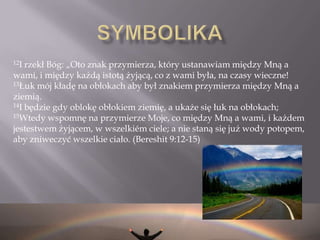
    Przykazanie NOEGO wMEDIACHOn Yud Shevat, a big event was held in Tel Aviv, in honor of the RebbeShlita King Moshiach. Rabbi BinyominEdery, Chabad Tokyo, flew in especially to talk at this momentous occasion.Ambassadors from six different countries came to take part in the gathering and declare in the name of the states they represent, their support of the ShevaMitzvosBneiNoach. They represented; Poland, Latvia, Mexico, Panama, Ghana, and Japan, they were part of a special program organized by Harav Boaz Kali.Harav Kali spoke shortly about the work being done to spread the message of the ShevaMitzvosBneiNoach, followed by a short video on the importance of the ShevaMitzvos. To the amazement of the audience at the Kinus, the embassadors signed a special proclamation which calls for all mankind to follow the ShevaMitzvosBneiNoachand to accept the everlasting kingship of the RebbeShlita as MelechHaMoshiach (King Moshiach).SYMBOLIKA12I rzekł Bóg: „Oto znak przymierza, który ustanawiam między Mną a wami, i między każdą istotą żyjącą, co z wami była, na czasy wieczne!   13Łuk mój kładę na obłokach aby był znakiem przymierza między Mną a ziemią.   14I będzie gdy oblokę obłokiem ziemię, a ukaże się łuk na obłokach;   15Wtedy wspomnę na przymierze Moje, co między Mną a wami, i każdem jestestwem żyjącem, w wszelkiém ciele; a nie staną się już wody potopem, aby zniweczyć wszelkie ciało. (Bereshit 9:12-15)