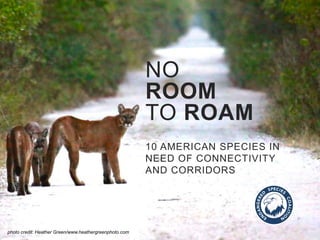
NO
ROOM
TO ROAM
10 AMERICAN SPECIES IN
NEED OF CONNECTIVITY
AND CORRIDORS
photo credit: Heather Green/www.heathergreenphoto.com
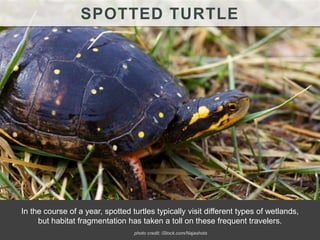
SPOTTED TURTLE
In the course of a year, spotted turtles typically visit different types of wetlands,
but habitat fragmentation has taken a toll on these frequent travelers.
photo credit: iStock.com/Najashots
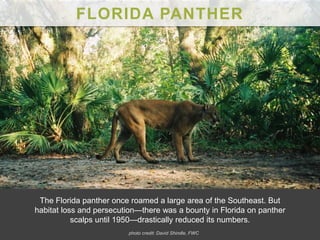
FLORIDA PANTHER
The Florida panther once roamed a large area of the Southeast. But
habitat loss and persecution—there was a bounty in Florida on panther
scalps until 1950—drastically reduced its numbers.
photo credit: David Shindle, FWC
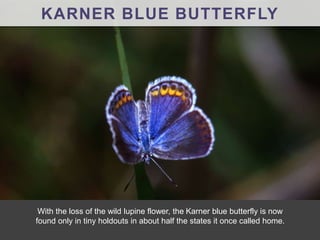
KARNER BLUE BUTTERFLY
With the loss of the wild lupine flower, the Karner blue butterfly is now
found only in tiny holdouts in about half the states it once called home.
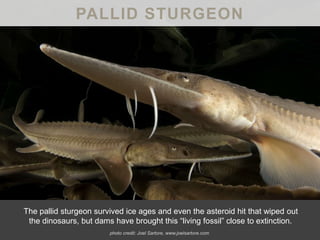
PALLID STURGEON
The pallid sturgeon survived ice ages and even the asteroid hit that wiped out
the dinosaurs, but dams have brought this “living fossil” close to extinction.
photo credit: Joel Sartore, www.joelsartore.com
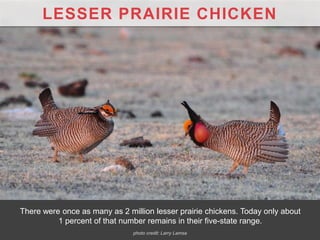
LESSER PRAIRIE CHICKEN
There were once as many as 2 million lesser prairie chickens. Today only about
1 percent of that number remains in their five-state range.
photo credit: Larry Lamsa
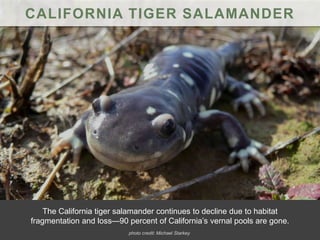
CALIFORNIA TIGER SALAMANDER
The California tiger salamander continues to decline due to habitat
fragmentation and loss—90 percent of California’s vernal pools are gone.
photo credit: Michael Starkey
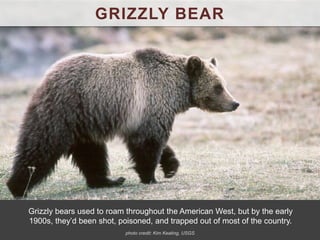
GRIZZLY BEAR
Grizzly bears used to roam throughout the American West, but by the early
1900s, they’d been shot, poisoned, and trapped out of most of the country.
photo credit: Kim Keating, USGS
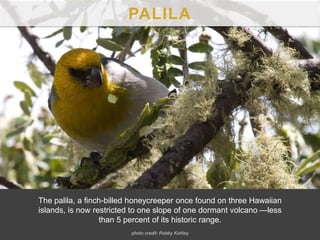
The palila, a finch-billed honeycreeper once found on three Hawaiian
islands, is now restricted to one slope of one dormant volcano —less
than 5 percent of its historic range.
PALILA
photo credit: Robby Kohley
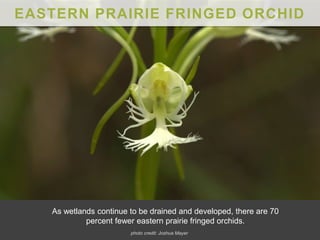
EASTERN PRAIRIE FRINGED ORCHID
As wetlands continue to be drained and developed, there are 70
percent fewer eastern prairie fringed orchids.
photo credit: Joshua Mayer
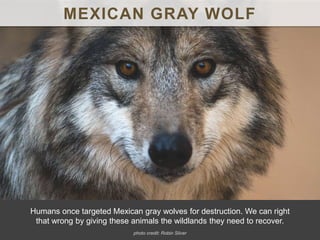
MEXICAN GRAY WOLF
Humans once targeted Mexican gray wolves for destruction. We can right
that wrong by giving these animals the wildlands they need to recover.
photo credit: Robin Silver
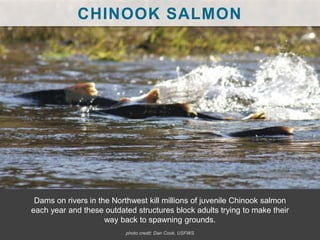
CHINOOK SALMON
Dams on rivers in the Northwest kill millions of juvenile Chinook salmon
each year and these outdated structures block adults trying to make their
way back to spawning grounds.
photo credit: Dan Cook, USFWS
In partnership with:
The
Caterpillar
Lab
Report Developed By:

No Room to Roam

  • 1.
    NO ROOM TO ROAM 10 AMERICANSPECIES IN NEED OF CONNECTIVITY AND CORRIDORS photo credit: Heather Green/www.heathergreenphoto.com
  • 2.
    SPOTTED TURTLE In thecourse of a year, spotted turtles typically visit different types of wetlands, but habitat fragmentation has taken a toll on these frequent travelers. photo credit: iStock.com/Najashots
  • 3.
    FLORIDA PANTHER The Floridapanther once roamed a large area of the Southeast. But habitat loss and persecution—there was a bounty in Florida on panther scalps until 1950—drastically reduced its numbers. photo credit: David Shindle, FWC
  • 4.
    KARNER BLUE BUTTERFLY Withthe loss of the wild lupine flower, the Karner blue butterfly is now found only in tiny holdouts in about half the states it once called home.
  • 5.
    PALLID STURGEON The pallidsturgeon survived ice ages and even the asteroid hit that wiped out the dinosaurs, but dams have brought this “living fossil” close to extinction. photo credit: Joel Sartore, www.joelsartore.com
  • 6.
    LESSER PRAIRIE CHICKEN Therewere once as many as 2 million lesser prairie chickens. Today only about 1 percent of that number remains in their five-state range. photo credit: Larry Lamsa
  • 7.
    CALIFORNIA TIGER SALAMANDER TheCalifornia tiger salamander continues to decline due to habitat fragmentation and loss—90 percent of California’s vernal pools are gone. photo credit: Michael Starkey
  • 8.
    GRIZZLY BEAR Grizzly bearsused to roam throughout the American West, but by the early 1900s, they’d been shot, poisoned, and trapped out of most of the country. photo credit: Kim Keating, USGS
  • 9.
    The palila, afinch-billed honeycreeper once found on three Hawaiian islands, is now restricted to one slope of one dormant volcano —less than 5 percent of its historic range. PALILA photo credit: Robby Kohley
  • 10.
    EASTERN PRAIRIE FRINGEDORCHID As wetlands continue to be drained and developed, there are 70 percent fewer eastern prairie fringed orchids. photo credit: Joshua Mayer
  • 11.
    MEXICAN GRAY WOLF Humansonce targeted Mexican gray wolves for destruction. We can right that wrong by giving these animals the wildlands they need to recover. photo credit: Robin Silver
  • 12.
    CHINOOK SALMON Dams onrivers in the Northwest kill millions of juvenile Chinook salmon each year and these outdated structures block adults trying to make their way back to spawning grounds. photo credit: Dan Cook, USFWS
  • 13.