NLP With Machine Learning
Introduction to NLP and Machine Learning
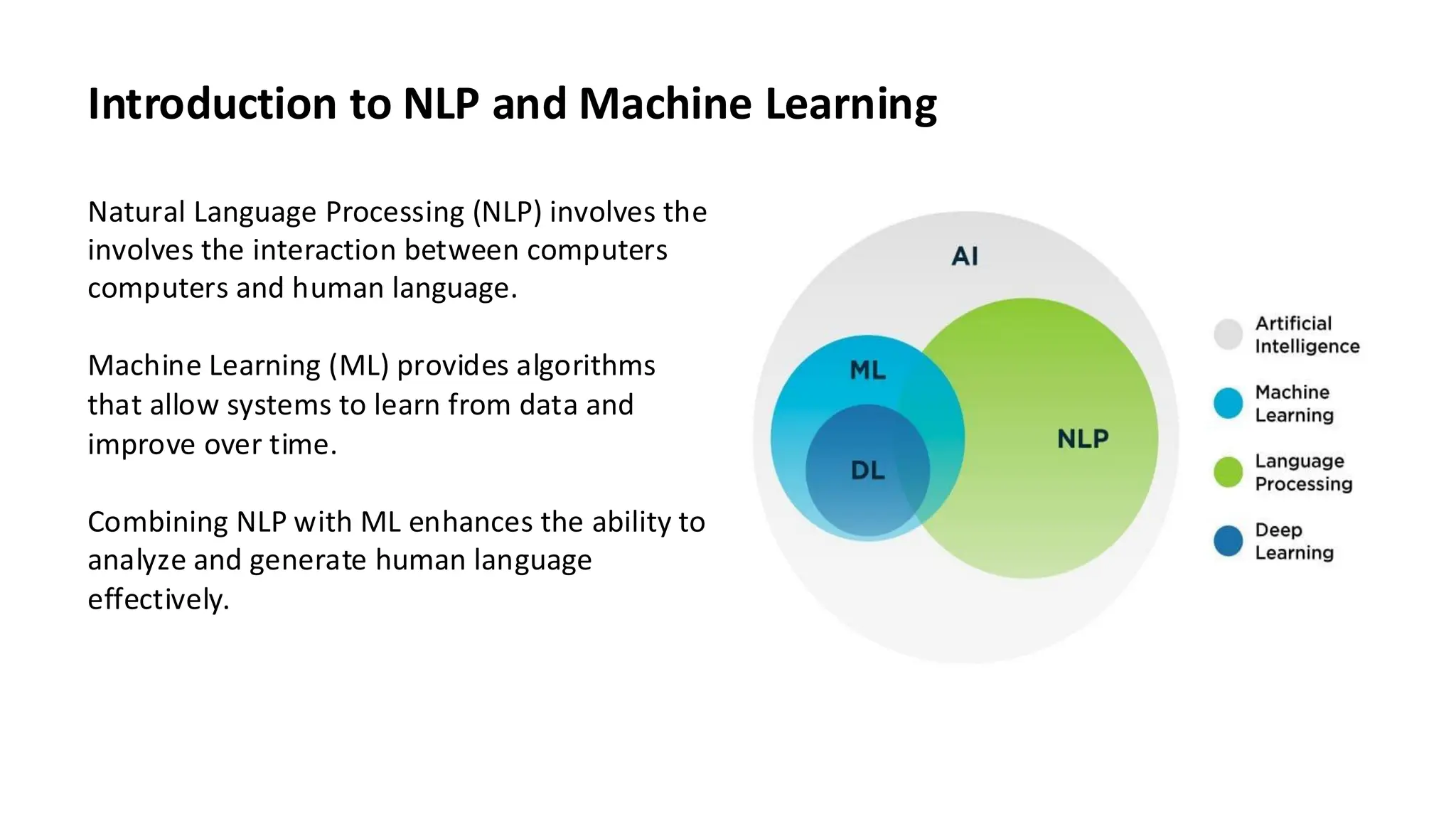
Natural Language Processing (NLP) involves the
involves the interaction between computers
computers and human language.
Machine Learning (ML) provides algorithms
that allow systems to learn from data and
improve over time.
Combining NLP with ML enhances the ability to
analyze and generate human language
effectively.
Importance of NLP
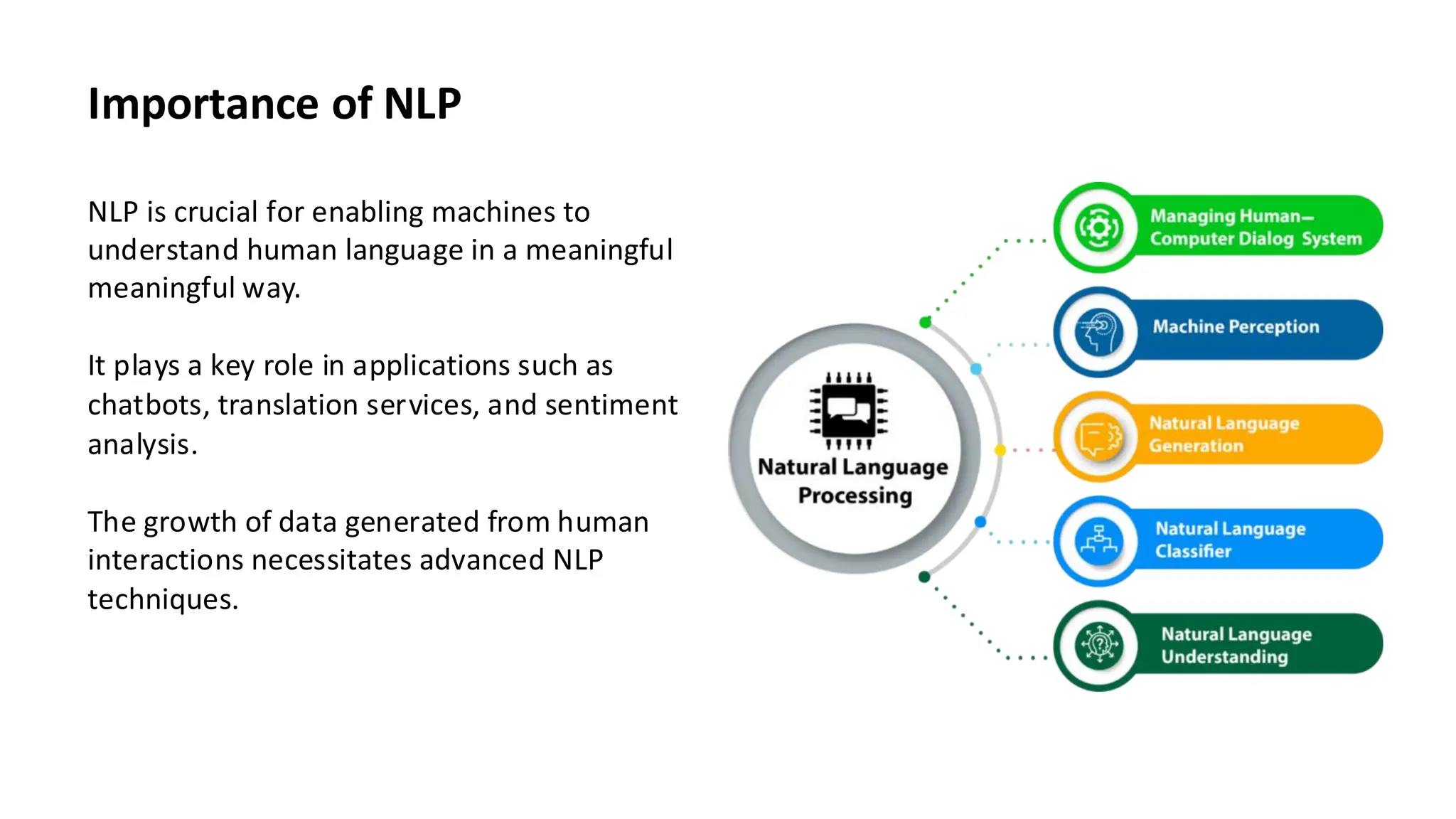
NLP is crucial for enabling machines to
understand human language in a meaningful
meaningful way.
It plays a key role in applications such as
chatbots, translation services, and sentiment
analysis.
The growth of data generated from human
interactions necessitates advanced NLP
techniques.
Key Concepts in NLP
Tokenization is the process of breaking text into individual words or phrases known
phrases known as tokens.
Stemming and lemmatization are techniques used to reduce words to their base or
root form.
Named Entity Recognition (NER) helps identify and classify key elements in text into
predefined categories.
Machine Learning Algorithms for NLP
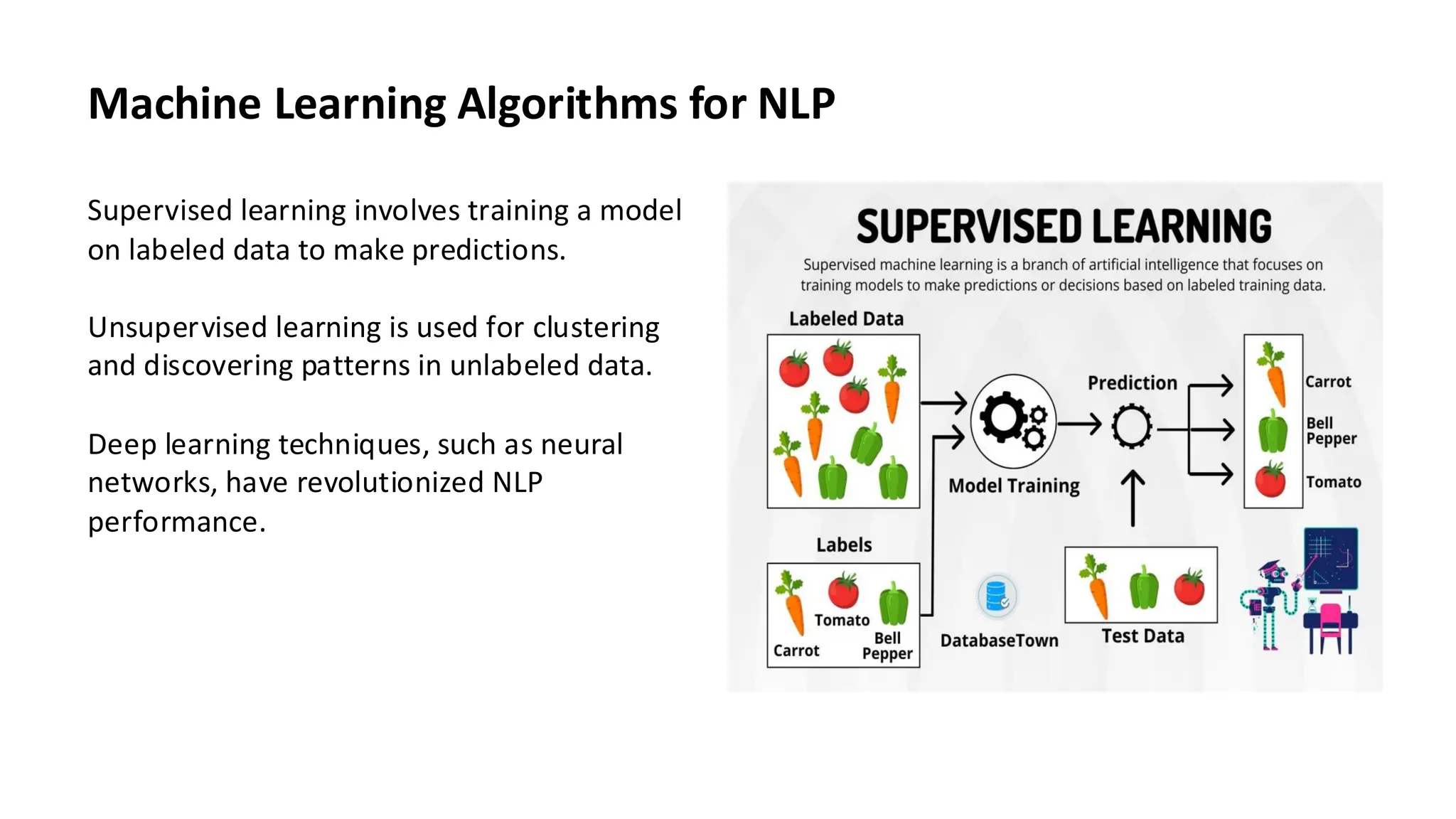
Supervised learning involves training a model
on labeled data to make predictions.
Unsupervised learning is used for clustering
and discovering patterns in unlabeled data.
Deep learning techniques, such as neural
networks, have revolutionized NLP
performance.
Common ML Models in NLP
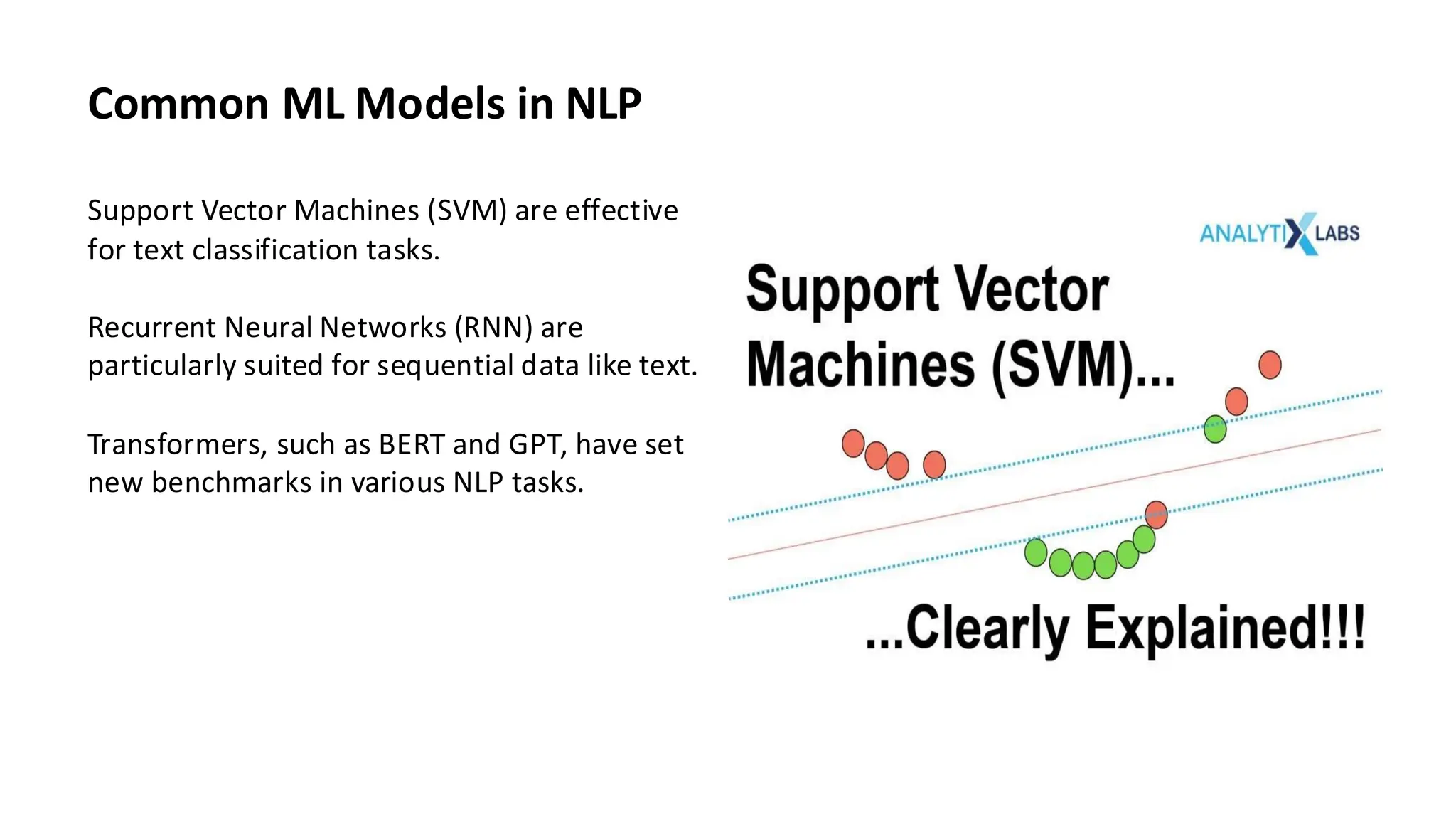
Support Vector Machines (SVM) are effective
for text classification tasks.
Recurrent Neural Networks (RNN) are
particularly suited for sequential data like text.
Transformers, such as BERT and GPT, have set
new benchmarks in various NLP tasks.
Text Classification
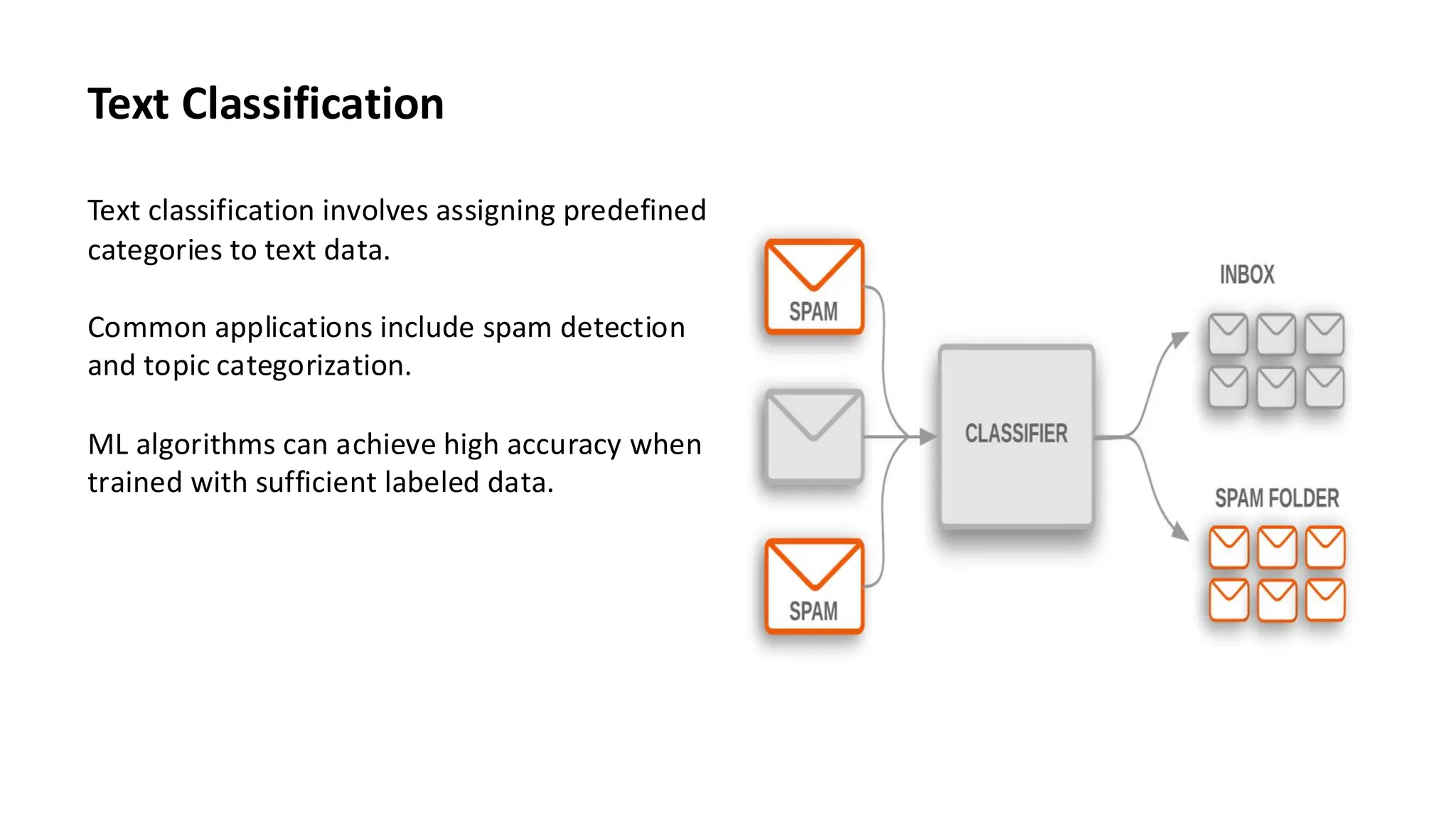
Text classification involves assigning predefined
categories to text data.
Common applications include spam detection
and topic categorization.
ML algorithms can achieve high accuracy when
trained with sufficient labeled data.
Sentiment Analysis
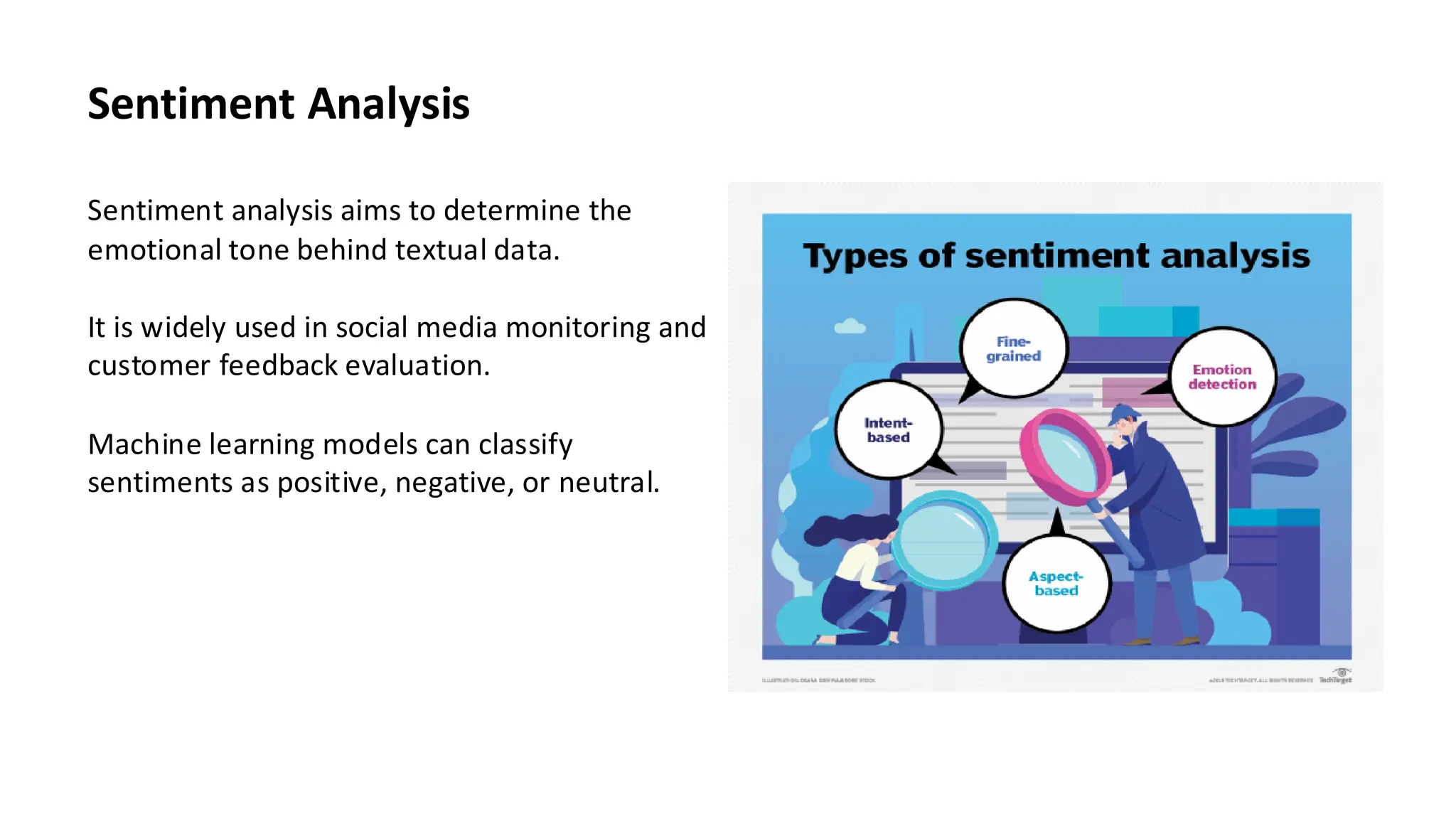
Sentiment analysis aims to determine the
emotional tone behind textual data.
It is widely used in social media monitoring and
customer feedback evaluation.
Machine learning models can classify
sentiments as positive, negative, or neutral.
Machine Translation
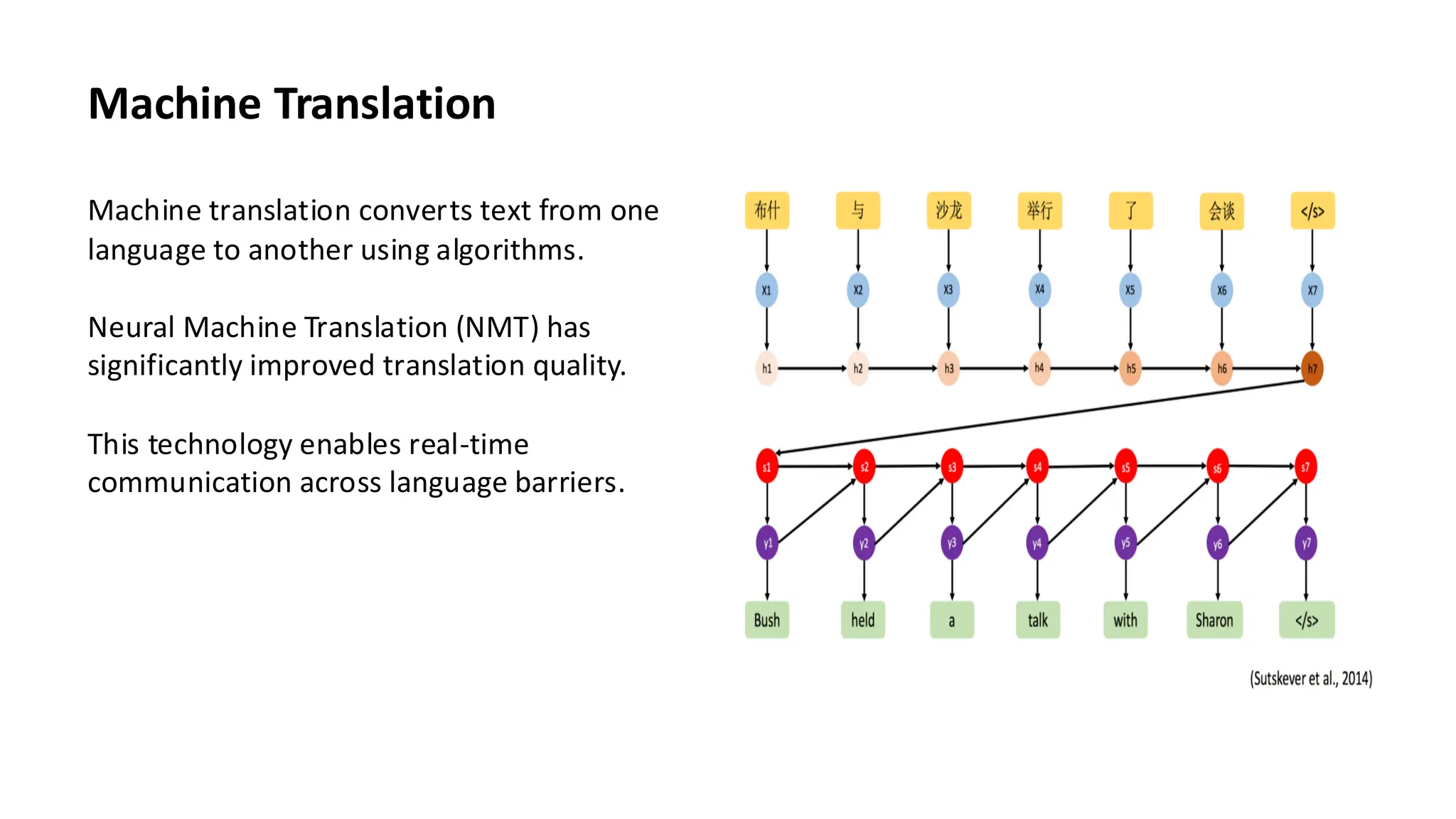
Machine translation converts text from one
language to another using algorithms.
Neural Machine Translation (NMT) has
significantly improved translation quality.
This technology enables real-time
communication across language barriers.
Challenges in NLP
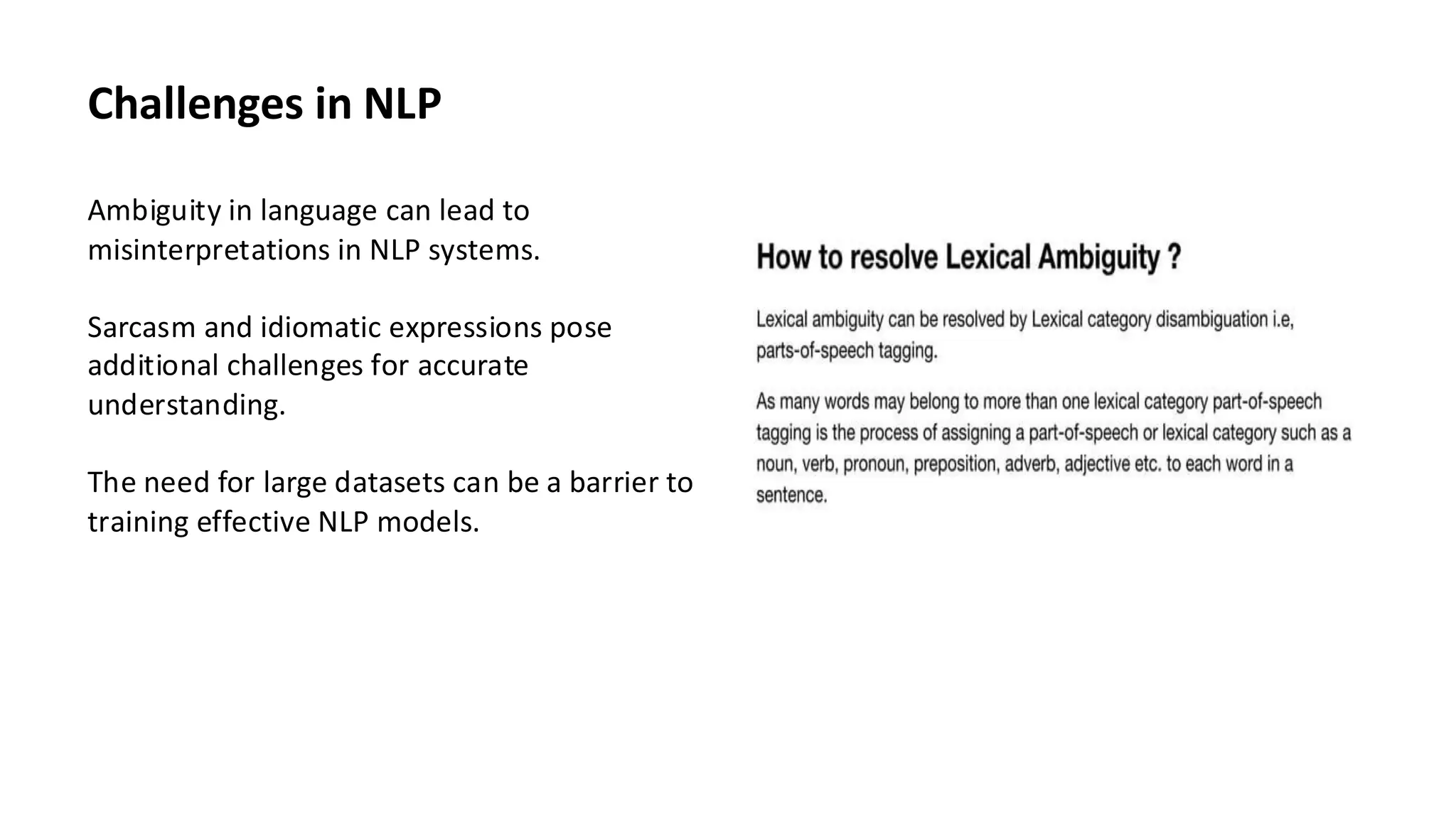
Ambiguity in language can lead to
misinterpretations in NLP systems.
Sarcasm and idiomatic expressions pose
additional challenges for accurate
understanding.
The need for large datasets can be a barrier to
training effective NLP models.
Future Trends in NLP
Advancements in unsupervised and semi-supervised learning are expected to
improve NLP.
Continued integration of NLP with other AI domains, like computer vision, will
enhance applications.
Ethical considerations and bias reduction will be a priority in developing NLP
technologies.
Applications of NLP with ML
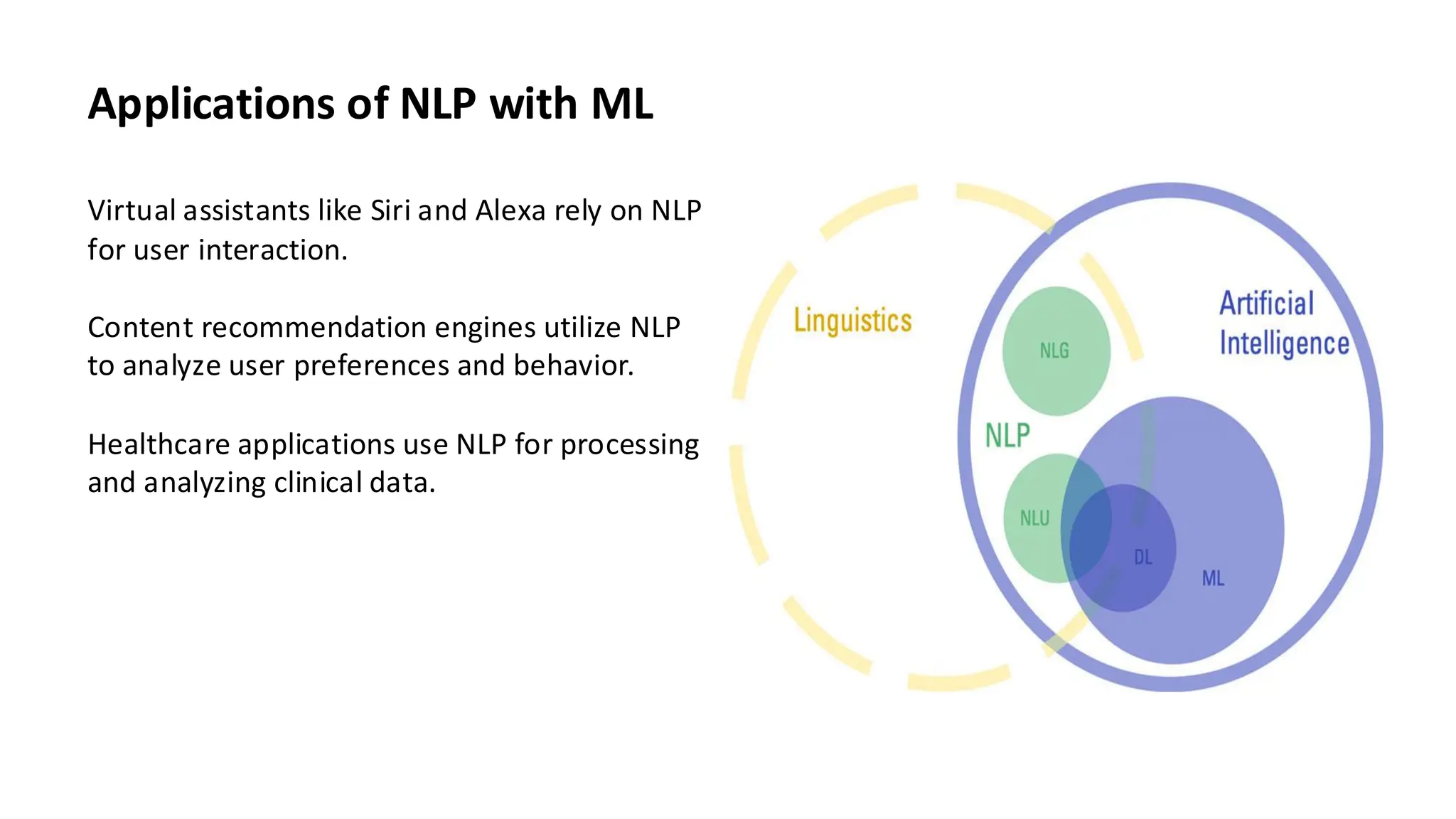
Virtual assistants like Siri and Alexa rely on NLP
for user interaction.
Content recommendation engines utilize NLP
to analyze user preferences and behavior.
Healthcare applications use NLP for processing
and analyzing clinical data.
Conclusion
The combination of NLP and machine learning is transforming how we interact with
technology.
Ongoing research and development promise even greater capabilities in the future.
Understanding and addressing the challenges will be key to advancing the field of NLP.

NLP With Machine Learning.pdf which gives

  • 1.
  • 2.
    Introduction to NLPand Machine Learning Natural Language Processing (NLP) involves the involves the interaction between computers computers and human language. Machine Learning (ML) provides algorithms that allow systems to learn from data and improve over time. Combining NLP with ML enhances the ability to analyze and generate human language effectively.
  • 3.
    Importance of NLP NLPis crucial for enabling machines to understand human language in a meaningful meaningful way. It plays a key role in applications such as chatbots, translation services, and sentiment analysis. The growth of data generated from human interactions necessitates advanced NLP techniques.
  • 4.
    Key Concepts inNLP Tokenization is the process of breaking text into individual words or phrases known phrases known as tokens. Stemming and lemmatization are techniques used to reduce words to their base or root form. Named Entity Recognition (NER) helps identify and classify key elements in text into predefined categories.
  • 5.
    Machine Learning Algorithmsfor NLP Supervised learning involves training a model on labeled data to make predictions. Unsupervised learning is used for clustering and discovering patterns in unlabeled data. Deep learning techniques, such as neural networks, have revolutionized NLP performance.
  • 6.
    Common ML Modelsin NLP Support Vector Machines (SVM) are effective for text classification tasks. Recurrent Neural Networks (RNN) are particularly suited for sequential data like text. Transformers, such as BERT and GPT, have set new benchmarks in various NLP tasks.
  • 7.
    Text Classification Text classificationinvolves assigning predefined categories to text data. Common applications include spam detection and topic categorization. ML algorithms can achieve high accuracy when trained with sufficient labeled data.
  • 8.
    Sentiment Analysis Sentiment analysisaims to determine the emotional tone behind textual data. It is widely used in social media monitoring and customer feedback evaluation. Machine learning models can classify sentiments as positive, negative, or neutral.
  • 9.
    Machine Translation Machine translationconverts text from one language to another using algorithms. Neural Machine Translation (NMT) has significantly improved translation quality. This technology enables real-time communication across language barriers.
  • 10.
    Challenges in NLP Ambiguityin language can lead to misinterpretations in NLP systems. Sarcasm and idiomatic expressions pose additional challenges for accurate understanding. The need for large datasets can be a barrier to training effective NLP models.
  • 11.
    Future Trends inNLP Advancements in unsupervised and semi-supervised learning are expected to improve NLP. Continued integration of NLP with other AI domains, like computer vision, will enhance applications. Ethical considerations and bias reduction will be a priority in developing NLP technologies.
  • 12.
    Applications of NLPwith ML Virtual assistants like Siri and Alexa rely on NLP for user interaction. Content recommendation engines utilize NLP to analyze user preferences and behavior. Healthcare applications use NLP for processing and analyzing clinical data.
  • 13.
    Conclusion The combination ofNLP and machine learning is transforming how we interact with technology. Ongoing research and development promise even greater capabilities in the future. Understanding and addressing the challenges will be key to advancing the field of NLP.