NISM VA- Day 1
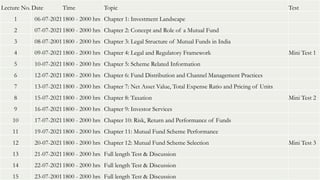
Lecture No. Date Time Topic Test
1 06-07-20211800 - 2000 hrs Chapter 1: Investment Landscape
2 07-07-20211800 - 2000 hrs Chapter 2: Concept and Role of a Mutual Fund
3 08-07-20011800 - 2000 hrs Chapter 3: Legal Structure of Mutual Funds in India
4 09-07-20211800 - 2000 hrs Chapter 4: Legal and Regulatory Framework Mini Test 1
5 10-07-20211800 - 2000 hrs Chapter 5: Scheme Related Information
6 12-07-20211800 - 2000 hrs Chapter 6: Fund Distribution and Channel Management Practices
7 13-07-20211800 - 2000 hrs Chapter 7: Net Asset Value, Total Expense Ratio and Pricing of Units
8 15-07-20211800 - 2000 hrs Chapter 8: Taxation Mini Test 2
9 16-07-20211800 - 2000 hrs Chapter 9: Investor Services
10 17-07-20211800 - 2000 hrs Chapter 10: Risk, Return and Performance of Funds
11 19-07-20211800 - 2000 hrs Chapter 11: Mutual Fund Scheme Performance
12 20-07-20211800 - 2000 hrs Chapter 12: Mutual Fund Scheme Selection Mini Test 3
13 21-07-20211800 - 2000 hrs Full length Test & Discussion
14 22-07-20211800 - 2000 hrs Full length Test & Discussion
15 23-07-20011800 - 2000 hrs Full length Test & Discussion
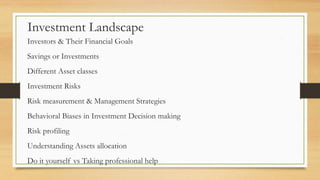
Investment Landscape
Investors & Their Financial Goals
Savings or Investments
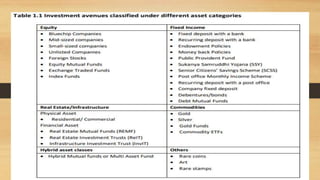
Different Asset classes
Investment Risks
Risk measurement & Management Strategies
Behavioral Biases in Investment Decision making
Risk profiling
Understanding Assets allocation
Do it yourself vs Taking professional help
Investors & their Financial Goals
“Please suggest some good investments.”
“Which mutual fund schemes should one buy this year?”
“Which is the best mutual fund scheme?”
“Which is the best investment?”
“Should I invest in stocks or real estate?”
“What is your view of the stock market?”
“Are my investments proper? Or should I make some changes?”
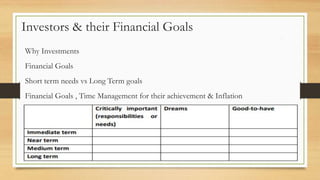
Investors & their Financial Goals
Why Investments
Financial Goals
Short term needs vs Long Term goals
Financial Goals , Time Management for their achievement & Inflation
Savings or Investments
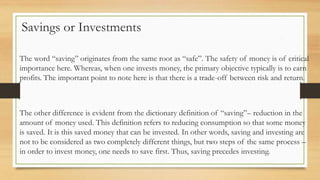
The word “saving” originates from the same root as “safe”. The safety of money is of critical
importance here. Whereas, when one invests money, the primary objective typically is to earn
profits. The important point to note here is that there is a trade-off between risk and return.
The other difference is evident from the dictionary definition of “saving”– reduction in the
amount of money used. This definition refers to reducing consumption so that some money
is saved. It is this saved money that can be invested. In other words, saving and investing are
not to be considered as two completely different things, but two steps of the same process –
in order to invest money, one needs to save first. Thus, saving precedes investing.
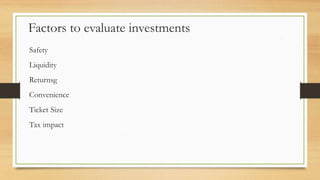
Factors to evaluate investments
Safety
Liquidity
Returnsg
Convenience
Ticket Size
Tax impact
Different Asset Classes
Real Estate
Commodities
Fixed Income
Equity
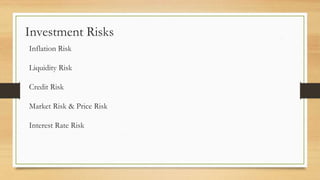
Investment Risks
Inflation Risk
Liquidity Risk
Credit Risk
Market Risk & Price Risk
Interest Rate Risk
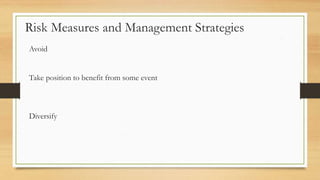
Risk Measures and Management Strategies
Avoid
Take position to benefit from some event
Diversify
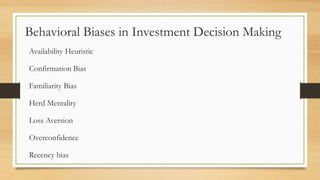
Behavioral Biases in Investment Decision Making
Availability Heuristic
Confirmation Bias
Familiarity Bias
Herd Mentality
Loss Aversion
Overconfidence
Recency bias
Risk Profiling
The need to take risks
The ability to take risks
The willingness to take risks
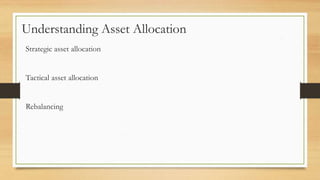
Understanding Asset Allocation
Strategic asset allocation
Tactical asset allocation
Rebalancing
Do-it-yourself versus Taking Professional Help
Can one do the job oneself?
Does one want to do it?
Can one afford to outsource?
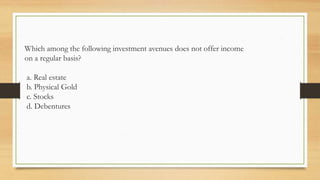
Which among the following investment avenues does not offer income
on a regular basis?
a. Real estate
b. Physical Gold
c. Stocks
d. Debentures
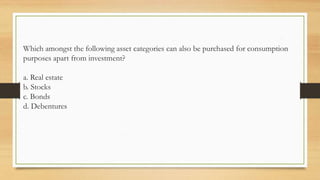
Which amongst the following asset categories can also be purchased for consumption
purposes apart from investment?
a. Real estate
b. Stocks
c. Bonds
d. Debentures
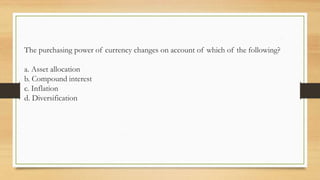
The purchasing power of currency changes on account of which of the following?
a. Asset allocation
b. Compound interest
c. Inflation
d. Diversification
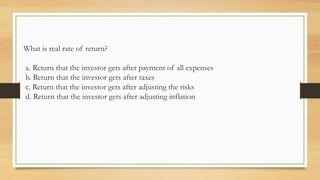
What is real rate of return?
a. Return that the investor gets after payment of all expenses
b. Return that the investor gets after taxes
c. Return that the investor gets after adjusting the risks
d. Return that the investor gets after adjusting inflation
When interest rate in the economy increases, the price of existing bonds ____.
a. Increases
b. Fluctuate
c. Decreases

NISM DAY 1. .pptx

  • 1.
  • 2.
    Lecture No. DateTime Topic Test 1 06-07-20211800 - 2000 hrs Chapter 1: Investment Landscape 2 07-07-20211800 - 2000 hrs Chapter 2: Concept and Role of a Mutual Fund 3 08-07-20011800 - 2000 hrs Chapter 3: Legal Structure of Mutual Funds in India 4 09-07-20211800 - 2000 hrs Chapter 4: Legal and Regulatory Framework Mini Test 1 5 10-07-20211800 - 2000 hrs Chapter 5: Scheme Related Information 6 12-07-20211800 - 2000 hrs Chapter 6: Fund Distribution and Channel Management Practices 7 13-07-20211800 - 2000 hrs Chapter 7: Net Asset Value, Total Expense Ratio and Pricing of Units 8 15-07-20211800 - 2000 hrs Chapter 8: Taxation Mini Test 2 9 16-07-20211800 - 2000 hrs Chapter 9: Investor Services 10 17-07-20211800 - 2000 hrs Chapter 10: Risk, Return and Performance of Funds 11 19-07-20211800 - 2000 hrs Chapter 11: Mutual Fund Scheme Performance 12 20-07-20211800 - 2000 hrs Chapter 12: Mutual Fund Scheme Selection Mini Test 3 13 21-07-20211800 - 2000 hrs Full length Test & Discussion 14 22-07-20211800 - 2000 hrs Full length Test & Discussion 15 23-07-20011800 - 2000 hrs Full length Test & Discussion
  • 3.
    Investment Landscape Investors &Their Financial Goals Savings or Investments Different Asset classes Investment Risks Risk measurement & Management Strategies Behavioral Biases in Investment Decision making Risk profiling Understanding Assets allocation Do it yourself vs Taking professional help
  • 4.
    Investors & theirFinancial Goals “Please suggest some good investments.” “Which mutual fund schemes should one buy this year?” “Which is the best mutual fund scheme?” “Which is the best investment?” “Should I invest in stocks or real estate?” “What is your view of the stock market?” “Are my investments proper? Or should I make some changes?”
  • 5.
    Investors & theirFinancial Goals Why Investments Financial Goals Short term needs vs Long Term goals Financial Goals , Time Management for their achievement & Inflation
  • 6.
    Savings or Investments Theword “saving” originates from the same root as “safe”. The safety of money is of critical importance here. Whereas, when one invests money, the primary objective typically is to earn profits. The important point to note here is that there is a trade-off between risk and return. The other difference is evident from the dictionary definition of “saving”– reduction in the amount of money used. This definition refers to reducing consumption so that some money is saved. It is this saved money that can be invested. In other words, saving and investing are not to be considered as two completely different things, but two steps of the same process – in order to invest money, one needs to save first. Thus, saving precedes investing.
  • 7.
    Factors to evaluateinvestments Safety Liquidity Returnsg Convenience Ticket Size Tax impact
  • 8.
    Different Asset Classes RealEstate Commodities Fixed Income Equity
  • 10.
    Investment Risks Inflation Risk LiquidityRisk Credit Risk Market Risk & Price Risk Interest Rate Risk
  • 11.
    Risk Measures andManagement Strategies Avoid Take position to benefit from some event Diversify
  • 12.
    Behavioral Biases inInvestment Decision Making Availability Heuristic Confirmation Bias Familiarity Bias Herd Mentality Loss Aversion Overconfidence Recency bias
  • 13.
    Risk Profiling The needto take risks The ability to take risks The willingness to take risks
  • 14.
    Understanding Asset Allocation Strategicasset allocation Tactical asset allocation Rebalancing
  • 15.
    Do-it-yourself versus TakingProfessional Help Can one do the job oneself? Does one want to do it? Can one afford to outsource?
  • 16.
    Which among thefollowing investment avenues does not offer income on a regular basis? a. Real estate b. Physical Gold c. Stocks d. Debentures
  • 17.
    Which amongst thefollowing asset categories can also be purchased for consumption purposes apart from investment? a. Real estate b. Stocks c. Bonds d. Debentures
  • 18.
    The purchasing powerof currency changes on account of which of the following? a. Asset allocation b. Compound interest c. Inflation d. Diversification
  • 19.
    What is realrate of return? a. Return that the investor gets after payment of all expenses b. Return that the investor gets after taxes c. Return that the investor gets after adjusting the risks d. Return that the investor gets after adjusting inflation
  • 20.
    When interest ratein the economy increases, the price of existing bonds ____. a. Increases b. Fluctuate c. Decreases

Editor's Notes

  • #19 The purchasing power of currency changes on account of which of the following? a. Asset allocation b. Compound interest c. Inflation d. Diversification