Nicolae Grigorescu Romanian Painter     (1838 – 1907) Music: George Enescu – Romanian Rapsody PPS by Florin Popescu
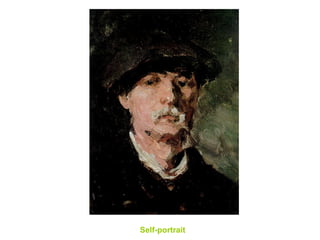
Self-portrait
Nicolae Grigorescu  ( May 15 ,  1838 —July 2 1 , 1907) was one of the founders of modern Romania painting. He was born in  Pitaru village  , Romania. In 1843 the family moved to Buc arest . At a young age (between 1848 and 1850), he became an apprentice at the workshop of the painter  and created icons for the church and the monastery .. Between 1856 and 1857, he painted the church of the Zamfira monastery, Prahova county, and in 1861 the church of the Agapia monastery .   H e received a scholarship to study in France. In the autumn of 1861, young Grigorescu left for Paris, where he studied at the École des Beaux-Arts. He also attended the workshop of , where he had as a colleague Pierre-Auguste Renoir. Knowing his weaknesses, he concentrated drawing and composition. However, he soon left this workshop and, attracted by the artistic concepts of the Barbizon school, he left Paris for that village, where he became the associate of artists such as Jean-François Millet, Jean-Baptiste Camille Corot, Gustave Courbet and Théodore Rousseau. Under the influence of the movement, Grigorescu looked for new means of expression and followed the trend of  en plein air  painting, which was also important in Impressionism. As part of the Universal Exposition of Paris (1867), he contributed seven works. Then he exhibited at the Paris Salon of 1868 the painting  Tânără ţigancă  ( Gypsy girl ). He returned to Romania a few times and starting in 1870 he participated in the exhibits of living artists and those organized by the Society of the Friends of the Belle-Arts. Between 1873 and 1874 he traveled to Italy, Greece and Vienna. In 1877 he was called to accompany the Romanian Army as a "frontline painter" in the Romanian War of Independence. In 1889 his work was featured in the Universal Exhibition in Paris and at the Romanian Atheneum.  From 1879 to 1890 he worked in France, especially in Vitré, Bretagne, and in his workshop in Paris. In 1890 he settled in Câmpina and started depicting pastoral themes, especially portraits of peasant girls, pictures of ox carts on dusty country roads and other landscapes. He was named honorary member of the Romanian Academy in 1899.
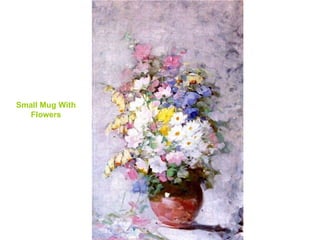
S mall  M ug  With Flowers
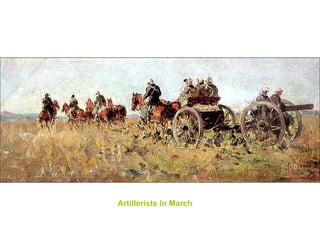
Artillerist s In March
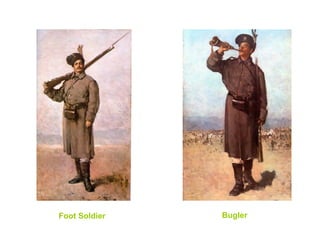
Foot Soldier   Bugler
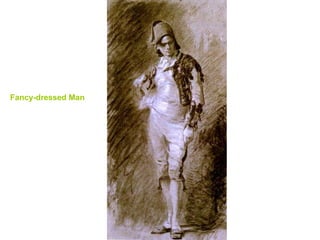
F an c y-dress ed Man
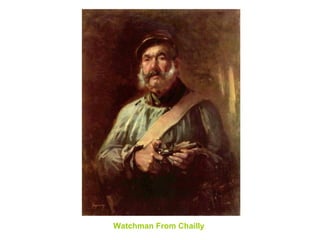
Watchman From Chailly
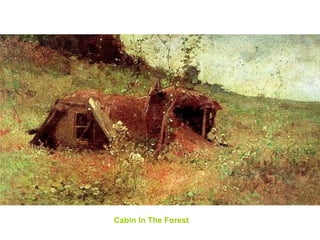
C abin  In The Forest
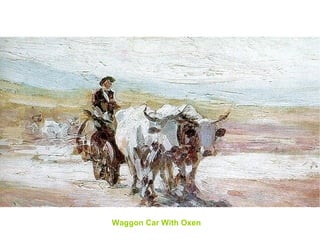
W aggon  C ar  With Oxen
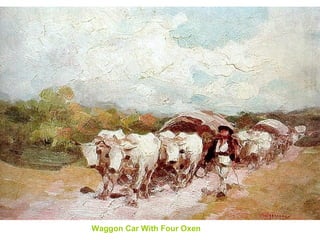
W aggon  C ar  With Four Oxen
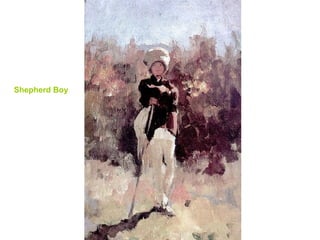
S hepherd  B oy
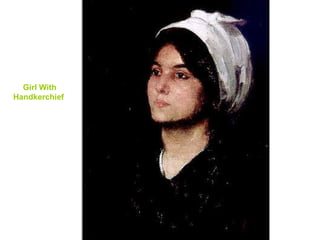
Girl With H andkerchief
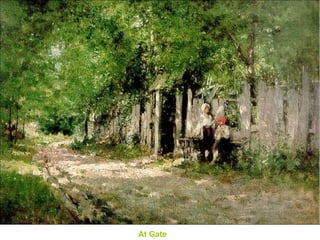
At Gate
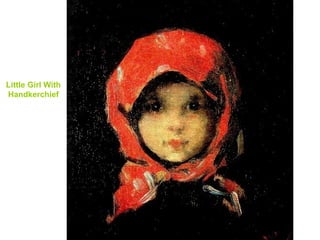
Little Girl With H andkerchief
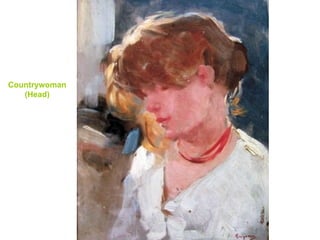
Countrywoman (Head)
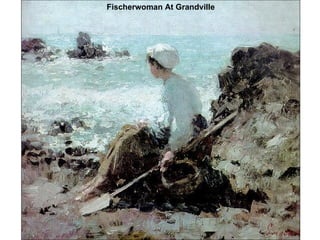
Fischerwoman At Grandville
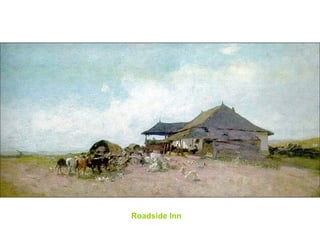
R oadside  I nn
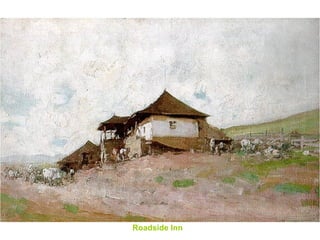
R oadside  I nn
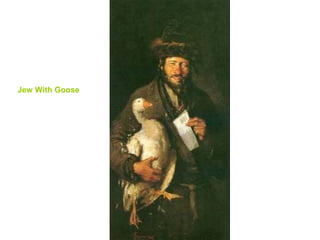
Jew With Goose
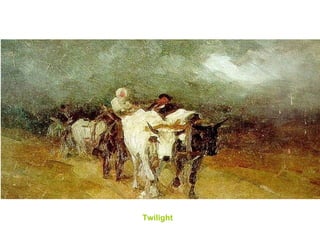
T wilight
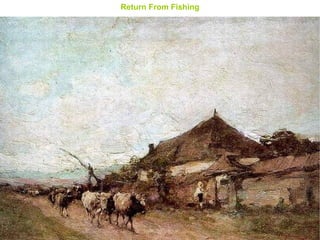
Return From Fishing
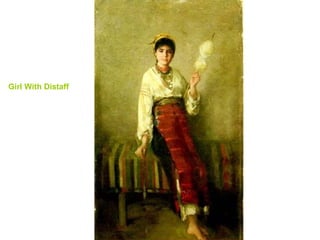
Girl With D istaff
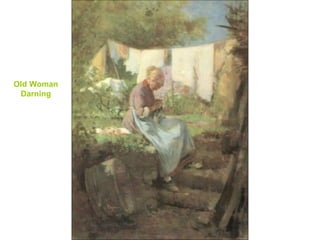
Old Woman Darning
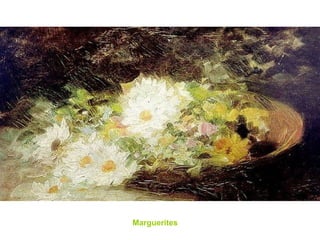
M arguerite s
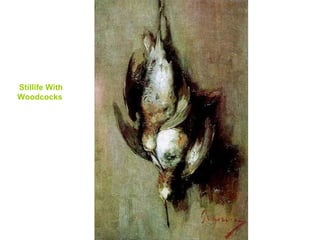
S tillife  With W oodcock s
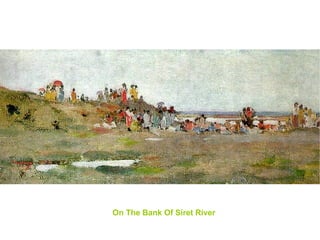
On The B ank  O f  Siret   R iver
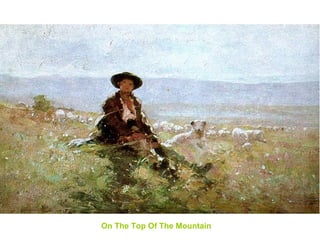
On The Top Of The Mountain
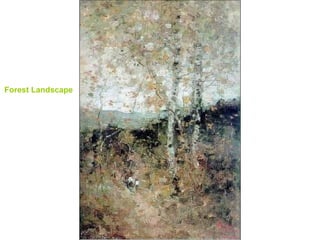
Forest L andscape
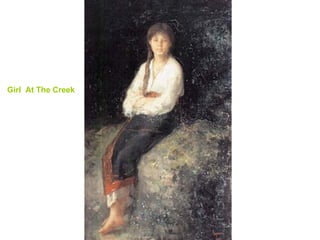
Girl  At The Creek
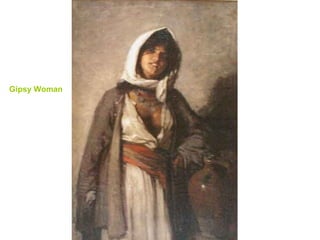
Gipsy Woman
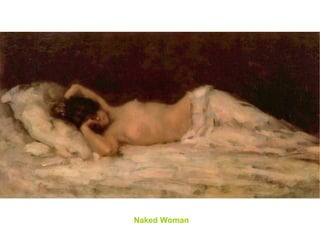
Naked Woman
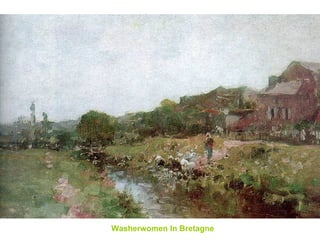
Washerwom e n  In Bretagne
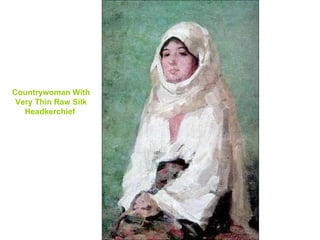
Countrywoman With   V ery  T hin  R aw  S ilk  H eadkerchief
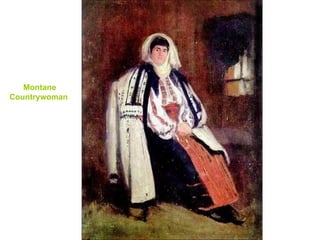
M ontane  Countrywoman
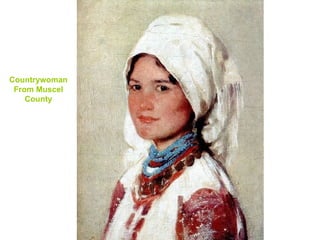
Countrywoman From Muscel County
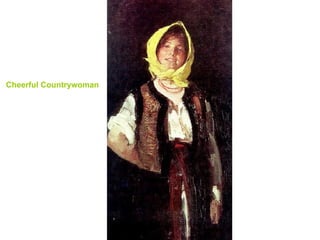
Cheerful Countrywoman

Nicolae Grigorescu

  • 1.
    Nicolae Grigorescu RomanianPainter (1838 – 1907) Music: George Enescu – Romanian Rapsody PPS by Florin Popescu
  • 2.
  • 3.
    Nicolae Grigorescu ( May 15 , 1838 —July 2 1 , 1907) was one of the founders of modern Romania painting. He was born in Pitaru village , Romania. In 1843 the family moved to Buc arest . At a young age (between 1848 and 1850), he became an apprentice at the workshop of the painter and created icons for the church and the monastery .. Between 1856 and 1857, he painted the church of the Zamfira monastery, Prahova county, and in 1861 the church of the Agapia monastery . H e received a scholarship to study in France. In the autumn of 1861, young Grigorescu left for Paris, where he studied at the École des Beaux-Arts. He also attended the workshop of , where he had as a colleague Pierre-Auguste Renoir. Knowing his weaknesses, he concentrated drawing and composition. However, he soon left this workshop and, attracted by the artistic concepts of the Barbizon school, he left Paris for that village, where he became the associate of artists such as Jean-François Millet, Jean-Baptiste Camille Corot, Gustave Courbet and Théodore Rousseau. Under the influence of the movement, Grigorescu looked for new means of expression and followed the trend of en plein air painting, which was also important in Impressionism. As part of the Universal Exposition of Paris (1867), he contributed seven works. Then he exhibited at the Paris Salon of 1868 the painting Tânără ţigancă ( Gypsy girl ). He returned to Romania a few times and starting in 1870 he participated in the exhibits of living artists and those organized by the Society of the Friends of the Belle-Arts. Between 1873 and 1874 he traveled to Italy, Greece and Vienna. In 1877 he was called to accompany the Romanian Army as a "frontline painter" in the Romanian War of Independence. In 1889 his work was featured in the Universal Exhibition in Paris and at the Romanian Atheneum. From 1879 to 1890 he worked in France, especially in Vitré, Bretagne, and in his workshop in Paris. In 1890 he settled in Câmpina and started depicting pastoral themes, especially portraits of peasant girls, pictures of ox carts on dusty country roads and other landscapes. He was named honorary member of the Romanian Academy in 1899.
  • 4.
    S mall M ug With Flowers
  • 5.
  • 6.
  • 7.
    F an cy-dress ed Man
  • 8.
  • 9.
    C abin In The Forest
  • 10.
    W aggon C ar With Oxen
  • 11.
    W aggon C ar With Four Oxen
  • 12.
  • 13.
    Girl With Handkerchief
  • 14.
  • 15.
    Little Girl WithH andkerchief
  • 16.
  • 17.
  • 18.
  • 19.
  • 20.
  • 21.
  • 22.
  • 23.
  • 24.
  • 25.
  • 26.
    S tillife With W oodcock s
  • 27.
    On The Bank O f Siret R iver
  • 28.
    On The TopOf The Mountain
  • 29.
  • 30.
    Girl AtThe Creek
  • 31.
  • 32.
  • 33.
    Washerwom e n In Bretagne
  • 34.
    Countrywoman With V ery T hin R aw S ilk H eadkerchief
  • 35.
    M ontane Countrywoman
  • 36.
  • 37.