Rainwater Management  for  Increased Agricultural production Centre of African Studies – Porto- Portugal  2 – 3 October 2008 CONFERENCE ON WATER IN AFRICA SESSION ON WATER AND AGRICULTURE Nico van Leeuwen
Outline  Food for all  ? Key role of water Smallholder adapted technologies Where does the rainwater go ? Options for management of rainwater  Conclusions
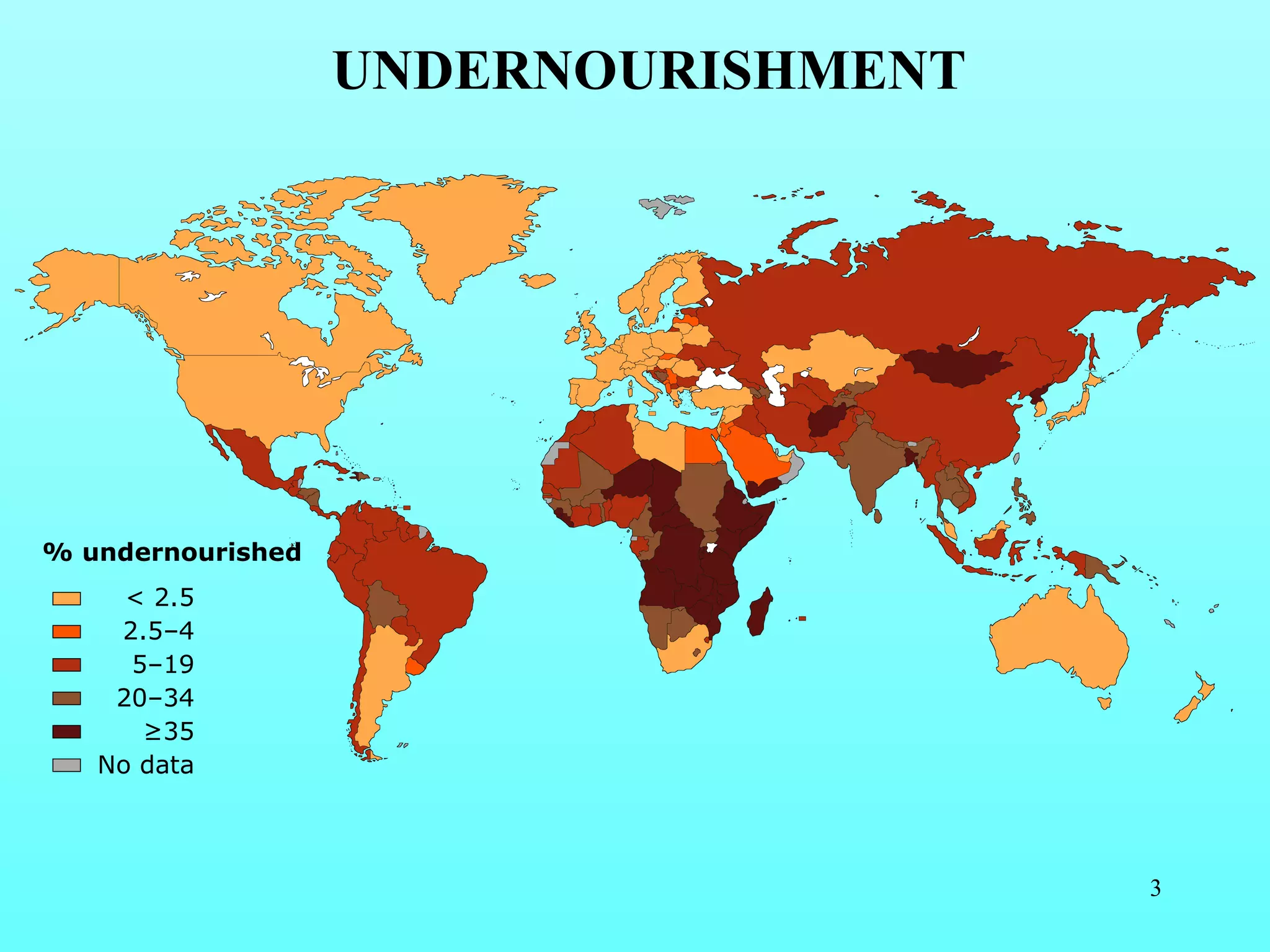
< 2.5 2.5–4 5–19 20–34 ≥ 35 No data % undernourished UNDERNOURISHMENT
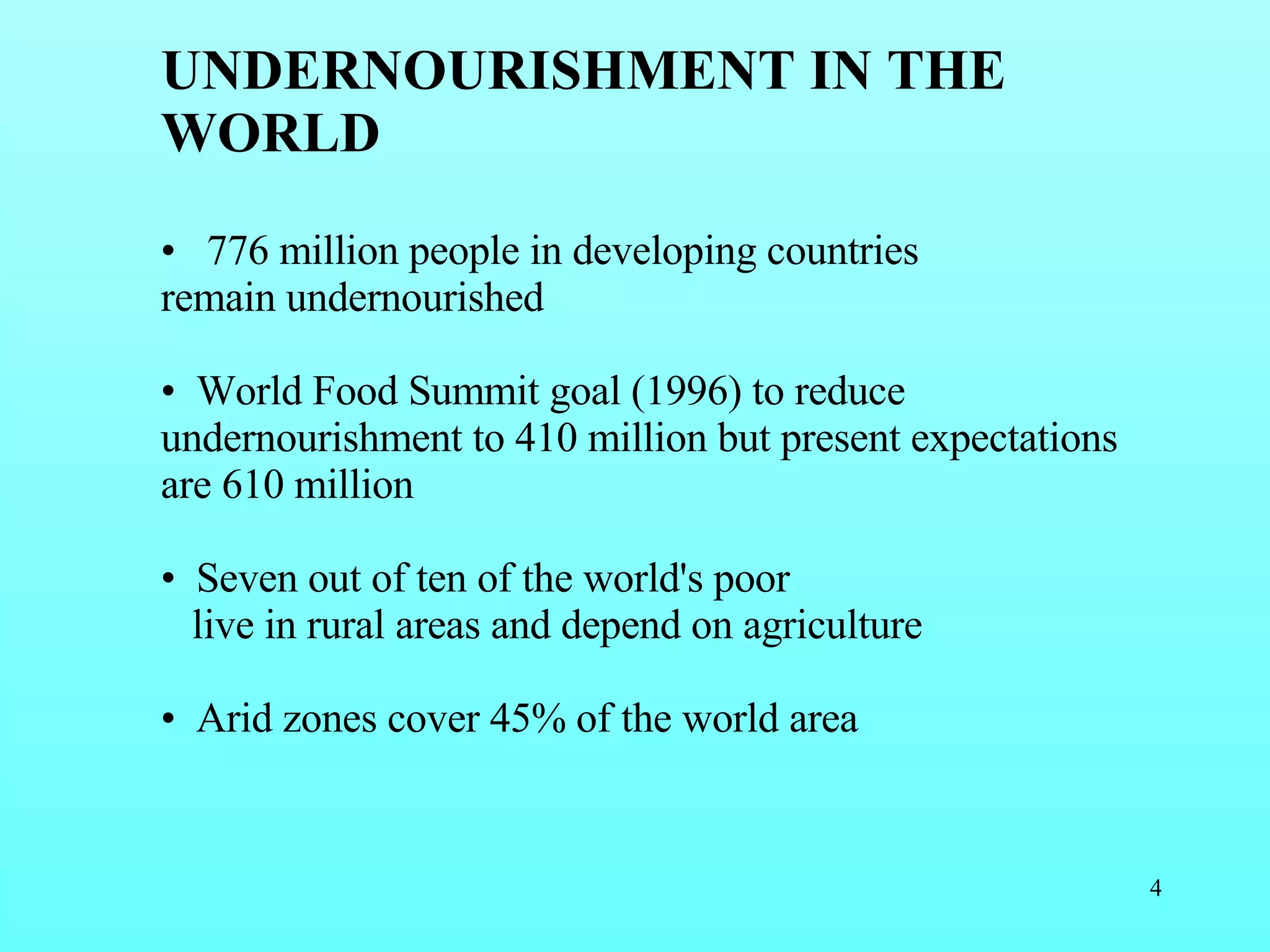
  UNDERNOURISHMENT IN THE WORLD 776 million people in developing countries remain undernourished  World Food Summit goal (1996) to reduce undernourishment to 410 million but present expectations are 610 million Seven out of ten of the world's poor live in rural areas  and depend on agriculture Arid zones cover 45% of the world area
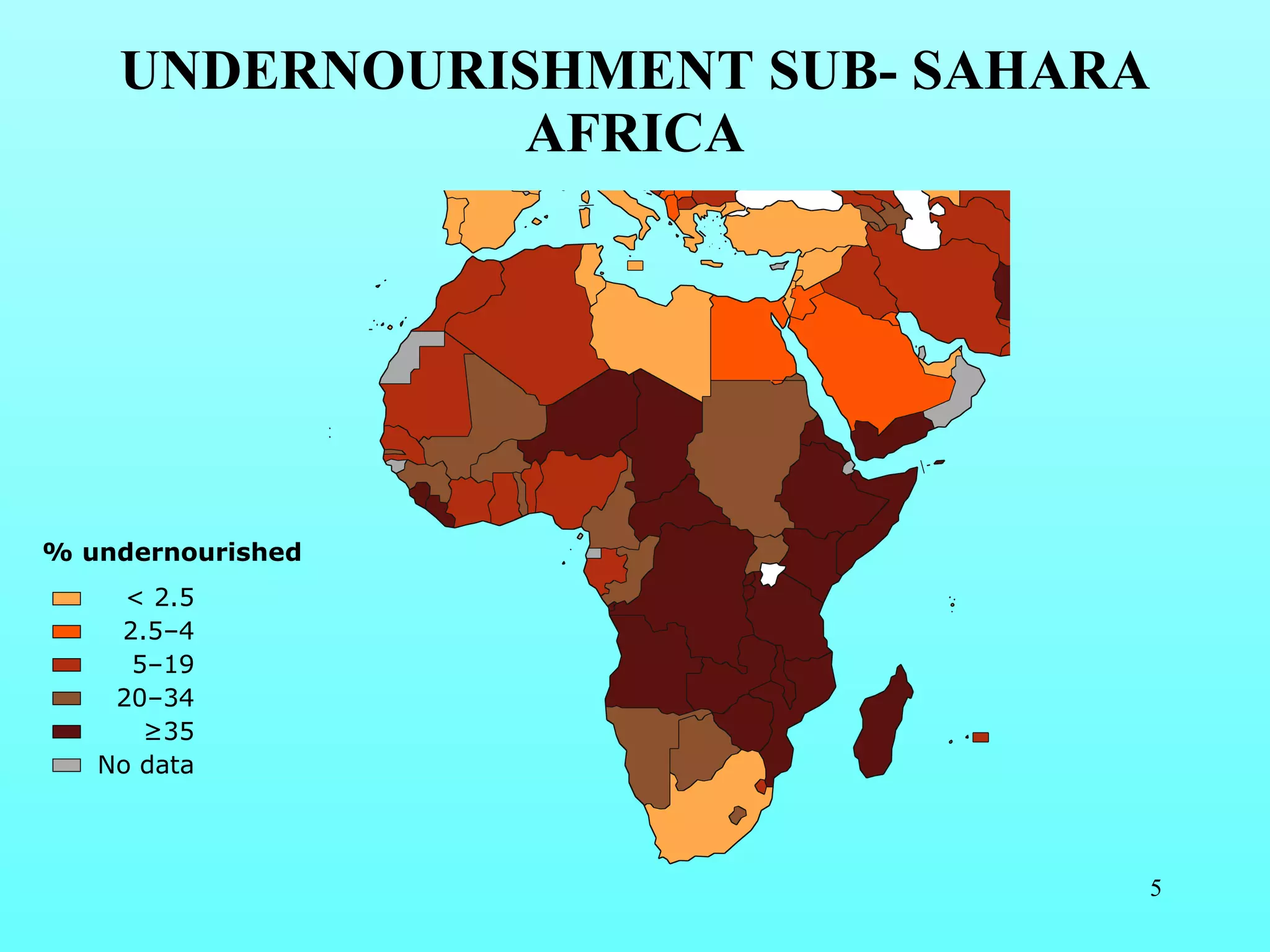
< 2.5 2.5–4 5–19 20–34 ≥ 35 No data % undernourished UNDERNOURISHMENT SUB- SAHARA AFRICA
UNDERNOURISHMENT IN SUB-SAHARAN AFRICA SSA undernourishment rose from 200 m people in 1995  to 450 m today.  SSA population 62% in rural areas SSA rural poverty accounts for 90% of total poverty SSA 80% of the poor depend on agriculture 38 % of SSA is arid land
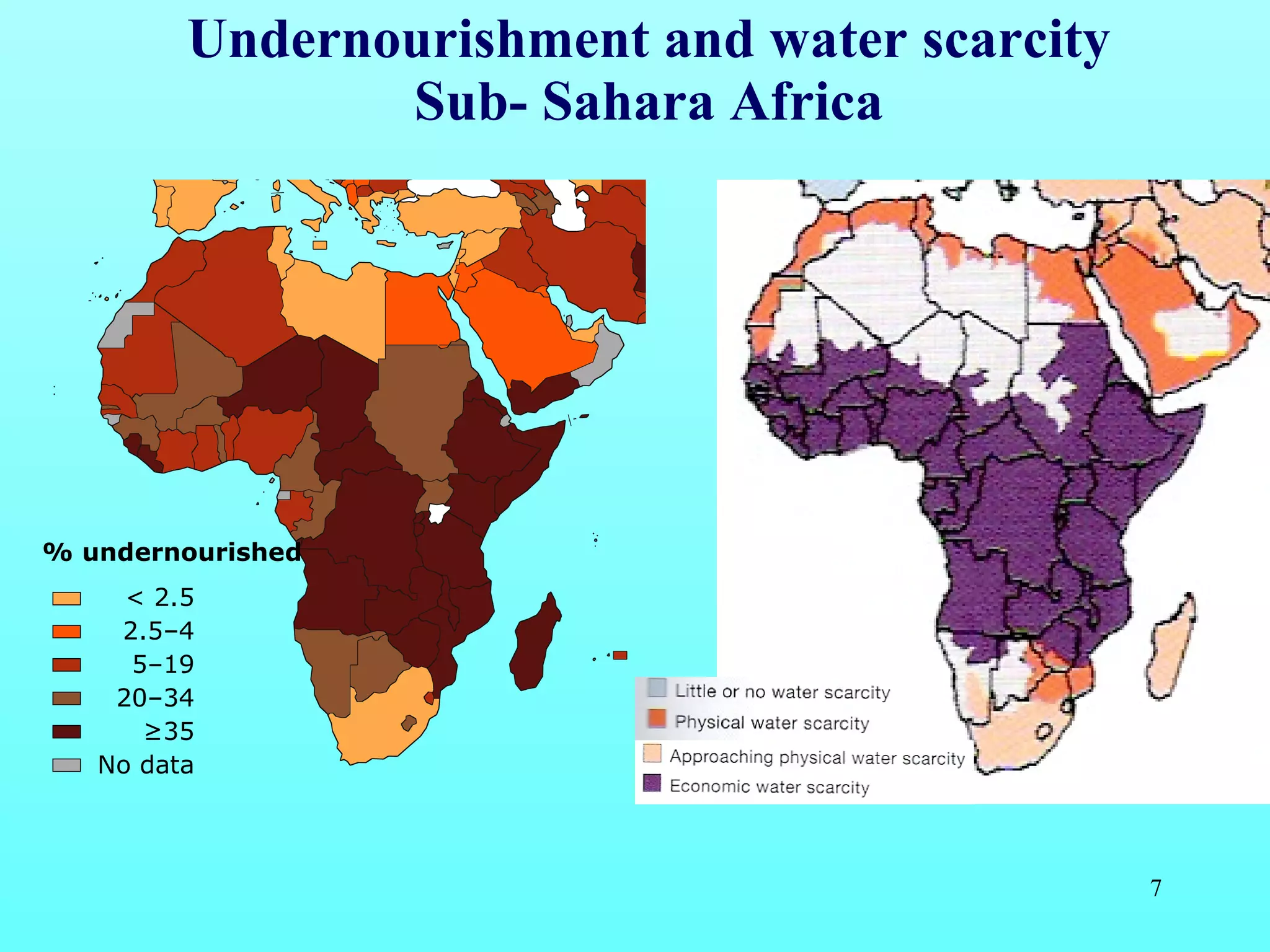
< 2.5 2.5–4 5–19 20–34 ≥ 35 No data % undernourished Undernourishment and water scarcity Sub- Sahara Africa
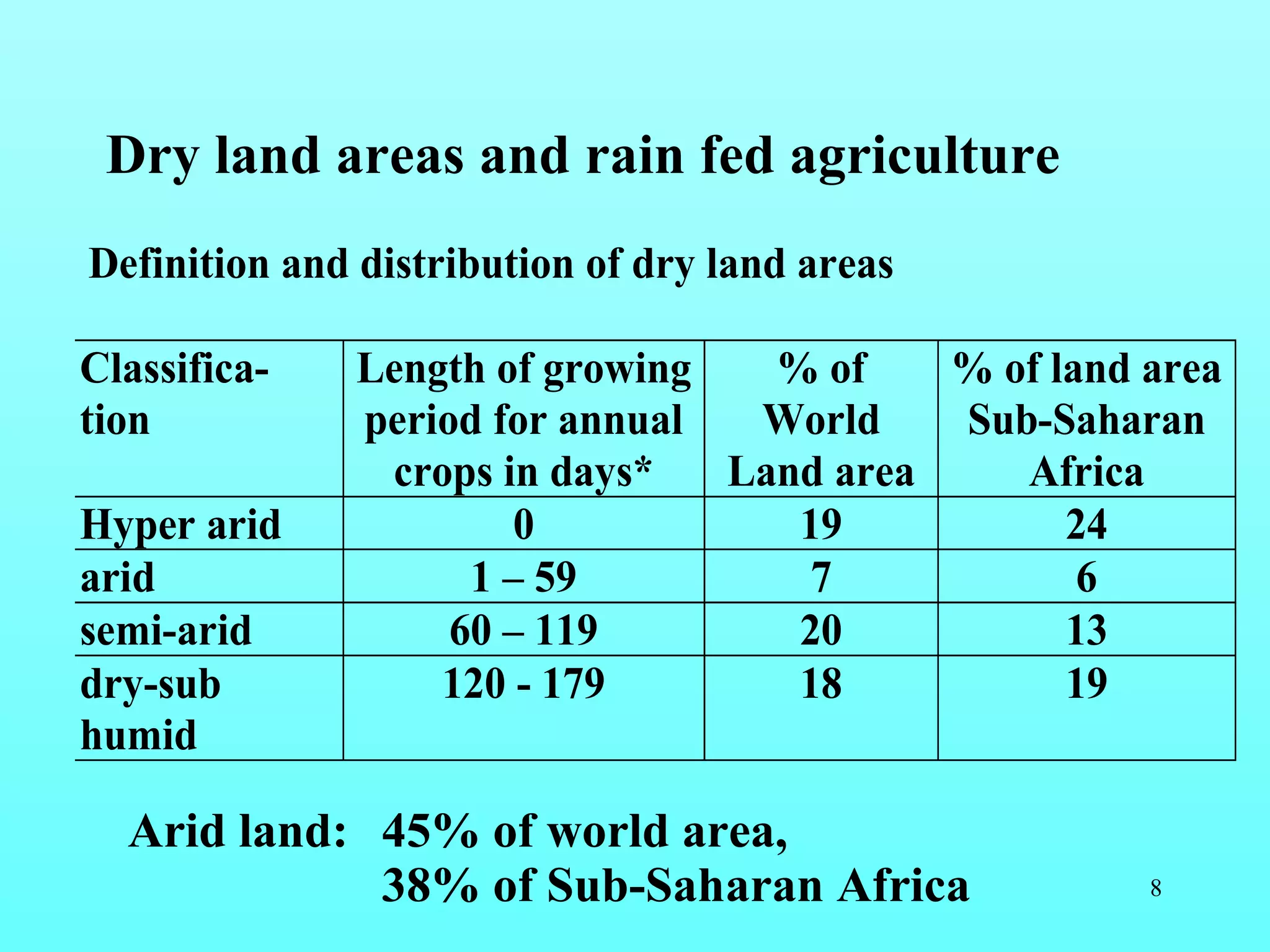
Dry land areas and rain fed agriculture   Arid land: 45% of world area,  38% of Sub-Saharan Africa
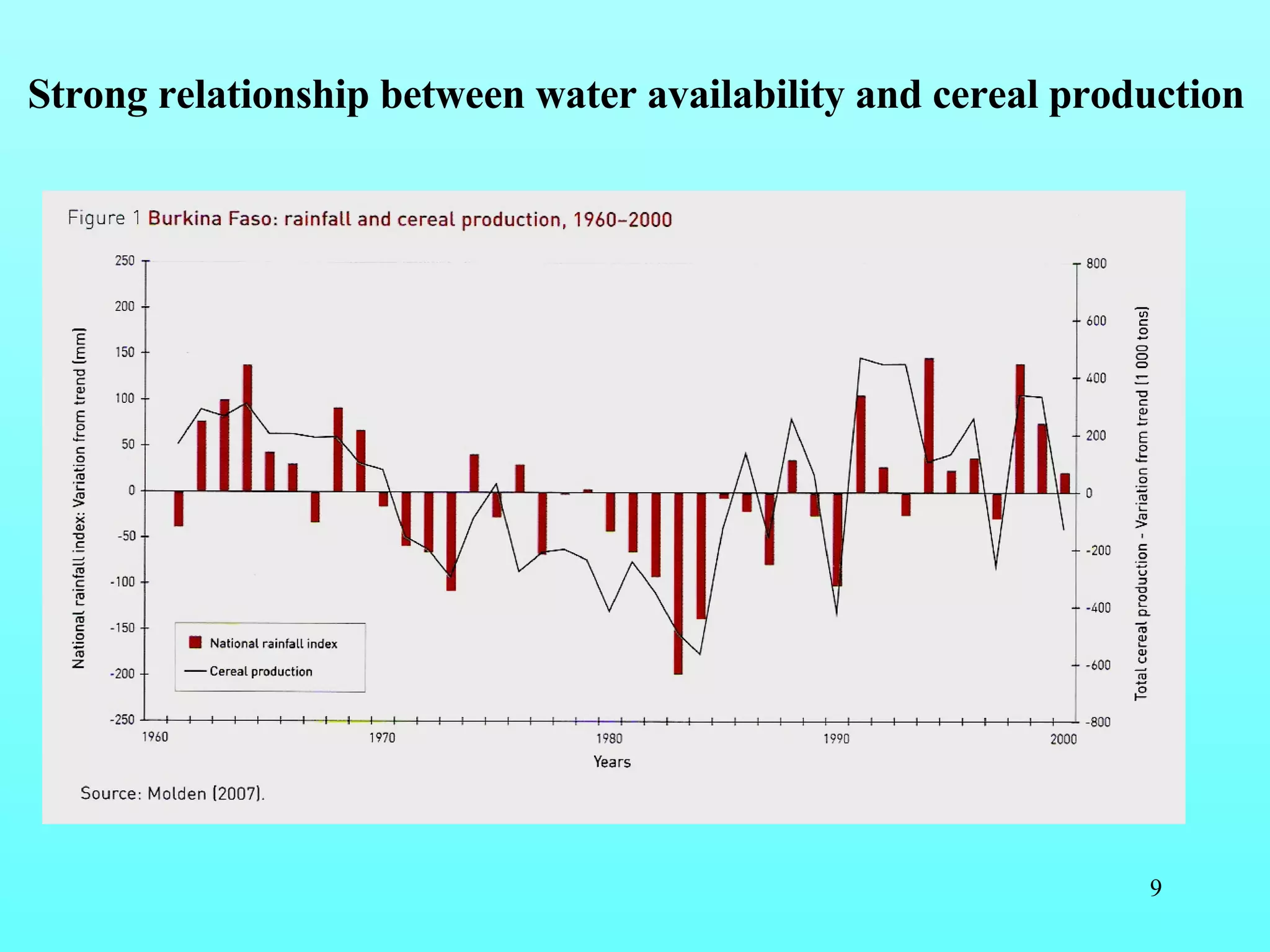
Strong relationship between water availability and cereal production
In order to reach the World Food Summit  and Millennium goals to reduce the number of undernourished and feed the world population expected to increase by 30% over the next 30 years world food production should  be increased by 50 %  in 2030
Some realities:   The green revolution is slowing down Serious environmental problems are appearing Investment in agriculture and irrigation has been reduced Groundwater resources are dangerously low in many countries
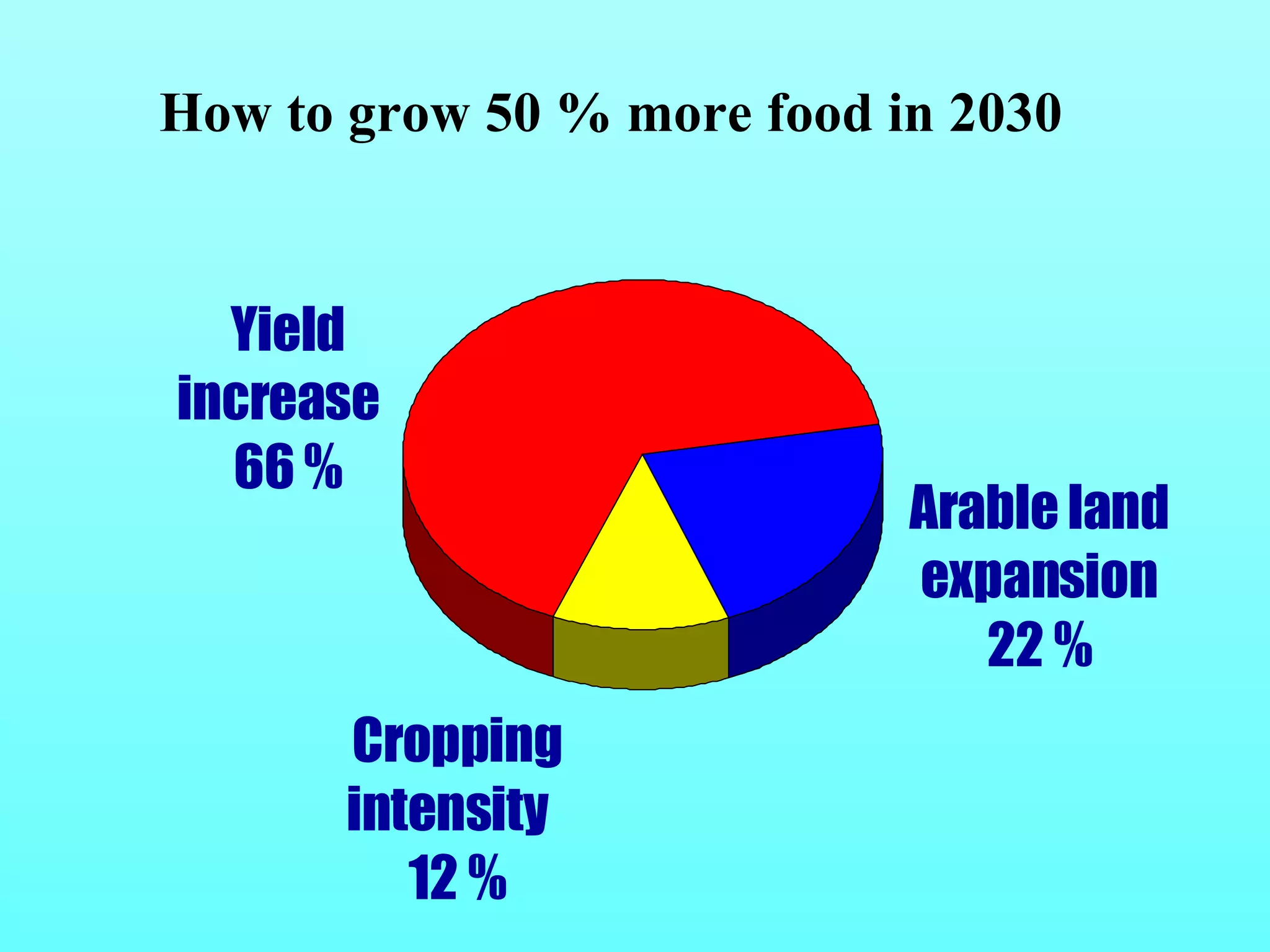
Arable land expansion 22 % Cropping intensity  12 % How to grow 50 % more food in 2030 Yield increase  66 %
Yield Increase :   Adequate  water  supply to crops through  Irrigation ,  water harvesting/runoff farming . Improved seed Fertiliser Agricultural practices Arable land expansion Irrigate  dry areas Expand use of  wetlands Water   harvesting   on arid lands   Cropping intensity   Expand and improve  irrigation Reclamation and intensive use of  wetlands
Large irrigation projects for small number of farmers ? or Small-scale water development for a large number of farmers? In developing countries 80% of the farmers are smallholder farmers practicing mainly subsistence farming located largely in arid and semi-arid zones  or zones with erratic rainfall
Improvement of water supply to crops accessible and affordable  to poor, smallholder subsistence farmers  Most appropriate technologies for smallholder farmers:   Very-small-scale irrigation (with groundwater, surface water  or  collected/stored rainwater  Water management in wetlands and valley bottoms Management of water from rainfall.
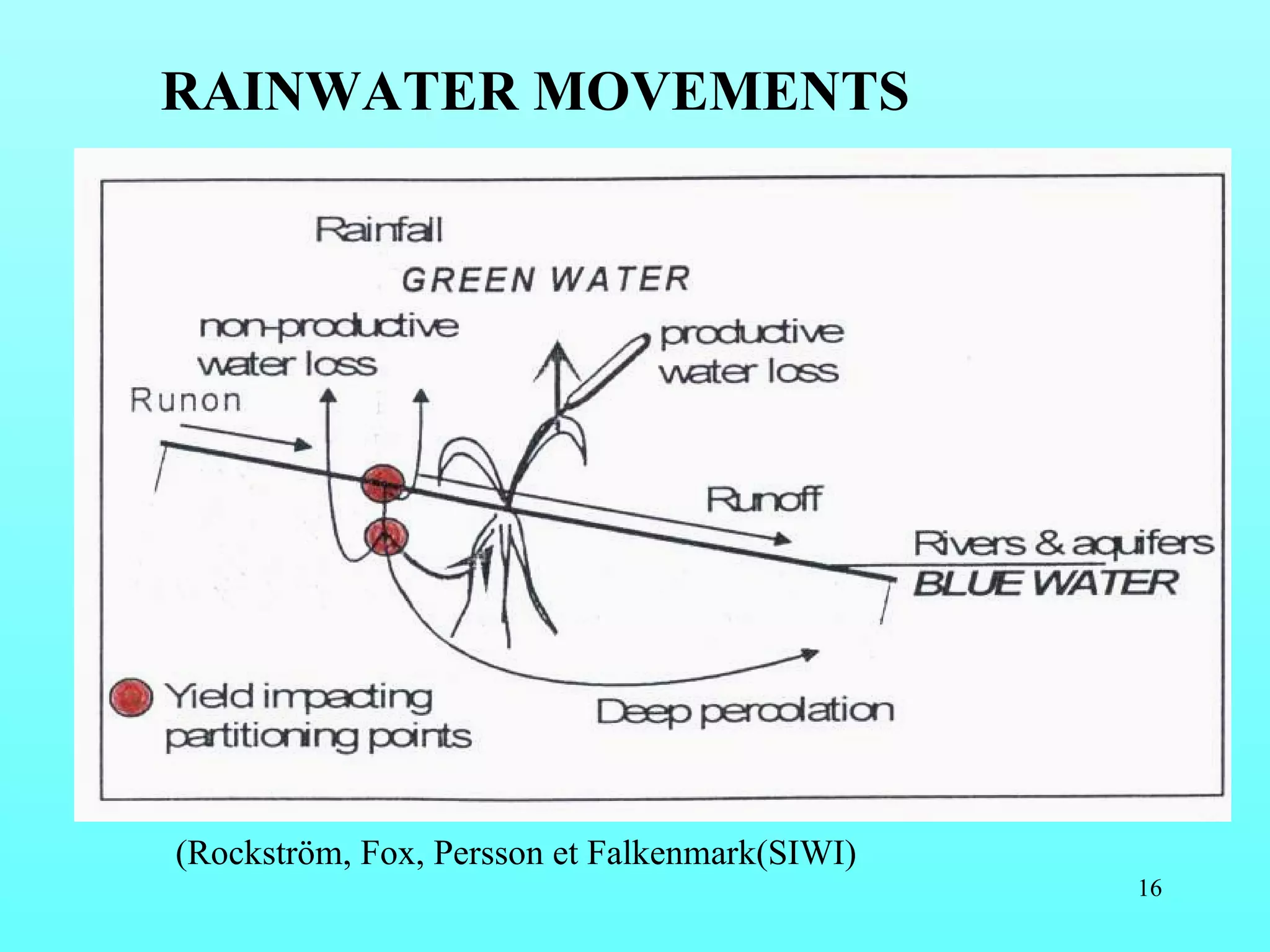
(Rockström, Fox, Persson et Falkenmark(SIWI) RAINWATER MOVEMENTS
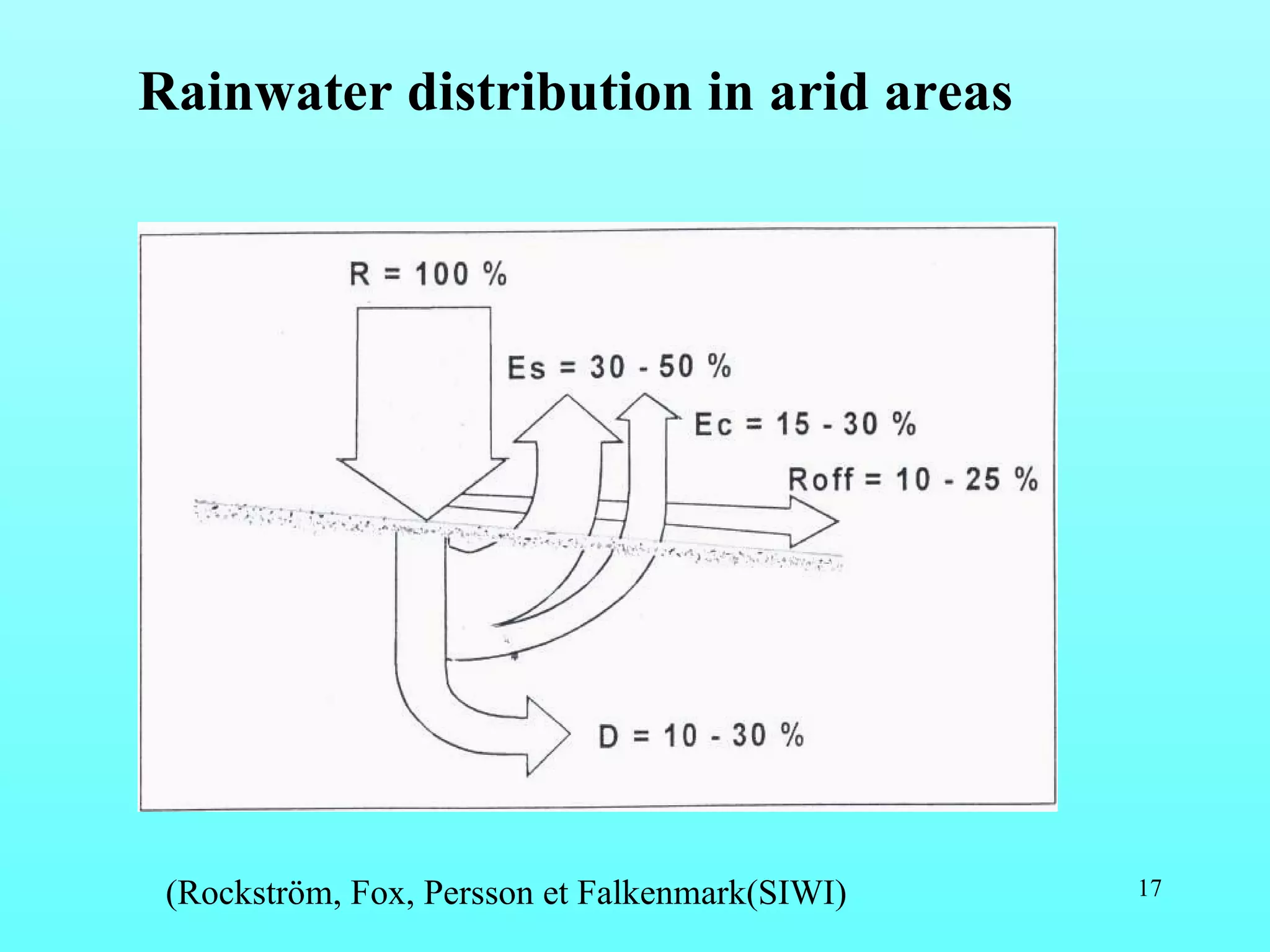
Rainwater distribution in arid areas (Rockström, Fox, Persson et Falkenmark(SIWI)
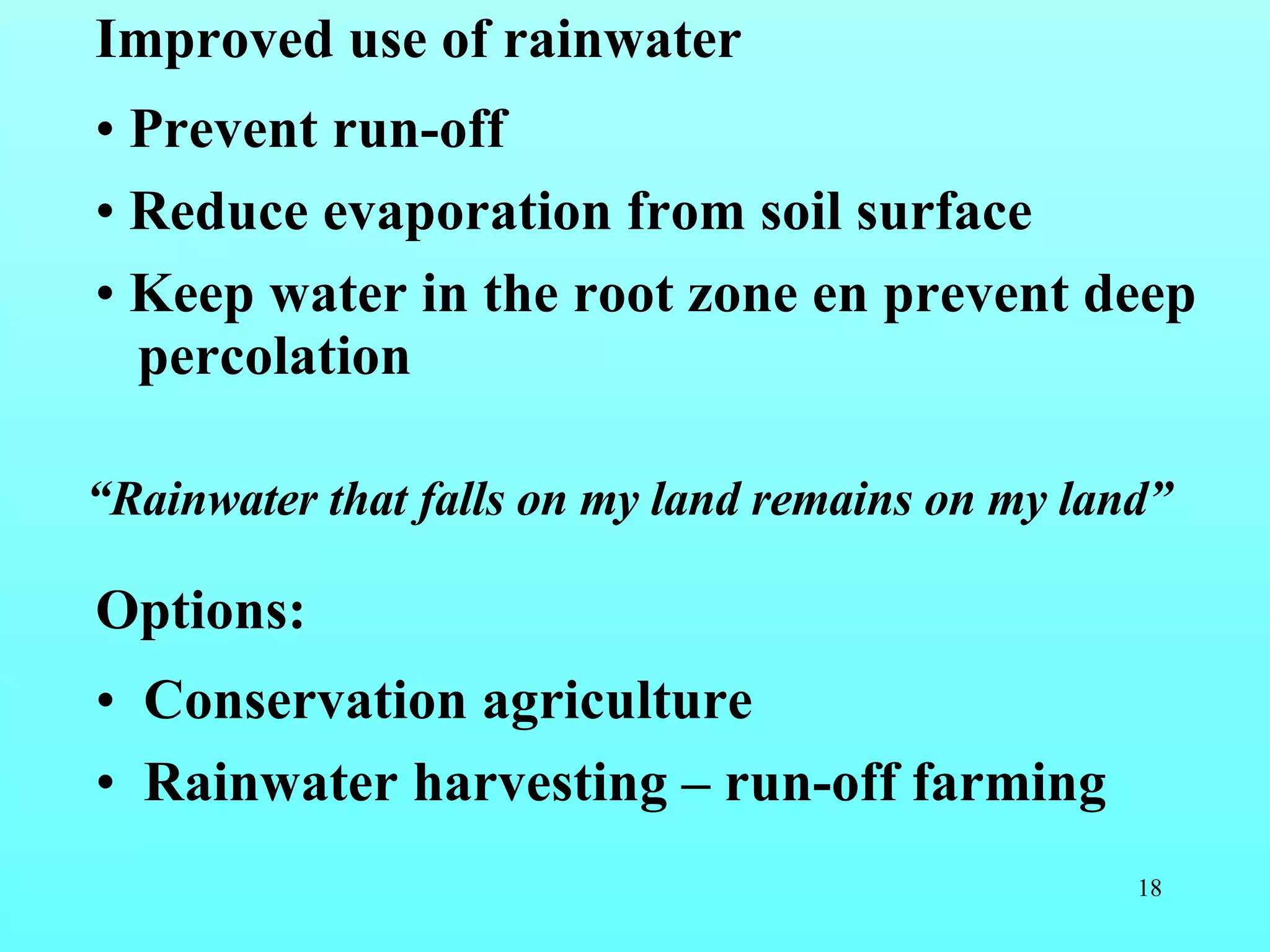
Improved use of rainwater Prevent run-off Reduce evaporation from soil surface Keep water in the root zone en prevent deep percolation Options:  Conservation agriculture Rainwater harvesting – run-off farming “ Rainwater that falls on my land remains on my land”
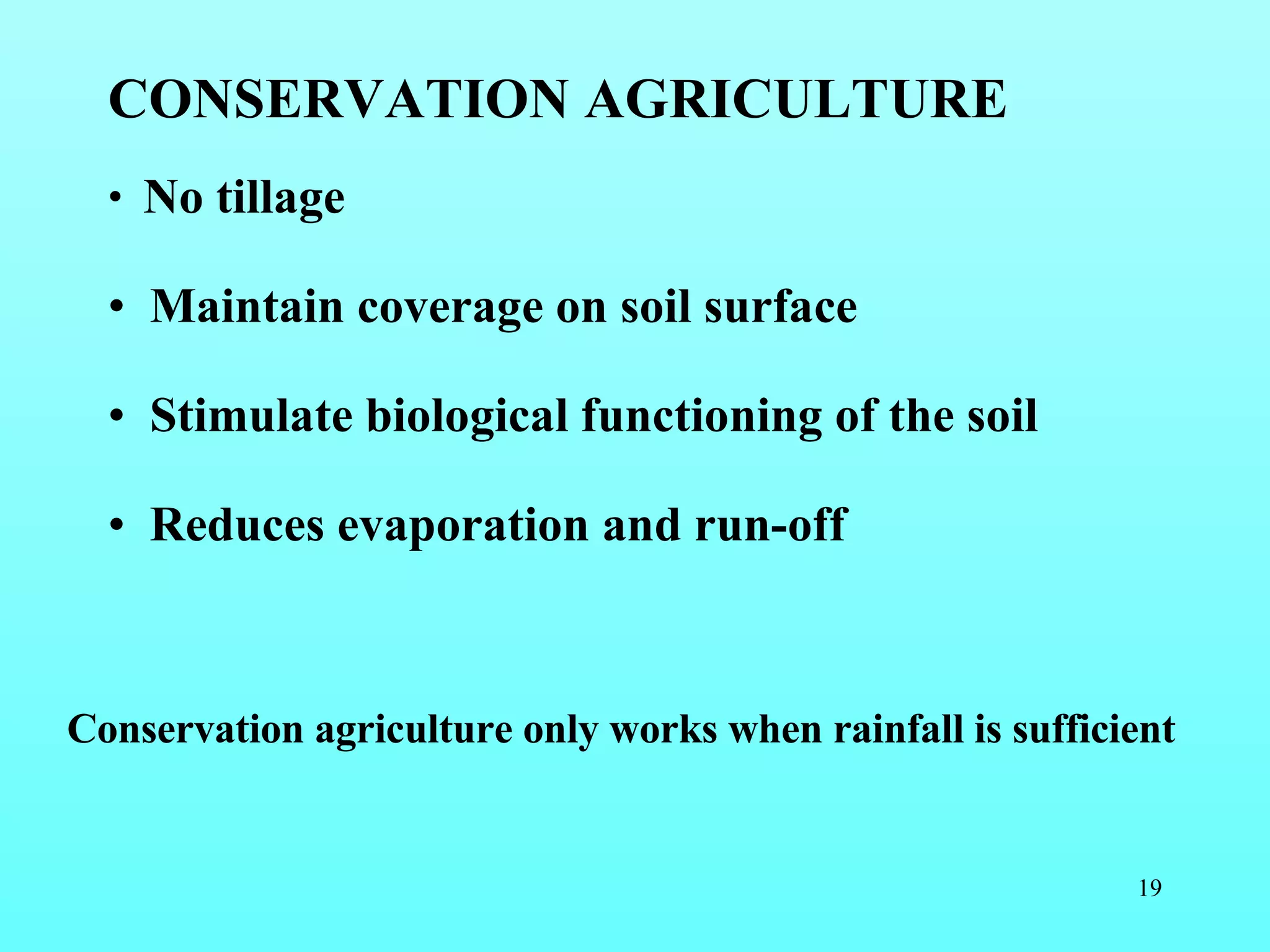
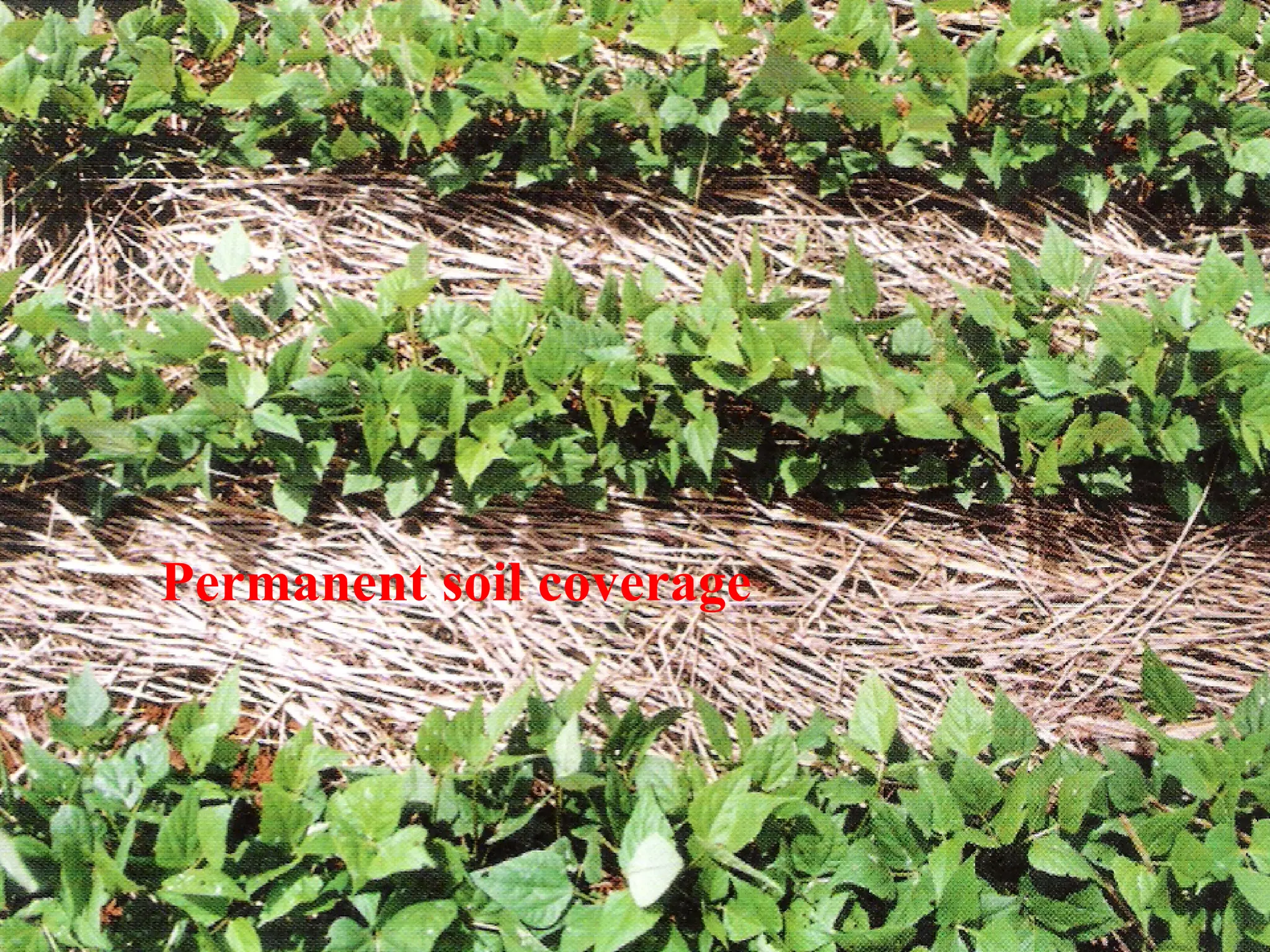
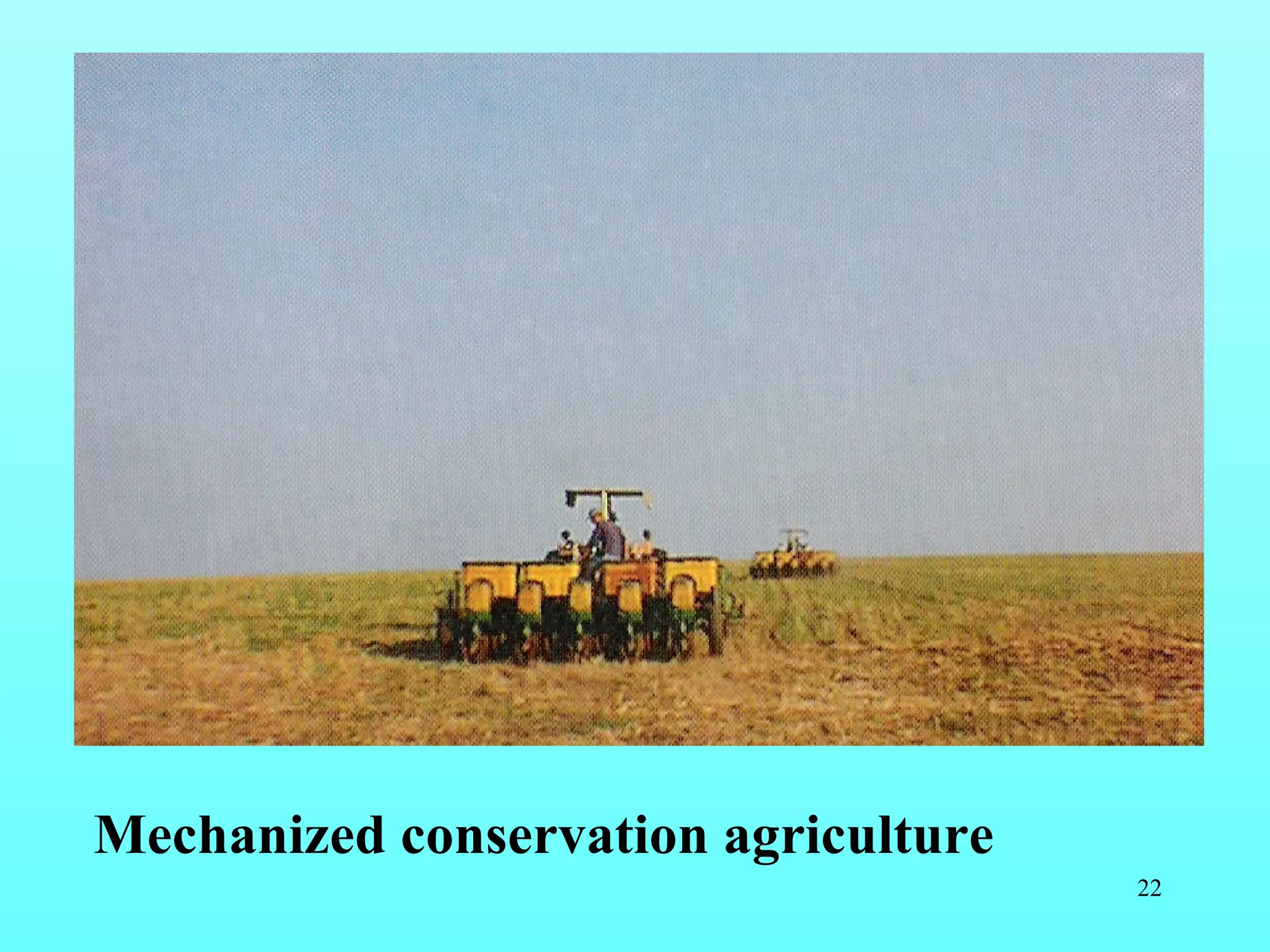
CONSERVATION AGRICULTURE No tillage Maintain coverage on soil surface Stimulate biological functioning of the soil Reduces evaporation and run-off Conservation agriculture only works when rainfall is sufficient
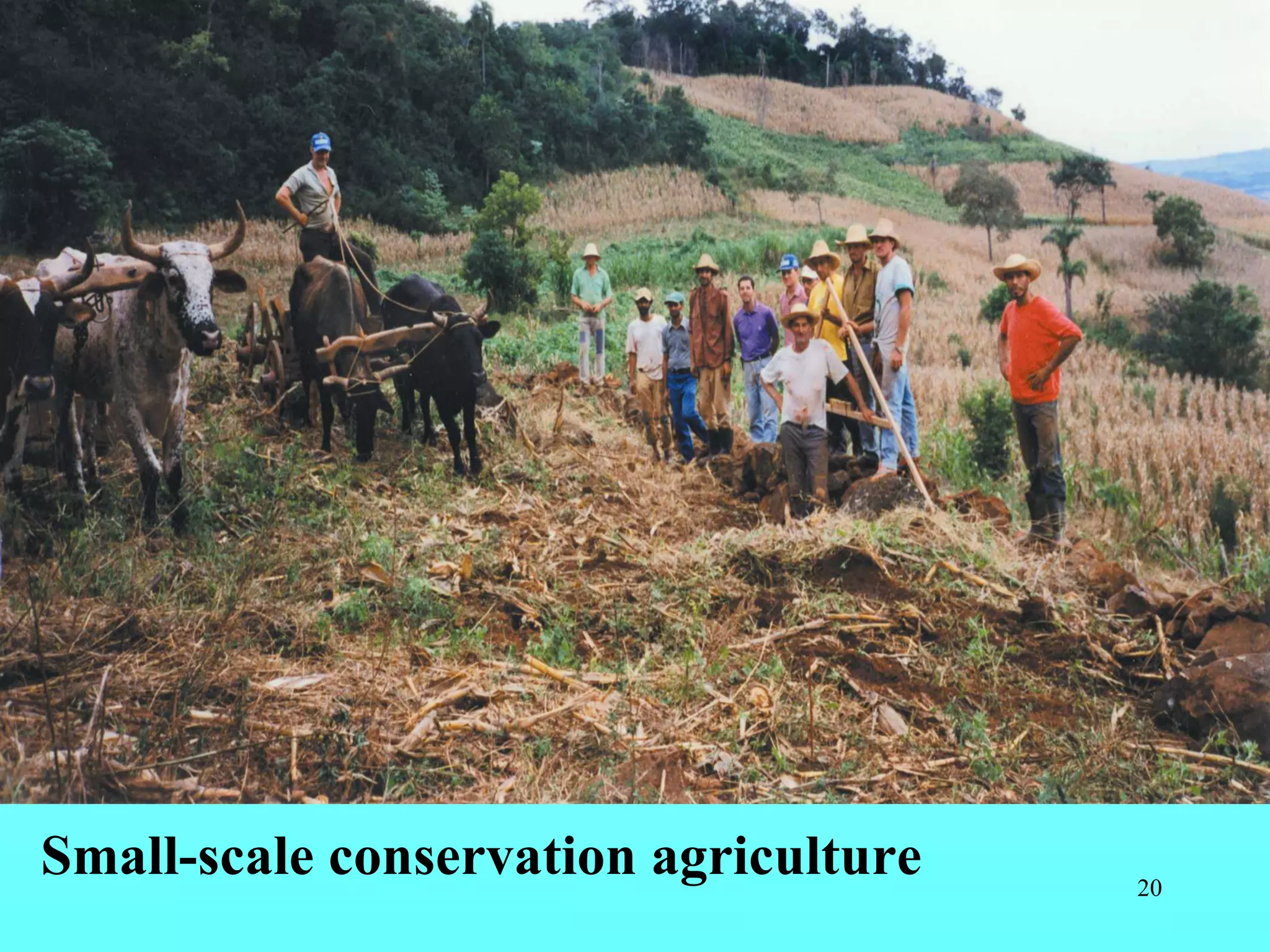
Small-scale conservation agriculture
Permanent soil coverage
Mechanized conservation agriculture
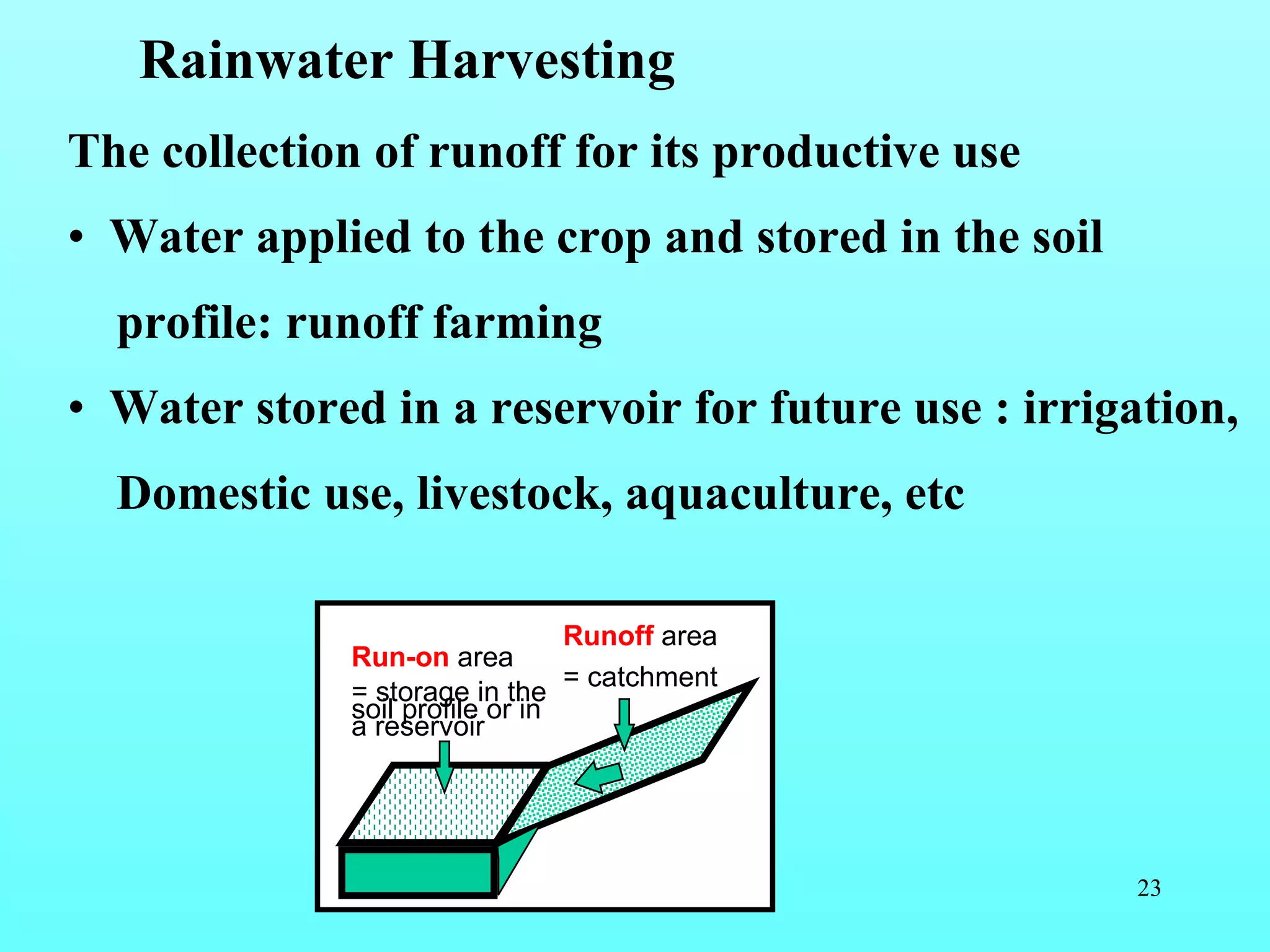
The collection of runoff for its productive use   Water applied to the crop and stored in the soil profile: runoff farming Water stored in a reservoir for future use : irrigation,  Domestic use, livestock, aquaculture, etc Rainwater Harvesting Run-on  area = storage in the soil profile or in a reservoir  Runoff  area = catchment
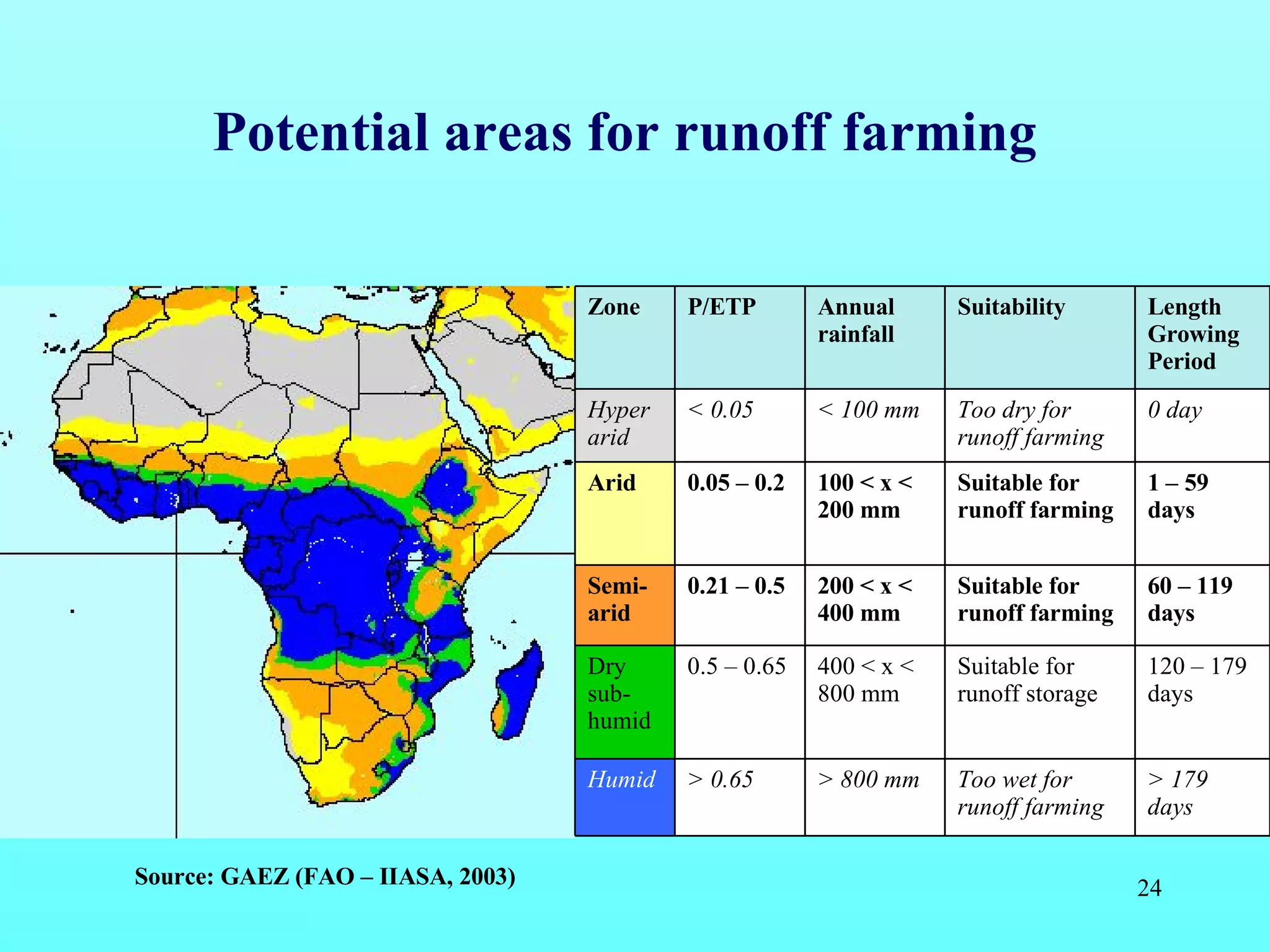
Potential areas for runoff farming Source: GAEZ (FAO – IIASA, 2003) > 800 mm 400 < x <  800 mm 200 < x <  400 mm 100 < x < 200 mm < 100 mm Annual rainfall > 179  days Too wet for  runoff farming > 0.65 Humid 120 – 179 days Suitable for  runoff storage  0.5 – 0.65 Dry  sub- humid 60 – 119 days Suitable for  runoff farming 0.21 – 0.5 Semi- arid 1 – 59 days Suitable for  runoff farming 0.05 – 0.2 Arid 0 day Too dry for  runoff farming < 0.05 Hyper arid Length  Growing Period Suitability P/ETP Zone
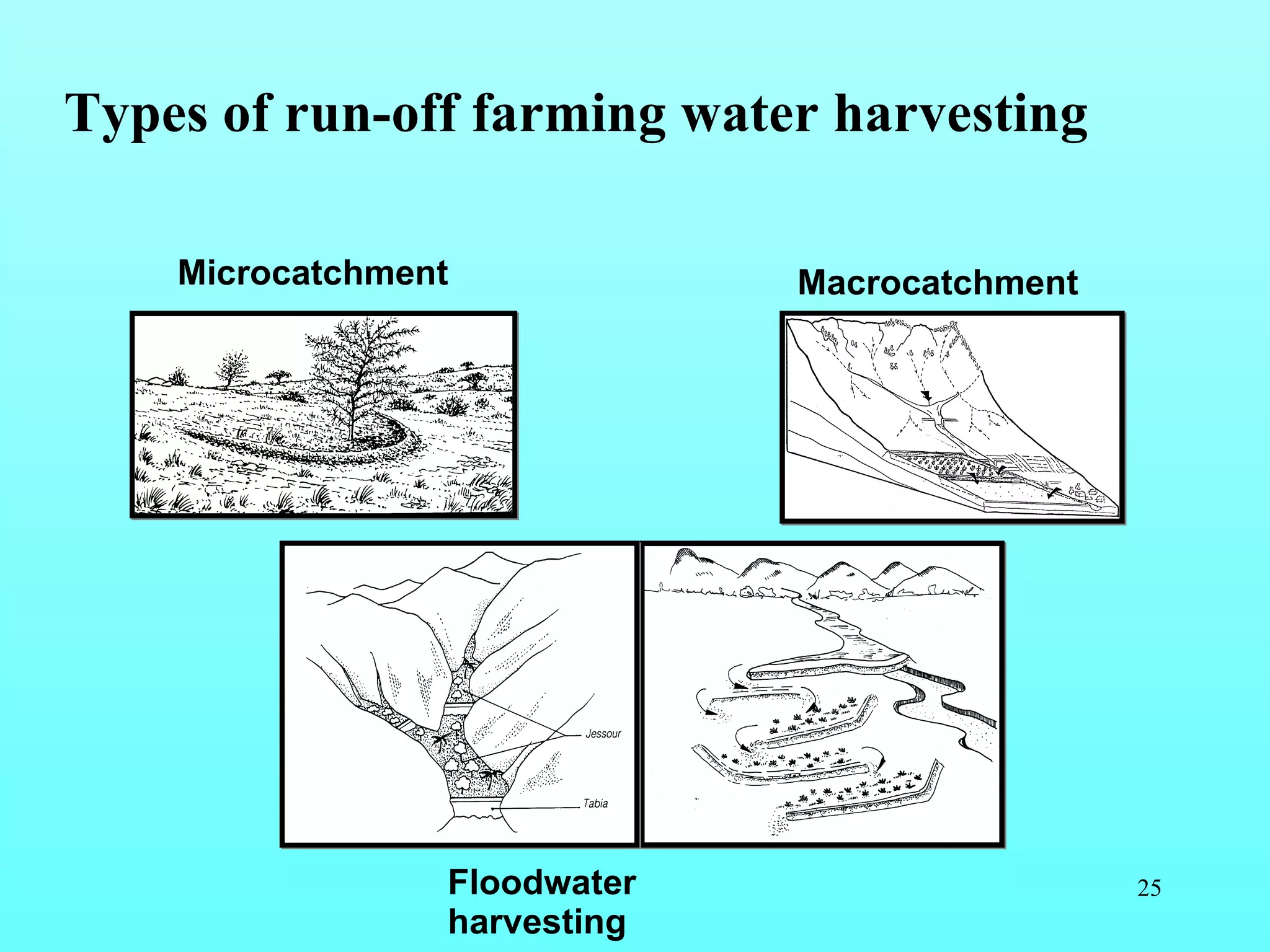
Microcatchment Macrocatchment Floodwater harvesting Types of run-off farming water harvesting
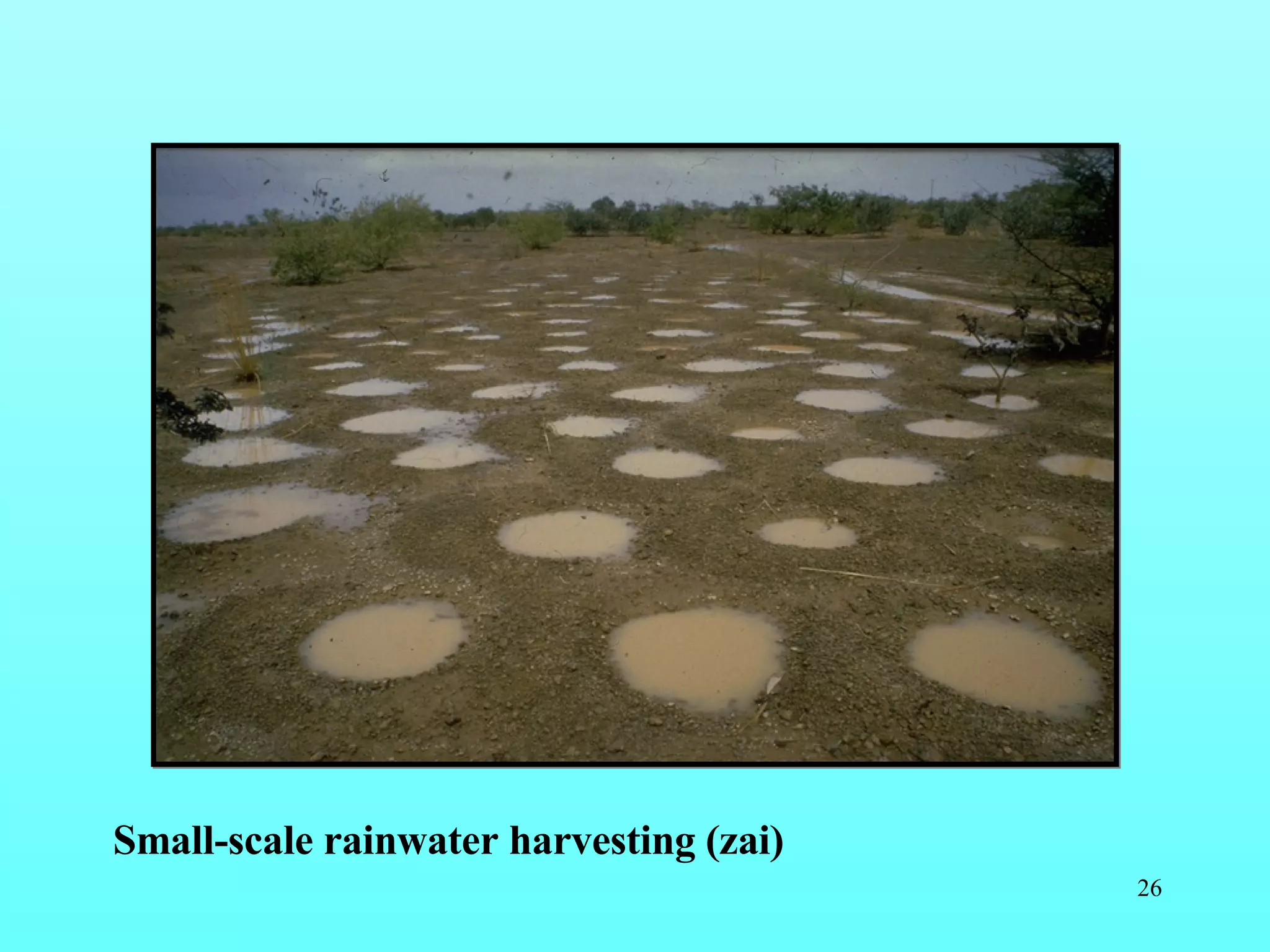
Small-scale rainwater harvesting (zai)
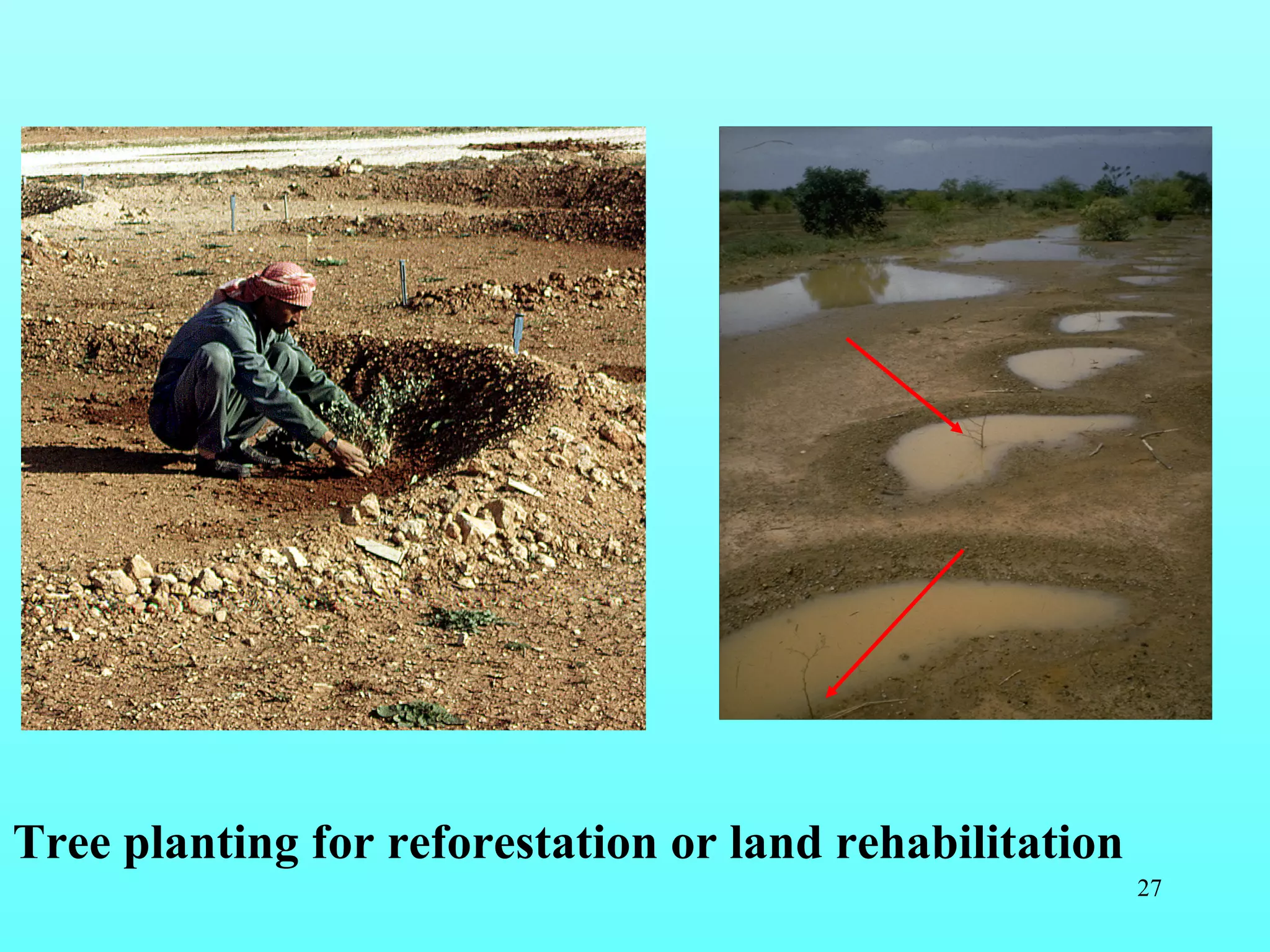
Tree planting for reforestation or land rehabilitation
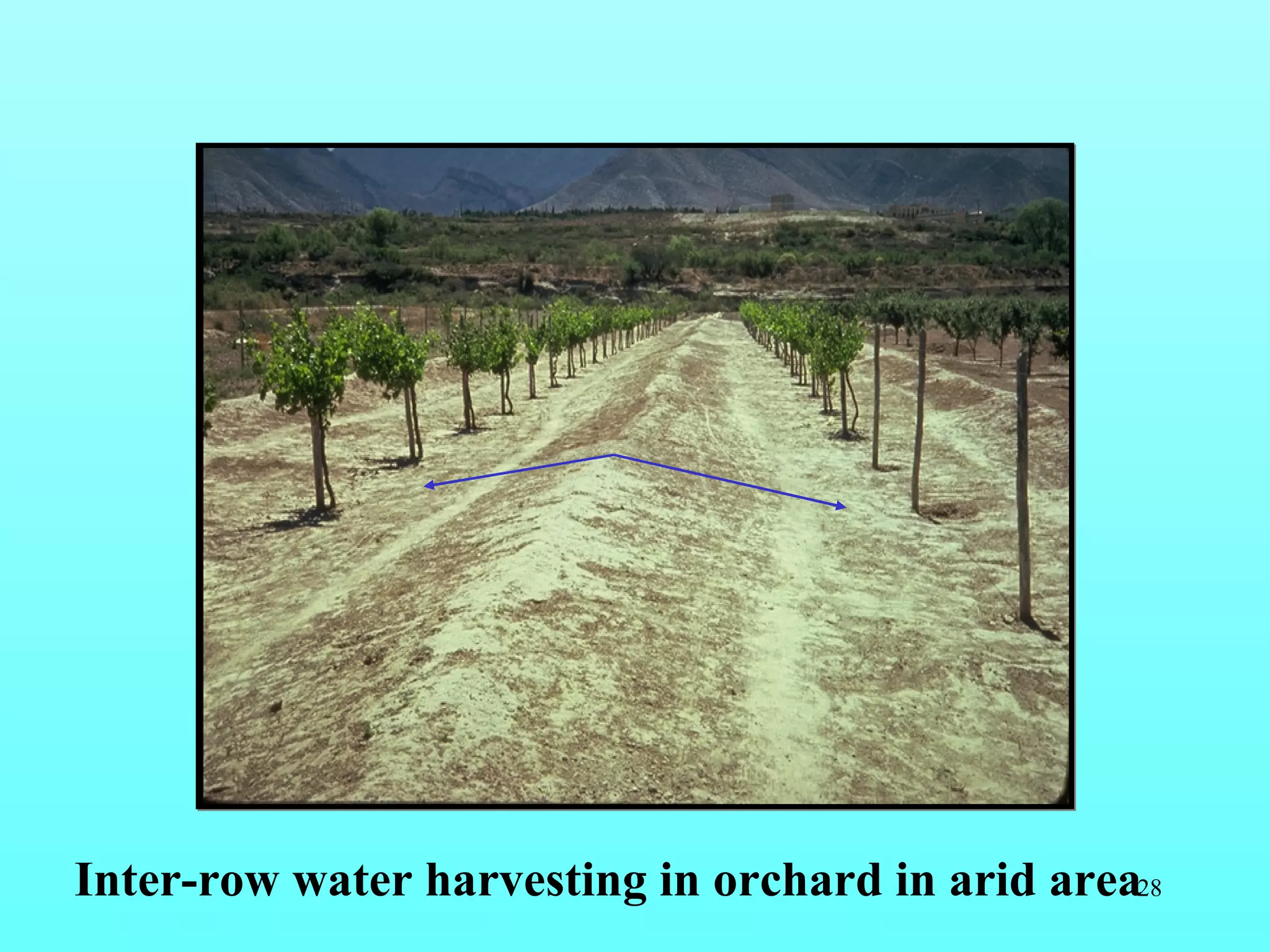
Inter-row water harvesting in orchard in arid area
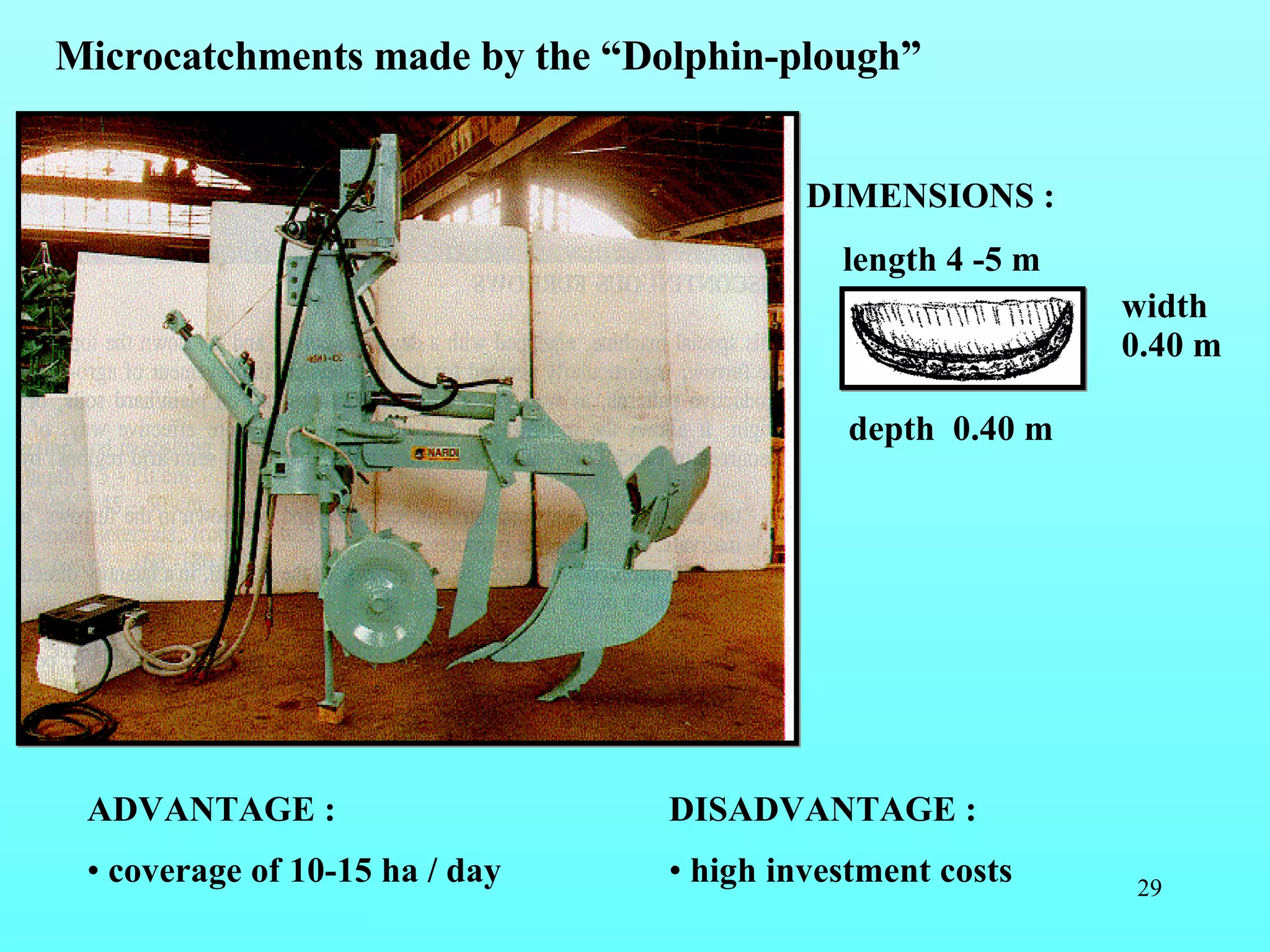
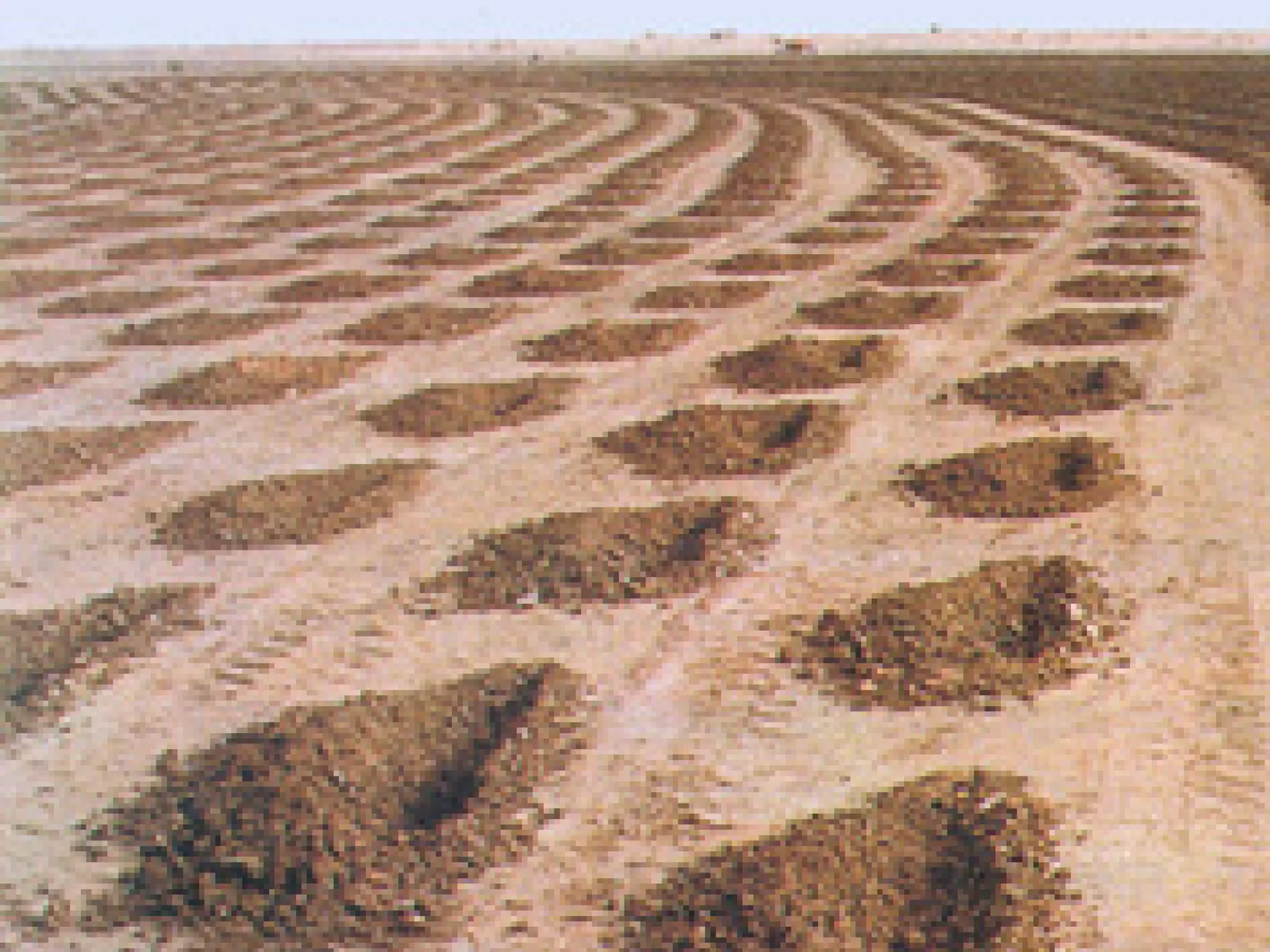
ADVANTAGE :  coverage of 10-15 ha / day DISADVANTAGE : high investment costs Microcatchments made by the “Dolphin-plough” width  0.40 m length 4 -5 m depth  0.40 m DIMENSIONS :
 
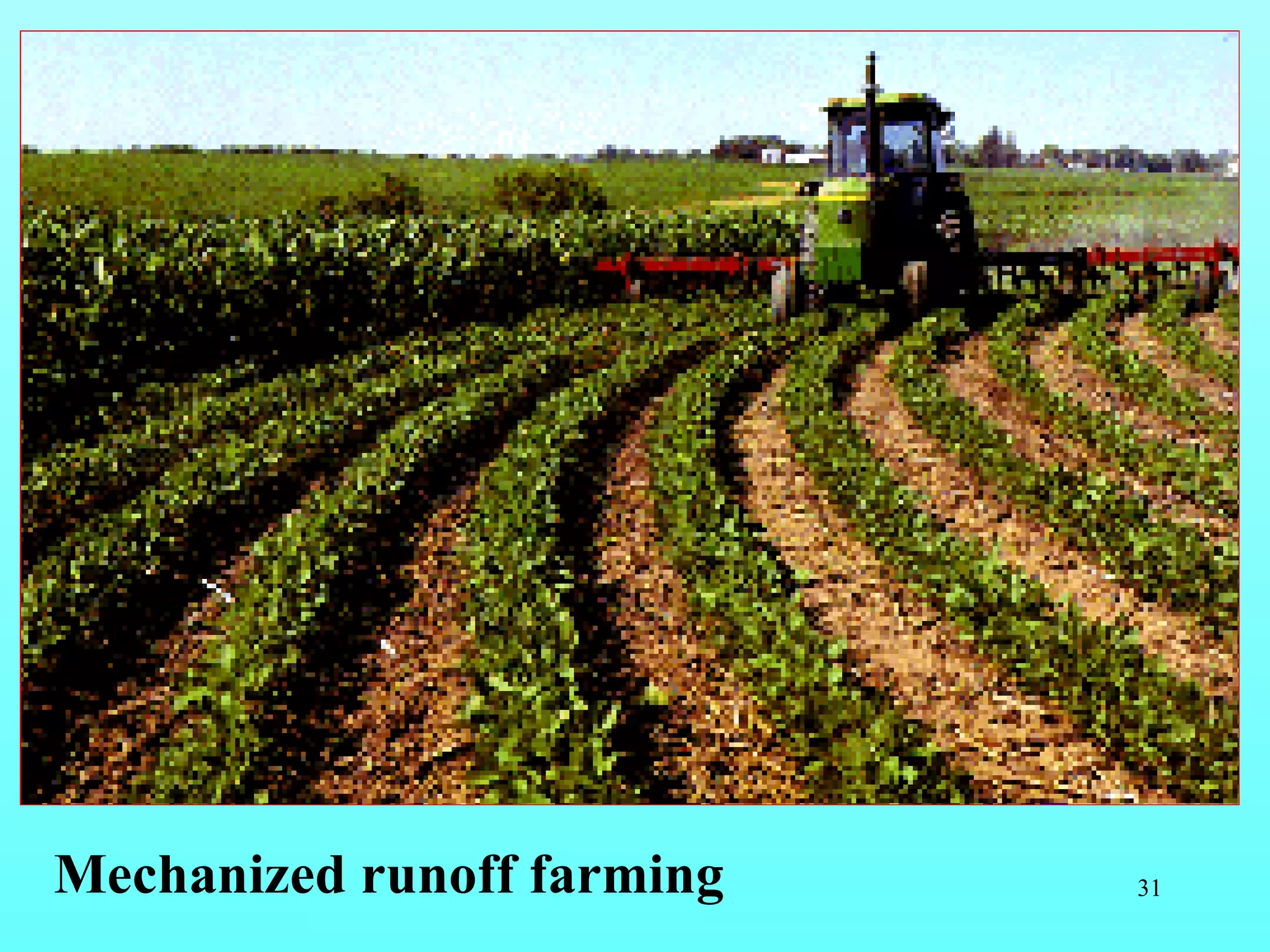
Mechanized runoff farming
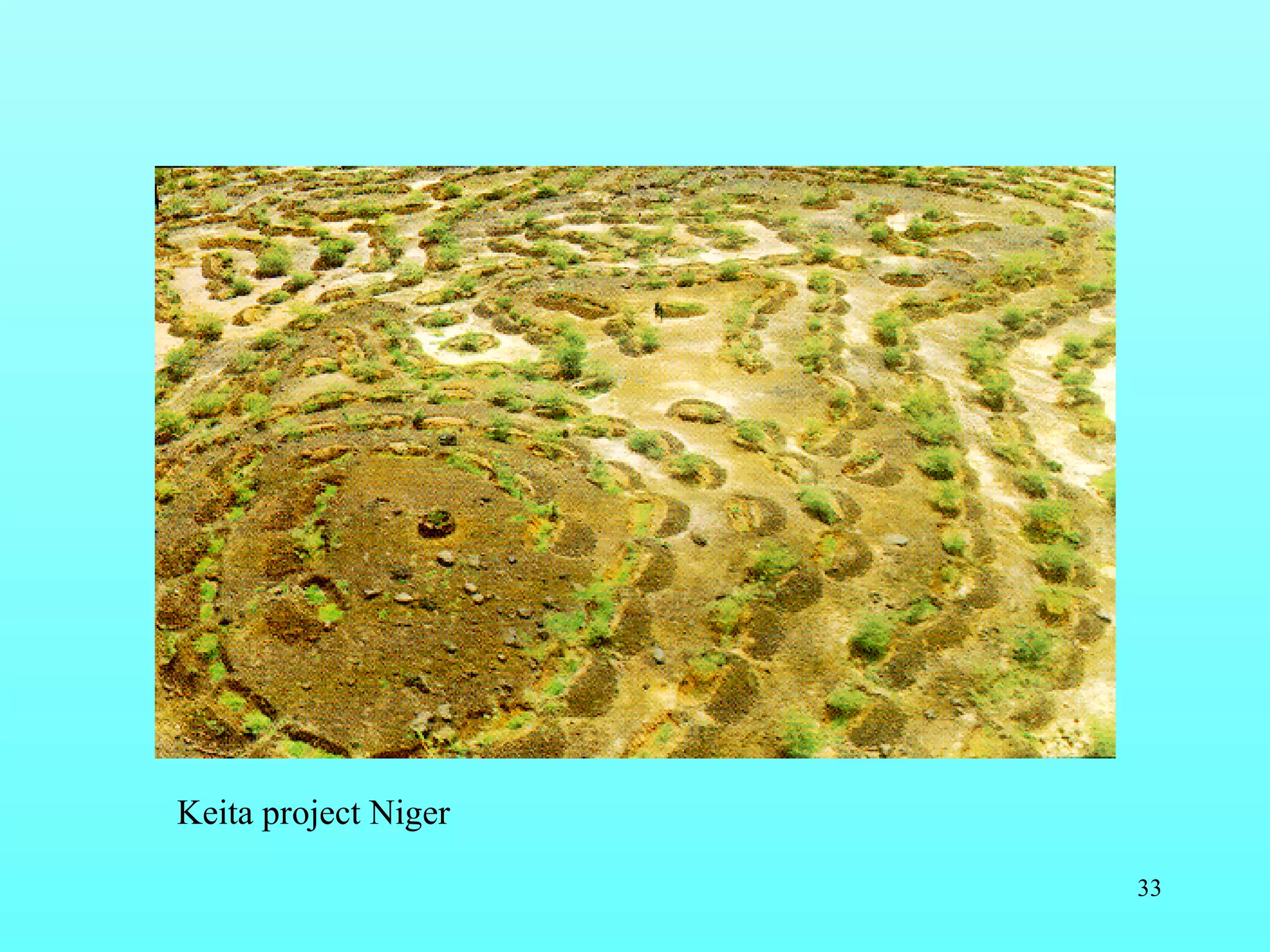
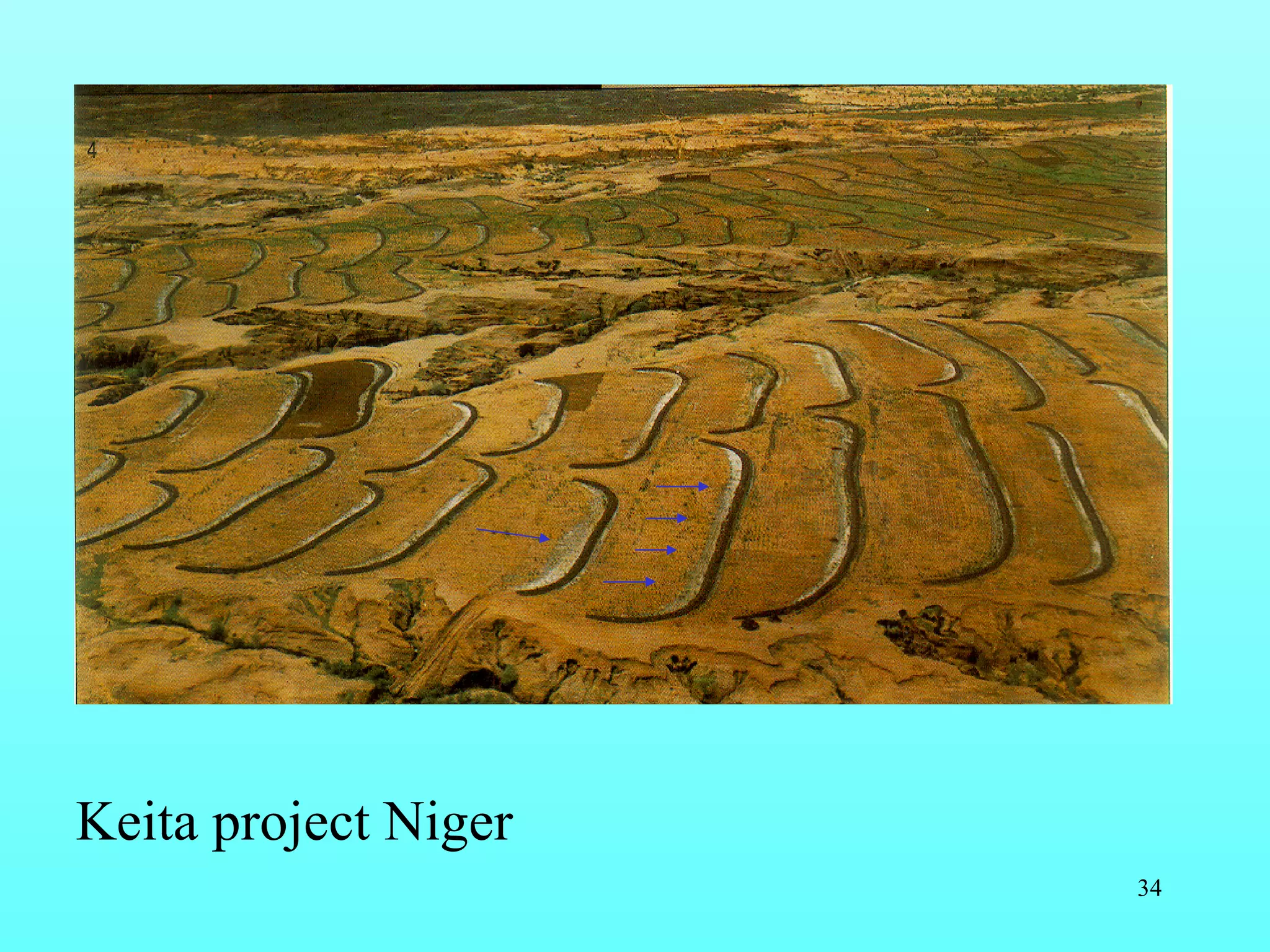
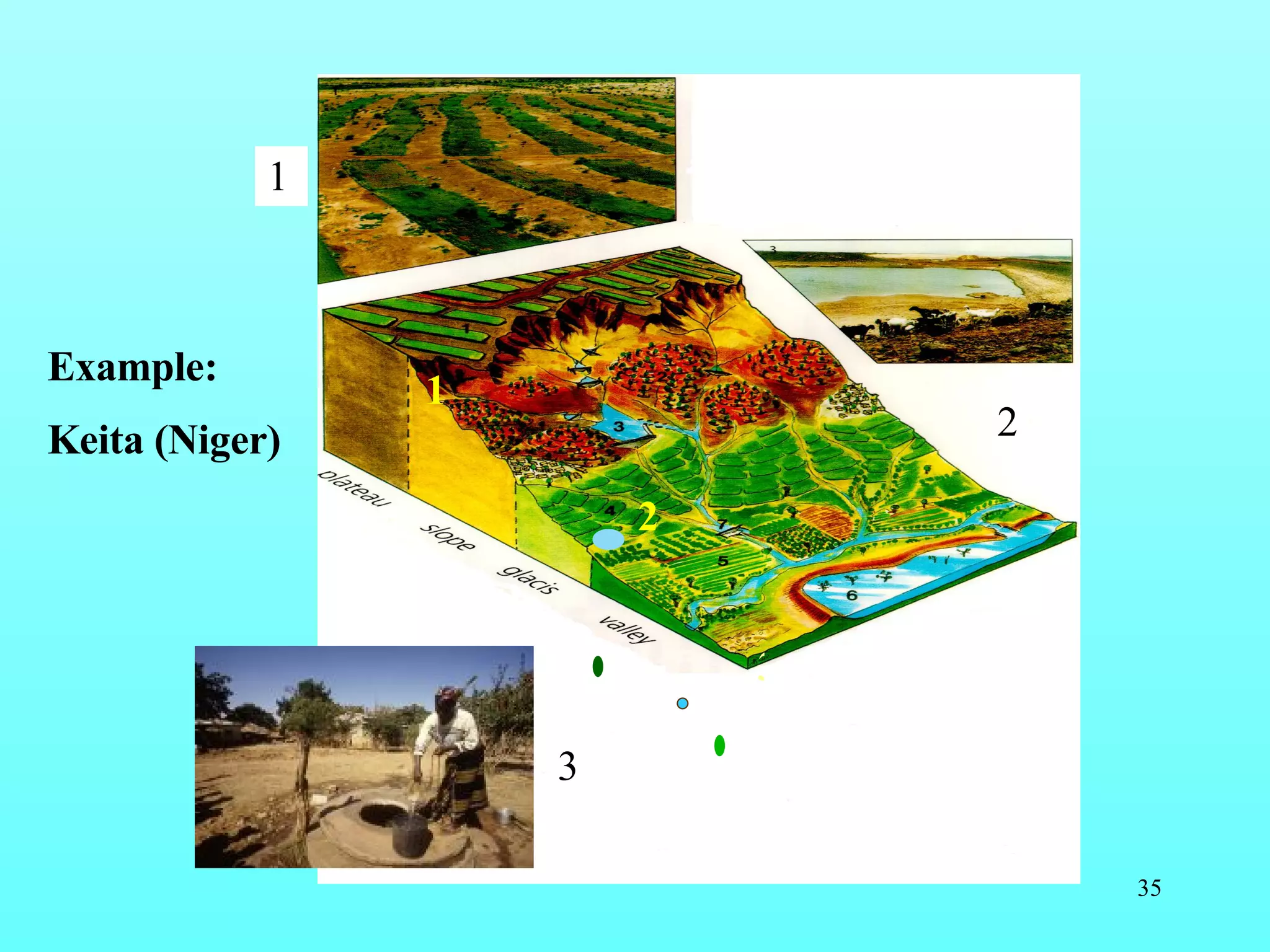
Rainwater harvesting or conservation  Very small scale  Large scale Keita project in Niger FAO/Italy and WFP  1984 – 1999 13 000 km ² -  300,000 people living in 400 villages 50 artificial lakes 42 dams 65 village wells 10,000 ha  water conservation 16 million trees Infrastructure: schools, maternity centres, veterinary facilities, storehouses, micro-credit, literacy courses, etc.
Keita project Niger
Keita project Niger
1 3 1 3 2 Example: Keita (Niger) 2
Characteristics of run-off farming techniques Oriented towards increased agricultural production Reduces risks of crop failure and encourages  other investments (seed, fertilizer, etc) Relatively Low-Cost and high return of investment Immediate benefits to farmers Reduces downstream flooding and consequent damages more……
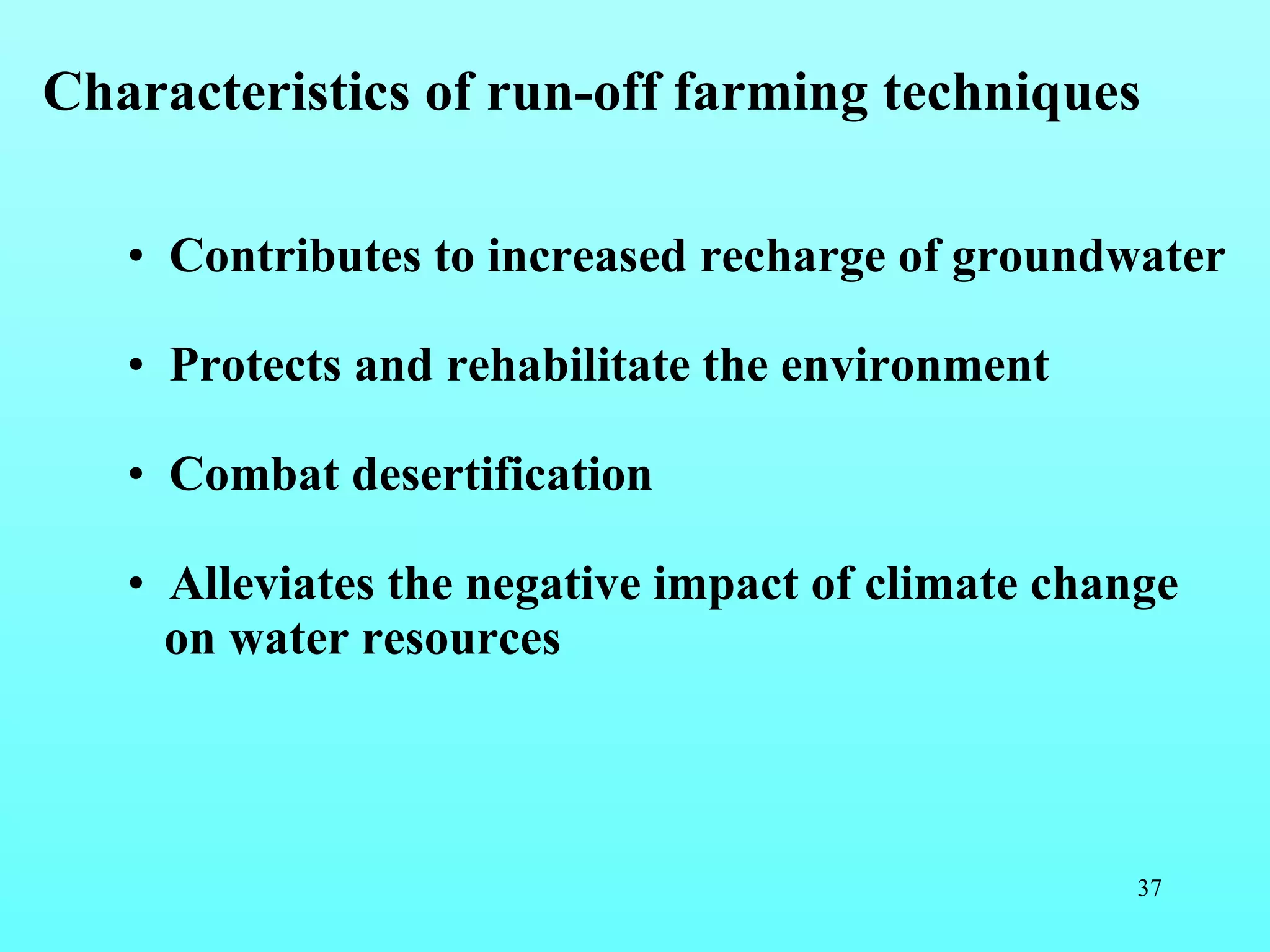
Contributes to increased recharge of groundwater Protects and rehabilitate the environment Combat desertification Alleviates the negative impact of climate change on water resources Characteristics of run-off farming techniques
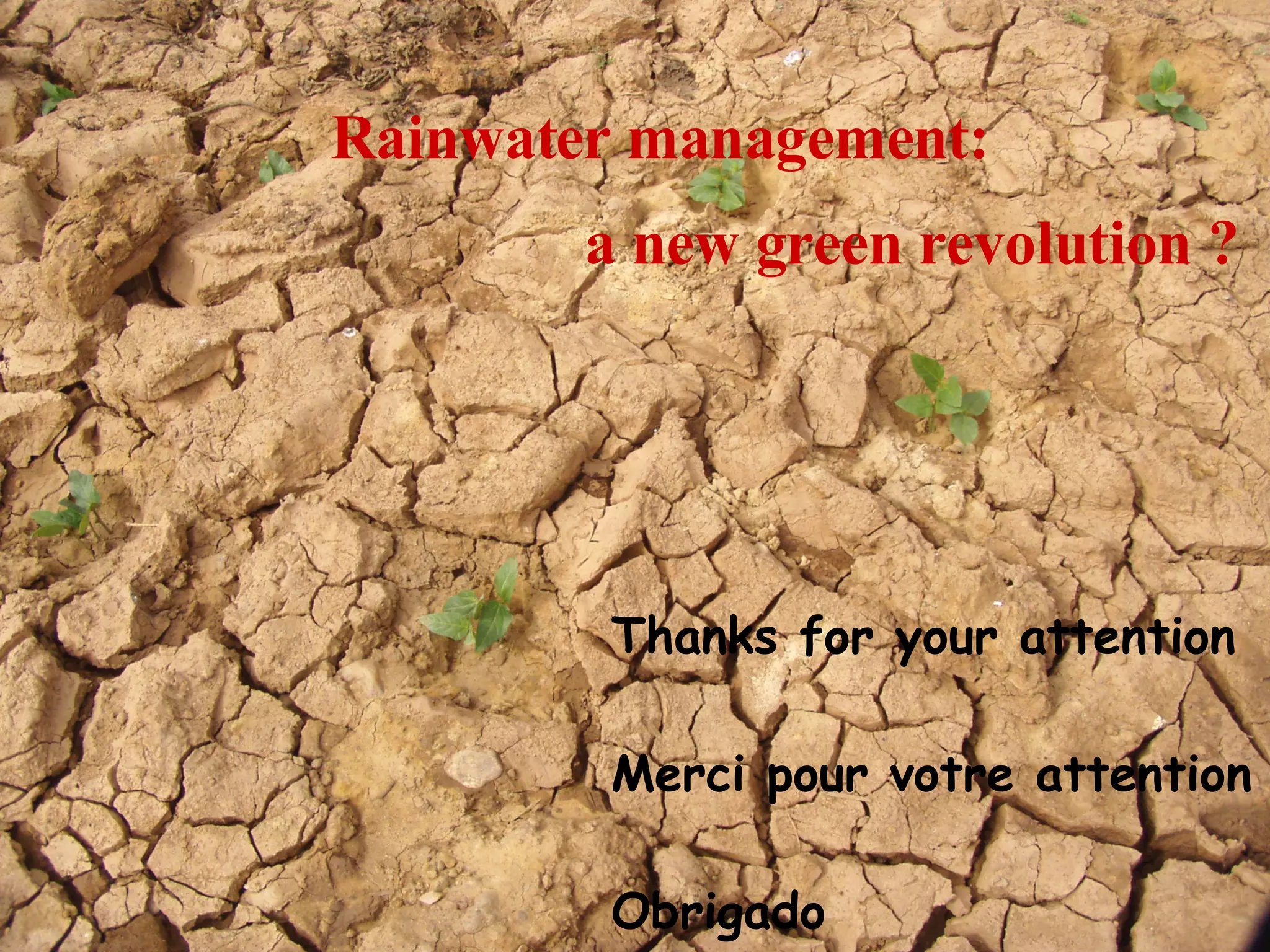
Rainwater management: a new green revolution ?   Thanks for your attention  Merci pour votre attention Obrigado

Nico Van Leeuwen Ppt

  • 1.
    Rainwater Management for Increased Agricultural production Centre of African Studies – Porto- Portugal 2 – 3 October 2008 CONFERENCE ON WATER IN AFRICA SESSION ON WATER AND AGRICULTURE Nico van Leeuwen
  • 2.
    Outline Foodfor all ? Key role of water Smallholder adapted technologies Where does the rainwater go ? Options for management of rainwater Conclusions
  • 3.
    < 2.5 2.5–45–19 20–34 ≥ 35 No data % undernourished UNDERNOURISHMENT
  • 4.
    UNDERNOURISHMENTIN THE WORLD 776 million people in developing countries remain undernourished World Food Summit goal (1996) to reduce undernourishment to 410 million but present expectations are 610 million Seven out of ten of the world's poor live in rural areas and depend on agriculture Arid zones cover 45% of the world area
  • 5.
    < 2.5 2.5–45–19 20–34 ≥ 35 No data % undernourished UNDERNOURISHMENT SUB- SAHARA AFRICA
  • 6.
    UNDERNOURISHMENT IN SUB-SAHARANAFRICA SSA undernourishment rose from 200 m people in 1995 to 450 m today. SSA population 62% in rural areas SSA rural poverty accounts for 90% of total poverty SSA 80% of the poor depend on agriculture 38 % of SSA is arid land
  • 7.
    < 2.5 2.5–45–19 20–34 ≥ 35 No data % undernourished Undernourishment and water scarcity Sub- Sahara Africa
  • 8.
    Dry land areasand rain fed agriculture Arid land: 45% of world area, 38% of Sub-Saharan Africa
  • 9.
    Strong relationship betweenwater availability and cereal production
  • 10.
    In order toreach the World Food Summit and Millennium goals to reduce the number of undernourished and feed the world population expected to increase by 30% over the next 30 years world food production should be increased by 50 % in 2030
  • 11.
    Some realities: The green revolution is slowing down Serious environmental problems are appearing Investment in agriculture and irrigation has been reduced Groundwater resources are dangerously low in many countries
  • 12.
    Arable land expansion22 % Cropping intensity 12 % How to grow 50 % more food in 2030 Yield increase 66 %
  • 13.
    Yield Increase : Adequate water supply to crops through Irrigation , water harvesting/runoff farming . Improved seed Fertiliser Agricultural practices Arable land expansion Irrigate dry areas Expand use of wetlands Water harvesting on arid lands Cropping intensity Expand and improve irrigation Reclamation and intensive use of wetlands
  • 14.
    Large irrigation projectsfor small number of farmers ? or Small-scale water development for a large number of farmers? In developing countries 80% of the farmers are smallholder farmers practicing mainly subsistence farming located largely in arid and semi-arid zones or zones with erratic rainfall
  • 15.
    Improvement of watersupply to crops accessible and affordable to poor, smallholder subsistence farmers Most appropriate technologies for smallholder farmers: Very-small-scale irrigation (with groundwater, surface water or collected/stored rainwater Water management in wetlands and valley bottoms Management of water from rainfall.
  • 16.
    (Rockström, Fox, Perssonet Falkenmark(SIWI) RAINWATER MOVEMENTS
  • 17.
    Rainwater distribution inarid areas (Rockström, Fox, Persson et Falkenmark(SIWI)
  • 18.
    Improved use ofrainwater Prevent run-off Reduce evaporation from soil surface Keep water in the root zone en prevent deep percolation Options: Conservation agriculture Rainwater harvesting – run-off farming “ Rainwater that falls on my land remains on my land”
  • 19.
    CONSERVATION AGRICULTURE Notillage Maintain coverage on soil surface Stimulate biological functioning of the soil Reduces evaporation and run-off Conservation agriculture only works when rainfall is sufficient
  • 20.
  • 21.
  • 22.
  • 23.
    The collection ofrunoff for its productive use Water applied to the crop and stored in the soil profile: runoff farming Water stored in a reservoir for future use : irrigation, Domestic use, livestock, aquaculture, etc Rainwater Harvesting Run-on area = storage in the soil profile or in a reservoir Runoff area = catchment
  • 24.
    Potential areas forrunoff farming Source: GAEZ (FAO – IIASA, 2003) > 800 mm 400 < x < 800 mm 200 < x < 400 mm 100 < x < 200 mm < 100 mm Annual rainfall > 179 days Too wet for runoff farming > 0.65 Humid 120 – 179 days Suitable for runoff storage 0.5 – 0.65 Dry sub- humid 60 – 119 days Suitable for runoff farming 0.21 – 0.5 Semi- arid 1 – 59 days Suitable for runoff farming 0.05 – 0.2 Arid 0 day Too dry for runoff farming < 0.05 Hyper arid Length Growing Period Suitability P/ETP Zone
  • 25.
    Microcatchment Macrocatchment Floodwaterharvesting Types of run-off farming water harvesting
  • 26.
  • 27.
    Tree planting forreforestation or land rehabilitation
  • 28.
    Inter-row water harvestingin orchard in arid area
  • 29.
    ADVANTAGE : coverage of 10-15 ha / day DISADVANTAGE : high investment costs Microcatchments made by the “Dolphin-plough” width 0.40 m length 4 -5 m depth 0.40 m DIMENSIONS :
  • 30.
  • 31.
  • 32.
    Rainwater harvesting orconservation Very small scale Large scale Keita project in Niger FAO/Italy and WFP 1984 – 1999 13 000 km ² - 300,000 people living in 400 villages 50 artificial lakes 42 dams 65 village wells 10,000 ha water conservation 16 million trees Infrastructure: schools, maternity centres, veterinary facilities, storehouses, micro-credit, literacy courses, etc.
  • 33.
  • 34.
  • 35.
    1 3 13 2 Example: Keita (Niger) 2
  • 36.
    Characteristics of run-offfarming techniques Oriented towards increased agricultural production Reduces risks of crop failure and encourages other investments (seed, fertilizer, etc) Relatively Low-Cost and high return of investment Immediate benefits to farmers Reduces downstream flooding and consequent damages more……
  • 37.
    Contributes to increasedrecharge of groundwater Protects and rehabilitate the environment Combat desertification Alleviates the negative impact of climate change on water resources Characteristics of run-off farming techniques
  • 38.
    Rainwater management: anew green revolution ? Thanks for your attention Merci pour votre attention Obrigado