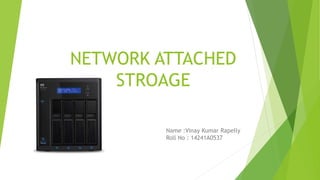
NETWORK ATTACHED
STROAGE
Name :Vinay Kumar Rapelly
Roll No : 14241A0537
CONTENTS
 Definition
 Introduction
 NAS Architecture
 NAS security
 Benefits of NAS
 Maintenance
 Disadvantages of NAS
 Conclusion
Definition:
 A storage device which attached directly to a
network, called network attached
storage(NAS)
 NAS provide file access services to computer
system and act like a storage element –
SNIA(Storage Network Industry Association)
 NFS (Network File System) is one of the
common Network Protocols implemented on
NAS.
 NAS is used to access and store different
type of data over a network. It contain one
or more hard disks.
Introduction:
 Originally NAS have the fixed disks, RAID arrays
magnetic tape drives which are exactly
connected to the networks( Eg. SAN and other
networks).
 NAS have its own LAN ip address for RAID
configuration which is attached to the
administrator computer that provide
applications to network workplace clients.
 Nowadays electronic data rising frequently,
so reliable data is a essential for small
business.
 NAS device is most efficient way to
centralize, share and protect information.
Compared with DAS NAS solutions are easier
to manage and improved performance.
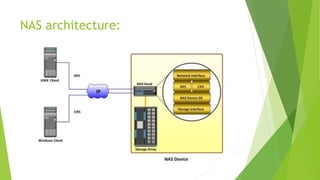
NAS architecture:
NAS Security:
 Every organization and industries mostly
depend upon security feature and NAS
device also face some security challenges
as other network components
 NAS system uses strong cryptography for
data hiding from unauthorized users.
 NAS have some main protection process in
these areas Physical security, General
network security, Access control lists.
 Physical security : NAS device should be
placed in separate room, where only
authorized access allowed.
 General network security : This is the
traditional networking security method
where the system administrator make sure
that these devices are accessed by only
companies ip addresses.
 Access control list : Administrators should
create a complex password to secure the
access to the NAS device.
Benefits of NAS:
 Efficient and Reliable
NAS servers contain streamlined
operating and hardware component, which let
the whole storage system more efficient.
Moreover, each hardware component is
physically separated from the network
servers, which is extremely helpful for system
reliability. Even the network server fails, the
whole system still can be accessed to store or
retrieve data.
 Flexible
The NAS storage system supports
multiple different users access the same file
simultaneously. The shared network resource
can be efficiently allocated to user based on
their specific need. For increasing storage
capacity, NAS system support directly
plugging a new expansion hard drive to the
NAS sever.
 Easy to use
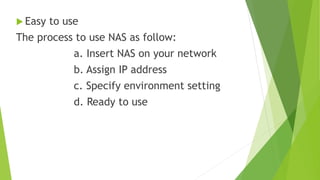
The process to use NAS as follow:
a. Insert NAS on your network
b. Assign IP address
c. Specify environment setting
d. Ready to use
 Data is protected
Most NAS device support RAID
(redundant array of independent disk) which
provide a way to storing the same data in
different place, so even one disk fails, user
still can access his or her data.
Maintenance:
 For the reliable file sharing and access speed , NAS
system need day to day maintenance. Such as,
1.Analyzing and monitoring the performance.
2.Hardware and software failures.
3.Performance tuning.
4.Storage management and user support.
 However once we configured the NAS system then
its very easy to maintain.
Disadvantages of NAS :
 The file transfer speed is not as fast as
DAS(direct attached storage).
 For using NAS device people should know
some basic knowledge about computer
networking.
 System available features depend upon the
NAS chip and firmware.
Conclusion
 Nowadays NAS is a new concept for the
computer network. This concept used for
development and growth of computer
networks.
 This NAS system is becoming a initial part
of the small scale industries and computing
environment.
Thanks

Network attached stroage

  • 1.
    NETWORK ATTACHED STROAGE Name :VinayKumar Rapelly Roll No : 14241A0537
  • 2.
    CONTENTS  Definition  Introduction NAS Architecture  NAS security  Benefits of NAS  Maintenance  Disadvantages of NAS  Conclusion
  • 3.
    Definition:  A storagedevice which attached directly to a network, called network attached storage(NAS)  NAS provide file access services to computer system and act like a storage element – SNIA(Storage Network Industry Association)  NFS (Network File System) is one of the common Network Protocols implemented on NAS.
  • 4.
     NAS isused to access and store different type of data over a network. It contain one or more hard disks.
  • 5.
    Introduction:  Originally NAShave the fixed disks, RAID arrays magnetic tape drives which are exactly connected to the networks( Eg. SAN and other networks).  NAS have its own LAN ip address for RAID configuration which is attached to the administrator computer that provide applications to network workplace clients.
  • 6.
     Nowadays electronicdata rising frequently, so reliable data is a essential for small business.  NAS device is most efficient way to centralize, share and protect information. Compared with DAS NAS solutions are easier to manage and improved performance.
  • 7.
  • 8.
    NAS Security:  Everyorganization and industries mostly depend upon security feature and NAS device also face some security challenges as other network components  NAS system uses strong cryptography for data hiding from unauthorized users.  NAS have some main protection process in these areas Physical security, General network security, Access control lists.
  • 9.
     Physical security: NAS device should be placed in separate room, where only authorized access allowed.  General network security : This is the traditional networking security method where the system administrator make sure that these devices are accessed by only companies ip addresses.  Access control list : Administrators should create a complex password to secure the access to the NAS device.
  • 10.
    Benefits of NAS: Efficient and Reliable NAS servers contain streamlined operating and hardware component, which let the whole storage system more efficient. Moreover, each hardware component is physically separated from the network servers, which is extremely helpful for system reliability. Even the network server fails, the whole system still can be accessed to store or retrieve data.
  • 11.
     Flexible The NASstorage system supports multiple different users access the same file simultaneously. The shared network resource can be efficiently allocated to user based on their specific need. For increasing storage capacity, NAS system support directly plugging a new expansion hard drive to the NAS sever.
  • 12.
     Easy touse The process to use NAS as follow: a. Insert NAS on your network b. Assign IP address c. Specify environment setting d. Ready to use
  • 13.
     Data isprotected Most NAS device support RAID (redundant array of independent disk) which provide a way to storing the same data in different place, so even one disk fails, user still can access his or her data.
  • 14.
    Maintenance:  For thereliable file sharing and access speed , NAS system need day to day maintenance. Such as, 1.Analyzing and monitoring the performance. 2.Hardware and software failures. 3.Performance tuning. 4.Storage management and user support.  However once we configured the NAS system then its very easy to maintain.
  • 15.
    Disadvantages of NAS:  The file transfer speed is not as fast as DAS(direct attached storage).  For using NAS device people should know some basic knowledge about computer networking.  System available features depend upon the NAS chip and firmware.
  • 16.
    Conclusion  Nowadays NASis a new concept for the computer network. This concept used for development and growth of computer networks.  This NAS system is becoming a initial part of the small scale industries and computing environment.
  • 17.