.NET Development
Fahmi KALLEL
ERP Consultant and Project Manager at EDI
Fullstack .NET Certified MCSA / CCNA Developer
Course Outline
 .NET Framework
 C# Syntax (OO Concepts / Loop / Structure … )
 MVC Web Application
 Entity Framework Core
 ORM and Database
 LINQ Language Written DS
Authorized Document
Project Exam
The Last Week
Chapter 1 : Introduction
Course Plan
 .NET Framework
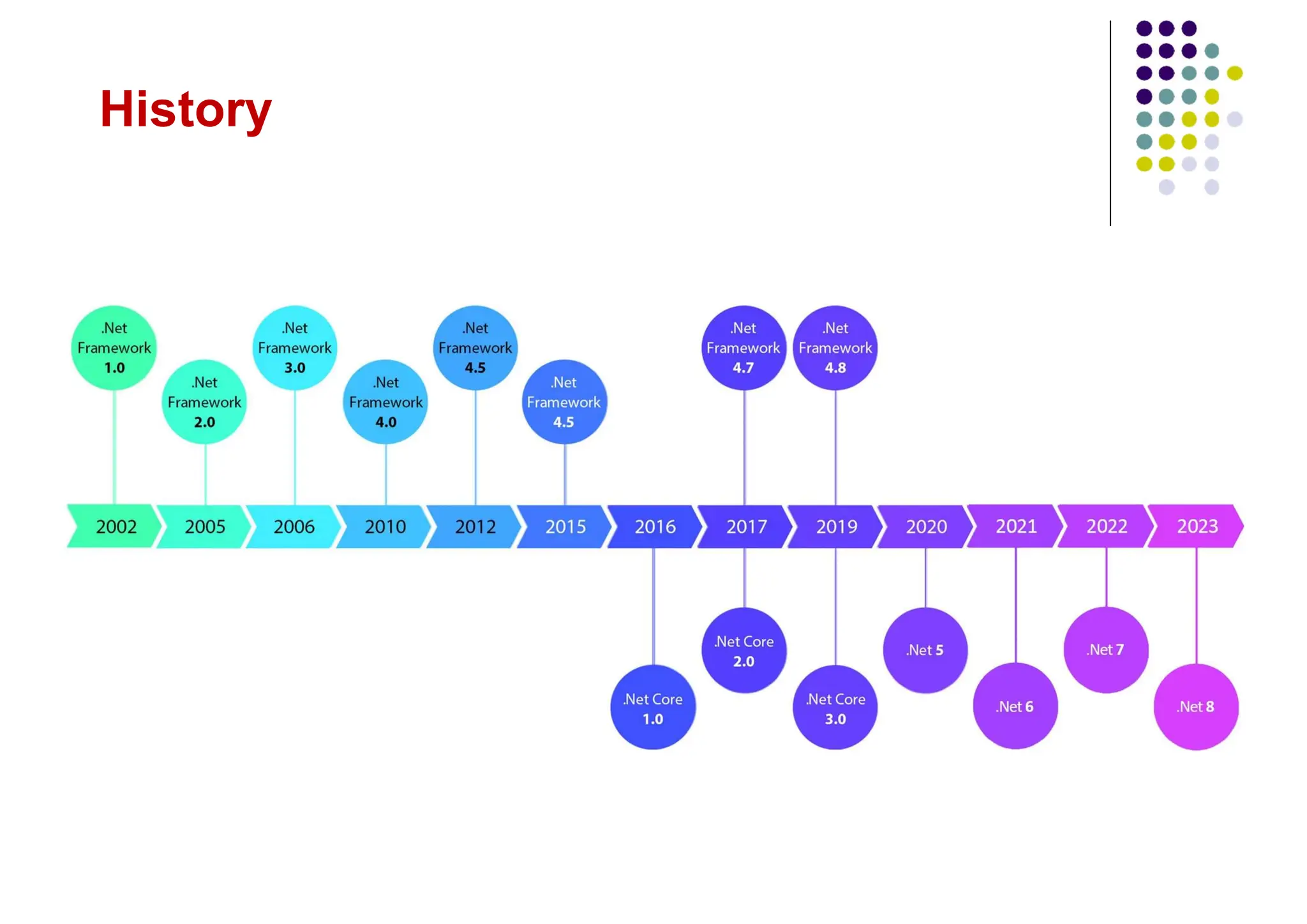
 History
 The C# Language
 Visual Studio Editor
 Project Types
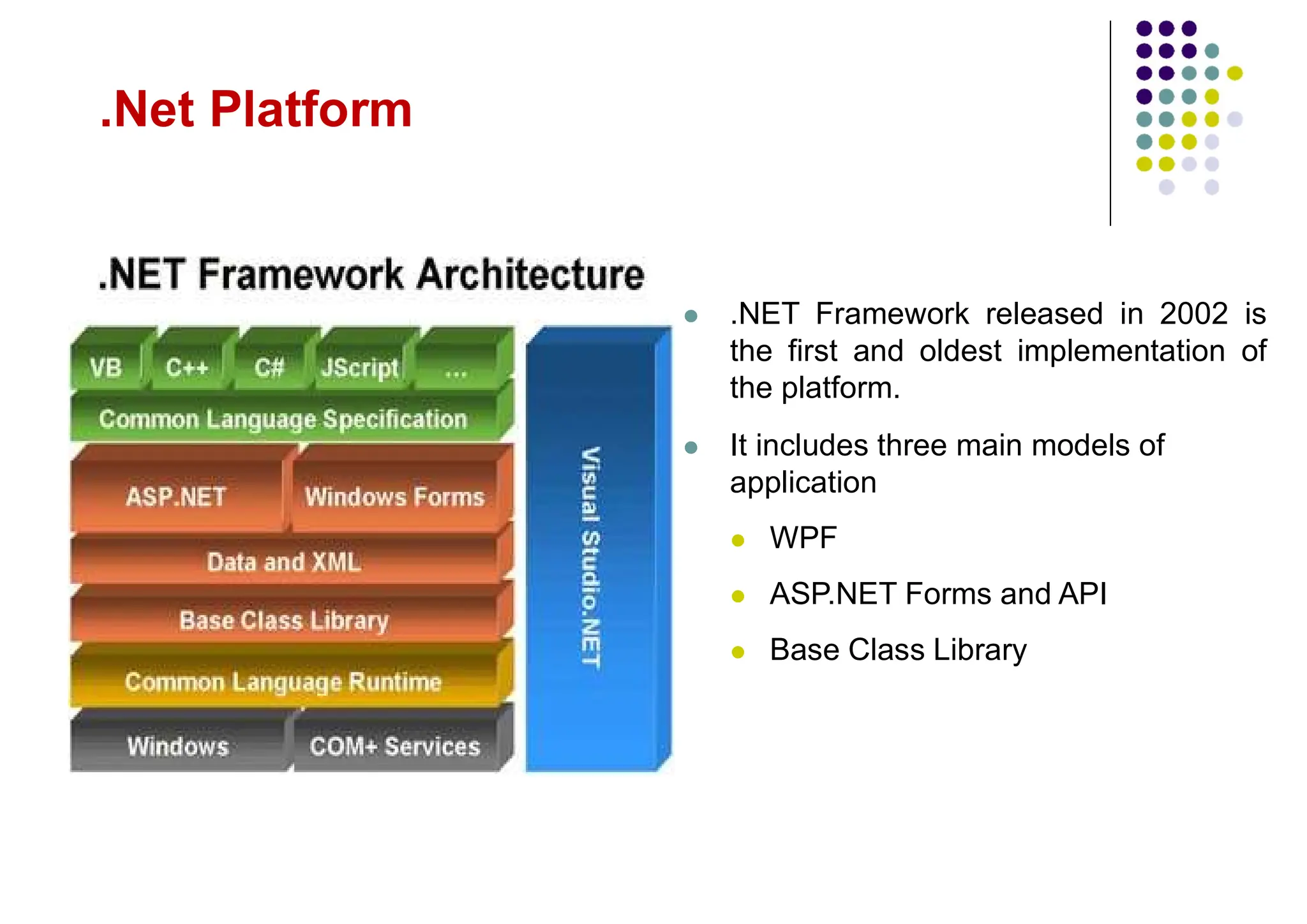
.Net Platform
 .NET Framework released in 2002 is
the first and oldest implementation of
the platform.
 It includes three main models of
application
 WPF
 ASP.NET Forms and API
 Base Class Library
History
.Net Platform
 .Net is a comprehensive platform for developing, deploying,
and running Windows, Web, Mobile applications,…..
 This development platform includes:
 A runtime to execute applications
 Multiple languages
 A complete API (Application Programming Interface)
 A development environment
 .NET Core is the new version of .NET Framework
 A free, open-source, and multi-purpose platform developed by Microsoft.
 Can run on the operating systems Windows, macOS, and Linux.
 .NET Core can be used to create different types of applications such as
mobile, desktop, web, cloud, IoT, machine learning, microservices,
games, etc.
The .NET CORE Framework
8
 .NETCore is written from scratch to create a modular, lightweight, fast and
multi-platform Framework.
 Includes the basic features required to run a .NET Core application.
 Other features are provided in the form of NuGet packages, which you can
add to your application if necessary.
 .NETCore accelerates the performance of applications, reduces the memory
overhead and is easy to maintain.
The .NET CORE Framework
9
Features .NET Core
 Open-source framework.
 Cross-platform : .NET Core runs on Windows, macOS, and Linux operating
systems. There are different runtimes for each operating system that
executes the code and generates the same output.
 Wide range of applications: Different types of applications can be
developed and run on the .NET Core platform such as mobile, desktop, web,
cloud, IoT, machine learning, microservices, games, etc.
The .NET CORE Framework
10
 Modular architecture: .NET Core supports the modular architecture approach
using NuGet packages. There are different NuGet packages for various features
that can be added to the .NET Core project according to the needs.
 CLI tools: The command line interface (CLI) is a new cross-platform tool for
creating, restoring packages, building, running, and publishing .NET
applications.
The .NET CORE Framework
11
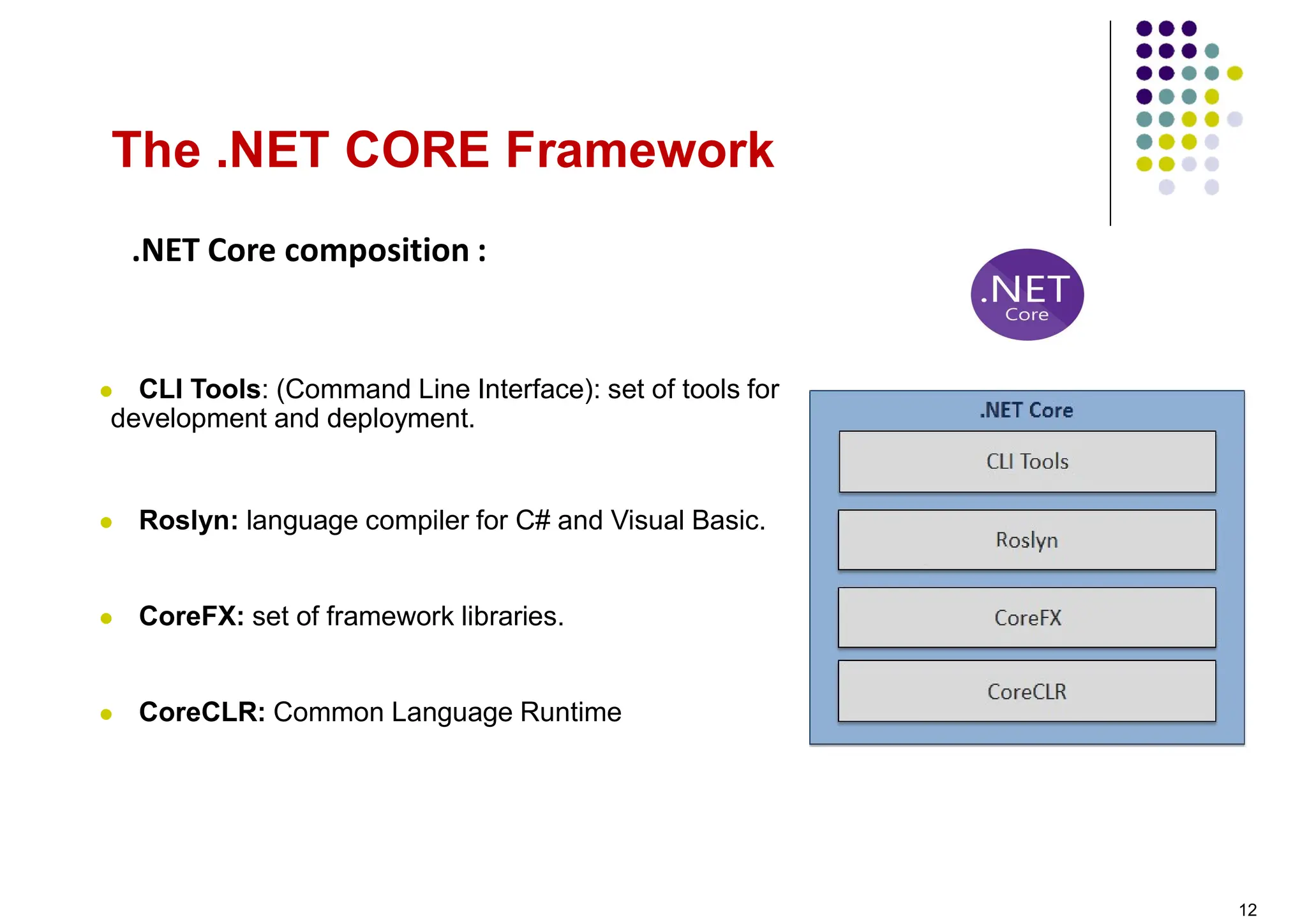
.NET Core composition :
 CLI Tools: (Command Line Interface): set of tools for
development and deployment.
 Roslyn: language compiler for C# and Visual Basic.
 CoreFX: set of framework libraries.
 CoreCLR: Common Language Runtime
The .NET CORE Framework
12
C# Language
 C# (C Sharp) is an object-oriented programming language, marketed by
Microsoft since 2002 and intended for development on the Microsoft .NET
platform.
 It is derived from C++ and very close to Java from which it takes the
general syntax as well as the concepts
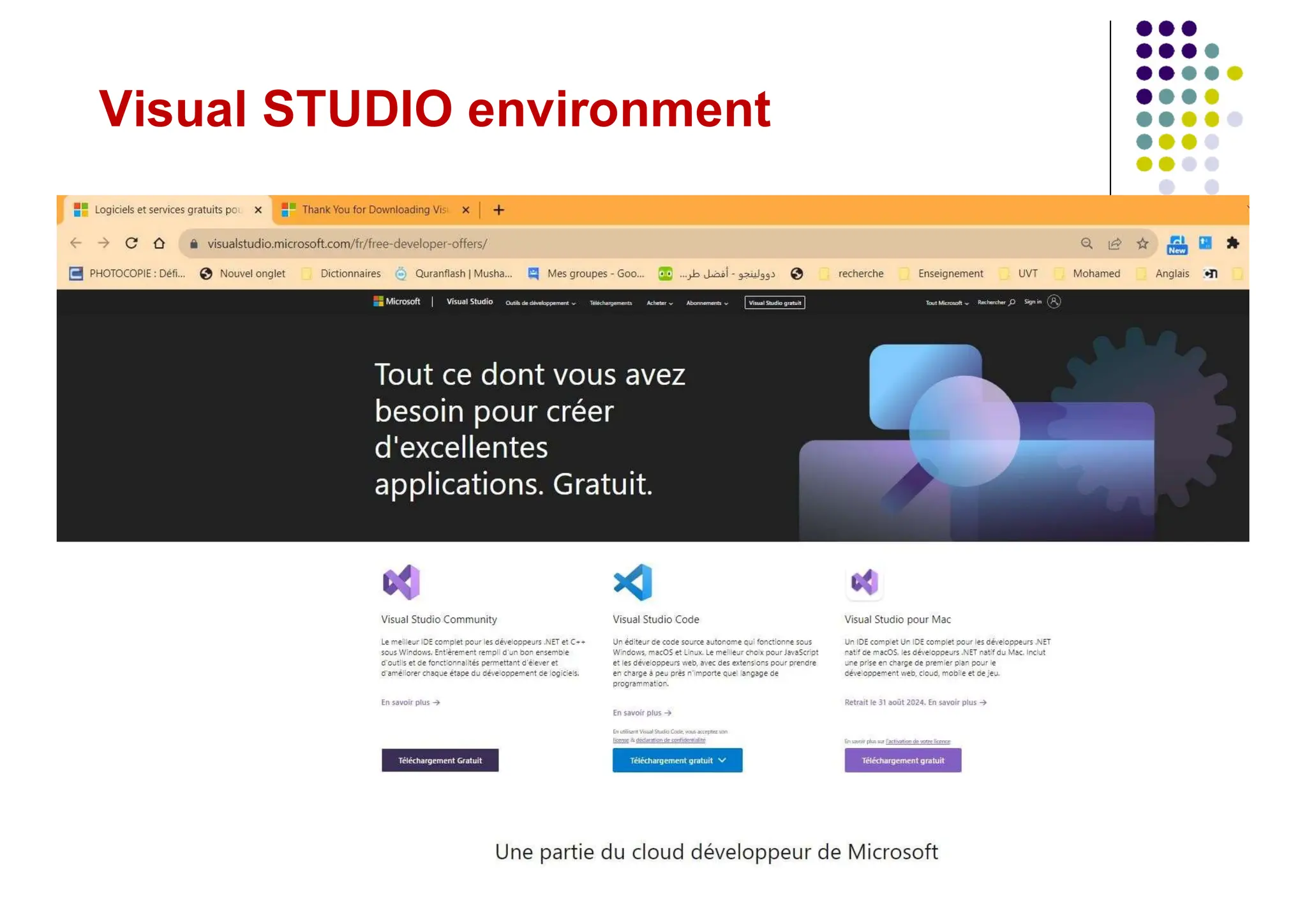
Visual STUDIO environment
Some types of project
Depending on the type of application we want to create, we can choose the
appropriate template :
 Console Application (.NET Core)
 Windows From Application (.NET Framework)
 Class Library (.NET Core)
 Web Application ASP MVC (.NET Core)
 Rest API (.NET Core)
 …
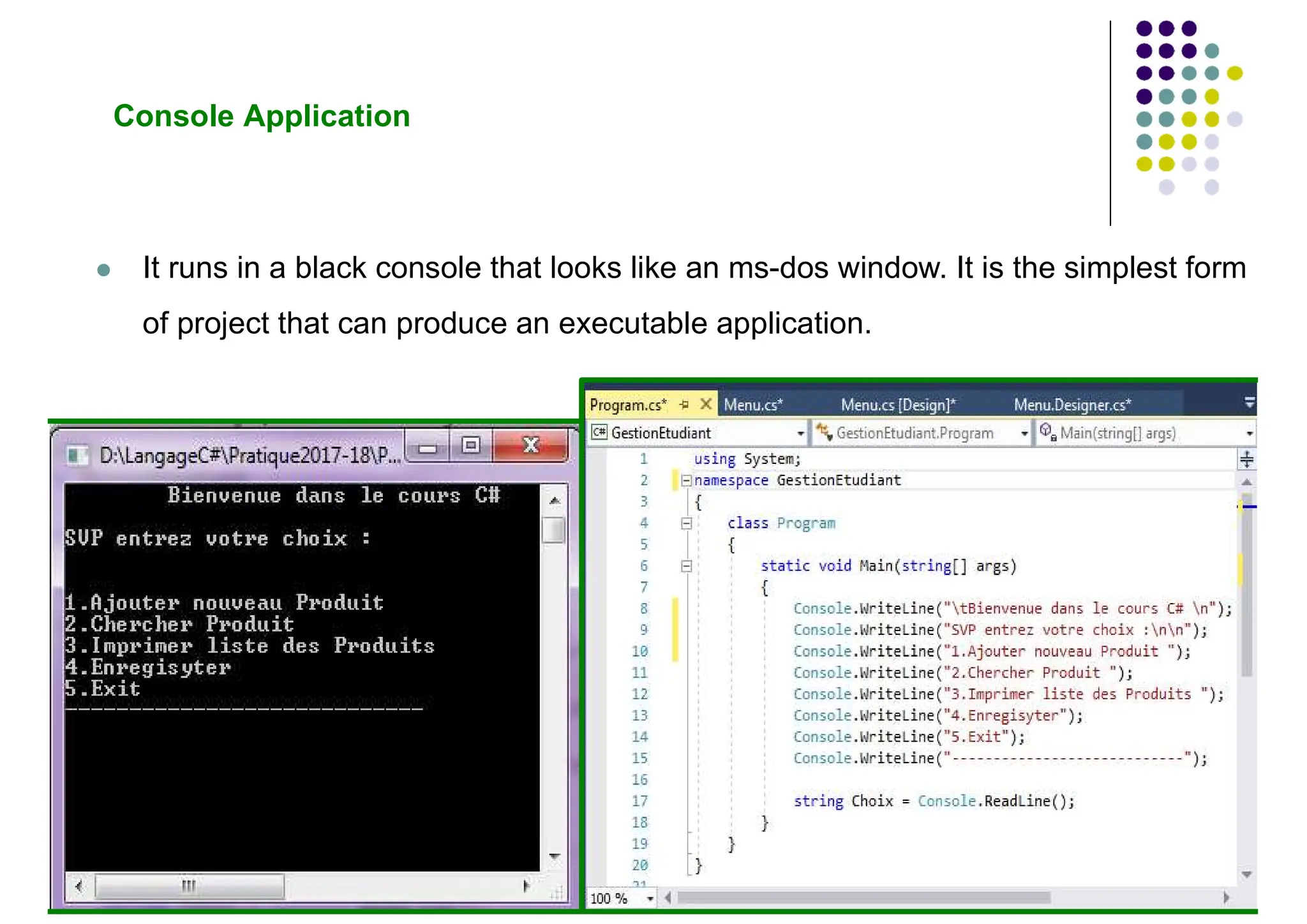
Console Application
 It runs in a black console that looks like an ms-dos window. It is the simplest form
of project that can produce an executable application.
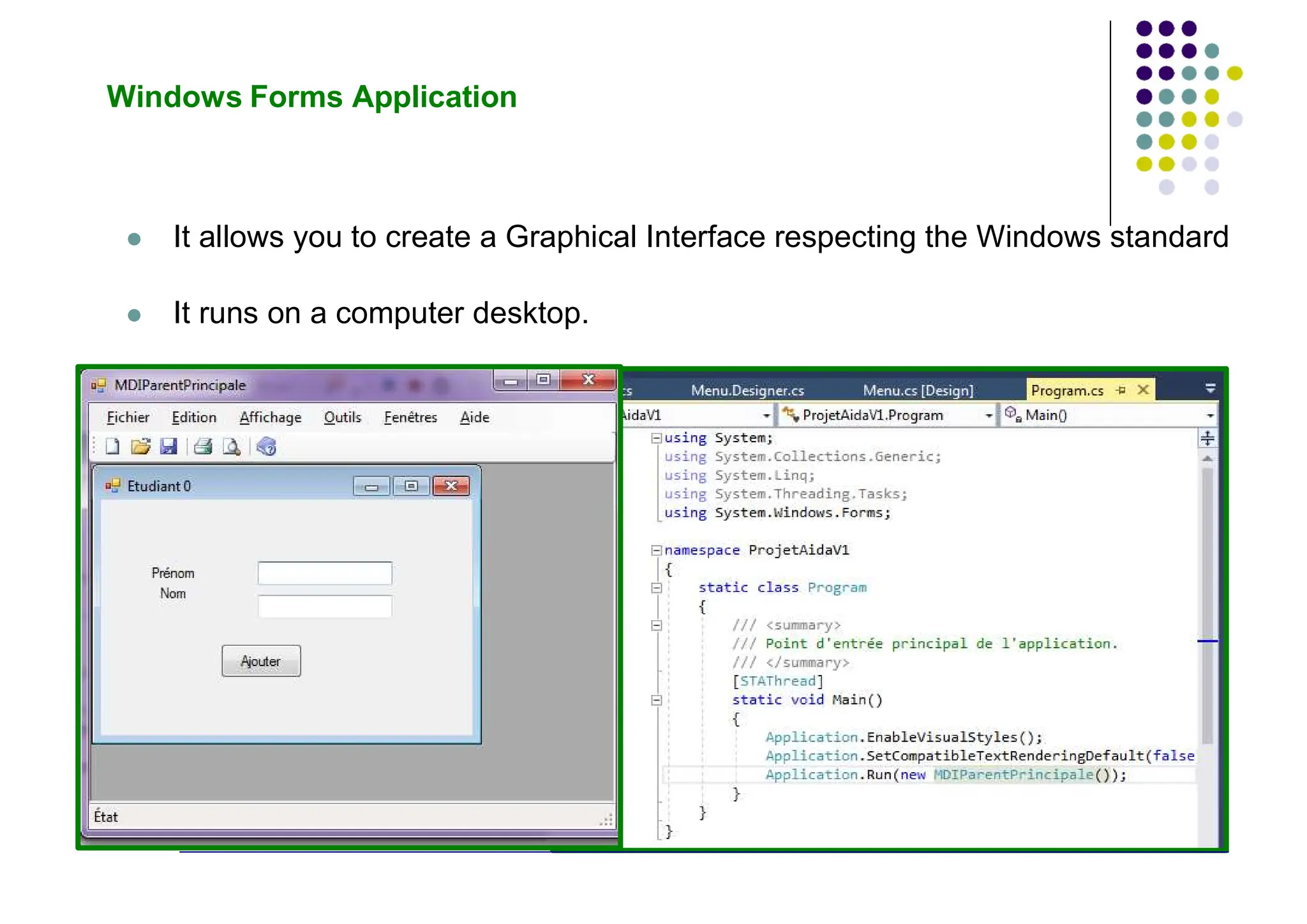
Windows Forms Application
 It allows you to create a Graphical Interface respecting the Windows standard
 It runs on a computer desktop.
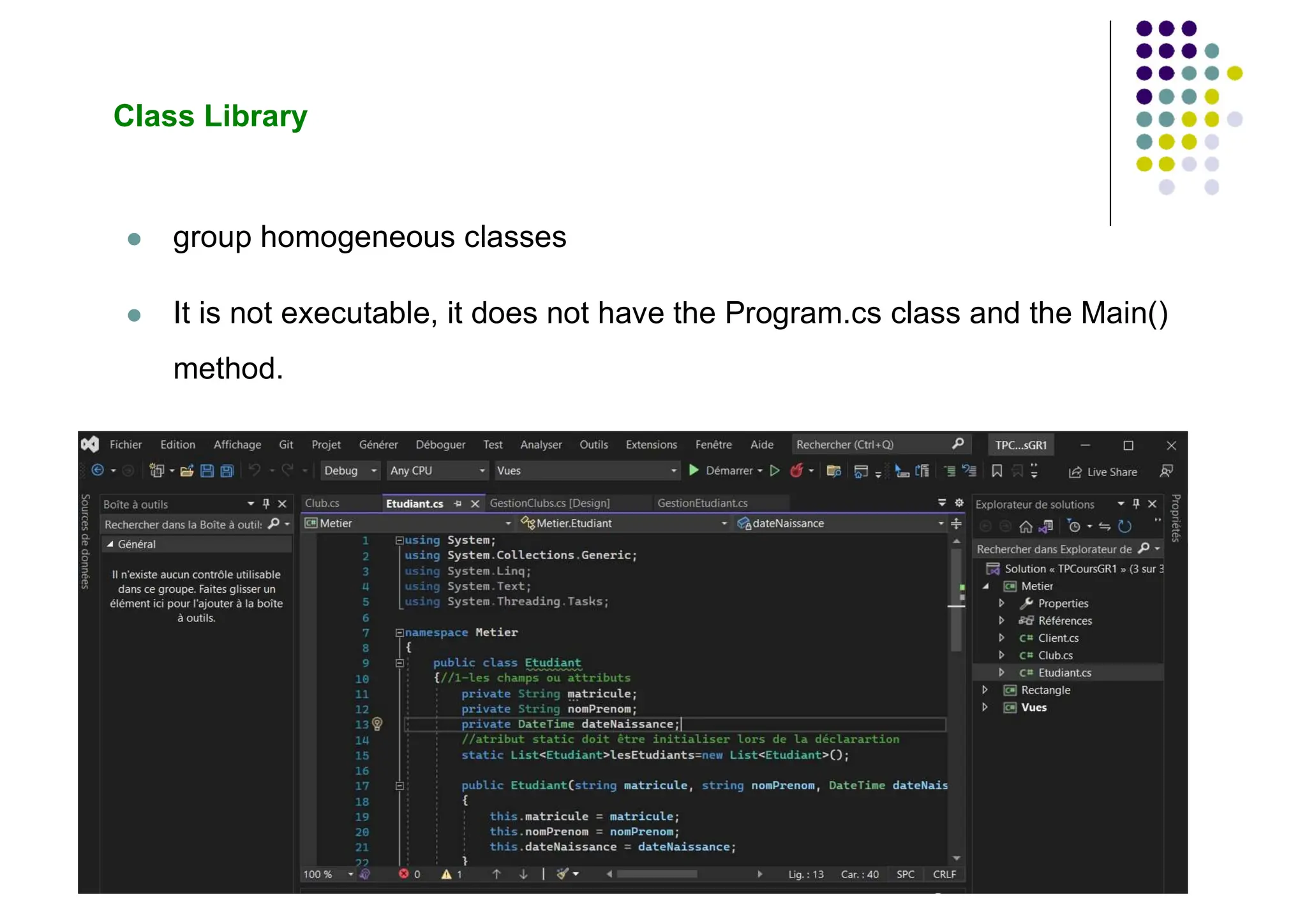
Class Library
 group homogeneous classes
 It is not executable, it does not have the Program.cs class and the Main()
method.
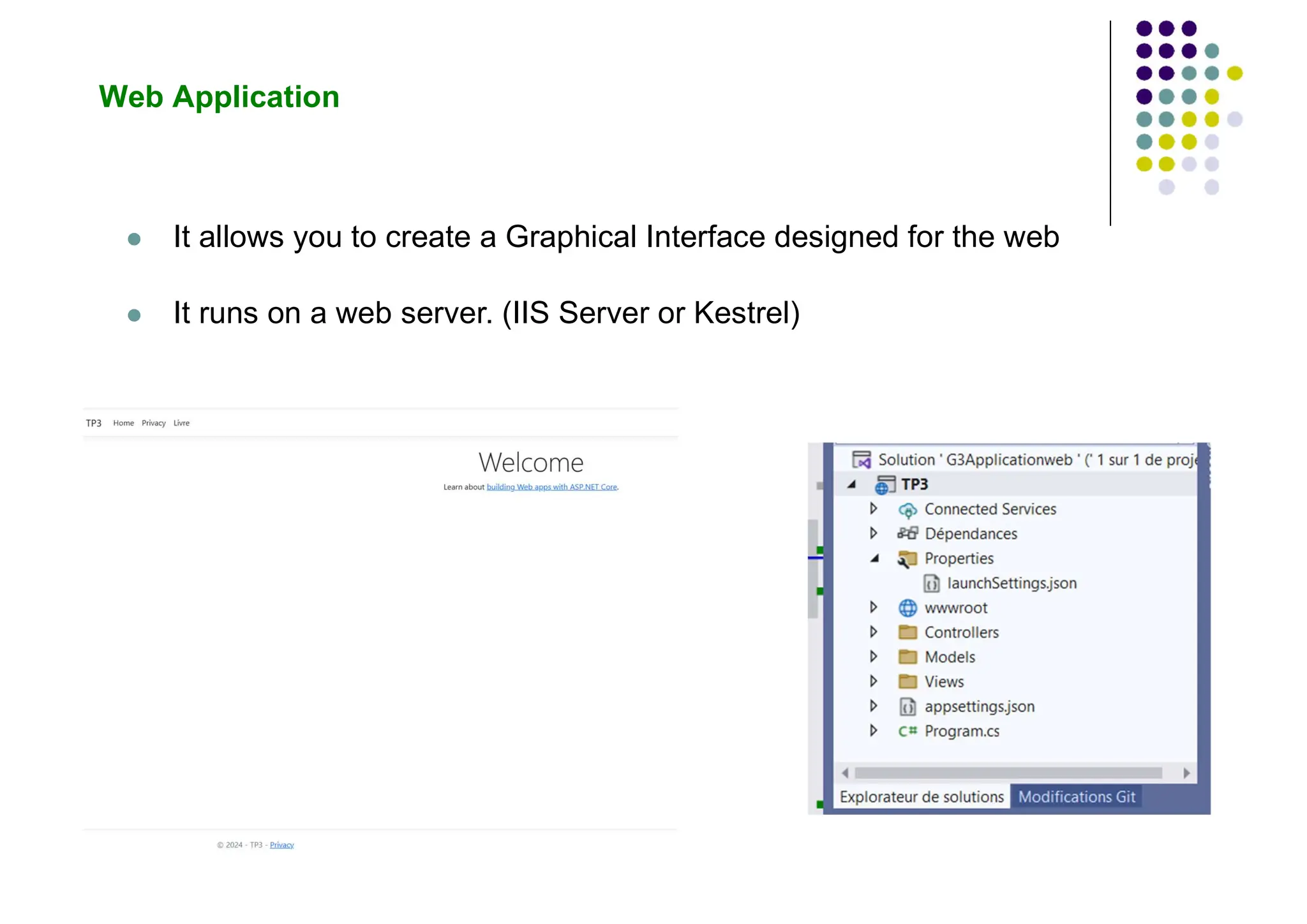
Web Application
 It allows you to create a Graphical Interface designed for the web
 It runs on a web server. (IIS Server or Kestrel)
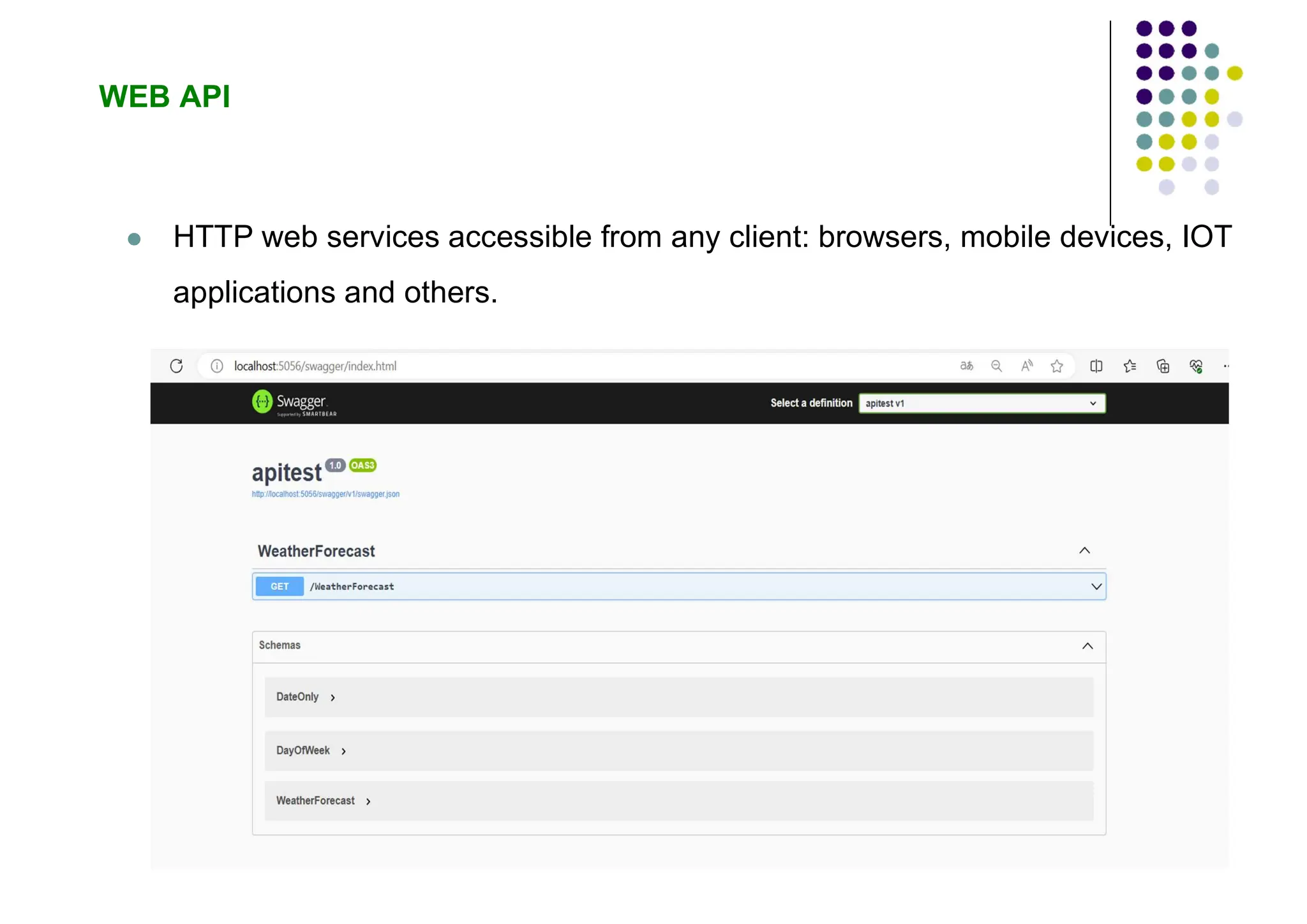
WEB API
 HTTP web services accessible from any client: browsers, mobile devices, IOT
applications and others.
Net Development- chaptfargzrfdabegtzrger1.pdf

  • 1.
    .NET Development Fahmi KALLEL ERPConsultant and Project Manager at EDI Fullstack .NET Certified MCSA / CCNA Developer
  • 2.
    Course Outline  .NETFramework  C# Syntax (OO Concepts / Loop / Structure … )  MVC Web Application  Entity Framework Core  ORM and Database  LINQ Language Written DS Authorized Document Project Exam The Last Week
  • 3.
    Chapter 1 :Introduction
  • 4.
    Course Plan  .NETFramework  History  The C# Language  Visual Studio Editor  Project Types
  • 5.
    .Net Platform  .NETFramework released in 2002 is the first and oldest implementation of the platform.  It includes three main models of application  WPF  ASP.NET Forms and API  Base Class Library
  • 6.
  • 7.
    .Net Platform  .Netis a comprehensive platform for developing, deploying, and running Windows, Web, Mobile applications,…..  This development platform includes:  A runtime to execute applications  Multiple languages  A complete API (Application Programming Interface)  A development environment
  • 8.
     .NET Coreis the new version of .NET Framework  A free, open-source, and multi-purpose platform developed by Microsoft.  Can run on the operating systems Windows, macOS, and Linux.  .NET Core can be used to create different types of applications such as mobile, desktop, web, cloud, IoT, machine learning, microservices, games, etc. The .NET CORE Framework 8
  • 9.
     .NETCore iswritten from scratch to create a modular, lightweight, fast and multi-platform Framework.  Includes the basic features required to run a .NET Core application.  Other features are provided in the form of NuGet packages, which you can add to your application if necessary.  .NETCore accelerates the performance of applications, reduces the memory overhead and is easy to maintain. The .NET CORE Framework 9
  • 10.
    Features .NET Core Open-source framework.  Cross-platform : .NET Core runs on Windows, macOS, and Linux operating systems. There are different runtimes for each operating system that executes the code and generates the same output.  Wide range of applications: Different types of applications can be developed and run on the .NET Core platform such as mobile, desktop, web, cloud, IoT, machine learning, microservices, games, etc. The .NET CORE Framework 10
  • 11.
     Modular architecture:.NET Core supports the modular architecture approach using NuGet packages. There are different NuGet packages for various features that can be added to the .NET Core project according to the needs.  CLI tools: The command line interface (CLI) is a new cross-platform tool for creating, restoring packages, building, running, and publishing .NET applications. The .NET CORE Framework 11
  • 12.
    .NET Core composition:  CLI Tools: (Command Line Interface): set of tools for development and deployment.  Roslyn: language compiler for C# and Visual Basic.  CoreFX: set of framework libraries.  CoreCLR: Common Language Runtime The .NET CORE Framework 12
  • 13.
    C# Language  C#(C Sharp) is an object-oriented programming language, marketed by Microsoft since 2002 and intended for development on the Microsoft .NET platform.  It is derived from C++ and very close to Java from which it takes the general syntax as well as the concepts
  • 14.
  • 15.
    Some types ofproject Depending on the type of application we want to create, we can choose the appropriate template :  Console Application (.NET Core)  Windows From Application (.NET Framework)  Class Library (.NET Core)  Web Application ASP MVC (.NET Core)  Rest API (.NET Core)  …
  • 16.
    Console Application  Itruns in a black console that looks like an ms-dos window. It is the simplest form of project that can produce an executable application.
  • 17.
    Windows Forms Application It allows you to create a Graphical Interface respecting the Windows standard  It runs on a computer desktop.
  • 18.
    Class Library  grouphomogeneous classes  It is not executable, it does not have the Program.cs class and the Main() method.
  • 19.
    Web Application  Itallows you to create a Graphical Interface designed for the web  It runs on a web server. (IIS Server or Kestrel)
  • 20.
    WEB API  HTTPweb services accessible from any client: browsers, mobile devices, IOT applications and others.