NEF – PI – PROGRESS TESTS 7-12 - READING
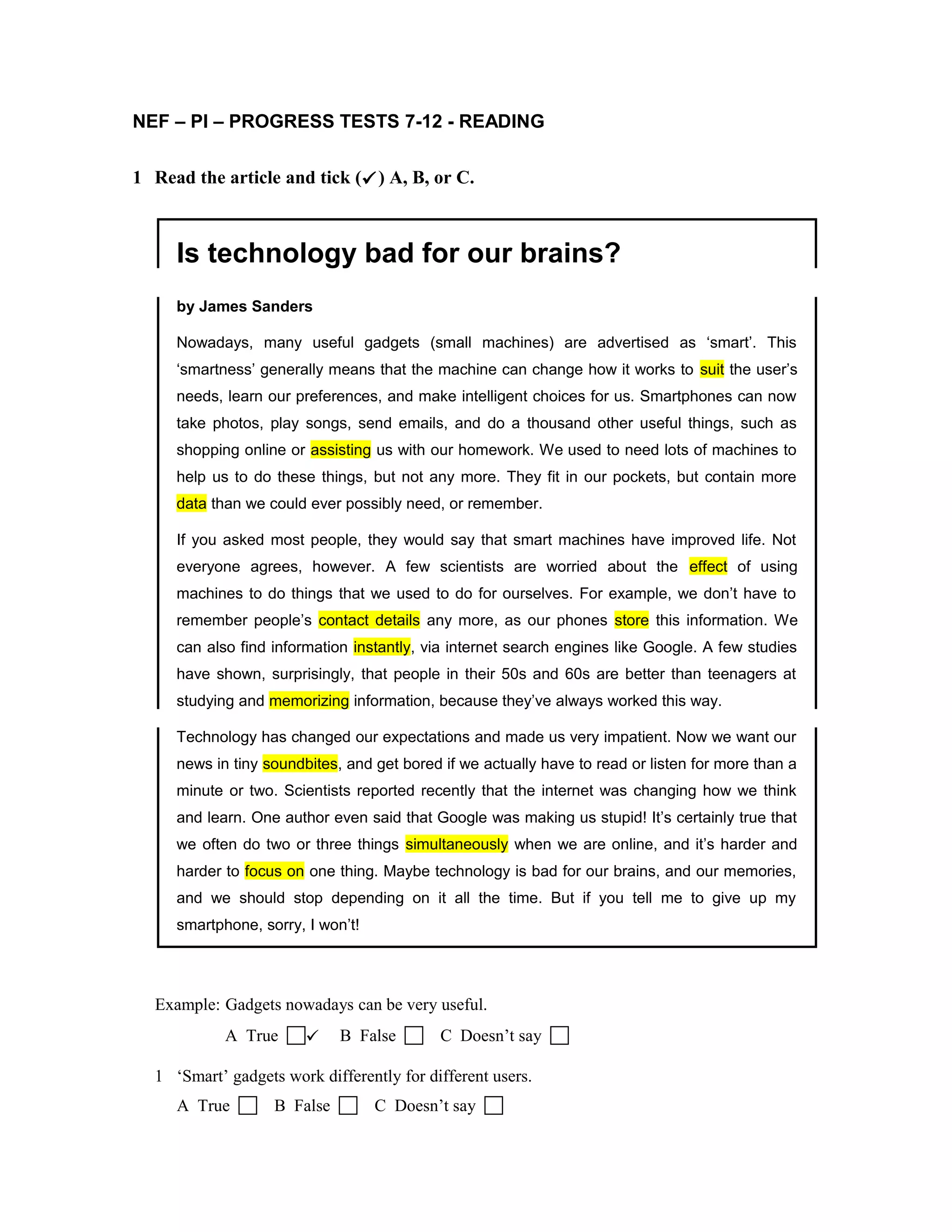
1 Read the article and tick () A, B, or C.
Is technology bad for our brains?
by James Sanders
Nowadays, many useful gadgets (small machines) are advertised as ‘smart’. This
‘smartness’ generally means that the machine can change how it works to suit the user’s
needs, learn our preferences, and make intelligent choices for us. Smartphones can now
take photos, play songs, send emails, and do a thousand other useful things, such as
shopping online or assisting us with our homework. We used to need lots of machines to
help us to do these things, but not any more. They fit in our pockets, but contain more
data than we could ever possibly need, or remember.
If you asked most people, they would say that smart machines have improved life. Not
everyone agrees, however. A few scientists are worried about the effect of using
machines to do things that we used to do for ourselves. For example, we don’t have to
remember people’s contact details any more, as our phones store this information. We
can also find information instantly, via internet search engines like Google. A few studies
have shown, surprisingly, that people in their 50s and 60s are better than teenagers at
studying and memorizing information, because they’ve always worked this way.
Technology has changed our expectations and made us very impatient. Now we want our
news in tiny soundbites, and get bored if we actually have to read or listen for more than a
minute or two. Scientists reported recently that the internet was changing how we think
and learn. One author even said that Google was making us stupid! It’s certainly true that
we often do two or three things simultaneously when we are online, and it’s harder and
harder to focus on one thing. Maybe technology is bad for our brains, and our memories,
and we should stop depending on it all the time. But if you tell me to give up my
smartphone, sorry, I won’t!
Example: Gadgets nowadays can be very useful.
A True  B False  C Doesn’t say 
1 ‘Smart’ gadgets work differently for different users.
A True  B False  C Doesn’t say 
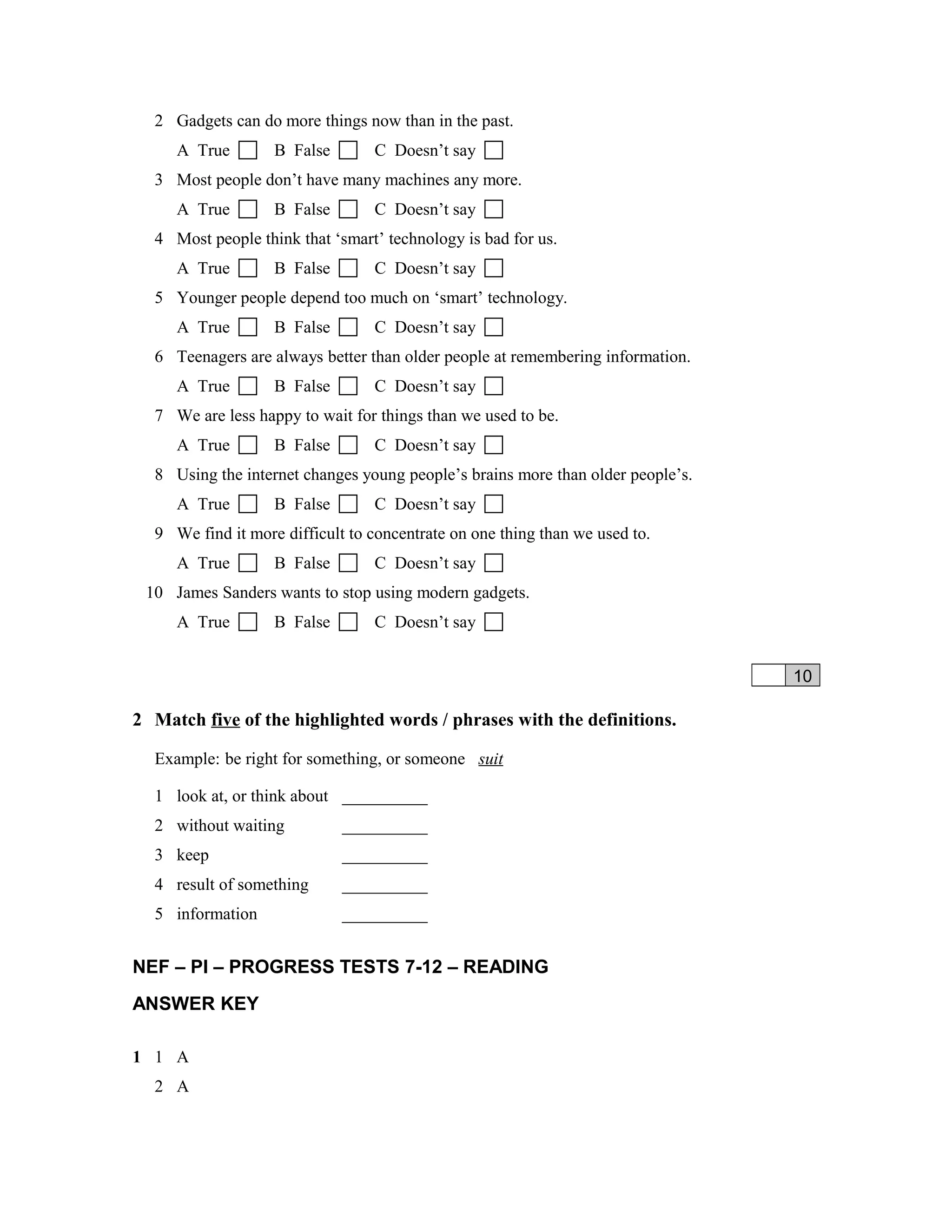
2 Gadgets can do more things now than in the past.
A True  B False  C Doesn’t say 
3 Most people don’t have many machines any more.
A True  B False  C Doesn’t say 
4 Most people think that ‘smart’ technology is bad for us.
A True  B False  C Doesn’t say 
5 Younger people depend too much on ‘smart’ technology.
A True  B False  C Doesn’t say 
6 Teenagers are always better than older people at remembering information.
A True  B False  C Doesn’t say 
7 We are less happy to wait for things than we used to be.
A True  B False  C Doesn’t say 
8 Using the internet changes young people’s brains more than older people’s.
A True  B False  C Doesn’t say 
9 We find it more difficult to concentrate on one thing than we used to.
A True  B False  C Doesn’t say 
10 James Sanders wants to stop using modern gadgets.
A True  B False  C Doesn’t say 
10
2 Match five of the highlighted words / phrases with the definitions.
Example: be right for something, or someone suit
1 look at, or think about __________
2 without waiting __________
3 keep __________
4 result of something __________
5 information __________
NEF – PI – PROGRESS TESTS 7-12 – READING
ANSWER KEY
1 1 A
2 A
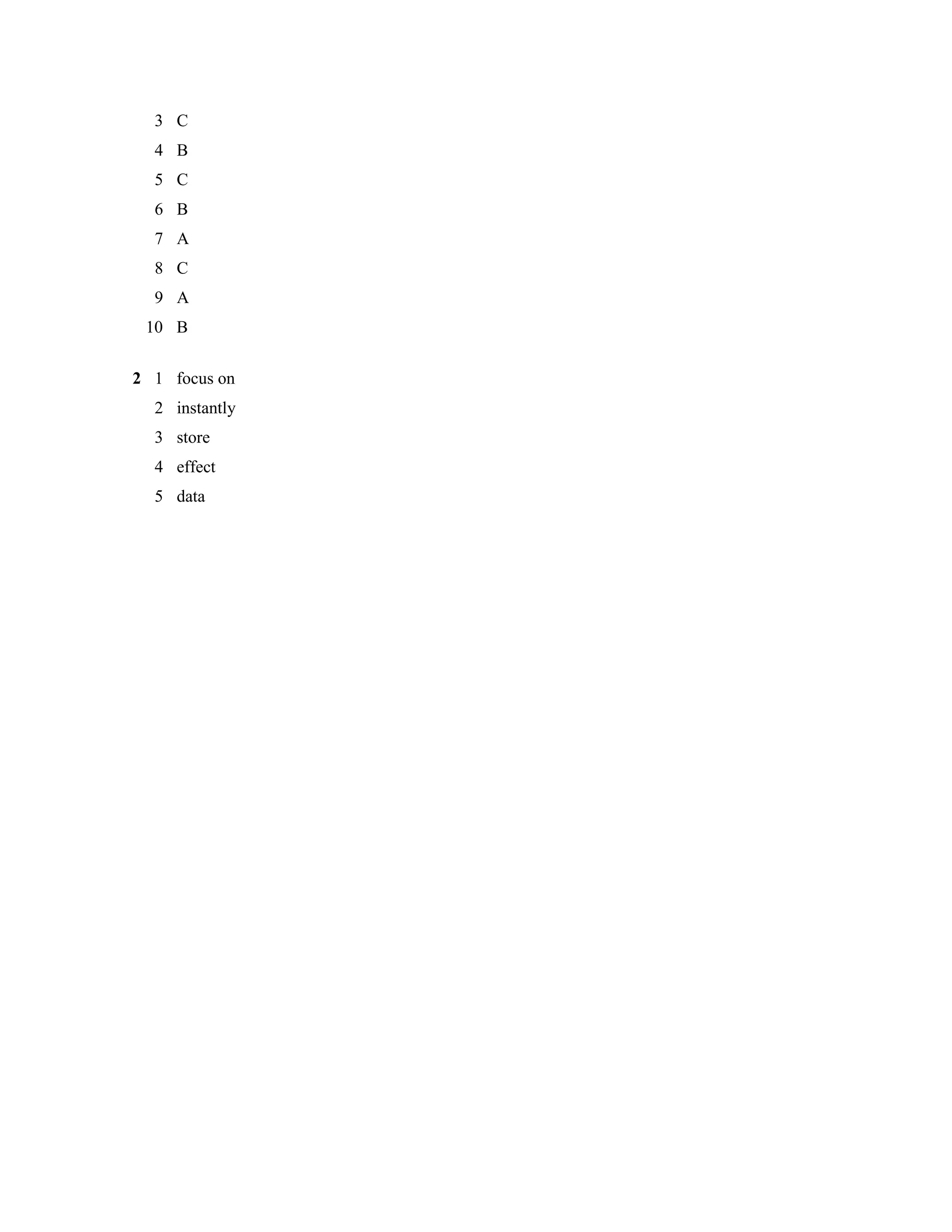
3 C
4 B
5 C
6 B
7 A
8 C
9 A
10 B
2 1 focus on
2 instantly
3 store
4 effect
5 data

NEF – PI – PROGRESS TESTS 7-12 - READING

  • 1.
    NEF – PI– PROGRESS TESTS 7-12 - READING 1 Read the article and tick () A, B, or C. Is technology bad for our brains? by James Sanders Nowadays, many useful gadgets (small machines) are advertised as ‘smart’. This ‘smartness’ generally means that the machine can change how it works to suit the user’s needs, learn our preferences, and make intelligent choices for us. Smartphones can now take photos, play songs, send emails, and do a thousand other useful things, such as shopping online or assisting us with our homework. We used to need lots of machines to help us to do these things, but not any more. They fit in our pockets, but contain more data than we could ever possibly need, or remember. If you asked most people, they would say that smart machines have improved life. Not everyone agrees, however. A few scientists are worried about the effect of using machines to do things that we used to do for ourselves. For example, we don’t have to remember people’s contact details any more, as our phones store this information. We can also find information instantly, via internet search engines like Google. A few studies have shown, surprisingly, that people in their 50s and 60s are better than teenagers at studying and memorizing information, because they’ve always worked this way. Technology has changed our expectations and made us very impatient. Now we want our news in tiny soundbites, and get bored if we actually have to read or listen for more than a minute or two. Scientists reported recently that the internet was changing how we think and learn. One author even said that Google was making us stupid! It’s certainly true that we often do two or three things simultaneously when we are online, and it’s harder and harder to focus on one thing. Maybe technology is bad for our brains, and our memories, and we should stop depending on it all the time. But if you tell me to give up my smartphone, sorry, I won’t! Example: Gadgets nowadays can be very useful. A True  B False  C Doesn’t say  1 ‘Smart’ gadgets work differently for different users. A True  B False  C Doesn’t say 
  • 2.
    2 Gadgets cando more things now than in the past. A True  B False  C Doesn’t say  3 Most people don’t have many machines any more. A True  B False  C Doesn’t say  4 Most people think that ‘smart’ technology is bad for us. A True  B False  C Doesn’t say  5 Younger people depend too much on ‘smart’ technology. A True  B False  C Doesn’t say  6 Teenagers are always better than older people at remembering information. A True  B False  C Doesn’t say  7 We are less happy to wait for things than we used to be. A True  B False  C Doesn’t say  8 Using the internet changes young people’s brains more than older people’s. A True  B False  C Doesn’t say  9 We find it more difficult to concentrate on one thing than we used to. A True  B False  C Doesn’t say  10 James Sanders wants to stop using modern gadgets. A True  B False  C Doesn’t say  10 2 Match five of the highlighted words / phrases with the definitions. Example: be right for something, or someone suit 1 look at, or think about __________ 2 without waiting __________ 3 keep __________ 4 result of something __________ 5 information __________ NEF – PI – PROGRESS TESTS 7-12 – READING ANSWER KEY 1 1 A 2 A
  • 3.
    3 C 4 B 5C 6 B 7 A 8 C 9 A 10 B 2 1 focus on 2 instantly 3 store 4 effect 5 data