NATIONAL EMERGENCY
ACTION PLAN
2021
POLIO ERADICATION
INITIATIVE, AFGHANISTAN
March 2022
Contents
• What is Polio and PEI
• Epidemiology and Situational Overview
• Report and cases in 2021
• Key challenges
• NEIP goals and objectives
• Strategic Interventions ..........
• Communications
• Identification, mapping and coverage of High-Risk Mobile Populations
• Monitoring
• Effective vaccine and cold chain management and accountability
What is Polio ??
Polio or poliomyelitis is a viral disease caused by poliovirus which
may affect the spinal cord causing muscle weakness and paralysis. The
Poliomyelitis is a highly infectious disease that most commonly affects
children under the age of 5 year .
The facts about polio :
1. Polio mainly affects children under age 5.
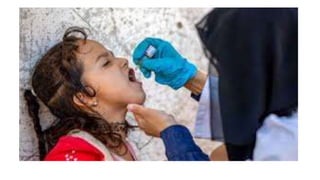
2. There is no cure, but polio is preventable with a vaccine
3. Only two countries remain endemic : Pakistan and Afghanistan
4. We’ve reduced cases by 99.9% since 1988.
5. Until we end polio forever, every child is at risk.
Epidemiology and Situational Overview
• The year 2020 was a challenging year for Afghanistan’s polio eradication program due
to not access to all children , ban to house to house vaccination this led to no vaccination
campaigns from April to July 2019 ( over 4 months)
• During 2020, wild poliovirus transmission in Afghanistan spread from South, Southeast
and East regions to North and Northeast regions of the country
• Transmission started to appear outside the known reservoir regions and polio cases were
reported from South East (6), West (8) and one case each from North region and
Badakhshan province.
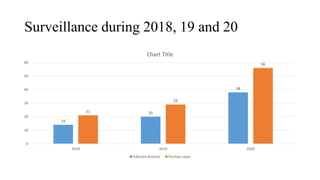
Surveillance during 2018, 19 and 20
14
20
38
21
29
56
0
10
20
30
40
50
60
2018 2019 2020
Chart Title
Infected districts Positive cases
Epidemiology
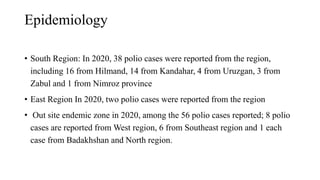
• South Region: In 2020, 38 polio cases were reported from the region,
including 16 from Hilmand, 14 from Kandahar, 4 from Uruzgan, 3 from
Zabul and 1 from Nimroz province
• East Region In 2020, two polio cases were reported from the region
• Out site endemic zone in 2020, among the 56 polio cases reported; 8 polio
cases are reported from West region, 6 from Southeast region and 1 each
case from Badakhshan and North region.
Key Challenges and Risks
1. Inaccessibility and inability to perform house to house campaigns
2. Sub optimal campaign quality
3. Refusals
4. High Population Mobility
5. Chronically low Routine Immunization coverage in the polio high
risk provinces
6. Continued COVID-19 Pandemic
Development and operationalization of
NEAP 2021
• Improving the Implementation Mechanisms through Strengthened
leadership and Management of PEI programm at the central and
provincial levels
• Implementation of plan
• Costing
• Accountability framework
Coordination bodies
National steering committee:
• Chaired by H.E. the President of IRA
• Attendees: Minister of Public Health, NEOC Coordinator with NEOC assigned
staff, One-UN Team leader including GPEI implementing partners
• Meets quarterly or biannually to review the progress and garner support from all
parts of the Government including line ministries and Governor
Polio executive committee/Polio partners dialogue:
• Chaired by H.E. the Minister of Health, and participated by National NEOC
Coordinator, NEOC senior staff, country representative of WHO & UNICEF,
International partners including GAVI and World Bank, and program executives
• Meets quarterly or scheduled based on the need, to review the progress and
challenges in polio eradication and provide feedback to H.E. The President
Goals
• To stop transmission of wild poliovirus in the South and East regions
of the country
• Respond to / stop any WPV-1 outbreaks in the non-reservoir areas
• Prevent the spread to currently polio-free areas
• Stop the cVDPV2 outbreaks by third quarter of 2021
Objectives
1. To stop ongoing WPV-1 transmission in the South and East regions, with special focus to
stop transmission in the accessible areas in 2021
2. To stop cVDPV2 transmission in the accessible areas by end-2021
3. To review, streamline and optimize the functioning of polio EOCs, by quarter-3 of 2021
4. To rapidly and effectively respond to any of WPV1/VDPVs outbreaks in the polio free areas
5. To ensure safety of frontline workers and communities through maintaining effective
infection prevention and control for COVID-19 transmission during the polio eradication activities
6. To maintain a scenario-based approach to rapidly adjust to any possible/anticipated access
and programmatic situations
7. To improve community acceptance and demand for vaccination and address vaccine refusals
through effective and locally appropriate communication strategies
8. To achieve and maintain high population immunity among HRMPs
among HRMPs
Key Residual risks
The program considers the following as major risks to stopping endemic WPV-1 transmission
and cVDPV2 outbreaks in Afghanistan; some of which are beyond the control of the program
making it significantly challenging.
• Continued / prolonging inaccessibility in the traditional polio reservoirs; significantly influenced by
the broader geo-political situation
• WPV-1 and cVDPV2 co-infection (following cVDPV2 importation from Pakistan) over a large
geographical region, including the inaccessible areas.
• Competition between response to WPV-1 and cVDPV2
• Risk of further seeding with mOPV2 / tOPV use
• The ongoing unprecedented COVID-19 pandemic (and introduction of COVID-19 vaccine during
2021)
• Impact related to the fact that Afghanistan and Pakistan are one epidemiological block;
both countries need to finish the job together.
Strategies / Strategic Interventions
The key strategies to expedite the interruption of WPV1 as well as stopping the cVDPV2 outbreaks
in Afghanistan, during the course of the 2021 and early 2022, are as follows:
1. Implement four NIDs and two SNIDs in 2021 with bOPV and targeted use of IPV as part of the
multi-antigen / accelerated campaigns in selected high-risk areas (as per the evolving WPV-1), as
and when feasible
2. Case response to new WPV-1 cases / isolates in the non-reservoir areas of the country i.e.
implementing three bOPV vaccination rounds in synch with planned bOPV rounds (preferably
within 8 weeks after the onset of last WPV-1 case / collection of last WPV-1 environmental
samples).
3. Plan and implement case response vaccination rounds with type-2 containing vaccines, as per the
evolving cVDPV2 epidemiology; the country will use tOPV or nOPV2, based on availability
and findings during the initial nOPV2 use with considerations of the epidemiology of both
cVDPV2 and WPV1 •
Interventions …..
1. Review the risk categorization for high-risk areas and continue focus on
the high-risk districts identified in NEAP 2021
2. Improve program quality in accessible areas with focus on high-risk
provinces/districts (special attention on reaching newborns and infants)
3. Maximizing reach in inaccessible areas, using all possible strategies and
contingency interventions, particularly in the context of expanding
cVPDV2 outbreaks in inaccessible areas
4. Assess / review (in view of the evolving challenges), optimize and further
augment communication / social mobilization strategies to improve
community vaccine acceptance and demand
5. Identification, mapping and coverage of High-Risk Mobile Populations
with focus on the Southern, Eastern and South-eastern regio
Focus on high-risk provinces and districts
• The programmed considers all districts with more than 50% target population
inaccessible for vaccination for more than two years, as high-risk for
programmatic purposes
• Based on polio epidemiology 33 districts of the country have been flagged as
high-risk, 109 as medium risk and 257 districts as low risk for sustaining
poliovirus transmission.
• Seven provinces have been flagged as high-risk province, namely Kandahar,
Helmand and Uruzgan in the South region, Nangarhar and Kunar in the East
region, Paktika in the South East and Farah in the West region
• The Program will lay zoomed focus on the high risk districts as per the revised
categorization, including adjustment of SIAs schedule and scope,
• The program will further enhance focus on the districts having ongoing population
movement withthe core reservoirs
Improving program quality in accessible areas
• The program aims to continue and innovate targeted interventions to reduce and bring the
proportion of missed children to 3% or less at district and cluster level in high-risk areas.
• The program will revise guidelines for recording various types of refusals for targeted interventions
• The use of ICN will continue to focus in the highest communication risk regions / areas of the
country.
• No Tolerance Policy” for campaign quality gaps will be utilized for the areas fully accessible for
house to house campaigns and monitoring,
• The national EOC in coordination with the regional / provincial EOCs will continue to focus on
improving quality of end-day / evening meetings during the campaigns.
• The national EOC will also hold regular post campaign review meetings (engaging the regional /
provincial teams) to ensure that the feedback and lessons learned are documented and used for
quality improvement
Front line worker
• Close monitoring and support to the FLWs selection committees by the NEOC and empowering
• them to function effectively and transparently, without any interference..
• Establish functional, impartial and well-balanced district selection committees in coordination the
relevant health shuras, particularly in high risk provinces
• National monitors will review FLWs selection for each campaign, particularly in SNIDs’ areas of
their assigned provinces. •
• Selection committees will make transparent and active efforts to engage more females as FLWs
including vaccinator, supervisor, ICN and ICM. Percentage of females as FLWs, particularly in
urban areas.
• Selection committees in the high-risk provinces will have at least one female member, to facilitate
and promote the recruitment of female FLWs.
• The National EOC will track and regularly update database for the FLWs composition.
• The National EOC will continue to directly monitor and support the engagement of female
• FLWs and mid-level managers.
FLW Training
Appropriate Training of the front-line workers will be among the key focus areas of the program
to improve the overall quality of campaign implementation.
• Revision of training manual in 2020 the National EOC will review the implementation of the
revised training manual during the first quarter of 2021
• Trainings in high-risk districts by program staff themselves (rather than team supervisors)
• Effective use of training monitoring data to take corrective measures
• Direct oversight on the functioning of training committees in high risk provinces and ensuring
their effectiveness
Micro planning
• Revision and updating of micro-plans will be ensured before each campaign
• Key components of micro planning such as team/supervisor/coordinator
• Workload and team composition will be tracked for each campaign
• The need for any major micro-plan revision based on the findings of campaign
monitoring
Focus on newborns and infants
Special attention will be paid to newborns and infants during vaccination campaigns, including
during revisit and catch up phases, through:
• Recording of newborns/infants by ICN in pre-campaign and in-between round phase and support
to vaccination teams during the campaigns.
• Emphasizing importance of vaccinating newborns and infants during training and monitoring.
• Increasing female frontline workers for better interaction at household level to identify and
vaccinate newborns and infants.
• Increasing the participation of female supervisors and monitors to support the frontline workers.
• Training the transit vaccination teams to approach families and vaccinate newborns / infants.
• Strengthening referral mechanism to enroll and follow up newborns for EPI vaccination.
• Engaging women and community at large on the importance of newborn vaccination through
• Identifying ‘white and underserved areas (villages level) and coordinating them for inclusion
within the outreach schedules with or without additional resources
Revisit / catch up vaccination of missed children
For vaccinating the missed children are absent or refusals, the program will take the below mentioned
interventions to strengthen revisits for their vaccination:
• The National EOCs will make necessary changes for timing and modality as well as aim to
streamline the work division among the vaccination teams / volunteers
• The daily revisit strategy will be strengthened by appropriating the supervision mechanisms /
checklists.
• The revised revisit strategy will also help to prevent missed children.
• Strengthen supervision and monitoring of the daily revisit during three days of the campaign to
improve effectiveness
Maximizing reach in inaccessible areas
• The program will maintain neutrality for polio eradication and will continue to strive toward
reaching all Afghan children with polio and other vaccines
• Access dialogue will continue at all levels ranging from local to international, with engagement
and support of all partners who can positively assist on gaining / maintaining access for house to
house polio campaigns.
• Local coordination will be maintained with the AGEs aiming high quality polio program
• The program will continue local level dialogue (at village, district and provincial level) to address
any local bans / restrictions through local staff and if not resolved, national level will take it up to
appropriate level for interventions.
• The program will continue to use additional vaccination opportunities e.g. IPV-OPV campaigns,
addition of OPV to other vaccinations activities, intensifying EPI and mobile health teams.
Enhancing EPI/PEI convergence through delivery of Integrated
Services to build population immunity in HR districts of South
Region
As the health facilities merely operated in a usual daily routine, offering routine immunization for 4
days with a few additional permanent transit team in south east region its worth to mention that :
• Many areas in the high-risk / inaccessible districts of Kandahar, Helmand and Uruzgan (south
region) do not have any health facilities.
• Some of the existing health facilities are not fully functional and some could not be included in the
plan and lack proper budget, staff and supervision/monitoring mechanisms.
• More than 300,000 target children live at a walking distance of more than one hour from the
nearest health facility in the AGEs controlled areas.
• In a very fluid security situation in the AGE controlled areas, the families are not expected to walk
for hours with several children unless there is a comprehensive package of health services and
pluses at the HFs.
Key interventions for convergence, Integrated and Polio plus Service
1.Health intervention like :
• Establishment of 62 new HFs, staffed with two to four vaccinators, one midwife and one nurse in
three provinces of the south
• Establishment of additional 72 MHTs (Integrated Service Outreach teams) in high-risk provinces
in the south,
• Improved utilization of health/immunization services through pluses at the health facilities to
attract clients such as soaps and baby blankets
• Improved routine immunization coverage through deployment of additional human and material
resources (technical staff and outreach vaccinators, solar fridges) in polio high-risk areas of South
• Strengthened capacity of existing HFs, through training, technical and financial support inclusive
of training of new vaccinators for underserved and white areas
• Adjusted target age for OPV from under 1 to under 5 in high risk provinces in routine immunization
in fixed, outreach and mobile strategies until WPV interruption is achieved.
• Private sector health facilities / clinics will be possibly included in the micro-plans and their role to
be defined by their capacity to provide routine immunization
2. Nutrition interventions:
• Integrate nutrition services into mobile health teams
• Provide deworming tablets to children 24-59 months
• Provide therapeutic food (RUTF) for treatment of children 6-59 months with Severe Acute
Malnutrition (SAM)
• Distribute alternatively Vitamin-A and Albendazole to the children during national polio
campaigns, as per the age policy in the national SIAs guidelines
3 & 4 WASH & Education interventions:
WASH
1. Construction of solar-powered water supply piped systems with house connection
2. Introducing a full package of WASH in selected schools
Education:
1. Establishing Community based schools / Accelerated Learning Centers, teachers as polio
influencers.
2. Providing scholarships to female students,
3. Training teachers on INSET and formative assessment packages and
4. Training teachers and children on immunization with the intention of making them education/
health ambassadors.
5. Polio Plus activities to increase vaccine acceptance
• Distribution of soaps for children vaccinated during routine immunization sessions.
• Distribution of blankets to newborn in maternity clinics.
• Distribution of crayons and exercise books for children.
6. Decentralized management:
• Establishment/strengthening of provincial EOCs in Helmand and Uruzgan
• Consolidation of the newly established UNICEF provincial offices.
Communications:
Communication play a critical role in polio eradication in Afghanistan. Despite
multiple challenges faced by the polio program.
Communication Plans and Tools:
1. Mass media
2. Digital Engagement and Other Innovations
3. Partnerships And Advocacy Interventions
4. Community Engagement
5. Religious Leaders Initiative
Communication intervention and activities in
inaccessible areas :
1. Use of local available media channels and tools, local influencers and
community networks.
2. Tailor communication approaches to address health facility, mosque to mosque
and site-to-site vaccination.
3. Develop communication materials tailored to the local audience in consultation
with the local leadership.
4. Engage influencers including religious leaders and local communities to support
operational challenges and encourage the population to vaccinate their children
against polio.
5. Maintain communication preparedness to implement H2H campaigns as soon as
restrictions lifted.
Identification, mapping and coverage of High-
Risk
The evidence of shared Mobile Populations
Transmission between Afghanistan and Pakistan continues to highlight the significance of mobile
populations travelling across the border and within the countries, in sustaining and spreading
poliovirus transmission.
• The program will continue to collaborate with other UN agencies and line departments for
elaborate information about IDPs and will immediately plan vaccination activities according to the
dynamics of IDPs
• SNIDs will continue to include HRMP settlements in non-endemic areas
• Nomads: Continuous mapping and cross border information sharing about movements of nomads
will be carried out with vaccination strategies
Cross border Cross border:
a. The program will continue to vaccinate the travelers of all age group, crossing border with
Pakistan at Torkham and Speen Boldak cross points .
b. Regular assessment of informal crossing points will continue, and cross border vaccination
teams rationalized accordingly
c. The program will continue vaccination at all cross-border points and international airports and
explore new informal crossing points to deploy vaccination teams о
d. Regular coordination with Pakistan polio eradication team for mutual advance information
sharing on any major population movement and ensure preparation for vaccinate on any such
instance
e. Vaccination of travelers as per IHR will continue for all age groups
Returnees:
• Through regular coordination with UNHCR, IOM and DoRR, the programme will monitor the
flow of returnees to Afghanistan and adjust the vaccination teams in the repatriation centers as
required
• All major congregations will be identified, and special vaccination opportunities will be provided
• The program will exercise all possible flexibilities while endeavoring to reach on cross border
resettling families during and outside the campaigns; with the core aim of “consistently reaching
and vaccinating the children” in such families.
Maintaining sensitive surveillance
• Afghanistan maintains a sensitive surveillance system, irrespective of access for SIAs.
• The number of routine / zero reporting sites was expanded from 2,744 in 2019 to 2,951 in 2020,
active surveillance sites from 1,577 to 1,694 and reporting volunteers from 35,356 in 2019 to
41,676 in 2020
• Currently, Afghanistan is collecting environmental samples from 23 sites located in 14 major
population centers of 11 provinces of the country
• Afghanistan and Pakistan have been mapped and vaccination teams are deployed. Currently, a total
of 47 cross border vaccination teams are functioning on 17 border crossing points. Mandatory all
age vaccination is being performed at the Torkham border in the northern corridor while target age
of vaccination is optional at the Friendship gate in the Southern corridor. Reportedly, more than 1.6
million doses of OPV were delivered by the cross-border vaccination teams in 2020
Key steps in 2021 to further improve surveillance
sensitivity and quality
• Further in-depth analysis will be carried out on regular basis to identify any gaps in the Southern
Region, especially the areas that are inaccessible for SIAs and have some challenges for
surveillance as well.
• The contact sampling strategy for AFP cases with inadequate stool samples will be revised, i.e.
three contact samples will be collected (instead of 5) for every AFP case .
• Review of the existing AFP surveillance Expert Review Committee (ERC) to inform further
strengthening measures by end-2021
• Data disaggregation for gender will be further systematized, with generation of periodic reports to
inform the planning and implementation processes •
• The program will continue to work on further understanding the origin of isolated long-chain
polioviruses and the areas they might be circulating in.
• The verification, documentation and supervision mechanisms in the inaccessible areas will be
reviewed to identify any gaps to be addressed
• The program will continue to explore ways to further expand environmental surveillance, based on
the evolving epidemiology and programmatic risks
Enhancing EPI/PEI convergence in HR districts
• Periodic Intensification of Routine Immunization
• Conducting multiantigen campaign in 7 provinces (mainly polio endemic and high risk) including
Kandahar, Uruzgan, Helmand, Paktika, Kabul, Nuristan and Zabul.
• To enhance immunization coverage among children under one year and under two years with
provision of all routine vaccines
• MCV coverage among children aged 9-59 months
• TD vaccine among women of child-bearing age by using a combination of both routine and four
rounds of campaign (PIRI) service delivery in the seven low performing provinces at high-risk for
polio.
Enhancing EPI/PEI convergence in HR districts
Conducting multiantigen campaign in 7 provinces (mainly polio endemic and high risk)
Key objectives :
1. Provide all vaccines to all unreached children aged less than 24 months and TD to all women of
child-bearing age
2. Give MCV to children aged 9-59 months and OPV to children aged 0-59 months
3. Use a combination of approaches to reach everyone targeted for PIRI/campaign
4. Expand vaccination beyond the traditional target groups, based on risk and considering
operational feasibility
5. Increase community demand for immunization
6. Ensure that unreached populations are reached in every selected district at least 4 times in 2021
7. Improve vaccine, immunization and injection safety and strengthen vaccine-management
systems.
8. Provide integrated service delivery with information, education, communication (IEC) and social
mobilization.
9. Evaluate PIRI/campaign and strengthen national immunization program
Target, duration & strategy
The target groups are children aged less than two years and women of child-bearing
age with below estimated breakdown:
1. 114,551 children aged <1 year for all antigens
2. 229,103 children aged <2 years for all antigens
3. 486,843 children aged 9-59 months for MCV
4. 572,757 children aged 0-59 months for OPV
5. 572,757 women of child-bearing aged for TD vaccine
The proposed duration of PIRI: •
1. The four planned rounds will start from Feb 2021, the strategy to be applied as site to site,
outreach and mobile.
2. Among the total 10 provinces planned, seven will be covered in 2021
Expected Results
• Achieve at least 50% coverage of all antigens among children aged less than one year and sustain
immunization of all antigens at district level by the end of 2021
• Achieve at least 90% OPV coverage among children aged less than 5 years, and polio virus
transmission interrupted within the province specially in selected districts by the end of 2021
• Measles cases reduced to less than the expected rate in selected districts (or 1 case per 1 million
populations) by 2021
Monitoring
The key areas and constituent activities that will be prioritized for the ongoing monitoring of
NEAP 2021 are:
1. Ensuring every child under the age of 5 years is reached with an effective OPV every time with
zero tolerance for poor performance in the accessible areas
2. Detecting every poliovirus transmission chain in a timely manner and investigating
appropriately
3. Improving data process and systems
4. Ensuring that communication & community engagement strategies are yielding impactful results
5. Ensuring effective management of vaccine logistics and cold chain
6. Providing support to and improving the coordination with EPI program
SIAs monitoring
Pre-campaign phase:
1. FLWs Selection:
a. All efforts to ensure that team composition is as per SIA minimum standards and both
vaccination team members are local (living in the same team area), at least one team member is
literate, female and both are trained.
b. The program will review and strengthen accountability of FLWs and will track the
implementation including removals based on objective documented criteria
c. The program will focus to increase the proportion of female FLWs .(supervisors, vaccinators,
social mobilizer, ICM and support the engagement of female FLWs and mid-level managers.
2- FLWs Training
• NEOC will provide direct oversight on the functioning of training committees in high-risk
provinces and ensuring their effectiveness
• Provincial and regional team members (program staff) to facilitate the FLW trainings in all
Focus and Very High-Risk districts
• All (100%) cluster supervisors and volunteers’ training sessions should be monitored in FDs/
VHRDs, and the volunteer’s trainings in HRDs (60%) and non HRDs (25%)
• Effective use of training monitoring data to take corrective measures
Intra-campaign phase:
• Good quality monitoring should be able to locate unvaccinated children for follow-up and identify
management and operational issues that need immediate correction
• The intra campaign monitoring (ICM) will aim to provide real-time information and opportunities
for local corrections.
• ICM will assess whether areas are properly covered, identify missed children (if any) and the
reasons for the same, supervisor and team performance,
• ICM will ensure that their findings are shared during evening meetings and poorly covered and
missed areas identified are recovered the next day
Post campaign phase:
• Post campaign monitoring (PCM) to be conducted in 100% of clusters in VHRDs and 50% clusters
in non-VHRDs, Lots Quality Assurance Survey (LQAS) and out-of-house finger mark survey
conducted to assess the coverage and quality of the vaccination activity, to identify missed or
poorly covered areas, and reasons .
• Remote monitoring by NEOC call center will continue in all high-risk, hard to reach areas and
possible blind spots.
• To improve the reliability of PCM and LQAS the program will continue to validate the PCM and
LQAS for data quality assurance and to identify poor performing clusters for corrective
interventions.
• Joint investigation of the failed by lots by WHO, MoPH, UNICEF and others partners at the
provincial level to identify the root causes of missed children, take action by recovering the area
and plan for remedial action.
• NEOC in coordination with the regional and provincial EOCs to monitor the flow and utilization of
financial resources up to the implementation level, with the aim to ensuring transparency.
• Financial accountability will be exercised with zero tolerance for any misappropriation
Third party monitoring
Due to inaccessibility in several parts of the country. the alternative modalities of site-to-site/health
facility to health facility is third party monitoring and will do the following:
• Validate the site-to-site micro plans before each campaign and ensure that all villages are included;
• Ensure that the vaccinators, supervisors, and social mobilizers are local and speak the language of
the community and have been properly trained.
• Develop a comprehensive site to site monitoring plans
• Develop innovative strategies that allow for intra campaign monitoring and out-of-house finger
mark survey
NEAP monitoring
Implementation of NEAP will be monitored on quarterly basis by technical working groups under
leadership of the ‘Strategy Working Group (SWG)’ of the National EOC by tracking the process
against NEAP work-plan (developed jointly by the WGs under the leadership of SWG)
Country specific indicators are listed below:
1. Polio epidemiology: number and spread of poliovirus detected in human and environment
2. Proportion of under immunized children among non-polio AFP cases
3. Timeliness and effectiveness of response to any detected transmission of WPV or VDPV
4. Proportion of missed children in SIAs
5. Number of missed children due to inaccessibility
6. Number of children missed due to refusals
7. Key surveillance indicators
8. Number of districts identified with high number of villages remained uncovered by RI outreach
The National and Regional / Provincial EOCs
will jointly monitoring :
They will jointly monitor the progress in the region, preferably each month. and share the status of
progress and their findings with the WGs of
The regional team will assess program improvements based on certain identified parameters and
the SIA minimum standards.
1. Proportion of missed children in SIAs by district and province
2. Number of missed children due to inaccessibility by district and province
3. Number of children missed due to refusals (categorized by reason) by cluster and district
4. Number of functional selection committee by province and district
5. Proportion of female FLWs by district and province
6. Number of districts identified with high number of villages that remained uncovered by RI
7. outreach by province
8. Proportion of under immunized children among non-polio AFP cases by district disaggregated
by reason (as per investigation report)
Effective vaccine and cold chain management and
accountability
Program Priorities
To achieve and maintain this in 2021, the program will thus prioritize on three main areas in
strong coordination with EPI at national, regional/provincial levels, regional and provincial EOCs
and with BPHS NGOs:
1.Procurement:
Vaccines: Vaccine forecast of requirements and shipment by type of vaccines (based on planned
SIA and for any case responses) will be done over the year.
2.Vaccine Management
 Continuous capacity building at all levels on mOPV2, tOPV and nOPV vaccine management
targeting vaccinators, national monitors, regional and provincial EOC teams, cold chain
 Support to Cold Chain Technician (CTT) trainings in coordination with EPI.
 Support to Quarterly Cold Chain inventory (CCI) activities.
3. Accountability
Accountability for all SIA vaccines will be prioritized and systematically enforced through:
1. Continuous use of accountability forms at team, cluster and district level for any form of
campaign (planned SIA or Case responses).
2. Continuous monitoring and tracking of vaccine wastage rates and use of data to inform better
decisions.
3. Ensuring all provinces have vaccine vial disposal committees and use the appropriate forms to
report vial destruction on time as per the recommended technical guideline
Ongoing Monitoring of the Impact of the
COVID-19 Pandemic and Mitigation Measures
1. The program will continue to monitor the evolving COVID-19 situation in the country and make
necessary adjustments and take required mitigating measures to optimally implement the NEAP
2021 strategies and approaches.
2. The National EOC remains committed to support the pandemic response using all possible
capacities under the umbrella of the MoPH.
3. The program will continue to prioritize the safety of frontline health workers and the
communities they serve through several approaches in the NEAP 2021.
4. the program will ensure continued appropriate trainings of all the concerned workers / staff on
infection prevention and control as well as provision of necessary items (mask, sanitizers, soaps
etc.) during the implementation of polio eradication activities

NEAP 2021 draft presentation .pptx

  • 1.
    NATIONAL EMERGENCY ACTION PLAN 2021 POLIOERADICATION INITIATIVE, AFGHANISTAN March 2022
  • 3.
    Contents • What isPolio and PEI • Epidemiology and Situational Overview • Report and cases in 2021 • Key challenges • NEIP goals and objectives • Strategic Interventions .......... • Communications • Identification, mapping and coverage of High-Risk Mobile Populations • Monitoring • Effective vaccine and cold chain management and accountability
  • 4.
    What is Polio?? Polio or poliomyelitis is a viral disease caused by poliovirus which may affect the spinal cord causing muscle weakness and paralysis. The Poliomyelitis is a highly infectious disease that most commonly affects children under the age of 5 year . The facts about polio : 1. Polio mainly affects children under age 5. 2. There is no cure, but polio is preventable with a vaccine 3. Only two countries remain endemic : Pakistan and Afghanistan 4. We’ve reduced cases by 99.9% since 1988. 5. Until we end polio forever, every child is at risk.
  • 5.
    Epidemiology and SituationalOverview • The year 2020 was a challenging year for Afghanistan’s polio eradication program due to not access to all children , ban to house to house vaccination this led to no vaccination campaigns from April to July 2019 ( over 4 months) • During 2020, wild poliovirus transmission in Afghanistan spread from South, Southeast and East regions to North and Northeast regions of the country • Transmission started to appear outside the known reservoir regions and polio cases were reported from South East (6), West (8) and one case each from North region and Badakhshan province.
  • 6.
    Surveillance during 2018,19 and 20 14 20 38 21 29 56 0 10 20 30 40 50 60 2018 2019 2020 Chart Title Infected districts Positive cases
  • 7.
    Epidemiology • South Region:In 2020, 38 polio cases were reported from the region, including 16 from Hilmand, 14 from Kandahar, 4 from Uruzgan, 3 from Zabul and 1 from Nimroz province • East Region In 2020, two polio cases were reported from the region • Out site endemic zone in 2020, among the 56 polio cases reported; 8 polio cases are reported from West region, 6 from Southeast region and 1 each case from Badakhshan and North region.
  • 8.
    Key Challenges andRisks 1. Inaccessibility and inability to perform house to house campaigns 2. Sub optimal campaign quality 3. Refusals 4. High Population Mobility 5. Chronically low Routine Immunization coverage in the polio high risk provinces 6. Continued COVID-19 Pandemic
  • 9.
    Development and operationalizationof NEAP 2021 • Improving the Implementation Mechanisms through Strengthened leadership and Management of PEI programm at the central and provincial levels • Implementation of plan • Costing • Accountability framework
  • 10.
    Coordination bodies National steeringcommittee: • Chaired by H.E. the President of IRA • Attendees: Minister of Public Health, NEOC Coordinator with NEOC assigned staff, One-UN Team leader including GPEI implementing partners • Meets quarterly or biannually to review the progress and garner support from all parts of the Government including line ministries and Governor
  • 11.
    Polio executive committee/Poliopartners dialogue: • Chaired by H.E. the Minister of Health, and participated by National NEOC Coordinator, NEOC senior staff, country representative of WHO & UNICEF, International partners including GAVI and World Bank, and program executives • Meets quarterly or scheduled based on the need, to review the progress and challenges in polio eradication and provide feedback to H.E. The President
  • 12.
    Goals • To stoptransmission of wild poliovirus in the South and East regions of the country • Respond to / stop any WPV-1 outbreaks in the non-reservoir areas • Prevent the spread to currently polio-free areas • Stop the cVDPV2 outbreaks by third quarter of 2021
  • 13.
    Objectives 1. To stopongoing WPV-1 transmission in the South and East regions, with special focus to stop transmission in the accessible areas in 2021 2. To stop cVDPV2 transmission in the accessible areas by end-2021 3. To review, streamline and optimize the functioning of polio EOCs, by quarter-3 of 2021 4. To rapidly and effectively respond to any of WPV1/VDPVs outbreaks in the polio free areas 5. To ensure safety of frontline workers and communities through maintaining effective infection prevention and control for COVID-19 transmission during the polio eradication activities 6. To maintain a scenario-based approach to rapidly adjust to any possible/anticipated access and programmatic situations 7. To improve community acceptance and demand for vaccination and address vaccine refusals through effective and locally appropriate communication strategies 8. To achieve and maintain high population immunity among HRMPs among HRMPs
  • 14.
    Key Residual risks Theprogram considers the following as major risks to stopping endemic WPV-1 transmission and cVDPV2 outbreaks in Afghanistan; some of which are beyond the control of the program making it significantly challenging. • Continued / prolonging inaccessibility in the traditional polio reservoirs; significantly influenced by the broader geo-political situation • WPV-1 and cVDPV2 co-infection (following cVDPV2 importation from Pakistan) over a large geographical region, including the inaccessible areas. • Competition between response to WPV-1 and cVDPV2 • Risk of further seeding with mOPV2 / tOPV use • The ongoing unprecedented COVID-19 pandemic (and introduction of COVID-19 vaccine during 2021) • Impact related to the fact that Afghanistan and Pakistan are one epidemiological block; both countries need to finish the job together.
  • 15.
    Strategies / StrategicInterventions The key strategies to expedite the interruption of WPV1 as well as stopping the cVDPV2 outbreaks in Afghanistan, during the course of the 2021 and early 2022, are as follows: 1. Implement four NIDs and two SNIDs in 2021 with bOPV and targeted use of IPV as part of the multi-antigen / accelerated campaigns in selected high-risk areas (as per the evolving WPV-1), as and when feasible 2. Case response to new WPV-1 cases / isolates in the non-reservoir areas of the country i.e. implementing three bOPV vaccination rounds in synch with planned bOPV rounds (preferably within 8 weeks after the onset of last WPV-1 case / collection of last WPV-1 environmental samples). 3. Plan and implement case response vaccination rounds with type-2 containing vaccines, as per the evolving cVDPV2 epidemiology; the country will use tOPV or nOPV2, based on availability and findings during the initial nOPV2 use with considerations of the epidemiology of both cVDPV2 and WPV1 •
  • 16.
    Interventions ….. 1. Reviewthe risk categorization for high-risk areas and continue focus on the high-risk districts identified in NEAP 2021 2. Improve program quality in accessible areas with focus on high-risk provinces/districts (special attention on reaching newborns and infants) 3. Maximizing reach in inaccessible areas, using all possible strategies and contingency interventions, particularly in the context of expanding cVPDV2 outbreaks in inaccessible areas 4. Assess / review (in view of the evolving challenges), optimize and further augment communication / social mobilization strategies to improve community vaccine acceptance and demand 5. Identification, mapping and coverage of High-Risk Mobile Populations with focus on the Southern, Eastern and South-eastern regio
  • 17.
    Focus on high-riskprovinces and districts • The programmed considers all districts with more than 50% target population inaccessible for vaccination for more than two years, as high-risk for programmatic purposes • Based on polio epidemiology 33 districts of the country have been flagged as high-risk, 109 as medium risk and 257 districts as low risk for sustaining poliovirus transmission. • Seven provinces have been flagged as high-risk province, namely Kandahar, Helmand and Uruzgan in the South region, Nangarhar and Kunar in the East region, Paktika in the South East and Farah in the West region • The Program will lay zoomed focus on the high risk districts as per the revised categorization, including adjustment of SIAs schedule and scope, • The program will further enhance focus on the districts having ongoing population movement withthe core reservoirs
  • 18.
    Improving program qualityin accessible areas • The program aims to continue and innovate targeted interventions to reduce and bring the proportion of missed children to 3% or less at district and cluster level in high-risk areas. • The program will revise guidelines for recording various types of refusals for targeted interventions • The use of ICN will continue to focus in the highest communication risk regions / areas of the country. • No Tolerance Policy” for campaign quality gaps will be utilized for the areas fully accessible for house to house campaigns and monitoring, • The national EOC in coordination with the regional / provincial EOCs will continue to focus on improving quality of end-day / evening meetings during the campaigns. • The national EOC will also hold regular post campaign review meetings (engaging the regional / provincial teams) to ensure that the feedback and lessons learned are documented and used for quality improvement
  • 19.
    Front line worker •Close monitoring and support to the FLWs selection committees by the NEOC and empowering • them to function effectively and transparently, without any interference.. • Establish functional, impartial and well-balanced district selection committees in coordination the relevant health shuras, particularly in high risk provinces • National monitors will review FLWs selection for each campaign, particularly in SNIDs’ areas of their assigned provinces. • • Selection committees will make transparent and active efforts to engage more females as FLWs including vaccinator, supervisor, ICN and ICM. Percentage of females as FLWs, particularly in urban areas. • Selection committees in the high-risk provinces will have at least one female member, to facilitate and promote the recruitment of female FLWs. • The National EOC will track and regularly update database for the FLWs composition. • The National EOC will continue to directly monitor and support the engagement of female • FLWs and mid-level managers.
  • 20.
    FLW Training Appropriate Trainingof the front-line workers will be among the key focus areas of the program to improve the overall quality of campaign implementation. • Revision of training manual in 2020 the National EOC will review the implementation of the revised training manual during the first quarter of 2021 • Trainings in high-risk districts by program staff themselves (rather than team supervisors) • Effective use of training monitoring data to take corrective measures • Direct oversight on the functioning of training committees in high risk provinces and ensuring their effectiveness
  • 21.
    Micro planning • Revisionand updating of micro-plans will be ensured before each campaign • Key components of micro planning such as team/supervisor/coordinator • Workload and team composition will be tracked for each campaign • The need for any major micro-plan revision based on the findings of campaign monitoring
  • 22.
    Focus on newbornsand infants Special attention will be paid to newborns and infants during vaccination campaigns, including during revisit and catch up phases, through: • Recording of newborns/infants by ICN in pre-campaign and in-between round phase and support to vaccination teams during the campaigns. • Emphasizing importance of vaccinating newborns and infants during training and monitoring. • Increasing female frontline workers for better interaction at household level to identify and vaccinate newborns and infants. • Increasing the participation of female supervisors and monitors to support the frontline workers. • Training the transit vaccination teams to approach families and vaccinate newborns / infants. • Strengthening referral mechanism to enroll and follow up newborns for EPI vaccination. • Engaging women and community at large on the importance of newborn vaccination through • Identifying ‘white and underserved areas (villages level) and coordinating them for inclusion within the outreach schedules with or without additional resources
  • 23.
    Revisit / catchup vaccination of missed children For vaccinating the missed children are absent or refusals, the program will take the below mentioned interventions to strengthen revisits for their vaccination: • The National EOCs will make necessary changes for timing and modality as well as aim to streamline the work division among the vaccination teams / volunteers • The daily revisit strategy will be strengthened by appropriating the supervision mechanisms / checklists. • The revised revisit strategy will also help to prevent missed children. • Strengthen supervision and monitoring of the daily revisit during three days of the campaign to improve effectiveness
  • 24.
    Maximizing reach ininaccessible areas • The program will maintain neutrality for polio eradication and will continue to strive toward reaching all Afghan children with polio and other vaccines • Access dialogue will continue at all levels ranging from local to international, with engagement and support of all partners who can positively assist on gaining / maintaining access for house to house polio campaigns. • Local coordination will be maintained with the AGEs aiming high quality polio program • The program will continue local level dialogue (at village, district and provincial level) to address any local bans / restrictions through local staff and if not resolved, national level will take it up to appropriate level for interventions. • The program will continue to use additional vaccination opportunities e.g. IPV-OPV campaigns, addition of OPV to other vaccinations activities, intensifying EPI and mobile health teams.
  • 25.
    Enhancing EPI/PEI convergencethrough delivery of Integrated Services to build population immunity in HR districts of South Region As the health facilities merely operated in a usual daily routine, offering routine immunization for 4 days with a few additional permanent transit team in south east region its worth to mention that : • Many areas in the high-risk / inaccessible districts of Kandahar, Helmand and Uruzgan (south region) do not have any health facilities. • Some of the existing health facilities are not fully functional and some could not be included in the plan and lack proper budget, staff and supervision/monitoring mechanisms. • More than 300,000 target children live at a walking distance of more than one hour from the nearest health facility in the AGEs controlled areas. • In a very fluid security situation in the AGE controlled areas, the families are not expected to walk for hours with several children unless there is a comprehensive package of health services and pluses at the HFs.
  • 26.
    Key interventions forconvergence, Integrated and Polio plus Service 1.Health intervention like : • Establishment of 62 new HFs, staffed with two to four vaccinators, one midwife and one nurse in three provinces of the south • Establishment of additional 72 MHTs (Integrated Service Outreach teams) in high-risk provinces in the south, • Improved utilization of health/immunization services through pluses at the health facilities to attract clients such as soaps and baby blankets • Improved routine immunization coverage through deployment of additional human and material resources (technical staff and outreach vaccinators, solar fridges) in polio high-risk areas of South • Strengthened capacity of existing HFs, through training, technical and financial support inclusive of training of new vaccinators for underserved and white areas • Adjusted target age for OPV from under 1 to under 5 in high risk provinces in routine immunization in fixed, outreach and mobile strategies until WPV interruption is achieved. • Private sector health facilities / clinics will be possibly included in the micro-plans and their role to be defined by their capacity to provide routine immunization
  • 27.
    2. Nutrition interventions: •Integrate nutrition services into mobile health teams • Provide deworming tablets to children 24-59 months • Provide therapeutic food (RUTF) for treatment of children 6-59 months with Severe Acute Malnutrition (SAM) • Distribute alternatively Vitamin-A and Albendazole to the children during national polio campaigns, as per the age policy in the national SIAs guidelines
  • 28.
    3 & 4WASH & Education interventions: WASH 1. Construction of solar-powered water supply piped systems with house connection 2. Introducing a full package of WASH in selected schools Education: 1. Establishing Community based schools / Accelerated Learning Centers, teachers as polio influencers. 2. Providing scholarships to female students, 3. Training teachers on INSET and formative assessment packages and 4. Training teachers and children on immunization with the intention of making them education/ health ambassadors.
  • 29.
    5. Polio Plusactivities to increase vaccine acceptance • Distribution of soaps for children vaccinated during routine immunization sessions. • Distribution of blankets to newborn in maternity clinics. • Distribution of crayons and exercise books for children. 6. Decentralized management: • Establishment/strengthening of provincial EOCs in Helmand and Uruzgan • Consolidation of the newly established UNICEF provincial offices.
  • 30.
    Communications: Communication play acritical role in polio eradication in Afghanistan. Despite multiple challenges faced by the polio program. Communication Plans and Tools: 1. Mass media 2. Digital Engagement and Other Innovations 3. Partnerships And Advocacy Interventions 4. Community Engagement 5. Religious Leaders Initiative
  • 31.
    Communication intervention andactivities in inaccessible areas : 1. Use of local available media channels and tools, local influencers and community networks. 2. Tailor communication approaches to address health facility, mosque to mosque and site-to-site vaccination. 3. Develop communication materials tailored to the local audience in consultation with the local leadership. 4. Engage influencers including religious leaders and local communities to support operational challenges and encourage the population to vaccinate their children against polio. 5. Maintain communication preparedness to implement H2H campaigns as soon as restrictions lifted.
  • 32.
    Identification, mapping andcoverage of High- Risk The evidence of shared Mobile Populations Transmission between Afghanistan and Pakistan continues to highlight the significance of mobile populations travelling across the border and within the countries, in sustaining and spreading poliovirus transmission. • The program will continue to collaborate with other UN agencies and line departments for elaborate information about IDPs and will immediately plan vaccination activities according to the dynamics of IDPs • SNIDs will continue to include HRMP settlements in non-endemic areas • Nomads: Continuous mapping and cross border information sharing about movements of nomads will be carried out with vaccination strategies
  • 33.
    Cross border Crossborder: a. The program will continue to vaccinate the travelers of all age group, crossing border with Pakistan at Torkham and Speen Boldak cross points . b. Regular assessment of informal crossing points will continue, and cross border vaccination teams rationalized accordingly c. The program will continue vaccination at all cross-border points and international airports and explore new informal crossing points to deploy vaccination teams о d. Regular coordination with Pakistan polio eradication team for mutual advance information sharing on any major population movement and ensure preparation for vaccinate on any such instance e. Vaccination of travelers as per IHR will continue for all age groups
  • 34.
    Returnees: • Through regularcoordination with UNHCR, IOM and DoRR, the programme will monitor the flow of returnees to Afghanistan and adjust the vaccination teams in the repatriation centers as required • All major congregations will be identified, and special vaccination opportunities will be provided • The program will exercise all possible flexibilities while endeavoring to reach on cross border resettling families during and outside the campaigns; with the core aim of “consistently reaching and vaccinating the children” in such families.
  • 35.
    Maintaining sensitive surveillance •Afghanistan maintains a sensitive surveillance system, irrespective of access for SIAs. • The number of routine / zero reporting sites was expanded from 2,744 in 2019 to 2,951 in 2020, active surveillance sites from 1,577 to 1,694 and reporting volunteers from 35,356 in 2019 to 41,676 in 2020 • Currently, Afghanistan is collecting environmental samples from 23 sites located in 14 major population centers of 11 provinces of the country • Afghanistan and Pakistan have been mapped and vaccination teams are deployed. Currently, a total of 47 cross border vaccination teams are functioning on 17 border crossing points. Mandatory all age vaccination is being performed at the Torkham border in the northern corridor while target age of vaccination is optional at the Friendship gate in the Southern corridor. Reportedly, more than 1.6 million doses of OPV were delivered by the cross-border vaccination teams in 2020
  • 36.
    Key steps in2021 to further improve surveillance sensitivity and quality • Further in-depth analysis will be carried out on regular basis to identify any gaps in the Southern Region, especially the areas that are inaccessible for SIAs and have some challenges for surveillance as well. • The contact sampling strategy for AFP cases with inadequate stool samples will be revised, i.e. three contact samples will be collected (instead of 5) for every AFP case . • Review of the existing AFP surveillance Expert Review Committee (ERC) to inform further strengthening measures by end-2021 • Data disaggregation for gender will be further systematized, with generation of periodic reports to inform the planning and implementation processes • • The program will continue to work on further understanding the origin of isolated long-chain polioviruses and the areas they might be circulating in. • The verification, documentation and supervision mechanisms in the inaccessible areas will be reviewed to identify any gaps to be addressed • The program will continue to explore ways to further expand environmental surveillance, based on the evolving epidemiology and programmatic risks
  • 37.
    Enhancing EPI/PEI convergencein HR districts • Periodic Intensification of Routine Immunization • Conducting multiantigen campaign in 7 provinces (mainly polio endemic and high risk) including Kandahar, Uruzgan, Helmand, Paktika, Kabul, Nuristan and Zabul. • To enhance immunization coverage among children under one year and under two years with provision of all routine vaccines • MCV coverage among children aged 9-59 months • TD vaccine among women of child-bearing age by using a combination of both routine and four rounds of campaign (PIRI) service delivery in the seven low performing provinces at high-risk for polio.
  • 38.
    Enhancing EPI/PEI convergencein HR districts Conducting multiantigen campaign in 7 provinces (mainly polio endemic and high risk) Key objectives : 1. Provide all vaccines to all unreached children aged less than 24 months and TD to all women of child-bearing age 2. Give MCV to children aged 9-59 months and OPV to children aged 0-59 months 3. Use a combination of approaches to reach everyone targeted for PIRI/campaign 4. Expand vaccination beyond the traditional target groups, based on risk and considering operational feasibility 5. Increase community demand for immunization 6. Ensure that unreached populations are reached in every selected district at least 4 times in 2021 7. Improve vaccine, immunization and injection safety and strengthen vaccine-management systems. 8. Provide integrated service delivery with information, education, communication (IEC) and social mobilization. 9. Evaluate PIRI/campaign and strengthen national immunization program
  • 39.
    Target, duration &strategy The target groups are children aged less than two years and women of child-bearing age with below estimated breakdown: 1. 114,551 children aged <1 year for all antigens 2. 229,103 children aged <2 years for all antigens 3. 486,843 children aged 9-59 months for MCV 4. 572,757 children aged 0-59 months for OPV 5. 572,757 women of child-bearing aged for TD vaccine The proposed duration of PIRI: • 1. The four planned rounds will start from Feb 2021, the strategy to be applied as site to site, outreach and mobile. 2. Among the total 10 provinces planned, seven will be covered in 2021
  • 40.
    Expected Results • Achieveat least 50% coverage of all antigens among children aged less than one year and sustain immunization of all antigens at district level by the end of 2021 • Achieve at least 90% OPV coverage among children aged less than 5 years, and polio virus transmission interrupted within the province specially in selected districts by the end of 2021 • Measles cases reduced to less than the expected rate in selected districts (or 1 case per 1 million populations) by 2021
  • 41.
    Monitoring The key areasand constituent activities that will be prioritized for the ongoing monitoring of NEAP 2021 are: 1. Ensuring every child under the age of 5 years is reached with an effective OPV every time with zero tolerance for poor performance in the accessible areas 2. Detecting every poliovirus transmission chain in a timely manner and investigating appropriately 3. Improving data process and systems 4. Ensuring that communication & community engagement strategies are yielding impactful results 5. Ensuring effective management of vaccine logistics and cold chain 6. Providing support to and improving the coordination with EPI program
  • 42.
    SIAs monitoring Pre-campaign phase: 1.FLWs Selection: a. All efforts to ensure that team composition is as per SIA minimum standards and both vaccination team members are local (living in the same team area), at least one team member is literate, female and both are trained. b. The program will review and strengthen accountability of FLWs and will track the implementation including removals based on objective documented criteria c. The program will focus to increase the proportion of female FLWs .(supervisors, vaccinators, social mobilizer, ICM and support the engagement of female FLWs and mid-level managers.
  • 43.
    2- FLWs Training •NEOC will provide direct oversight on the functioning of training committees in high-risk provinces and ensuring their effectiveness • Provincial and regional team members (program staff) to facilitate the FLW trainings in all Focus and Very High-Risk districts • All (100%) cluster supervisors and volunteers’ training sessions should be monitored in FDs/ VHRDs, and the volunteer’s trainings in HRDs (60%) and non HRDs (25%) • Effective use of training monitoring data to take corrective measures
  • 44.
    Intra-campaign phase: • Goodquality monitoring should be able to locate unvaccinated children for follow-up and identify management and operational issues that need immediate correction • The intra campaign monitoring (ICM) will aim to provide real-time information and opportunities for local corrections. • ICM will assess whether areas are properly covered, identify missed children (if any) and the reasons for the same, supervisor and team performance, • ICM will ensure that their findings are shared during evening meetings and poorly covered and missed areas identified are recovered the next day
  • 45.
    Post campaign phase: •Post campaign monitoring (PCM) to be conducted in 100% of clusters in VHRDs and 50% clusters in non-VHRDs, Lots Quality Assurance Survey (LQAS) and out-of-house finger mark survey conducted to assess the coverage and quality of the vaccination activity, to identify missed or poorly covered areas, and reasons . • Remote monitoring by NEOC call center will continue in all high-risk, hard to reach areas and possible blind spots. • To improve the reliability of PCM and LQAS the program will continue to validate the PCM and LQAS for data quality assurance and to identify poor performing clusters for corrective interventions. • Joint investigation of the failed by lots by WHO, MoPH, UNICEF and others partners at the provincial level to identify the root causes of missed children, take action by recovering the area and plan for remedial action. • NEOC in coordination with the regional and provincial EOCs to monitor the flow and utilization of financial resources up to the implementation level, with the aim to ensuring transparency. • Financial accountability will be exercised with zero tolerance for any misappropriation
  • 46.
    Third party monitoring Dueto inaccessibility in several parts of the country. the alternative modalities of site-to-site/health facility to health facility is third party monitoring and will do the following: • Validate the site-to-site micro plans before each campaign and ensure that all villages are included; • Ensure that the vaccinators, supervisors, and social mobilizers are local and speak the language of the community and have been properly trained. • Develop a comprehensive site to site monitoring plans • Develop innovative strategies that allow for intra campaign monitoring and out-of-house finger mark survey
  • 47.
    NEAP monitoring Implementation ofNEAP will be monitored on quarterly basis by technical working groups under leadership of the ‘Strategy Working Group (SWG)’ of the National EOC by tracking the process against NEAP work-plan (developed jointly by the WGs under the leadership of SWG) Country specific indicators are listed below: 1. Polio epidemiology: number and spread of poliovirus detected in human and environment 2. Proportion of under immunized children among non-polio AFP cases 3. Timeliness and effectiveness of response to any detected transmission of WPV or VDPV 4. Proportion of missed children in SIAs 5. Number of missed children due to inaccessibility 6. Number of children missed due to refusals 7. Key surveillance indicators 8. Number of districts identified with high number of villages remained uncovered by RI outreach
  • 48.
    The National andRegional / Provincial EOCs will jointly monitoring : They will jointly monitor the progress in the region, preferably each month. and share the status of progress and their findings with the WGs of The regional team will assess program improvements based on certain identified parameters and the SIA minimum standards. 1. Proportion of missed children in SIAs by district and province 2. Number of missed children due to inaccessibility by district and province 3. Number of children missed due to refusals (categorized by reason) by cluster and district 4. Number of functional selection committee by province and district 5. Proportion of female FLWs by district and province 6. Number of districts identified with high number of villages that remained uncovered by RI 7. outreach by province 8. Proportion of under immunized children among non-polio AFP cases by district disaggregated by reason (as per investigation report)
  • 49.
    Effective vaccine andcold chain management and accountability Program Priorities To achieve and maintain this in 2021, the program will thus prioritize on three main areas in strong coordination with EPI at national, regional/provincial levels, regional and provincial EOCs and with BPHS NGOs: 1.Procurement: Vaccines: Vaccine forecast of requirements and shipment by type of vaccines (based on planned SIA and for any case responses) will be done over the year. 2.Vaccine Management  Continuous capacity building at all levels on mOPV2, tOPV and nOPV vaccine management targeting vaccinators, national monitors, regional and provincial EOC teams, cold chain  Support to Cold Chain Technician (CTT) trainings in coordination with EPI.  Support to Quarterly Cold Chain inventory (CCI) activities.
  • 50.
    3. Accountability Accountability forall SIA vaccines will be prioritized and systematically enforced through: 1. Continuous use of accountability forms at team, cluster and district level for any form of campaign (planned SIA or Case responses). 2. Continuous monitoring and tracking of vaccine wastage rates and use of data to inform better decisions. 3. Ensuring all provinces have vaccine vial disposal committees and use the appropriate forms to report vial destruction on time as per the recommended technical guideline
  • 51.
    Ongoing Monitoring ofthe Impact of the COVID-19 Pandemic and Mitigation Measures 1. The program will continue to monitor the evolving COVID-19 situation in the country and make necessary adjustments and take required mitigating measures to optimally implement the NEAP 2021 strategies and approaches. 2. The National EOC remains committed to support the pandemic response using all possible capacities under the umbrella of the MoPH. 3. The program will continue to prioritize the safety of frontline health workers and the communities they serve through several approaches in the NEAP 2021. 4. the program will ensure continued appropriate trainings of all the concerned workers / staff on infection prevention and control as well as provision of necessary items (mask, sanitizers, soaps etc.) during the implementation of polio eradication activities