NATUREVIEW FARM
CASE STUDY
INTRODUCTION
• Natureview Inc. is a
small yogurt
manufacturing
company that was
started in 1989.
HISTORY
1989
• Founded in Vermont
• Manufactured Yogurts
1999
• Profits rise up to $13 Million
• Fruit on the bottom yogurt
2000
• Develop strong relations with natural food retailers
• Introduce 12 new flavors.
PROGRESS
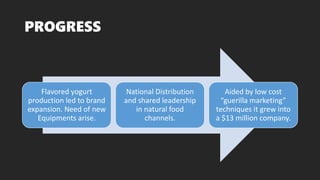
Flavored yogurt
production led to brand
expansion. Need of new
Equipments arise.
National Distribution
and shared leadership
in natural food
channels.
Aided by low cost
“guerilla marketing”
techniques it grew into
a $13 million company.
ANALYSIS
Strengths
Strong Brand
Low Cost
Natural Product
Weakness
No alternative
finances
Poor sales team
Threats
Accumulation of
cash by horizon
from IPO
Being dropped our
of traditional
channel
Oppurtunities
Strong relation
with leading
nature food
retaileres
PROBLEMS
VC needed to
cash out of its
investment.
Goal was to
make
company a
$20 million
before 2001.
Need of new
Investors or
alternative
source of
finances.
Question of the hour
•Should
Natureview
expand to
Supermarke
t channels?
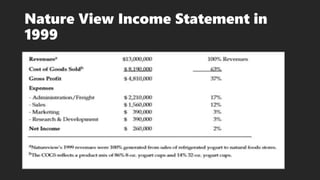
Nature View Income Statement in
1999
Problems
to focus
on.
How to reach
$20 million by
2001?
Supermarkets
or natural
food stores?
Analysis of
senior
management
team 3 ways.
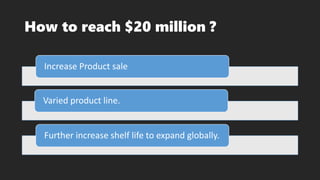
How to reach $20 million ?
Increase Product sale
Varied product line.
Further increase shelf life to expand globally.
Yogurt Sales Distribution Channel
•Supermarkets
•Natural food retailorsMajor
•Warehouse clubs
•Drug storesMinor
Yogurt Market share in 1999
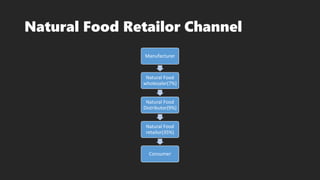
Natural Food Retailor Channel
Manufacturer
Natural Food
wholesaler(7%)
Natural Food
Distributor(9%)
Natural Food
retailor(35%)
Consumer
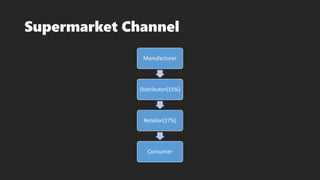
Supermarket Channel
Manufacturer
Distributor(15%)
Retailor(27%)
Consumer
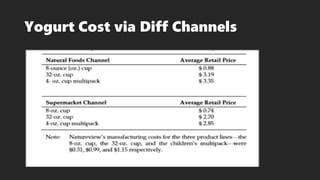
Yogurt Cost via Diff Channels
3 Ways Proposed by Marketing team
First
• Expand in
Northeast and
west
supermarkets.
• Introduce 6
SKU’s of 8oz
Second
• Expand in
supermarkets
nationally
• Introduce 4
SKU’s of 32oz.
Third
• Stay in natural
food channel.
• Introduce 2
Children’s
Multipack.
Sales Projections
COST ANALYSIS
Total Fixed Cost for all
three options remain
same.
Total cost= Total fixed
cost + Advertising cost
+Promotion cost + SKU
cost.
Summary
Introduction
History
Progress
Analysis
Problems
3 Options
Analysis
DISCLAIMER
• Created by Rishabh Gugnani, a student at MIT Manipal during an
internship in Marketing Management under Prof Sameer Mathur
(Marketing Profesor IIM Lucknow).

Natureview farm