Natural Disasters & Management
TORNADO
by
223C1A0507
223C1A0508
223C1A0512
223C1A0529
223C1A0541
Basic outlines
1.What is Tornado?
• Definition
• Characteristic
2.Tornado Formation
• Causes of Tornado
3.Types of tornado
4.Effects of tornado
• Effects
• Major tornado events
5.Tornado Mitigation
• A tornado is a violently rotating column of air that extent from a
thunderstorm to the ground.
• it’s also called “TIWSTER”.
• These spinning columns of wind can take variety of shapes such as
rope, funnel, cylinders.
• Every tornado must extend downward form cumulonimbus to ground.
• The funnel shaped tornado that haven’t touched the ground are called
”FUNNEL CLOUDS”
WHAT IS TORNADO
TORNADO FORMATION
• Causes of tornado formation
• Suitable climatic conditions
• Extremely large thunderstorm
• Supply of wind
• Unstable wind shear
Stages of formation of tornado
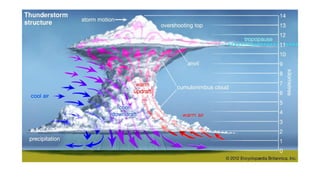
• Tornado form where there are large difference in atmospheric
pressure.
• Often results during a major storm such as “SUPERCELL”
thunderstorm.
• Supercell is a large rotating thunderstorm which possess mesocyclone
having a ability to updraft massive cloud to rotate inside.
Formation of horizontal wind
shear
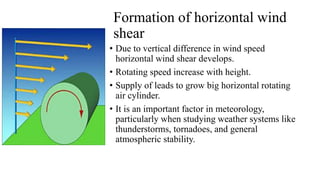
• Due to vertical difference in wind speed
horizontal wind shear develops.
• Rotating speed increase with height.
• Supply of leads to grow big horizontal rotating
air cylinder.
• It is an important factor in meteorology,
particularly when studying weather systems like
thunderstorms, tornadoes, and general
atmospheric stability.
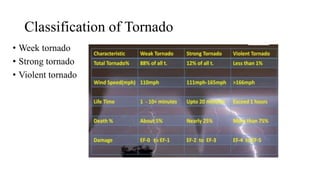
Classification of Tornado
• Week tornado
• Strong tornado
• Violent tornado
Other types of tornado
• Supercell Tornado
• Landspout Tornado
• Gustanado
• Waterspouts
• Dust Devil
• Fire Tornado
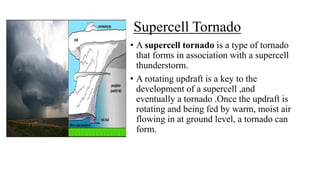
Supercell Tornado
• A supercell tornado is a type of tornado
that forms in association with a supercell
thunderstorm.
• A rotating updraft is a key to the
development of a supercell ,and
eventually a tornado .Once the updraft is
rotating and being fed by warm, moist air
flowing in at ground level, a tornado can
form.
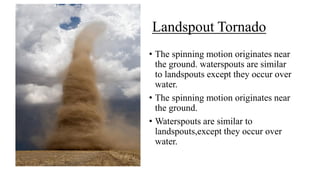
Landspout Tornado
• The spinning motion originates near
the ground. waterspouts are similar
to landspouts except they occur over
water.
• The spinning motion originates near
the ground.
• Waterspouts are similar to
landspouts,except they occur over
water.
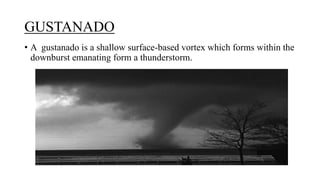
GUSTANADO
• A gustanado is a shallow surface-based vortex which forms within the
downburst emanating form a thunderstorm.
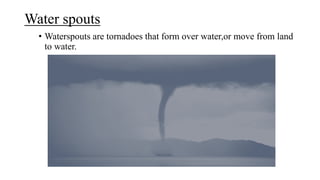
Water spouts
• Waterspouts are tornadoes that form over water,or move from land
to water.
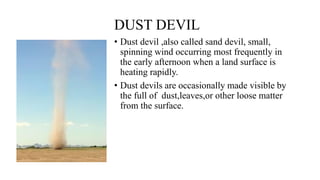
DUST DEVIL
• Dust devil ,also called sand devil, small,
spinning wind occurring most frequently in
the early afternoon when a land surface is
heating rapidly.
• Dust devils are occasionally made visible by
the full of dust,leaves,or other loose matter
from the surface.
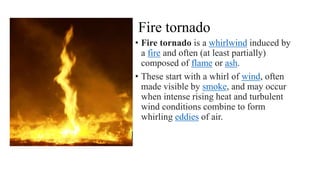
Fire tornado
• Fire tornado is a whirlwind induced by
a fire and often (at least partially)
composed of flame or ash.
• These start with a whirl of wind, often
made visible by smoke, and may occur
when intense rising heat and turbulent
wind conditions combine to form
whirling eddies of air.
EFFECTS OF TORNADO
• Loss of life
• Property damage
• Effects of nature
• Lightning
• Pyschological effects
THANK YOU

Natural Disasters & Management. about TORNADO

  • 1.
    Natural Disasters &Management TORNADO by 223C1A0507 223C1A0508 223C1A0512 223C1A0529 223C1A0541
  • 2.
    Basic outlines 1.What isTornado? • Definition • Characteristic 2.Tornado Formation • Causes of Tornado 3.Types of tornado 4.Effects of tornado • Effects • Major tornado events 5.Tornado Mitigation
  • 3.
    • A tornadois a violently rotating column of air that extent from a thunderstorm to the ground. • it’s also called “TIWSTER”. • These spinning columns of wind can take variety of shapes such as rope, funnel, cylinders. • Every tornado must extend downward form cumulonimbus to ground. • The funnel shaped tornado that haven’t touched the ground are called ”FUNNEL CLOUDS” WHAT IS TORNADO
  • 4.
    TORNADO FORMATION • Causesof tornado formation • Suitable climatic conditions • Extremely large thunderstorm • Supply of wind • Unstable wind shear
  • 6.
    Stages of formationof tornado • Tornado form where there are large difference in atmospheric pressure. • Often results during a major storm such as “SUPERCELL” thunderstorm. • Supercell is a large rotating thunderstorm which possess mesocyclone having a ability to updraft massive cloud to rotate inside.
  • 7.
    Formation of horizontalwind shear • Due to vertical difference in wind speed horizontal wind shear develops. • Rotating speed increase with height. • Supply of leads to grow big horizontal rotating air cylinder. • It is an important factor in meteorology, particularly when studying weather systems like thunderstorms, tornadoes, and general atmospheric stability.
  • 8.
    Classification of Tornado •Week tornado • Strong tornado • Violent tornado
  • 9.
    Other types oftornado • Supercell Tornado • Landspout Tornado • Gustanado • Waterspouts • Dust Devil • Fire Tornado
  • 10.
    Supercell Tornado • Asupercell tornado is a type of tornado that forms in association with a supercell thunderstorm. • A rotating updraft is a key to the development of a supercell ,and eventually a tornado .Once the updraft is rotating and being fed by warm, moist air flowing in at ground level, a tornado can form.
  • 11.
    Landspout Tornado • Thespinning motion originates near the ground. waterspouts are similar to landspouts except they occur over water. • The spinning motion originates near the ground. • Waterspouts are similar to landspouts,except they occur over water.
  • 12.
    GUSTANADO • A gustanadois a shallow surface-based vortex which forms within the downburst emanating form a thunderstorm.
  • 13.
    Water spouts • Waterspoutsare tornadoes that form over water,or move from land to water.
  • 14.
    DUST DEVIL • Dustdevil ,also called sand devil, small, spinning wind occurring most frequently in the early afternoon when a land surface is heating rapidly. • Dust devils are occasionally made visible by the full of dust,leaves,or other loose matter from the surface.
  • 15.
    Fire tornado • Firetornado is a whirlwind induced by a fire and often (at least partially) composed of flame or ash. • These start with a whirl of wind, often made visible by smoke, and may occur when intense rising heat and turbulent wind conditions combine to form whirling eddies of air.
  • 16.
    EFFECTS OF TORNADO •Loss of life • Property damage • Effects of nature • Lightning • Pyschological effects
  • 17.