Native American Pow Wow Dance & Song
UT Informal Class, Fall 2014
Class I, Oct. 14, 2014
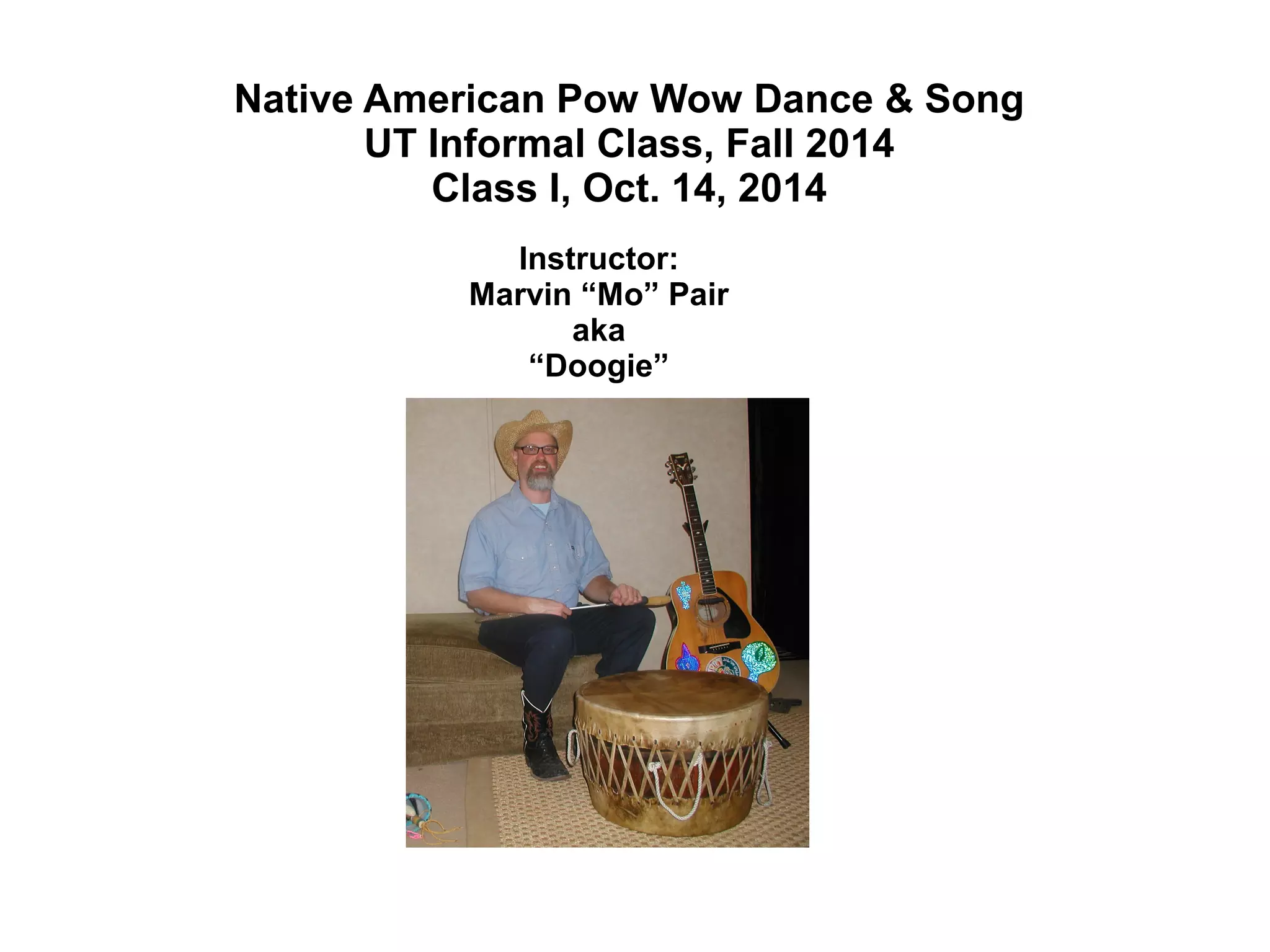
Instructor:
Marvin “Mo” Pair
aka
“Doogie”
Class 1 (10/14): History and Background of the modern Pow Wow
Class 2 (10/21): Pow Wow description and etiquette
Class 3 (10/28): Pow Wow dance styles and clothes
Class 4 (11/4): Tribal-specific dances
Potential class trip to Austin Pow Wow: Nov. 8, 2014
Class 5 (11/11): Pow Wow song elucidated
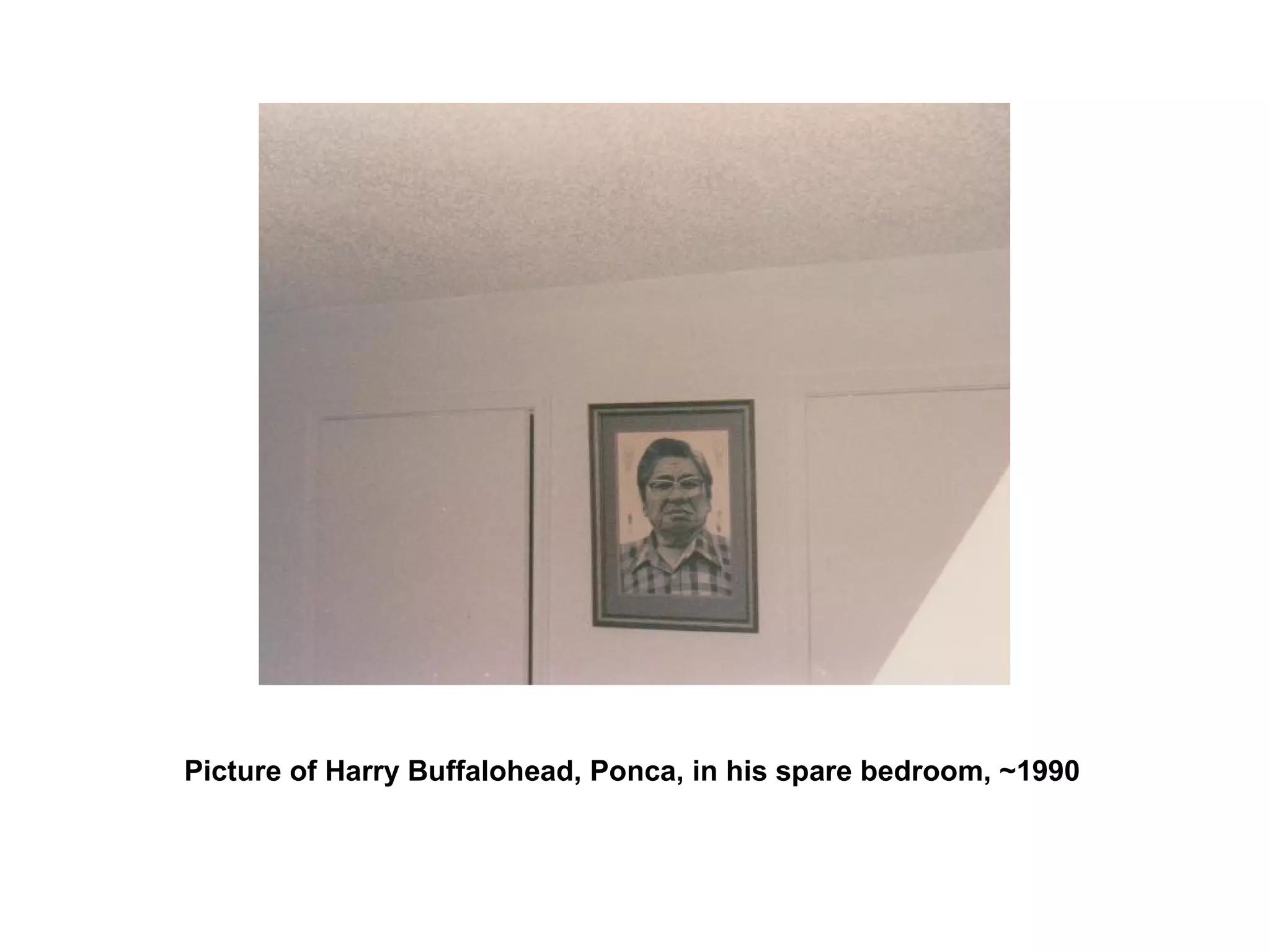
Picture of Harry Buffalohead, Ponca, in his spare bedroom, ~1990
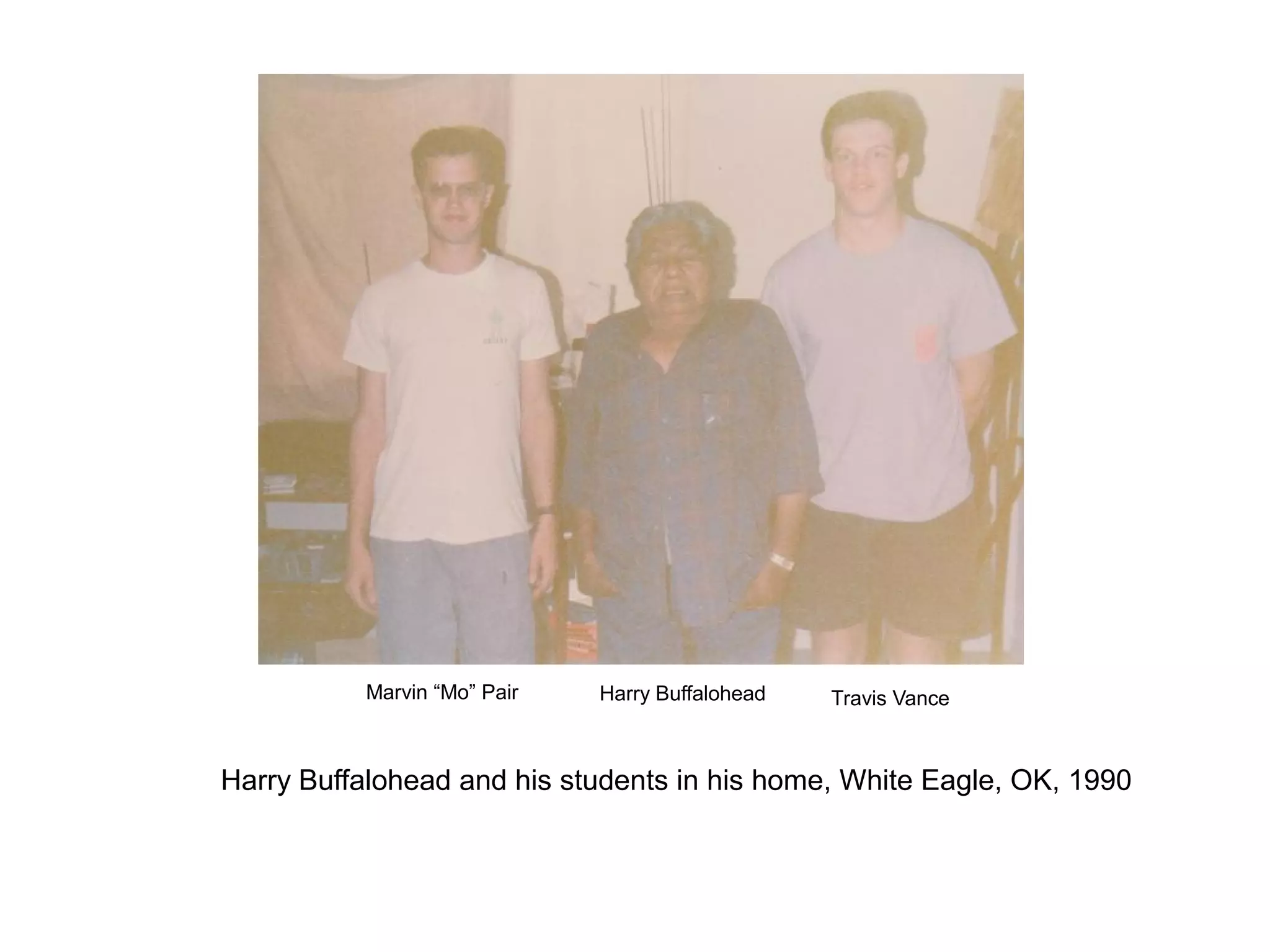
Marvin “Mo” Pair Harry Buffalohead Travis Vance
Harry Buffalohead and his students in his home, White Eagle, OK, 1990
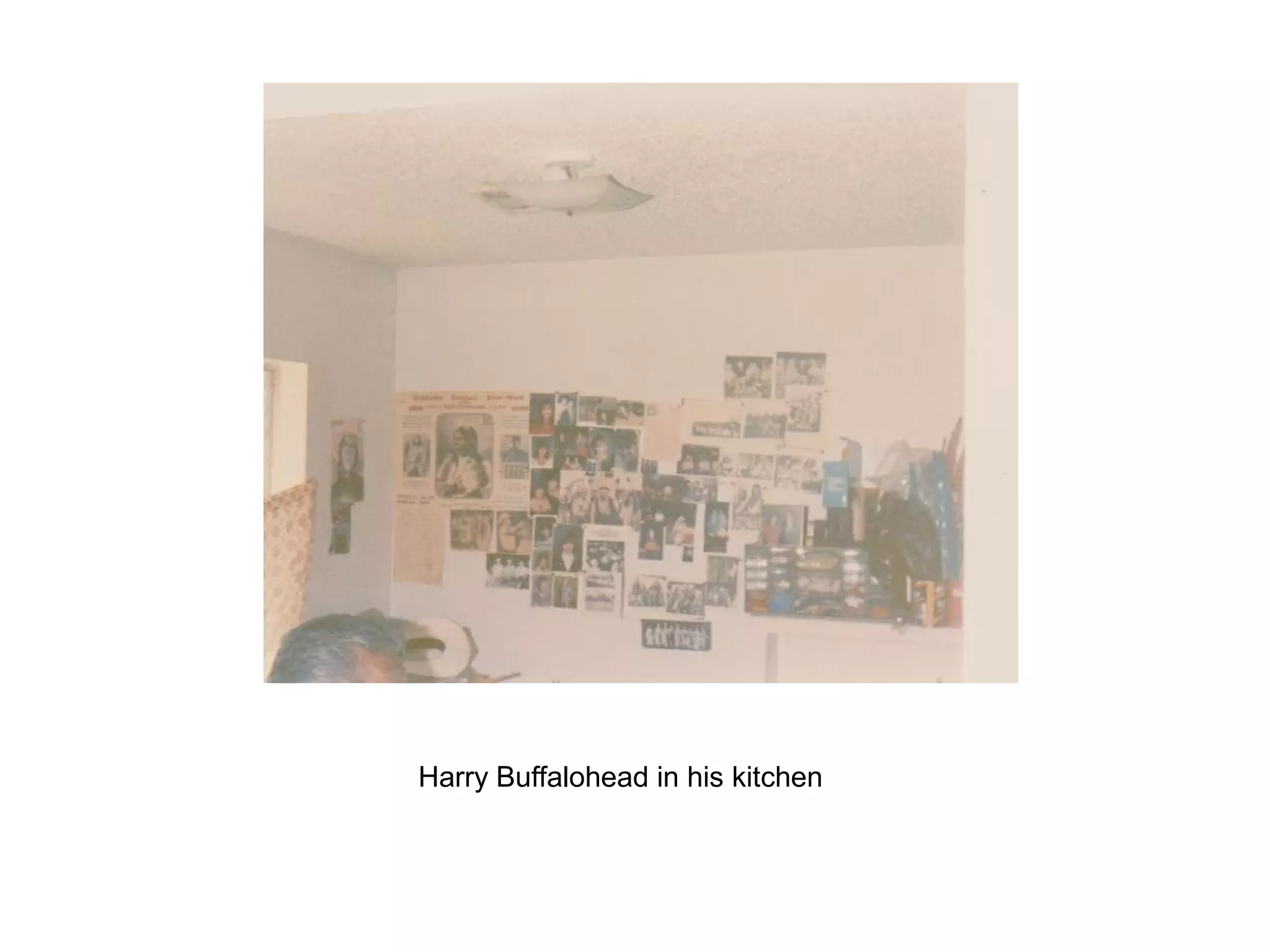
Harry Buffalohead in his kitchen
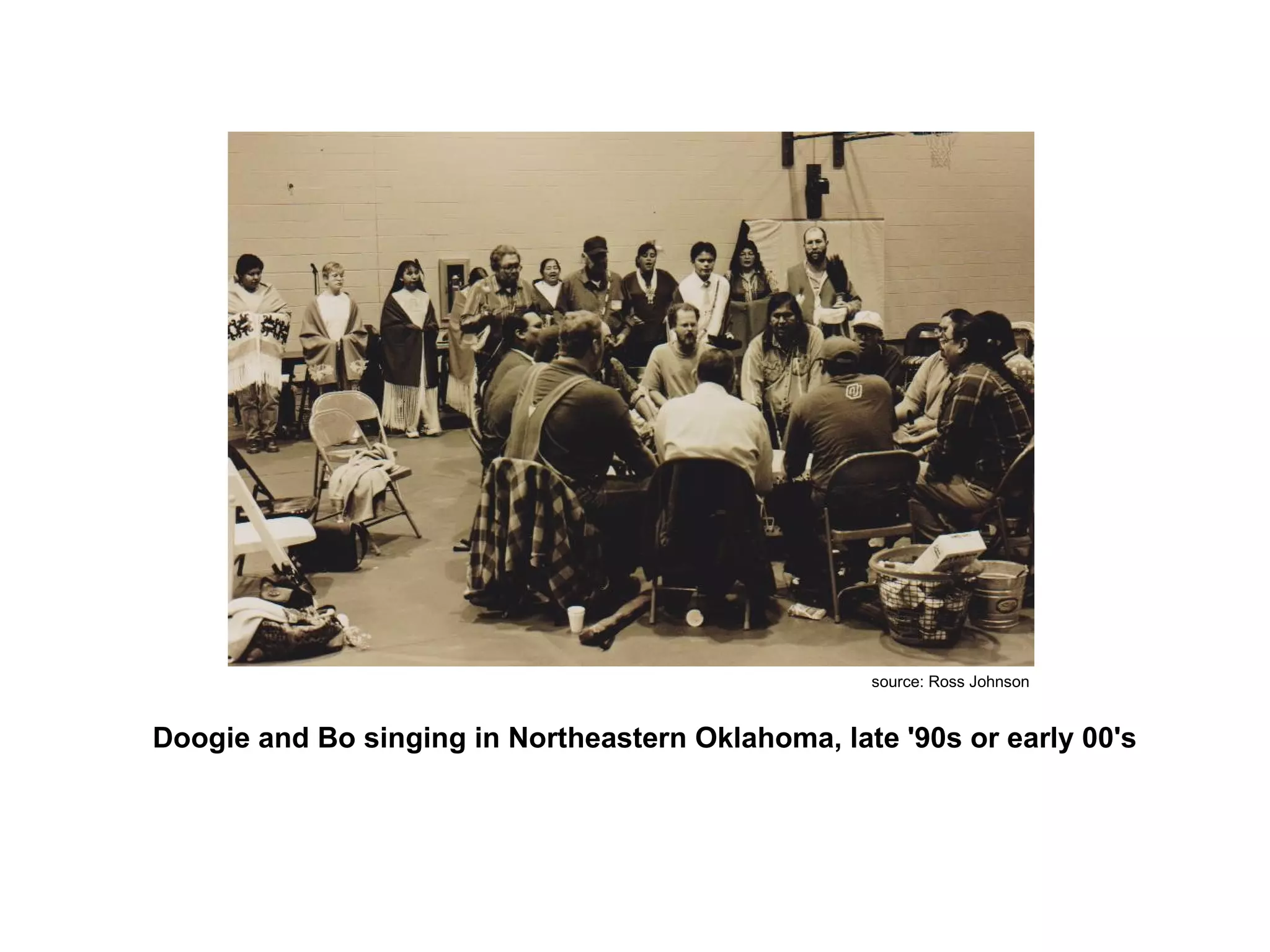
Doogie and Bo singing in Northeastern Oklahoma, late '90s or early 00's
source: Ross Johnson
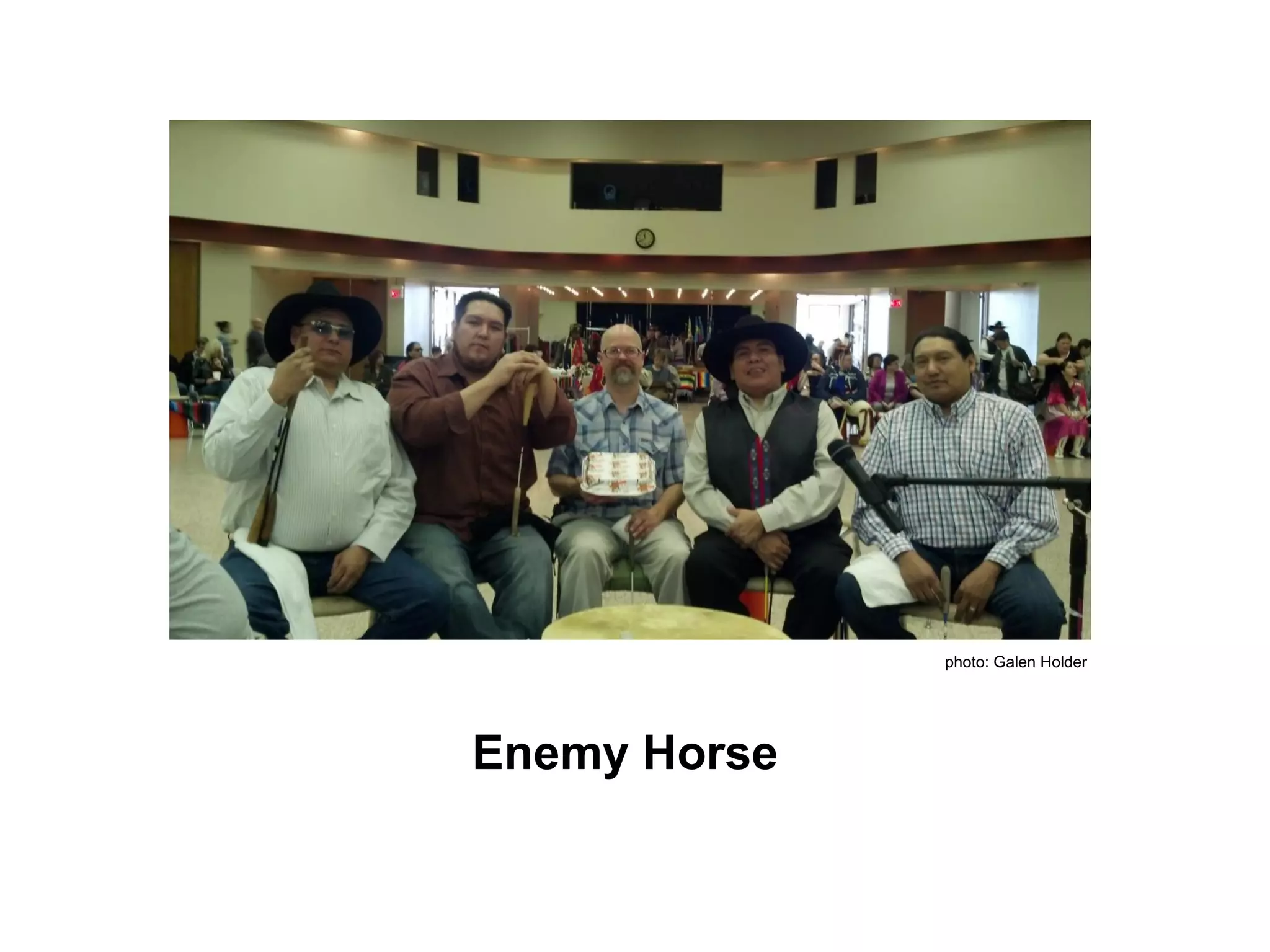
Enemy Horse
photo: Galen Holder
Good Sources for pow wow education
Tara Browner
Clyde Ellis
Luke Lassiter
“A pow-wow is an event where American Indians
of all nations come together to celebrate their
culture through the medium of music and dance.”
-Tara Browner, “Heartbeat of the People”
“As I began researching the origins of pow-wows,
conflicts among the pow-wow origin narratives of
different tribal communities became increasingly
evident and problematic.
Although clearly there is no single birthplace of the
pow-wow, scores of tribes claim to have held the
'first'.”
-Tara Browner, “Heartbeat of the People”
“While Chapter 1 explored some commonalities
in the ways traditional indigenous knowledge has
been approached and defined, it also stressed the
importance of localized rather than generalized
(and essentialized) observations and values.”
-Beverly Diamond, “Native American Music in
Eastern North America”
Traditional Indigenous Knowledge (TIK):
“...the identification of a distinctive body
of knowledge that indigenous communities
maintain and use”
-Diamond
conflicting narratives:
“localized rather than generalized observations
and values”
::
Browner:Diamond
Pow wow is probably from the Algonquian language
family of northeastern USA and Canada
pau wau: Narragansett for “he/she dreams”
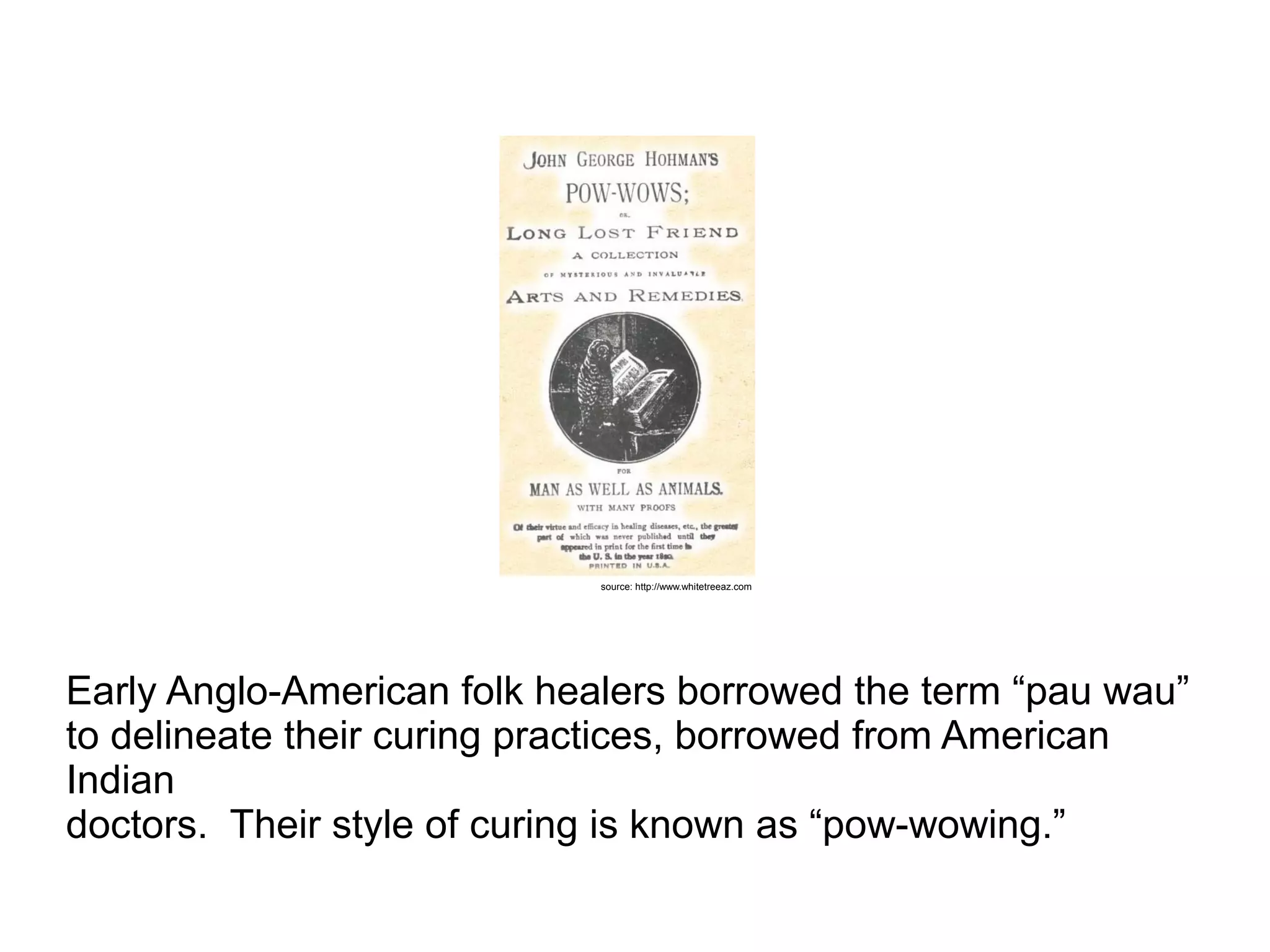
Early Anglo-American folk healers borrowed the term “pau wau”
to delineate their curing practices, borrowed from American
Indian
doctors. Their style of curing is known as “pow-wowing.”
source: http://www.whitetreeaz.com
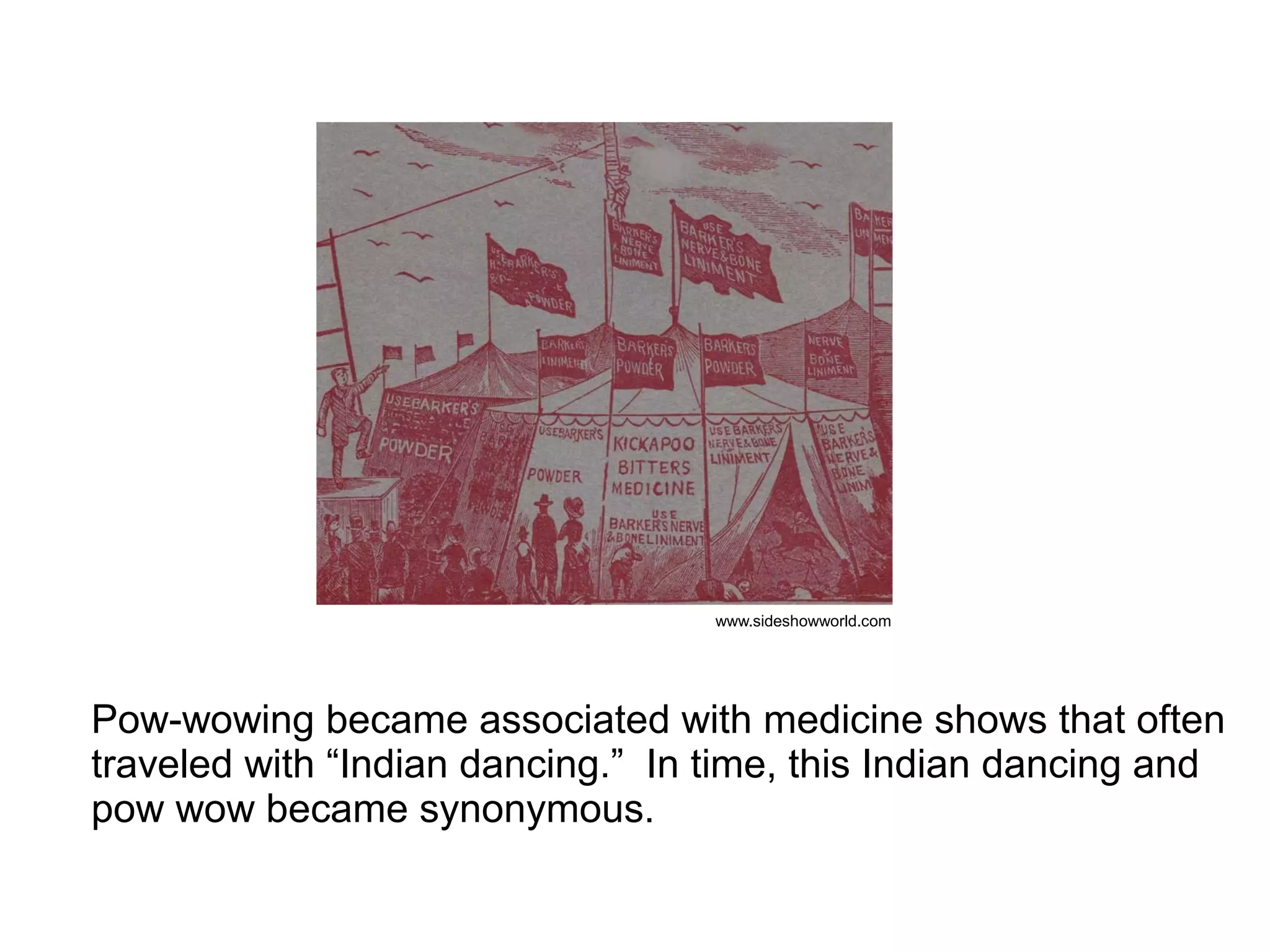
Pow-wowing became associated with medicine shows that often
traveled with “Indian dancing.” In time, this Indian dancing and
pow wow became synonymous.
www.sideshowworld.com
During the time period (late nineteenth, early twentieth centuries)
of medicine shows concomitant with indian dancing, the early
forms of pow wow, Indians were having very difficult times:
-Assimilation
-Allotments
-Dance restrictions
-Confinement to reservations
-'Destruction of culture, both material and spiritual'
-Limited legal and human rights
During this period of woe for Native Americans,
dancing goes underground, or is only legal at
medicine shows and...
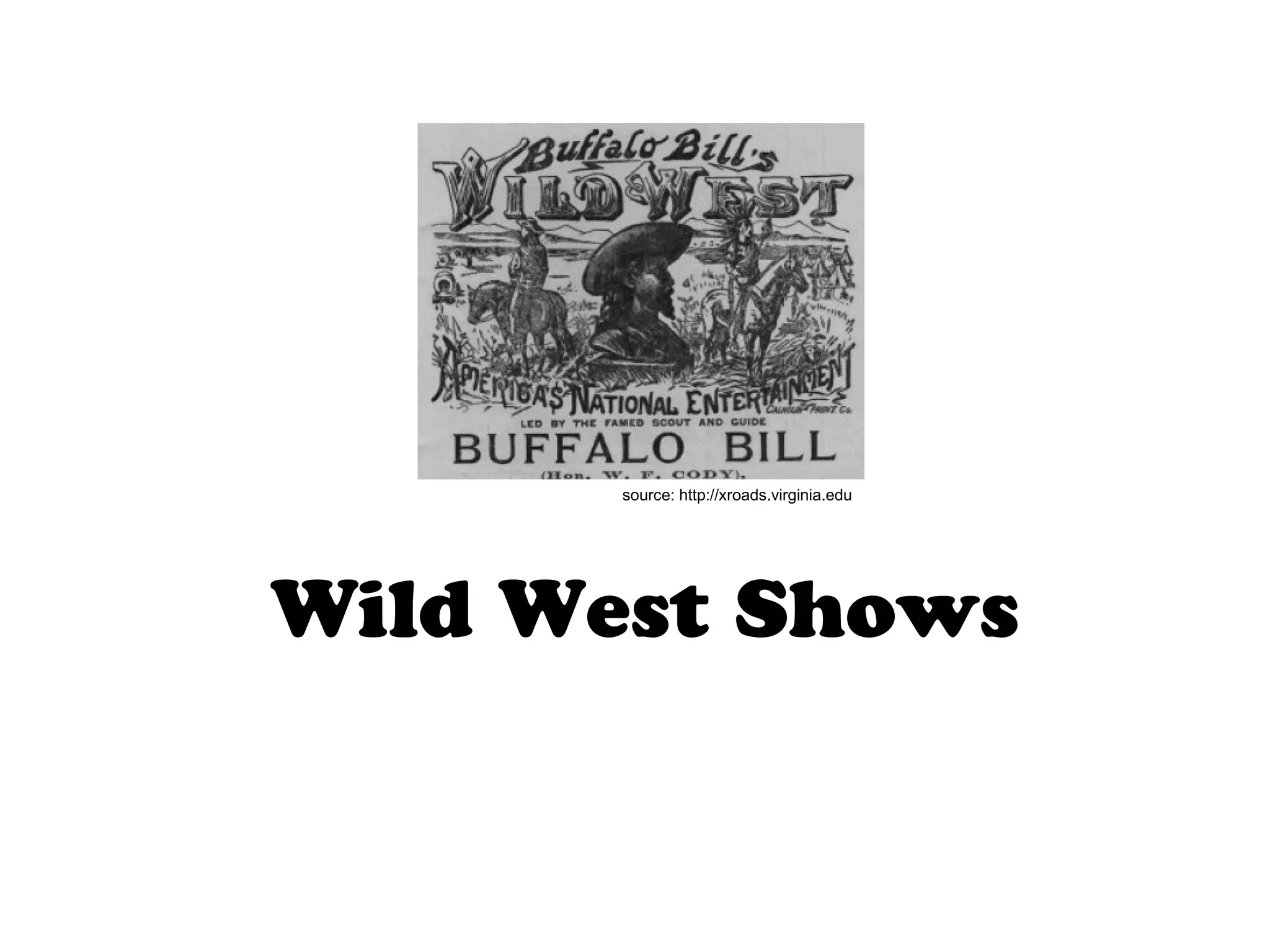
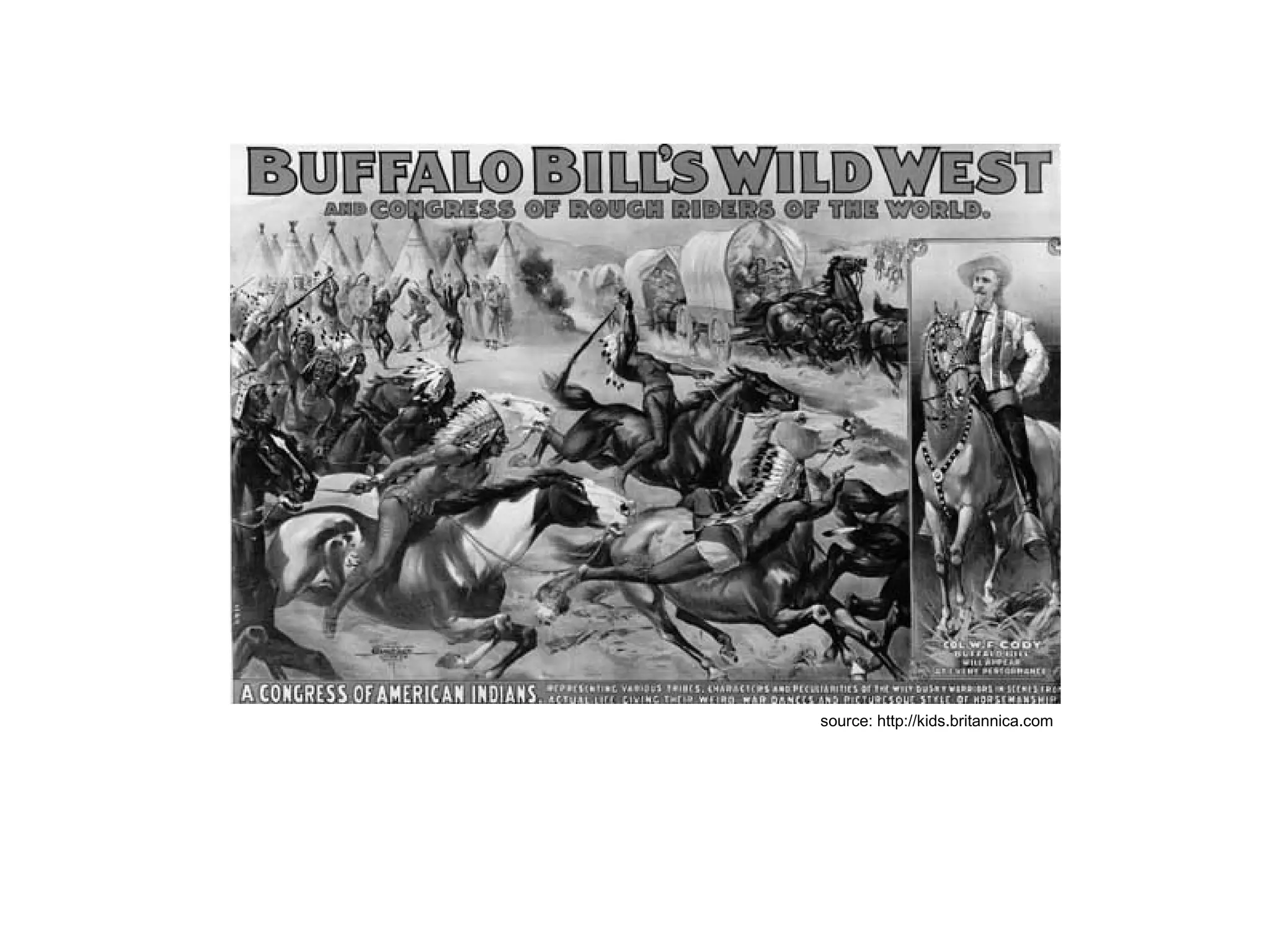
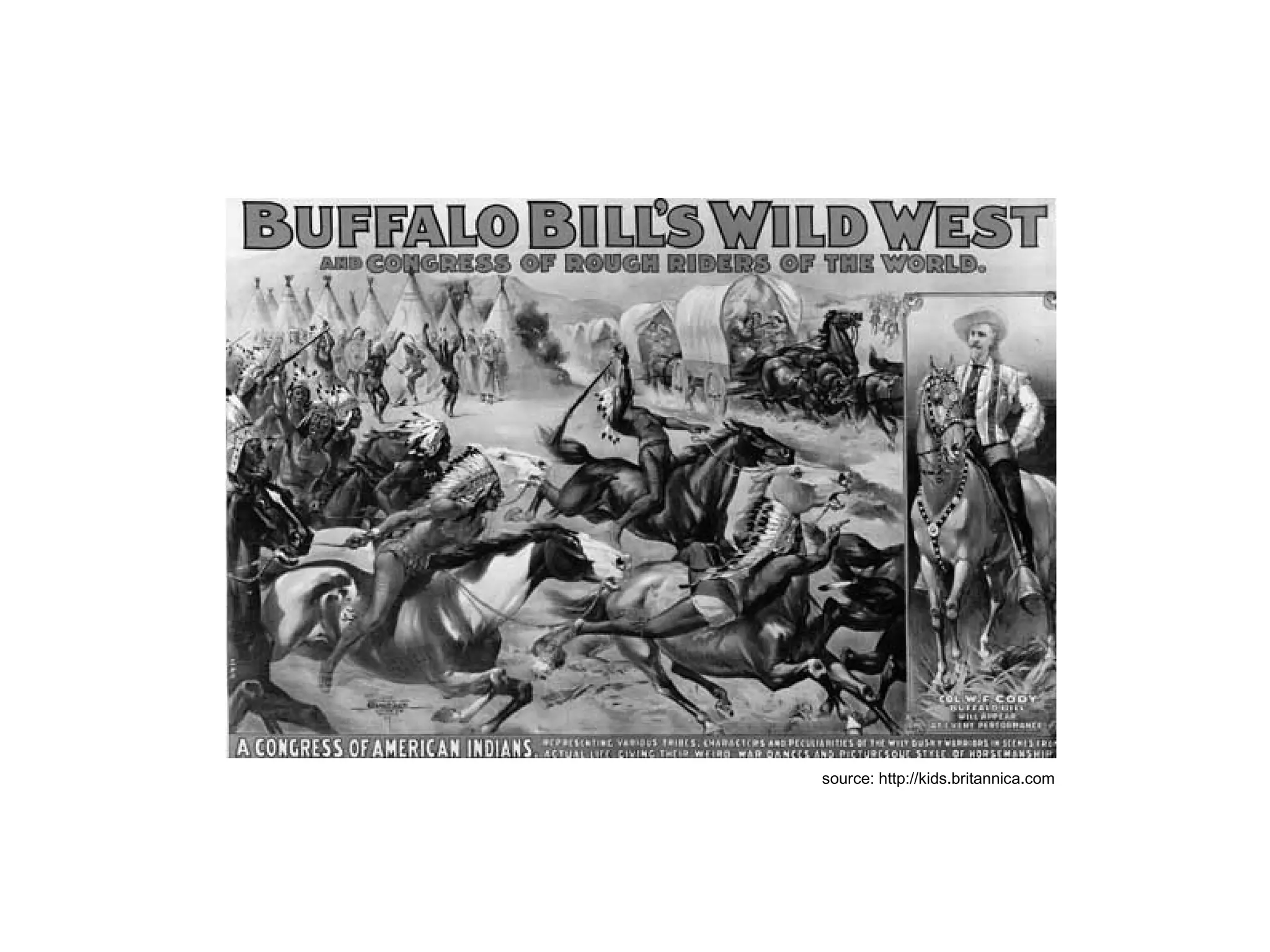
Wild West Shows
source: http://xroads.virginia.edu
source: http://kids.britannica.com
Benefits of wild west shows to Indians:
-Income
-Travel
-Intertribal relations
Influences on the contemporary pow wow:
-Wild west shows and other exhibitions
-Warrior society dances
-Reservation-era intertribal dances
-Postwar homecoming celebrations
source: http://kids.britannica.com
“As I began researching the origins of pow-wows,
conflicts among the pow-wow origin narratives of
different tribal communities became increasingly
evident and problematic.
Although clearly there is no single birthplace of the
pow-wow, scores of tribes claim to have held the 'first'.”
-Tara Browner, “Heartbeat of the People”
Clark Wissler's
“General Discussion of
Shamanistic and Dancing Societies”
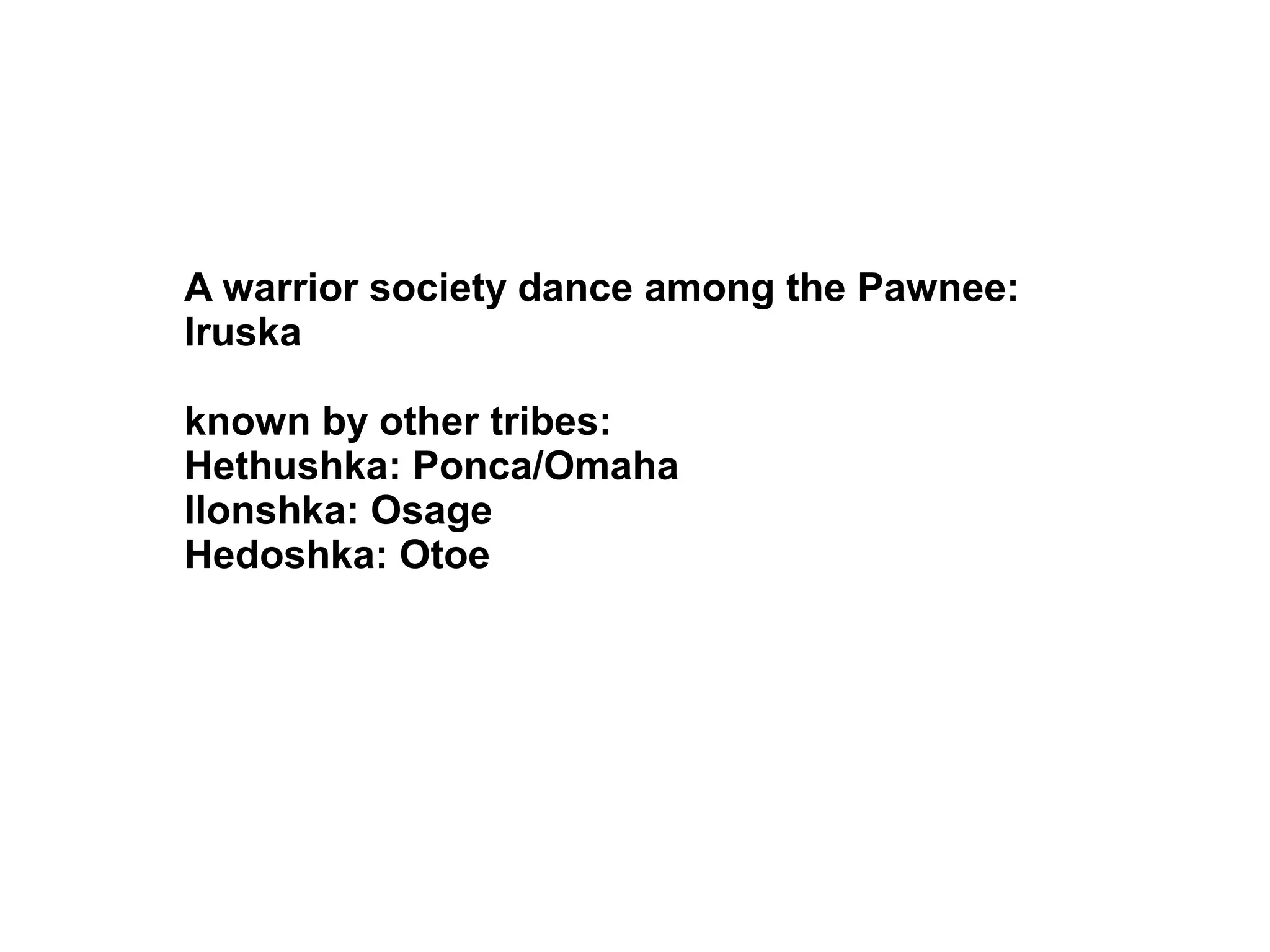
A warrior society dance among the Pawnee:
Iruska
known by other tribes:
Hethushka: Ponca/Omaha
Ilonshka: Osage
Hedoshka: Otoe
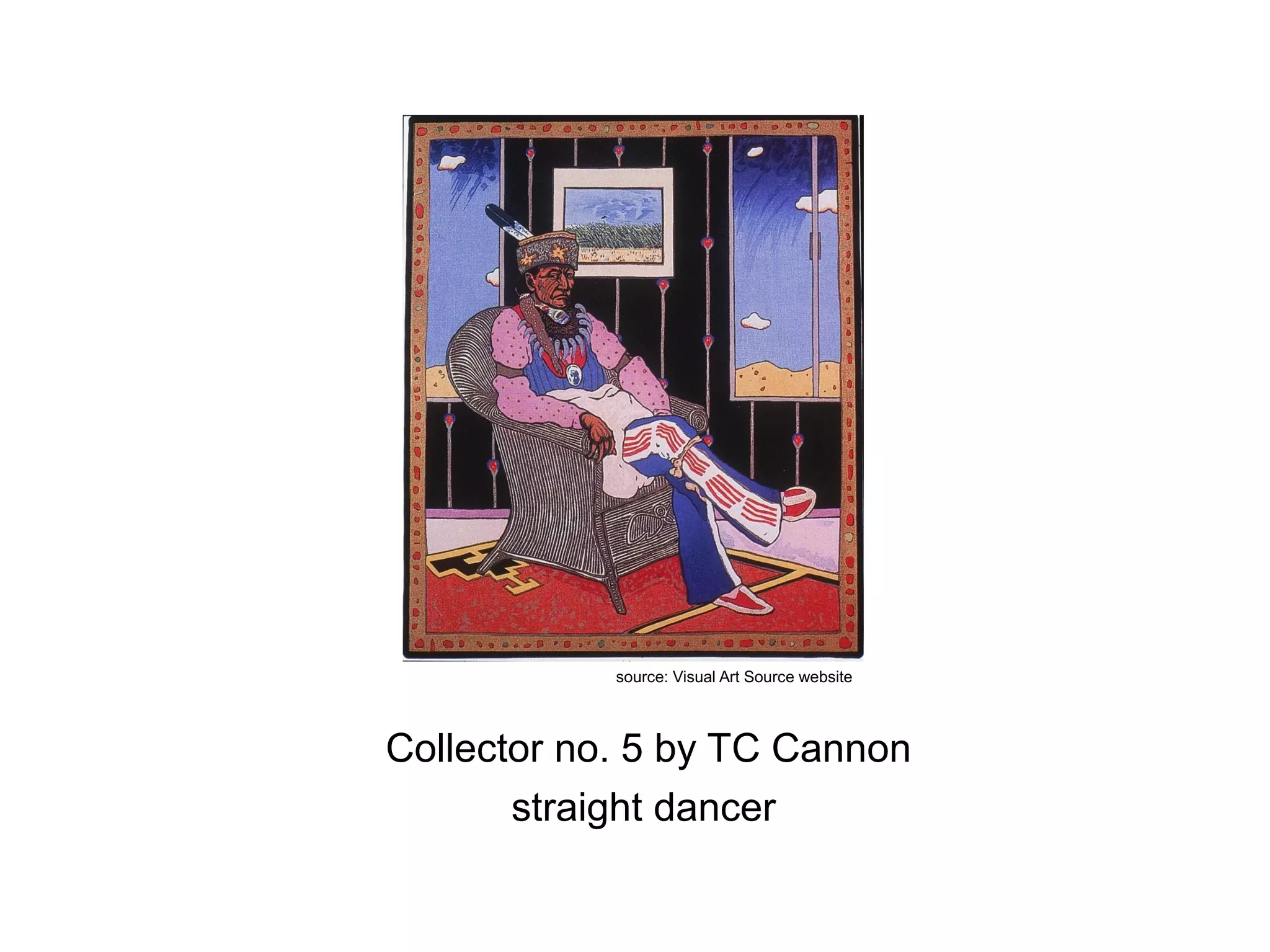
Collector no. 5 by TC Cannon
straight dancer
source: Visual Art Source website
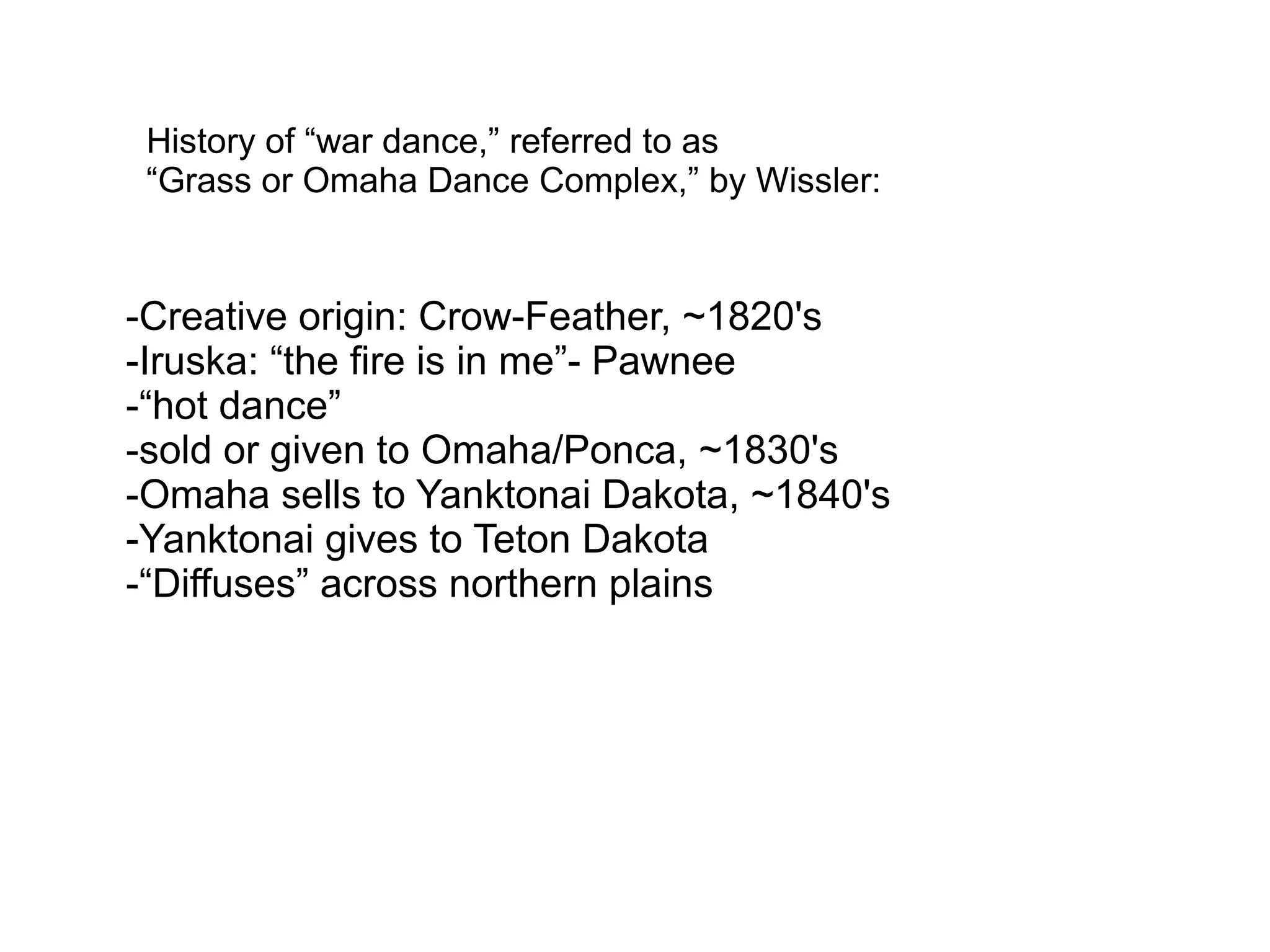
History of “war dance,” referred to as
“Grass or Omaha Dance Complex,” by Wissler:
-Creative origin: Crow-Feather, ~1820's
-Iruska: “the fire is in me”- Pawnee
-“hot dance”
-sold or given to Omaha/Ponca, ~1830's
-Omaha sells to Yanktonai Dakota, ~1840's
-Yanktonai gives to Teton Dakota
-“Diffuses” across northern plains
Introduction to Pow Wow Music
a strong root of this music: the war dance or Omaha dance

Native Song and Dance Class Outline

  • 1.
    Native American PowWow Dance & Song UT Informal Class, Fall 2014 Class I, Oct. 14, 2014 Instructor: Marvin “Mo” Pair aka “Doogie”
  • 2.
    Class 1 (10/14):History and Background of the modern Pow Wow Class 2 (10/21): Pow Wow description and etiquette Class 3 (10/28): Pow Wow dance styles and clothes Class 4 (11/4): Tribal-specific dances Potential class trip to Austin Pow Wow: Nov. 8, 2014 Class 5 (11/11): Pow Wow song elucidated
  • 3.
    Picture of HarryBuffalohead, Ponca, in his spare bedroom, ~1990
  • 4.
    Marvin “Mo” PairHarry Buffalohead Travis Vance Harry Buffalohead and his students in his home, White Eagle, OK, 1990
  • 5.
  • 6.
    Doogie and Bosinging in Northeastern Oklahoma, late '90s or early 00's source: Ross Johnson
  • 7.
  • 8.
    Good Sources forpow wow education Tara Browner Clyde Ellis Luke Lassiter
  • 9.
    “A pow-wow isan event where American Indians of all nations come together to celebrate their culture through the medium of music and dance.” -Tara Browner, “Heartbeat of the People”
  • 10.
    “As I beganresearching the origins of pow-wows, conflicts among the pow-wow origin narratives of different tribal communities became increasingly evident and problematic. Although clearly there is no single birthplace of the pow-wow, scores of tribes claim to have held the 'first'.” -Tara Browner, “Heartbeat of the People”
  • 11.
    “While Chapter 1explored some commonalities in the ways traditional indigenous knowledge has been approached and defined, it also stressed the importance of localized rather than generalized (and essentialized) observations and values.” -Beverly Diamond, “Native American Music in Eastern North America”
  • 12.
    Traditional Indigenous Knowledge(TIK): “...the identification of a distinctive body of knowledge that indigenous communities maintain and use” -Diamond
  • 13.
    conflicting narratives: “localized ratherthan generalized observations and values” :: Browner:Diamond
  • 14.
    Pow wow isprobably from the Algonquian language family of northeastern USA and Canada pau wau: Narragansett for “he/she dreams”
  • 15.
    Early Anglo-American folkhealers borrowed the term “pau wau” to delineate their curing practices, borrowed from American Indian doctors. Their style of curing is known as “pow-wowing.” source: http://www.whitetreeaz.com
  • 16.
    Pow-wowing became associatedwith medicine shows that often traveled with “Indian dancing.” In time, this Indian dancing and pow wow became synonymous. www.sideshowworld.com
  • 17.
    During the timeperiod (late nineteenth, early twentieth centuries) of medicine shows concomitant with indian dancing, the early forms of pow wow, Indians were having very difficult times: -Assimilation -Allotments -Dance restrictions -Confinement to reservations -'Destruction of culture, both material and spiritual' -Limited legal and human rights
  • 18.
    During this periodof woe for Native Americans, dancing goes underground, or is only legal at medicine shows and...
  • 19.
    Wild West Shows source:http://xroads.virginia.edu
  • 20.
  • 21.
    Benefits of wildwest shows to Indians: -Income -Travel -Intertribal relations
  • 22.
    Influences on thecontemporary pow wow: -Wild west shows and other exhibitions -Warrior society dances -Reservation-era intertribal dances -Postwar homecoming celebrations
  • 23.
  • 24.
    “As I beganresearching the origins of pow-wows, conflicts among the pow-wow origin narratives of different tribal communities became increasingly evident and problematic. Although clearly there is no single birthplace of the pow-wow, scores of tribes claim to have held the 'first'.” -Tara Browner, “Heartbeat of the People”
  • 25.
    Clark Wissler's “General Discussionof Shamanistic and Dancing Societies”
  • 26.
    A warrior societydance among the Pawnee: Iruska known by other tribes: Hethushka: Ponca/Omaha Ilonshka: Osage Hedoshka: Otoe
  • 27.
    Collector no. 5by TC Cannon straight dancer source: Visual Art Source website
  • 28.
    History of “wardance,” referred to as “Grass or Omaha Dance Complex,” by Wissler: -Creative origin: Crow-Feather, ~1820's -Iruska: “the fire is in me”- Pawnee -“hot dance” -sold or given to Omaha/Ponca, ~1830's -Omaha sells to Yanktonai Dakota, ~1840's -Yanktonai gives to Teton Dakota -“Diffuses” across northern plains
  • 29.
    Introduction to PowWow Music a strong root of this music: the war dance or Omaha dance