Commencing National Nutritional Awareness
Week 2023: A Deeper Dive into Edible
Engravings Before Your Supermarket Odyssey
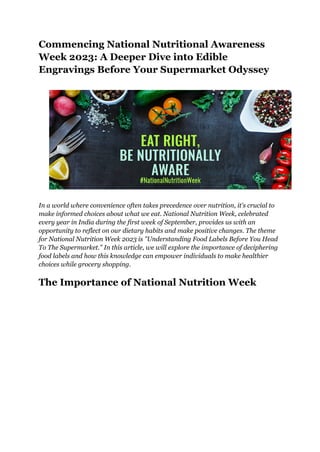
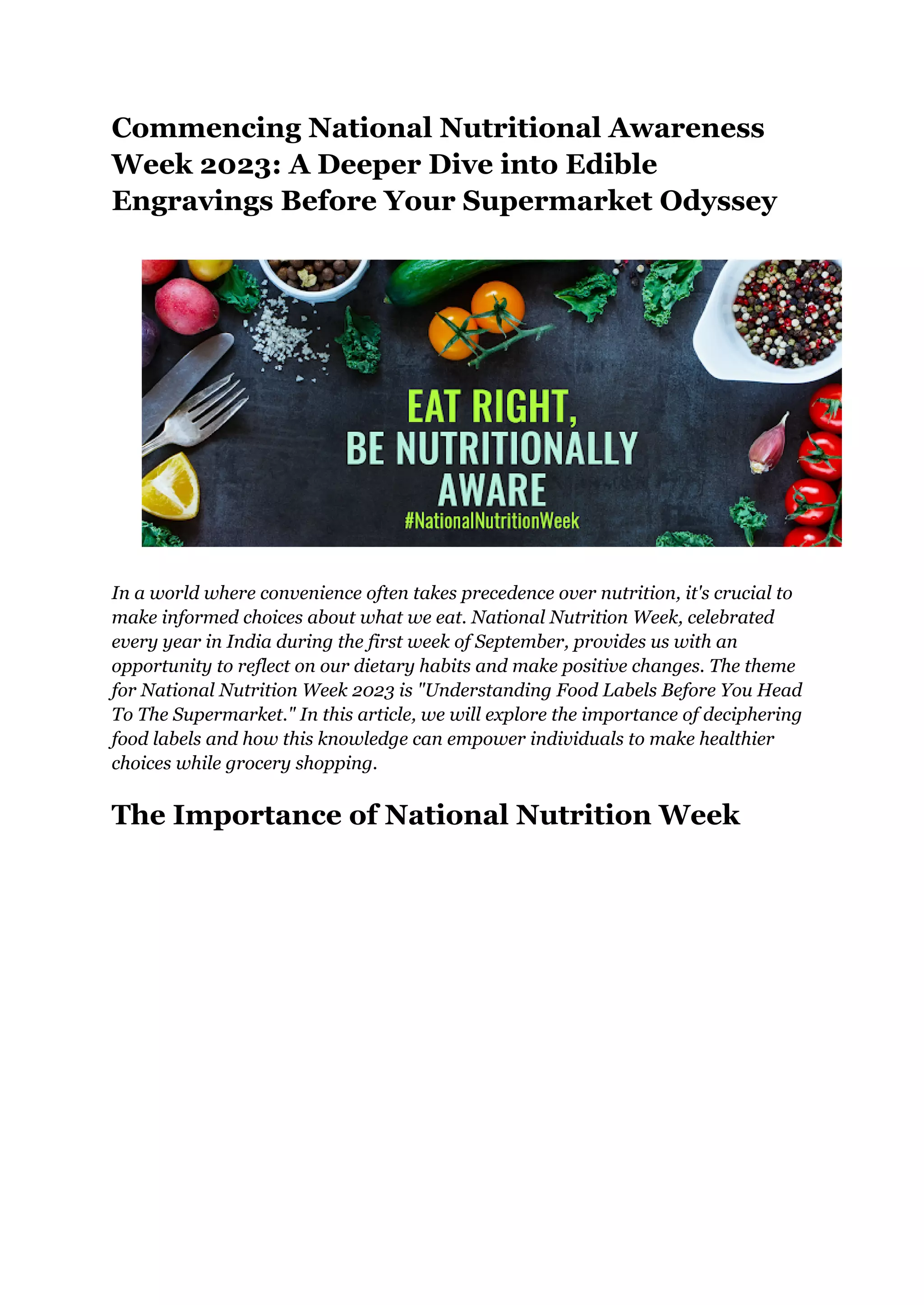
In a world where convenience often takes precedence over nutrition, it's crucial to
make informed choices about what we eat. National Nutrition Week, celebrated
every year in India during the first week of September, provides us with an
opportunity to reflect on our dietary habits and make positive changes. The theme
for National Nutrition Week 2023 is "Understanding Food Labels Before You Head
To The Supermarket." In this article, we will explore the importance of deciphering
food labels and how this knowledge can empower individuals to make healthier
choices while grocery shopping.
The Importance of National Nutrition Week
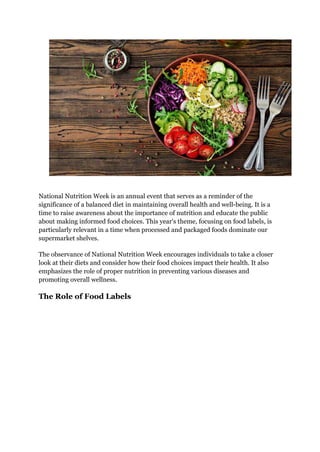
National Nutrition Week is an annual event that serves as a reminder of the
significance of a balanced diet in maintaining overall health and well-being. It is a
time to raise awareness about the importance of nutrition and educate the public
about making informed food choices. This year's theme, focusing on food labels, is
particularly relevant in a time when processed and packaged foods dominate our
supermarket shelves.
The observance of National Nutrition Week encourages individuals to take a closer
look at their diets and consider how their food choices impact their health. It also
emphasizes the role of proper nutrition in preventing various diseases and
promoting overall wellness.
The Role of Food Labels
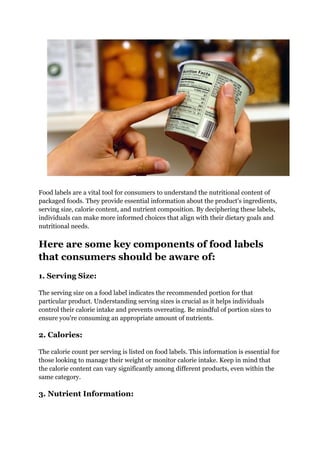
Food labels are a vital tool for consumers to understand the nutritional content of
packaged foods. They provide essential information about the product's ingredients,
serving size, calorie content, and nutrient composition. By deciphering these labels,
individuals can make more informed choices that align with their dietary goals and
nutritional needs.
Here are some key components of food labels
that consumers should be aware of:
1. Serving Size:
The serving size on a food label indicates the recommended portion for that
particular product. Understanding serving sizes is crucial as it helps individuals
control their calorie intake and prevents overeating. Be mindful of portion sizes to
ensure you're consuming an appropriate amount of nutrients.
2. Calories:
The calorie count per serving is listed on food labels. This information is essential for
those looking to manage their weight or monitor calorie intake. Keep in mind that
the calorie content can vary significantly among different products, even within the
same category.
3. Nutrient Information:
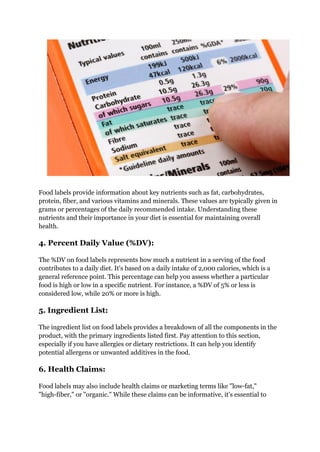
Food labels provide information about key nutrients such as fat, carbohydrates,
protein, fiber, and various vitamins and minerals. These values are typically given in
grams or percentages of the daily recommended intake. Understanding these
nutrients and their importance in your diet is essential for maintaining overall
health.
4. Percent Daily Value (%DV):
The %DV on food labels represents how much a nutrient in a serving of the food
contributes to a daily diet. It's based on a daily intake of 2,000 calories, which is a
general reference point. This percentage can help you assess whether a particular
food is high or low in a specific nutrient. For instance, a %DV of 5% or less is
considered low, while 20% or more is high.
5. Ingredient List:
The ingredient list on food labels provides a breakdown of all the components in the
product, with the primary ingredients listed first. Pay attention to this section,
especially if you have allergies or dietary restrictions. It can help you identify
potential allergens or unwanted additives in the food.
6. Health Claims:
Food labels may also include health claims or marketing terms like "low-fat,"
"high-fiber," or "organic." While these claims can be informative, it's essential to
verify their accuracy by examining the nutrient information and ingredient list. Some
terms may be misleading, so a critical eye is necessary.
Deciphering Food Labels for Healthier Choices
Now that we've covered the key elements of food labels let's delve deeper into how to
use this information to make healthier choices at the supermarket:
1. Start with the Serving Size:
Begin by identifying the serving size on the label. This serves as the reference point
for all other nutritional information. Be mindful of portion sizes to avoid
overconsumption of calories and nutrients.
2. Check the Calories:
Next, look at the calorie count per serving. If you're watching your calorie intake,
compare this number to your daily calorie goals. Keep in mind that the total calorie
count can quickly add up if you consume multiple servings.
3. Evaluate Macronutrients:
Review the amounts of fat, carbohydrates, and protein in the product. Consider your
dietary needs and preferences. For example, if you're trying to reduce your saturated
fat intake, opt for products with lower fat content.
4. Assess Fiber:
Fiber stands as an indispensable cornerstone for gastrointestinal vitality, promoting
a sense of fullness and contentment. Opt for victuals brimming with dietary fiber, as
they substantially contribute to the equilibrium of your dietary regimen.
5. Watch for Added Sugars:
Look for added sugars in the ingredient list. Added sugars can hide under various
names, including sucrose, high-fructose corn syrup, and molasses. Reducing your
consumption of added sugars can have a positive impact on your health.
6. Be Mindful of Sodium:
Excess sodium can contribute to high blood pressure and other health issues. Check
the sodium content on the label, especially if you have dietary restrictions related to
salt intake.
7. Consider Vitamins and Minerals:
Pay attention to the vitamins and minerals listed on the label. Some products are
fortified with essential nutrients, which can be beneficial. However, be cautious of
excessive fortification, as it may not necessarily translate to better health.
8. Read the Ingredient List:
Scrutinize the ingredient list for any allergens or additives you want to avoid. If
you're striving for a more natural and whole-food-based diet, choose products with
shorter ingredient lists and recognizable ingredients.
9. Interpret %DV:
Use the %DV to assess whether a product is high or low in a specific nutrient. For
instance, if a food item has 20% or more of the %DV for fiber, it's considered a good
source of fiber.
10. Compare Products:
When shopping for similar products, compare their nutritional labels. This can help
you choose the one that aligns best with your dietary goals and preferences.
Special Considerations
In addition to the general guidelines mentioned above, there are some specific
considerations for different dietary needs and preferences:
1. Dietary Restrictions:
Individuals with dietary restrictions, such as gluten intolerance or lactose
intolerance, should carefully review food labels to ensure products are safe for
consumption.
2. Allergies:
If you have allergies, it's essential to check the ingredient list for potential allergens.
Food labels are legally required to highlight common allergens like peanuts, tree
nuts, dairy, soy, wheat, eggs, fish, and shellfish.
3. Organic and Non-GMO:
If you prioritize organic or non-GMO foods, look for relevant certifications on food
labels. These labels indicate that the product meets specific standards for organic or
non-genetically modified ingredients.
4. Sustainable and Ethical Choices:
Some consumers are concerned about the environmental and ethical impact of their
food choices. Look for labels indicating sustainable sourcing or fair trade practices if
these are important to you.
Conclusion
As we observe National Nutrition Week 2023 with the theme "Understanding Food
Labels Before You Head To The Supermarket," it's clear that food labels are a
powerful tool for making informed choices about our diets. By deciphering these
labels and understanding the information they provide, we can take control of our
nutrition and make choices that support our health and well-being.
Remember that nutrition is not a one-size-fits-all concept. It's essential to consider
your individual dietary needs, preferences, and goals when interpreting food labels.
Whether you're striving for weight management, improved health, or specific dietary
restrictions, food labels can guide you towards making choices that align with your
objectives.
So, the next time you find yourself at the supermarket, take a moment to read and
understand the food labels on the products you're considering. This simple yet
valuable habit can have a lasting impact on your health and contribute to a more
balanced and nutritious diet. National Nutrition Week serves as a reminder that our
food choices matter, and by making informed decisions, we can pave the way to a
healthier future.

National Nutritional Awareness Week.pdf

  • 1.
    Commencing National NutritionalAwareness Week 2023: A Deeper Dive into Edible Engravings Before Your Supermarket Odyssey In a world where convenience often takes precedence over nutrition, it's crucial to make informed choices about what we eat. National Nutrition Week, celebrated every year in India during the first week of September, provides us with an opportunity to reflect on our dietary habits and make positive changes. The theme for National Nutrition Week 2023 is "Understanding Food Labels Before You Head To The Supermarket." In this article, we will explore the importance of deciphering food labels and how this knowledge can empower individuals to make healthier choices while grocery shopping. The Importance of National Nutrition Week
  • 2.
    National Nutrition Weekis an annual event that serves as a reminder of the significance of a balanced diet in maintaining overall health and well-being. It is a time to raise awareness about the importance of nutrition and educate the public about making informed food choices. This year's theme, focusing on food labels, is particularly relevant in a time when processed and packaged foods dominate our supermarket shelves. The observance of National Nutrition Week encourages individuals to take a closer look at their diets and consider how their food choices impact their health. It also emphasizes the role of proper nutrition in preventing various diseases and promoting overall wellness. The Role of Food Labels
  • 3.
    Food labels area vital tool for consumers to understand the nutritional content of packaged foods. They provide essential information about the product's ingredients, serving size, calorie content, and nutrient composition. By deciphering these labels, individuals can make more informed choices that align with their dietary goals and nutritional needs. Here are some key components of food labels that consumers should be aware of: 1. Serving Size: The serving size on a food label indicates the recommended portion for that particular product. Understanding serving sizes is crucial as it helps individuals control their calorie intake and prevents overeating. Be mindful of portion sizes to ensure you're consuming an appropriate amount of nutrients. 2. Calories: The calorie count per serving is listed on food labels. This information is essential for those looking to manage their weight or monitor calorie intake. Keep in mind that the calorie content can vary significantly among different products, even within the same category. 3. Nutrient Information:
  • 4.
    Food labels provideinformation about key nutrients such as fat, carbohydrates, protein, fiber, and various vitamins and minerals. These values are typically given in grams or percentages of the daily recommended intake. Understanding these nutrients and their importance in your diet is essential for maintaining overall health. 4. Percent Daily Value (%DV): The %DV on food labels represents how much a nutrient in a serving of the food contributes to a daily diet. It's based on a daily intake of 2,000 calories, which is a general reference point. This percentage can help you assess whether a particular food is high or low in a specific nutrient. For instance, a %DV of 5% or less is considered low, while 20% or more is high. 5. Ingredient List: The ingredient list on food labels provides a breakdown of all the components in the product, with the primary ingredients listed first. Pay attention to this section, especially if you have allergies or dietary restrictions. It can help you identify potential allergens or unwanted additives in the food. 6. Health Claims: Food labels may also include health claims or marketing terms like "low-fat," "high-fiber," or "organic." While these claims can be informative, it's essential to
  • 5.
    verify their accuracyby examining the nutrient information and ingredient list. Some terms may be misleading, so a critical eye is necessary. Deciphering Food Labels for Healthier Choices Now that we've covered the key elements of food labels let's delve deeper into how to use this information to make healthier choices at the supermarket: 1. Start with the Serving Size: Begin by identifying the serving size on the label. This serves as the reference point for all other nutritional information. Be mindful of portion sizes to avoid overconsumption of calories and nutrients. 2. Check the Calories: Next, look at the calorie count per serving. If you're watching your calorie intake, compare this number to your daily calorie goals. Keep in mind that the total calorie count can quickly add up if you consume multiple servings.
  • 6.
    3. Evaluate Macronutrients: Reviewthe amounts of fat, carbohydrates, and protein in the product. Consider your dietary needs and preferences. For example, if you're trying to reduce your saturated fat intake, opt for products with lower fat content. 4. Assess Fiber: Fiber stands as an indispensable cornerstone for gastrointestinal vitality, promoting a sense of fullness and contentment. Opt for victuals brimming with dietary fiber, as they substantially contribute to the equilibrium of your dietary regimen. 5. Watch for Added Sugars: Look for added sugars in the ingredient list. Added sugars can hide under various names, including sucrose, high-fructose corn syrup, and molasses. Reducing your consumption of added sugars can have a positive impact on your health. 6. Be Mindful of Sodium: Excess sodium can contribute to high blood pressure and other health issues. Check the sodium content on the label, especially if you have dietary restrictions related to salt intake. 7. Consider Vitamins and Minerals:
  • 7.
    Pay attention tothe vitamins and minerals listed on the label. Some products are fortified with essential nutrients, which can be beneficial. However, be cautious of excessive fortification, as it may not necessarily translate to better health. 8. Read the Ingredient List: Scrutinize the ingredient list for any allergens or additives you want to avoid. If you're striving for a more natural and whole-food-based diet, choose products with shorter ingredient lists and recognizable ingredients. 9. Interpret %DV: Use the %DV to assess whether a product is high or low in a specific nutrient. For instance, if a food item has 20% or more of the %DV for fiber, it's considered a good source of fiber. 10. Compare Products: When shopping for similar products, compare their nutritional labels. This can help you choose the one that aligns best with your dietary goals and preferences. Special Considerations In addition to the general guidelines mentioned above, there are some specific considerations for different dietary needs and preferences: 1. Dietary Restrictions: Individuals with dietary restrictions, such as gluten intolerance or lactose intolerance, should carefully review food labels to ensure products are safe for consumption. 2. Allergies:
  • 8.
    If you haveallergies, it's essential to check the ingredient list for potential allergens. Food labels are legally required to highlight common allergens like peanuts, tree nuts, dairy, soy, wheat, eggs, fish, and shellfish. 3. Organic and Non-GMO:
  • 9.
    If you prioritizeorganic or non-GMO foods, look for relevant certifications on food labels. These labels indicate that the product meets specific standards for organic or non-genetically modified ingredients. 4. Sustainable and Ethical Choices: Some consumers are concerned about the environmental and ethical impact of their food choices. Look for labels indicating sustainable sourcing or fair trade practices if these are important to you. Conclusion As we observe National Nutrition Week 2023 with the theme "Understanding Food Labels Before You Head To The Supermarket," it's clear that food labels are a powerful tool for making informed choices about our diets. By deciphering these labels and understanding the information they provide, we can take control of our nutrition and make choices that support our health and well-being. Remember that nutrition is not a one-size-fits-all concept. It's essential to consider your individual dietary needs, preferences, and goals when interpreting food labels. Whether you're striving for weight management, improved health, or specific dietary
  • 10.
    restrictions, food labelscan guide you towards making choices that align with your objectives. So, the next time you find yourself at the supermarket, take a moment to read and understand the food labels on the products you're considering. This simple yet valuable habit can have a lasting impact on your health and contribute to a more balanced and nutritious diet. National Nutrition Week serves as a reminder that our food choices matter, and by making informed decisions, we can pave the way to a healthier future.