National Integrity
Dr Charu Sharma
CTO,
Govt Arts & Sports College, Jalandhar
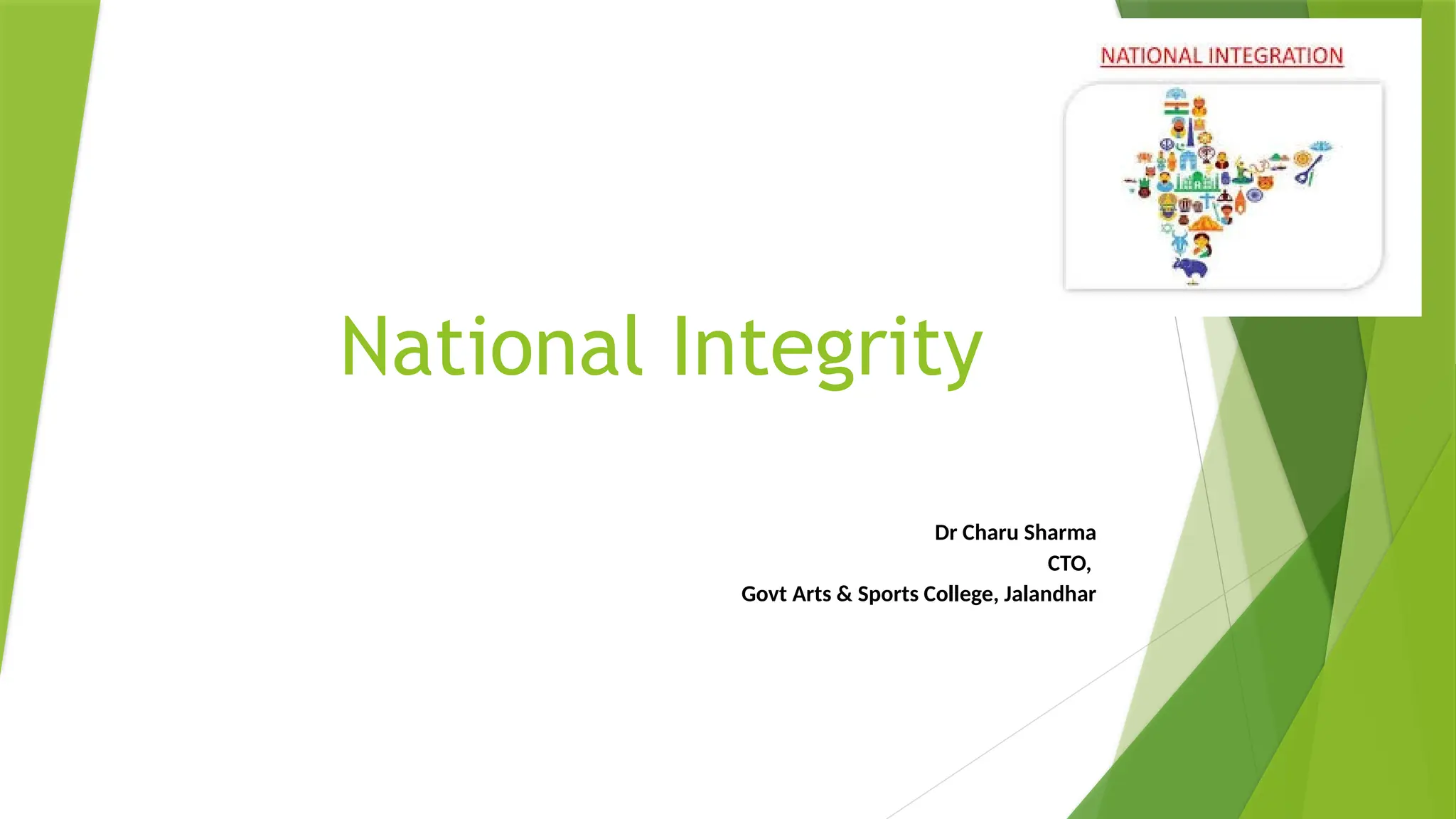
National Integrity
 National Integrity refers to the unity, honesty, and collective responsibility of the
citizens of a country toward preserving its sovereignty, cultural identity, constitutional
values, and social harmony.
Etymology of National Integrity
 National-
Root word: Latin nasci, natus –
which means “to be born”
 Integrity-
Root Word- Latin integer –
which means “whole” or
“untouched.”
National Integrity-
 "National" = related to the nation or country
 "Integrity" = wholeness, unity, and moral uprightness
Thus, National Integrity means the wholeness, unity,
and moral strength of a nation,
where citizens are loyal, law-
abiding, and united despite diversity.
Importance of National Integrity
 Preservation of National Unity
 Social Harmony and Peace
 Strengthening Democracy
 National Development
 Effective Disaster and Crisis Management
 Global Image and Diplomacy
 Youth Empowerment and Future Security
Key Components of National Integrity
 Unity in Diversity: Respecting all cultures, languages, and religions.
 Secularism: Equal treatment of all religions by the state.
 Democratic Values: Faith in the constitution, law, and equal rights.
 Social Harmony: No discrimination based on caste, gender, or region.
 Patriotism: Commitment to national development and welfare.
 Ethical Citizenship: Being honest, law-abiding, and responsible.
 Respect for National Symbols: The flag, anthem, and constitution.
Unity in Diversity
 Unity = Togetherness, oneness, harmony
 Diversity = Variety in culture, traditions, language, religion,
lifestyle, etc.
Unity in Diversity means living in harmony
while honoring differences.
Forms of Unity in Diversity
1. Cultural Diversity
 People from different states and ethnic groups live together peacefully.
 Example: Celebrating Durga Puja in West Bengal, Onam in Kerala, Bihu in Assam, and Lohri in
Punjab – yet all are celebrated with mutual respect.
2. Religious Diversity
 India is home to Hindus, Muslims, Christians, Sikhs, Jains, Buddhists, and more.
 Places like Kerala and Delhi show examples of interfaith communities living in harmony.
 Inter-religious festivals like Eid greetings by Hindus or Christmas celebrations in schools are
common.
Forms…..
3. Linguistic Diversity
 22 scheduled languages and hundreds of dialects.
 Still, a common communication bridge like Hindi and English connects people from different linguistic
backgrounds.
4. Regional Diversity
 Kashmir to Kanyakumari, Gujarat to Arunachal Pradesh – every region has unique food, dress, customs.
 Yet people travel, live, and work across regions with mutual understanding and respect.
5. Ethnic and Racial Diversity
 Tribal populations in Northeast and Central India, Anglo-Indians, Parsis, and others coexist within the larger
Indian society.
Secularism
 Secularism is the principle of separating religion from the state or
government.
 It means that the state does not favor or discriminate against any religion,
ensuring equal treatment to all citizens regardless of their faith.
 In India, we have positive secularism means equal respect for all religions.
 Other form can be- Complete separation of religion and state. Like France,
USA
Components of Secularism
1. Religious Freedom
 Right to profess, practice, and propagate any religion or no religion at all. (Article 25–28 of the Indian
Constitution)
2. Equality Before Law
 No discrimination based on religion in access to education, jobs, or public places.
3. Non-Establishment
 The state does not declare any religion as a state religion. (E.g., India, USA)
4. Neutrality of the State
 Government cannot favor or promote any one religion over others.
5. Intervention for Social Justice
 The state may regulate or reform religious practices that violate human rights (e.g., child marriage, sati,
triple talaq).
Social Harmony
Peaceful coexistence among people of different religions, castes, cultures, and regions.
Key Aspects:
 Respect for diversity
 Tolerance and empathy
 Non-discrimination and inclusiveness
 Dialogue and cooperation over conflict
Example:
 Celebrating festivals of different religions together
 Joint community projects like cleanliness drives across diverse groups
Patriotism
Love, loyalty, and commitment toward one's nation.
Key Aspects:
 Working for the betterment of the country
 Respecting the Constitution and national interests
 Contributing to national unity and integrity
Example:
 Participating in national movements like voting drives, Swachh Bharat Abhiyan
 Defending the country’s sovereignty and laws
Ethical Citizenship
Being a morally responsible, law-abiding, and participative member of society.
Key Aspects:
 Honesty, integrity, and fairness
 Following the rule of law
 Active civic engagement (voting, public discussions, volunteering)
Example:
 Paying taxes honestly
 Reporting corruption and supporting social causes
Respect for National Symbols
 Honoring the nation’s identity through symbols like the National Flag, Anthem,
Emblem, and Constitution.
 Key Aspects:
 Proper conduct during national anthem or flag hoisting
 Understanding the values behind symbols
 Teaching youth to value national pride
 Example:
 Observing Republic Day and Independence Day with dignity
 Learning and teaching about national heroes and freedom fighters
How can it be Developed?
 Education: Instills values of unity, tolerance, and patriotism through inclusive and
value-based learning.
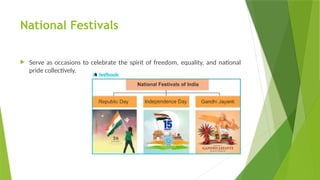
National Festivals
 Serve as occasions to celebrate the spirit of freedom, equality, and national
pride collectively.
Youth Participation in Nation-Building
 Empowers young minds to actively contribute to social, economic, and cultural
development.
Interfaith and Intercultural Dialogue
 Promotes mutual respect, understanding, and peaceful coexistence among diverse
communities.
Community Service and Volunteering
 Encourages collective responsibility and empathy through acts of public service.
Media and Literature
 Shape public opinion and inspire unity by highlighting stories of harmony, sacrifice, and
national integration.

National Integrity and its components...

  • 1.
    National Integrity Dr CharuSharma CTO, Govt Arts & Sports College, Jalandhar
  • 2.
    National Integrity  NationalIntegrity refers to the unity, honesty, and collective responsibility of the citizens of a country toward preserving its sovereignty, cultural identity, constitutional values, and social harmony.
  • 3.
    Etymology of NationalIntegrity  National- Root word: Latin nasci, natus – which means “to be born”  Integrity- Root Word- Latin integer – which means “whole” or “untouched.”
  • 4.
    National Integrity-  "National"= related to the nation or country  "Integrity" = wholeness, unity, and moral uprightness Thus, National Integrity means the wholeness, unity, and moral strength of a nation, where citizens are loyal, law- abiding, and united despite diversity.
  • 5.
    Importance of NationalIntegrity  Preservation of National Unity  Social Harmony and Peace  Strengthening Democracy  National Development  Effective Disaster and Crisis Management  Global Image and Diplomacy  Youth Empowerment and Future Security
  • 6.
    Key Components ofNational Integrity  Unity in Diversity: Respecting all cultures, languages, and religions.  Secularism: Equal treatment of all religions by the state.  Democratic Values: Faith in the constitution, law, and equal rights.  Social Harmony: No discrimination based on caste, gender, or region.  Patriotism: Commitment to national development and welfare.  Ethical Citizenship: Being honest, law-abiding, and responsible.  Respect for National Symbols: The flag, anthem, and constitution.
  • 7.
    Unity in Diversity Unity = Togetherness, oneness, harmony  Diversity = Variety in culture, traditions, language, religion, lifestyle, etc. Unity in Diversity means living in harmony while honoring differences.
  • 8.
    Forms of Unityin Diversity 1. Cultural Diversity  People from different states and ethnic groups live together peacefully.  Example: Celebrating Durga Puja in West Bengal, Onam in Kerala, Bihu in Assam, and Lohri in Punjab – yet all are celebrated with mutual respect. 2. Religious Diversity  India is home to Hindus, Muslims, Christians, Sikhs, Jains, Buddhists, and more.  Places like Kerala and Delhi show examples of interfaith communities living in harmony.  Inter-religious festivals like Eid greetings by Hindus or Christmas celebrations in schools are common.
  • 9.
    Forms….. 3. Linguistic Diversity 22 scheduled languages and hundreds of dialects.  Still, a common communication bridge like Hindi and English connects people from different linguistic backgrounds. 4. Regional Diversity  Kashmir to Kanyakumari, Gujarat to Arunachal Pradesh – every region has unique food, dress, customs.  Yet people travel, live, and work across regions with mutual understanding and respect. 5. Ethnic and Racial Diversity  Tribal populations in Northeast and Central India, Anglo-Indians, Parsis, and others coexist within the larger Indian society.
  • 10.
    Secularism  Secularism isthe principle of separating religion from the state or government.  It means that the state does not favor or discriminate against any religion, ensuring equal treatment to all citizens regardless of their faith.  In India, we have positive secularism means equal respect for all religions.  Other form can be- Complete separation of religion and state. Like France, USA
  • 11.
    Components of Secularism 1.Religious Freedom  Right to profess, practice, and propagate any religion or no religion at all. (Article 25–28 of the Indian Constitution) 2. Equality Before Law  No discrimination based on religion in access to education, jobs, or public places. 3. Non-Establishment  The state does not declare any religion as a state religion. (E.g., India, USA) 4. Neutrality of the State  Government cannot favor or promote any one religion over others. 5. Intervention for Social Justice  The state may regulate or reform religious practices that violate human rights (e.g., child marriage, sati, triple talaq).
  • 12.
    Social Harmony Peaceful coexistenceamong people of different religions, castes, cultures, and regions. Key Aspects:  Respect for diversity  Tolerance and empathy  Non-discrimination and inclusiveness  Dialogue and cooperation over conflict Example:  Celebrating festivals of different religions together  Joint community projects like cleanliness drives across diverse groups
  • 13.
    Patriotism Love, loyalty, andcommitment toward one's nation. Key Aspects:  Working for the betterment of the country  Respecting the Constitution and national interests  Contributing to national unity and integrity Example:  Participating in national movements like voting drives, Swachh Bharat Abhiyan  Defending the country’s sovereignty and laws
  • 14.
    Ethical Citizenship Being amorally responsible, law-abiding, and participative member of society. Key Aspects:  Honesty, integrity, and fairness  Following the rule of law  Active civic engagement (voting, public discussions, volunteering) Example:  Paying taxes honestly  Reporting corruption and supporting social causes
  • 15.
    Respect for NationalSymbols  Honoring the nation’s identity through symbols like the National Flag, Anthem, Emblem, and Constitution.  Key Aspects:  Proper conduct during national anthem or flag hoisting  Understanding the values behind symbols  Teaching youth to value national pride  Example:  Observing Republic Day and Independence Day with dignity  Learning and teaching about national heroes and freedom fighters
  • 16.
    How can itbe Developed?  Education: Instills values of unity, tolerance, and patriotism through inclusive and value-based learning.
  • 17.
    National Festivals  Serveas occasions to celebrate the spirit of freedom, equality, and national pride collectively.
  • 18.
    Youth Participation inNation-Building  Empowers young minds to actively contribute to social, economic, and cultural development.
  • 19.
    Interfaith and InterculturalDialogue  Promotes mutual respect, understanding, and peaceful coexistence among diverse communities.
  • 20.
    Community Service andVolunteering  Encourages collective responsibility and empathy through acts of public service.
  • 21.
    Media and Literature Shape public opinion and inspire unity by highlighting stories of harmony, sacrifice, and national integration.