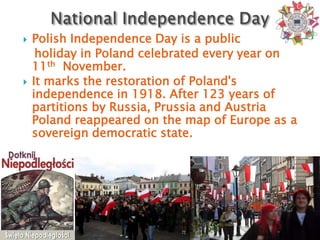
   Polish Independence Day is a public
     holiday in Poland celebrated every year on
    11th November.
   It marks the restoration of Poland's
    independence in 1918. After 123 years of
    partitions by Russia, Prussia and Austria
    Poland reappeared on the map of Europe as a
    sovereign democratic state.
   Year after year, The Polish community, whether at home or
    abroad, gathers together to commemorate the 3rd of May
    Constitution and to honor all the great minds who took
    part in the creation of this revolutionary document in
    1791. They celebrate because the constitution symbolizes
    the spiritual and moral renovation of the Polish nation
    after a long period of chaos and disorder. They celebrate
    because the constitution established a democratic
    philosophy of humanitarianism and tolerance, including
    entire liberty to all people. And, most of all, they celebrate
    because the 3rd of May Constitution is not only a
    milestone in the Polish political and social history. but it is
    also a landmark in the European tradition, being the
    second constitution ever written in the world, and a first
    on the European soil.
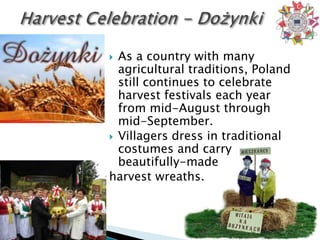
 As a country with many
  agricultural traditions, Poland
  still continues to celebrate
  harvest festivals each year
  from mid-August through
  mid-September.
 Villagers dress in traditional
  costumes and carry
  beautifully-made
harvest wreaths.
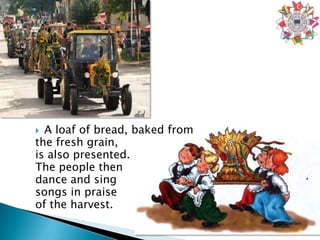
 A loaf of bread, baked from
the fresh grain,
is also presented.
The people then
dance and sing
songs in praise
of the harvest.
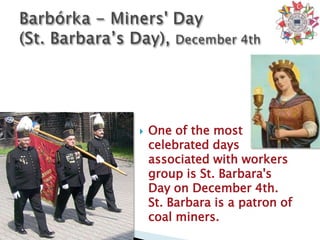
   One of the most
    celebrated days
    associated with workers
    group is St. Barbara's
    Day on December 4th.
    St. Barbara is a patron of
    coal miners.
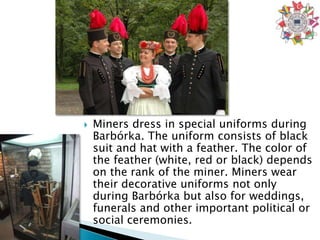
   Miners dress in special uniforms during
    Barbórka. The uniform consists of black
    suit and hat with a feather. The color of
    the feather (white, red or black) depends
    on the rank of the miner. Miners wear
    their decorative uniforms not only
    during Barbórka but also for weddings,
    funerals and other important political or
    social ceremonies.
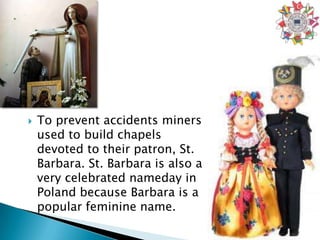
   To prevent accidents miners
    used to build chapels
    devoted to their patron, St.
    Barbara. St. Barbara is also a
    very celebrated nameday in
    Poland because Barbara is a
    popular feminine name.
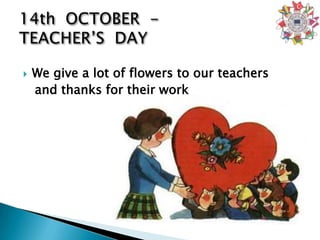
   We give a lot of flowers to our teachers
    and thanks for their work
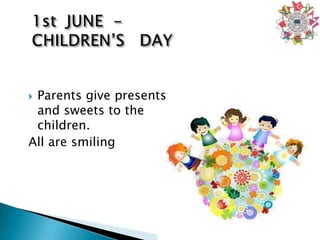
Parents give presents
 and sweets to the
 children.
All are smiling
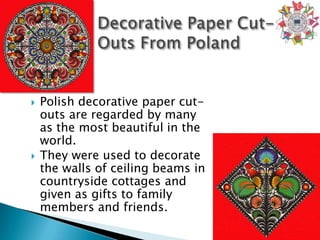
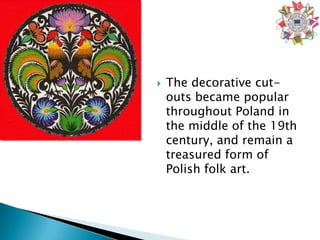
   Polish decorative paper cut-
    outs are regarded by many
    as the most beautiful in the
    world.
   They were used to decorate
    the walls of ceiling beams in
    countryside cottages and
    given as gifts to family
    members and friends.
   The decorative cut-
    outs became popular
    throughout Poland in
    the middle of the 19th
    century, and remain a
    treasured form of
    Polish folk art.
   Thank You

National holidays

  • 2.
    Polish Independence Day is a public holiday in Poland celebrated every year on 11th November.  It marks the restoration of Poland's independence in 1918. After 123 years of partitions by Russia, Prussia and Austria Poland reappeared on the map of Europe as a sovereign democratic state.
  • 3.
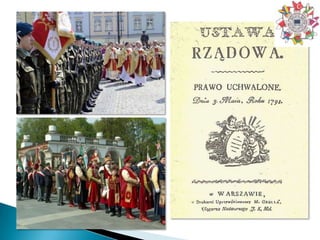
    Year after year, The Polish community, whether at home or abroad, gathers together to commemorate the 3rd of May Constitution and to honor all the great minds who took part in the creation of this revolutionary document in 1791. They celebrate because the constitution symbolizes the spiritual and moral renovation of the Polish nation after a long period of chaos and disorder. They celebrate because the constitution established a democratic philosophy of humanitarianism and tolerance, including entire liberty to all people. And, most of all, they celebrate because the 3rd of May Constitution is not only a milestone in the Polish political and social history. but it is also a landmark in the European tradition, being the second constitution ever written in the world, and a first on the European soil.
  • 5.
     As acountry with many agricultural traditions, Poland still continues to celebrate harvest festivals each year from mid-August through mid-September.  Villagers dress in traditional costumes and carry beautifully-made harvest wreaths.
  • 6.
     A loafof bread, baked from the fresh grain, is also presented. The people then dance and sing songs in praise of the harvest.
  • 7.
    One of the most celebrated days associated with workers group is St. Barbara's Day on December 4th. St. Barbara is a patron of coal miners.
  • 8.
    Miners dress in special uniforms during Barbórka. The uniform consists of black suit and hat with a feather. The color of the feather (white, red or black) depends on the rank of the miner. Miners wear their decorative uniforms not only during Barbórka but also for weddings, funerals and other important political or social ceremonies.
  • 9.
    To prevent accidents miners used to build chapels devoted to their patron, St. Barbara. St. Barbara is also a very celebrated nameday in Poland because Barbara is a popular feminine name.
  • 10.
    We give a lot of flowers to our teachers and thanks for their work
  • 11.
    Parents give presents and sweets to the children. All are smiling
  • 12.
    Polish decorative paper cut- outs are regarded by many as the most beautiful in the world.  They were used to decorate the walls of ceiling beams in countryside cottages and given as gifts to family members and friends.
  • 13.
    The decorative cut- outs became popular throughout Poland in the middle of the 19th century, and remain a treasured form of Polish folk art.
  • 14.
    Thank You