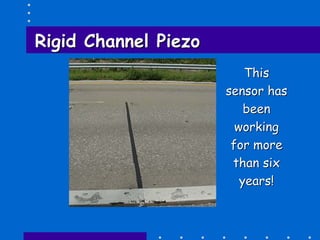
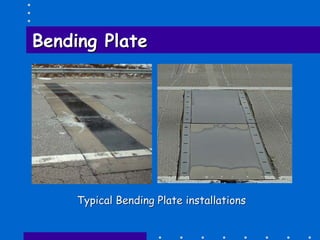
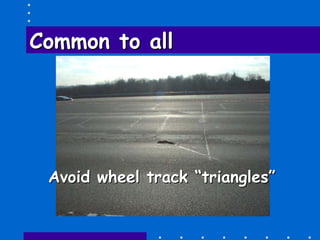
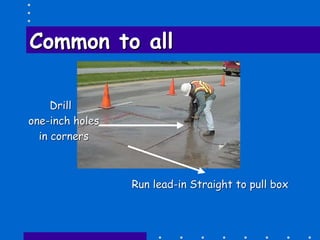
This document discusses experiences with different types of traditional WIM (weigh-in-motion) sensors installed in Kentucky, including their advantages and disadvantages. It provides examples of good, bad, and ugly sensor installations and emphasizes the importance of thorough planning, accurate installation, and addressing road characteristics and future maintenance for sensor functionality. Common issues include sensors popping out of the pavement, voids in installations, and crossings that dip and lose the sensor signal. Proper installation following technical specifications is highlighted as key to WIM sensor performance.