Humanism,
Transhumanism and
   Posthumanism
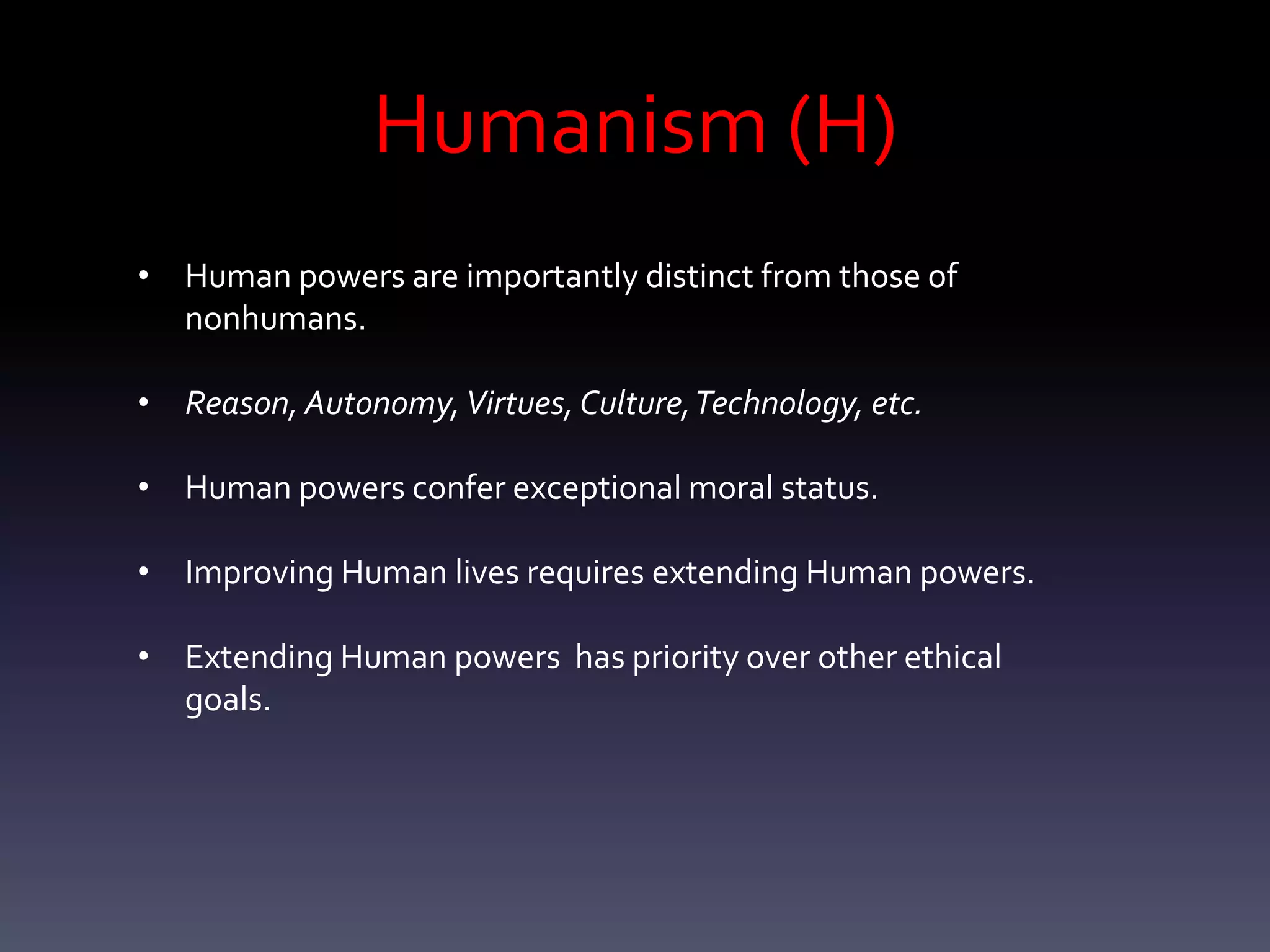
Humanism (H)
• Human powers are importantly distinct from those of
  nonhumans.

• Reason, Autonomy, Virtues, Culture, Technology, etc.

• Human powers confer exceptional moral status.

• Improving Human lives requires extending Human powers.

• Extending Human powers has priority over other ethical
  goals.
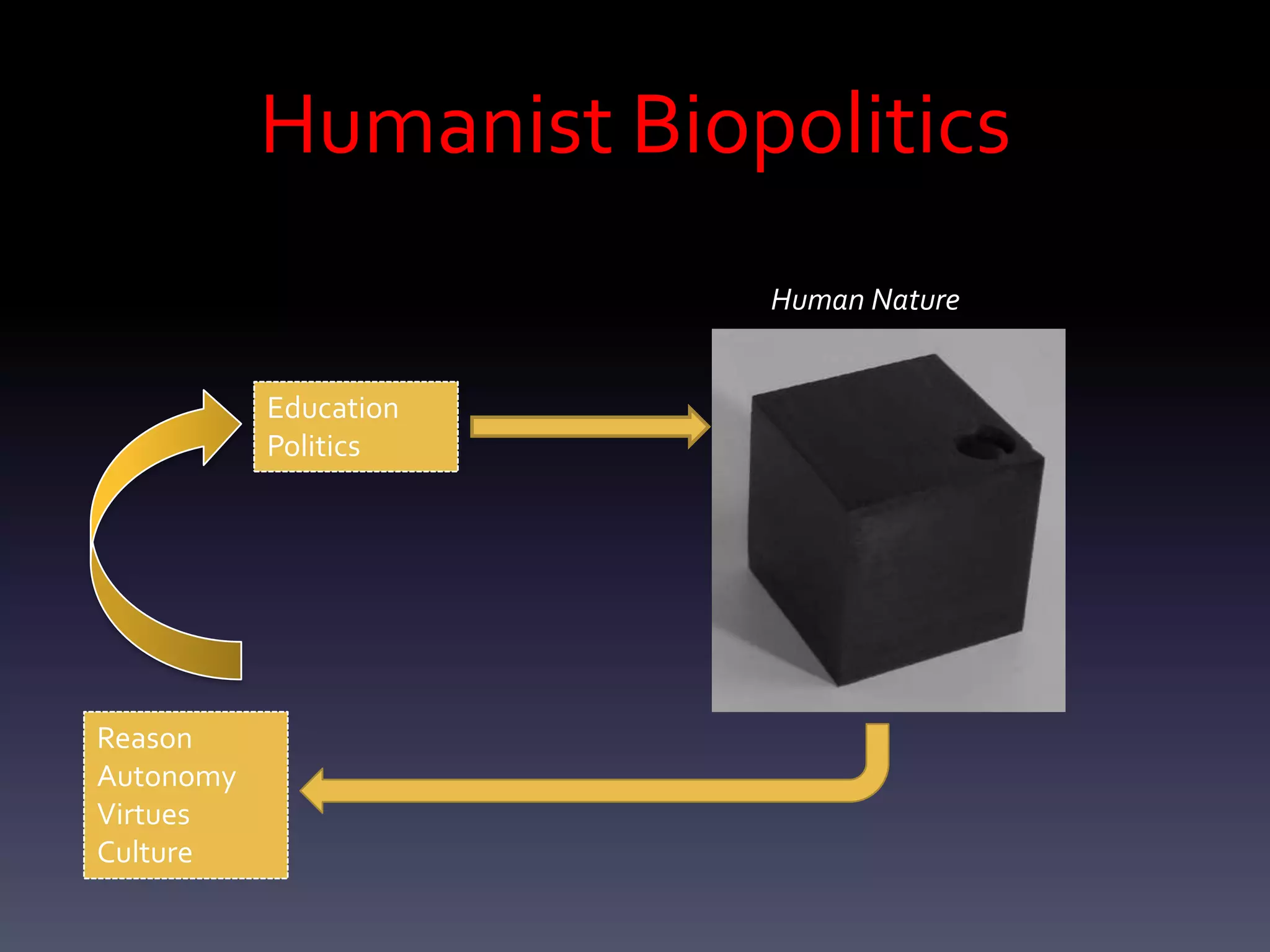
Humanist Biopolitics
                        Human Nature


           Education
           Politics


Reason
Autonomy
Virtues
Culture
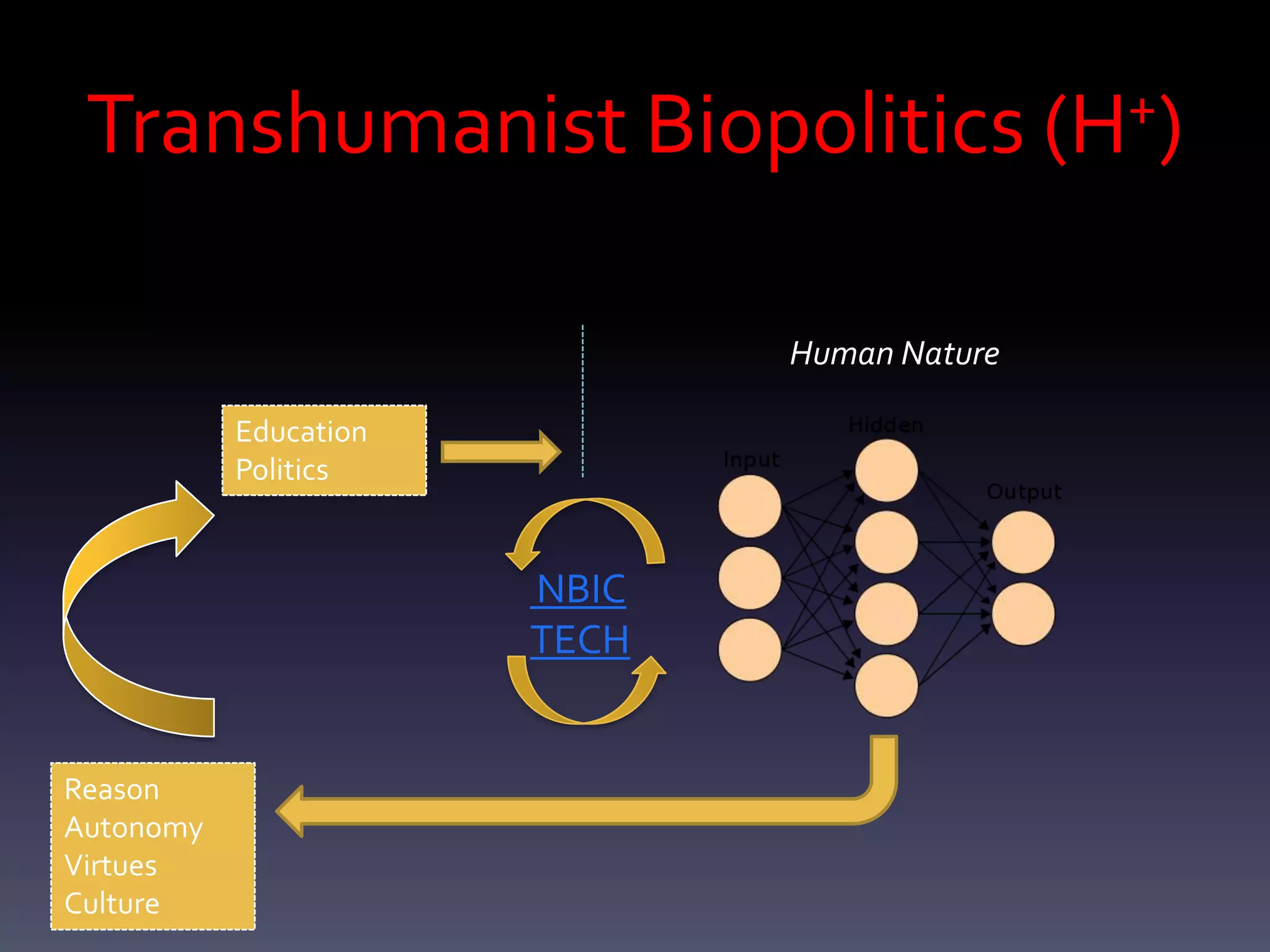
Transhumanist Biopolitics (H+)


                              Human Nature

           Education
           Politics


                       NBIC
                       TECH


Reason
Autonomy
Virtues
Culture
NBIC Technologies
•   Nanotechnology – very fast and precise atom-scale manufacturing,
    programmable matter (New Materials, Post-Scarcity Economics).
•   Biotechnology – manipulating life and living systems at the genetic/sub-
    cellular level, synthetic life (Genetic Enhancement, Ageing Cures)
•   Information Technology – computing, cybernetics (Artificial Intelligence,
    Brain Machine Interfaces)
•   Cognitive Science – understanding the architecture and implementation
    details of human and nonhuman minds (Cognitive Enhancement, Mind-
    Uploading)
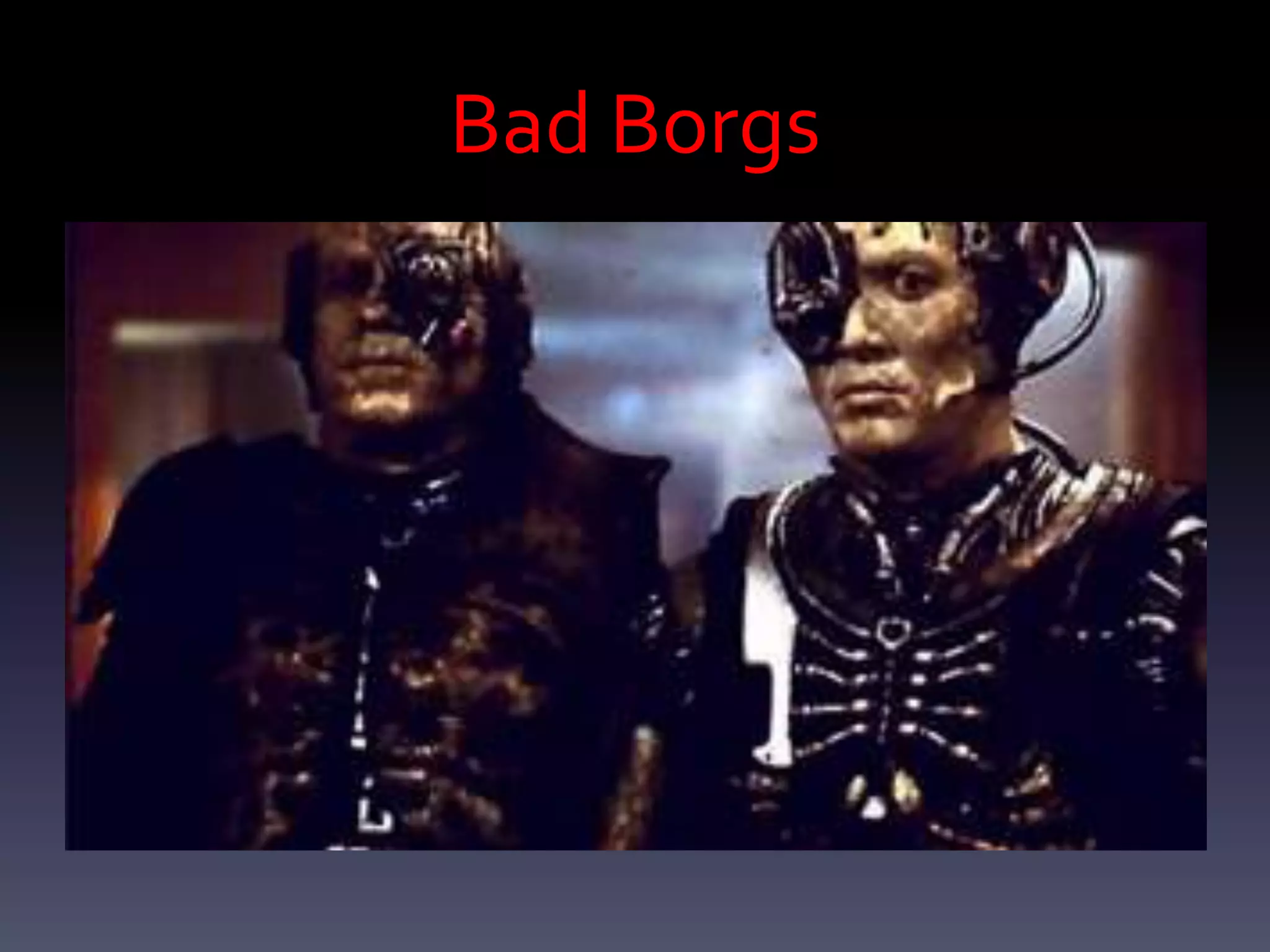
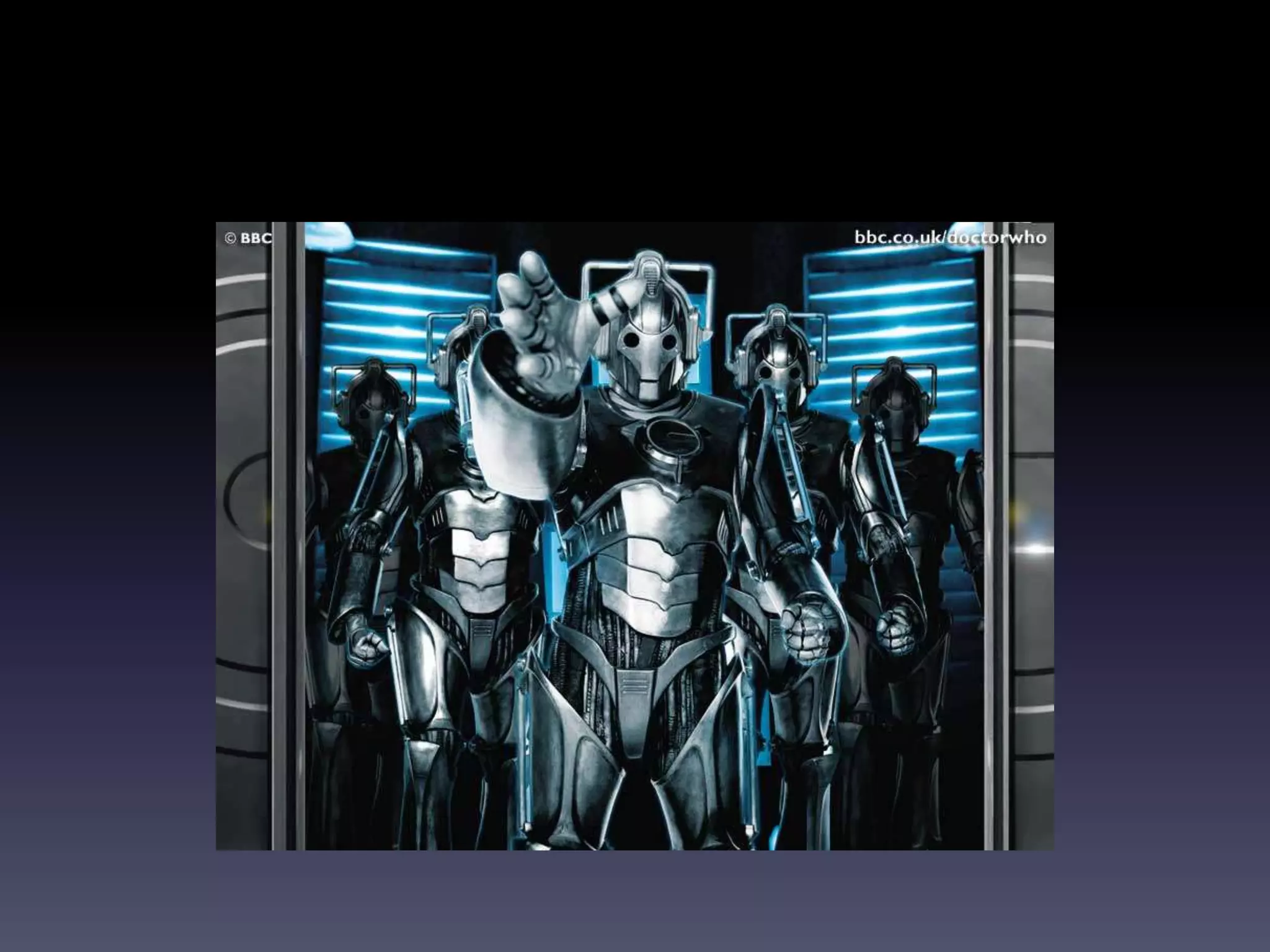
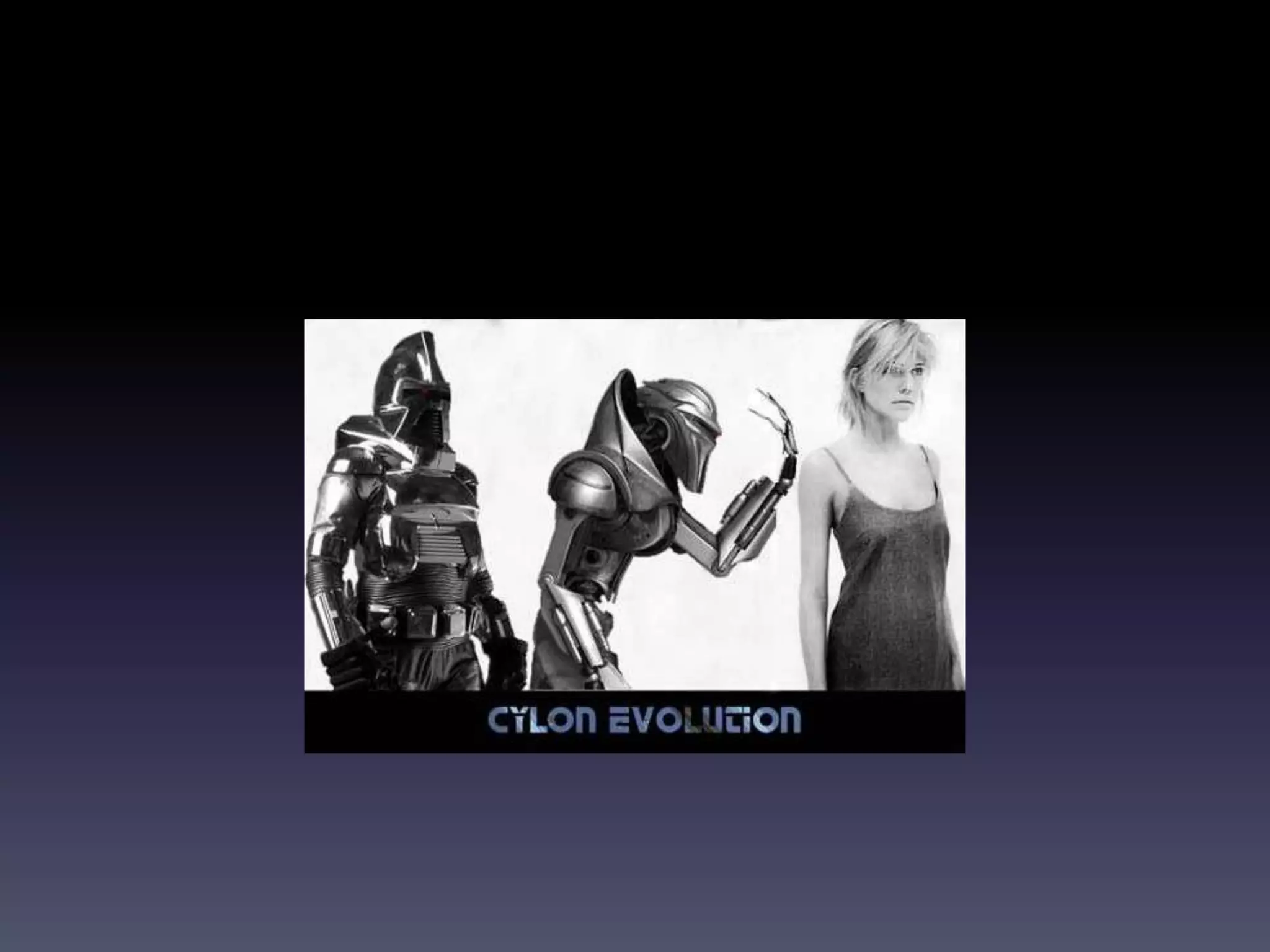
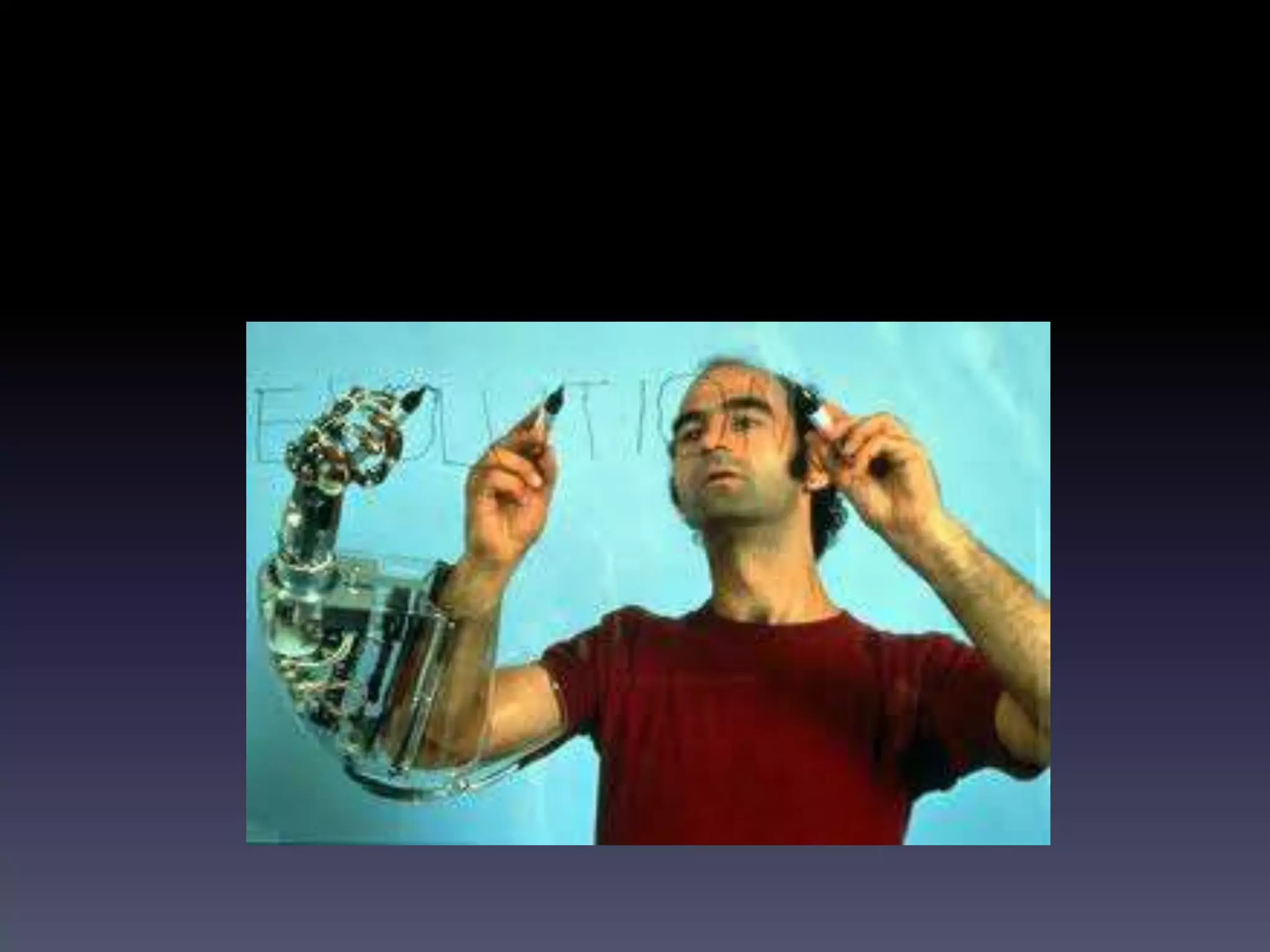
Bad Borgs
Cyborg Humanism ?
• The promise, or perhaps threatened, transition to a world of wired
  humans and semi-intelligent gadgets is just one more move in an
  ancient game. . . We are already masters at incorporating
  nonbiological stuff and structure deep into our physical and
  cognitive routines. To appreciate this is to cease to believe in any
  post-human future and to resist the temptation to define ourselves
  in brutal opposition to the very worlds in which so many of us now
  live, love and work (Andy Clark, Natural Born Cyborgs. Oxford OUP:
  2003, 142).
The Technological Singularity
“an ultraintelligent machine be defined as a machine that can far surpass all the intellectual
activities of any man however clever. Since the design of machines is one of these intellectual
activities, an ultraintelligent machine could design even better machines; there would then
unquestionably be an "intelligence explosion“ I J Good, cited in Vernor Vinge, “The Coming
Technological Singularity: How to Survive in the Post-Human Era”


And what happens a month or two (or a day or two) after that? I have only analogies to
point to: The rise of humankind. We will be in the Post-Human era. And for all my rampant
technological optimism, sometimes I think I'd be more comfortable if I were regarding
these transcendental events from one thousand years remove... instead of twenty. Vernor
Vinge, “The Coming Technological Singularity: How to Survive in the Post-Human Era”
(Speculative) Posthumanism


SP: Descendants of current humans could cease to be
human as a consequence of technical alteration.
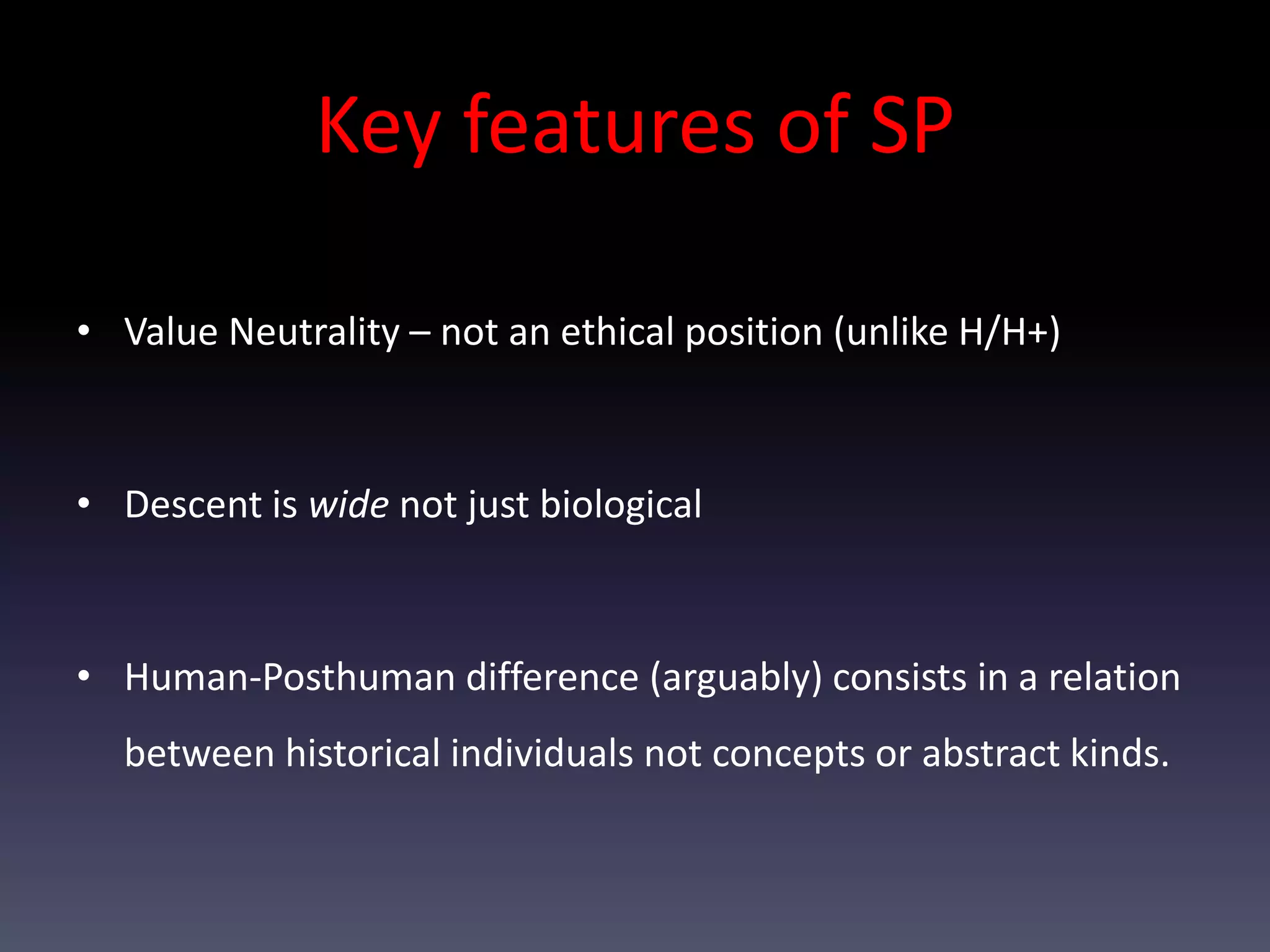
Key features of SP

• Value Neutrality – not an ethical position (unlike H/H+)


• Descent is wide not just biological


• Human-Posthuman difference (arguably) consists in a relation
  between historical individuals not concepts or abstract kinds.
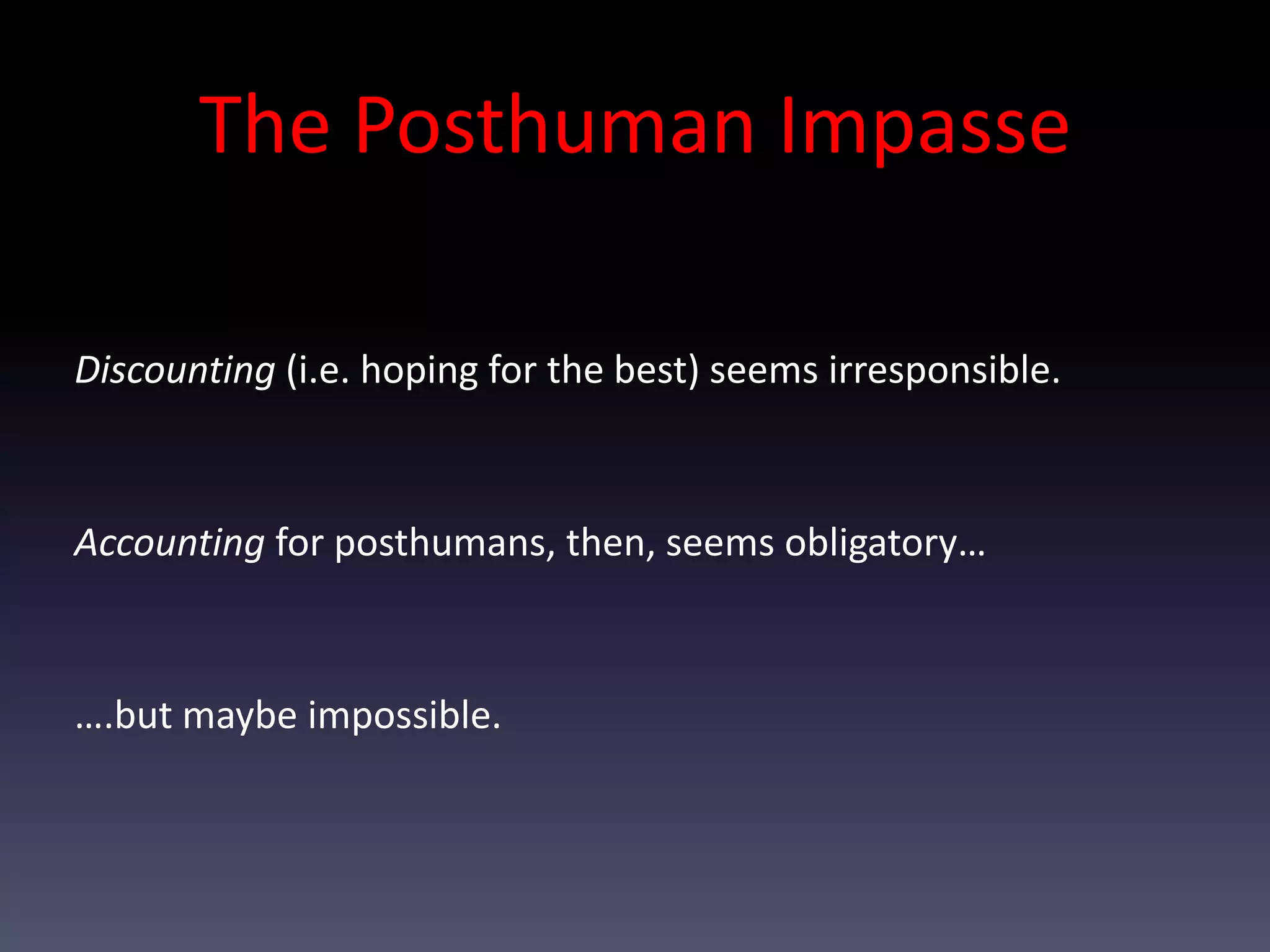
The Posthuman Impasse

Discounting (i.e. hoping for the best) seems irresponsible.


Accounting for posthumans, then, seems obligatory…


….but maybe impossible.
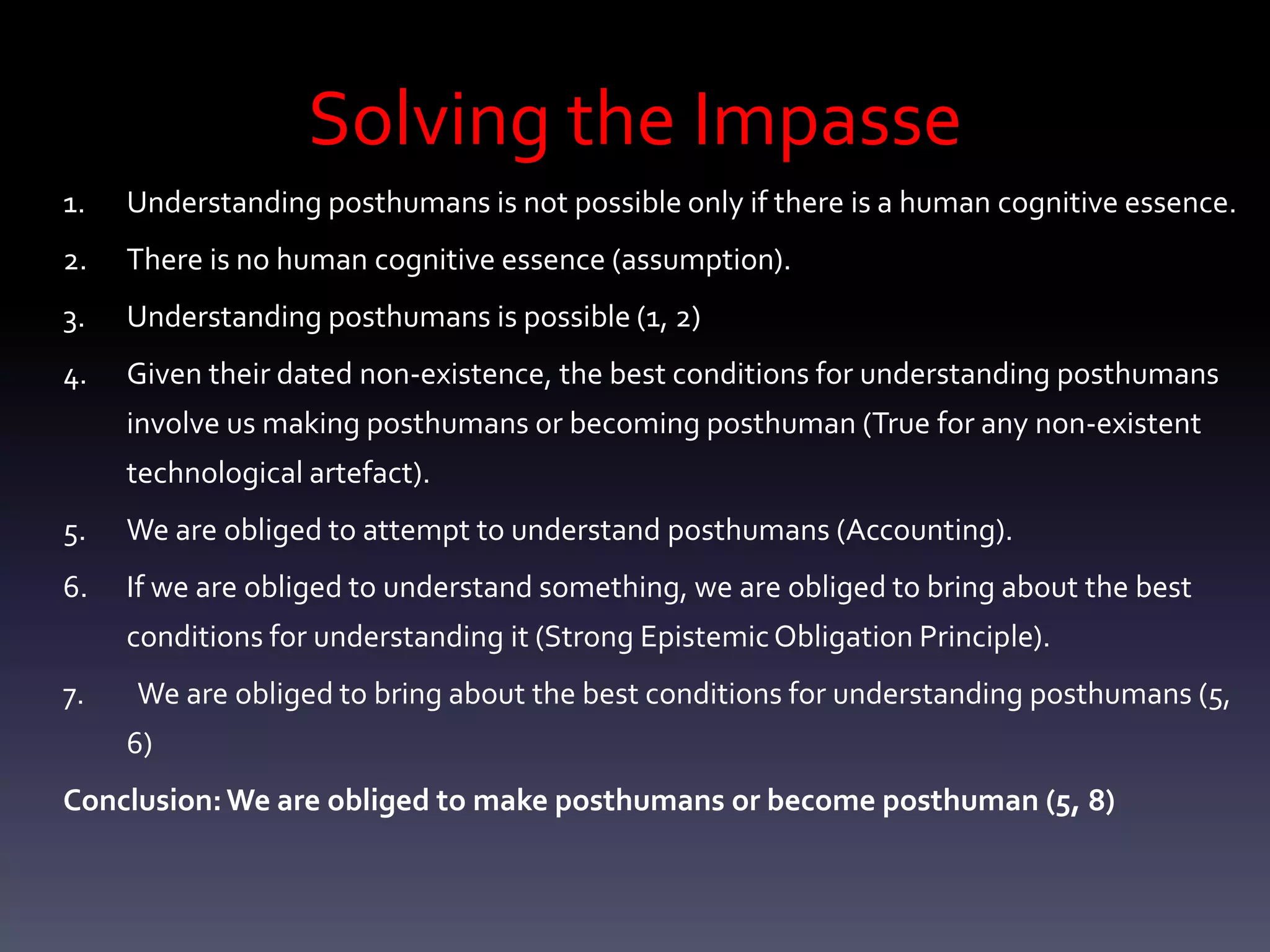
Solving the Impasse
1.   Understanding posthumans is not possible only if there is a human cognitive essence.
2.   There is no human cognitive essence (assumption).
3.   Understanding posthumans is possible (1, 2)
4.   Given their dated non-existence, the best conditions for understanding posthumans
     involve us making posthumans or becoming posthuman (True for any non-existent
     technological artefact).
5.   We are obliged to attempt to understand posthumans (Accounting).
6.   If we are obliged to understand something, we are obliged to bring about the best
     conditions for understanding it (Strong Epistemic Obligation Principle).
7.   We are obliged to bring about the best conditions for understanding posthumans (5,
     6)
Conclusion: We are obliged to make posthumans or become posthuman (5, 8)
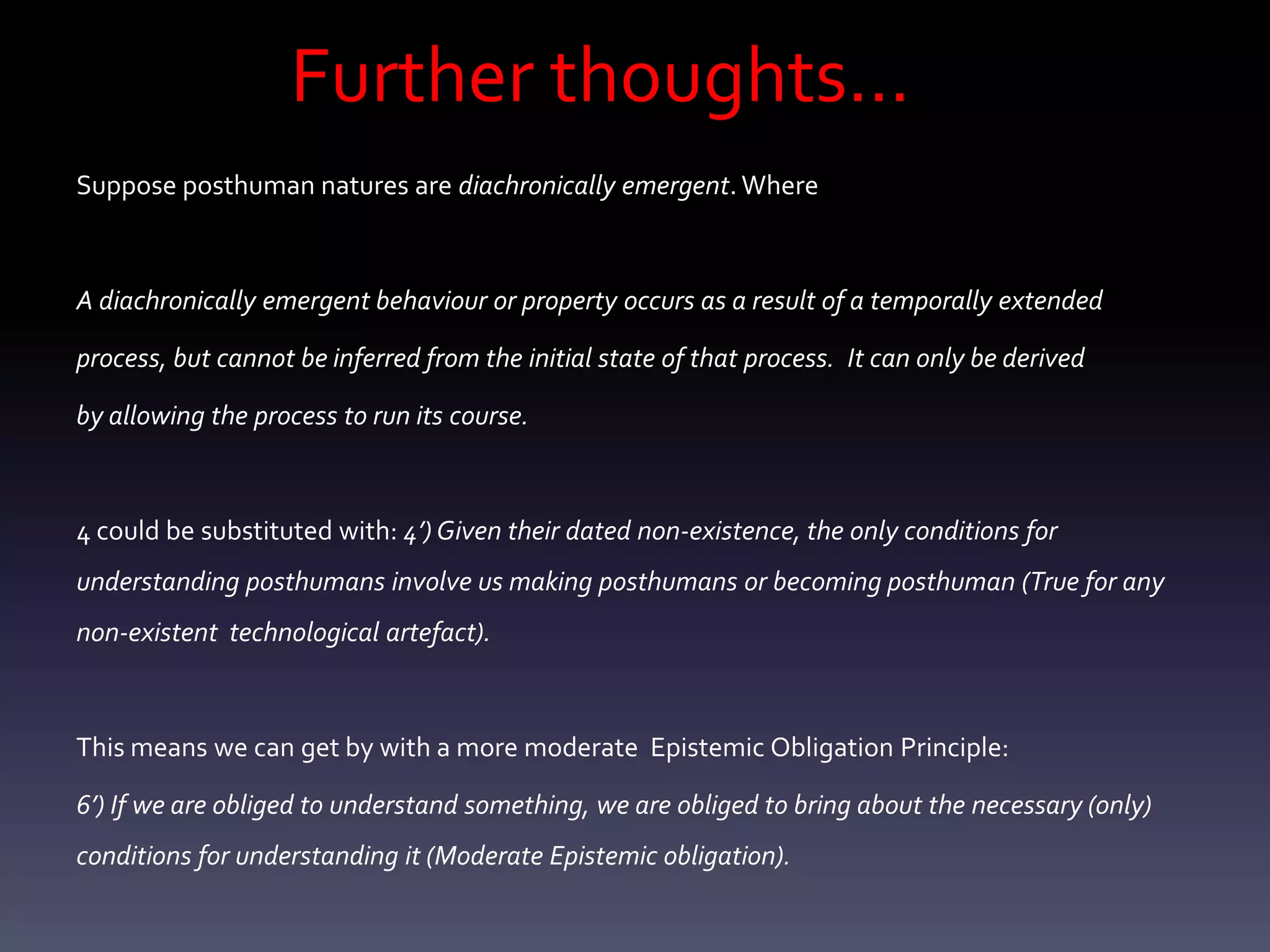
Further thoughts…
Suppose posthuman natures are diachronically emergent. Where


A diachronically emergent behaviour or property occurs as a result of a temporally extended

process, but cannot be inferred from the initial state of that process. It can only be derived

by allowing the process to run its course.


4 could be substituted with: 4’) Given their dated non-existence, the only conditions for
understanding posthumans involve us making posthumans or becoming posthuman (True for any
non-existent technological artefact).


This means we can get by with a more moderate Epistemic Obligation Principle:

6’) If we are obliged to understand something, we are obliged to bring about the necessary (only)
conditions for understanding it (Moderate Epistemic obligation).

My night with philosophers presentation - London June 8

  • 1.
  • 2.
    Humanism (H) • Humanpowers are importantly distinct from those of nonhumans. • Reason, Autonomy, Virtues, Culture, Technology, etc. • Human powers confer exceptional moral status. • Improving Human lives requires extending Human powers. • Extending Human powers has priority over other ethical goals.
  • 3.
    Humanist Biopolitics Human Nature Education Politics Reason Autonomy Virtues Culture
  • 4.
    Transhumanist Biopolitics (H+) Human Nature Education Politics NBIC TECH Reason Autonomy Virtues Culture
  • 5.
    NBIC Technologies • Nanotechnology – very fast and precise atom-scale manufacturing, programmable matter (New Materials, Post-Scarcity Economics). • Biotechnology – manipulating life and living systems at the genetic/sub- cellular level, synthetic life (Genetic Enhancement, Ageing Cures) • Information Technology – computing, cybernetics (Artificial Intelligence, Brain Machine Interfaces) • Cognitive Science – understanding the architecture and implementation details of human and nonhuman minds (Cognitive Enhancement, Mind- Uploading)
  • 6.
  • 10.
    Cyborg Humanism ? •The promise, or perhaps threatened, transition to a world of wired humans and semi-intelligent gadgets is just one more move in an ancient game. . . We are already masters at incorporating nonbiological stuff and structure deep into our physical and cognitive routines. To appreciate this is to cease to believe in any post-human future and to resist the temptation to define ourselves in brutal opposition to the very worlds in which so many of us now live, love and work (Andy Clark, Natural Born Cyborgs. Oxford OUP: 2003, 142).
  • 11.
    The Technological Singularity “anultraintelligent machine be defined as a machine that can far surpass all the intellectual activities of any man however clever. Since the design of machines is one of these intellectual activities, an ultraintelligent machine could design even better machines; there would then unquestionably be an "intelligence explosion“ I J Good, cited in Vernor Vinge, “The Coming Technological Singularity: How to Survive in the Post-Human Era” And what happens a month or two (or a day or two) after that? I have only analogies to point to: The rise of humankind. We will be in the Post-Human era. And for all my rampant technological optimism, sometimes I think I'd be more comfortable if I were regarding these transcendental events from one thousand years remove... instead of twenty. Vernor Vinge, “The Coming Technological Singularity: How to Survive in the Post-Human Era”
  • 12.
    (Speculative) Posthumanism SP: Descendantsof current humans could cease to be human as a consequence of technical alteration.
  • 13.
    Key features ofSP • Value Neutrality – not an ethical position (unlike H/H+) • Descent is wide not just biological • Human-Posthuman difference (arguably) consists in a relation between historical individuals not concepts or abstract kinds.
  • 14.
    The Posthuman Impasse Discounting(i.e. hoping for the best) seems irresponsible. Accounting for posthumans, then, seems obligatory… ….but maybe impossible.
  • 15.
    Solving the Impasse 1. Understanding posthumans is not possible only if there is a human cognitive essence. 2. There is no human cognitive essence (assumption). 3. Understanding posthumans is possible (1, 2) 4. Given their dated non-existence, the best conditions for understanding posthumans involve us making posthumans or becoming posthuman (True for any non-existent technological artefact). 5. We are obliged to attempt to understand posthumans (Accounting). 6. If we are obliged to understand something, we are obliged to bring about the best conditions for understanding it (Strong Epistemic Obligation Principle). 7. We are obliged to bring about the best conditions for understanding posthumans (5, 6) Conclusion: We are obliged to make posthumans or become posthuman (5, 8)
  • 16.
    Further thoughts… Suppose posthumannatures are diachronically emergent. Where A diachronically emergent behaviour or property occurs as a result of a temporally extended process, but cannot be inferred from the initial state of that process. It can only be derived by allowing the process to run its course. 4 could be substituted with: 4’) Given their dated non-existence, the only conditions for understanding posthumans involve us making posthumans or becoming posthuman (True for any non-existent technological artefact). This means we can get by with a more moderate Epistemic Obligation Principle: 6’) If we are obliged to understand something, we are obliged to bring about the necessary (only) conditions for understanding it (Moderate Epistemic obligation).