Music tourism is
the act of visiting a
city or town, to see
a music festival or
other music
performances.
This sort of tourism is particularly
important to small villages such as
Glastonbury, as well as large cities
like Glasgow.
 Music tourism is a sub-set of the larger type of
tourism called Cultural Tourism which includes
travel to attend festivals focusing on a theme
such as food, beverage (wine, scotch, etc.),
film and literary.
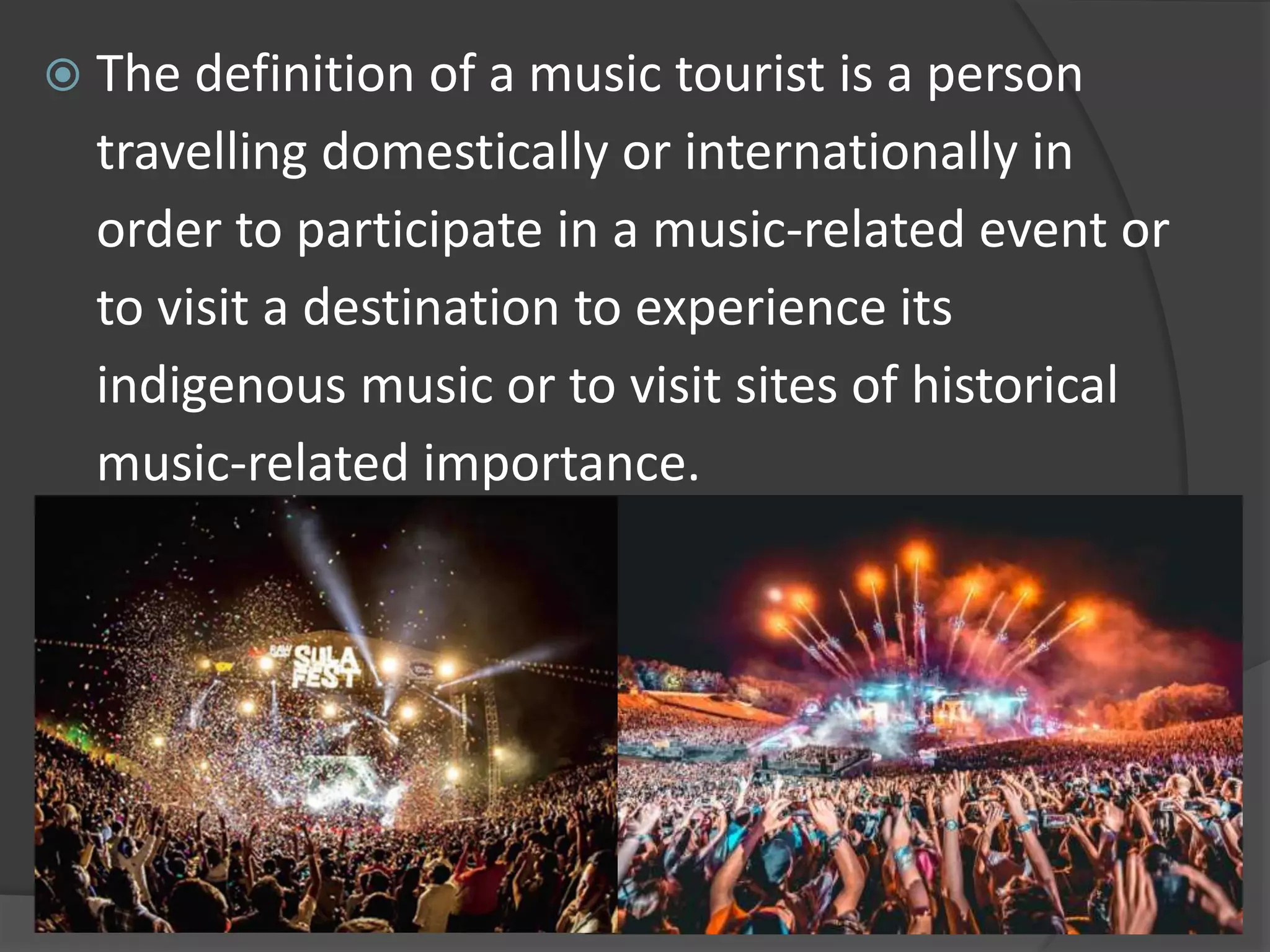
 The definition of a music tourist is a person
travelling domestically or internationally in
order to participate in a music-related event or
to visit a destination to experience its
indigenous music or to visit sites of historical
music-related importance.
 There are a large number of music festivals
held around the world, usually annually, that
attract non-local visitors. The self-proclaimed
largest music festival in the world is
Summerfest, an 11-day event in Milwaukee,
Wisconsin with an annual attendance of
nearly 1,000,000 people.
Some major ones include Rio Carnival in
Brazil, which attracts 500,000 foreign visitors
annually, and the Salvador de Bahia carnival,
which is the largest street party, and attracts
crowds of up to two million people throughout
its week-long duration.
There are also a
number of annual
carnivals, events
that include
music, dancing
and street parties.
 The Notting Hill
Carnival
(London, UK) is
one of the
largest street
parties in
Europe and
attracts around
one million
people each
year.
 The Love Parade, an
electronic dance music
festival in Germany held
from 1989 to 2010, saw
crowds of 1.6 million at its
peak.
There are hundreds of annual jazz festivals
around the world, with the largest, the
Montreal International Jazz Festival, seeing
2.5 million attendees every year, one third
of whom are tourists.
And the capital city of music tourism?
 Despite Liverpool’s pull for Beatles fans and
Birmingham’s magnetism for heavy metal lovers
London attracts the most music tourists with 1.8m
flocking to the capital.

Music tourism

  • 2.
    Music tourism is theact of visiting a city or town, to see a music festival or other music performances. This sort of tourism is particularly important to small villages such as Glastonbury, as well as large cities like Glasgow.
  • 3.
     Music tourismis a sub-set of the larger type of tourism called Cultural Tourism which includes travel to attend festivals focusing on a theme such as food, beverage (wine, scotch, etc.), film and literary.
  • 4.
     The definitionof a music tourist is a person travelling domestically or internationally in order to participate in a music-related event or to visit a destination to experience its indigenous music or to visit sites of historical music-related importance.
  • 5.
     There area large number of music festivals held around the world, usually annually, that attract non-local visitors. The self-proclaimed largest music festival in the world is Summerfest, an 11-day event in Milwaukee, Wisconsin with an annual attendance of nearly 1,000,000 people.
  • 6.
    Some major onesinclude Rio Carnival in Brazil, which attracts 500,000 foreign visitors annually, and the Salvador de Bahia carnival, which is the largest street party, and attracts crowds of up to two million people throughout its week-long duration. There are also a number of annual carnivals, events that include music, dancing and street parties.
  • 7.
     The NottingHill Carnival (London, UK) is one of the largest street parties in Europe and attracts around one million people each year.
  • 8.
     The LoveParade, an electronic dance music festival in Germany held from 1989 to 2010, saw crowds of 1.6 million at its peak.
  • 9.
    There are hundredsof annual jazz festivals around the world, with the largest, the Montreal International Jazz Festival, seeing 2.5 million attendees every year, one third of whom are tourists.
  • 10.
    And the capitalcity of music tourism?  Despite Liverpool’s pull for Beatles fans and Birmingham’s magnetism for heavy metal lovers London attracts the most music tourists with 1.8m flocking to the capital.