Multiple carboxylase deficiency
Omar aljabri
Definition and enzymatic deficiency
Multiple carboxylase deficiency is recessive inherited amino
acidopathy caused by deficiency of either of two enzymes
necessary for activity of several biotin containing carboxylases.
enzymes:
 Holocaroxylase synthetase (HCLS)
 Biotinidase
Prior to the advent of universal newborn screening (NBS) in the United
States, age of onset was used to differentiate between HCLS deficiency
and biotinidase deficiency, with biotinidase deficiency generally
presenting after 3 months.
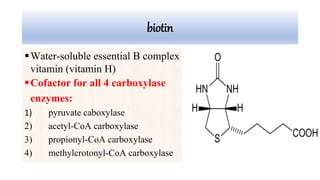
biotin
Water-soluble essential B complex
vitamin (vitamin H)
Cofactor for all 4 carboxylase
enzymes:
1) pyruvate caboxylase
2) acetyl-CoA carboxylase
3) propionyl-CoA carboxylase
4) methylcrotonyl-CoA carboxylase
Pathogenesis
• Holocaroxylase synthetase (HCLS)
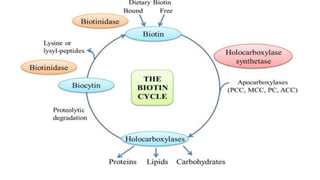
 the HCLS is responsible for covalently linking biotin to(PCC, 3-MCC, PC,
ACC) Failure to attach biotin causes reduced activity of these biotin-
dependent carboxylases and results in multiple carboxylase deficiency
• Biotinidase:
 A major function of biotinidase is to recycle biotin liberated from biocytin and/or
small biotinyl-peptides from degraded holocarboxylase.
 It is also important in freeing biotin from dietary protein-bound biotin.
Causes
• Mutations in the genes for holocarboxylase synthetase and biotinidase
produce deficient or defective enzymes inhibiting the activation of the four
carboxylases and limiting the recovery of protein bound biotin for
reactivation of the carboxylases.
• The gene for holocarboxylase synthetase is located on chromosome 21, and has 11 exons.
There are at least 35 mutations known.
• The gene for biotinidase is located on chromosome 3, and has 4 axons. Over 100 mutations
have been reported, but 5 common mutations account for about 60% of the abnormal alleles.
Inheritance pattern
Incidence of profound and partial deficiency is 1:60.000 in
most countries
metabolic consequence
• excessive levels of acids in the blood resulting in acidosis.
• accumulations of (ketone bodies) in tissues to excessive breakdown of fats
resulting in ketosis
• inhibits the urea cycle resulting in hyperammonemia.
• inhibits gluconeogenesis resulting in hypoglycemia
• abnormal urine organic acids characteristic of ketosis increased
lactic acid.
 3-hydroxy isovaleric acid .
 3-methylcrotonylglycine.
 methylcitrate.
hydroxy-propionate and propionylglycine .
Diagnosis and Laboratory findings
the enzyme activity should be assayed in leukocytes
Primary newborn screening for multiple carboxylase deficiency utilizes tandem
mass spectrometry. Elevated C5-OH acylcarnitine indicates the possibility of
multiple carboxylase deficiency
Pathological organic acid profile in the urine propionic acid, methylcitrate, 3-
methylcrotonic-, 3-hydroxyisovaleric acid, 3-methylcrotonylglycine)
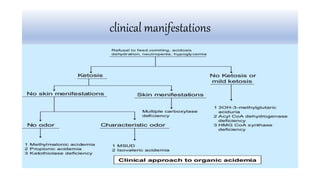
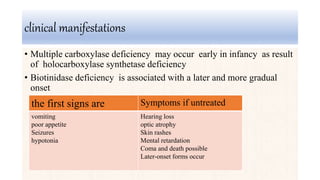
clinical manifestations
• Multiple carboxylase deficiency may occur early in infancy as result
of holocarboxylase synthetase deficiency
• Biotinidase deficiency is associated with a later and more gradual
onset
Symptoms if untreatedthe first signs are
Hearing loss
optic atrophy
Skin rashes
Mental retardation
Coma and death possible
Later-onset forms occur
vomiting
poor appetite
Seizures
hypotonia
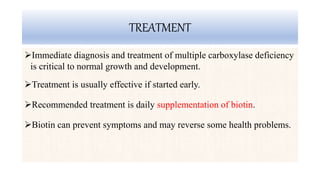
TREATMENT
Immediate diagnosis and treatment of multiple carboxylase deficiency
is critical to normal growth and development.
Treatment is usually effective if started early.
Recommended treatment is daily supplementation of biotin.
Biotin can prevent symptoms and may reverse some health problems.
Multiple carboxylase deficiency

Multiple carboxylase deficiency

  • 1.
  • 2.
    Definition and enzymaticdeficiency Multiple carboxylase deficiency is recessive inherited amino acidopathy caused by deficiency of either of two enzymes necessary for activity of several biotin containing carboxylases. enzymes:  Holocaroxylase synthetase (HCLS)  Biotinidase Prior to the advent of universal newborn screening (NBS) in the United States, age of onset was used to differentiate between HCLS deficiency and biotinidase deficiency, with biotinidase deficiency generally presenting after 3 months.
  • 3.
    biotin Water-soluble essential Bcomplex vitamin (vitamin H) Cofactor for all 4 carboxylase enzymes: 1) pyruvate caboxylase 2) acetyl-CoA carboxylase 3) propionyl-CoA carboxylase 4) methylcrotonyl-CoA carboxylase
  • 4.
    Pathogenesis • Holocaroxylase synthetase(HCLS)  the HCLS is responsible for covalently linking biotin to(PCC, 3-MCC, PC, ACC) Failure to attach biotin causes reduced activity of these biotin- dependent carboxylases and results in multiple carboxylase deficiency • Biotinidase:  A major function of biotinidase is to recycle biotin liberated from biocytin and/or small biotinyl-peptides from degraded holocarboxylase.  It is also important in freeing biotin from dietary protein-bound biotin.
  • 6.
    Causes • Mutations inthe genes for holocarboxylase synthetase and biotinidase produce deficient or defective enzymes inhibiting the activation of the four carboxylases and limiting the recovery of protein bound biotin for reactivation of the carboxylases. • The gene for holocarboxylase synthetase is located on chromosome 21, and has 11 exons. There are at least 35 mutations known. • The gene for biotinidase is located on chromosome 3, and has 4 axons. Over 100 mutations have been reported, but 5 common mutations account for about 60% of the abnormal alleles.
  • 7.
    Inheritance pattern Incidence ofprofound and partial deficiency is 1:60.000 in most countries
  • 8.
    metabolic consequence • excessivelevels of acids in the blood resulting in acidosis. • accumulations of (ketone bodies) in tissues to excessive breakdown of fats resulting in ketosis • inhibits the urea cycle resulting in hyperammonemia. • inhibits gluconeogenesis resulting in hypoglycemia • abnormal urine organic acids characteristic of ketosis increased lactic acid.  3-hydroxy isovaleric acid .  3-methylcrotonylglycine.  methylcitrate. hydroxy-propionate and propionylglycine .
  • 9.
    Diagnosis and Laboratoryfindings the enzyme activity should be assayed in leukocytes Primary newborn screening for multiple carboxylase deficiency utilizes tandem mass spectrometry. Elevated C5-OH acylcarnitine indicates the possibility of multiple carboxylase deficiency Pathological organic acid profile in the urine propionic acid, methylcitrate, 3- methylcrotonic-, 3-hydroxyisovaleric acid, 3-methylcrotonylglycine)
  • 10.
  • 11.
    clinical manifestations • Multiplecarboxylase deficiency may occur early in infancy as result of holocarboxylase synthetase deficiency • Biotinidase deficiency is associated with a later and more gradual onset Symptoms if untreatedthe first signs are Hearing loss optic atrophy Skin rashes Mental retardation Coma and death possible Later-onset forms occur vomiting poor appetite Seizures hypotonia
  • 12.
    TREATMENT Immediate diagnosis andtreatment of multiple carboxylase deficiency is critical to normal growth and development. Treatment is usually effective if started early. Recommended treatment is daily supplementation of biotin. Biotin can prevent symptoms and may reverse some health problems.