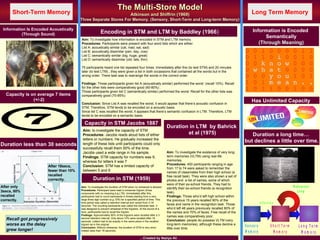
Since list C was recalled the worst, it appears that there’s semantic STM Baddeley (1966)
                                                                                                                                          Encoding in confusion in LTM. Therefore, LTM tends to be encoded on a semantic basis.


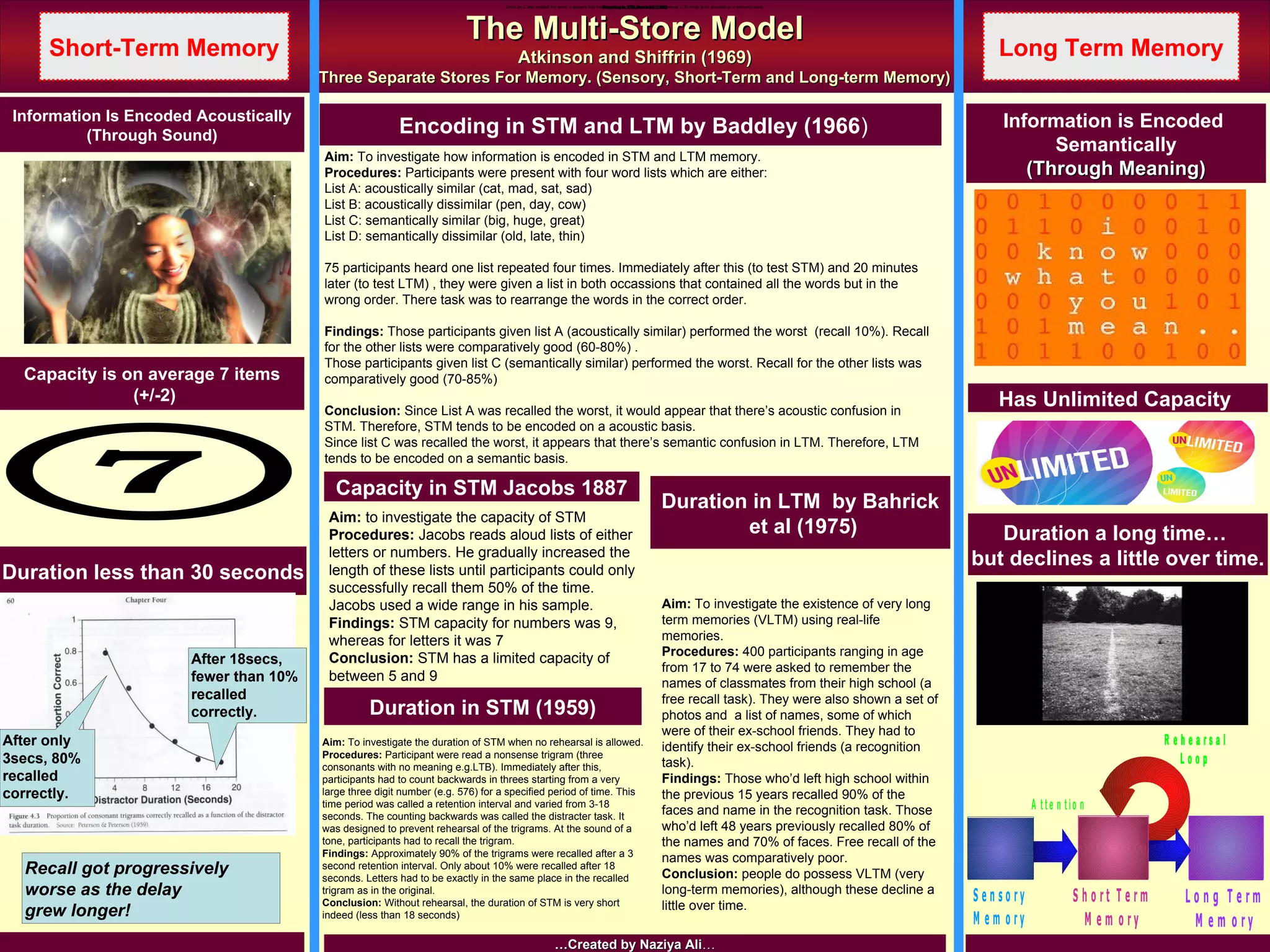
                                                                        The Multi-Store Model
     Short-Term Memory                                                                 Atkinson and Shiffrin (1969)                                                                                                                    Long Term Memory
                                        Three Separate Stores For Memory. (Sensory, Short-Term and Long-term Memory)

 Information Is Encoded Acoustically                                                                                                                                                                                                    Information is Encoded
           (Through Sound)                               Encoding in STM and LTM by Baddley (1966)
                                                                                                                                                                                                                                              Semantically
                                        Aim: To investigate how information is encoded in STM and LTM memory.
                                        Procedures: Participants were present with four word lists which are either:                                                                                                                       (Through Meaning)
                                        List A: acoustically similar (cat, mad, sat, sad)
                                        List B: acoustically dissimilar (pen, day, cow)
                                        List C: semantically similar (big, huge, great)
                                        List D: semantically dissimilar (old, late, thin)

                                        75 participants heard one list repeated four times. Immediately after this (to test STM) and 20 minutes
                                        later (to test LTM) , they were given a list in both occassions that contained all the words but in the
                                        wrong order. There task was to rearrange the words in the correct order.

                                        Findings: Those participants given list A (acoustically similar) performed the worst (recall 10%). Recall
                                        for the other lists were comparatively good (60-80%) .
                                        Those participants given list C (semantically similar) performed the worst. Recall for the other lists was
  Capacity is on average 7 items        comparatively good (70-85%)
               (+/-2)                                                                                                                                                                                                                  Has Unlimited Capacity
                                        Conclusion: Since List A was recalled the worst, it would appear that there’s acoustic confusion in
                                        STM. Therefore, STM tends to be encoded on a acoustic basis.
                                        Since list C was recalled the worst, it appears that there’s semantic confusion in LTM. Therefore, LTM
                                        tends to be encoded on a semantic basis.

                                           Capacity in STM Jacobs 1887
                                                                                                                                                                      Duration in LTM by Bahrick
                                         Aim: to investigate the capacity of STM
                                         Procedures: Jacobs reads aloud lists of either                                                                                       et al (1975)                                           Duration a long time…
                                         letters or numbers. He gradually increased the
                                                                                                                                                                                                                                  but declines a little over time.
Duration less than 30 seconds            length of these lists until participants could only
                                         successfully recall them 50% of the time.
                                         Jacobs used a wide range in his sample.                                                                                      Aim: To investigate the existence of very long
                                         Findings: STM capacity for numbers was 9,                                                                                    term memories (VLTM) using real-life
                                         whereas for letters it was 7                                                                                                 memories.
                                                                                                                                                                      Procedures: 400 participants ranging in age
                       After 18secs,     Conclusion: STM has a limited capacity of
                                                                                                                                                                      from 17 to 74 were asked to remember the
                       fewer than 10%    between 5 and 9                                                                                                              names of classmates from their high school (a
                       recalled                                                                                                                                       free recall task). They were also shown a set of
                       correctly.                 Duration in STM (1959)                                                                                              photos and a list of names, some of which
                                                                                                                                                                      were of their ex-school friends. They had to
After only                              Aim: To investigate the duration of STM when no rehearsal is allowed.
                                                                                                                                                                      identify their ex-school friends (a recognition                                                        R e h e a rsa l
                                        Procedures: Participant were read a nonsense trigram (three
3secs, 80%
                                        consonants with no meaning e.g.LTB). Immediately after this,                                                                  task).                                                                                                     Loop
recalled                                participants had to count backwards in threes starting from a very                                                            Findings: Those who’d left high school within
correctly.                              large three digit number (e.g. 576) for a specified period of time. This                                                      the previous 15 years recalled 90% of the
                                        time period was called a retention interval and varied from 3-18
                                                                                                                                                                      faces and name in the recognition task. Those                             A tte n t io n
                                        seconds. The counting backwards was called the distracter task. It
                                        was designed to prevent rehearsal of the trigrams. At the sound of a                                                          who’d left 48 years previously recalled 80% of
                                        tone, participants had to recall the trigram.                                                                                 the names and 70% of faces. Free recall of the
                                        Findings: Approximately 90% of the trigrams were recalled after a 3
                                                                                                                                                                      names was comparatively poor.
  Recall got progressively              second retention interval. Only about 10% were recalled after 18
                                        seconds. Letters had to be exactly in the same place in the recalled                                                          Conclusion: people do possess VLTM (very
  worse as the delay                    trigram as in the original.                                                                                                   long-term memories), although these decline a
                                                                                                                                                                                                                                  S e n so ry              S h o rt T e rm        Lo n g T e rm
                                        Conclusion: Without rehearsal, the duration of STM is very short                                                              little over time.
  grew longer!                                                                                                                                                                                                                    M e m o ry
                                        indeed (less than 18 seconds)
                                                                                                                                                                                                                                                             M e m o ry            M e m o ry
                                                                                                           …Created by Naziya Ali…

Multi store model-poster[1]

  • 1.
    Since list Cwas recalled the worst, it appears that there’s semantic STM Baddeley (1966) Encoding in confusion in LTM. Therefore, LTM tends to be encoded on a semantic basis. The Multi-Store Model Short-Term Memory Atkinson and Shiffrin (1969) Long Term Memory Three Separate Stores For Memory. (Sensory, Short-Term and Long-term Memory) Information Is Encoded Acoustically Information is Encoded (Through Sound) Encoding in STM and LTM by Baddley (1966) Semantically Aim: To investigate how information is encoded in STM and LTM memory. Procedures: Participants were present with four word lists which are either: (Through Meaning) List A: acoustically similar (cat, mad, sat, sad) List B: acoustically dissimilar (pen, day, cow) List C: semantically similar (big, huge, great) List D: semantically dissimilar (old, late, thin) 75 participants heard one list repeated four times. Immediately after this (to test STM) and 20 minutes later (to test LTM) , they were given a list in both occassions that contained all the words but in the wrong order. There task was to rearrange the words in the correct order. Findings: Those participants given list A (acoustically similar) performed the worst (recall 10%). Recall for the other lists were comparatively good (60-80%) . Those participants given list C (semantically similar) performed the worst. Recall for the other lists was Capacity is on average 7 items comparatively good (70-85%) (+/-2) Has Unlimited Capacity Conclusion: Since List A was recalled the worst, it would appear that there’s acoustic confusion in STM. Therefore, STM tends to be encoded on a acoustic basis. Since list C was recalled the worst, it appears that there’s semantic confusion in LTM. Therefore, LTM tends to be encoded on a semantic basis. Capacity in STM Jacobs 1887 Duration in LTM by Bahrick Aim: to investigate the capacity of STM Procedures: Jacobs reads aloud lists of either et al (1975) Duration a long time… letters or numbers. He gradually increased the but declines a little over time. Duration less than 30 seconds length of these lists until participants could only successfully recall them 50% of the time. Jacobs used a wide range in his sample. Aim: To investigate the existence of very long Findings: STM capacity for numbers was 9, term memories (VLTM) using real-life whereas for letters it was 7 memories. Procedures: 400 participants ranging in age After 18secs, Conclusion: STM has a limited capacity of from 17 to 74 were asked to remember the fewer than 10% between 5 and 9 names of classmates from their high school (a recalled free recall task). They were also shown a set of correctly. Duration in STM (1959) photos and a list of names, some of which were of their ex-school friends. They had to After only Aim: To investigate the duration of STM when no rehearsal is allowed. identify their ex-school friends (a recognition R e h e a rsa l Procedures: Participant were read a nonsense trigram (three 3secs, 80% consonants with no meaning e.g.LTB). Immediately after this, task). Loop recalled participants had to count backwards in threes starting from a very Findings: Those who’d left high school within correctly. large three digit number (e.g. 576) for a specified period of time. This the previous 15 years recalled 90% of the time period was called a retention interval and varied from 3-18 faces and name in the recognition task. Those A tte n t io n seconds. The counting backwards was called the distracter task. It was designed to prevent rehearsal of the trigrams. At the sound of a who’d left 48 years previously recalled 80% of tone, participants had to recall the trigram. the names and 70% of faces. Free recall of the Findings: Approximately 90% of the trigrams were recalled after a 3 names was comparatively poor. Recall got progressively second retention interval. Only about 10% were recalled after 18 seconds. Letters had to be exactly in the same place in the recalled Conclusion: people do possess VLTM (very worse as the delay trigram as in the original. long-term memories), although these decline a S e n so ry S h o rt T e rm Lo n g T e rm Conclusion: Without rehearsal, the duration of STM is very short little over time. grew longer! M e m o ry indeed (less than 18 seconds) M e m o ry M e m o ry …Created by Naziya Ali…