
MULE-Salesforce
Integration Patterns
2
Salesforce Integration Patterns
Enterprise systems, such as databases, ERP and CRM systems
and custom applications, is critical to enabling sales teams,
increasing revenue and better serving customers
The five most common integration patterns are
migration, broadcast, aggregation, correlation, and bi-directional
synchronization.
3
Migration
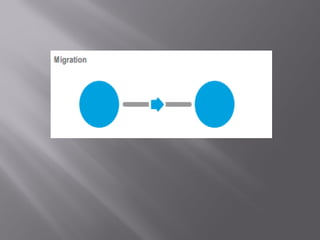
Data migration is the act of moving a specific set of data at a point in
time from one system to another. A migration pattern allows
developers to create automated integration services for functionality
that will be shared across multiple teams. Developers can set
configuration parameters to pass into the API call, so that the
migration application can dynamically migrate scoped Salesforce data
in or out of Salesforce either on command or in the form of an API.
Creating reusable services for frequent migrations can save an
exceptional amount of time for development and operations teams
4
5
Broadcast
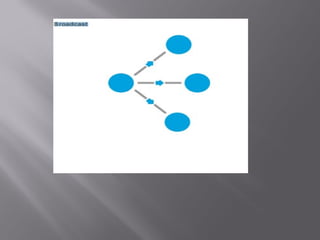
Broadcast is the act of moving data from a single source system to
many destination systems in an ongoing, near real-time or real-time
basis. Essentially, it is one-way synchronization from one to many.
Typically “one way sync” implies a 1:1 relationship; however, the
broadcast pattern can also be a 1:many relationship.
6
7
Providing an External HTTP or HTTPS Port
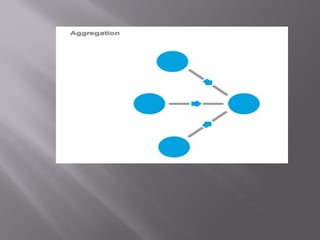
Aggregation is the act of taking or receiving data from multiple
systems and moving or copying that data into one system. The
alternative would be to run multiple migrations on a daily basis,
which means worrying about keeping data accurate, synchronized
and up to date. Broadcasting data from multiple systems
8
9
Providing an External HTTP or HTTPS Port
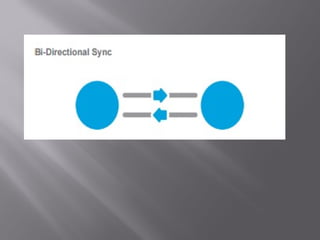
Bi-directional sync is the act of uniting two or more datasets in two or
more different systems to behave as one system that recognizes the
existence of different datasets. This type of integration is useful when
different tools or different systems, which are needed in their own
right and for their own specific purposes, must accomplish different
functions on the same data set. Using bi-directional sync to share the
dataset enables use of both systems, while maintaining a consistent
real time view of the data across systems.
10
Mule salesforce integration patterns

Mule salesforce integration patterns

  • 1.
  • 2.
    2 Salesforce Integration Patterns Enterprisesystems, such as databases, ERP and CRM systems and custom applications, is critical to enabling sales teams, increasing revenue and better serving customers The five most common integration patterns are migration, broadcast, aggregation, correlation, and bi-directional synchronization.
  • 3.
    3 Migration Data migration isthe act of moving a specific set of data at a point in time from one system to another. A migration pattern allows developers to create automated integration services for functionality that will be shared across multiple teams. Developers can set configuration parameters to pass into the API call, so that the migration application can dynamically migrate scoped Salesforce data in or out of Salesforce either on command or in the form of an API. Creating reusable services for frequent migrations can save an exceptional amount of time for development and operations teams
  • 4.
  • 5.
    5 Broadcast Broadcast is theact of moving data from a single source system to many destination systems in an ongoing, near real-time or real-time basis. Essentially, it is one-way synchronization from one to many. Typically “one way sync” implies a 1:1 relationship; however, the broadcast pattern can also be a 1:many relationship.
  • 6.
  • 7.
    7 Providing an ExternalHTTP or HTTPS Port Aggregation is the act of taking or receiving data from multiple systems and moving or copying that data into one system. The alternative would be to run multiple migrations on a daily basis, which means worrying about keeping data accurate, synchronized and up to date. Broadcasting data from multiple systems
  • 8.
  • 9.
    9 Providing an ExternalHTTP or HTTPS Port Bi-directional sync is the act of uniting two or more datasets in two or more different systems to behave as one system that recognizes the existence of different datasets. This type of integration is useful when different tools or different systems, which are needed in their own right and for their own specific purposes, must accomplish different functions on the same data set. Using bi-directional sync to share the dataset enables use of both systems, while maintaining a consistent real time view of the data across systems.
  • 10.