The Next-Gen Student News Organization 
A data-backed yet rarely discussed proposal for 
student news orgs. 
—Presented by: Carl V. Lewis, 
@carlvlewis 
—Presented for: mercercluster.com 
editorial team 
Prepared with  and Markdown by a proud Mercer University Bear and Cluster 
alumnus.
First, some hard truths... 
You spend countless 
hours trying to fill 
newspaper page space, 
designing pixel-perfect 
InDesign layouts every 
issue and yet...
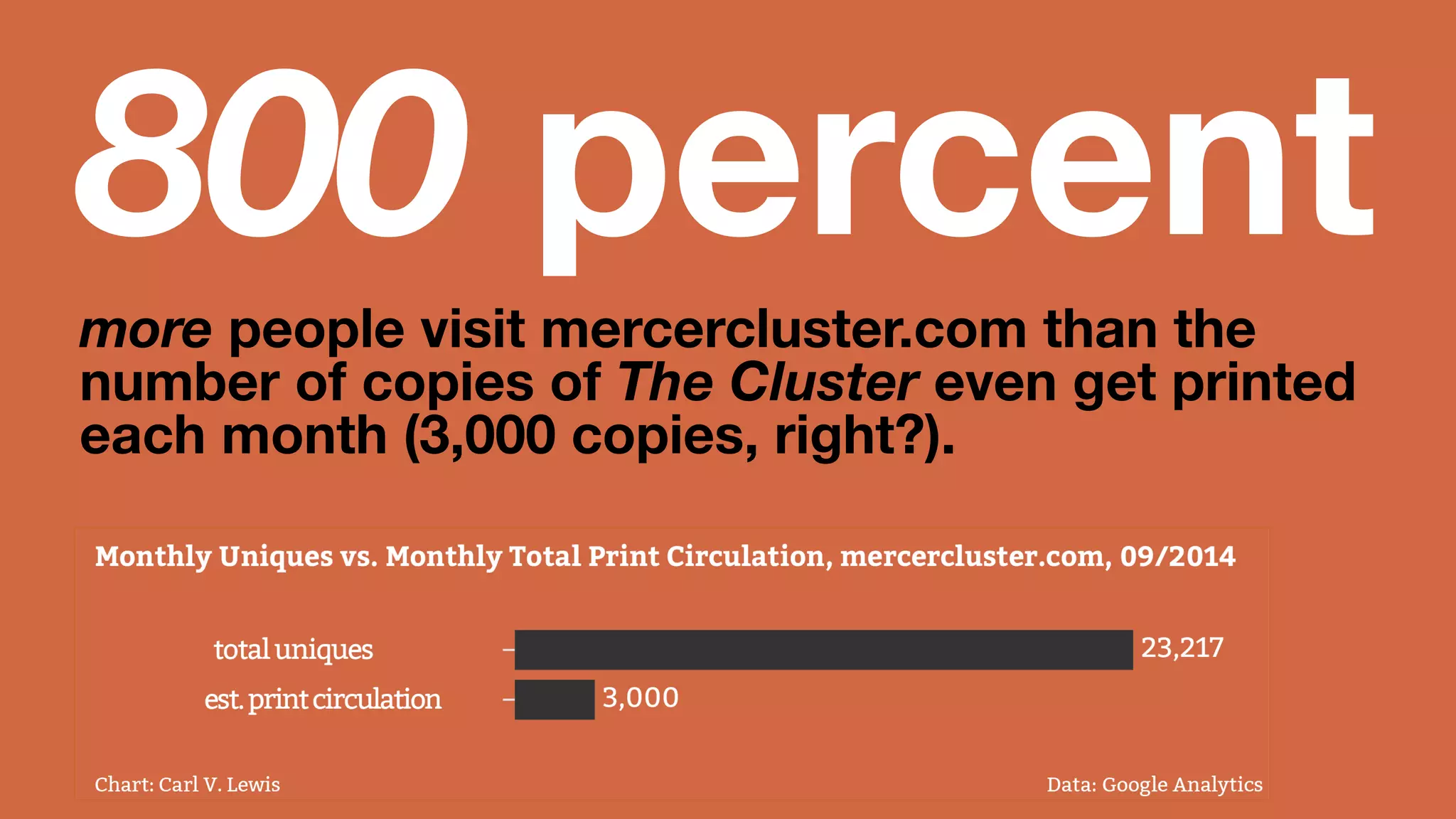
800 percent more people visit mercercluster.com than the number of copies of The Cluster 
even get printed each month (3,000 copies, right?).
Did you also know that..
...78 percent of 
visitors last month 
to 
mercercluster.com 
accessed the site 
via...
Mobile! But nonetheless: We still aren't optimizing our content for mobile 
—(i.e., we're setting embed widths in 
pixels instead of percentage widths; 
YT video embeds that aren't 
responsive; worse, not properly adding 
paragraph spacing because we copied 
body copy straight out of InDesign).
THAT IS 
SHOVELWARE! 
A.K.A. - The worst digital publishing 
mistake ever known in online news 
circles. 
Definitely not the type of work that will get you hired in industry by the time you 
graduate... sorry, kiddos. Although certainly still important, you need more than 
good writing nowadat – you need strong digital storytelling skills.
So where the heck 
are all these 20k or 
so unique users 
each month coming 
from? 
Hint: Not primarily Google or search engines, despite strong SEO.
Social
Social platforms = 
digital analog to 
newsstands... 
FACT: 81 percent of users 
in Sept. were referred to 
mercercluster.com via a 
social media platform.
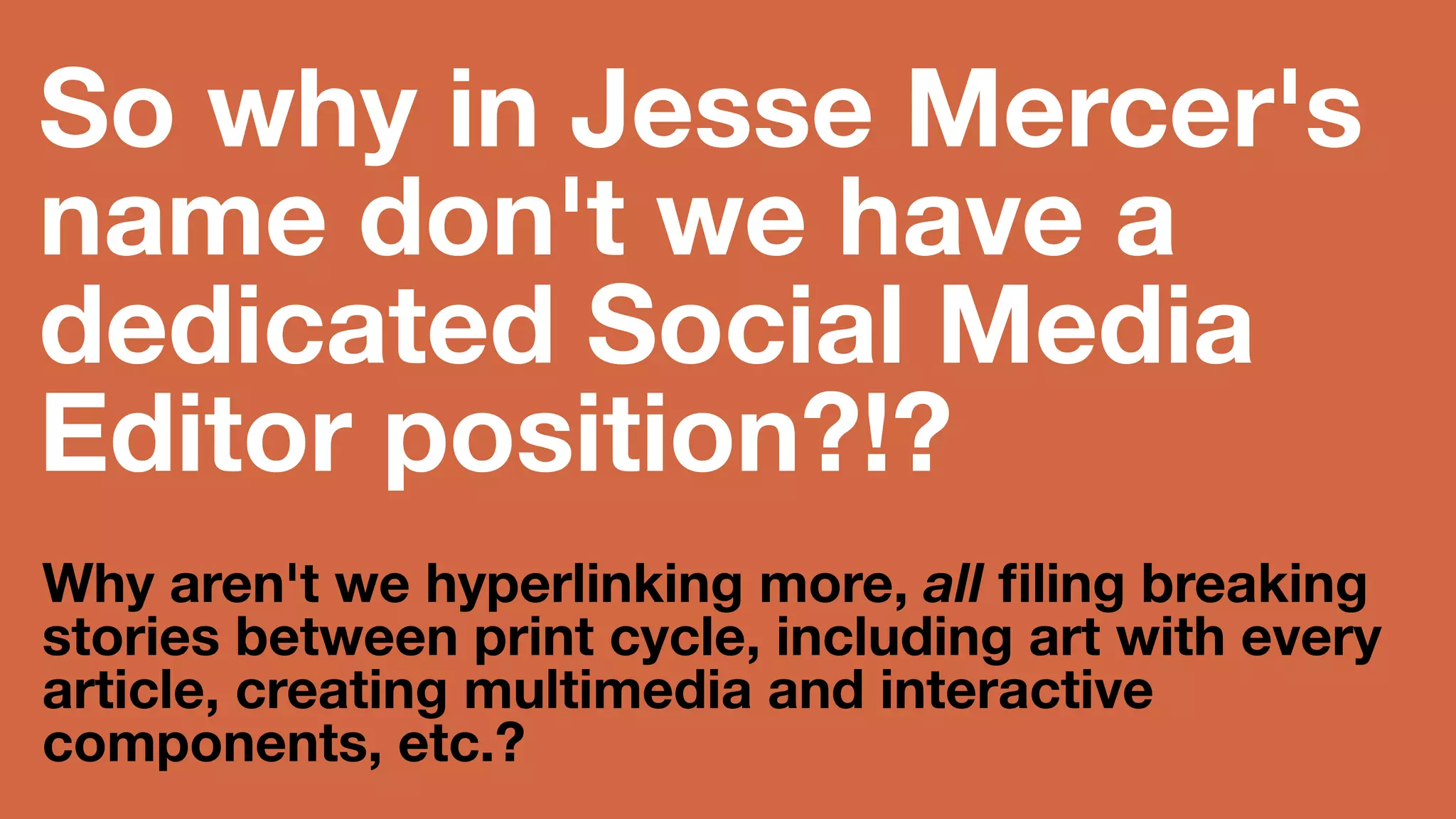
So why in Jesse Mercer's 
name don't we have a 
dedicated Social Media 
Editor position?!? 
Why aren't we hyperlinking more, all 
filing breaking stories between print 
cycle, including art with every article, 
creating multimedia and interactive 
components, etc.? 
(trust me, it's way more fun than tinkering for hours in InDesign!)
Here's the 
reality...
Digital is WAY more consumed 
than print. WAY! At least 
for The Cluster, that is.
But, unfortunately... 
...the imperative of filling page space 
in print eats up all our time. 
Print = high distribution, production 
costs, higher but rapidly diminishing 
ad rev.
Ready for some 
good news?
Local 94 percent of users' IP 
addresses were in 
Macon-Bibb! Not many 
flybys. There is a strong, 
loyal niche audience.
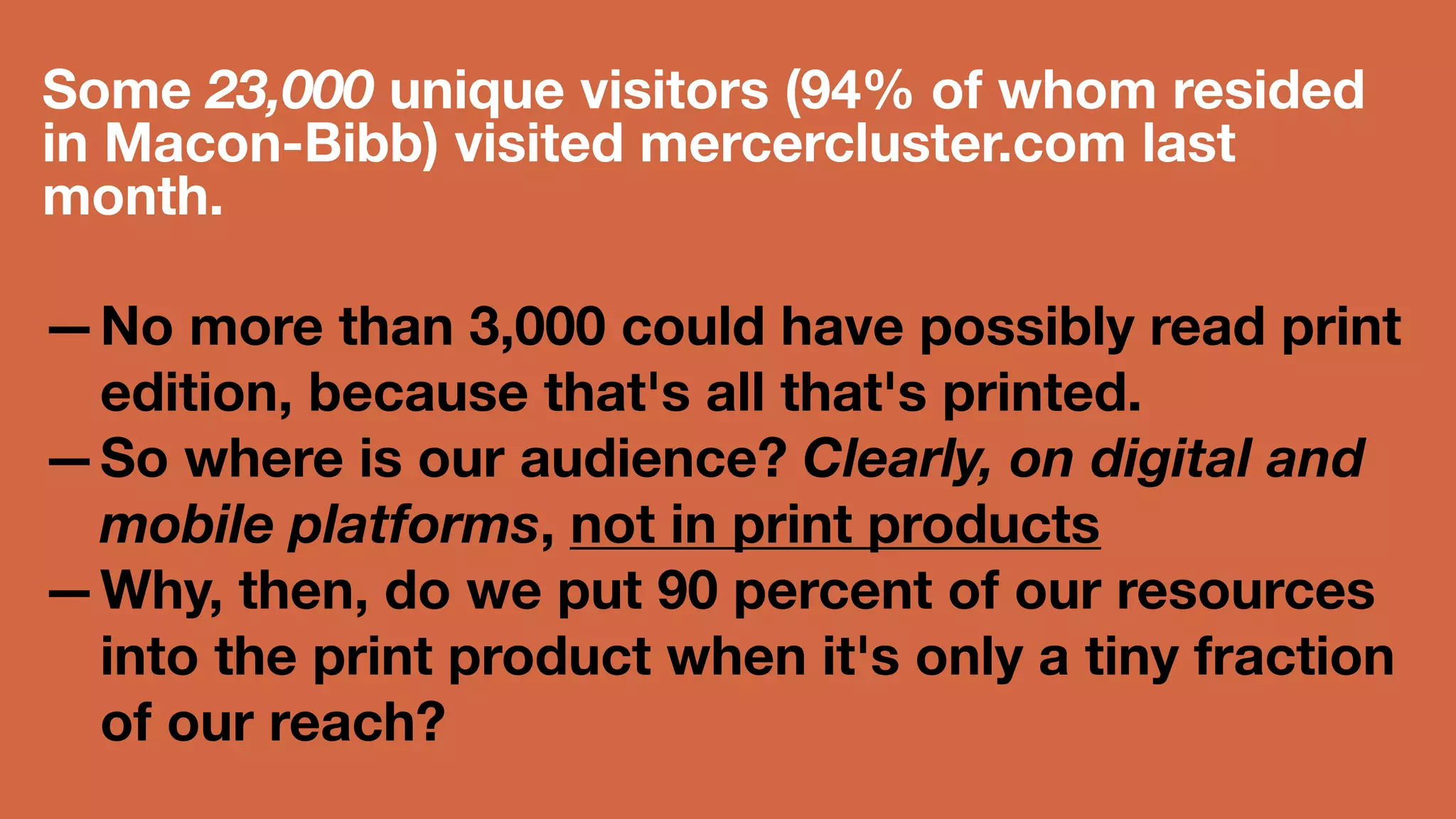
Some 23,000 unique visitors (94% of 
whom resided in Macon-Bibb) visited 
mercercluster.com last month. 
—No more than 3,000 could have 
possibly read print edition, because 
that's all that's printed. 
—So where is our audience? Clearly, on 
digital and mobile platforms, not in 
print products 
—Why, then, do we put 90 percent of our 
resources into the print product when
A few guesses...
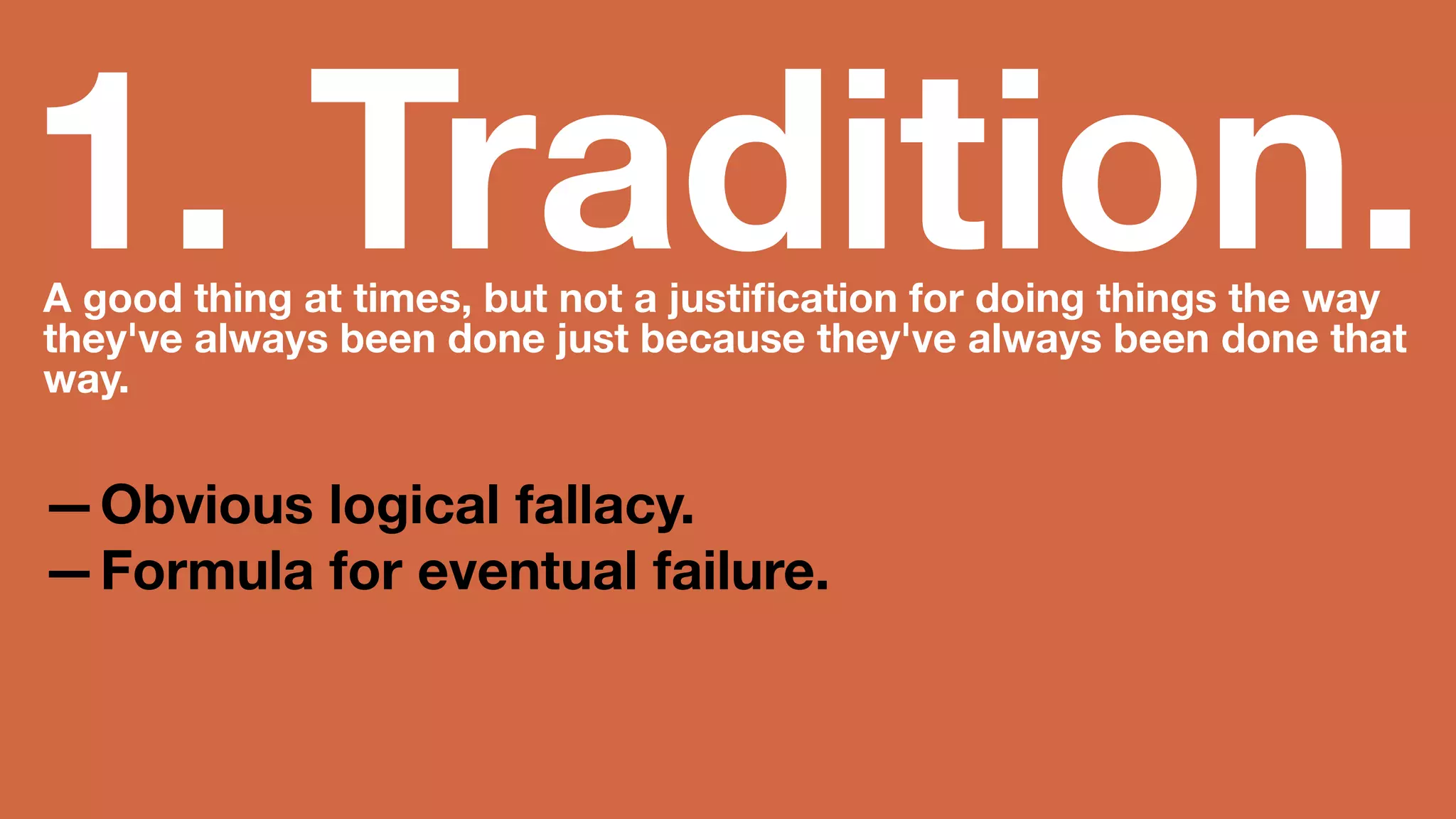
1. Tradition. A good thing at times, but not a justification for doing 
things the way they've always been done just because 
they've always been done that way. 
—Obvious logical fallacy. 
—Formula for eventual failure.
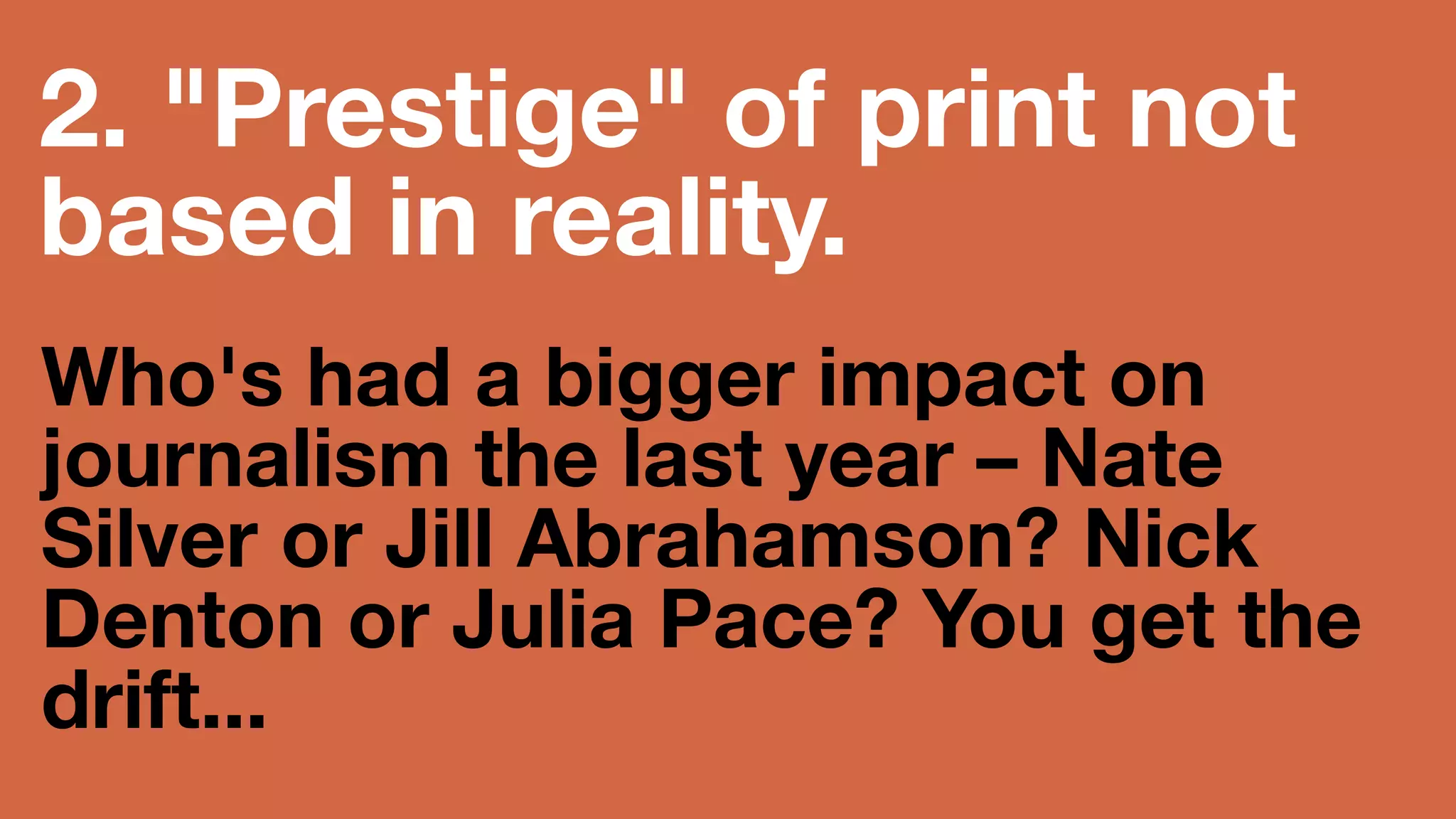
2. Prestige of print 
not based in reality. 
Who's had a bigger impact 
on journalism the last year 
– Nate Silver or Jill 
Abrahamson? Nick Denton 
or Julia Pace? You get the 
drift...
3. Mistaken belief 
that print 
newspapers will still 
exist in a decade. 
Clay Shirky, of NYU's Graduate School of 
Journalism, predicts less than five years 
left before most news presses stop.
Still, it's the most exciting 
time ever to be a young, 
digitally-literate journalist. 
You'll be leading digital newsrooms in 
your early career (I was the online editor 
at Savannah Morning News at age 22!)
Newspapers don't 
define journalism. 
Quality, watchdog, 
investigative reporting and 
innovative digital platforms 
define journalism. It's 
about the message + the 
medium.
Tidbit: Users spend 67 percent longer on 
articles that include art than they do 
content without art. 
—Digital is inherently visual medium. 
—Not getting or finding visuals is the 
equivalent of not getting all the facts or 
talking to the necessary sources. 
—Massive word count minimums simply 
to fill space leads to poor prose. 
Strong news writing is concise, 
cogent, to-the-point, especially online.
NOT just digital-first 
Audience-first! 
Focus your efforts on where your 
audience is primarily. 
Remember, you have editorial autonomy!
The only sane 
response to change 
is to find the 
opportunity in it.” 
— Jeff Jarvis
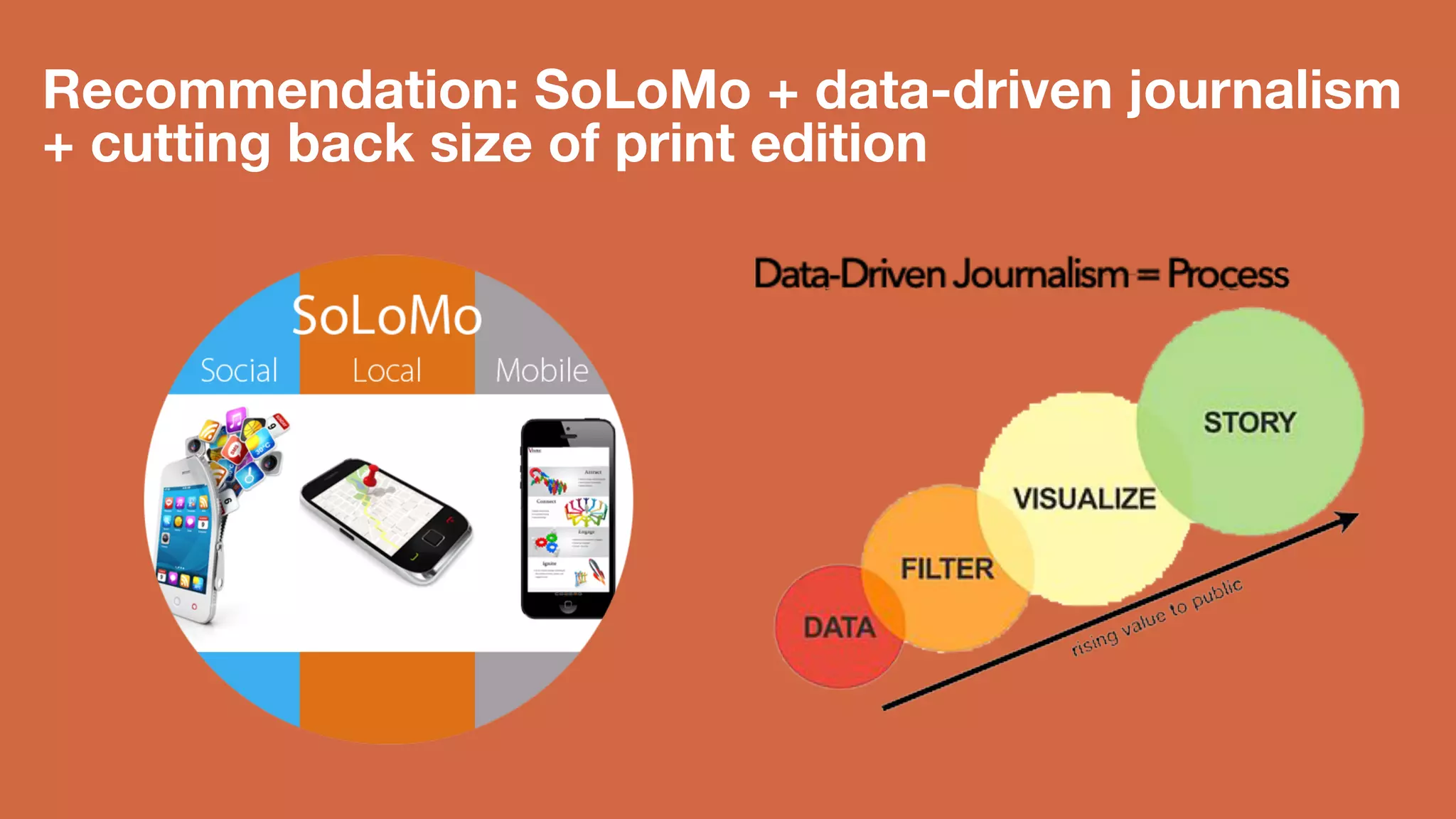
Recommendation: SoLoMo + data-driven 
journalism + cutting back size of print 
edition
Queries? Concerns? 
Think I'm crazy? 
Email me: 
hello@carlvlewis.net. 
Slides: bit.ly/clustersermon

The Next-Gen Student News Organization

  • 1.
    The Next-Gen StudentNews Organization A data-backed yet rarely discussed proposal for student news orgs. —Presented by: Carl V. Lewis, @carlvlewis —Presented for: mercercluster.com editorial team Prepared with and Markdown by a proud Mercer University Bear and Cluster alumnus.
  • 2.
    First, some hardtruths... You spend countless hours trying to fill newspaper page space, designing pixel-perfect InDesign layouts every issue and yet...
  • 3.
    800 percent morepeople visit mercercluster.com than the number of copies of The Cluster even get printed each month (3,000 copies, right?).
  • 4.
    Did you alsoknow that..
  • 5.
    ...78 percent of visitors last month to mercercluster.com accessed the site via...
  • 6.
    Mobile! But nonetheless:We still aren't optimizing our content for mobile —(i.e., we're setting embed widths in pixels instead of percentage widths; YT video embeds that aren't responsive; worse, not properly adding paragraph spacing because we copied body copy straight out of InDesign).
  • 7.
    THAT IS SHOVELWARE! A.K.A. - The worst digital publishing mistake ever known in online news circles. Definitely not the type of work that will get you hired in industry by the time you graduate... sorry, kiddos. Although certainly still important, you need more than good writing nowadat – you need strong digital storytelling skills.
  • 8.
    So where theheck are all these 20k or so unique users each month coming from? Hint: Not primarily Google or search engines, despite strong SEO.
  • 9.
  • 10.
    Social platforms = digital analog to newsstands... FACT: 81 percent of users in Sept. were referred to mercercluster.com via a social media platform.
  • 11.
    So why inJesse Mercer's name don't we have a dedicated Social Media Editor position?!? Why aren't we hyperlinking more, all filing breaking stories between print cycle, including art with every article, creating multimedia and interactive components, etc.? (trust me, it's way more fun than tinkering for hours in InDesign!)
  • 12.
  • 13.
    Digital is WAYmore consumed than print. WAY! At least for The Cluster, that is.
  • 14.
    But, unfortunately... ...theimperative of filling page space in print eats up all our time. Print = high distribution, production costs, higher but rapidly diminishing ad rev.
  • 15.
    Ready for some good news?
  • 16.
    Local 94 percentof users' IP addresses were in Macon-Bibb! Not many flybys. There is a strong, loyal niche audience.
  • 17.
    Some 23,000 uniquevisitors (94% of whom resided in Macon-Bibb) visited mercercluster.com last month. —No more than 3,000 could have possibly read print edition, because that's all that's printed. —So where is our audience? Clearly, on digital and mobile platforms, not in print products —Why, then, do we put 90 percent of our resources into the print product when
  • 18.
  • 19.
    1. Tradition. Agood thing at times, but not a justification for doing things the way they've always been done just because they've always been done that way. —Obvious logical fallacy. —Formula for eventual failure.
  • 20.
    2. Prestige ofprint not based in reality. Who's had a bigger impact on journalism the last year – Nate Silver or Jill Abrahamson? Nick Denton or Julia Pace? You get the drift...
  • 21.
    3. Mistaken belief that print newspapers will still exist in a decade. Clay Shirky, of NYU's Graduate School of Journalism, predicts less than five years left before most news presses stop.
  • 22.
    Still, it's themost exciting time ever to be a young, digitally-literate journalist. You'll be leading digital newsrooms in your early career (I was the online editor at Savannah Morning News at age 22!)
  • 23.
    Newspapers don't definejournalism. Quality, watchdog, investigative reporting and innovative digital platforms define journalism. It's about the message + the medium.
  • 24.
    Tidbit: Users spend67 percent longer on articles that include art than they do content without art. —Digital is inherently visual medium. —Not getting or finding visuals is the equivalent of not getting all the facts or talking to the necessary sources. —Massive word count minimums simply to fill space leads to poor prose. Strong news writing is concise, cogent, to-the-point, especially online.
  • 25.
    NOT just digital-first Audience-first! Focus your efforts on where your audience is primarily. Remember, you have editorial autonomy!
  • 26.
    The only sane response to change is to find the opportunity in it.” — Jeff Jarvis
  • 27.
    Recommendation: SoLoMo +data-driven journalism + cutting back size of print edition
  • 28.
    Queries? Concerns? ThinkI'm crazy? Email me: hello@carlvlewis.net. Slides: bit.ly/clustersermon