Introduction
MS SQL is an RDBMS
Programmed in C++
Platforms support : IA-32, x64, .NET
Framework 3.5
Proprietary software of Microsoft
Corporation, available in both commercial
and freeware editions.
History and Origin
• In 1989, Microsoft released its first version of
SQL Server. It was designed for the OS/2
platform and was developed jointly by
Microsoft, Sybase and Ashton-Tate.
• 1990s, Microsoft began to develop a new
version of SQL Server for the NT platform.
• July 1993, Sybase and Microsoft parted ways
• Versions launched with Sybase and Ashton-Tate

SQL 1.0
SQL 1.1
• Microsoft’s SQL versions:
SQL 4.2 (year1993):First time GUI
was introduced
SQL 4.2.1(year 1993): Windows NT
edition
SQL 6.0 (year 1995)
SQL 6.5(year 1996): Internet and
data warehousing options

SQL 7.0(year 1998): Flexible scalability
and revamped architecture

SQL Server 2000 (year 2000): RDB,
OLAP, ETL,REPORTING,FAILOVER
CLUSTERING,RELATIONAL,BLOB,XML
SQL Server 2005(year 2005):
PARTITIONING, MAMAGEMENT
STUDIO, COMMON LANGUAGE
REFERENCE, XQUERY, DATA
MONITORING
SQL Server 2008 (year 2008):
RESOURCE GOVERNOR, DATA AND
BACKUP COMPRESSION, REMOTE
BLOBs/FILESTREAMS.
SQL Server 2008 R2 (year 2010):
REPORT BUILDER 3.0, POWER PIVOT,
MASTER DATA SERVICES, MULTI-SERVER
MANAGEMENT.

SQL Azure (year 2010): Specifically
made for cloud computing and cloud
based applications.
The current version:
SQL Server 2012
Microsoft announced that the next major
version of SQL Server (codenamed "Denali"),
would be SQL Server 2012. It was released to
manufacturing on March 6, 2012. SQL Server
2012 Service Pack 1 was released to
manufacturing on November 9, 2012.
There are three basic versions of MS-SQL 2012:
1. Enterprise:
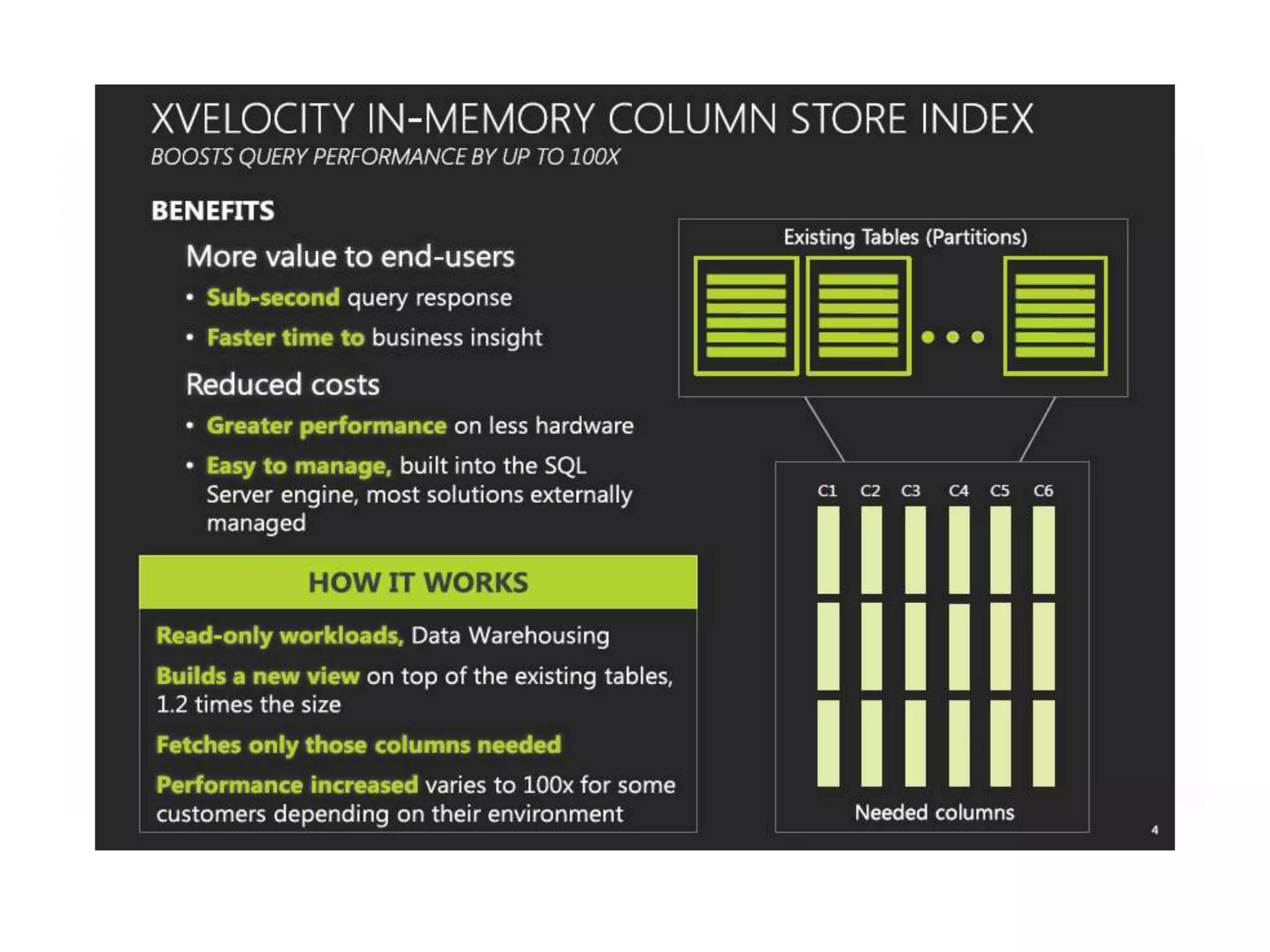
• For Mission Critical & Applications Data
Warehousing
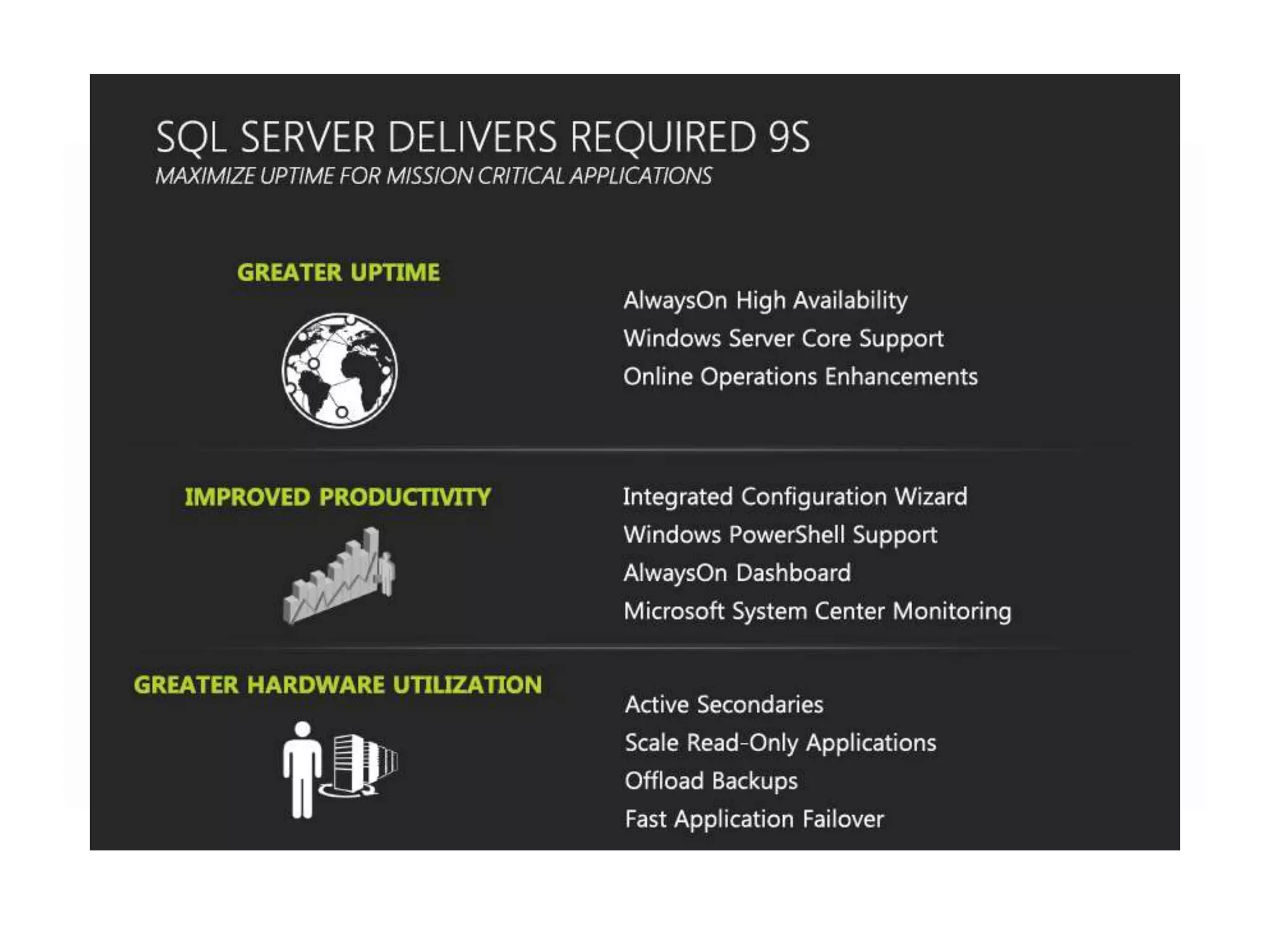
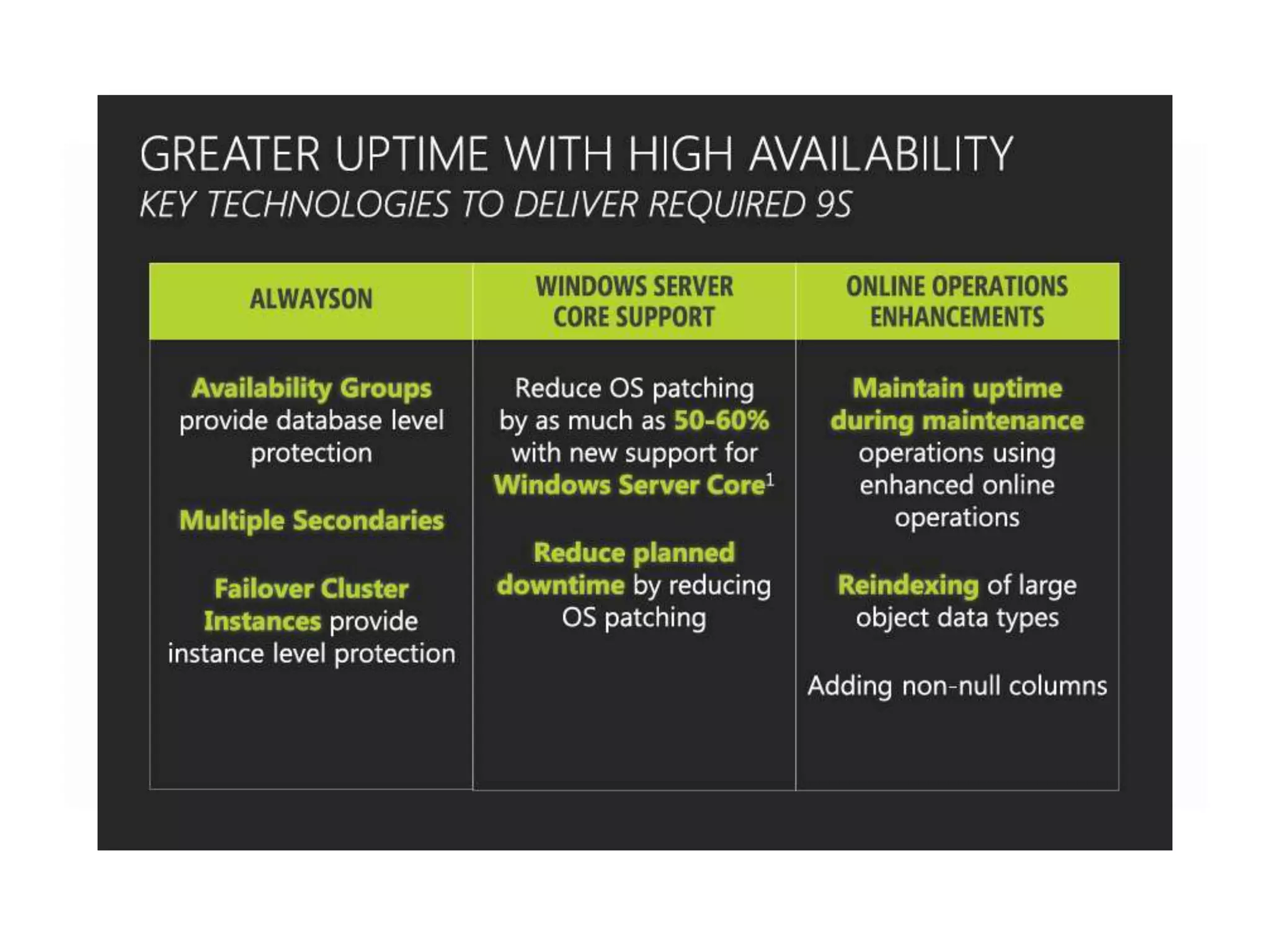
• Advanced high availability with AlwaysOn
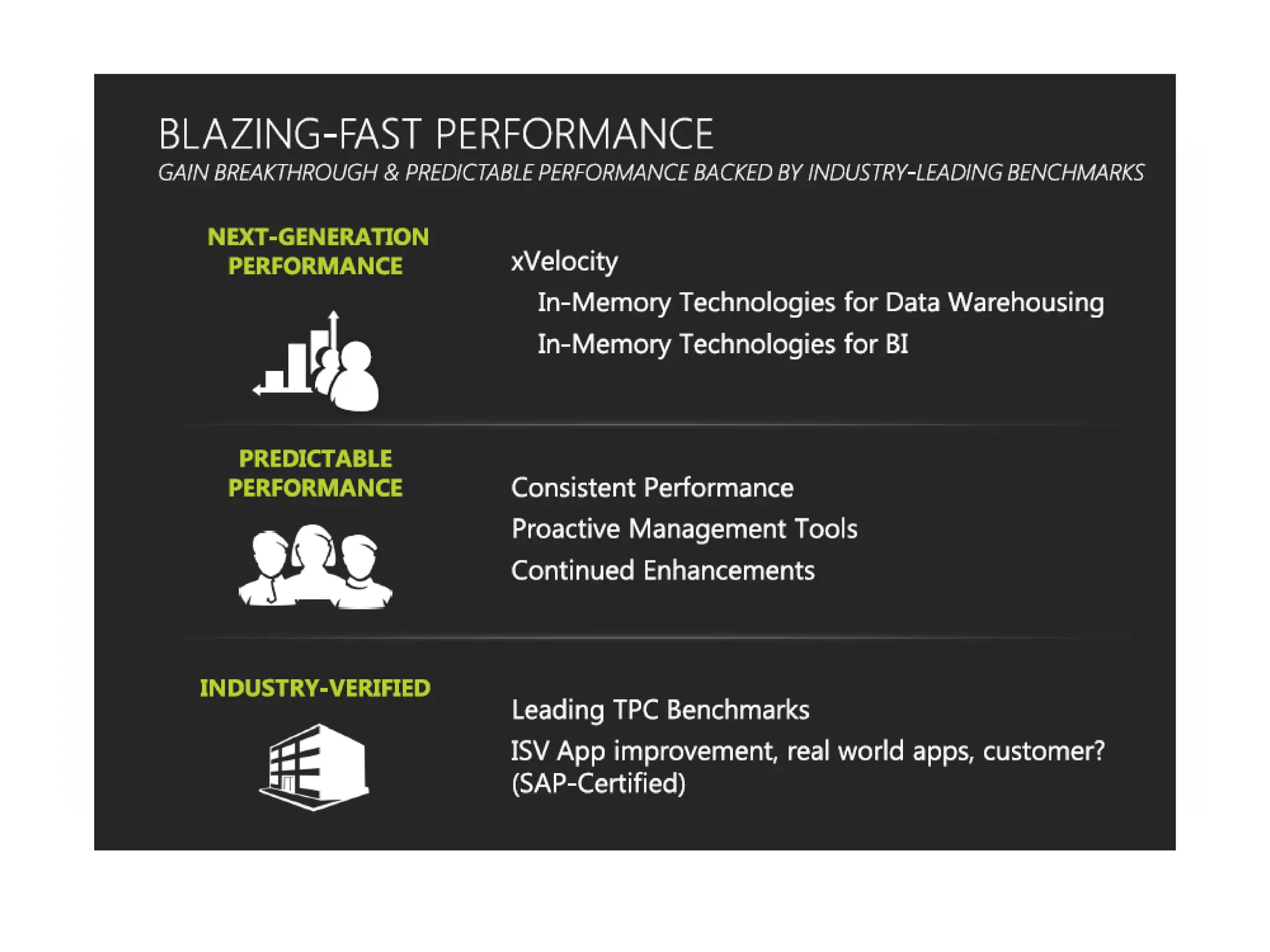
• High performance data warehousing
with ColumnStore
• Maximum virtualization (with Software
Assurance)
• Inclusive of Business Intelligence edition's
capabilities
2. Business Intelligence:
• For Premium Self-Service and Corporate
Business Intelligence
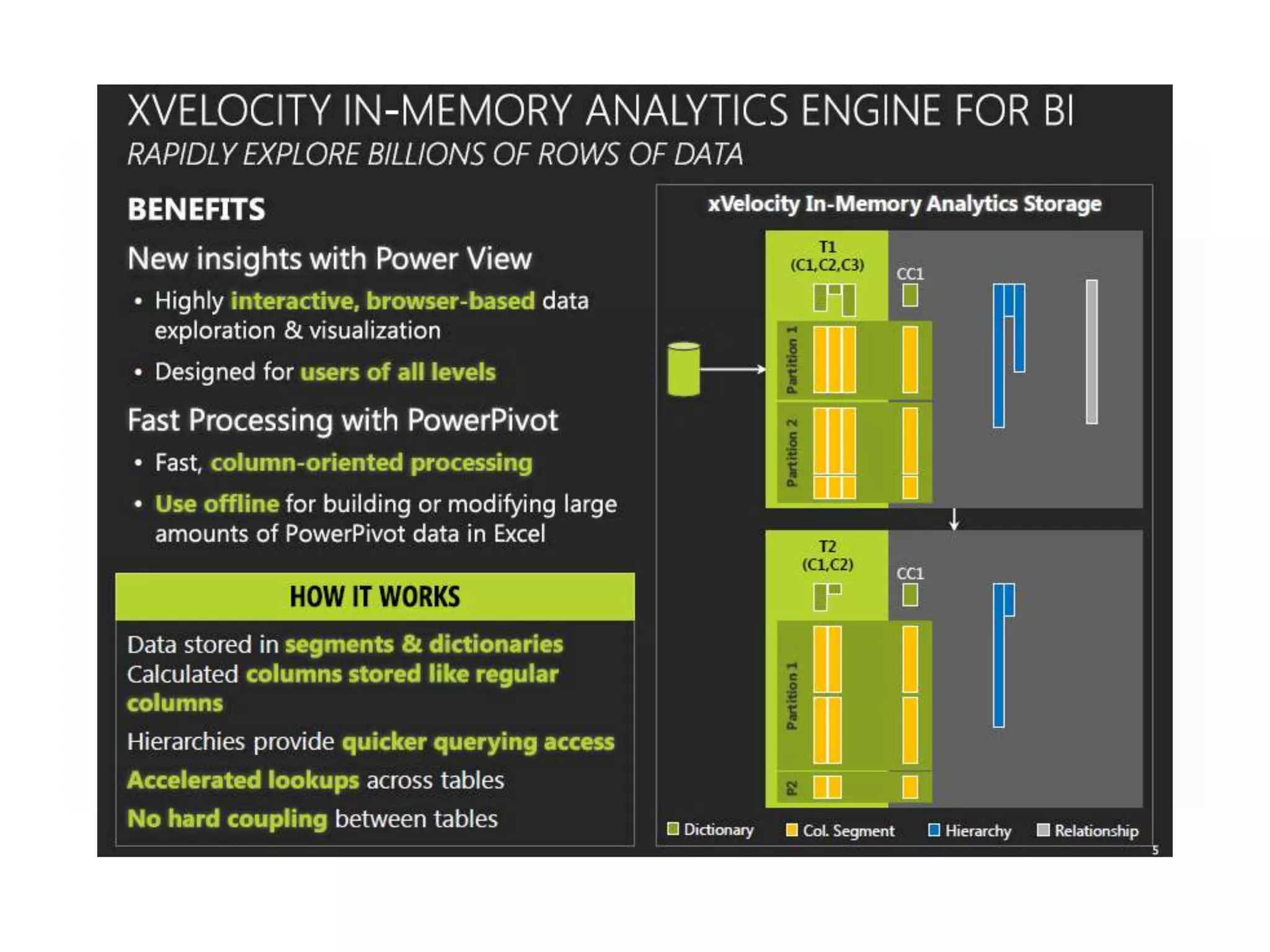
• Rapid data discovery with Power View
• Corporate and scalable reporting and analytics
• Data Quality Services and Master Data
Services
• Inclusive of the Standard edition's capabilities
3. Standard:
• Standard continues to offer basic database,
reporting and analytics capabilities.
• Windows Server Core Support
• Reduce OS patching by as much as 50-60%¹
with new support for Windows Server Core.
SOME OF THE DISTINGUISHED
FEATURES AND WORKING OF THE
CURRENT MICROSOFT SQL SERVER
ENTERPRISE 2012 ARE DESCRIBED IN
THE FOLLOWING SLIDES :
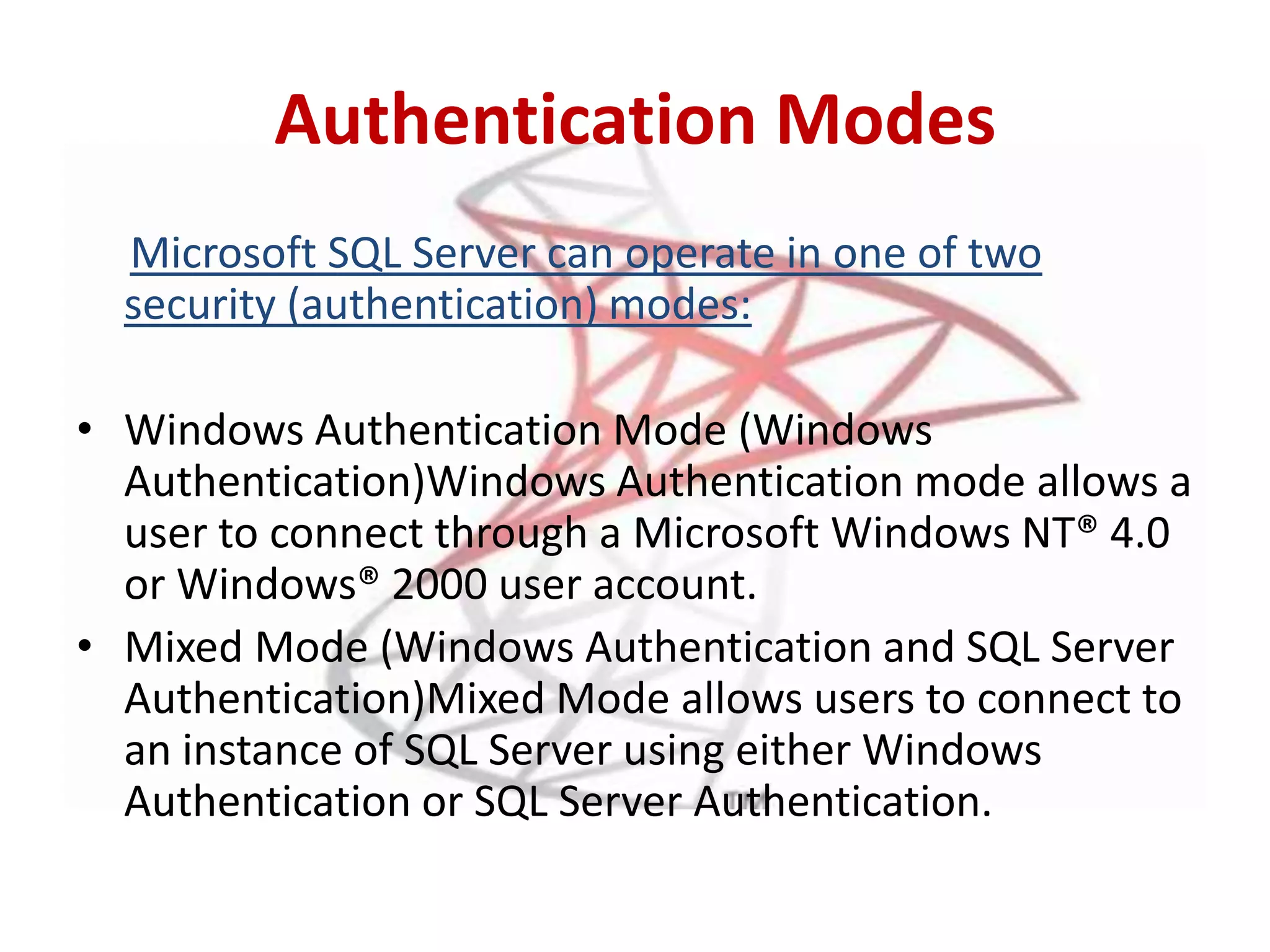
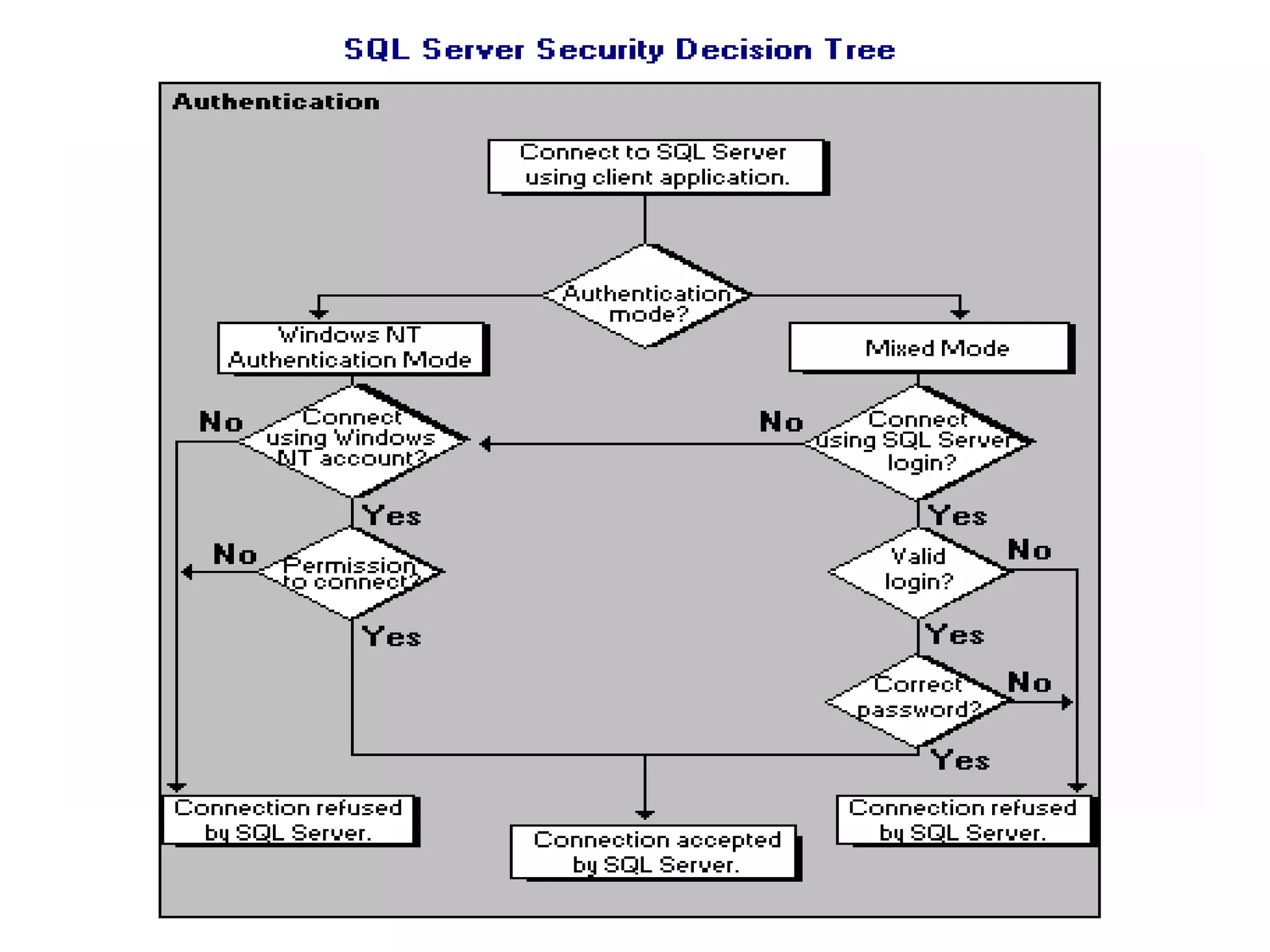
Authentication Modes
Microsoft SQL Server can operate in one of two
security (authentication) modes:
• Windows Authentication Mode (Windows
Authentication)Windows Authentication mode allows a
user to connect through a Microsoft Windows NT® 4.0
or Windows® 2000 user account.
• Mixed Mode (Windows Authentication and SQL Server
Authentication)Mixed Mode allows users to connect to
an instance of SQL Server using either Windows
Authentication or SQL Server Authentication.
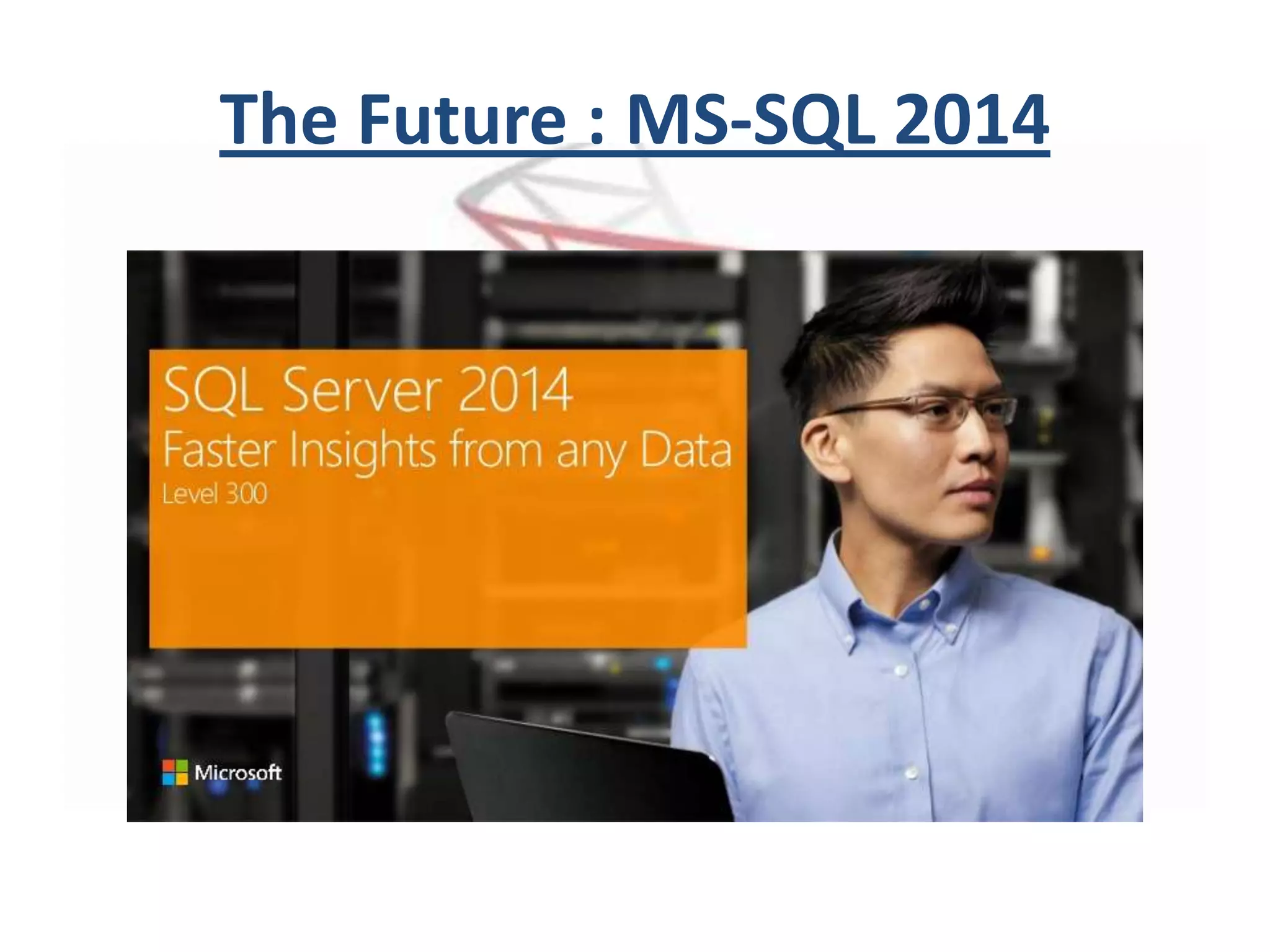
The Future : MS-SQL 2014
About MS-SQL 2014
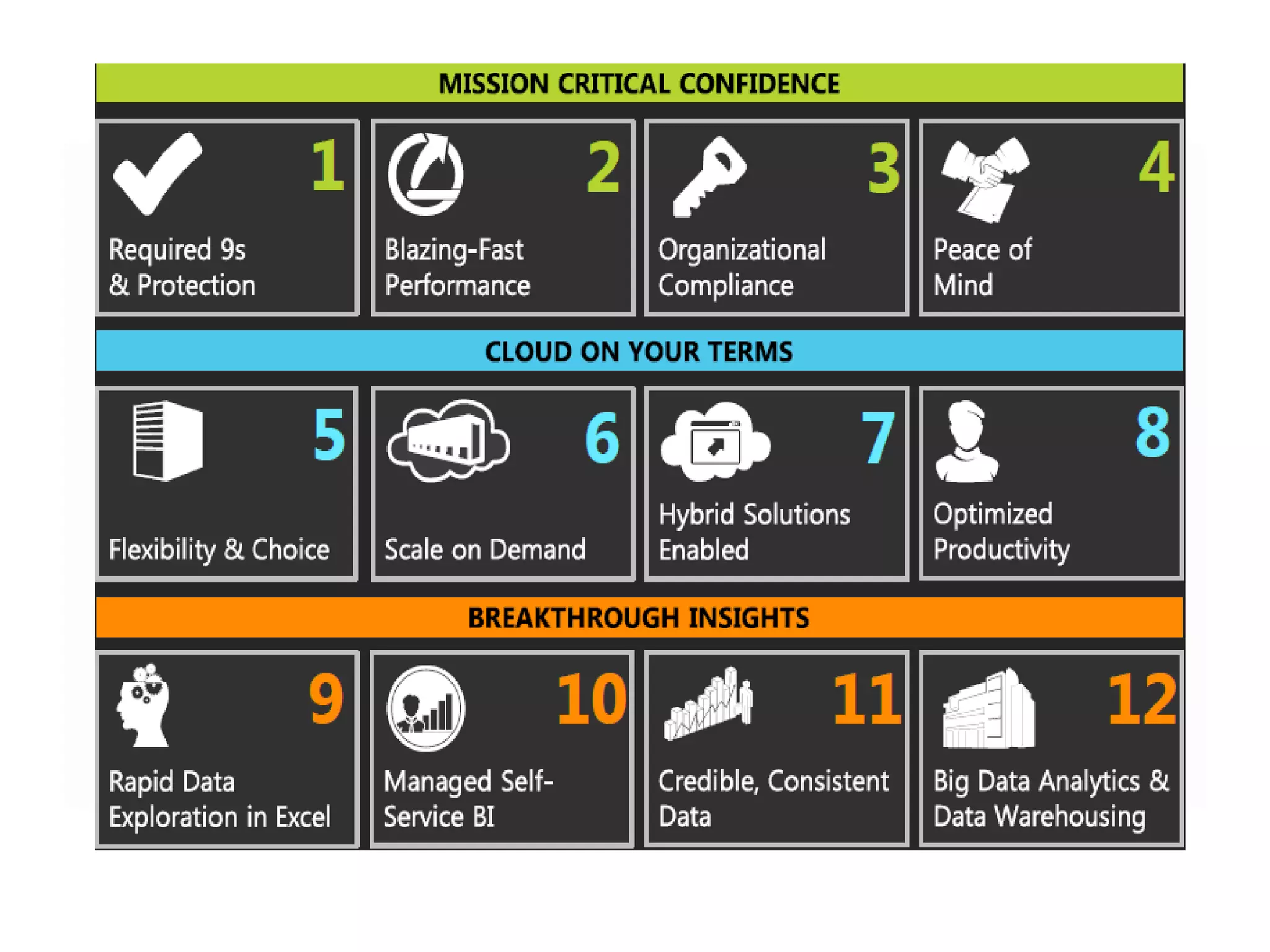
• Microsoft SQL Server 2014 builds on the missioncritical capabilities.
• SQL Server 2014 delivers new in-memory capabilities
built into the core database for OLTP and data
warehousing, BI capabilities.
• disaster recovery and backup solutions with
Windows Azure
• Unparalleled scalability…
That’s the story so far…

Ms sql

  • 2.
    Introduction MS SQL isan RDBMS Programmed in C++ Platforms support : IA-32, x64, .NET Framework 3.5 Proprietary software of Microsoft Corporation, available in both commercial and freeware editions.
  • 3.
    History and Origin •In 1989, Microsoft released its first version of SQL Server. It was designed for the OS/2 platform and was developed jointly by Microsoft, Sybase and Ashton-Tate. • 1990s, Microsoft began to develop a new version of SQL Server for the NT platform. • July 1993, Sybase and Microsoft parted ways
  • 4.
    • Versions launchedwith Sybase and Ashton-Tate SQL 1.0 SQL 1.1 • Microsoft’s SQL versions: SQL 4.2 (year1993):First time GUI was introduced SQL 4.2.1(year 1993): Windows NT edition SQL 6.0 (year 1995)
  • 5.
    SQL 6.5(year 1996):Internet and data warehousing options SQL 7.0(year 1998): Flexible scalability and revamped architecture SQL Server 2000 (year 2000): RDB, OLAP, ETL,REPORTING,FAILOVER CLUSTERING,RELATIONAL,BLOB,XML
  • 6.
    SQL Server 2005(year2005): PARTITIONING, MAMAGEMENT STUDIO, COMMON LANGUAGE REFERENCE, XQUERY, DATA MONITORING SQL Server 2008 (year 2008): RESOURCE GOVERNOR, DATA AND BACKUP COMPRESSION, REMOTE BLOBs/FILESTREAMS.
  • 7.
    SQL Server 2008R2 (year 2010): REPORT BUILDER 3.0, POWER PIVOT, MASTER DATA SERVICES, MULTI-SERVER MANAGEMENT. SQL Azure (year 2010): Specifically made for cloud computing and cloud based applications.
  • 8.
    The current version: SQLServer 2012 Microsoft announced that the next major version of SQL Server (codenamed "Denali"), would be SQL Server 2012. It was released to manufacturing on March 6, 2012. SQL Server 2012 Service Pack 1 was released to manufacturing on November 9, 2012.
  • 9.
    There are threebasic versions of MS-SQL 2012: 1. Enterprise: • For Mission Critical & Applications Data Warehousing • Advanced high availability with AlwaysOn • High performance data warehousing with ColumnStore • Maximum virtualization (with Software Assurance) • Inclusive of Business Intelligence edition's capabilities
  • 10.
    2. Business Intelligence: •For Premium Self-Service and Corporate Business Intelligence • Rapid data discovery with Power View • Corporate and scalable reporting and analytics • Data Quality Services and Master Data Services • Inclusive of the Standard edition's capabilities
  • 11.
    3. Standard: • Standardcontinues to offer basic database, reporting and analytics capabilities. • Windows Server Core Support • Reduce OS patching by as much as 50-60%¹ with new support for Windows Server Core.
  • 12.
    SOME OF THEDISTINGUISHED FEATURES AND WORKING OF THE CURRENT MICROSOFT SQL SERVER ENTERPRISE 2012 ARE DESCRIBED IN THE FOLLOWING SLIDES :
  • 23.
    Authentication Modes Microsoft SQLServer can operate in one of two security (authentication) modes: • Windows Authentication Mode (Windows Authentication)Windows Authentication mode allows a user to connect through a Microsoft Windows NT® 4.0 or Windows® 2000 user account. • Mixed Mode (Windows Authentication and SQL Server Authentication)Mixed Mode allows users to connect to an instance of SQL Server using either Windows Authentication or SQL Server Authentication.
  • 25.
    The Future :MS-SQL 2014
  • 26.
    About MS-SQL 2014 •Microsoft SQL Server 2014 builds on the missioncritical capabilities. • SQL Server 2014 delivers new in-memory capabilities built into the core database for OLTP and data warehousing, BI capabilities. • disaster recovery and backup solutions with Windows Azure • Unparalleled scalability…
  • 27.