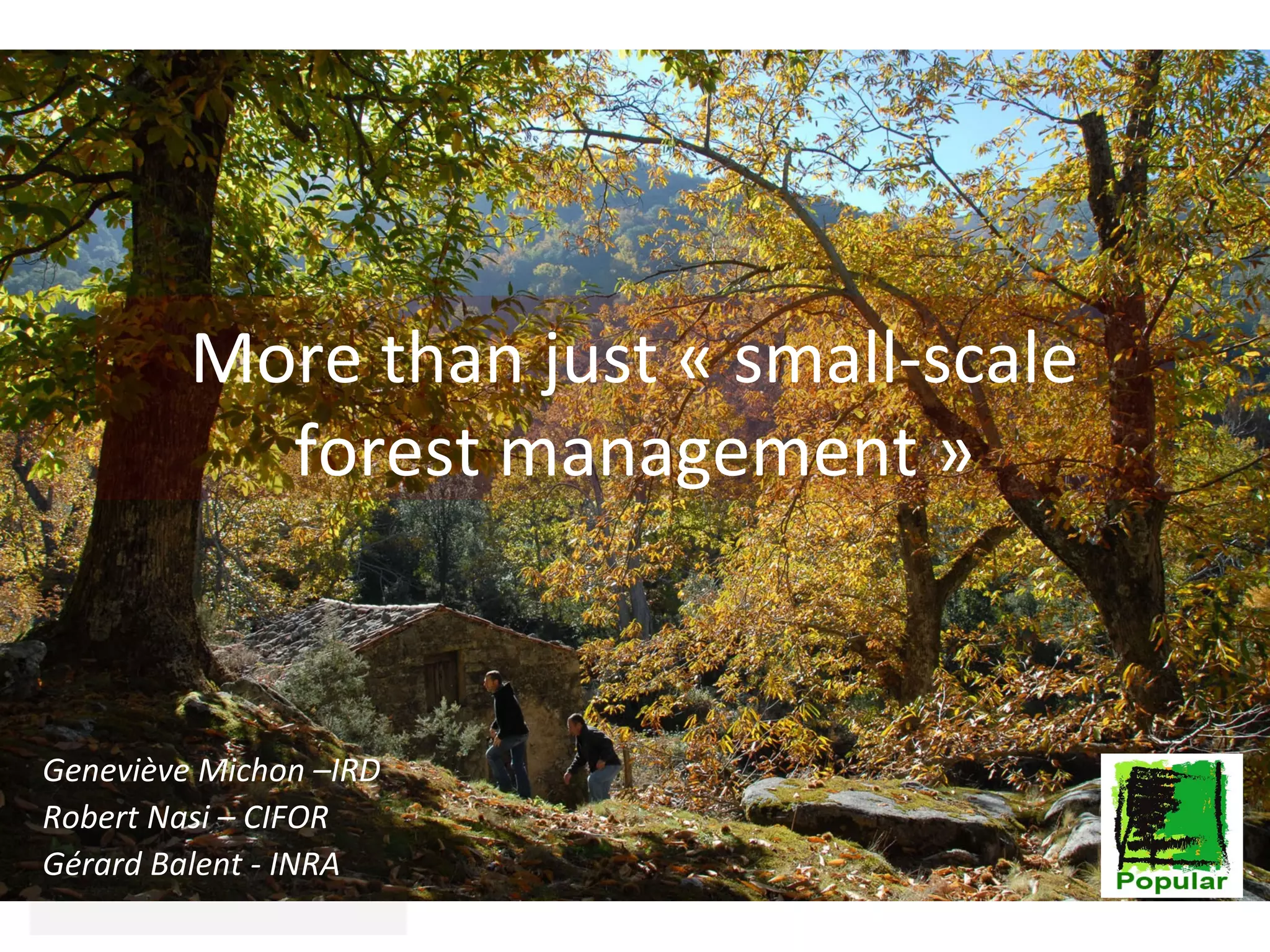
More than just « small-scale
forest management »

Geneviève Michon –IRD
Robert Nasi – CIFOR
Gérard Balent - INRA
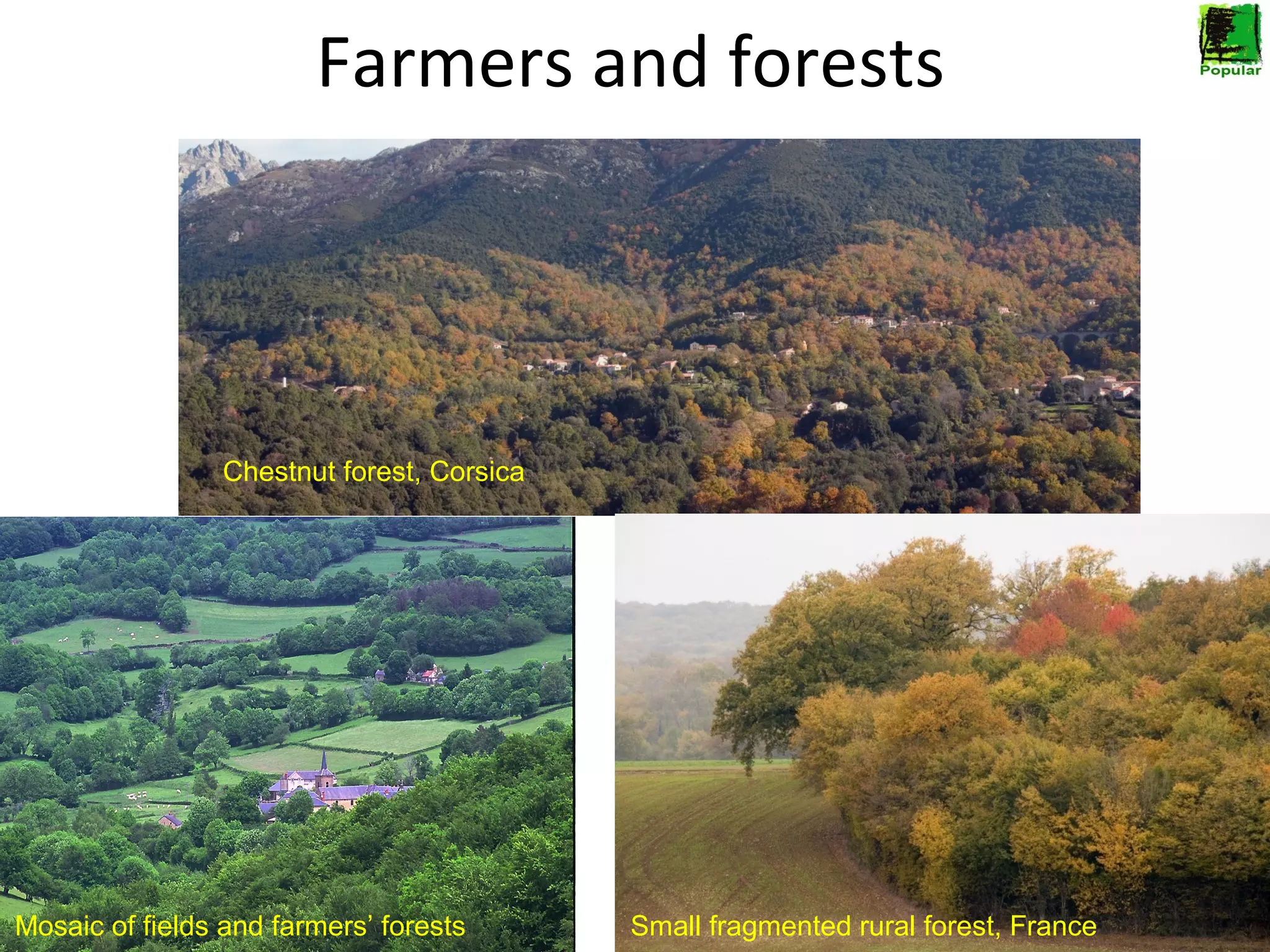
Farmers and forests

Chestnut forest, Corsica

Mosaic of fields and farmers’ forests

Small fragmented rural forest, France
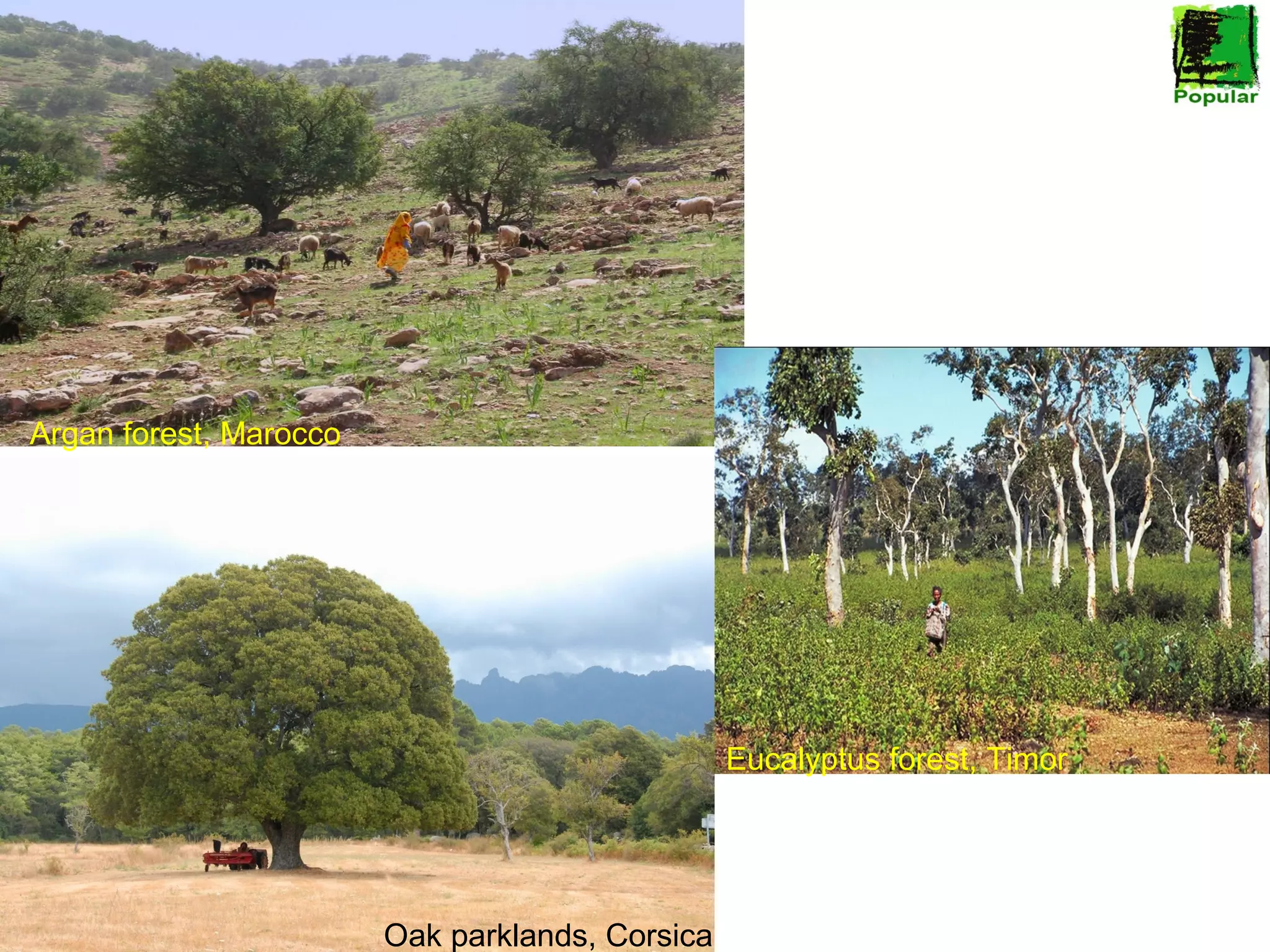
Argan forest, Marocco

Eucalyptus forest, Timor

Oak parklands, Corsica
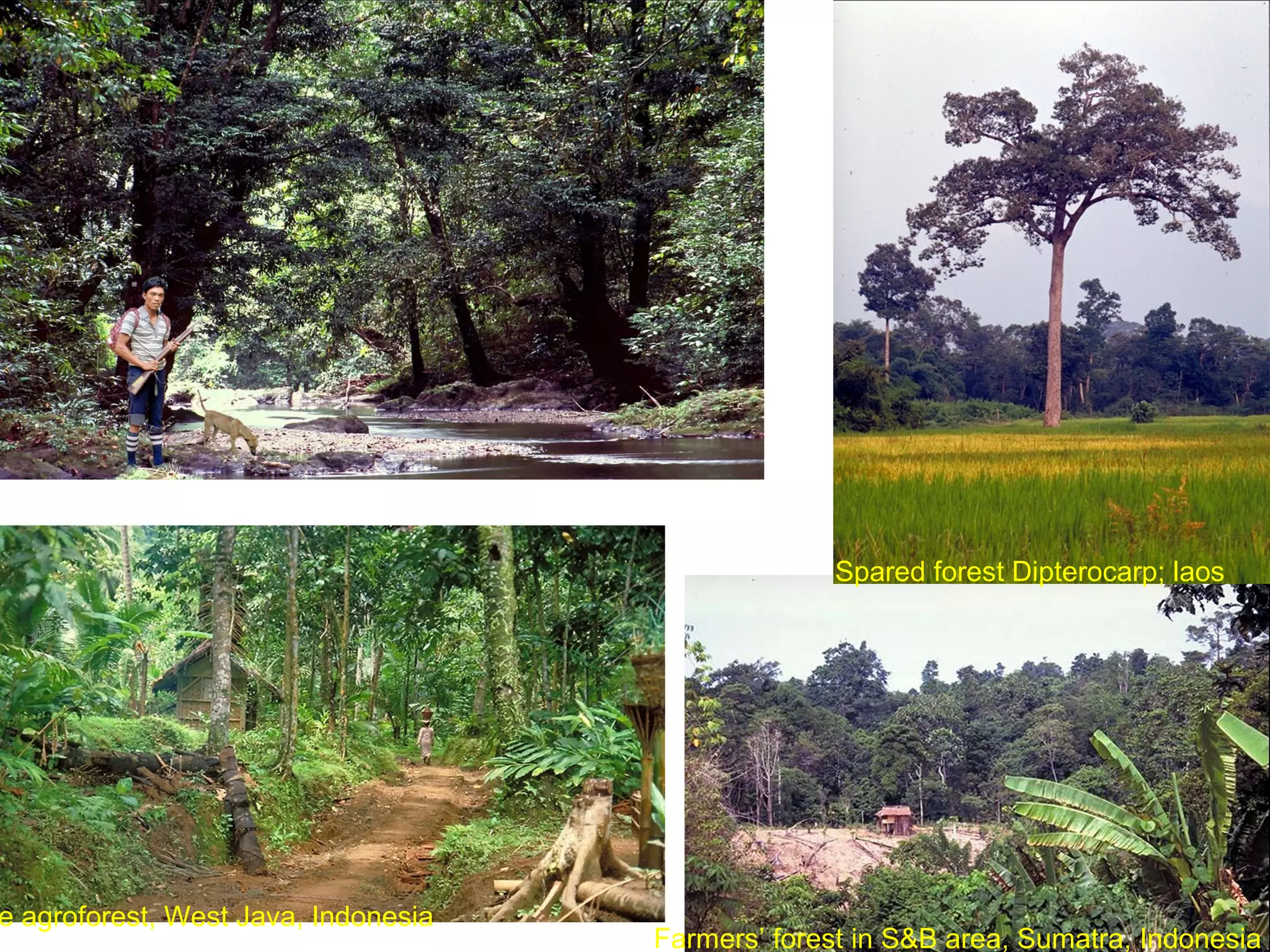
Domestic forest for collection, Sumatra, Indonesia

e agroforest, West Java, Indonesia

Spared forest Dipterocarp; laos

Farmers’ forest in S&B area, Sumatra, Indonesia
Humanity and naturality
• The material part: ecology, local knowledge and
practices
– « Domesticating »: bringing « nature » into the « domestic »
human sphere
• Domesticating trees
• Domesticating ecosystems
• Domesticating landscapes

• The immaterial part: the human component of
domesticated forests
– Economic dimension
– Symbolic dimension
– Intergenerational linkages: to the ancestors and for the future
generations
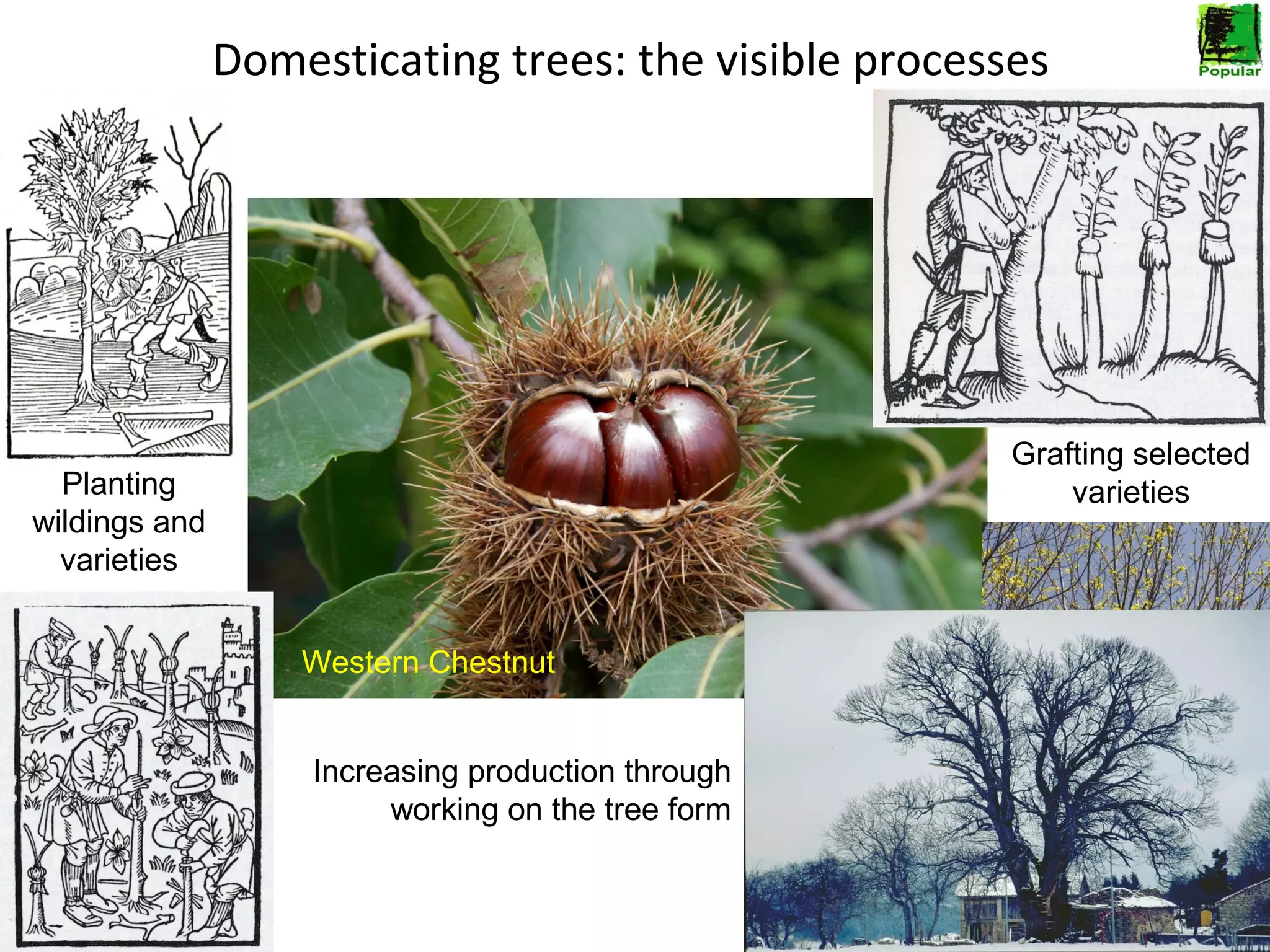
Domesticating trees: the visible processes

Grafting selected
varieties

Planting
wildings and
varieties
Western Chestnut
Increasing production through
working on the tree form
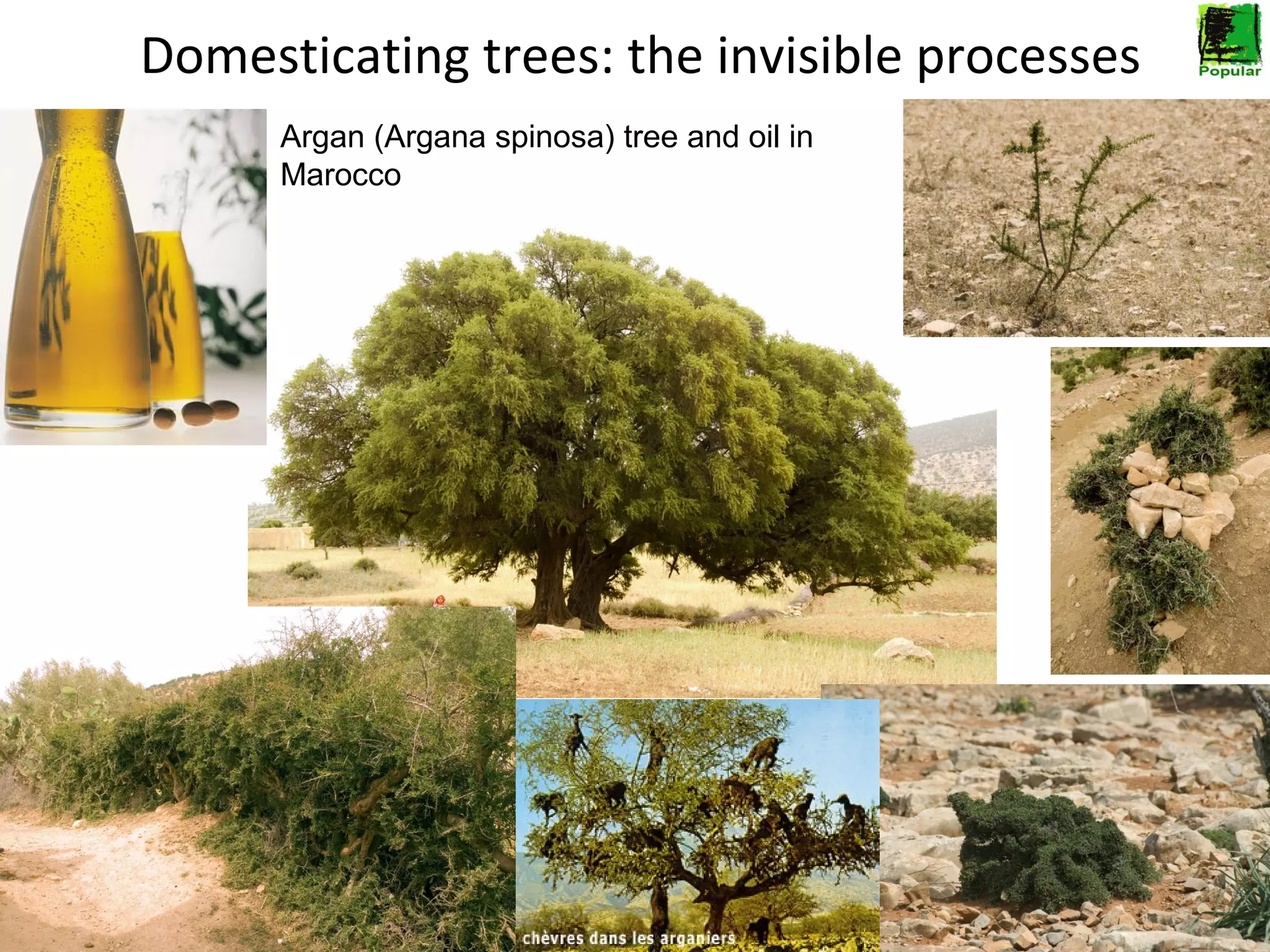
Domesticating trees: the invisible processes
Argan (Argana spinosa) tree and oil in
Marocco
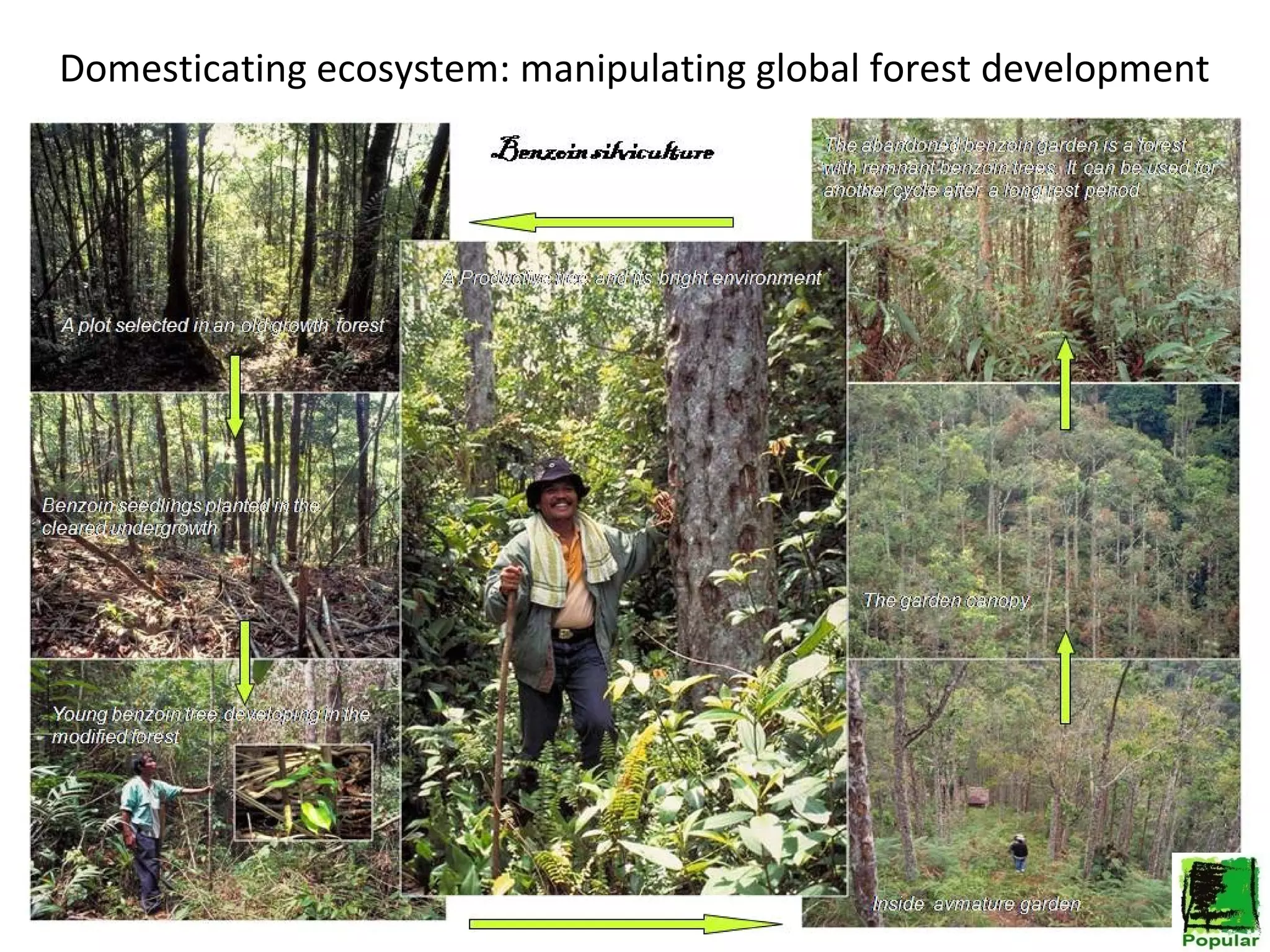
Domesticating ecosystem: manipulating global forest development
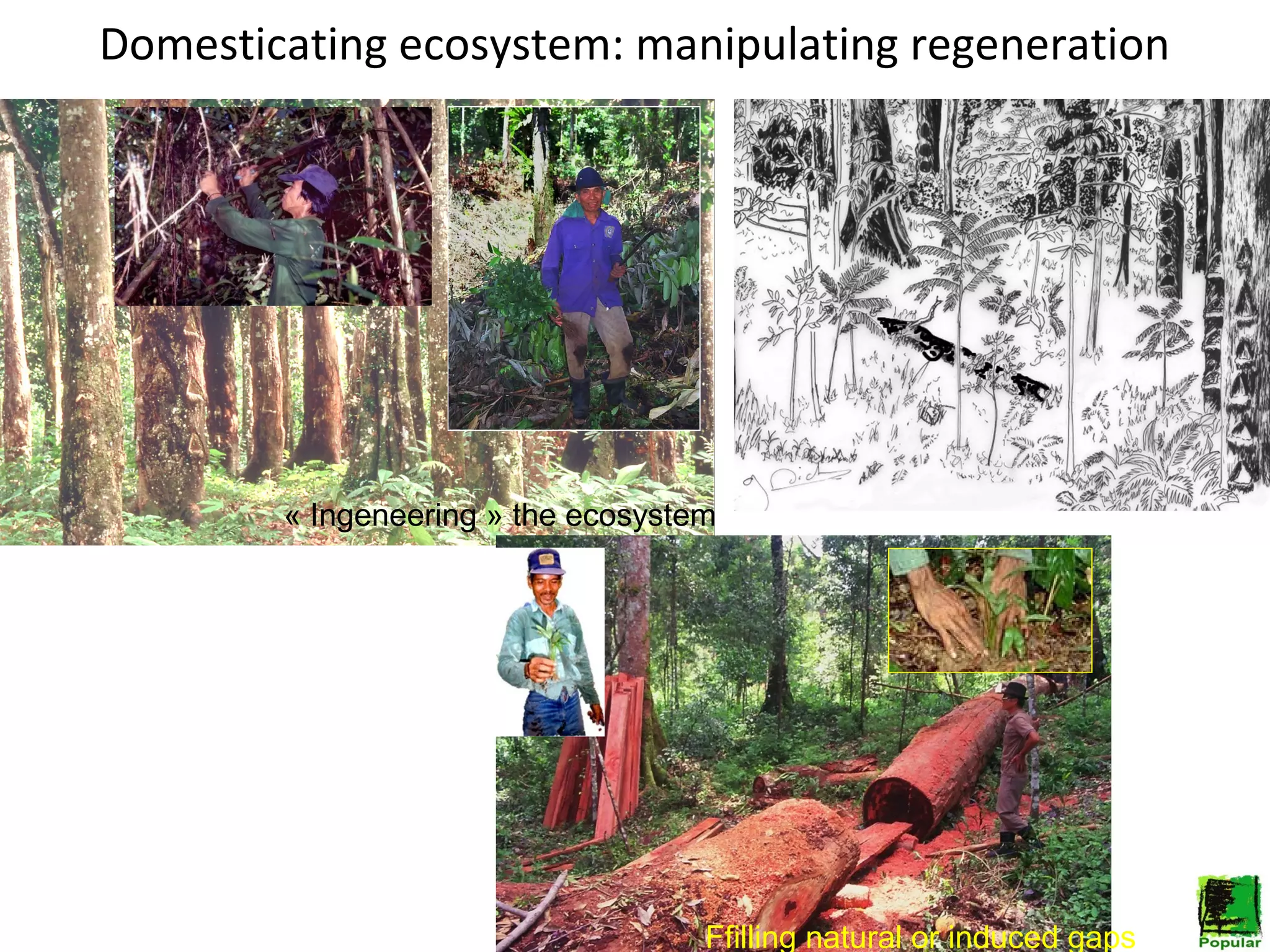
Domesticating ecosystem: manipulating regeneration

« Ingeneering » the ecosystem

Ffilling natural or induced gaps
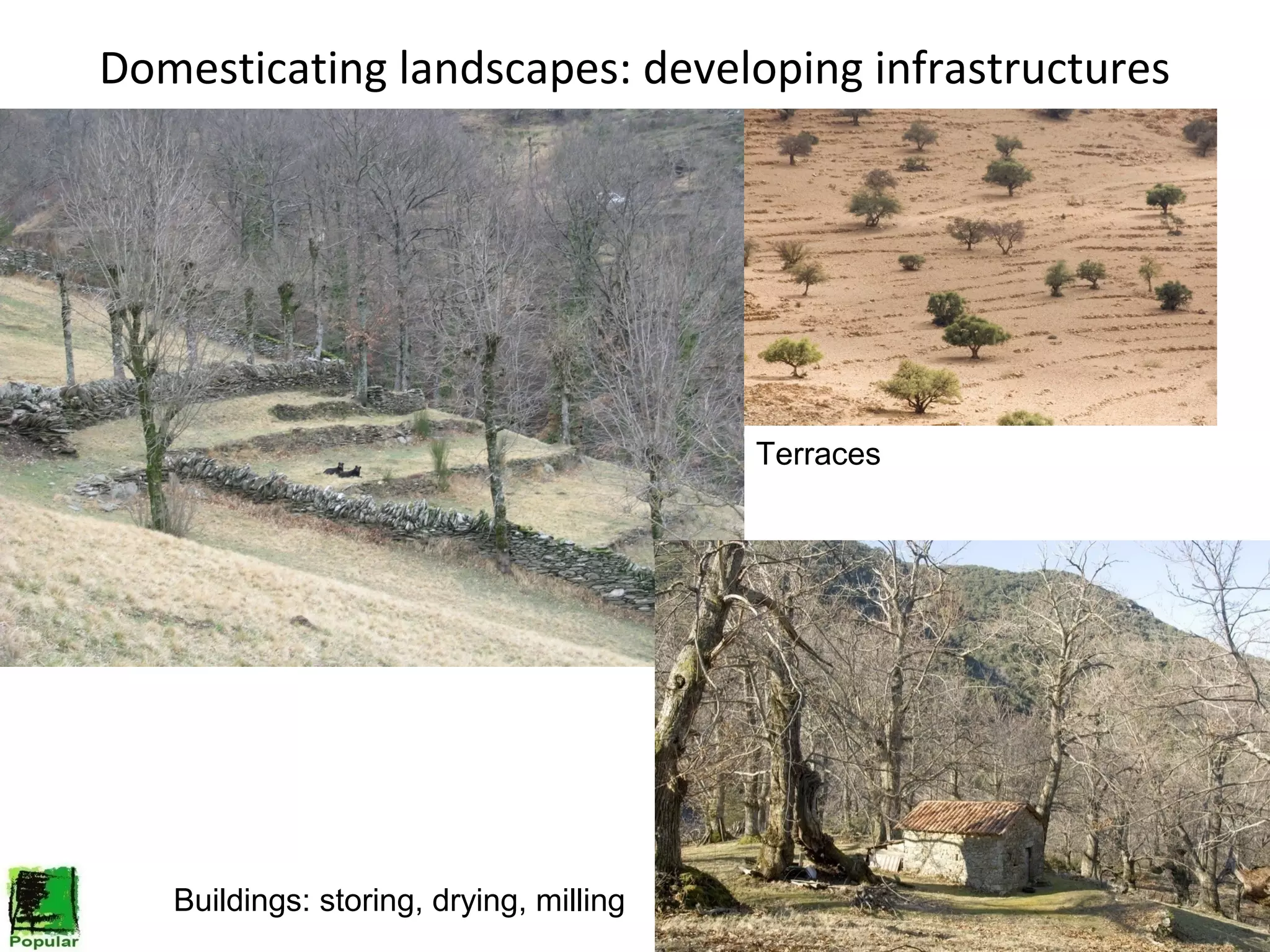
Domesticating landscapes: developing infrastructures

Terraces

Buildings: storing, drying, milling
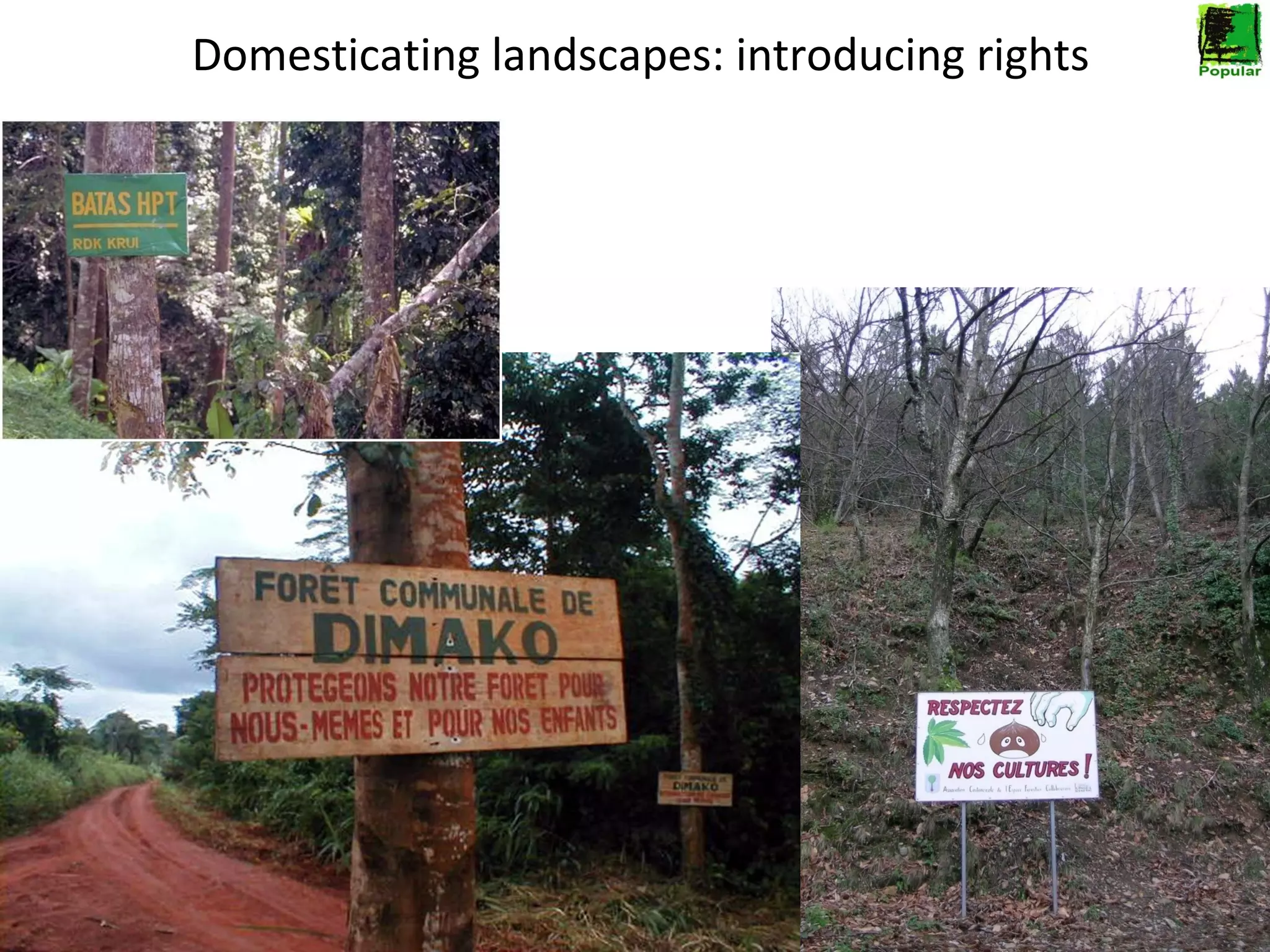
Domesticating landscapes: introducing rights
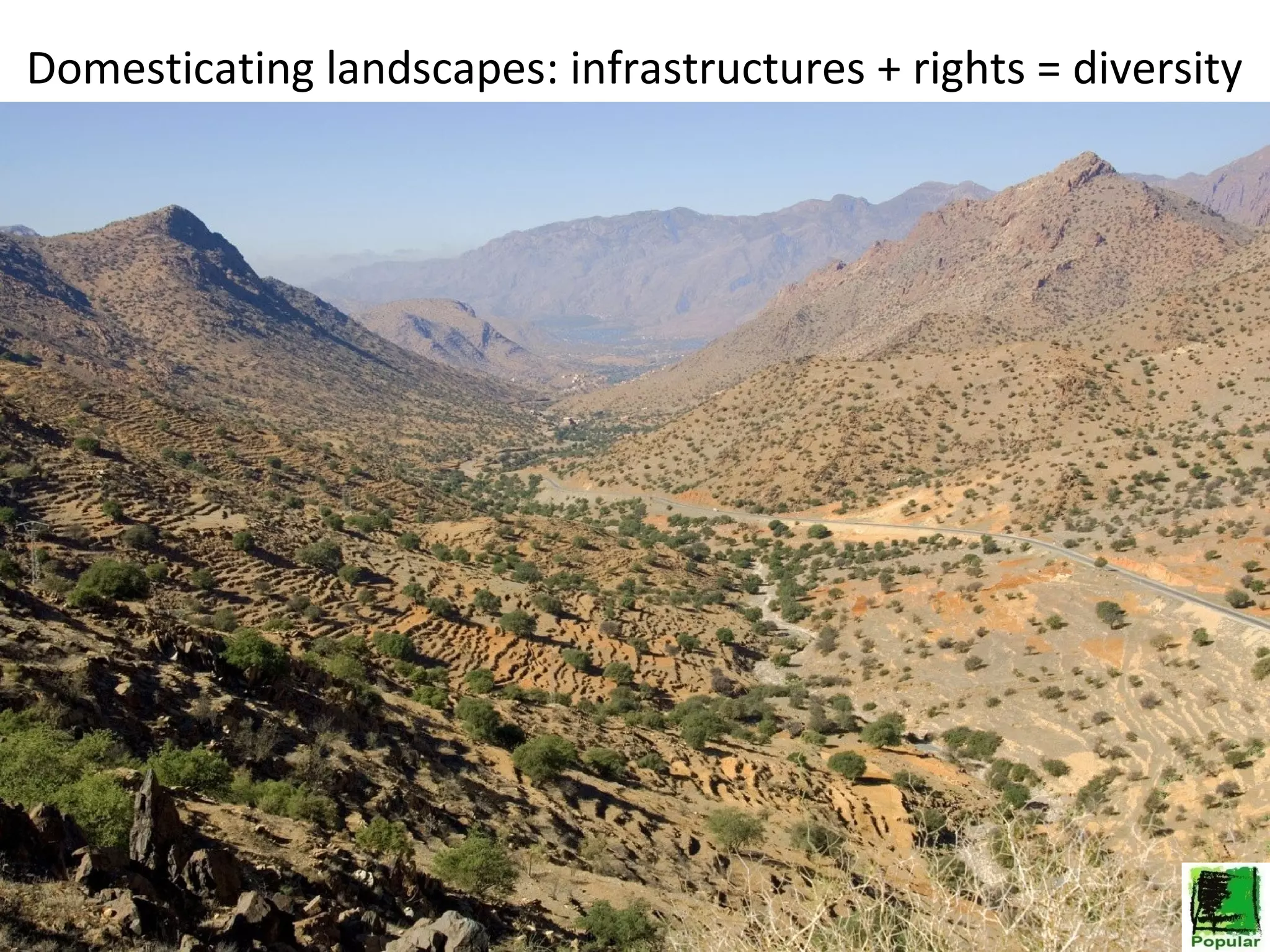
Domesticating landscapes: infrastructures + rights = diversity
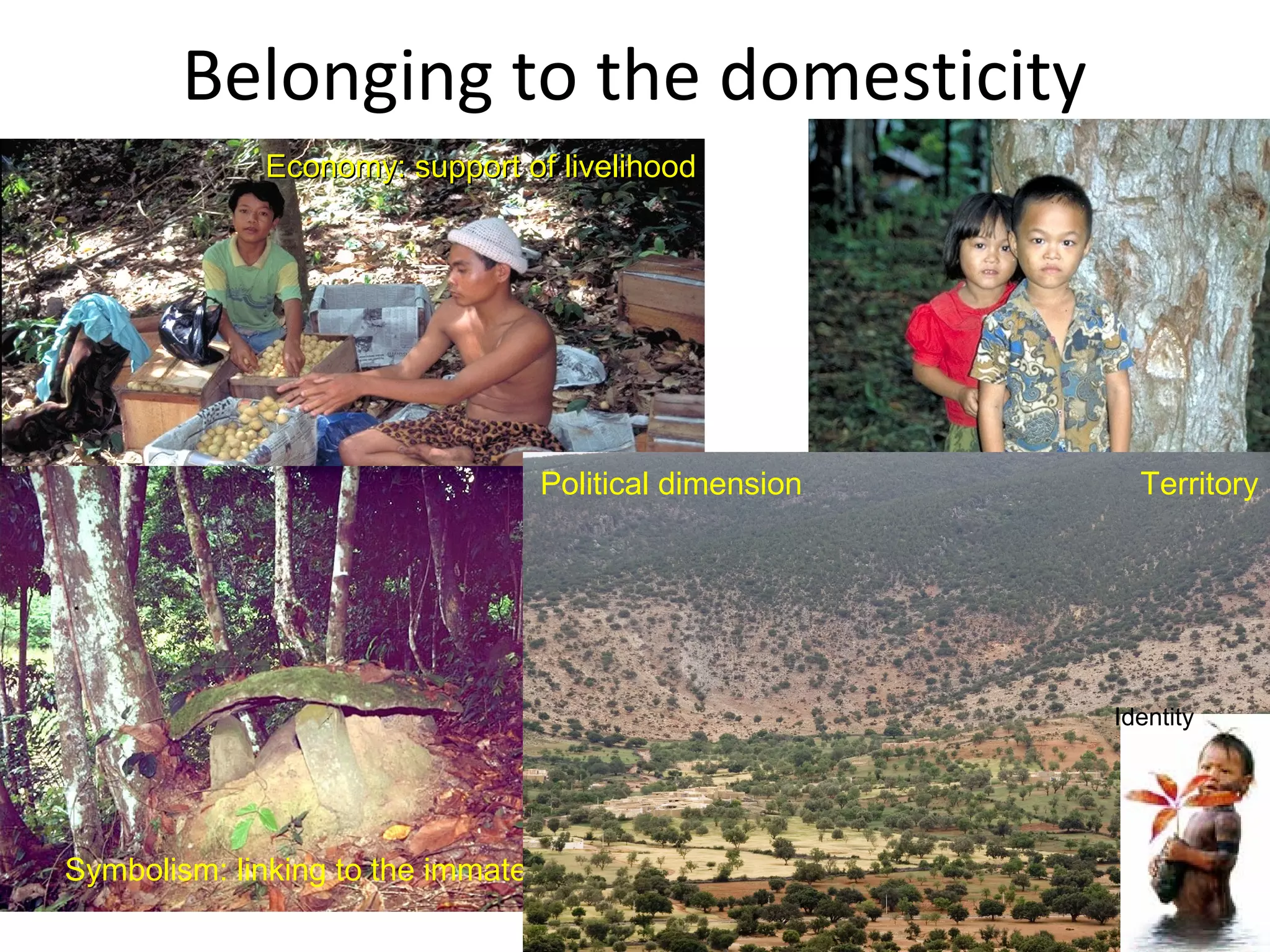
Belonging to the domesticity
Economy: support of livelihood

Political dimension

Territory

Patrimony:
transgenerational
intentions

Symbolism: linking to the immaterial world

Identity
And the policy framework ???
• The Agriculture / Forest divide: forest or not forest?
• Forest policies: do not really acknowledge the multidimensional
value of local forests
– Production forests? (not intensive timber production areas, too
« degraded », timber is minor)
– Conservation forests? (not biodiversity sanctuaries: too much humanity:
reserve concept not working)
– Social forest? (reluctance for full local rights, authority and legitimacy
recognition)

• Agricultural policies: care for single productions (chestnut, argan
oil), not for the maintenance of the forest ecosystem integrity
• Conservation policies: do not care for development and
modernization
• A bit of everything (production + environment + social)
• « Sustainable Development »: a more favorable framework?
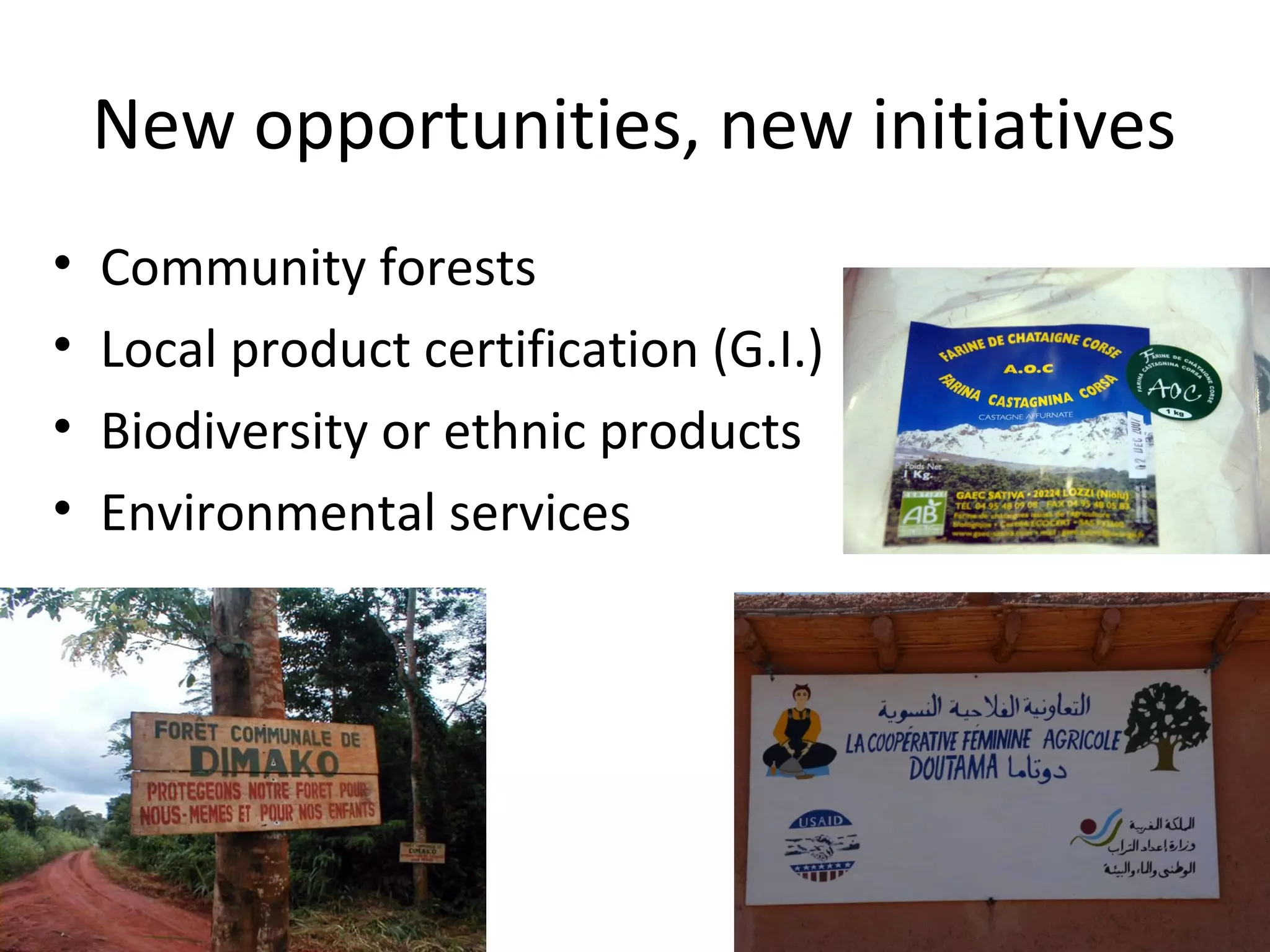
New opportunities, new initiatives
•
•
•
•

Community forests
Local product certification (G.I.)
Biodiversity or ethnic products
Environmental services
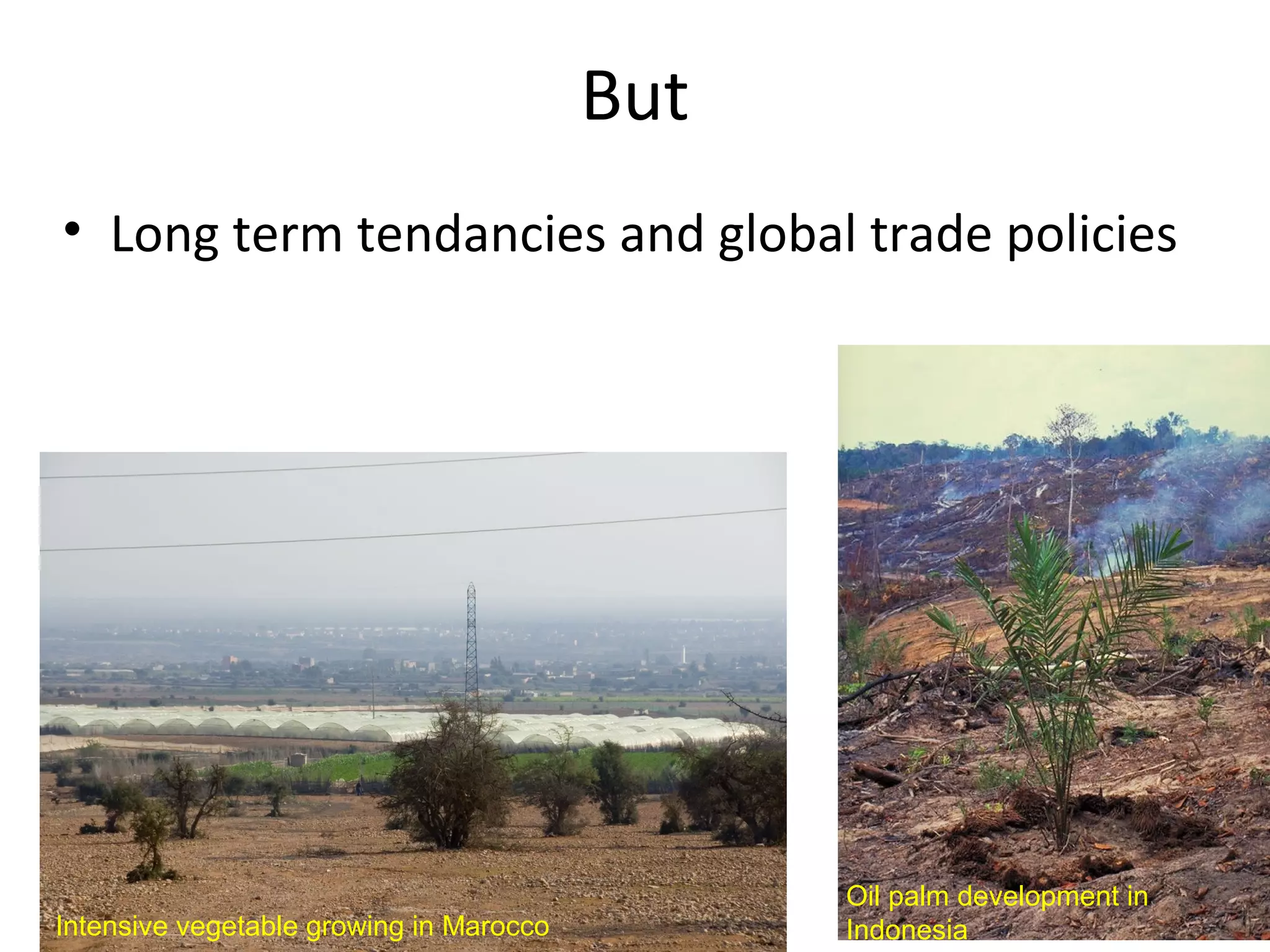
But
• Long term tendancies and global trade policies

Intensive vegetable growing in Marocco

Oil palm development in
Indonesia
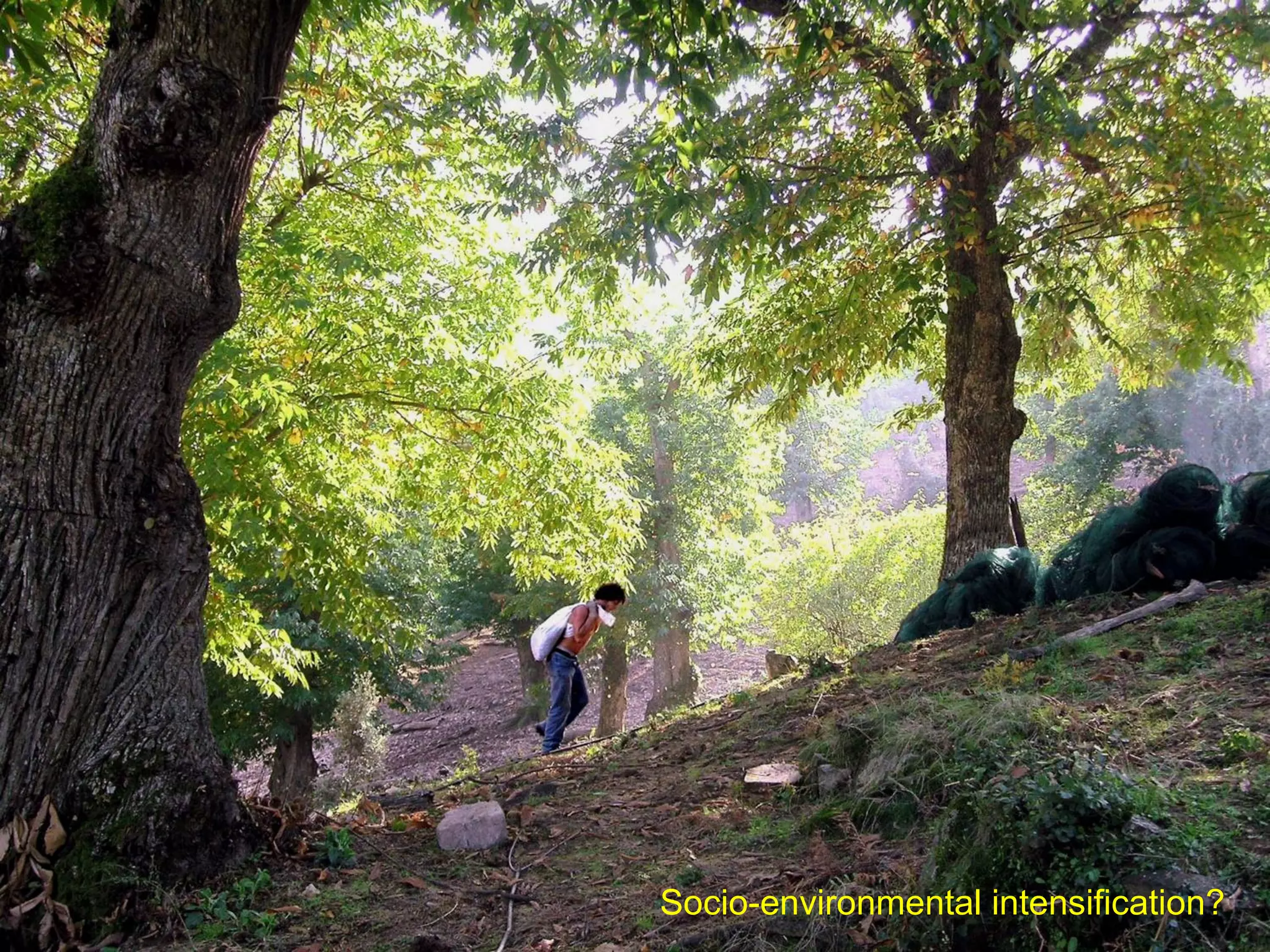
Socio-environmental intensification?

More than just small scale forest management

  • 1.
    More than just« small-scale forest management » Geneviève Michon –IRD Robert Nasi – CIFOR Gérard Balent - INRA
  • 2.
    Farmers and forests Chestnutforest, Corsica Mosaic of fields and farmers’ forests Small fragmented rural forest, France
  • 3.
    Argan forest, Marocco Eucalyptusforest, Timor Oak parklands, Corsica
  • 4.
    Domestic forest forcollection, Sumatra, Indonesia e agroforest, West Java, Indonesia Spared forest Dipterocarp; laos Farmers’ forest in S&B area, Sumatra, Indonesia
  • 5.
    Humanity and naturality •The material part: ecology, local knowledge and practices – « Domesticating »: bringing « nature » into the « domestic » human sphere • Domesticating trees • Domesticating ecosystems • Domesticating landscapes • The immaterial part: the human component of domesticated forests – Economic dimension – Symbolic dimension – Intergenerational linkages: to the ancestors and for the future generations
  • 6.
    Domesticating trees: thevisible processes Grafting selected varieties Planting wildings and varieties Western Chestnut Increasing production through working on the tree form
  • 7.
    Domesticating trees: theinvisible processes Argan (Argana spinosa) tree and oil in Marocco
  • 8.
    Domesticating ecosystem: manipulatingglobal forest development
  • 9.
    Domesticating ecosystem: manipulatingregeneration « Ingeneering » the ecosystem Ffilling natural or induced gaps
  • 10.
    Domesticating landscapes: developinginfrastructures Terraces Buildings: storing, drying, milling
  • 11.
  • 12.
  • 13.
    Belonging to thedomesticity Economy: support of livelihood Political dimension Territory Patrimony: transgenerational intentions Symbolism: linking to the immaterial world Identity
  • 14.
    And the policyframework ??? • The Agriculture / Forest divide: forest or not forest? • Forest policies: do not really acknowledge the multidimensional value of local forests – Production forests? (not intensive timber production areas, too « degraded », timber is minor) – Conservation forests? (not biodiversity sanctuaries: too much humanity: reserve concept not working) – Social forest? (reluctance for full local rights, authority and legitimacy recognition) • Agricultural policies: care for single productions (chestnut, argan oil), not for the maintenance of the forest ecosystem integrity • Conservation policies: do not care for development and modernization • A bit of everything (production + environment + social) • « Sustainable Development »: a more favorable framework?
  • 15.
    New opportunities, newinitiatives • • • • Community forests Local product certification (G.I.) Biodiversity or ethnic products Environmental services
  • 16.
    But • Long termtendancies and global trade policies Intensive vegetable growing in Marocco Oil palm development in Indonesia
  • 17.