MORALE AND
MOTIVATION
MORALE
It is the mental attitude which
makes the individual perform his
work either willingly and
enthusiastically or poorly and
reluctantly.
It is used to describe the level or
quality of the attitude or reaction
displayed by an individual or by a
group as being high or low, good or
poor, positive or negative.
The qualities indicating high morale
are known by such terms as
enthusiasm, personal satisfaction,
team spirit, pride of achievement,
and willingness to work.
MORALE
Professor Michael J. Jucius defines
morale “as a state of mind and
emotions, affecting willingness to
work, which in turn affects individual
and organizational objectives.”
What it is
What it does
Where it resides
Whom it affects
What it affects
MORALE
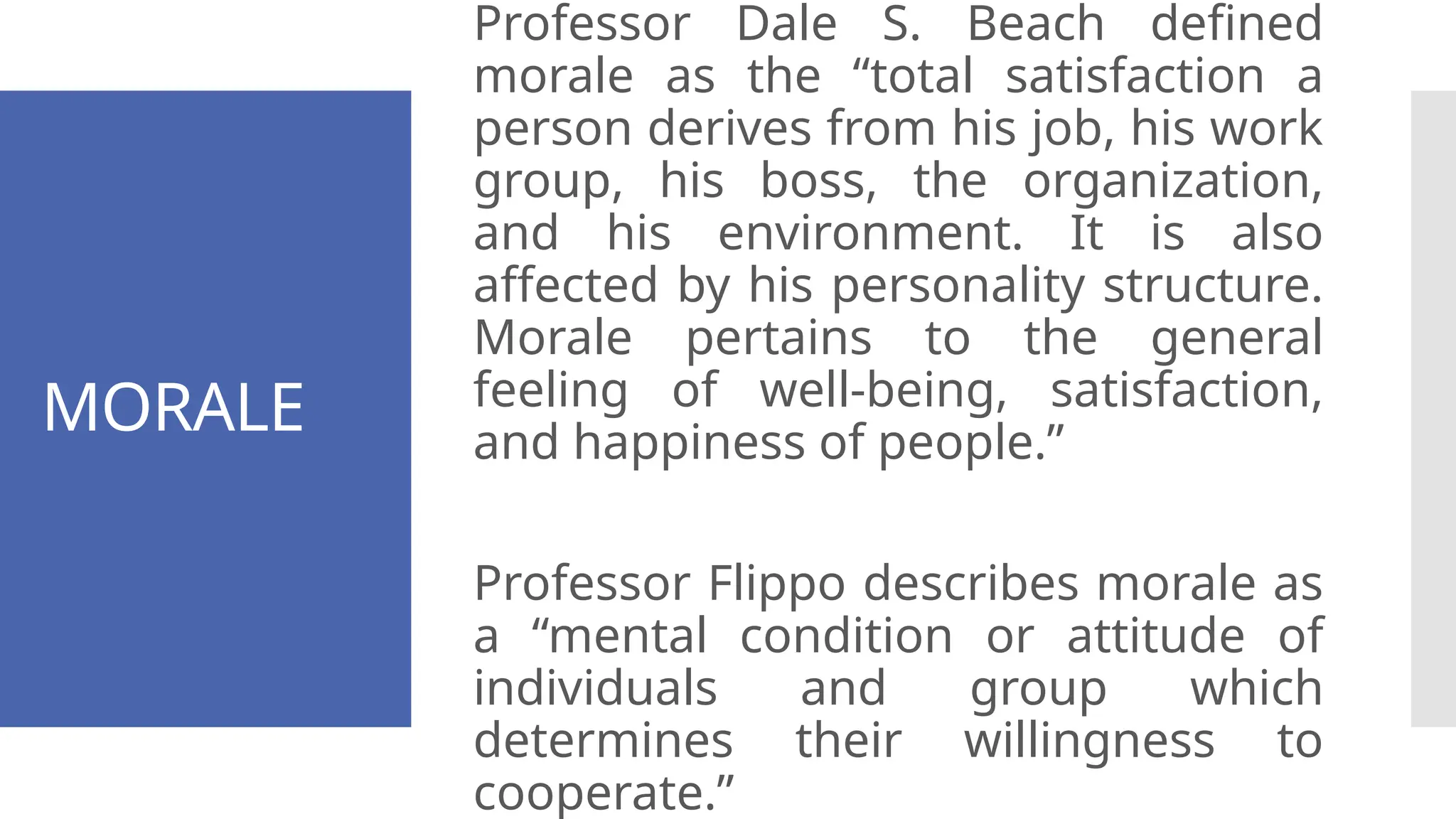
Professor Dale S. Beach defined
morale as the “total satisfaction a
person derives from his job, his work
group, his boss, the organization,
and his environment. It is also
affected by his personality structure.
Morale pertains to the general
feeling of well-being, satisfaction,
and happiness of people.”
Professor Flippo describes morale as
a “mental condition or attitude of
individuals and group which
determines their willingness to
cooperate.”
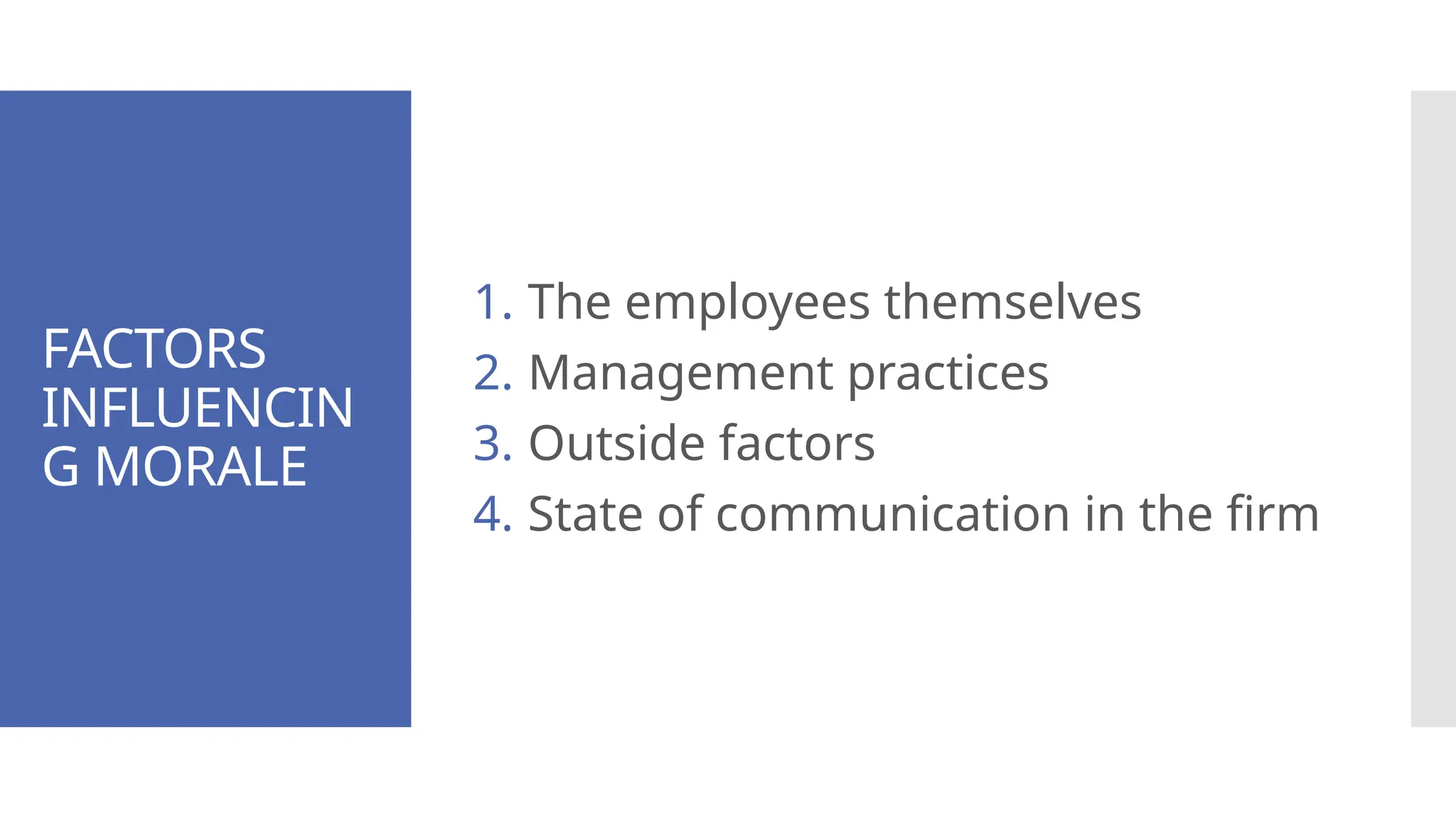
FACTORS
INFLUENCIN
G MORALE
1. The employees themselves
2. Management practices
3. Outside factors
4. State of communication in the firm
INDICATION
S OF LOW
EMPLOYEE
MORALE
1. Customer complaints
2. Frequent absenteeism and
tardiness
3. Frequent sick leave
4. Low production, spoilage of
materials due to inattention
5. Unjustified overtime
6. Careless handling of machines
causing breakdowns
7. Spoilage and waste of supplies
and materials
INDICATION
S OF LOW
EMPLOYEE
MORALE
8. Grievance and complaints
9. High labor turnover
10.Rumors, quarrels or fights
11.Frequent violations of rules and
regulations
12.Lost man-hours because of long
breaks and frequent trips to
comfort rooms
13.Unsatisfactory ratings in
performance appraisal
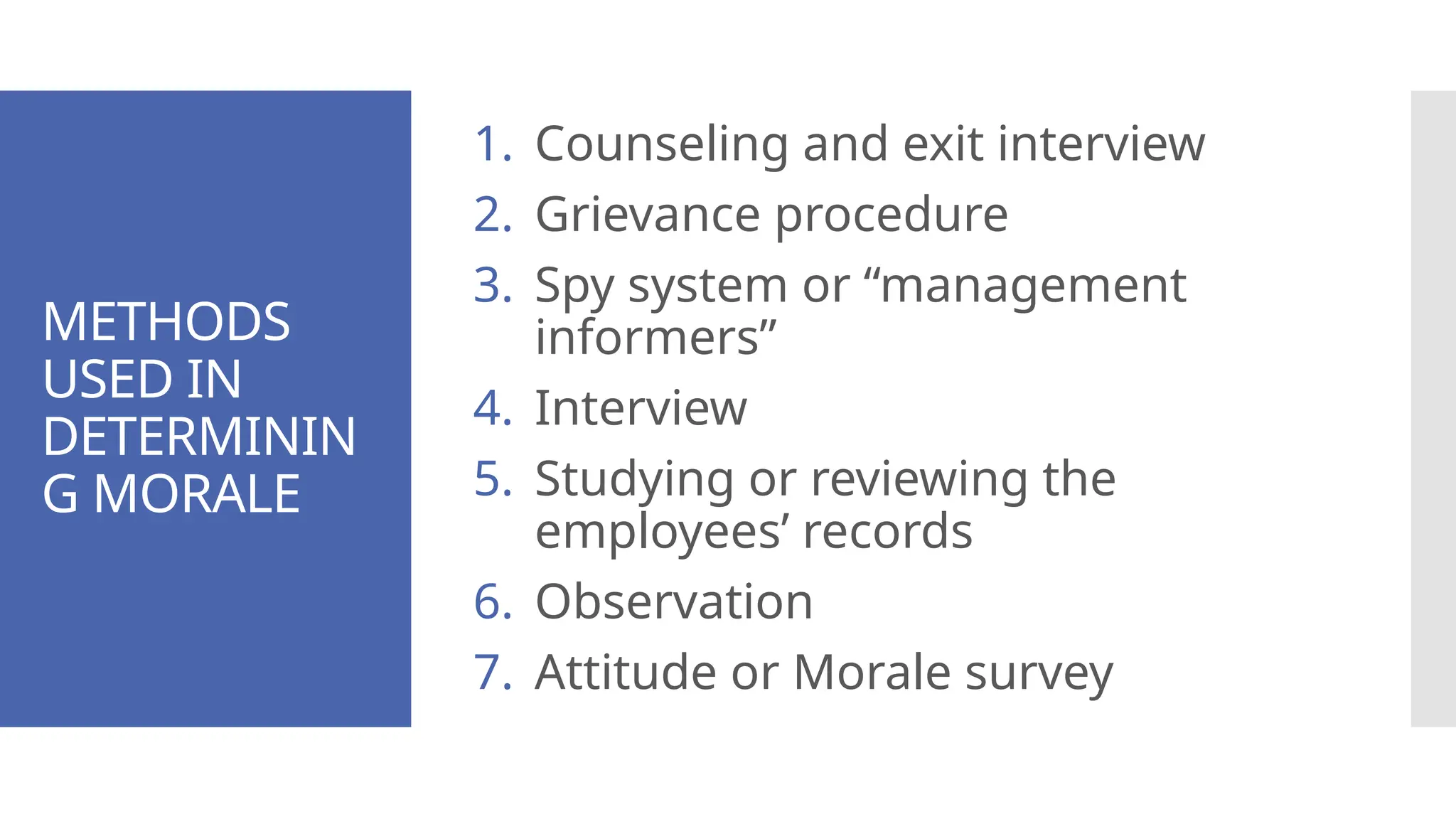
METHODS
USED IN
DETERMININ
G MORALE
1. Counseling and exit interview
2. Grievance procedure
3. Spy system or “management
informers”
4. Interview
5. Studying or reviewing the
employees’ records
6. Observation
7. Attitude or Morale survey
MOTIVATIO
N
The word motivation is derived from
the word “motivate” which means to
move, impel or induce to act to
satisfy a need or want.
Any consideration, idea or object
prompting or exciting an individual
to act or move him to do what his
leader wants to be accomplished is
motivation.
It is the willingness to exert effort to
achieve a goal or objective for
reward.
It is the need, want, or motive
within the individual that will urge
him to accomplish his objectives.
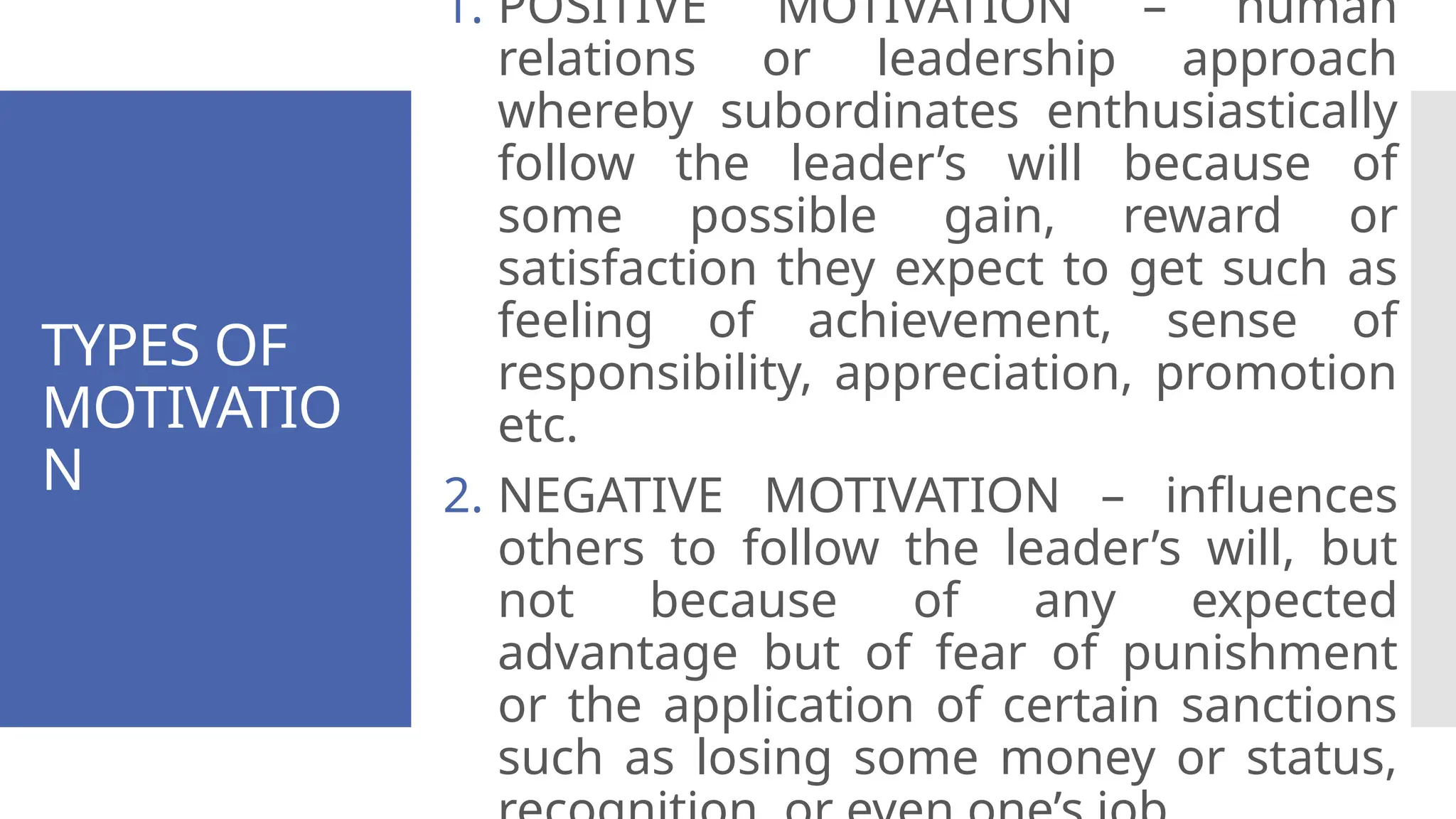
TYPES OF
MOTIVATIO
N
1. POSITIVE MOTIVATION – human
relations or leadership approach
whereby subordinates enthusiastically
follow the leader’s will because of
some possible gain, reward or
satisfaction they expect to get such as
feeling of achievement, sense of
responsibility, appreciation, promotion
etc.
2. NEGATIVE MOTIVATION – influences
others to follow the leader’s will, but
not because of any expected
advantage but of fear of punishment
or the application of certain sanctions
such as losing some money or status,
POSITIVE
FACTORS IN
MOTIVATIN
G PEOPLE
1. Money
2. Job security
3. Praise and recognition
4. Sense of belonging
5. Competition
6. Delegation of responsibility and
authority
7. Employee participation
8. Sincere interest in subordinate
EFFECTS OF
MOTIVATIO
N
1. Move and act to follow the
direction desired by management
2. Achieve high output and produce
good quality products and services
3. More careful in the use and care of
machines and equipment, avoid or
prevent accidents, and minimize
or prevent losses or waste
EFFECTS OF
MOTIVATIO
N
4. Accept willingly the changes made
by the management provided that
the changes to be made have
been previously explained and
understood by them and proper
training is provided to adjust them
to the change
5. Willingly respond in times of
emergencies or during rush
periods or occasions requiring
special effort, overtime, and the
like
6. Problems of disciplines are
minimized
THEORIES
OF
MOTIVATIO
N
1. McGregor’s Theory X and Theory Y
2. Maslow’s Hierarchy of Needs
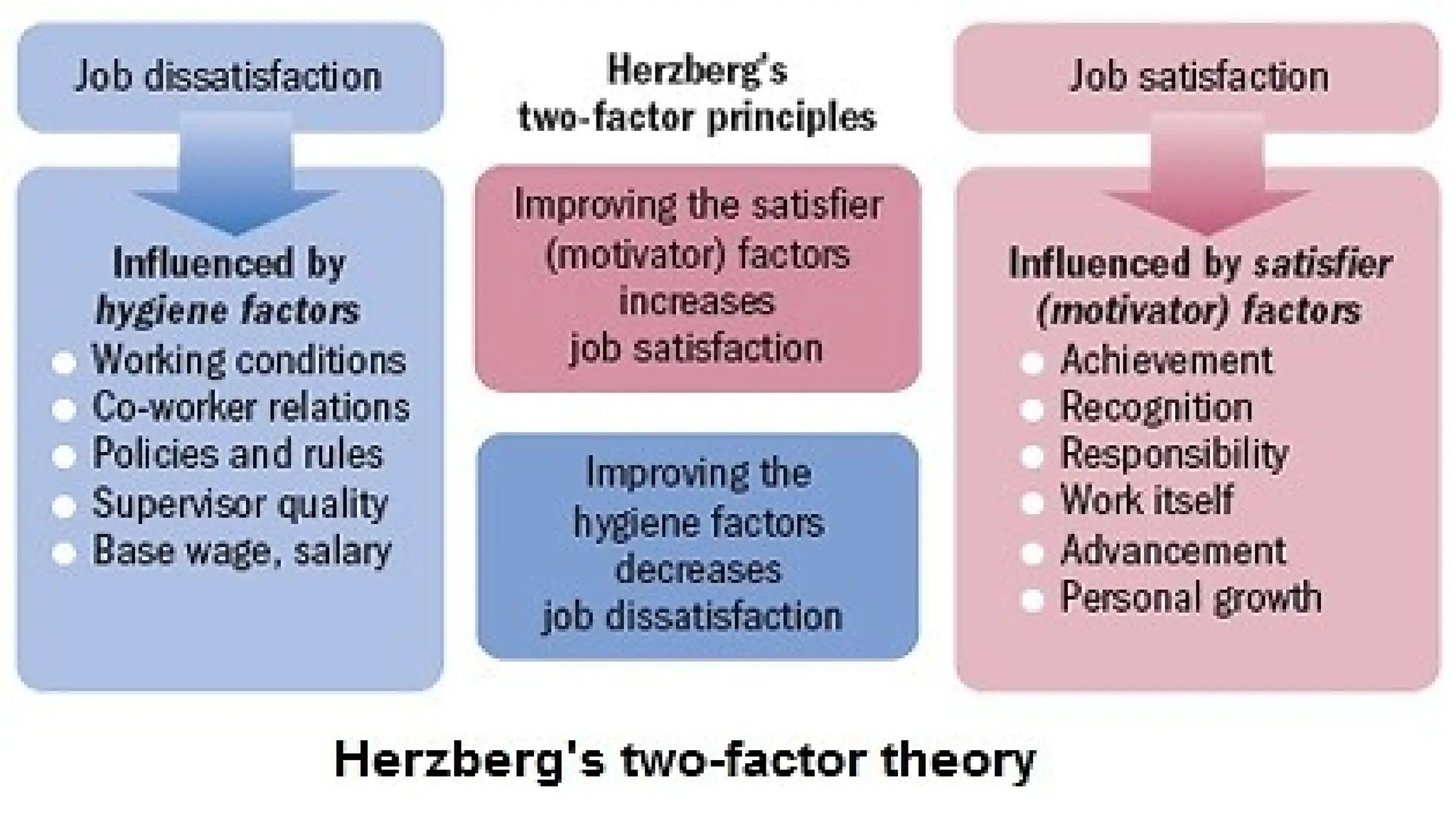
3. Herzberg’s Two-Factor Theory
4. Adams’ Equity Theory
5. Locke’s Goal Theory
THE END

moraleandmotivationforleadershipmanagement

  • 1.
  • 2.
    MORALE It is themental attitude which makes the individual perform his work either willingly and enthusiastically or poorly and reluctantly. It is used to describe the level or quality of the attitude or reaction displayed by an individual or by a group as being high or low, good or poor, positive or negative. The qualities indicating high morale are known by such terms as enthusiasm, personal satisfaction, team spirit, pride of achievement, and willingness to work.
  • 3.
    MORALE Professor Michael J.Jucius defines morale “as a state of mind and emotions, affecting willingness to work, which in turn affects individual and organizational objectives.” What it is What it does Where it resides Whom it affects What it affects
  • 4.
    MORALE Professor Dale S.Beach defined morale as the “total satisfaction a person derives from his job, his work group, his boss, the organization, and his environment. It is also affected by his personality structure. Morale pertains to the general feeling of well-being, satisfaction, and happiness of people.” Professor Flippo describes morale as a “mental condition or attitude of individuals and group which determines their willingness to cooperate.”
  • 5.
    FACTORS INFLUENCIN G MORALE 1. Theemployees themselves 2. Management practices 3. Outside factors 4. State of communication in the firm
  • 6.
    INDICATION S OF LOW EMPLOYEE MORALE 1.Customer complaints 2. Frequent absenteeism and tardiness 3. Frequent sick leave 4. Low production, spoilage of materials due to inattention 5. Unjustified overtime 6. Careless handling of machines causing breakdowns 7. Spoilage and waste of supplies and materials
  • 7.
    INDICATION S OF LOW EMPLOYEE MORALE 8.Grievance and complaints 9. High labor turnover 10.Rumors, quarrels or fights 11.Frequent violations of rules and regulations 12.Lost man-hours because of long breaks and frequent trips to comfort rooms 13.Unsatisfactory ratings in performance appraisal
  • 8.
    METHODS USED IN DETERMININ G MORALE 1.Counseling and exit interview 2. Grievance procedure 3. Spy system or “management informers” 4. Interview 5. Studying or reviewing the employees’ records 6. Observation 7. Attitude or Morale survey
  • 9.
    MOTIVATIO N The word motivationis derived from the word “motivate” which means to move, impel or induce to act to satisfy a need or want. Any consideration, idea or object prompting or exciting an individual to act or move him to do what his leader wants to be accomplished is motivation. It is the willingness to exert effort to achieve a goal or objective for reward. It is the need, want, or motive within the individual that will urge him to accomplish his objectives.
  • 10.
    TYPES OF MOTIVATIO N 1. POSITIVEMOTIVATION – human relations or leadership approach whereby subordinates enthusiastically follow the leader’s will because of some possible gain, reward or satisfaction they expect to get such as feeling of achievement, sense of responsibility, appreciation, promotion etc. 2. NEGATIVE MOTIVATION – influences others to follow the leader’s will, but not because of any expected advantage but of fear of punishment or the application of certain sanctions such as losing some money or status,
  • 11.
    POSITIVE FACTORS IN MOTIVATIN G PEOPLE 1.Money 2. Job security 3. Praise and recognition 4. Sense of belonging 5. Competition 6. Delegation of responsibility and authority 7. Employee participation 8. Sincere interest in subordinate
  • 12.
    EFFECTS OF MOTIVATIO N 1. Moveand act to follow the direction desired by management 2. Achieve high output and produce good quality products and services 3. More careful in the use and care of machines and equipment, avoid or prevent accidents, and minimize or prevent losses or waste
  • 13.
    EFFECTS OF MOTIVATIO N 4. Acceptwillingly the changes made by the management provided that the changes to be made have been previously explained and understood by them and proper training is provided to adjust them to the change 5. Willingly respond in times of emergencies or during rush periods or occasions requiring special effort, overtime, and the like 6. Problems of disciplines are minimized
  • 14.
    THEORIES OF MOTIVATIO N 1. McGregor’s TheoryX and Theory Y 2. Maslow’s Hierarchy of Needs 3. Herzberg’s Two-Factor Theory 4. Adams’ Equity Theory 5. Locke’s Goal Theory
  • 20.