Historic
Montvale
 1832-2012
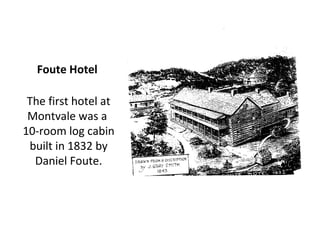
Foute Hotel

 The first hotel at
 Montvale was a
10-room log cabin
 built in 1832 by
  Daniel Foute.
Montvale Trails
  Foute bought 6,300
   acres of mountain
     land along the
  Chilhowee and into
 Cades Cove. He used
 Cherokee Indians to
lay out trails and build
roads over Chilhowee
  Mountain, to Cades
 Cove, Gregory’s Bald,
 and Abrams Creek.
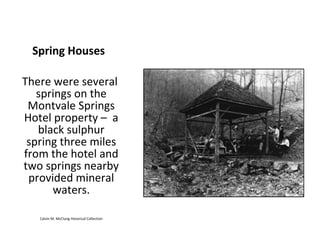
Spring Houses

There were several
   springs on the
 Montvale Springs
Hotel property – a
   black sulphur
 spring three miles
from the hotel and
two springs nearby
 provided mineral
      waters.

   Calvin M. McClung Historical Collection
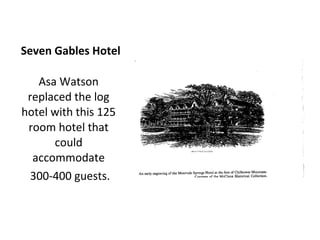
Seven Gables Hotel

   Asa Watson
 replaced the log
hotel with this 125
 room hotel that
      could
  accommodate
  300-400 guests.
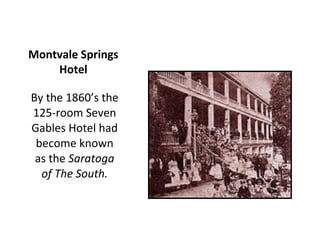
Montvale Springs
    Hotel

By the 1860’s the
125-room Seven
Gables Hotel had
 become known
 as the Saratoga
  of The South.
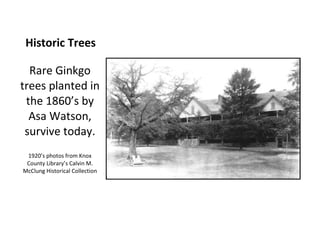
Historic Trees

  Rare Ginkgo
trees planted in
 the 1860’s by
  Asa Watson,
 survive today.
 1920’s photos from Knox
 County Library’s Calvin M.
McClung Historical Collection
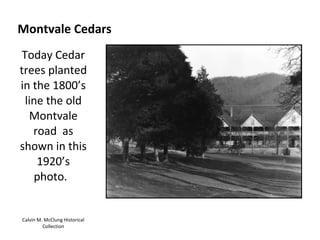
Montvale Cedars
Today Cedar
trees planted
in the 1800’s
 line the old
  Montvale
   road as
shown in this
    1920’s
   photo.


Calvin M. McClung Historical
         Collection
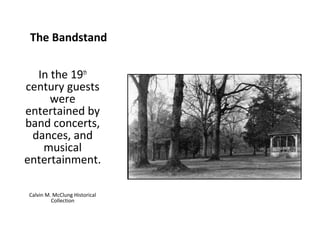
The Bandstand

  In the 19th
century guests
     were
entertained by
band concerts,
 dances, and
   musical
entertainment.

Calvin M. McClung Historical
         Collection
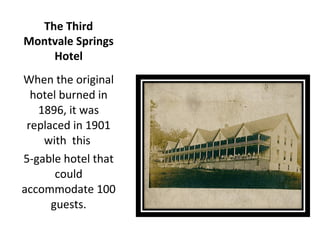
The Third
Montvale Springs
    Hotel
When the original
  hotel burned in
   1896, it was
 replaced in 1901
    with this
5-gable hotel that
       could
accommodate 100
      guests.
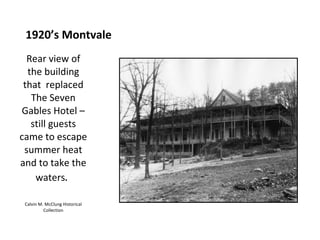
1920’s Montvale
  Rear view of
  the building
 that replaced
   The Seven
Gables Hotel –
   still guests
came to escape
 summer heat
and to take the
    waters.

 Calvin M. McClung Historical
          Collection
Montvale’s Springs

 Montvale spring
water was praised
    by Dr. John
   Moorman as
  valuable in the
   treatment of
 maladies ranging
 from anemia to
dyspepsia, dropsy,
   paralysis and
nervous afflictions.

  Calvin M. McClung Historical
           Collection
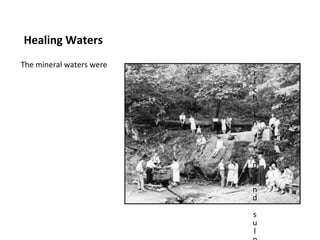
Healing Waters
The mineral waters were
                          r
                          i
                          c
                          h
                          i
                          n
                          i
                          r
                          o
                          n
                          a
                          n
                          d
                          s
                          u
                          l
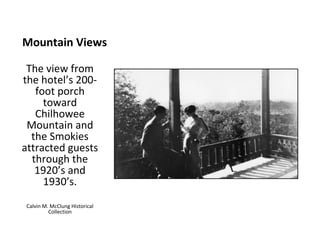
Mountain Views

 The view from
the hotel’s 200-
   foot porch
     toward
   Chilhowee
 Mountain and
  the Smokies
attracted guests
  through the
   1920’s and
     1930’s.
Calvin M. McClung Historical
         Collection
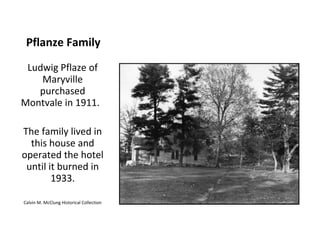
Pflanze Family
 Ludwig Pflaze of
    Maryville
   purchased
Montvale in 1911.

The family lived in
  this house and
operated the hotel
 until it burned in
        1933.

Calvin M. McClung Historical Collection
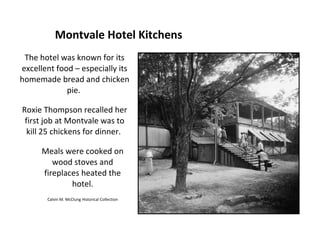
Montvale Hotel Kitchens
 The hotel was known for its
excellent food – especially its
homemade bread and chicken
             pie.

Roxie Thompson recalled her
 first job at Montvale was to
  kill 25 chickens for dinner.

      Meals were cooked on
         wood stoves and
      fireplaces heated the
              hotel.
       Calvin M. McClung Historical Collection
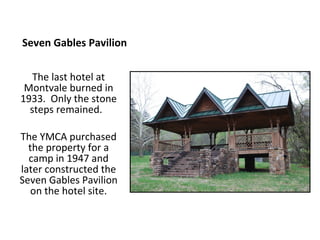
Seven Gables Pavilion

   The last hotel at
 Montvale burned in
1933. Only the stone
  steps remained.

The YMCA purchased
  the property for a
  camp in 1947 and
later constructed the
Seven Gables Pavilion
   on the hotel site.
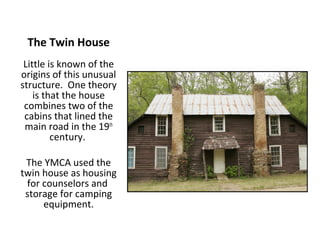
The Twin House
 Little is known of the
origins of this unusual
structure. One theory
    is that the house
 combines two of the
 cabins that lined the
 main road in the 19th
         century.

 The YMCA used the
twin house as housing
 for counselors and
 storage for camping
     equipment.
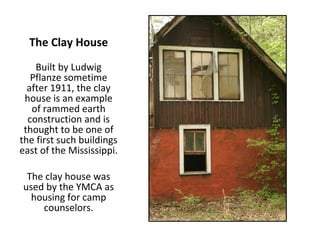
The Clay House
    Built by Ludwig
   Pflanze sometime
  after 1911, the clay
 house is an example
   of rammed earth
  construction and is
 thought to be one of
the first such buildings
east of the Mississippi.

 The clay house was
used by the YMCA as
  housing for camp
    counselors.
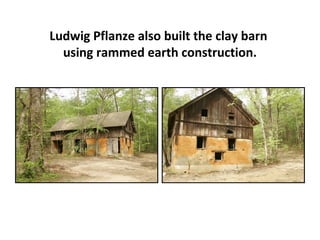
Ludwig Pflanze also built the clay barn
  using rammed earth construction.
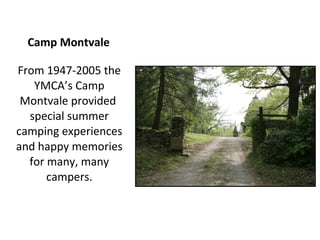
Camp Montvale

From 1947-2005 the
   YMCA’s Camp
 Montvale provided
  special summer
camping experiences
and happy memories
  for many, many
      campers.
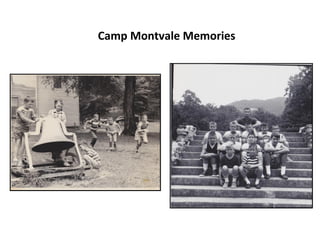
Camp Montvale Memories
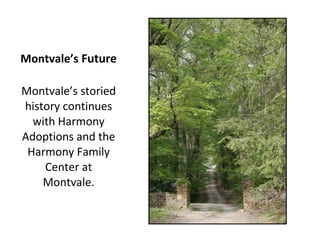
Montvale’s Future

Montvale’s storied
history continues
  with Harmony
Adoptions and the
 Harmony Family
    Center at
    Montvale.
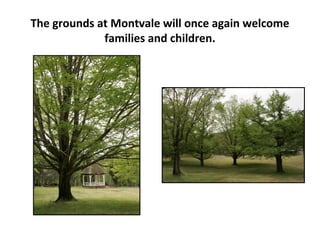
The grounds at Montvale will once again welcome
             families and children.
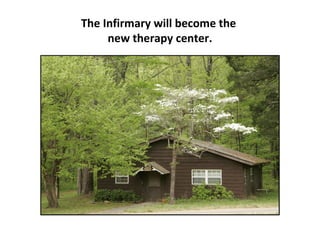
The Infirmary will become the
     new therapy center.
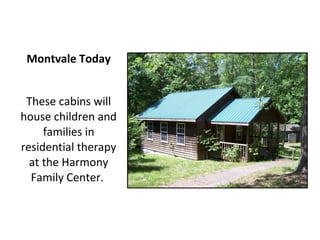
Montvale Today


 These cabins will
house children and
     families in
residential therapy
  at the Harmony
  Family Center.
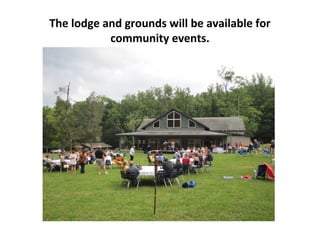
The lodge and grounds will be available for
           community events.
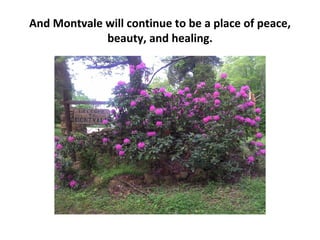
And Montvale will continue to be a place of peace,
             beauty, and healing.

Montvale History

  • 1.
  • 2.
    Foute Hotel Thefirst hotel at Montvale was a 10-room log cabin built in 1832 by Daniel Foute.
  • 3.
    Montvale Trails Foute bought 6,300 acres of mountain land along the Chilhowee and into Cades Cove. He used Cherokee Indians to lay out trails and build roads over Chilhowee Mountain, to Cades Cove, Gregory’s Bald, and Abrams Creek.
  • 4.
    Spring Houses There wereseveral springs on the Montvale Springs Hotel property – a black sulphur spring three miles from the hotel and two springs nearby provided mineral waters. Calvin M. McClung Historical Collection
  • 5.
    Seven Gables Hotel Asa Watson replaced the log hotel with this 125 room hotel that could accommodate 300-400 guests.
  • 6.
    Montvale Springs Hotel By the 1860’s the 125-room Seven Gables Hotel had become known as the Saratoga of The South.
  • 7.
    Historic Trees Rare Ginkgo trees planted in the 1860’s by Asa Watson, survive today. 1920’s photos from Knox County Library’s Calvin M. McClung Historical Collection
  • 8.
    Montvale Cedars Today Cedar treesplanted in the 1800’s line the old Montvale road as shown in this 1920’s photo. Calvin M. McClung Historical Collection
  • 9.
    The Bandstand In the 19th century guests were entertained by band concerts, dances, and musical entertainment. Calvin M. McClung Historical Collection
  • 10.
    The Third Montvale Springs Hotel When the original hotel burned in 1896, it was replaced in 1901 with this 5-gable hotel that could accommodate 100 guests.
  • 11.
    1920’s Montvale Rear view of the building that replaced The Seven Gables Hotel – still guests came to escape summer heat and to take the waters. Calvin M. McClung Historical Collection
  • 12.
    Montvale’s Springs Montvalespring water was praised by Dr. John Moorman as valuable in the treatment of maladies ranging from anemia to dyspepsia, dropsy, paralysis and nervous afflictions. Calvin M. McClung Historical Collection
  • 13.
    Healing Waters The mineralwaters were r i c h i n i r o n a n d s u l
  • 14.
    Mountain Views Theview from the hotel’s 200- foot porch toward Chilhowee Mountain and the Smokies attracted guests through the 1920’s and 1930’s. Calvin M. McClung Historical Collection
  • 15.
    Pflanze Family LudwigPflaze of Maryville purchased Montvale in 1911. The family lived in this house and operated the hotel until it burned in 1933. Calvin M. McClung Historical Collection
  • 16.
    Montvale Hotel Kitchens The hotel was known for its excellent food – especially its homemade bread and chicken pie. Roxie Thompson recalled her first job at Montvale was to kill 25 chickens for dinner. Meals were cooked on wood stoves and fireplaces heated the hotel. Calvin M. McClung Historical Collection
  • 17.
    Seven Gables Pavilion The last hotel at Montvale burned in 1933. Only the stone steps remained. The YMCA purchased the property for a camp in 1947 and later constructed the Seven Gables Pavilion on the hotel site.
  • 18.
    The Twin House Little is known of the origins of this unusual structure. One theory is that the house combines two of the cabins that lined the main road in the 19th century. The YMCA used the twin house as housing for counselors and storage for camping equipment.
  • 19.
    The Clay House Built by Ludwig Pflanze sometime after 1911, the clay house is an example of rammed earth construction and is thought to be one of the first such buildings east of the Mississippi. The clay house was used by the YMCA as housing for camp counselors.
  • 20.
    Ludwig Pflanze alsobuilt the clay barn using rammed earth construction.
  • 21.
    Camp Montvale From 1947-2005the YMCA’s Camp Montvale provided special summer camping experiences and happy memories for many, many campers.
  • 22.
  • 23.
    Montvale’s Future Montvale’s storied historycontinues with Harmony Adoptions and the Harmony Family Center at Montvale.
  • 24.
    The grounds atMontvale will once again welcome families and children.
  • 25.
    The Infirmary willbecome the new therapy center.
  • 26.
    Montvale Today Thesecabins will house children and families in residential therapy at the Harmony Family Center.
  • 27.
    The lodge andgrounds will be available for community events.
  • 28.
    And Montvale willcontinue to be a place of peace, beauty, and healing.