Module 2
Language Diversity in the
Classroom
Multilingualism- Meaning, Nature, and
Scope
The ability of an individual speaker or a community of
speakers to use multiple languages
Multilingualism in education refers to the practice of
using multiple languages as mediums of instruction or as
subjects of study within the educational system.
It involves recognizing, valuing, and utilizing the
linguistic diversity present in a given society.
• ensure flexibility in classroom activities
• enhance student motivation
• build self-esteem
• prepare for global citizenship
•Bridge differences among students
•Make the expertise of teachers available to the
diversified student community
• Deepen understanding
Deficit theory (Eller 1989)
• suggested that working-class children have an
inadequate command of grammar and vocabulary to
express complex ideas.
• It explains why students fail in using language. They
have: Poor linguistic ability, weak vocabulary
foundation, limited range of grammatical
constructions; inadequate communicative ability with
persons from a different language background, lack of
coherence in their presentations. As a result, students
experience psychological problems and feel
incompetent in class.
Discontinuity theory
• suggests that there might be a fundamental
difference between first language (L1) and
second language (L2) acquisition.
• This theory proposes that the mechanisms or
processes involved in acquiring a first
language differ significantly from those
involved in learning a second language,
leading to a perceived gap or discontinuity
between the two.
Sociocultural Variants with special
focus to Dialect and Register
Dialect
• a particular form of a language which is peculiar to a
specific region or social group
• A dialect is distinguished by its vocabulary, grammar, and
pronunciation
• a regional variety of language distinguished by features of
vocabulary, grammar, and pronunciation from other
regional varieties and constituting together with them a
single language
• a form of a language spoken in a particular geographical
area or by members of a particular social class or
occupational group, distinguished by its vocabulary,
grammar, and pronunciation.
• Malayali English,Maharashtrian English, Punjabi
English, Bengali English, Hindi English
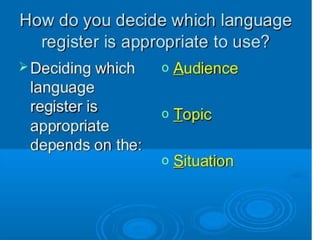
Register
• Register often refers to the degree of formality of
language,but in a more general sense it means the
language used by a group of people who share
similar work or interests, such as doctors or
lawyers.
• A register is one of the many styles or varieties
of language determined by such factors social
occasion, purpose, and audience.
Understanding the Language
background of the students
First and Second language Learners
Home language Vs. School language
Power dynamics
• The superiority of the target language
or the language followed in schools
must not be overpowered by the home
language of the student.
• The home language can however be
used by teachers as a stepping stone to
raise the thinking ability of the child
and to make quick associations.
• Dialectal differences-language varieties
of different regions- must not be
overlooked.
Language used in teaching the subject
- issues and Challenges

Module 2.pptx

  • 1.
  • 2.
    Multilingualism- Meaning, Nature,and Scope The ability of an individual speaker or a community of speakers to use multiple languages Multilingualism in education refers to the practice of using multiple languages as mediums of instruction or as subjects of study within the educational system. It involves recognizing, valuing, and utilizing the linguistic diversity present in a given society.
  • 3.
    • ensure flexibilityin classroom activities • enhance student motivation • build self-esteem • prepare for global citizenship •Bridge differences among students •Make the expertise of teachers available to the diversified student community • Deepen understanding
  • 4.
    Deficit theory (Eller1989) • suggested that working-class children have an inadequate command of grammar and vocabulary to express complex ideas. • It explains why students fail in using language. They have: Poor linguistic ability, weak vocabulary foundation, limited range of grammatical constructions; inadequate communicative ability with persons from a different language background, lack of coherence in their presentations. As a result, students experience psychological problems and feel incompetent in class.
  • 5.
    Discontinuity theory • suggeststhat there might be a fundamental difference between first language (L1) and second language (L2) acquisition. • This theory proposes that the mechanisms or processes involved in acquiring a first language differ significantly from those involved in learning a second language, leading to a perceived gap or discontinuity between the two.
  • 6.
    Sociocultural Variants withspecial focus to Dialect and Register
  • 7.
    Dialect • a particularform of a language which is peculiar to a specific region or social group • A dialect is distinguished by its vocabulary, grammar, and pronunciation • a regional variety of language distinguished by features of vocabulary, grammar, and pronunciation from other regional varieties and constituting together with them a single language • a form of a language spoken in a particular geographical area or by members of a particular social class or occupational group, distinguished by its vocabulary, grammar, and pronunciation. • Malayali English,Maharashtrian English, Punjabi English, Bengali English, Hindi English
  • 8.
    Register • Register oftenrefers to the degree of formality of language,but in a more general sense it means the language used by a group of people who share similar work or interests, such as doctors or lawyers. • A register is one of the many styles or varieties of language determined by such factors social occasion, purpose, and audience.
  • 10.
  • 11.
    First and Secondlanguage Learners
  • 12.
    Home language Vs.School language
  • 13.
    Power dynamics • Thesuperiority of the target language or the language followed in schools must not be overpowered by the home language of the student. • The home language can however be used by teachers as a stepping stone to raise the thinking ability of the child and to make quick associations. • Dialectal differences-language varieties of different regions- must not be overlooked.
  • 14.
    Language used inteaching the subject - issues and Challenges