Module 11: ReportWriting
for DOSH CHRA
Clear, Compliant, and Impactful Risk Assessment Reports
2.
Why Effective CHRAReports
Matter
Legal Compliance
Mandatory under USECHH
Regulations 2000 to avoid
penalties, legal action, and
potential workplace shutdowns
Worker Protection
Protects employee health by
systematically identifying and
controlling chemical hazards
before incidents occur
Operational Excellence
Drives safer workplaces and operational efficiency through informed
decisions and evidence-based actions
3.
Core Elements toInclude in Your CHRA Report
1 Chemical Hazard Identification
Reference Safety Data Sheets (SDS) and catalog all chemicals used in the
workplace
2 Exposure Risk Assessment
Evaluate routes of exposure, frequency of contact, and intensity levels for each
chemical
3 Control Measure Analysis
Document existing control measures and objectively evaluate their effectiveness
4 Action Plans
Recommend specific improvements with clear timelines and responsible parties
4.
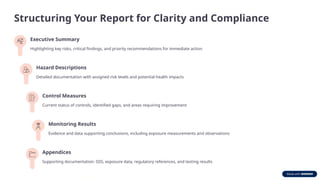
Structuring Your Reportfor Clarity and Compliance
Executive Summary
Highlighting key risks, critical findings, and priority recommendations for immediate action
Hazard Descriptions
Detailed documentation with assigned risk levels and potential health impacts
Control Measures
Current status of controls, identified gaps, and areas requiring improvement
Monitoring Results
Evidence and data supporting conclusions, including exposure measurements and observations
Appendices
Supporting documentation: SDS, exposure data, regulatory references, and testing results
5.
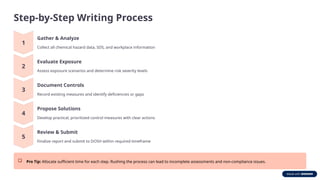
Step-by-Step Writing Process
Gather& Analyze
Collect all chemical hazard data, SDS, and workplace information
Evaluate Exposure
Assess exposure scenarios and determine risk severity levels
Document Controls
Record existing measures and identify deficiencies or gaps
Propose Solutions
Develop practical, prioritized control measures with clear actions
Review & Submit
Finalize report and submit to DOSH within required timeframe
Pro Tip: Allocate sufficient time for each step. Rushing the process can lead to incomplete assessments and non-compliance issues.
6.
Communicating Findings toManagement
Strategies for Executive Buy-In
• Present clear, actionable summaries tailored specifically to decision-makers
• Use compelling visuals: risk matrices, exposure level charts, and
implementation timelines
• Highlight cost-benefit analysis of recommended controls for budget approval
• Engage management early in the process to secure support and necessary
resources
7.
Engaging Workers andSafety
Committees
Accessible Communication
Share key findings in plain language during safety meetings, avoiding overly technical jargon
that may confuse frontline workers
Collaborative Planning
Involve safety committees actively in action planning, implementation strategies, and follow-
up monitoring activities
Living Document
Use the report as a dynamic tool for ongoing training, awareness campaigns, and safety
briefings
Culture Building
Foster a culture of continuous improvement, transparency, and proactive compliance
throughout the organization
8.
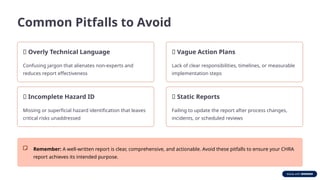
Common Pitfalls toAvoid
❌ Overly Technical Language
Confusing jargon that alienates non-experts and
reduces report effectiveness
❌ Incomplete Hazard ID
Missing or superficial hazard identification that leaves
critical risks unaddressed
❌ Vague Action Plans
Lack of clear responsibilities, timelines, or measurable
implementation steps
❌ Static Reports
Failing to update the report after process changes,
incidents, or scheduled reviews
Remember: A well-written report is clear, comprehensive, and actionable. Avoid these pitfalls to ensure your CHRA
report achieves its intended purpose.
9.
Best Practices fromDOSH-Registered Assessors
Standardized Templates
Use templates aligned with DOSH guidelines to ensure consistency and
completeness across all assessments
Timely Submission
Submit reports within 30 days of assessment completion to maintain
regulatory compliance
Digital Records
Maintain secure digital copies for easy reference, sharing, and audit
preparedness
Regular Updates
Review and update reports every 5 years or immediately after significant
process changes
10.
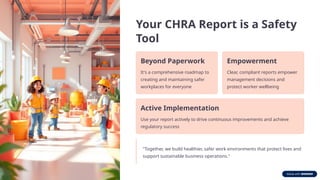
Your CHRA Reportis a Safety
Tool
Beyond Paperwork
It's a comprehensive roadmap to
creating and maintaining safer
workplaces for everyone
Empowerment
Clear, compliant reports empower
management decisions and
protect worker wellbeing
Active Implementation
Use your report actively to drive continuous improvements and achieve
regulatory success
"Together, we build healthier, safer work environments that protect lives and
support sustainable business operations."