Introduction to
Syllable Types
Introduction to
Syllable Types
Activity:
1. Teach student that there are 6 syllable types, and they can be
used to help them figure out how to pronounce big words.
2. Use the Lesson slides here to introduce the concepts.
o Open & Closed can be taught together.
o Final Stable should be taught separately.
o R-Controlled, VCe, and Vowel Team can be taught
together or separately.
3. Use the syllable word cards as examples.
Introduction to
Syllable Types
fumble nation
napkin
veto
submit enjoy
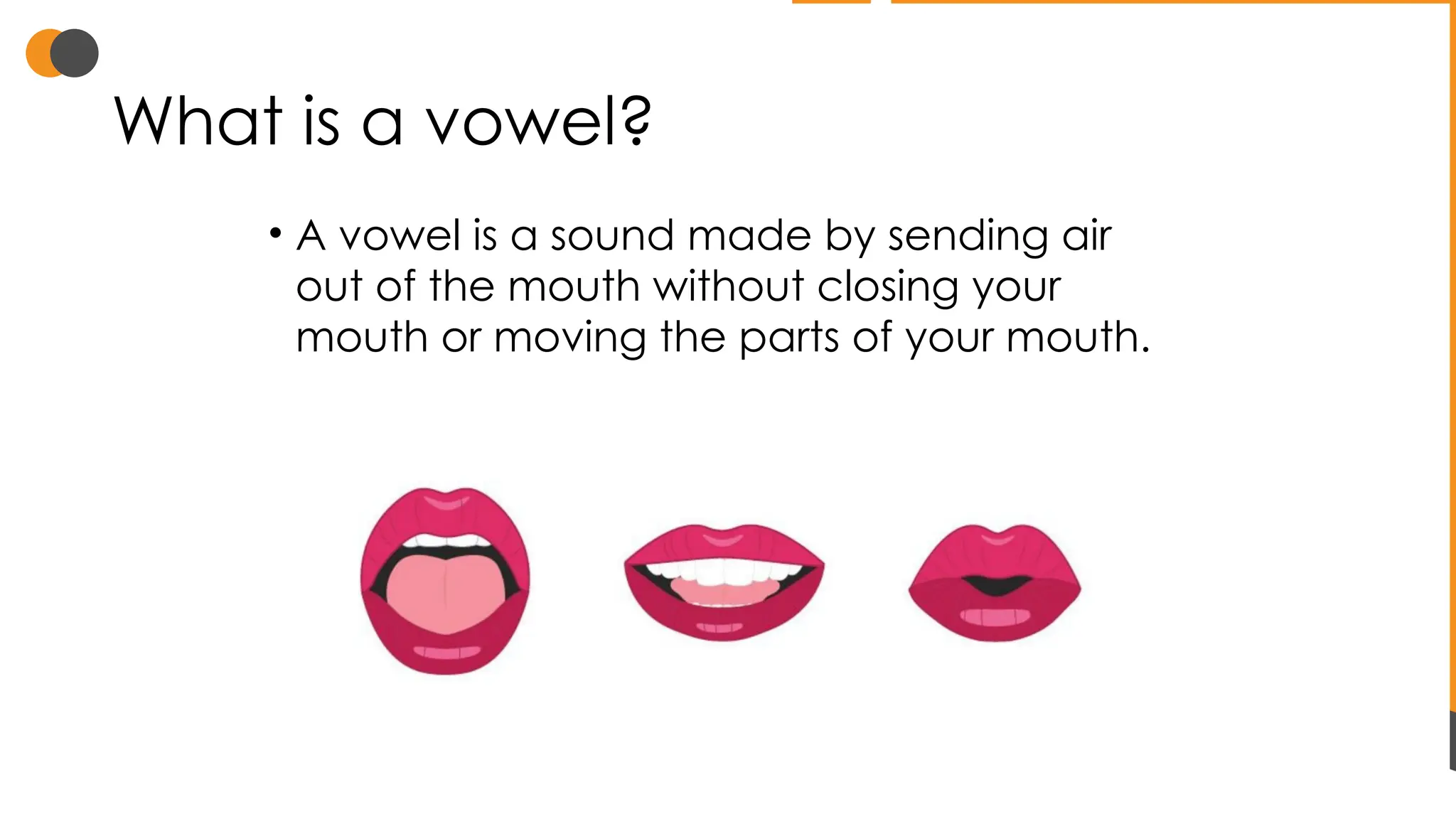
What is a vowel?
• A vowel is a sound made by sending air
out of the mouth without closing your
mouth or moving the parts of your mouth.
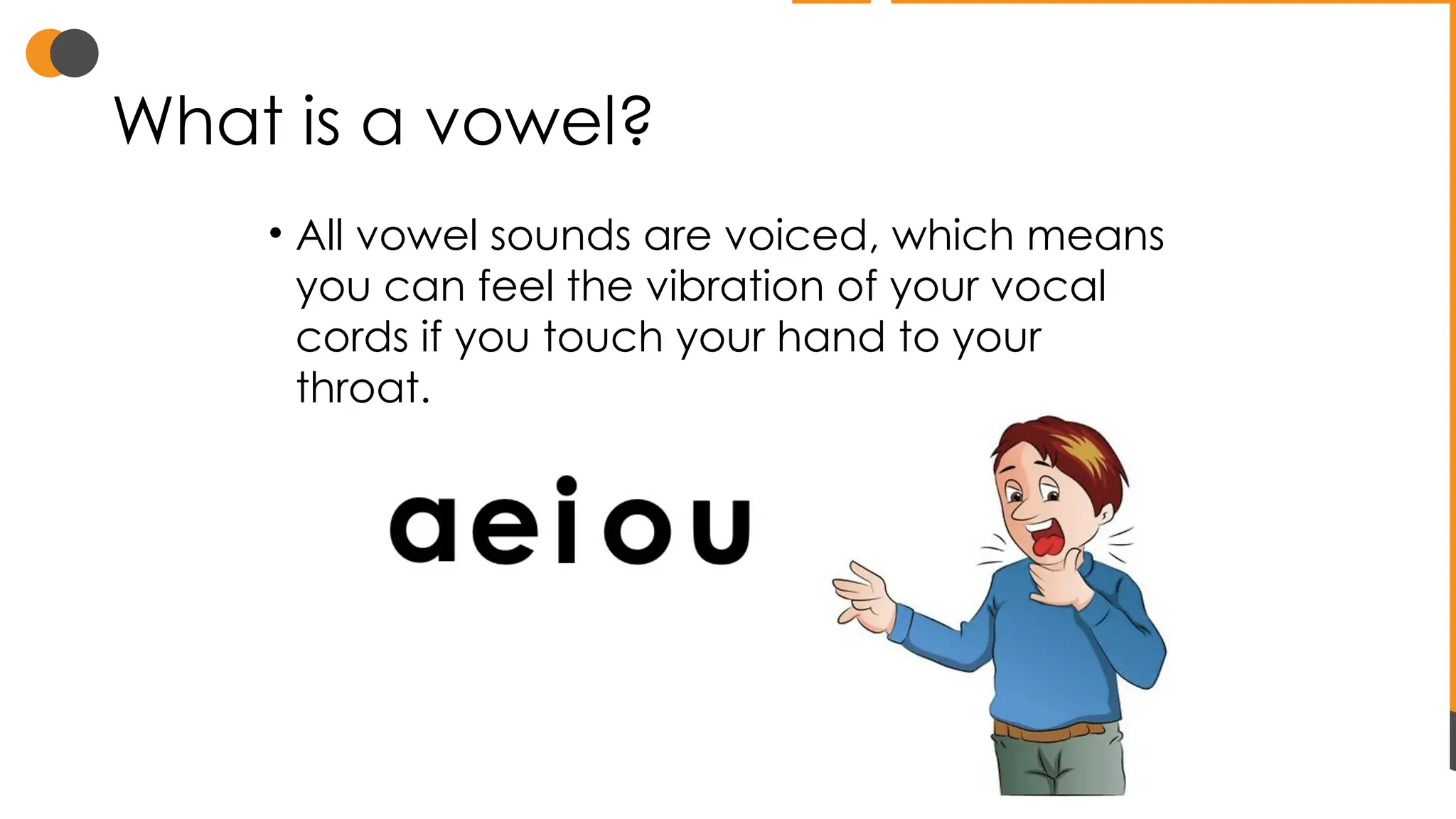
What is a vowel?
• All vowel sounds are voiced, which means
you can feel the vibration of your vocal
cords if you touch your hand to your
throat.
What is a vowel?
• The two main types of vowel sounds are
often called short vowels and long vowels.
• These terms can be confusing because
we can’t hear any difference in the actual
length of the vowel sounds.
• Another name for short vowels is lax.
• Another name for long vowels is tense.
What is a vowel?
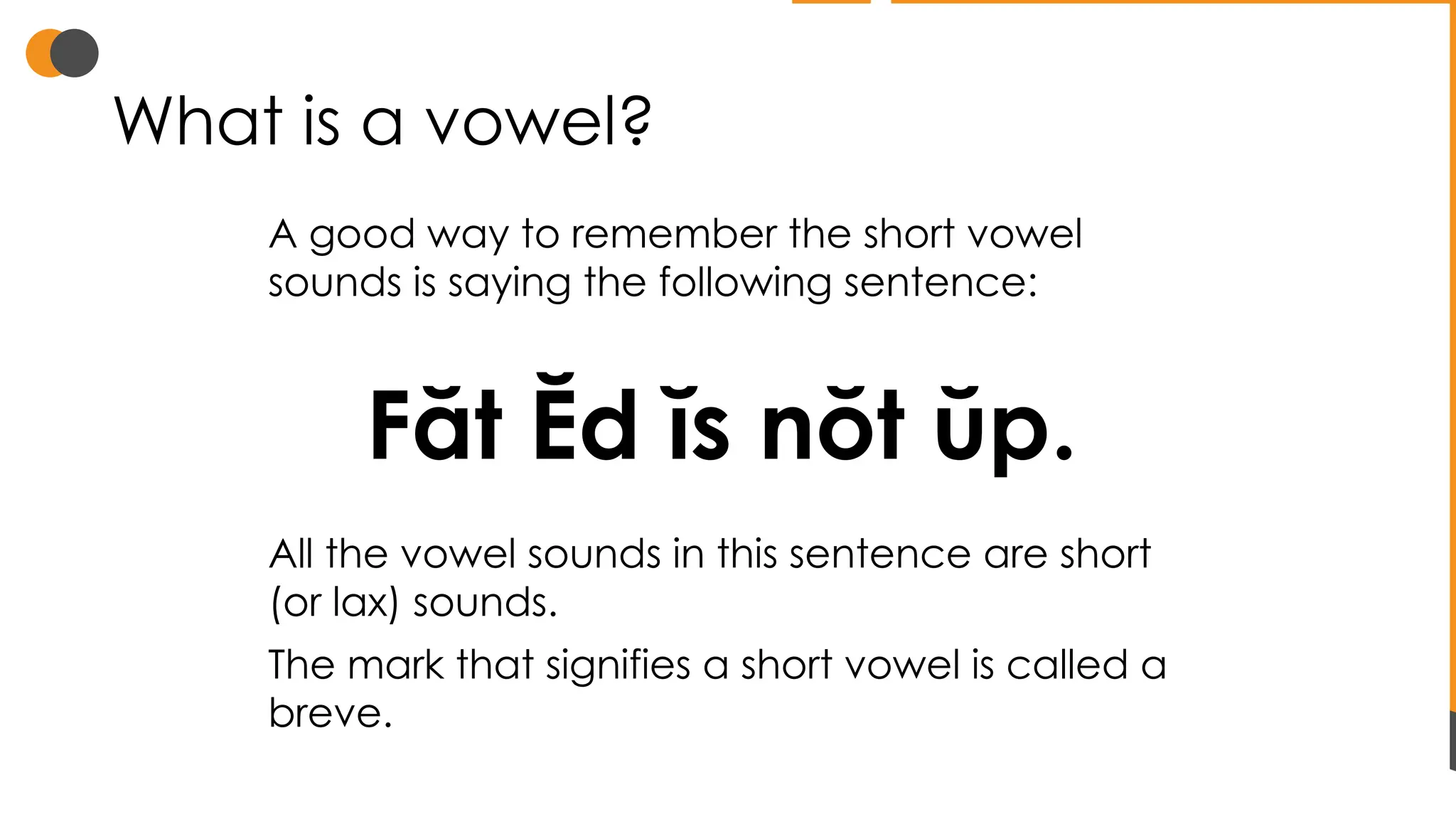
A good way to remember the short vowel
sounds is saying the following sentence:
Făt Ĕd ĭs nŏt ŭp.
All the vowel sounds in this sentence are short
(or lax) sounds.
The mark that signifies a short vowel is called a
breve.
What is a vowel?
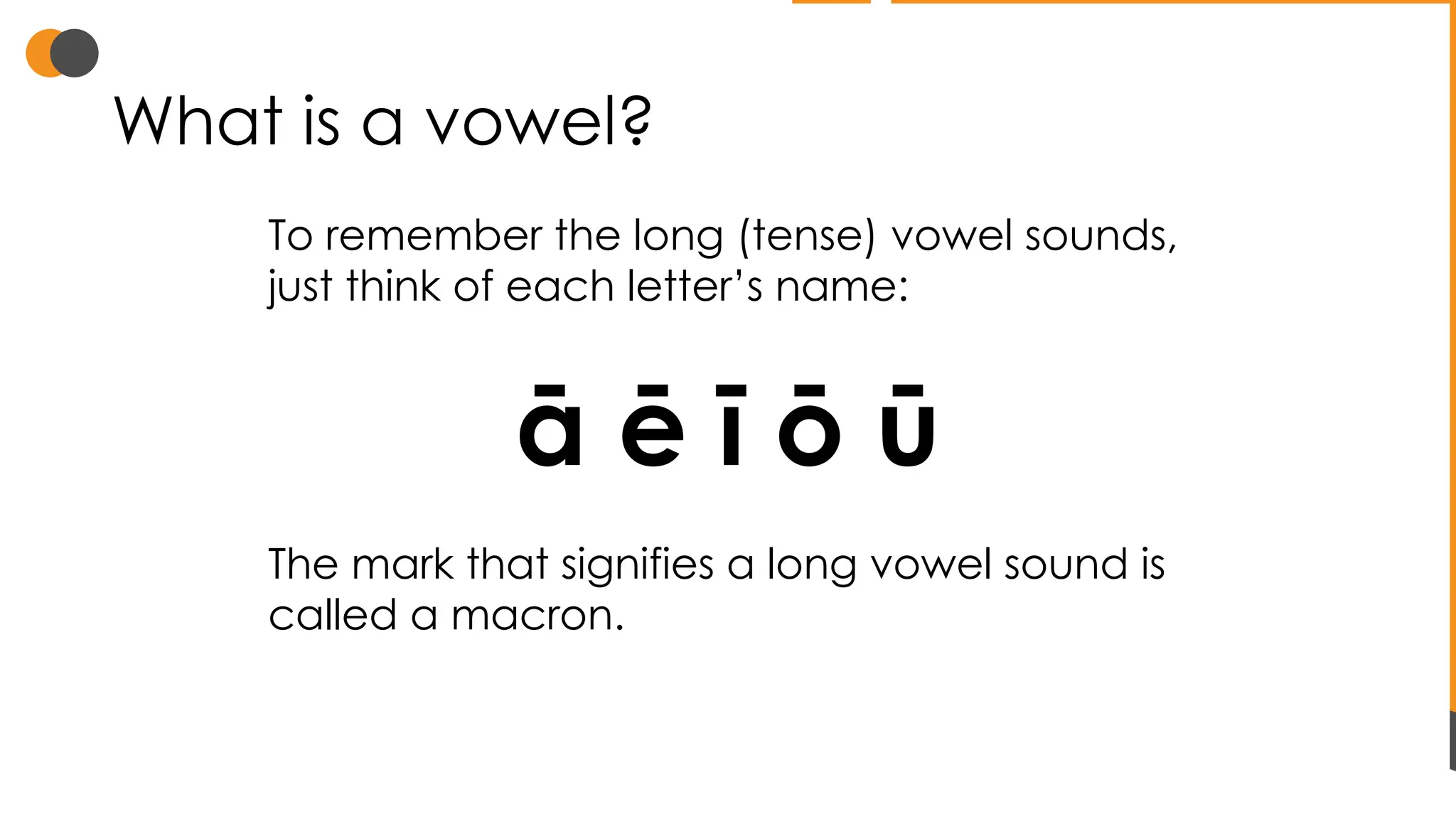
To remember the long (tense) vowel sounds,
just think of each letter’s name:
ā ē ī ō ū
The mark that signifies a long vowel sound is
called a macron.
What is a consonant?
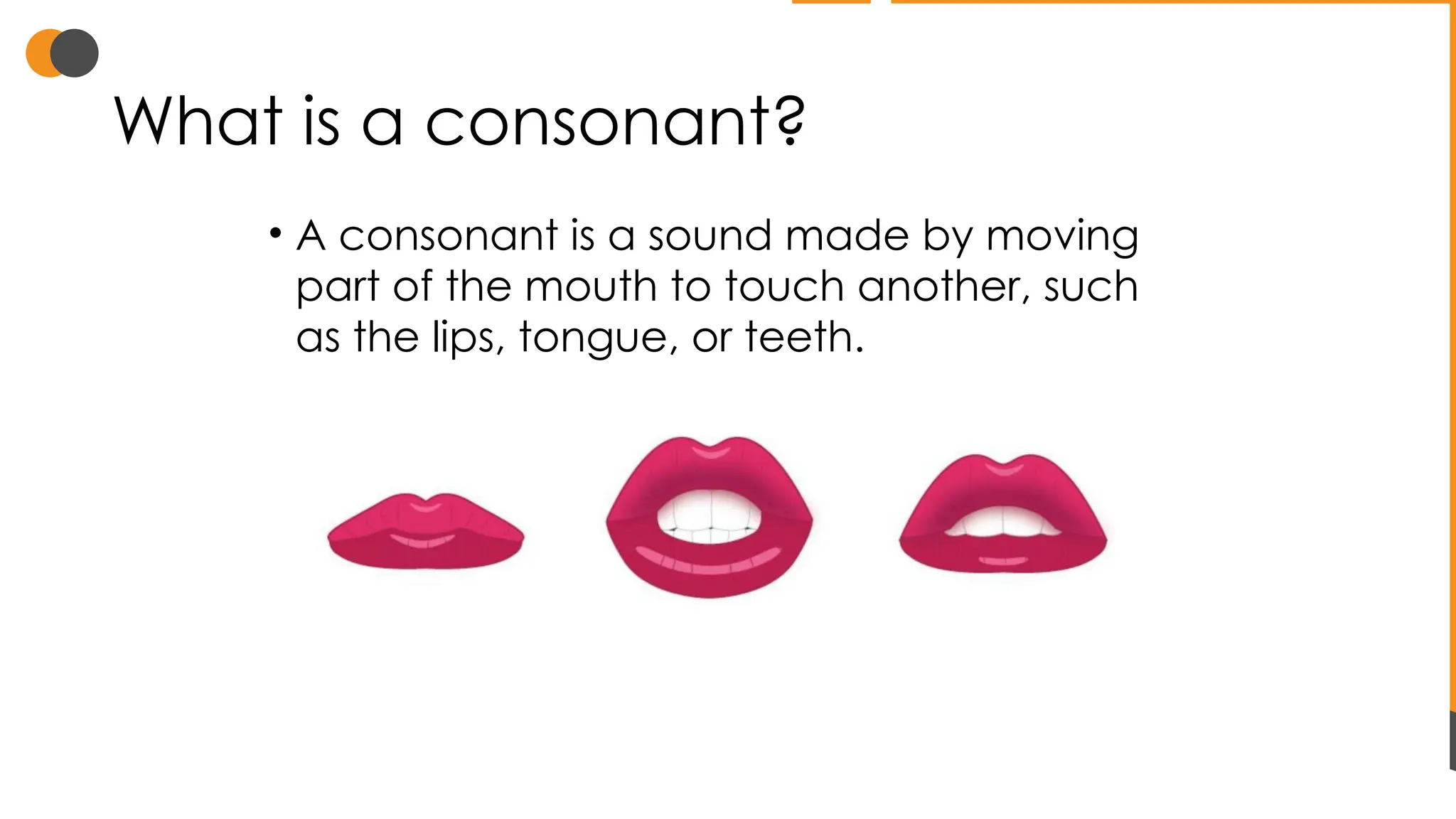
• A consonant is a sound made by moving
part of the mouth to touch another, such
as the lips, tongue, or teeth.
What is a consonant?
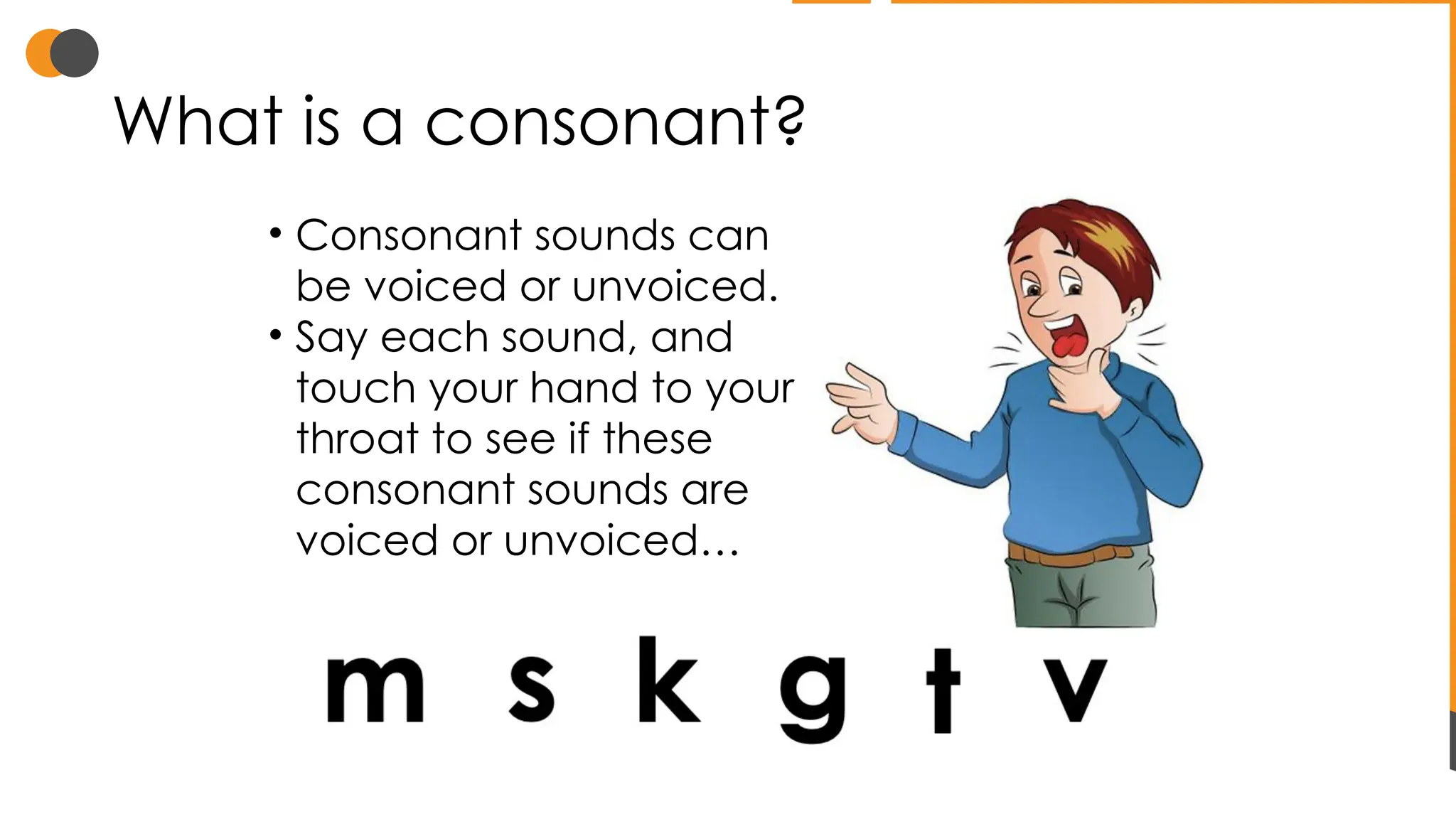
• Consonant sounds can
be voiced or unvoiced.
• Say each sound, and
touch your hand to your
throat to see if these
consonant sounds are
voiced or unvoiced…
What is a syllable?
• A syllable is a word or a part of a word with
one vowel sound.
• A syllable can be pushed out in one
breath. Your chin will usually drop slightly
as you say each syllable in a word.
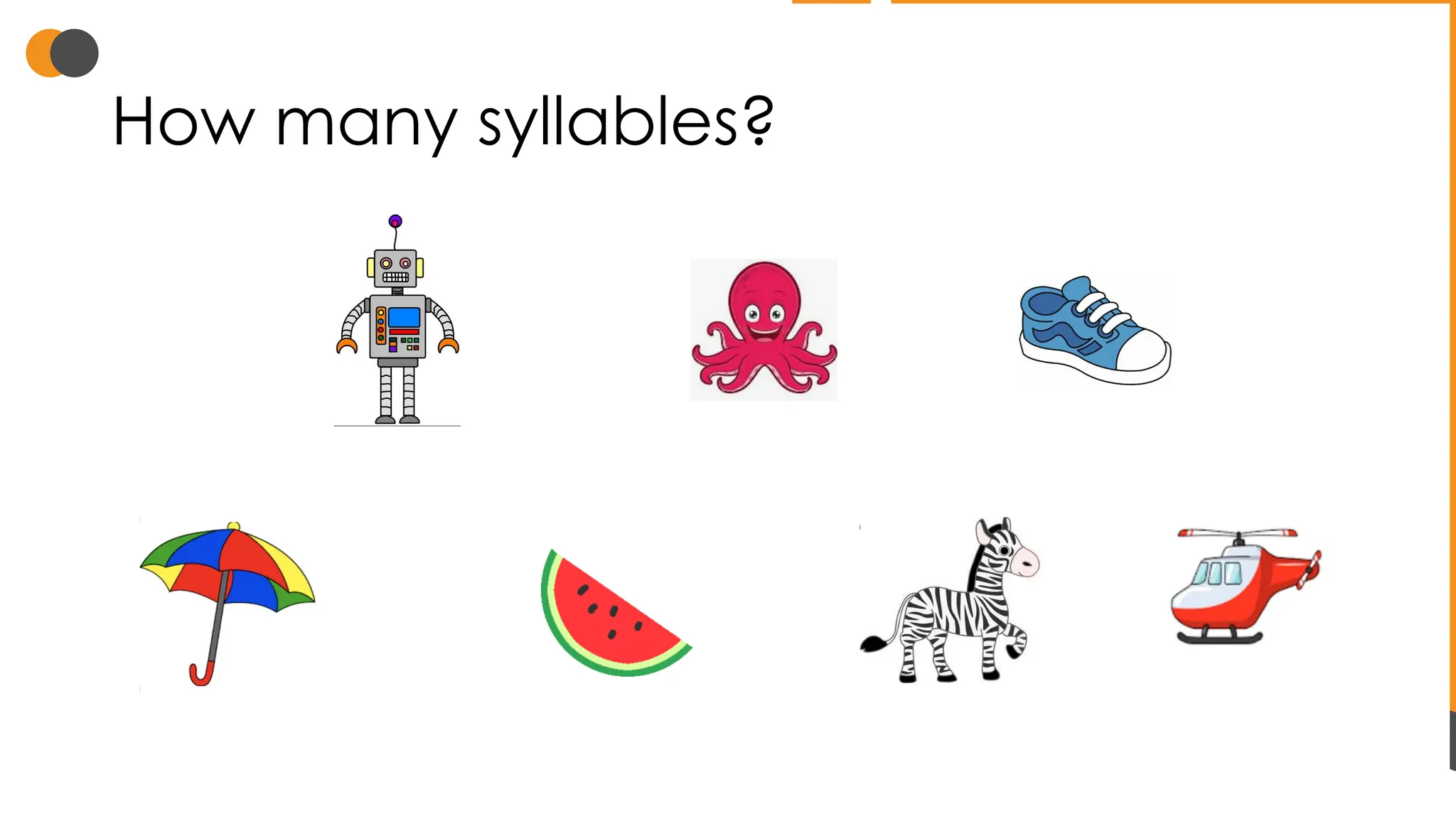
• Say the word for each picture and count
the syllables.
How many syllables?
Closed Syllables
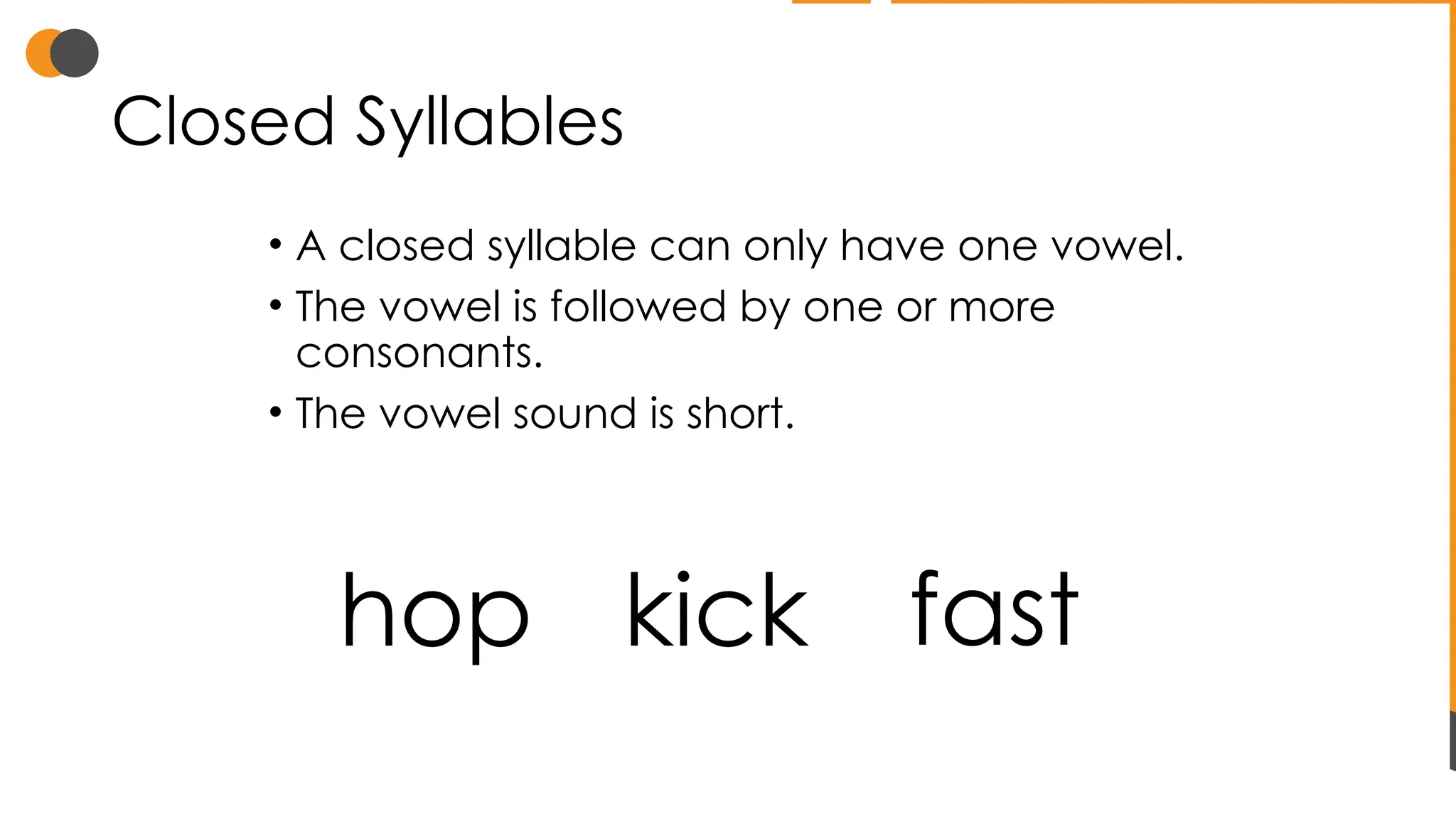
• A closed syllable can only have one vowel.
• The vowel is followed by one or more
consonants.
• The vowel sound is short.
hop kick fast
Open Syllables
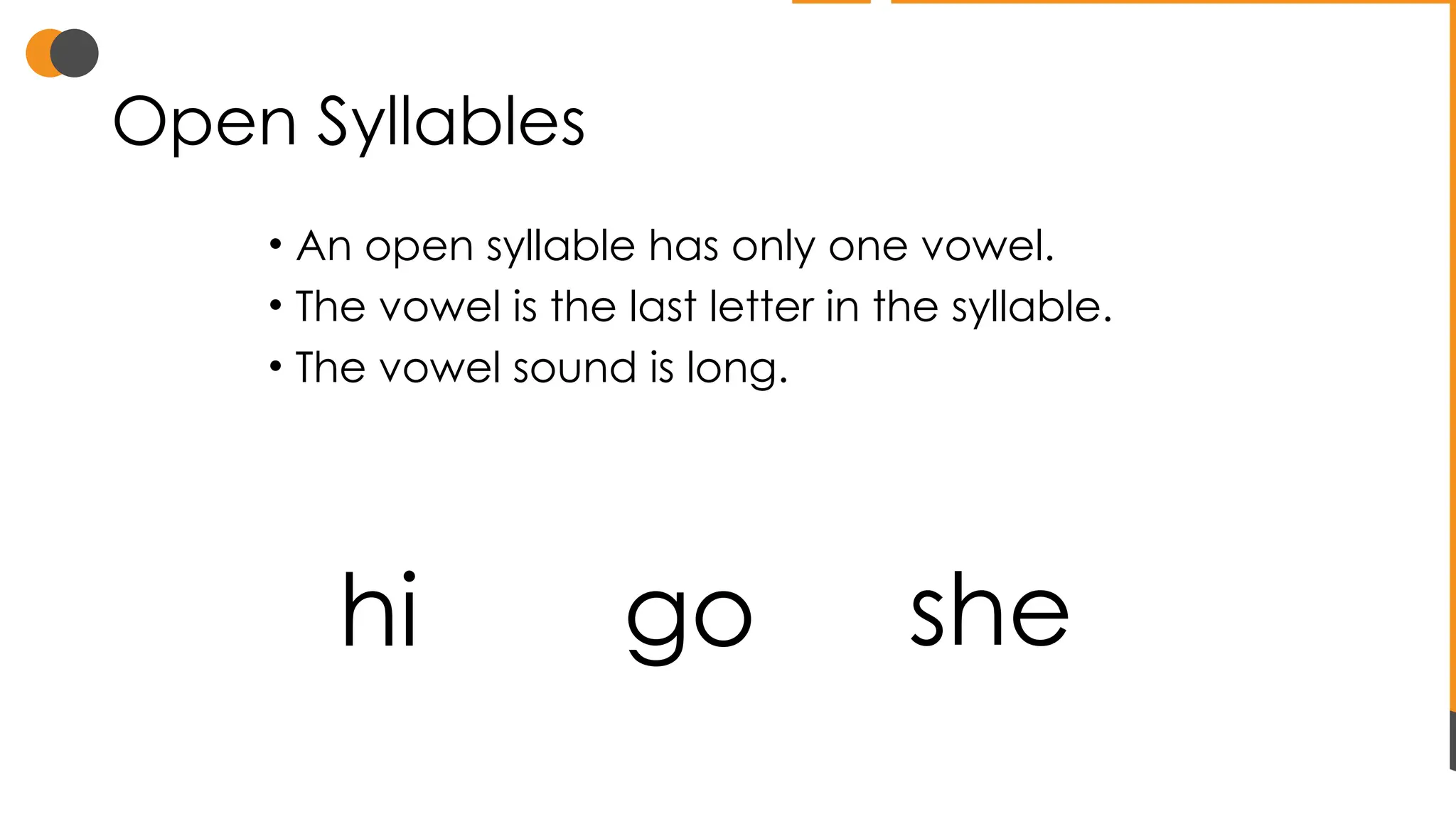
• An open syllable has only one vowel.
• The vowel is the last letter in the syllable.
• The vowel sound is long.
hi go she
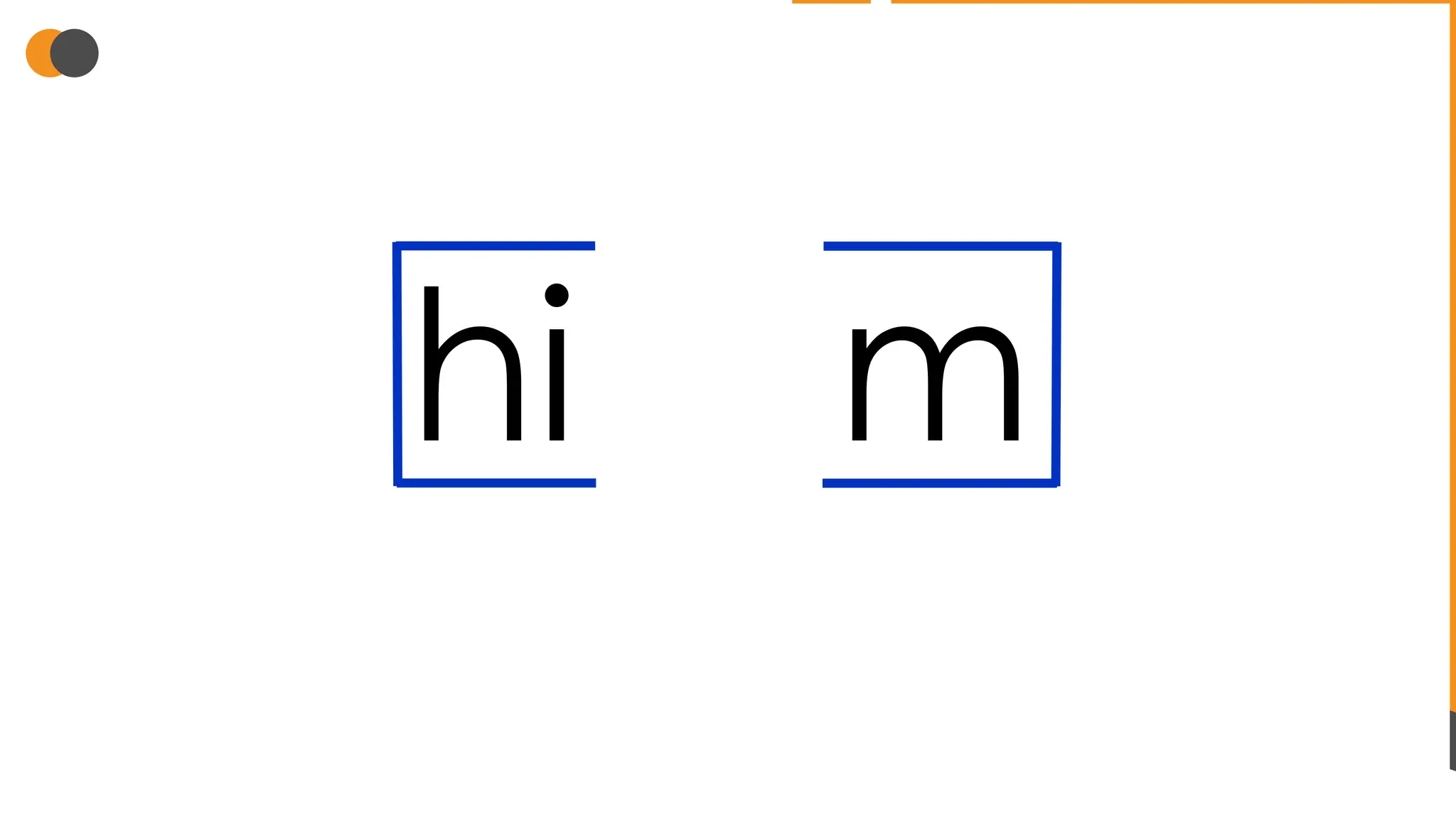
hi m
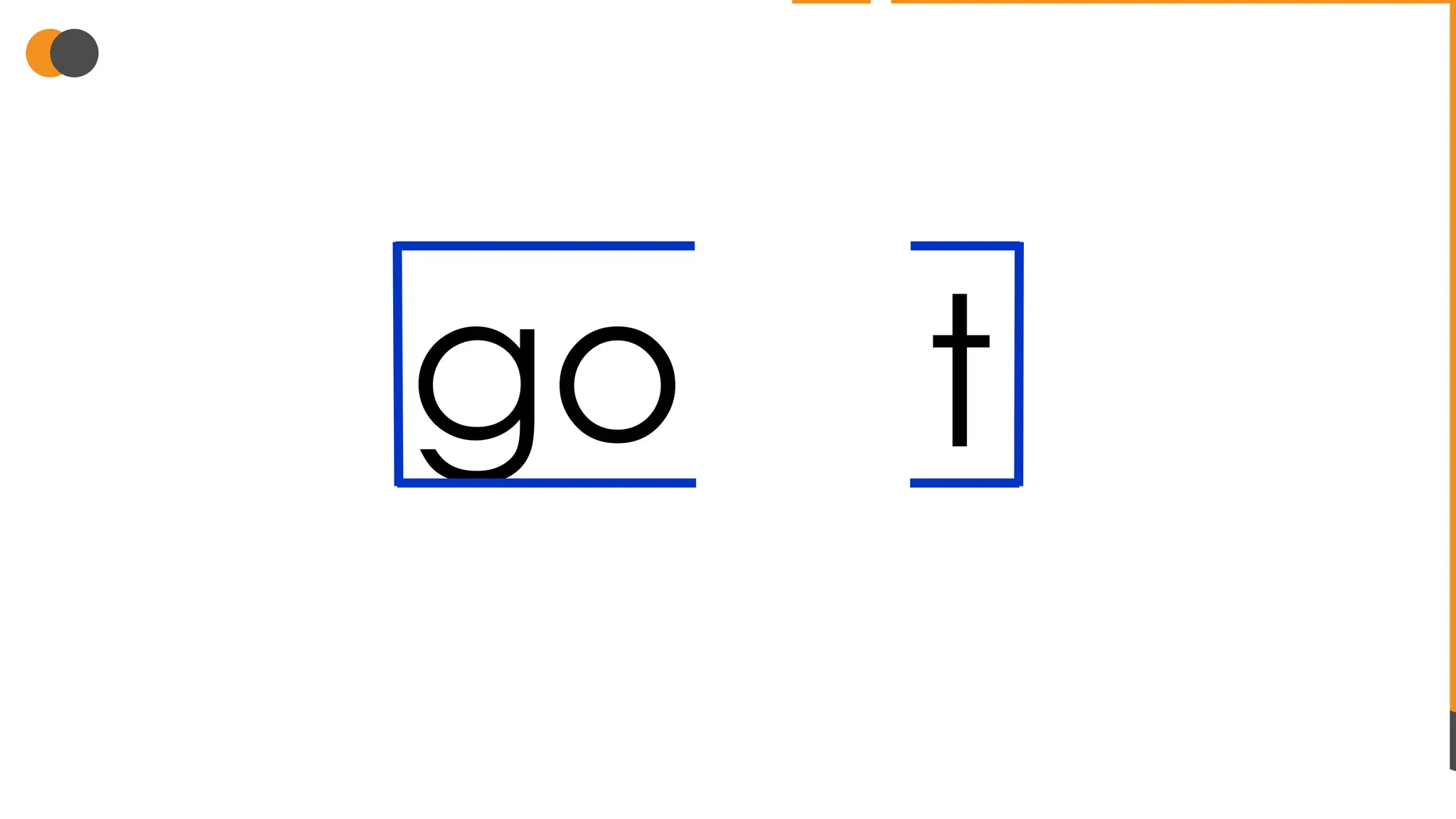
go t
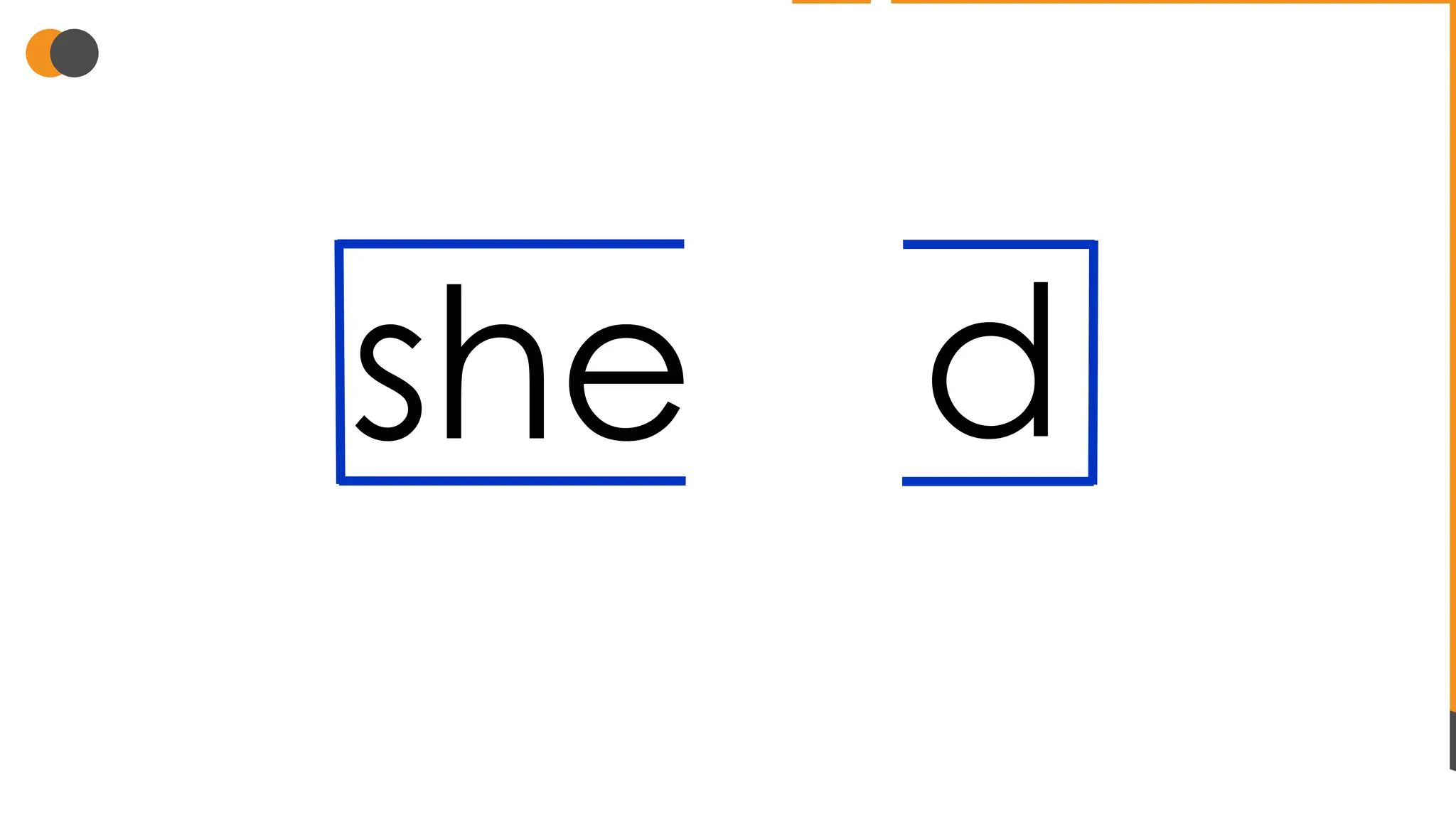
she d
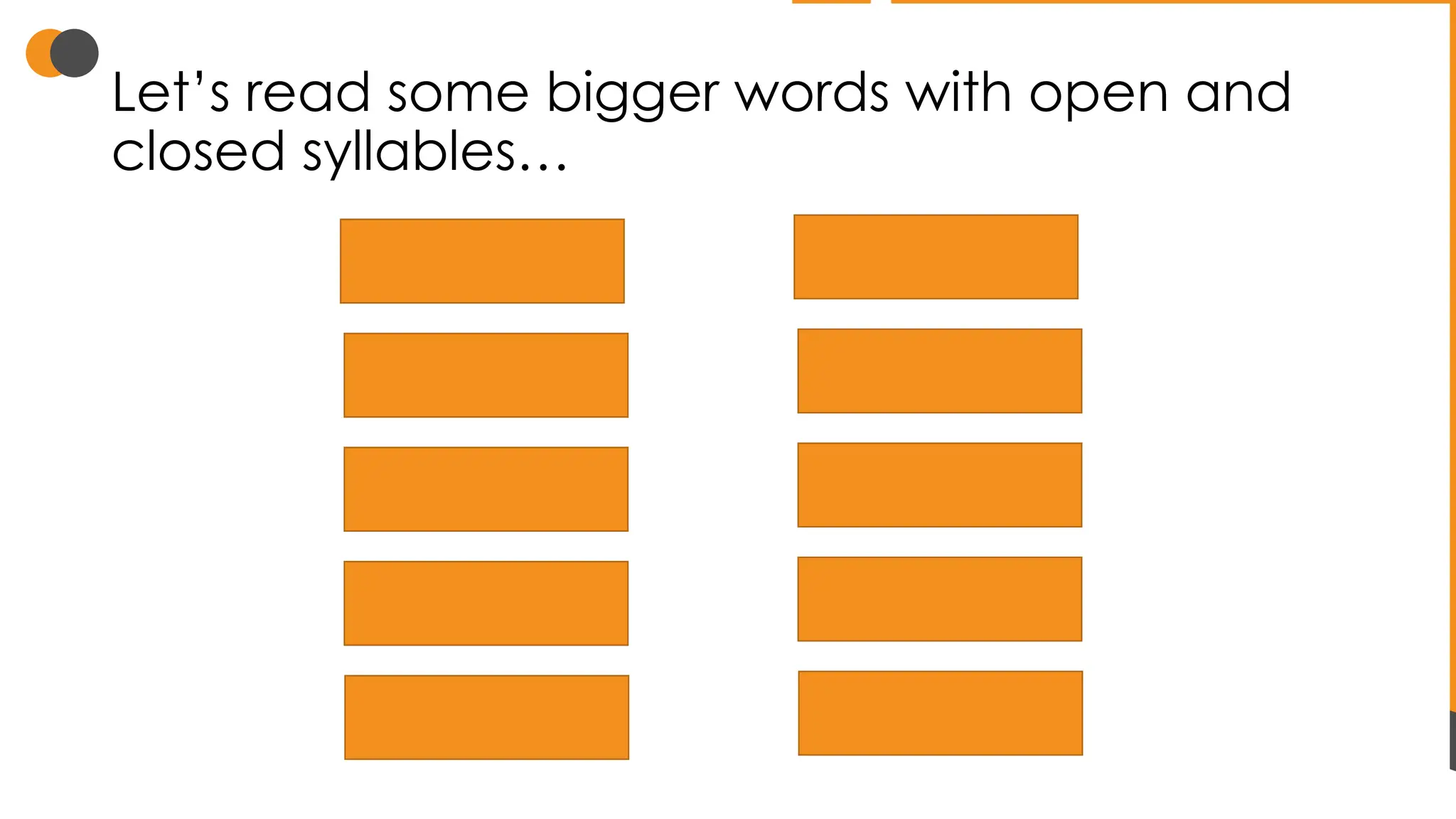
Let’s read some bigger words with open and
closed syllables…
napkin
veto
insect
submit
began
picnic
hotel
bonus
basic contract
Final Stable Syllables
• A final stable syllable is just that…
• Final: It must be the last syllable of a word.
• Stable: It is always pronounced the same way.
Final Stable Syllables
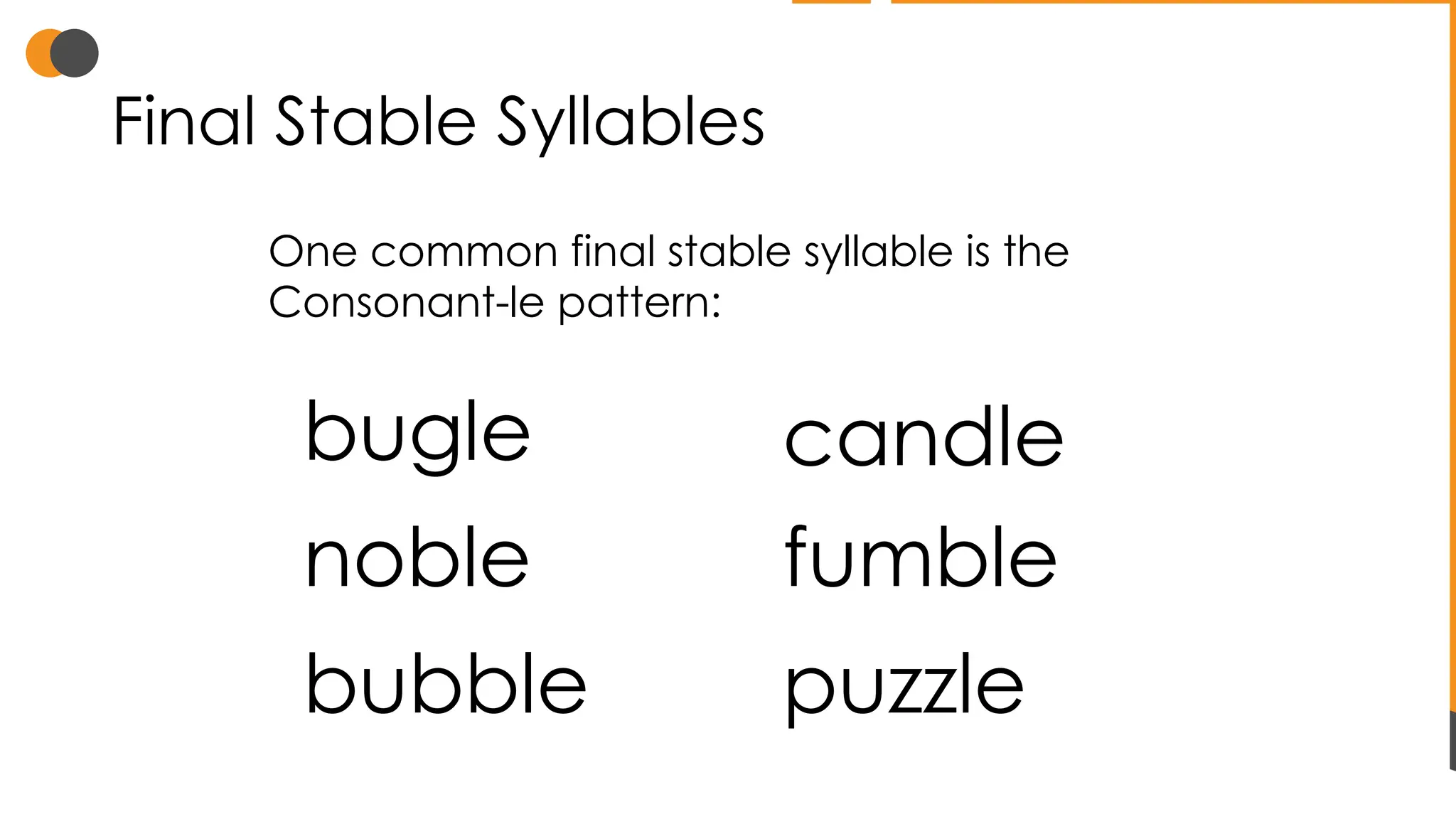
One common final stable syllable is the
Consonant-le pattern:
bugle candle
noble
bubble
fumble
puzzle
Final Stable Syllables
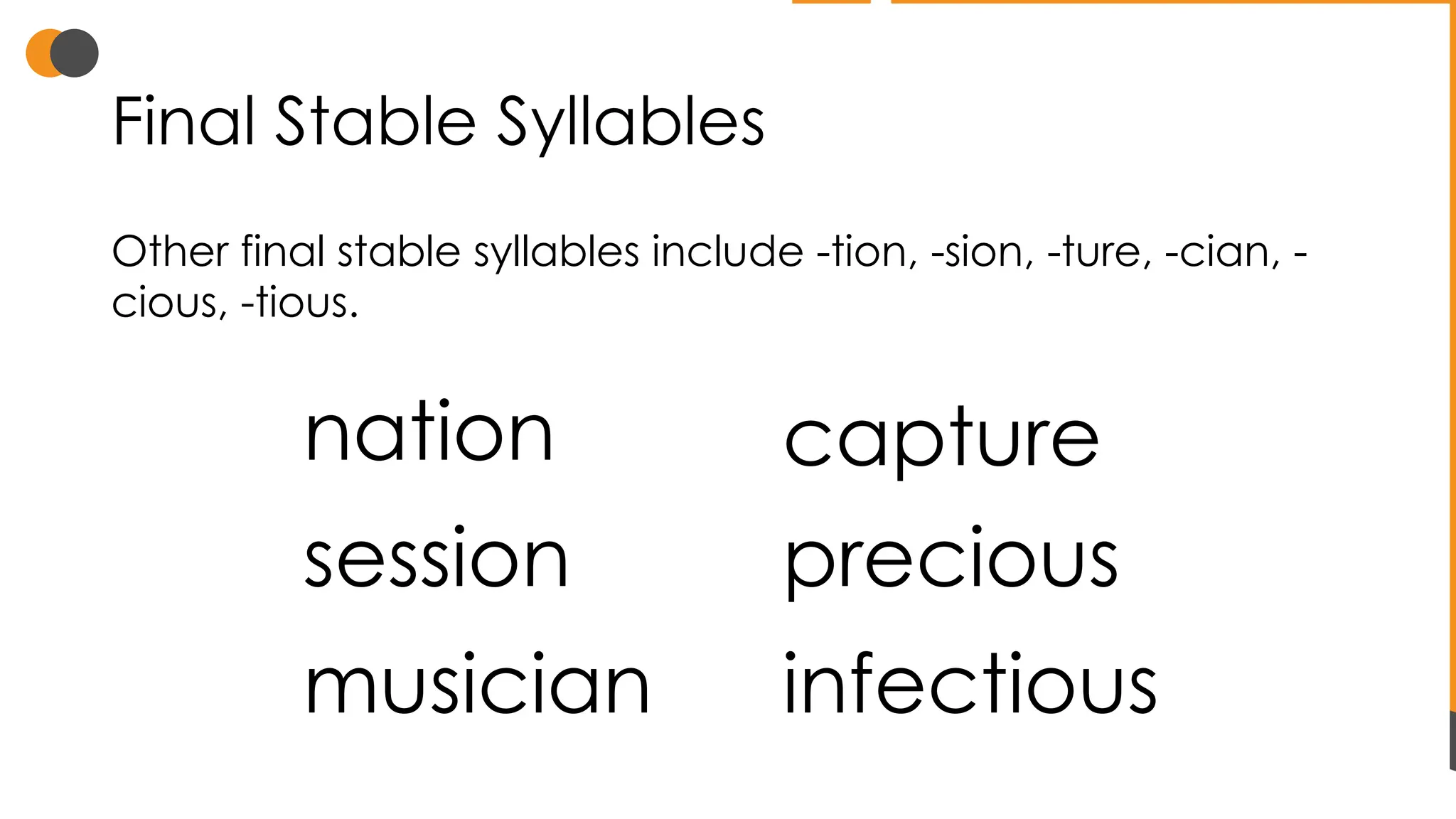
Other final stable syllables include -tion, -sion, -ture, -cian, -
cious, -tious.
nation capture
session
musician
precious
infectious
Other Syllable Types
There are 3 other syllable types:
• R-Controlled
• Vowel-Consonant-e
• Vowel Team
Other Syllable Types
You have already learned how to read little words with
these patterns.
• R-Controlled: fur, stir, corn
• Vowel-Consonant-e: kite, lake, vote
• Vowel Team: read, sheep, float
Other Syllable Types
If you see one of these patterns as a syllable
in a big word, the same rules usually apply.
• R-Controlled: marker, fortune, burden
• Vowel-Consonant-e: reptile, mistake
• Vowel Team: maintain, steamboat, power
R-Controlled Syllables
• Has one vowel followed by an r.
• The vowel is not long or short.
• The vowel is controlled by the r.
fur horn starter
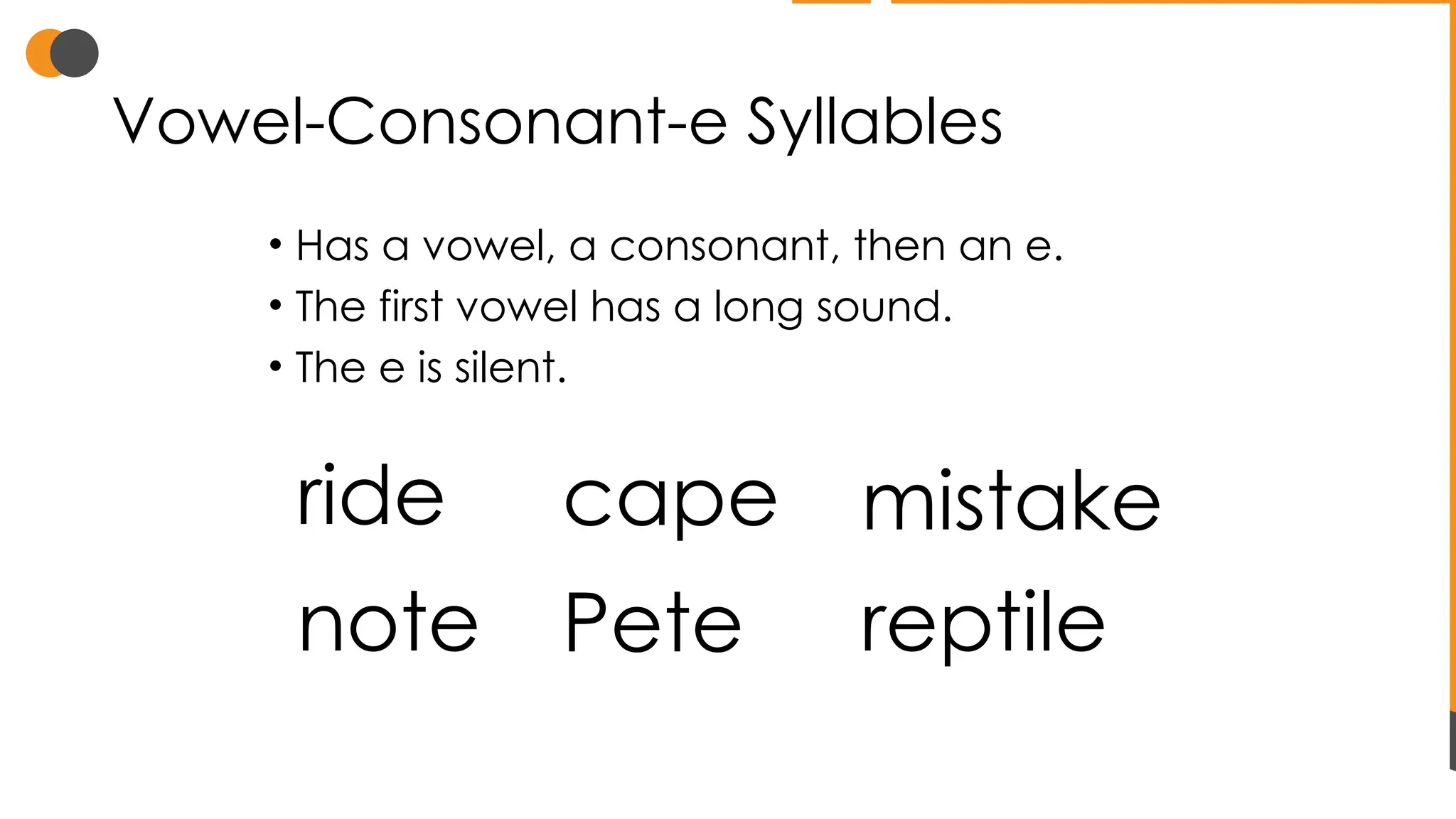
Vowel-Consonant-e Syllables
• Has a vowel, a consonant, then an e.
• The first vowel has a long sound.
• The e is silent.
ride mistake
note reptile
cape
Pete
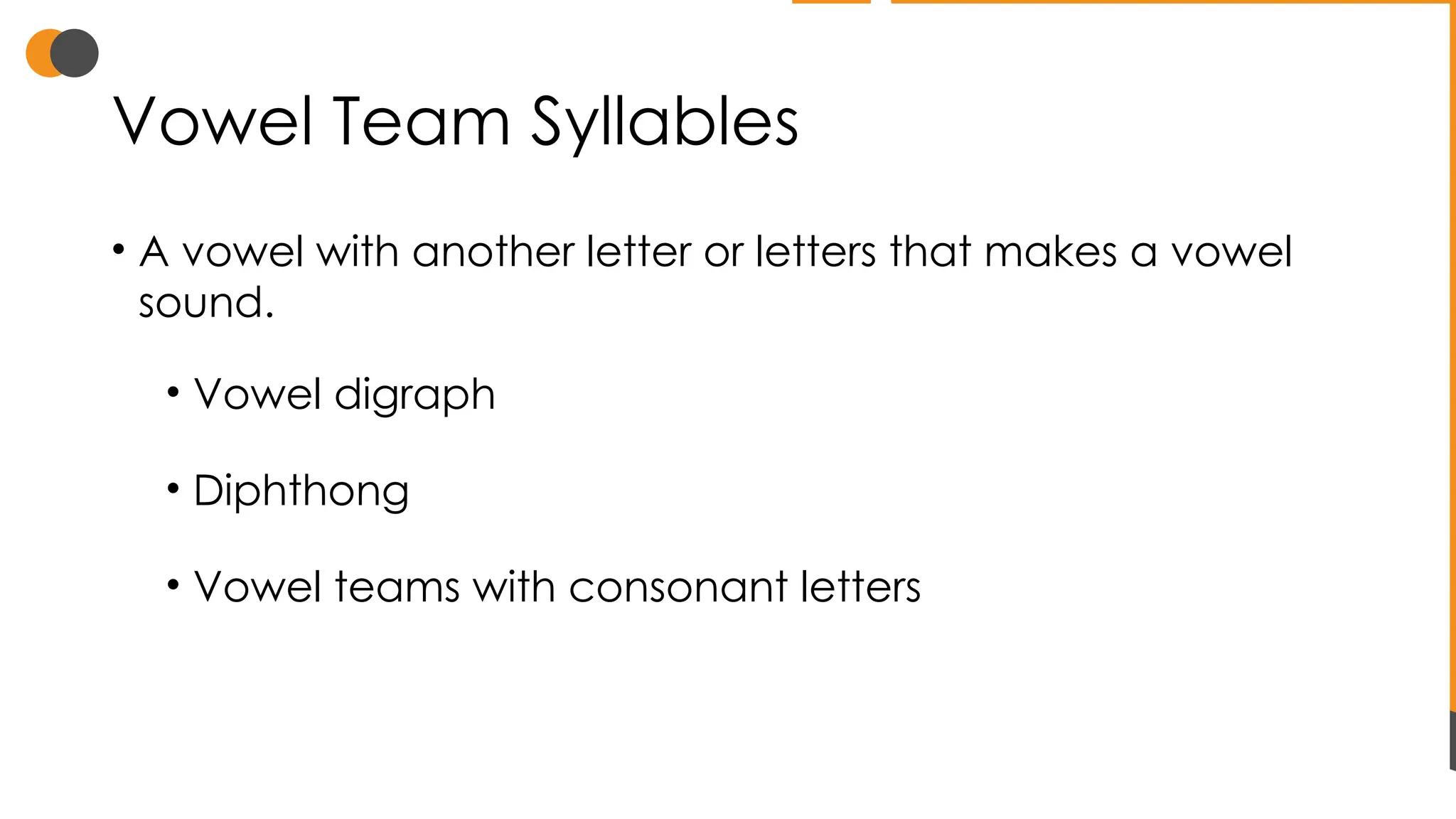
Vowel Team Syllables
• A vowel with another letter or letters that makes a vowel
sound.
• Vowel digraph
• Diphthong
• Vowel teams with consonant letters
Vowel Team Syllables
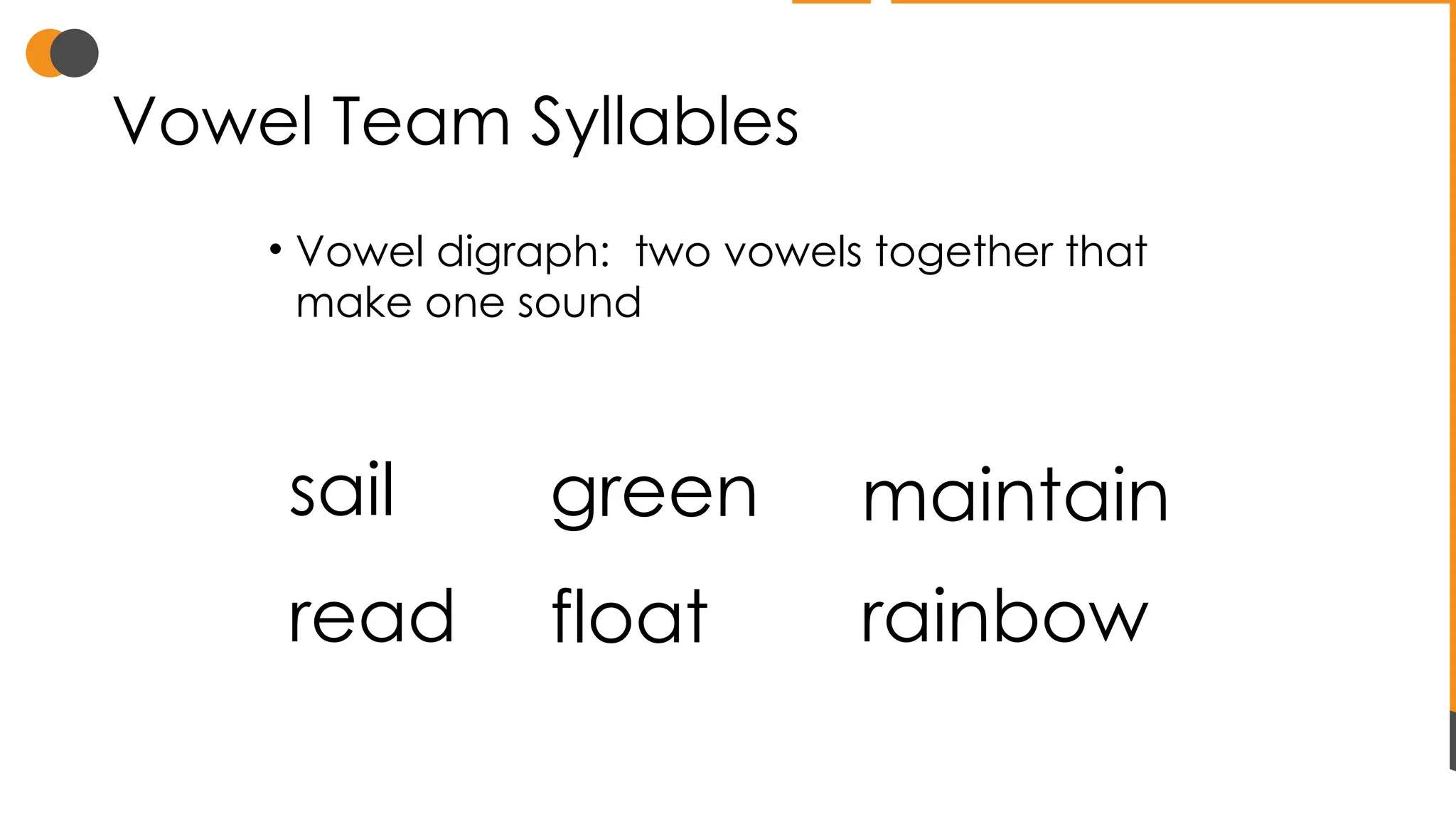
• Vowel digraph: two vowels together that
make one sound
sail maintain
read rainbow
green
float
Vowel Team Syllables
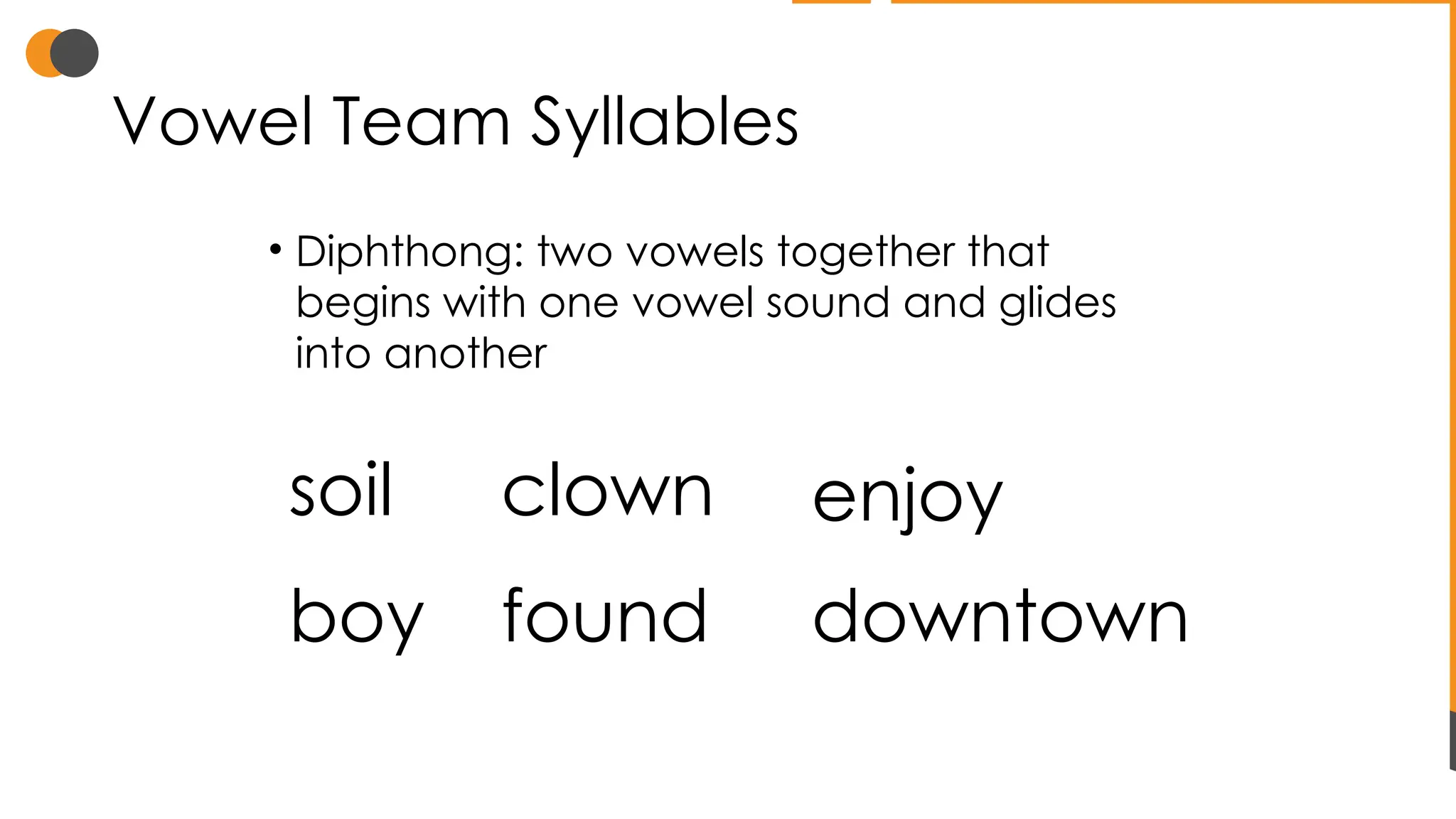
• Diphthong: two vowels together that
begins with one vowel sound and glides
into another
soil enjoy
boy downtown
clown
found
Vowel Team Syllables
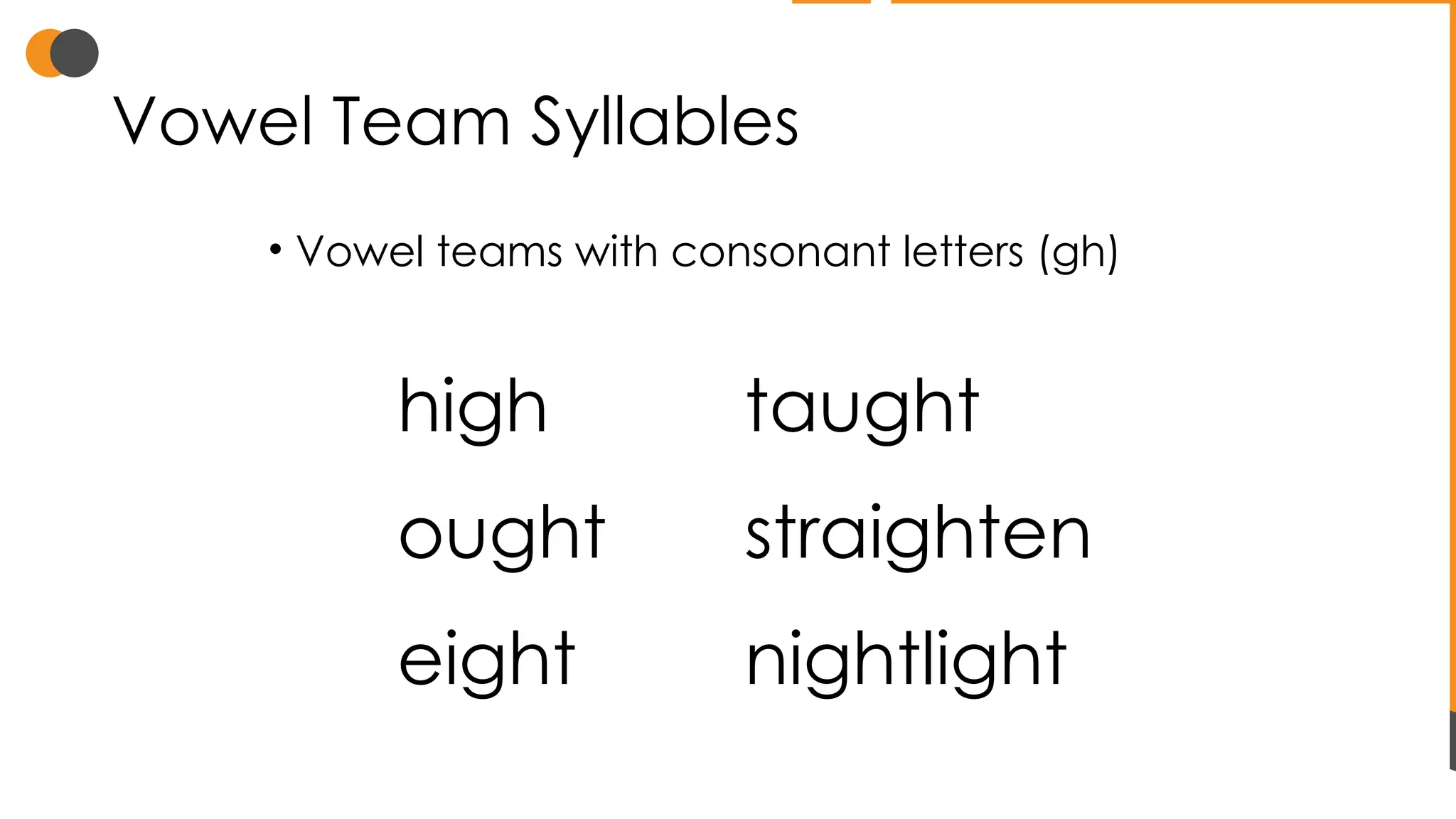
• Vowel teams with consonant letters (gh)
high
straighten
ought
nightlight
eight
taught
Multisyllable Word Practice
maintain
rainbow
enjoy
downtown
straighten
nightlight
mistake
reptile
starter
bugle candle
noble
bubble
fumble
puzzle
nation
capture
session
musician
precious
infectious
napkin
veto
insect
submit
basic
began
picnic
hotel
bonus
contract
market
Let’s read some 2-syllable words…
window
silver
pocket
tropic
donate
brighter
garden
zipper
number
action tiger
orbit
gargle
paper
magnet
table
nature
target
Martian
future
gracious
monster
teacher
slipper
marble
temper
replay
lotion
spider
hamster
paddle
apple

Module 1 Syllables of Common English Words.pptx

  • 1.
  • 2.
    Introduction to Syllable Types Activity: 1.Teach student that there are 6 syllable types, and they can be used to help them figure out how to pronounce big words. 2. Use the Lesson slides here to introduce the concepts. o Open & Closed can be taught together. o Final Stable should be taught separately. o R-Controlled, VCe, and Vowel Team can be taught together or separately. 3. Use the syllable word cards as examples.
  • 3.
    Introduction to Syllable Types fumblenation napkin veto submit enjoy
  • 4.
    What is avowel? • A vowel is a sound made by sending air out of the mouth without closing your mouth or moving the parts of your mouth.
  • 5.
    What is avowel? • All vowel sounds are voiced, which means you can feel the vibration of your vocal cords if you touch your hand to your throat.
  • 6.
    What is avowel? • The two main types of vowel sounds are often called short vowels and long vowels. • These terms can be confusing because we can’t hear any difference in the actual length of the vowel sounds. • Another name for short vowels is lax. • Another name for long vowels is tense.
  • 7.
    What is avowel? A good way to remember the short vowel sounds is saying the following sentence: Făt Ĕd ĭs nŏt ŭp. All the vowel sounds in this sentence are short (or lax) sounds. The mark that signifies a short vowel is called a breve.
  • 8.
    What is avowel? To remember the long (tense) vowel sounds, just think of each letter’s name: ā ē ī ō ū The mark that signifies a long vowel sound is called a macron.
  • 9.
    What is aconsonant? • A consonant is a sound made by moving part of the mouth to touch another, such as the lips, tongue, or teeth.
  • 10.
    What is aconsonant? • Consonant sounds can be voiced or unvoiced. • Say each sound, and touch your hand to your throat to see if these consonant sounds are voiced or unvoiced…
  • 11.
    What is asyllable? • A syllable is a word or a part of a word with one vowel sound. • A syllable can be pushed out in one breath. Your chin will usually drop slightly as you say each syllable in a word. • Say the word for each picture and count the syllables.
  • 12.
  • 13.
    Closed Syllables • Aclosed syllable can only have one vowel. • The vowel is followed by one or more consonants. • The vowel sound is short. hop kick fast
  • 14.
    Open Syllables • Anopen syllable has only one vowel. • The vowel is the last letter in the syllable. • The vowel sound is long. hi go she
  • 15.
  • 16.
  • 17.
  • 18.
    Let’s read somebigger words with open and closed syllables… napkin veto insect submit began picnic hotel bonus basic contract
  • 19.
    Final Stable Syllables •A final stable syllable is just that… • Final: It must be the last syllable of a word. • Stable: It is always pronounced the same way.
  • 20.
    Final Stable Syllables Onecommon final stable syllable is the Consonant-le pattern: bugle candle noble bubble fumble puzzle
  • 21.
    Final Stable Syllables Otherfinal stable syllables include -tion, -sion, -ture, -cian, - cious, -tious. nation capture session musician precious infectious
  • 22.
    Other Syllable Types Thereare 3 other syllable types: • R-Controlled • Vowel-Consonant-e • Vowel Team
  • 23.
    Other Syllable Types Youhave already learned how to read little words with these patterns. • R-Controlled: fur, stir, corn • Vowel-Consonant-e: kite, lake, vote • Vowel Team: read, sheep, float
  • 24.
    Other Syllable Types Ifyou see one of these patterns as a syllable in a big word, the same rules usually apply. • R-Controlled: marker, fortune, burden • Vowel-Consonant-e: reptile, mistake • Vowel Team: maintain, steamboat, power
  • 25.
    R-Controlled Syllables • Hasone vowel followed by an r. • The vowel is not long or short. • The vowel is controlled by the r. fur horn starter
  • 26.
    Vowel-Consonant-e Syllables • Hasa vowel, a consonant, then an e. • The first vowel has a long sound. • The e is silent. ride mistake note reptile cape Pete
  • 27.
    Vowel Team Syllables •A vowel with another letter or letters that makes a vowel sound. • Vowel digraph • Diphthong • Vowel teams with consonant letters
  • 28.
    Vowel Team Syllables •Vowel digraph: two vowels together that make one sound sail maintain read rainbow green float
  • 29.
    Vowel Team Syllables •Diphthong: two vowels together that begins with one vowel sound and glides into another soil enjoy boy downtown clown found
  • 30.
    Vowel Team Syllables •Vowel teams with consonant letters (gh) high straighten ought nightlight eight taught
  • 31.
    Multisyllable Word Practice maintain rainbow enjoy downtown straighten nightlight mistake reptile starter buglecandle noble bubble fumble puzzle nation capture session musician precious infectious napkin veto insect submit basic began picnic hotel bonus contract market
  • 32.
    Let’s read some2-syllable words… window silver pocket tropic donate brighter garden zipper number action tiger orbit gargle paper magnet table nature target Martian future gracious monster teacher slipper marble temper replay lotion spider hamster paddle apple

Editor's Notes

  • #4 /ŏ, /ē/, /OO/
  • #7 OPTIONAL INFORMATION
  • #8 OPTIONAL INFORMATION
  • #12 Robot = 2 Octopus = 3 Macaroni = 4 Shoe = 1 Umbrella = 3 Watermelon = 4 Zebra = 2 Helicopter = 4
  • #15 First have the student read the open-syllable word to the left. Then, move the ending part of each word over to “close” the syllable, and have the student read the new closed-syllable word.
  • #16 First have the student read the open-syllable word to the left. Then, move the ending part of each word over to “close” the syllable, and have the student read the new closed-syllable word.
  • #17 First have the student read the open-syllable word to the left. Then, move the ending part of each word over to “close” the syllable, and have the student read the new closed-syllable word.
  • #18 Slide boxes away one at a time to reveal words for students to read. You can also use the box to cover part of a word to assist with decoding.
  • #31 These words are all from the previous slides. Pull the blue box down to reveal one word at a time, or delete to reveal a whole list.
  • #32 These words are new multisyllabic words for practice. Pull the blue box down to reveal one word at a time, or delete to reveal a whole list.