By : Dr . Eithar Sharif
supervision
Prof dr Maher FOUDA
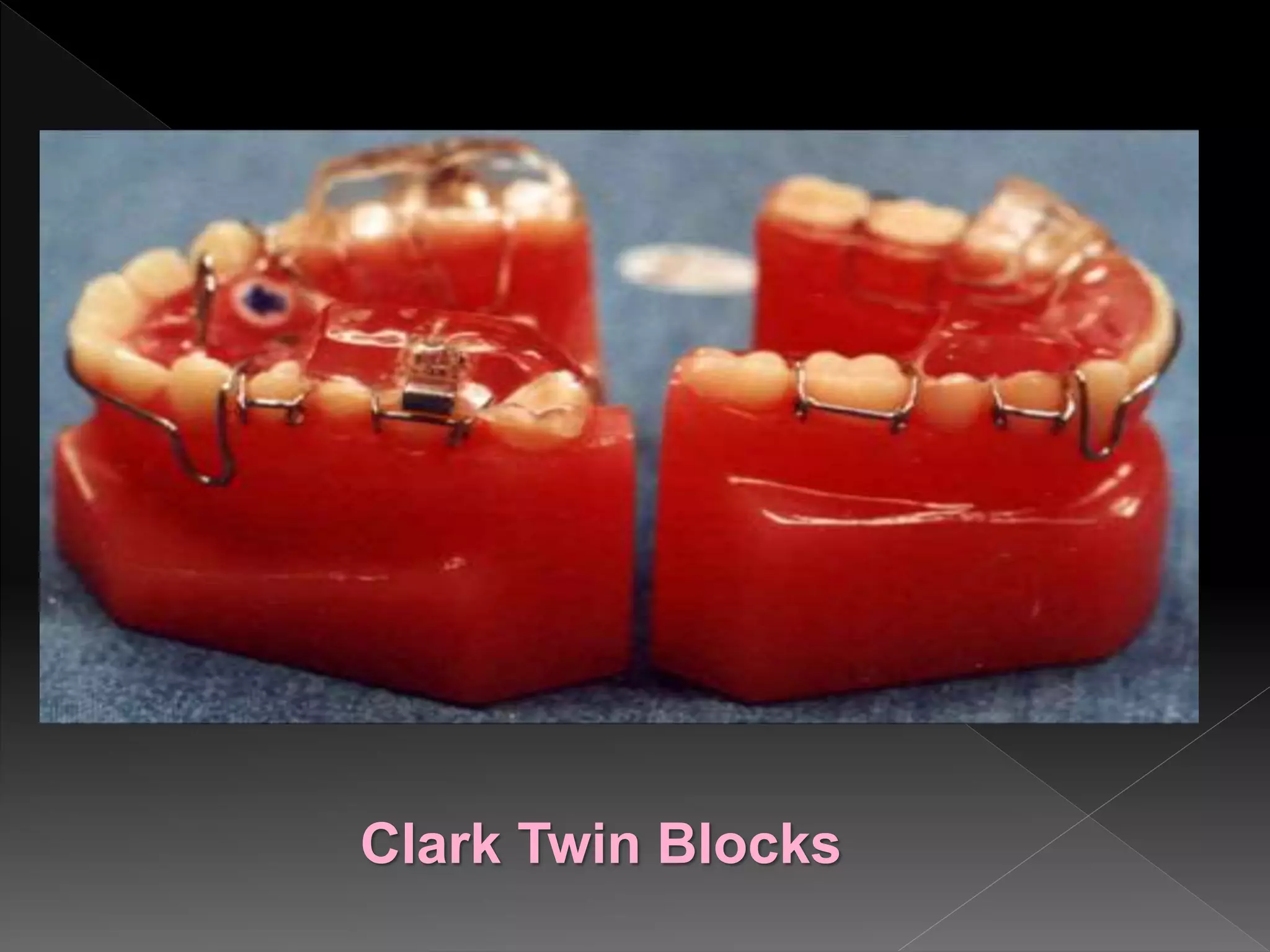
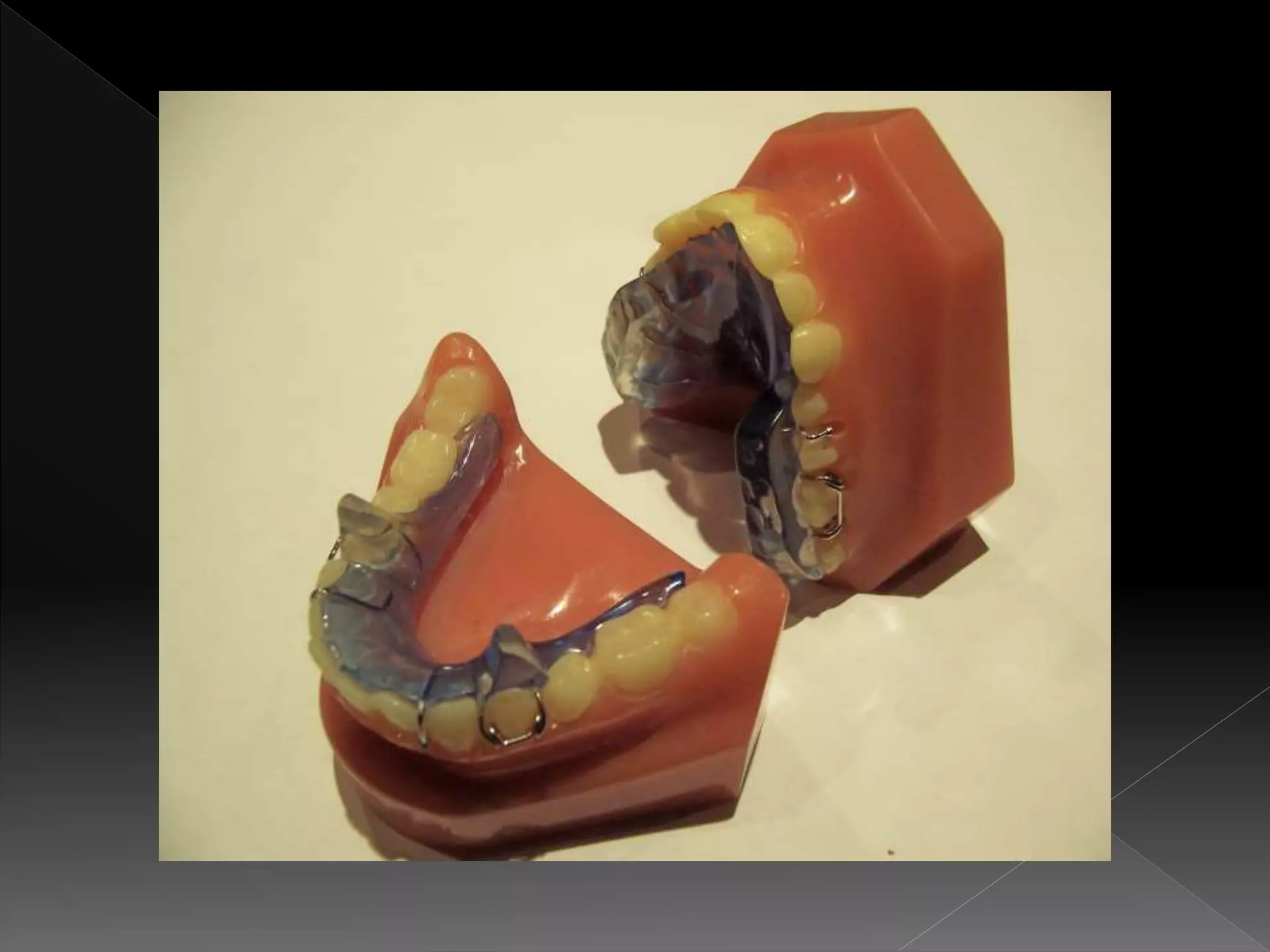
Clark Twin Blocks
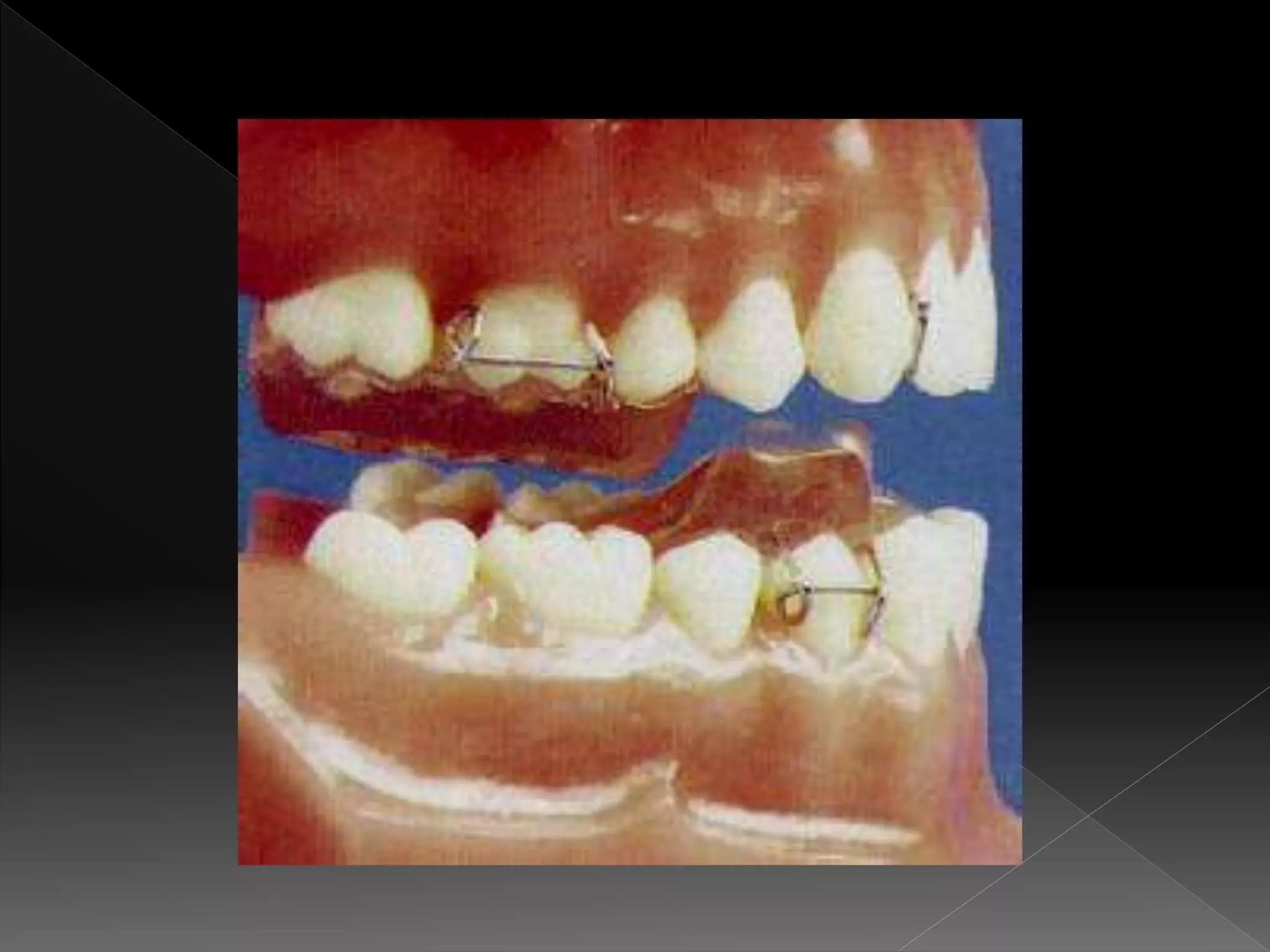
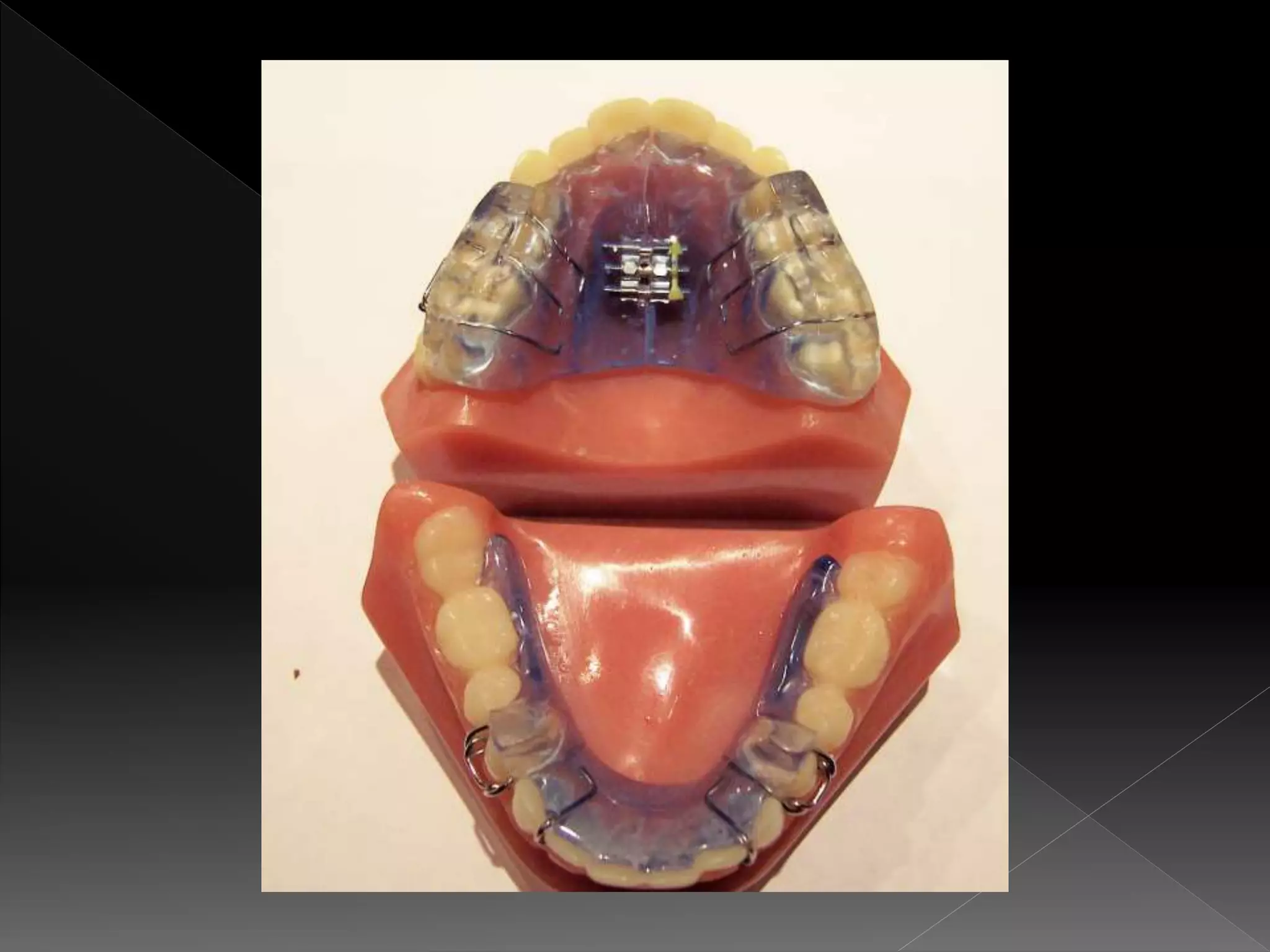
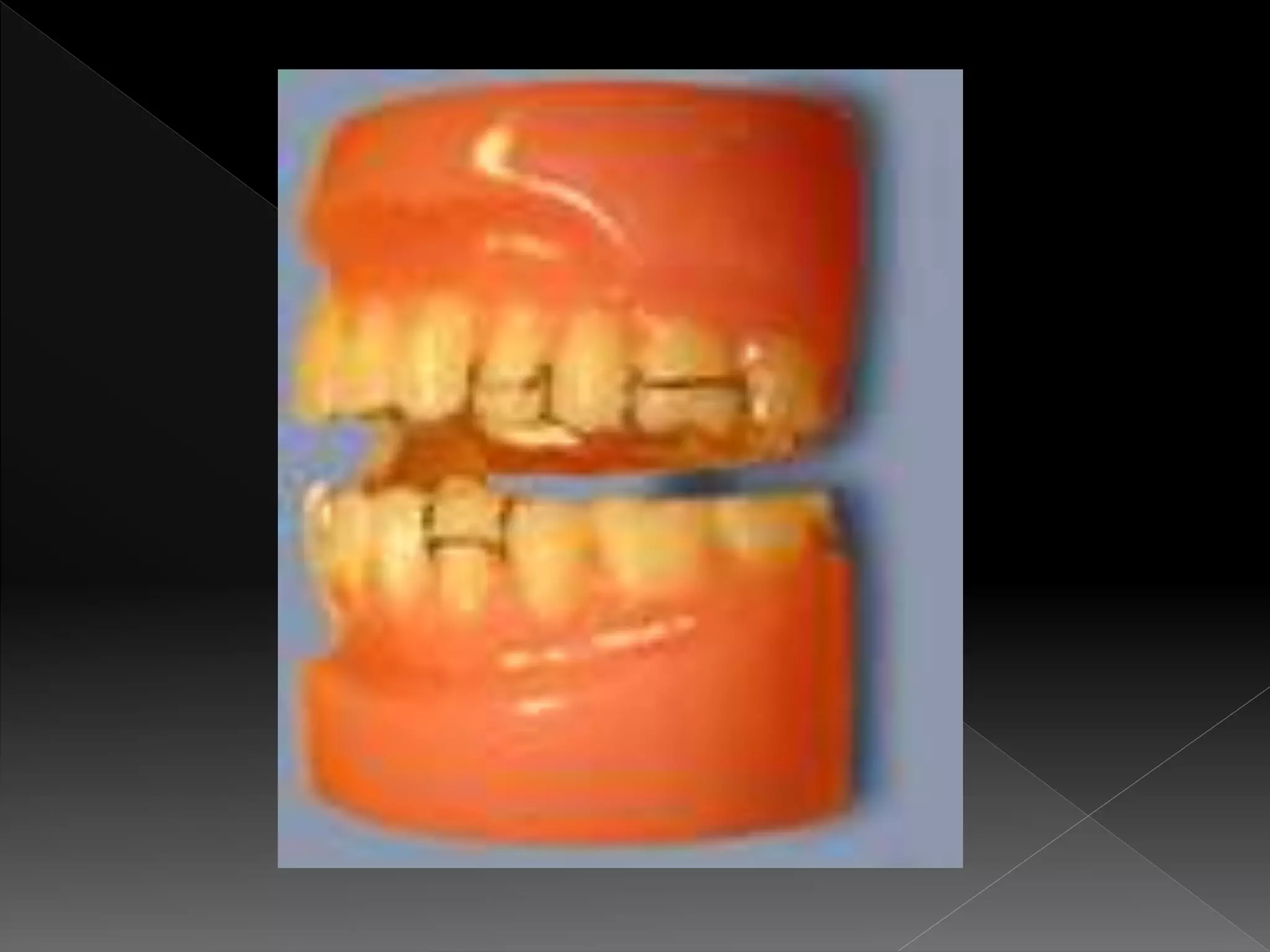
 The Twin-block (TB) appliance, originally
developed by Clarke, is a widely used functional
appliance for the management of Class II
malocclusion.
 Its popularity is attributable to its high
patient acceptability and its ability to produce
rapid treatment changes.
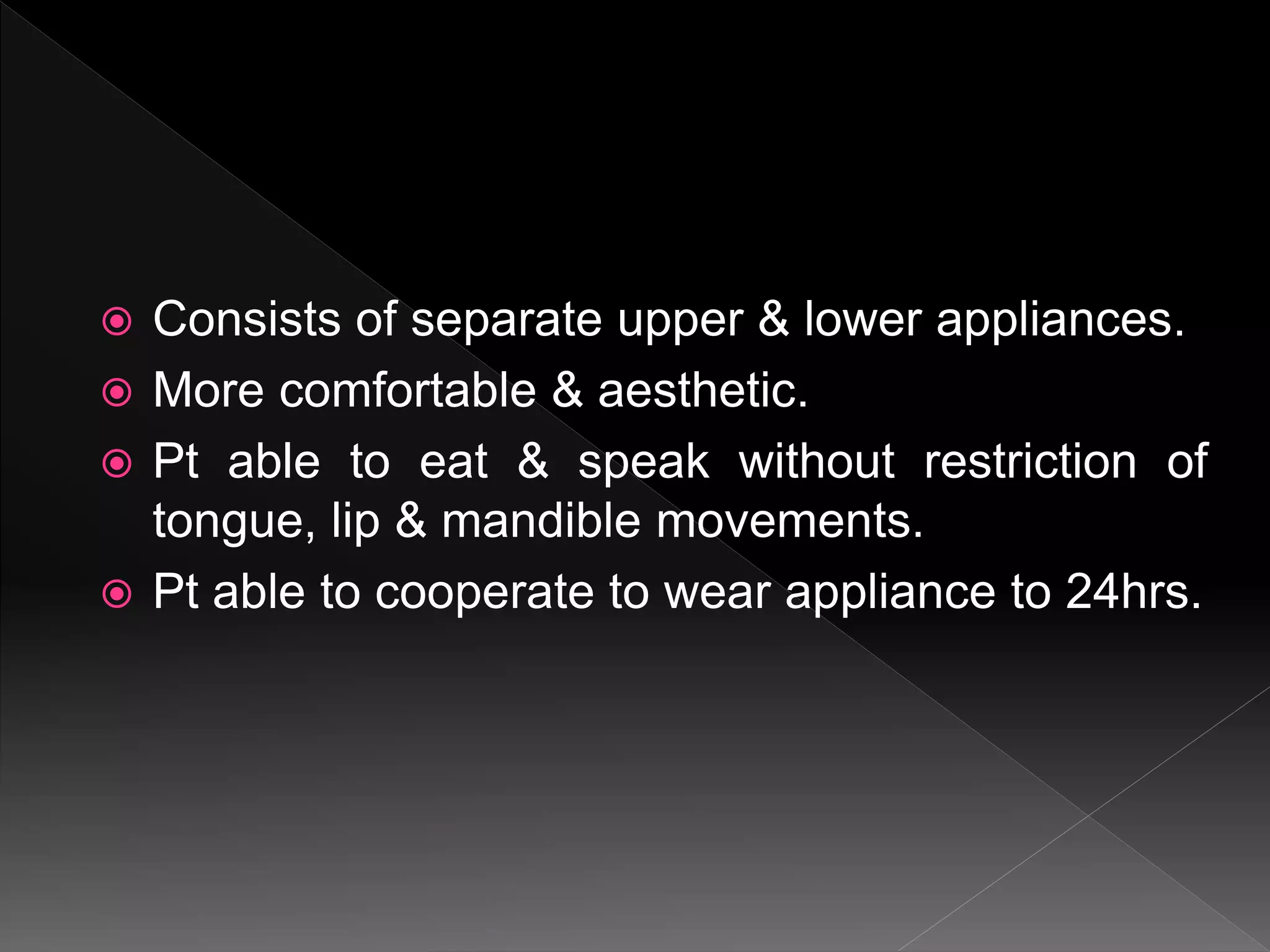
 Consists of separate upper & lower appliances.
 More comfortable & aesthetic.
 Pt able to eat & speak without restriction of
tongue, lip & mandible movements.
 Pt able to cooperate to wear appliance to 24hrs.
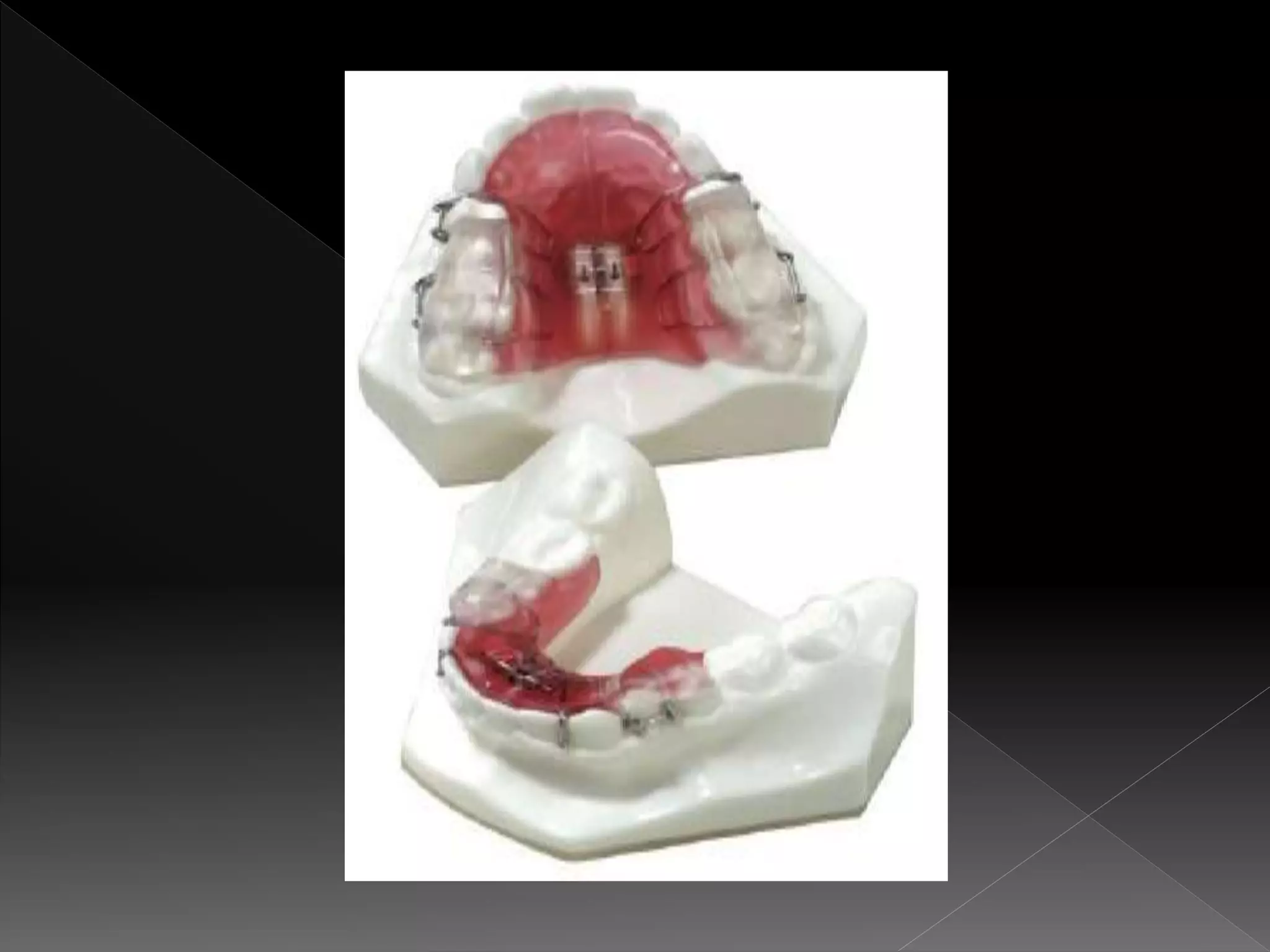
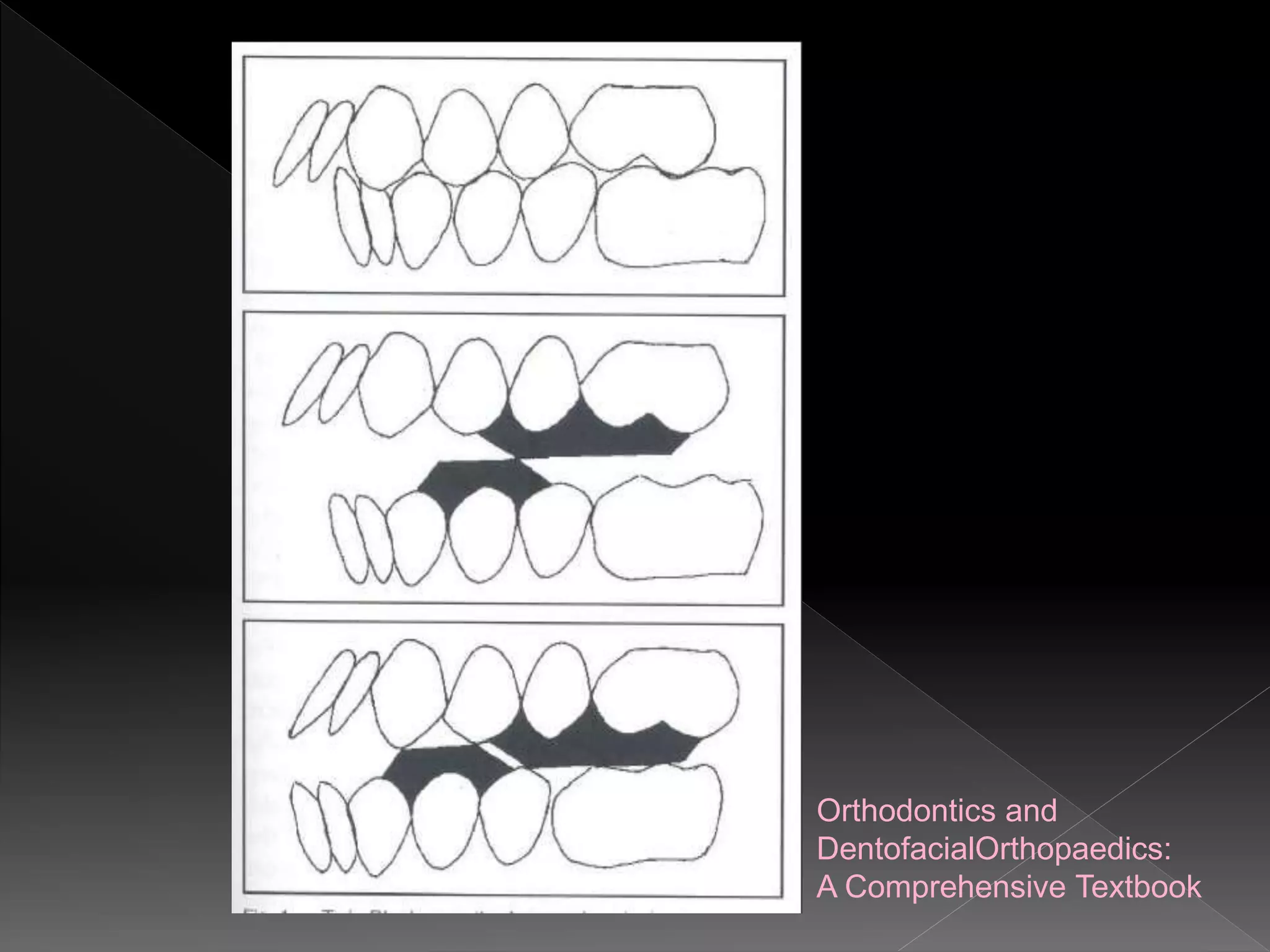
 Constructed to a protrusive bite.
 With appliances in mouth, pt not able to occlude
in former distal position.
 Mandible forced to adopt protrusive bite.
 Block ~ 5-6 mm thick between molars
(mouth open beyond freeway space) so that
pt cannot return to former distal occlusion.
Orthodontics and
DentofacialOrthopaedics:
A Comprehensive Textbook
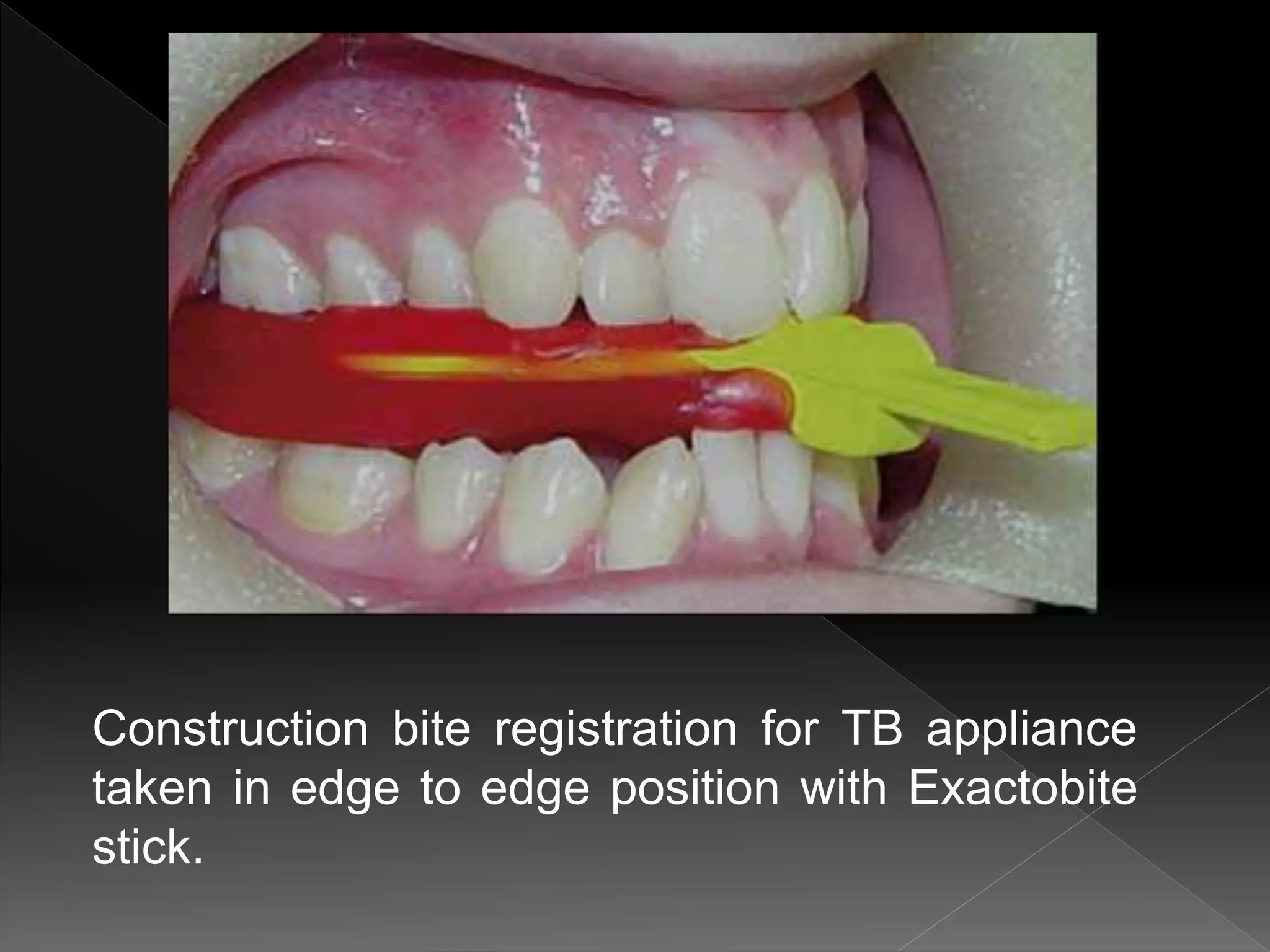
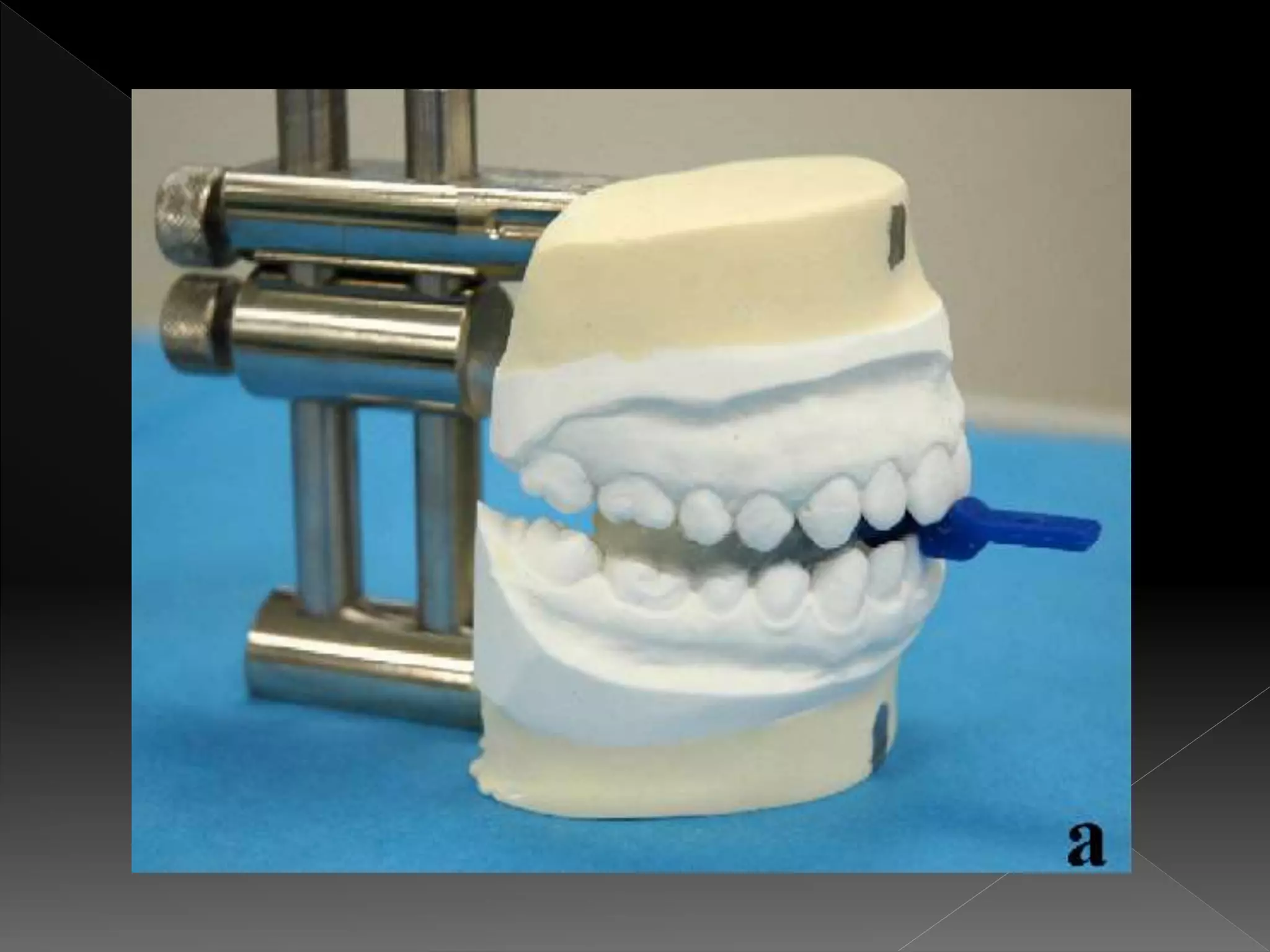
 To standardize the appliance activation
vertically, the construction bite was taken with
an Exactobite stick (Forestadent, Milton
Keynes, United Kingdom), with the incisors in
an edge to edge position and separated by 4
mm.
Construction bite registration for TB appliance
taken in edge to edge position with Exactobite
stick.
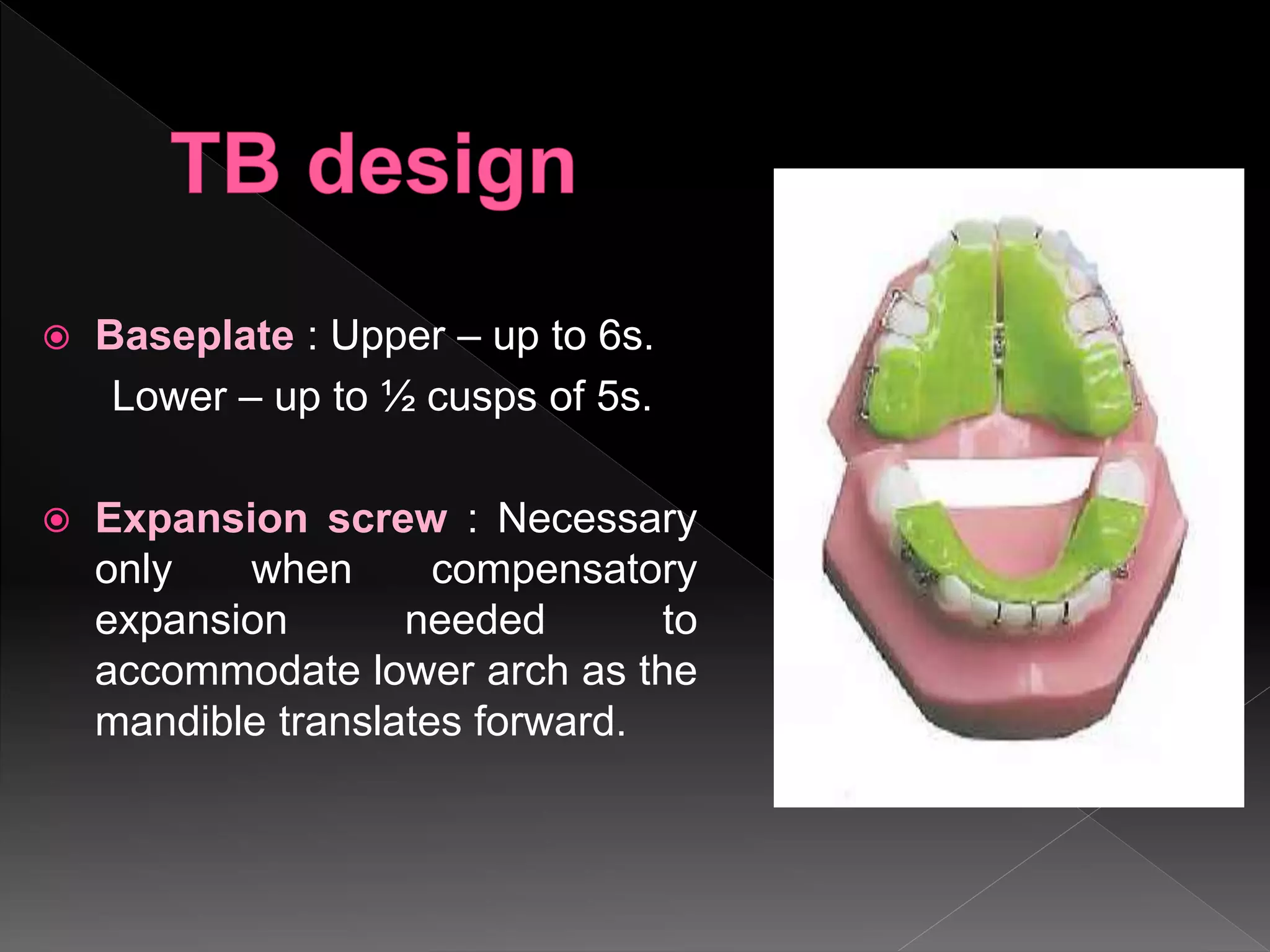
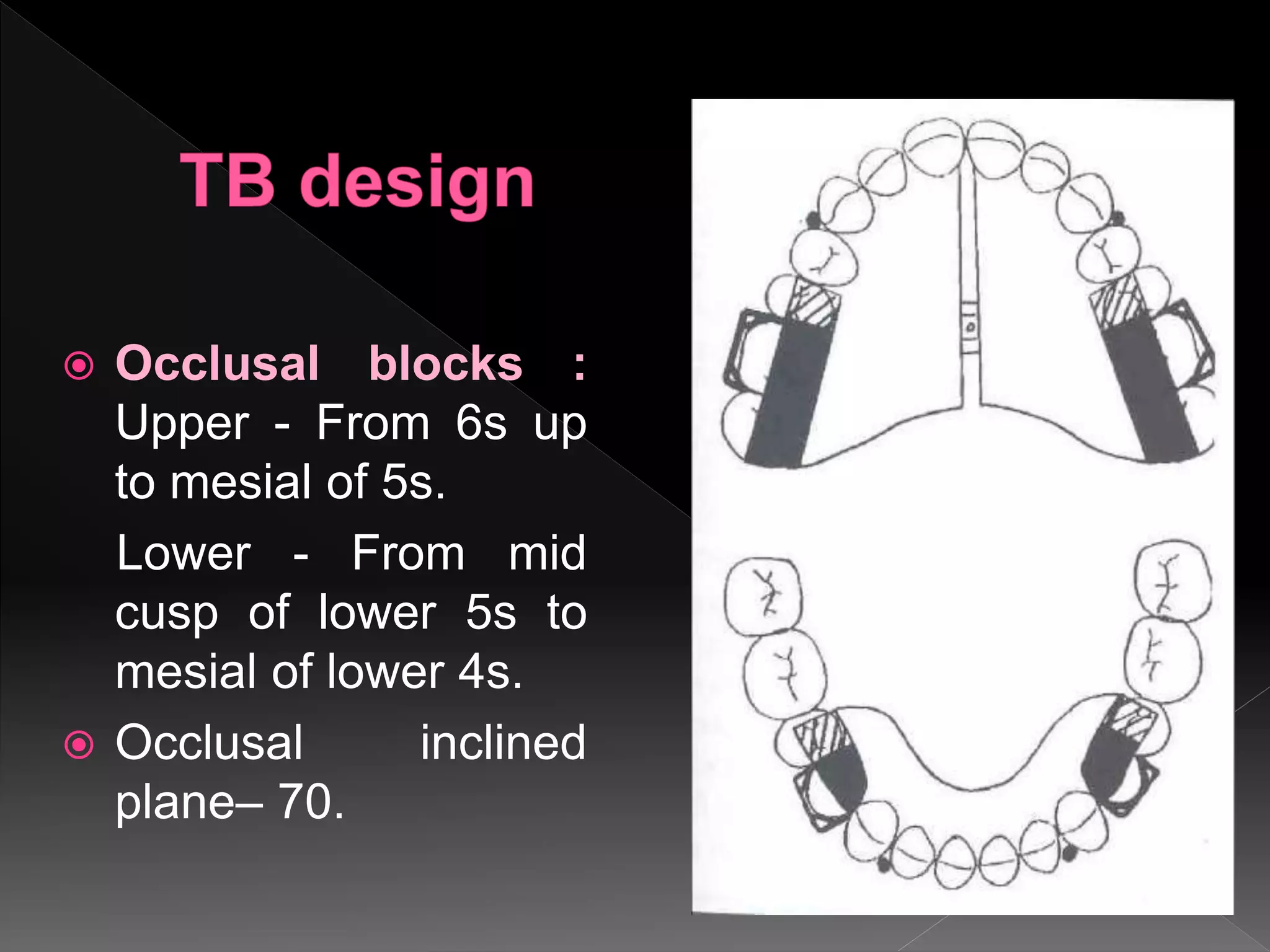
 Baseplate : Upper – up to 6s.
Lower – up to ½ cusps of 5s.
 Expansion screw : Necessary
only when compensatory
expansion needed to
accommodate lower arch as the
mandible translates forward.
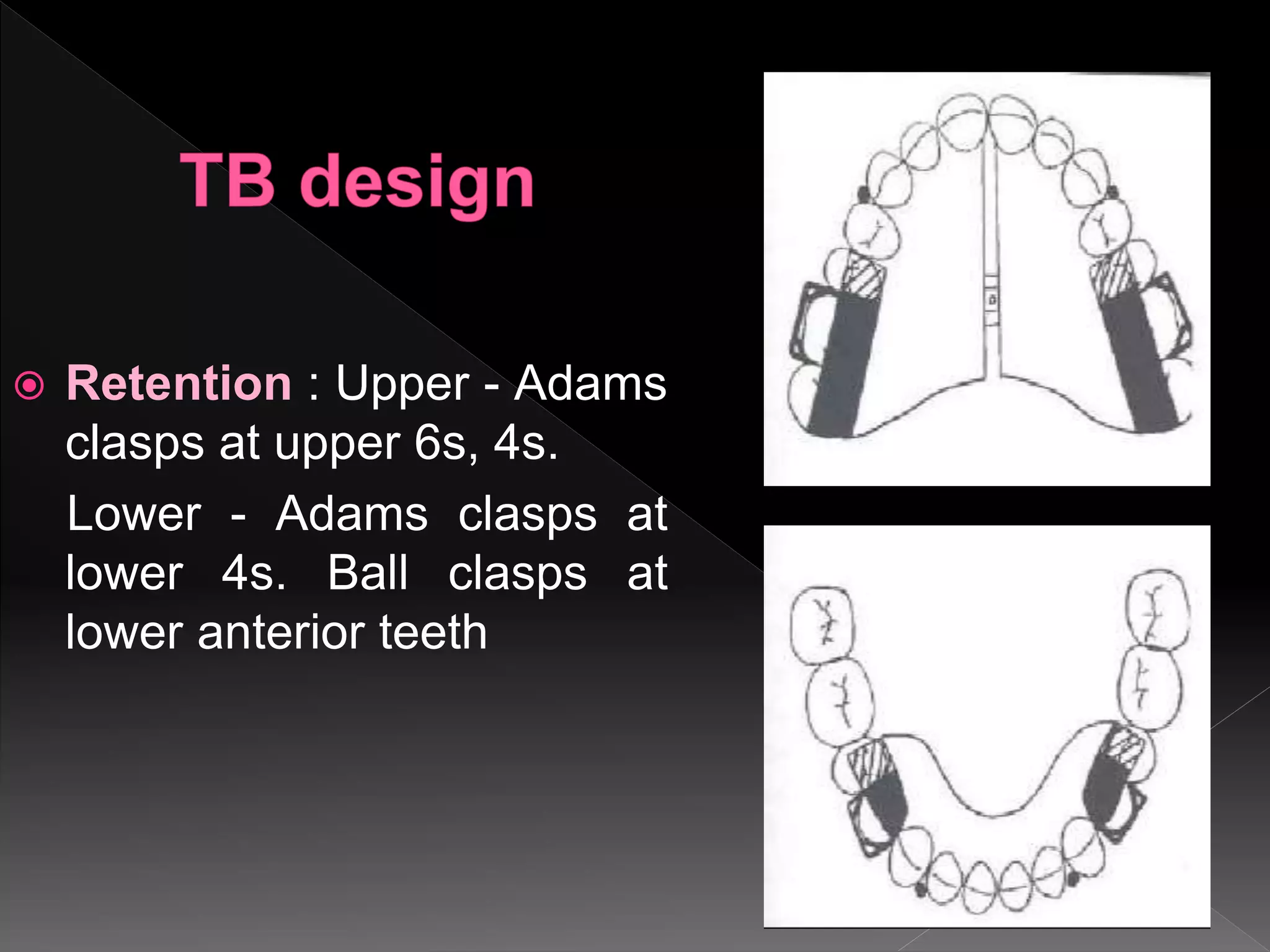
 Retention : Upper - Adams
clasps at upper 6s, 4s.
Lower - Adams clasps at
lower 4s. Ball clasps at
lower anterior teeth
 Occlusal blocks :
Upper - From 6s up
to mesial of 5s.
Lower - From mid
cusp of lower 5s to
mesial of lower 4s.
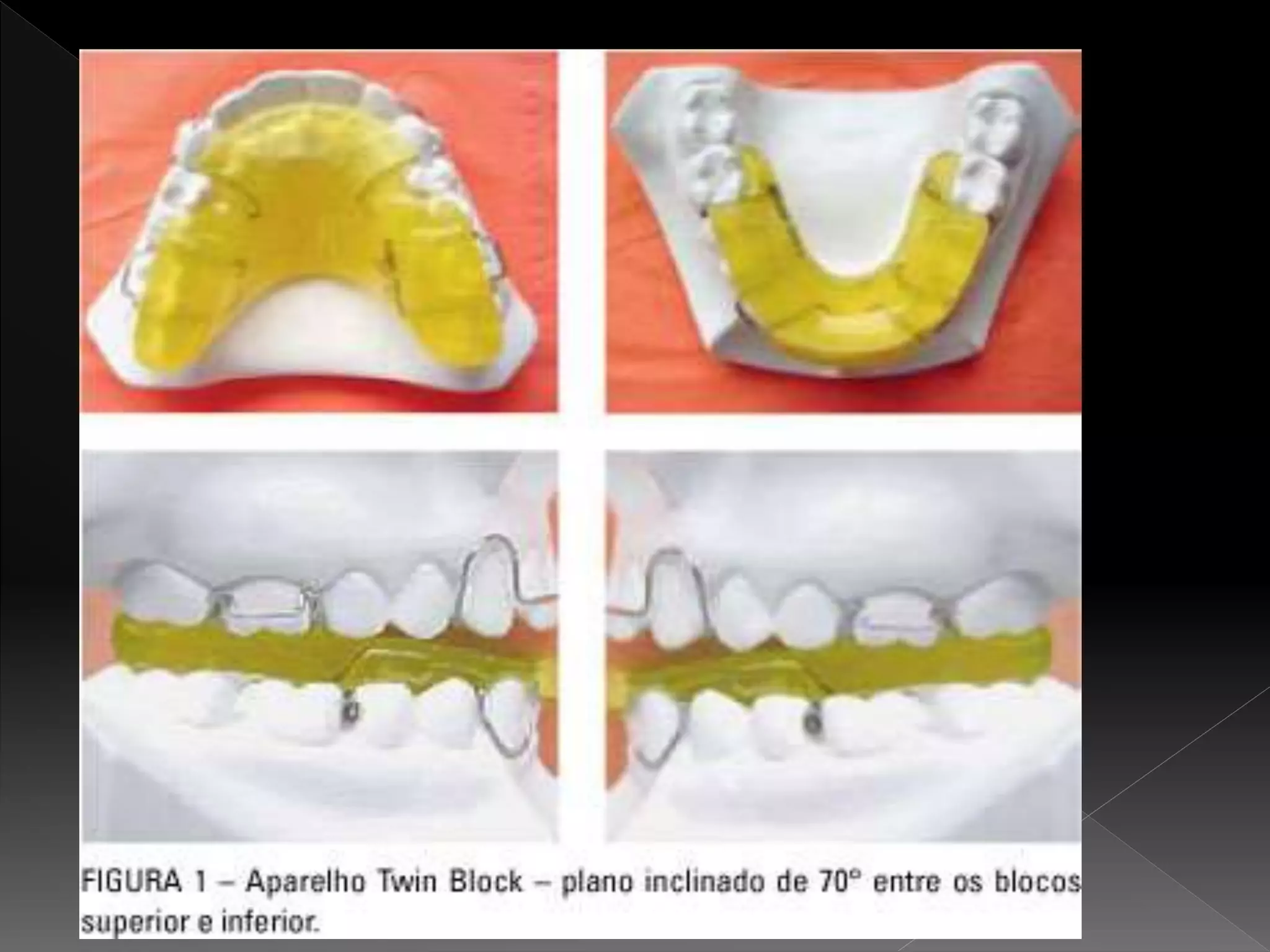
 Occlusal inclined
plane– 70.
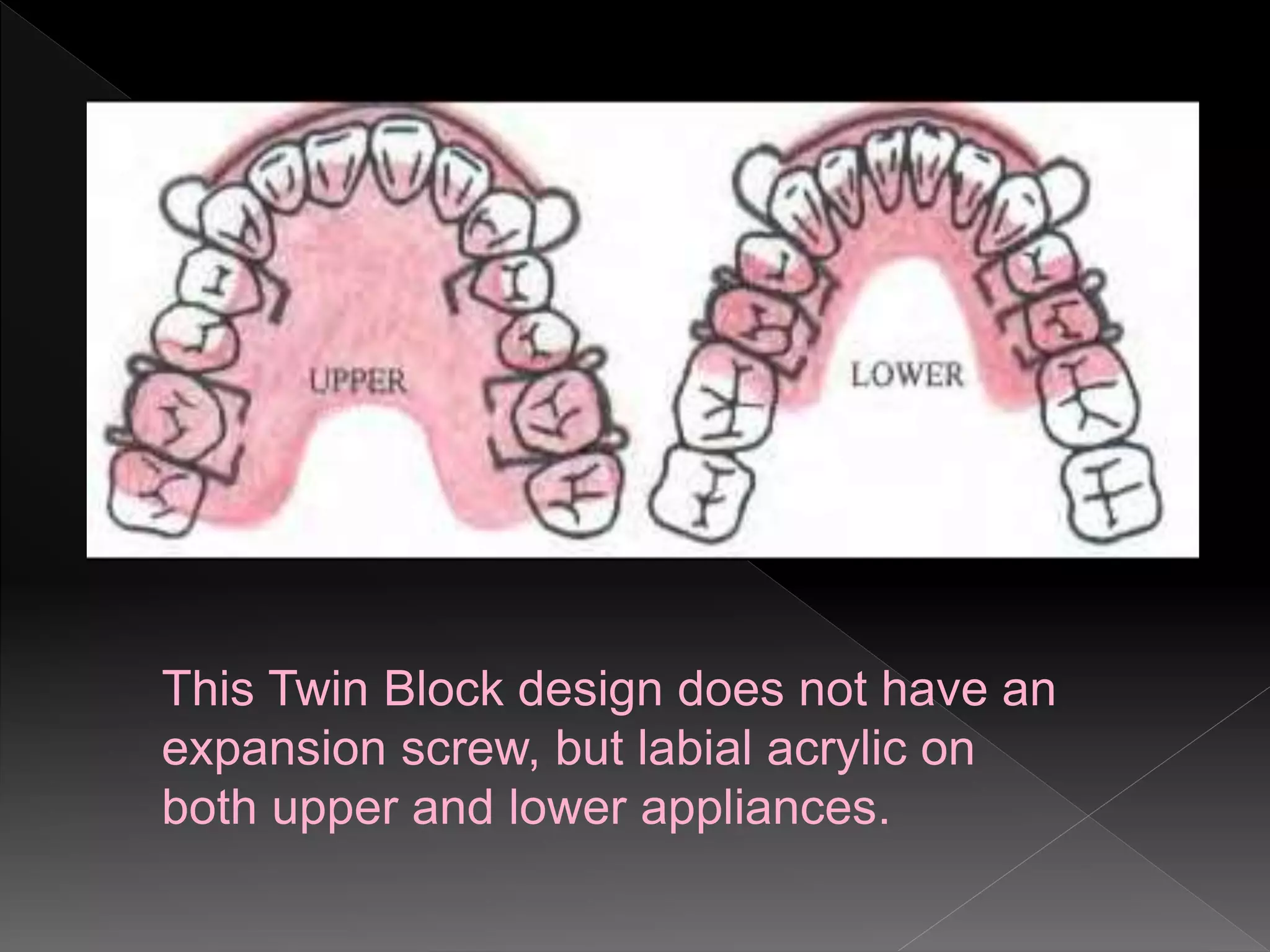
This Twin Block design does not have an
expansion screw, but labial acrylic on
both upper and lower appliances.
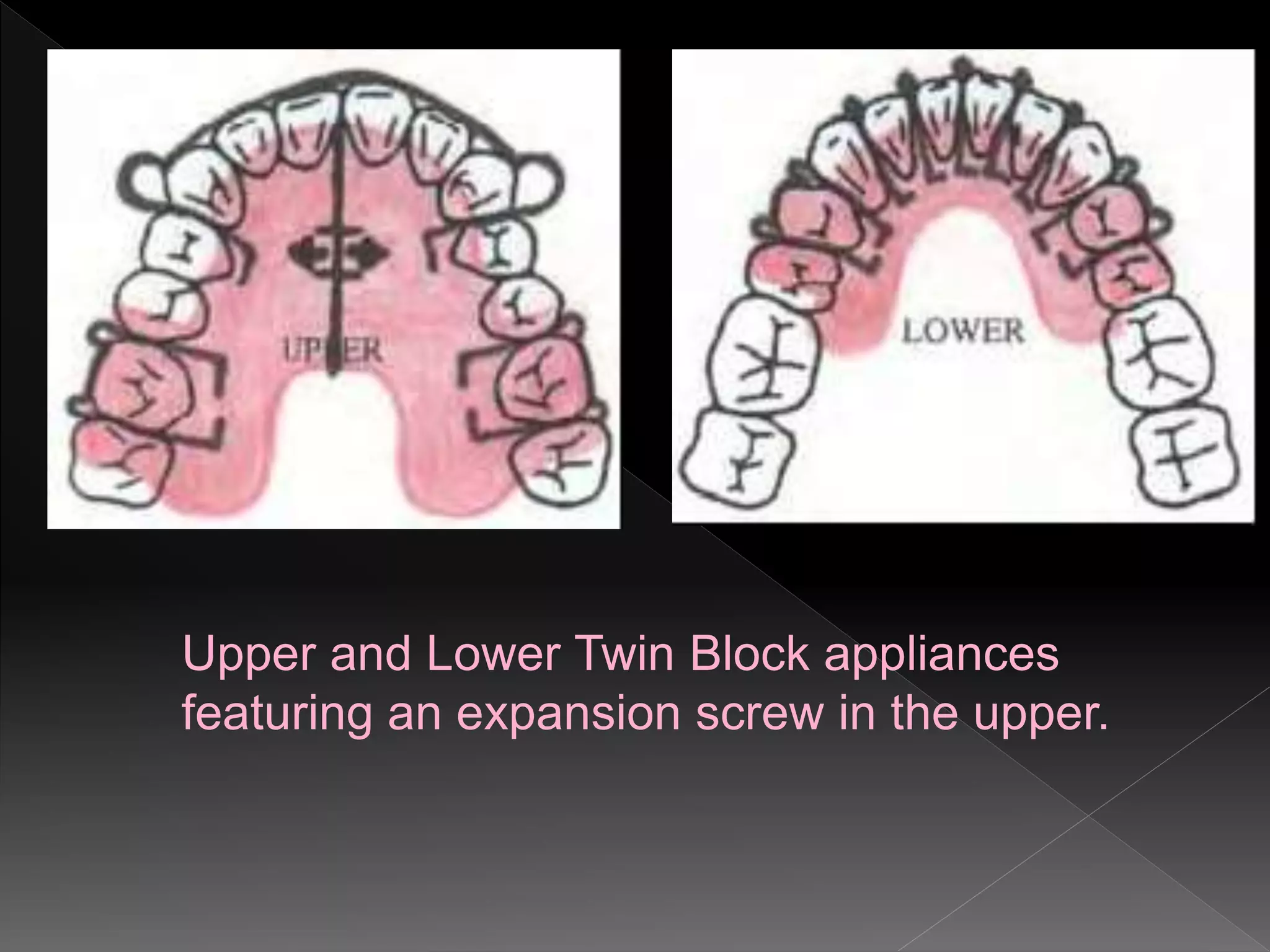
Upper and Lower Twin Block appliances
featuring an expansion screw in the upper.
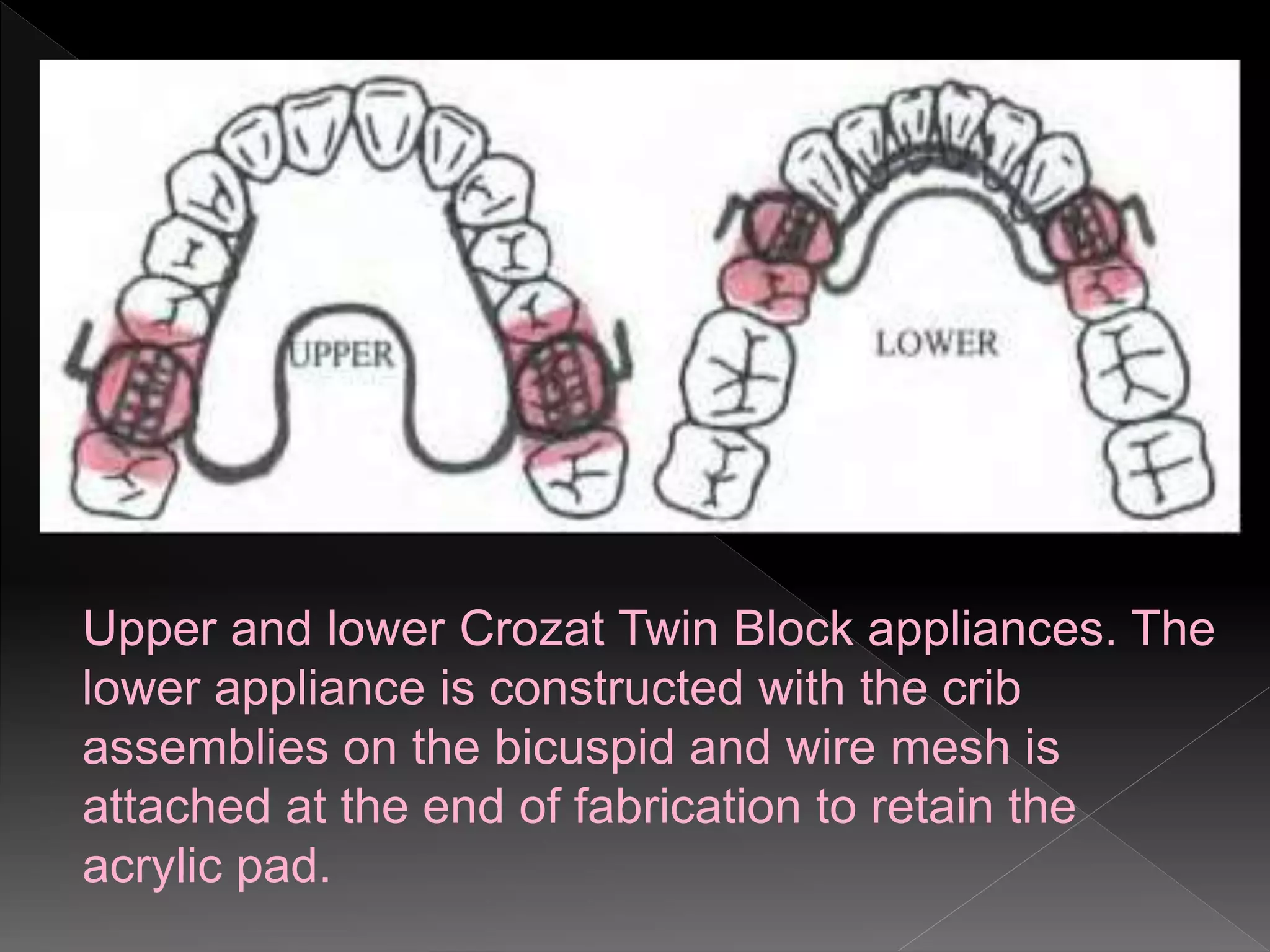
Upper and lower Crozat Twin Block appliances. The
lower appliance is constructed with the crib
assemblies on the bicuspid and wire mesh is
attached at the end of fabrication to retain the
acrylic pad.
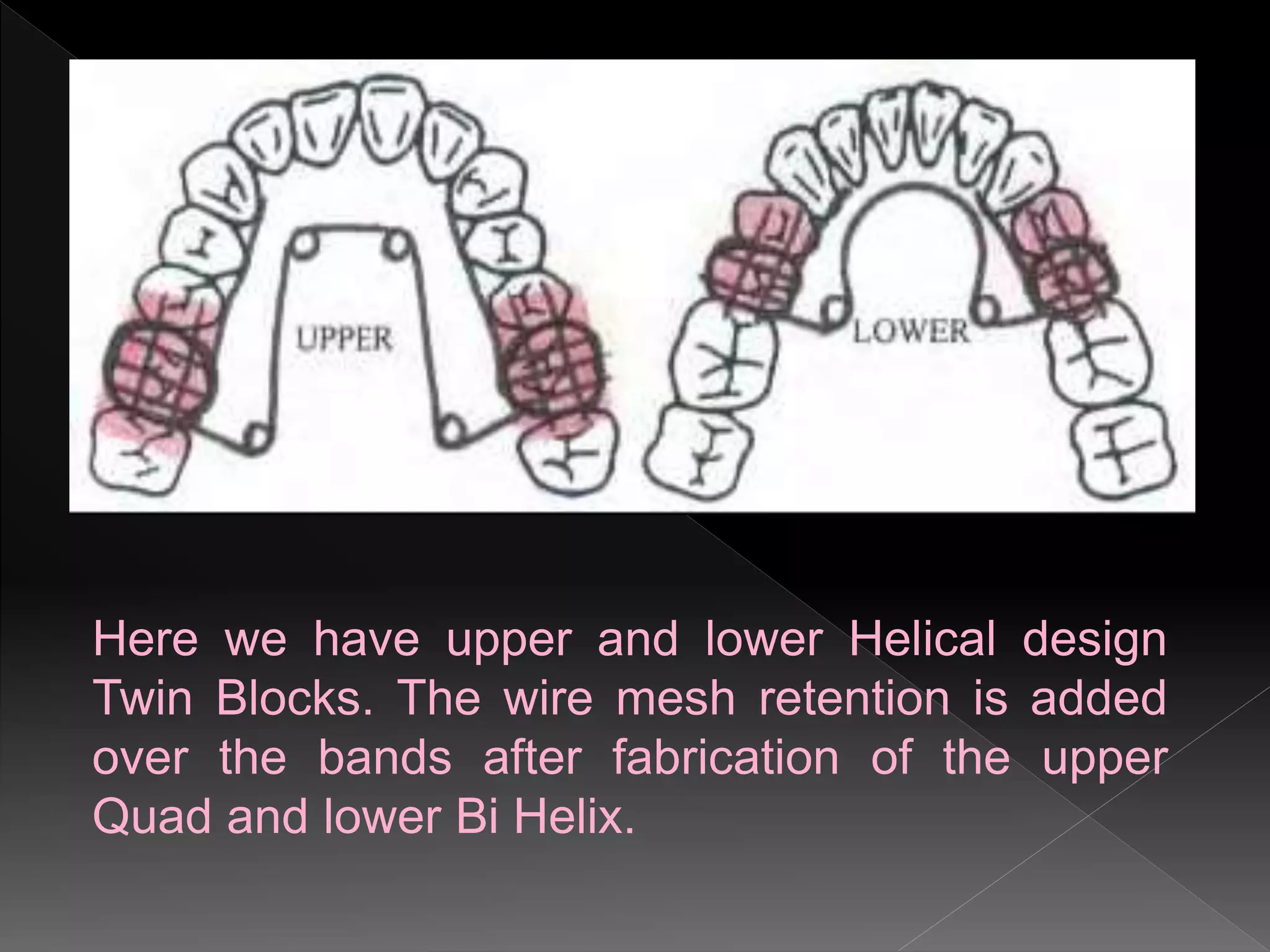
Here we have upper and lower Helical design
Twin Blocks. The wire mesh retention is added
over the bands after fabrication of the upper
Quad and lower Bi Helix.
1 st stage –To correct anteroposterior relationship
from skeletal Class II to Class I.
2nd stage – Settling of posterior teeth into occlusion
from Class II molar relation ship to Class I.
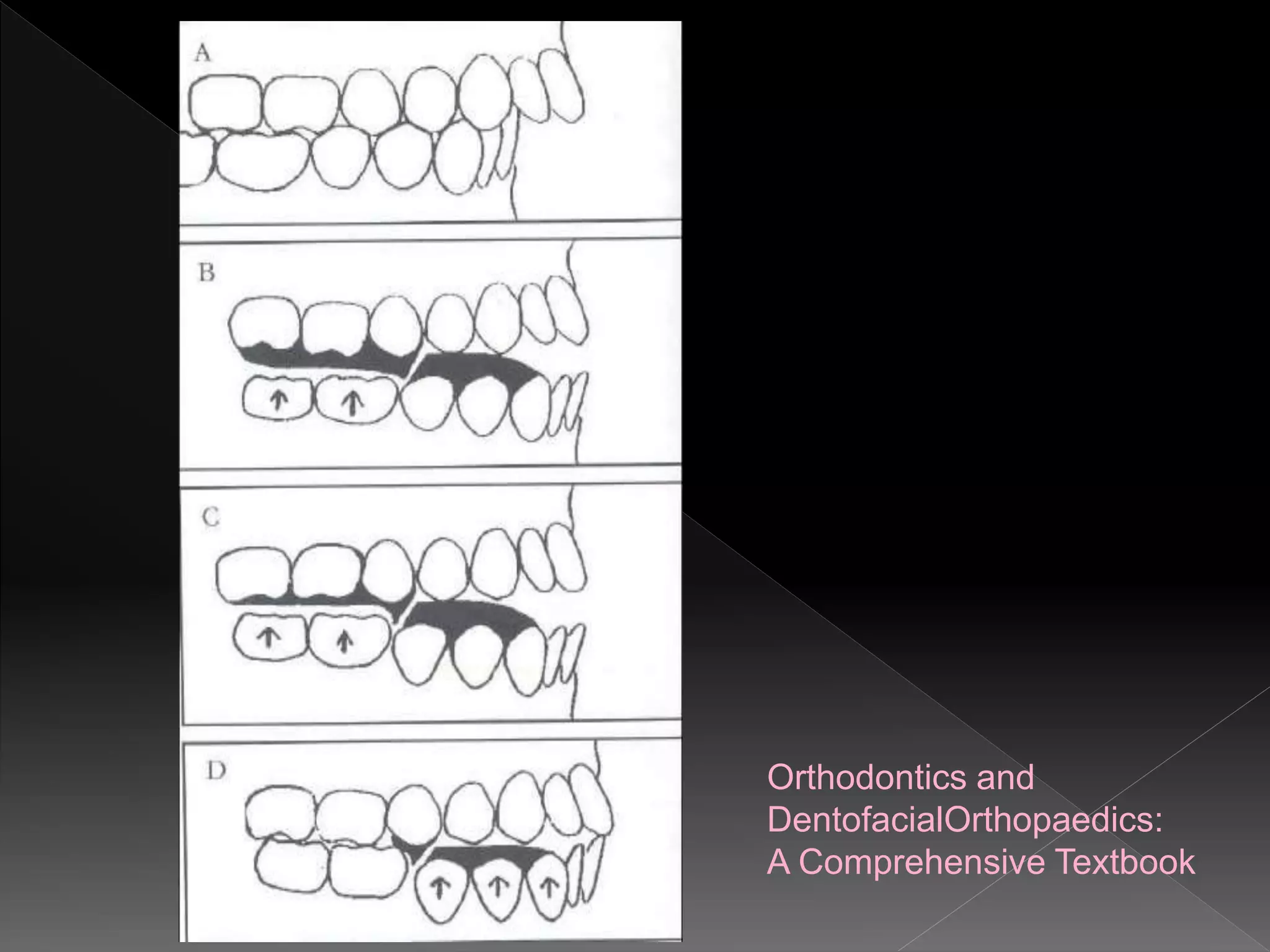
Upper bite blocks trimmed to allow eruption of lower
posterior teeth.
Lower bite blocks trimmed to level occlusal plane.
 In deep bite cases, trim blocks
 In reduced or open bite cases, do not trim
blocks.
Orthodontics and
DentofacialOrthopaedics:
A Comprehensive Textbook
 Full time wear for first 6 months , Worn at all
times including eating and sleeping.
Removed only for brushing of teeth, Not to be
worn during sporting activities.
 Night time wear for next 6-9 months.
Finishing may be undertaken with fixed
appliances.
 Comfortable ––pt able to eat and speak .
 Aesthetic ––appliance not obvious .
 Mandible able to move freely.
 Compliance ––can be removable or temporarily
cemented.
 Improved facial appearance.
 Normal speech.
 Easy to manage clinically.
 Not easily breakable.
 Allows independent arch development.
 Improvement of vertical height.
 Allows for asymmetrical correction.
 Rapid & efficient correction of skeletal
discrepancy & malocclusion.
 Can be undertaken from childhood to early
adulthood.
 May be integrated with fixed appliances.
 TB of TMJ dysfunction––splint allows displaced
disc to be recaptured.
 TB of sleep apnoea––increases airway space.
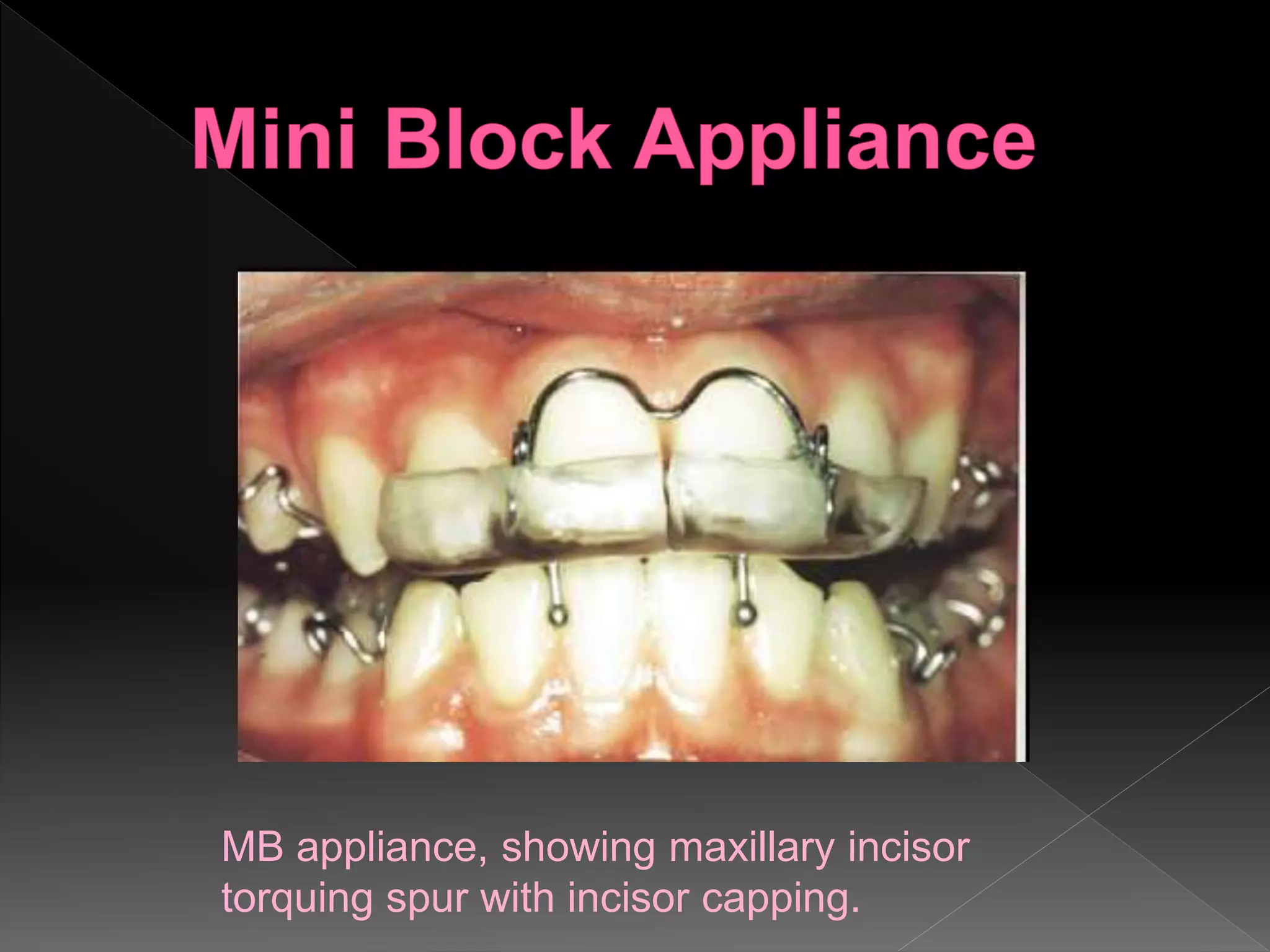
MB appliance, showing maxillary incisor
torquing spur with incisor capping.
 Modifications incorporated into this appliance
include a facility to incrementally advance the
mandible, the use of bite blocks of reduced
vertical dimension, and the incorporation of a
maxillary incisor torquing spring
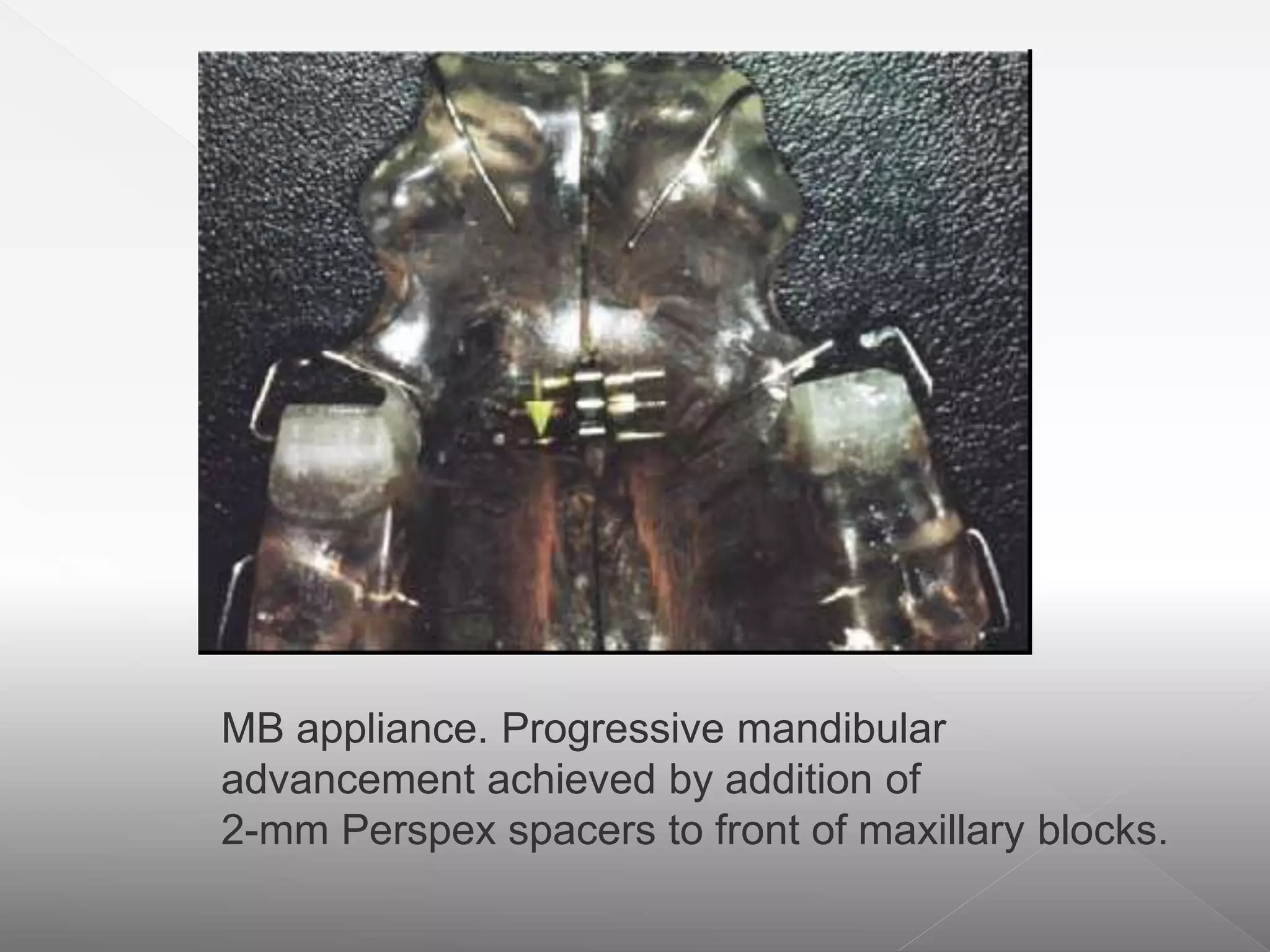
MB appliance. Progressive mandibular
advancement achieved by addition of
2-mm Perspex spacers to front of maxillary blocks.
 In this modified appliance the acrylic blocks
are attached to bands placed on the
maxillary first molars and the mandibular
premolars.
 The blocks are attached by Wilson
attachments on the lingual/palatal surface of
the bands.
 On the buccal side, a retaining wire (0.7 mm, stainless
steel) is fitted into the maxillary molar band headgear
tube, and a similar wire is fitted into a tube soldered
onto the wings of the edgewise bracket on the
mandibular band . The appliance cannot be removed
by the patient, and the small gap between the blocks
and the occlusal surface is filled with glass ionomer
cement.
 Reactivation of the blocks was carried out when
necessary by adding acrylic to the inclined surface of
the maxillary block.
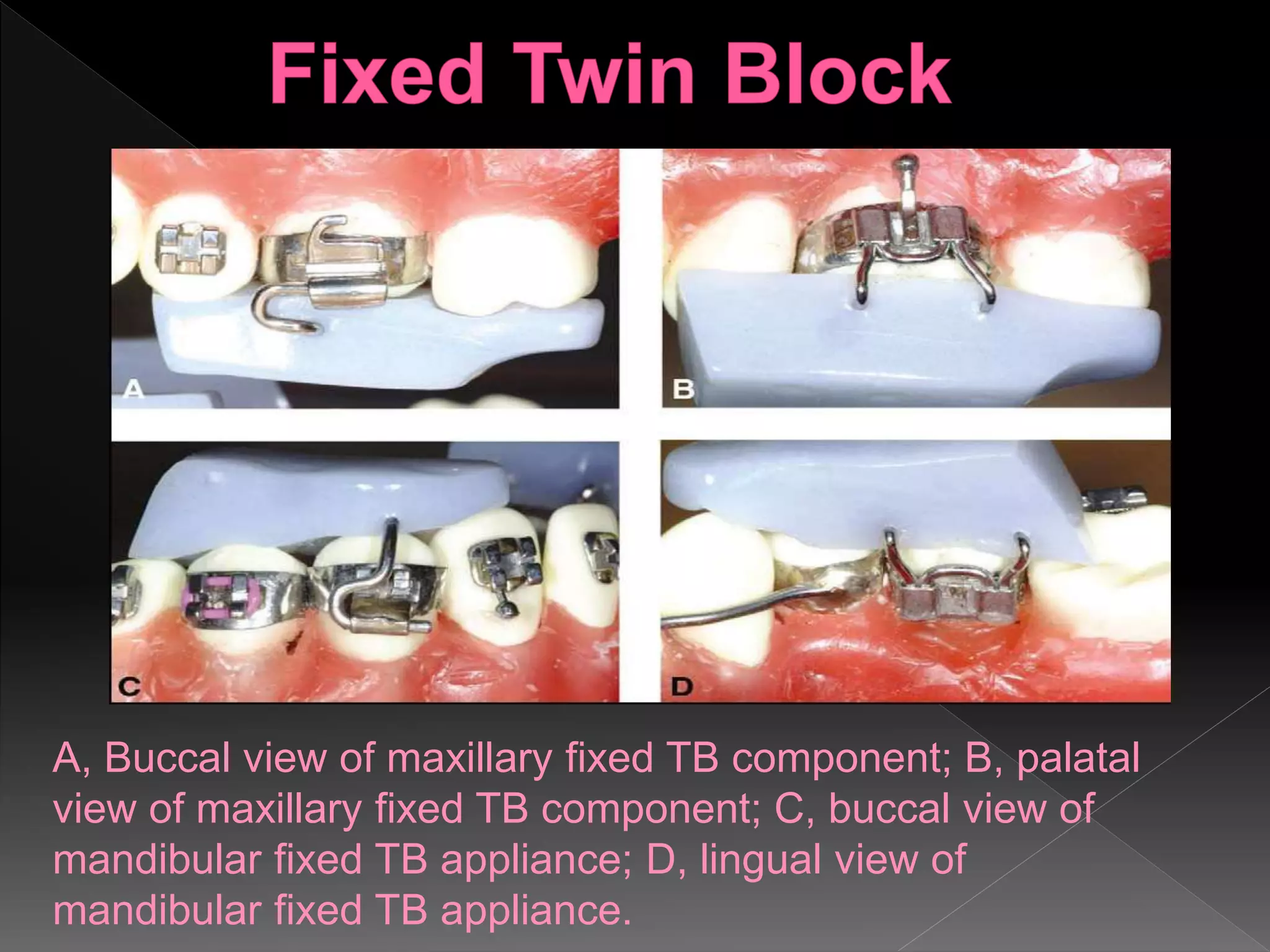
A, Buccal view of maxillary fixed TB component; B, palatal
view of maxillary fixed TB component; C, buccal view of
mandibular fixed TB appliance; D, lingual view of
mandibular fixed TB appliance.
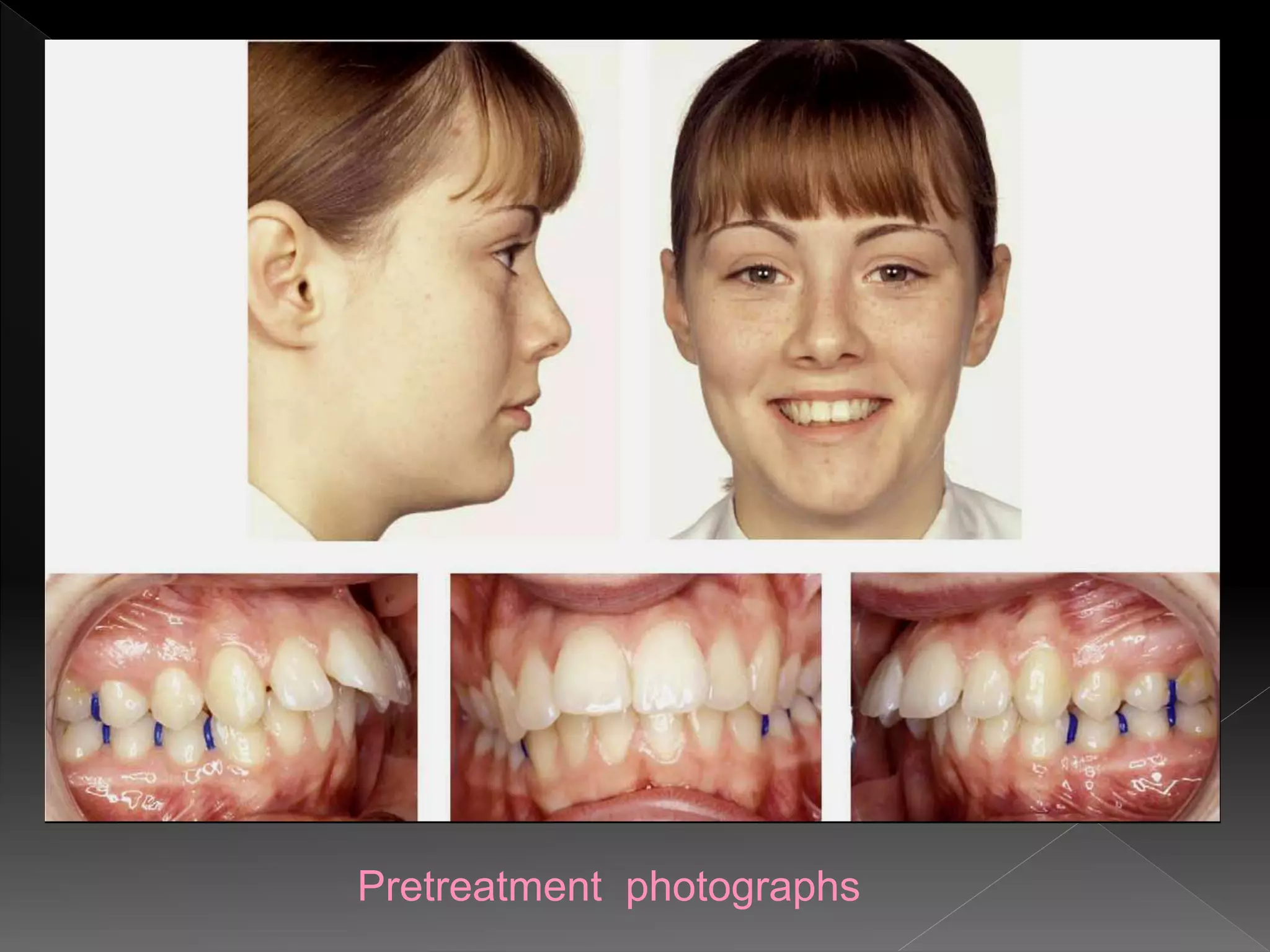
Pretreatment photographs
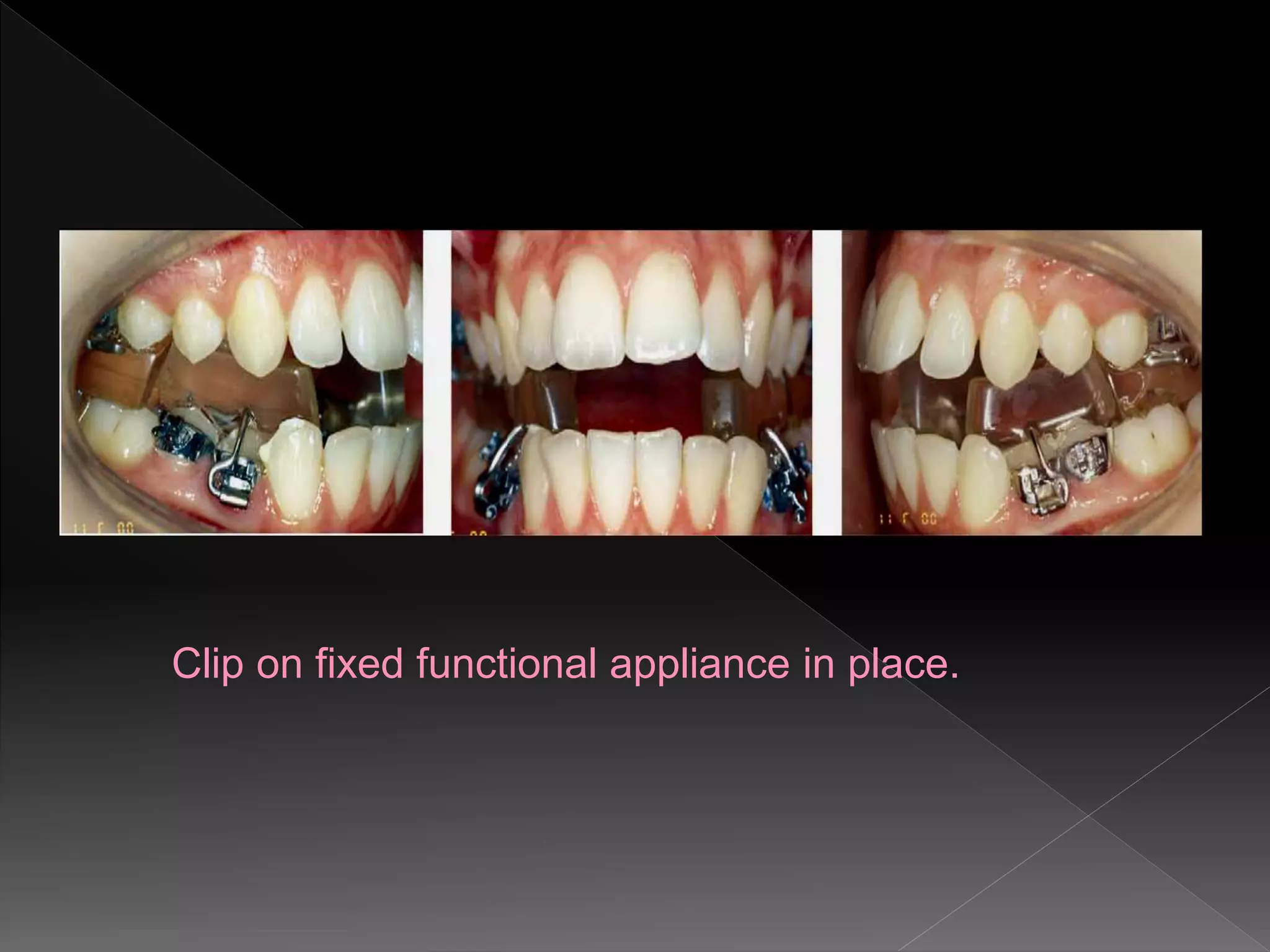
Clip on fixed functional appliance in place.
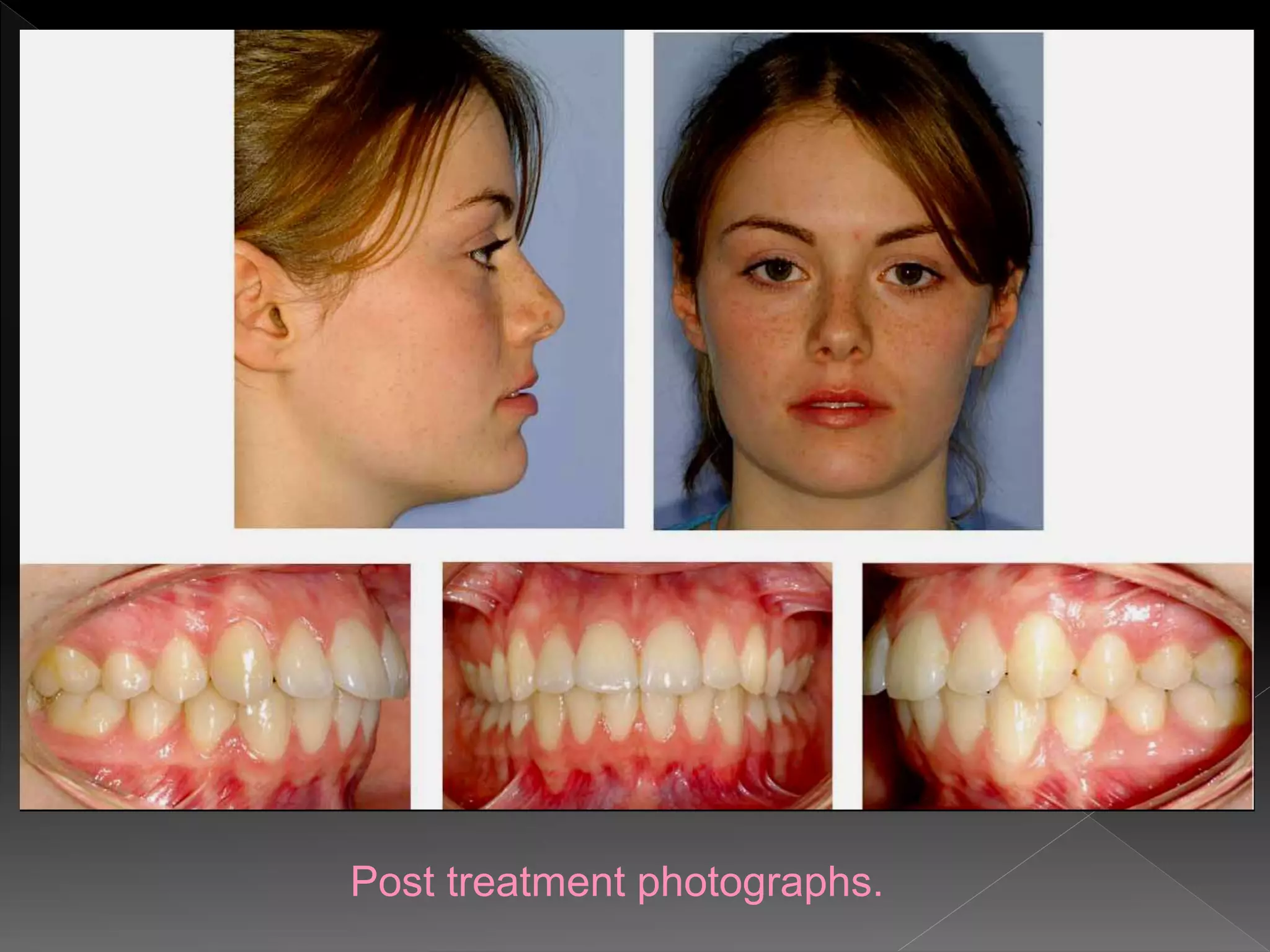
Post treatment photographs.
 Dr. Gerber has modified his Twin Block
design to improve stability and
neuromuscular treatment.
 He has also extended the acrylic and
eliminated all sharp edges to create a tighter
fitting appliance.
 The appliances can be modified as the
case requires and designs may be used in
any combination. For example, upper and
lower expansion screws may be used for
lateral development, an upper sagittal type
appliance may be used with a basic lower
appliance, and a face bow, or reverse
headgear, may be incorporated in the case
design.
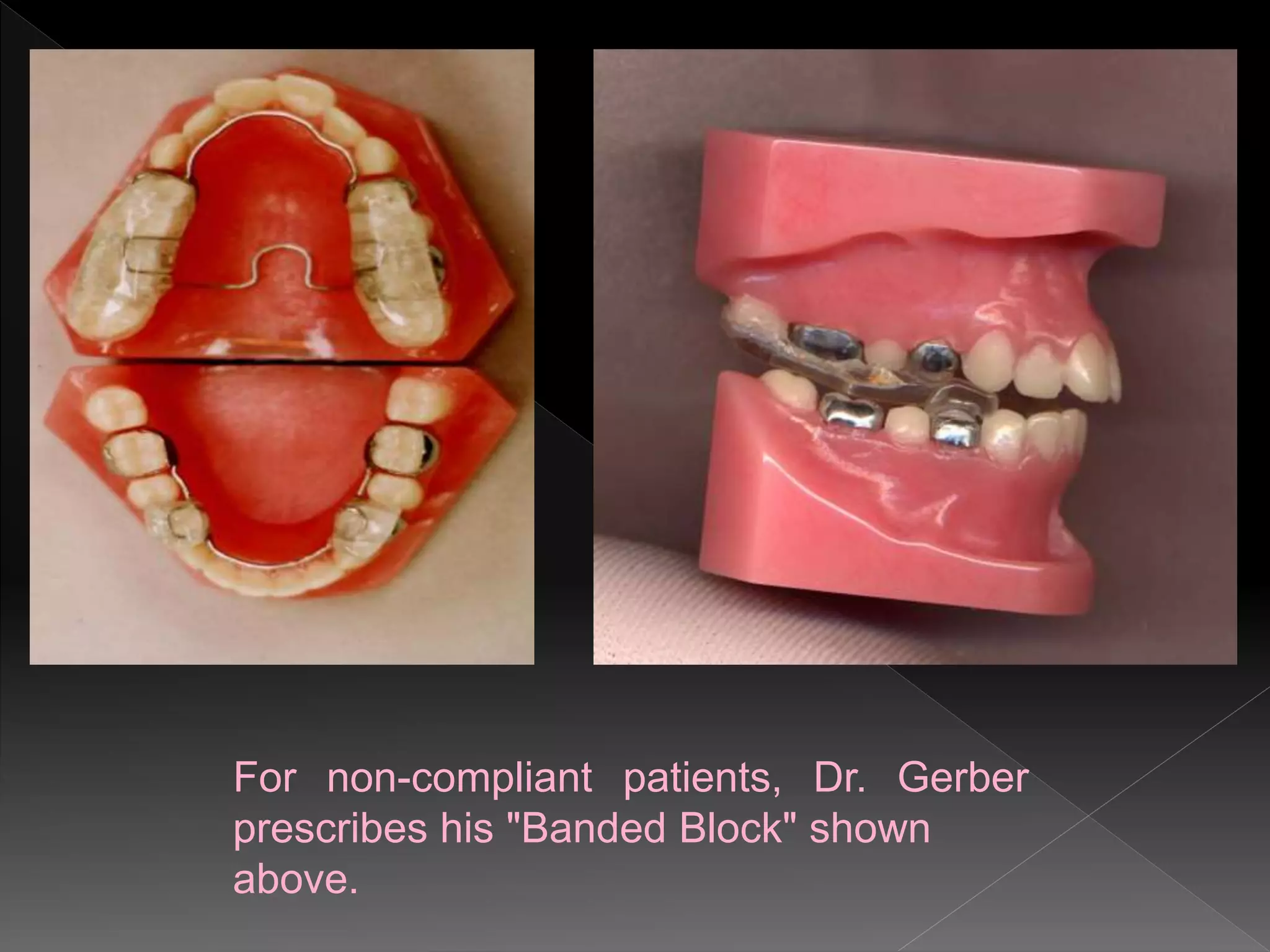
For non-compliant patients, Dr. Gerber
prescribes his "Banded Block" shown
above.
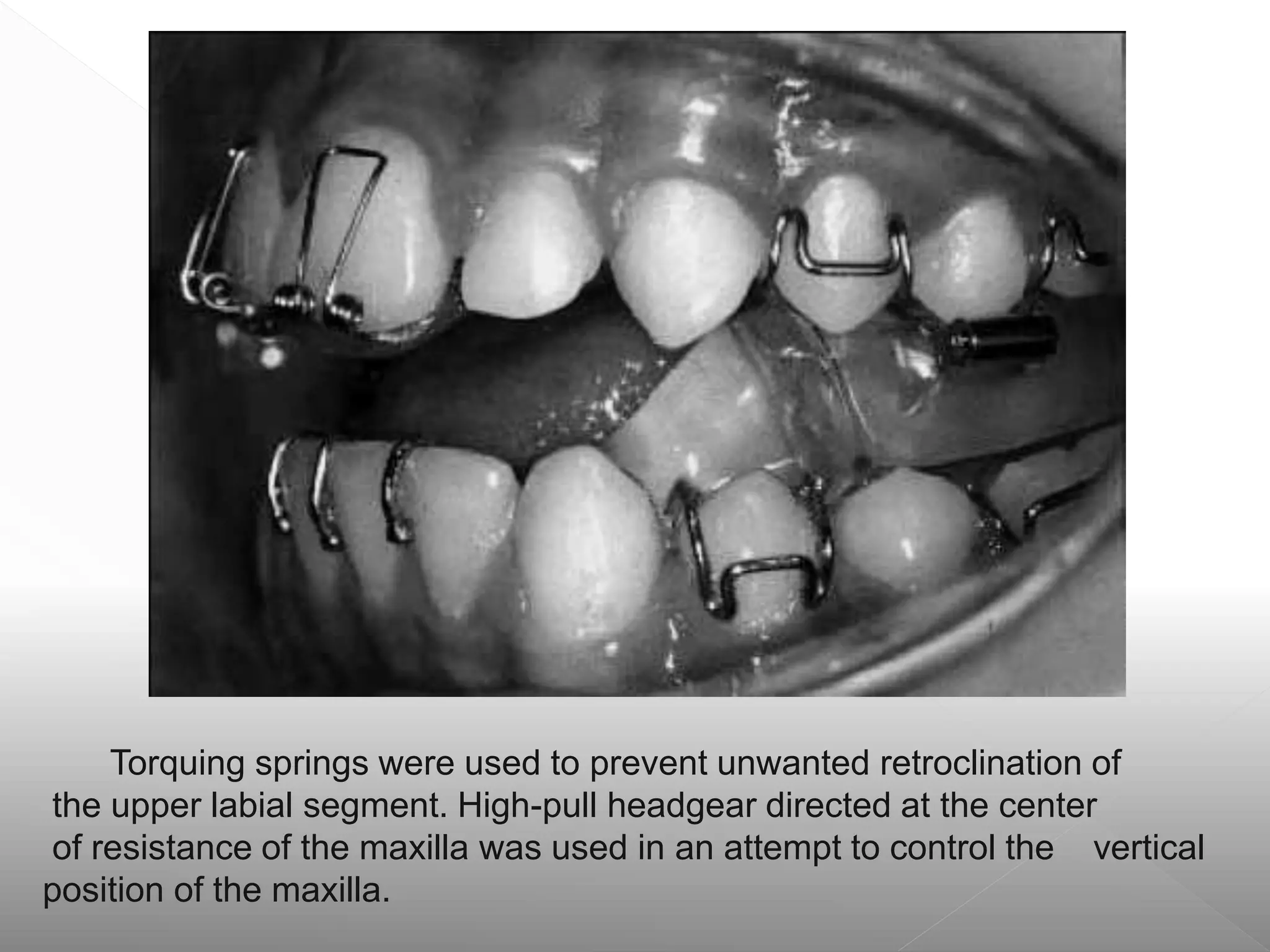
Torquing springs were used to prevent unwanted retroclination of
the upper labial segment. High-pull headgear directed at the center
of resistance of the maxilla was used in an attempt to control the vertical
position of the maxilla.
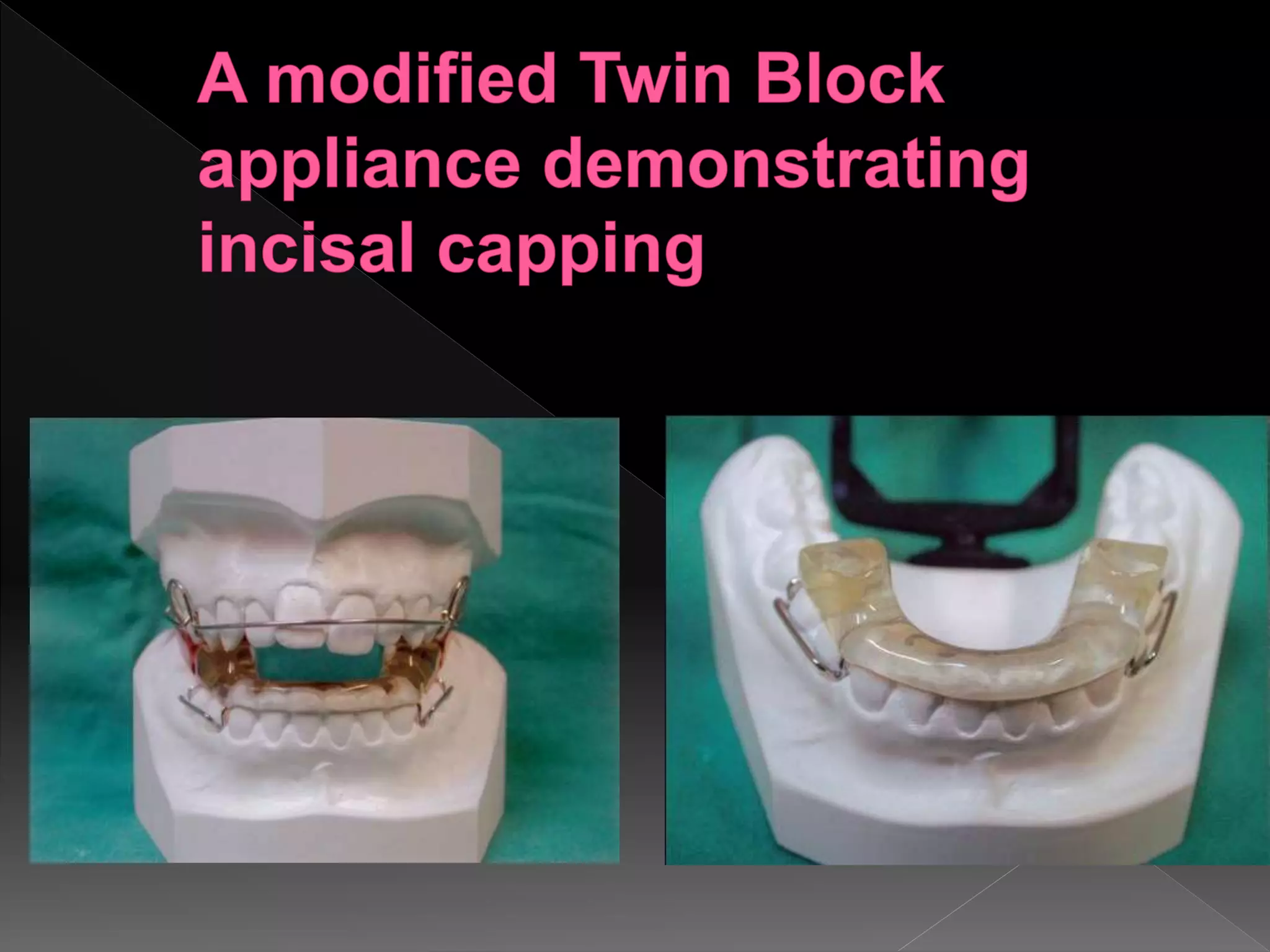
 This modification was introduced to reduce the
incidence of midline fracture in the lower block,
which was found to be the most common
removable appliance breakage.
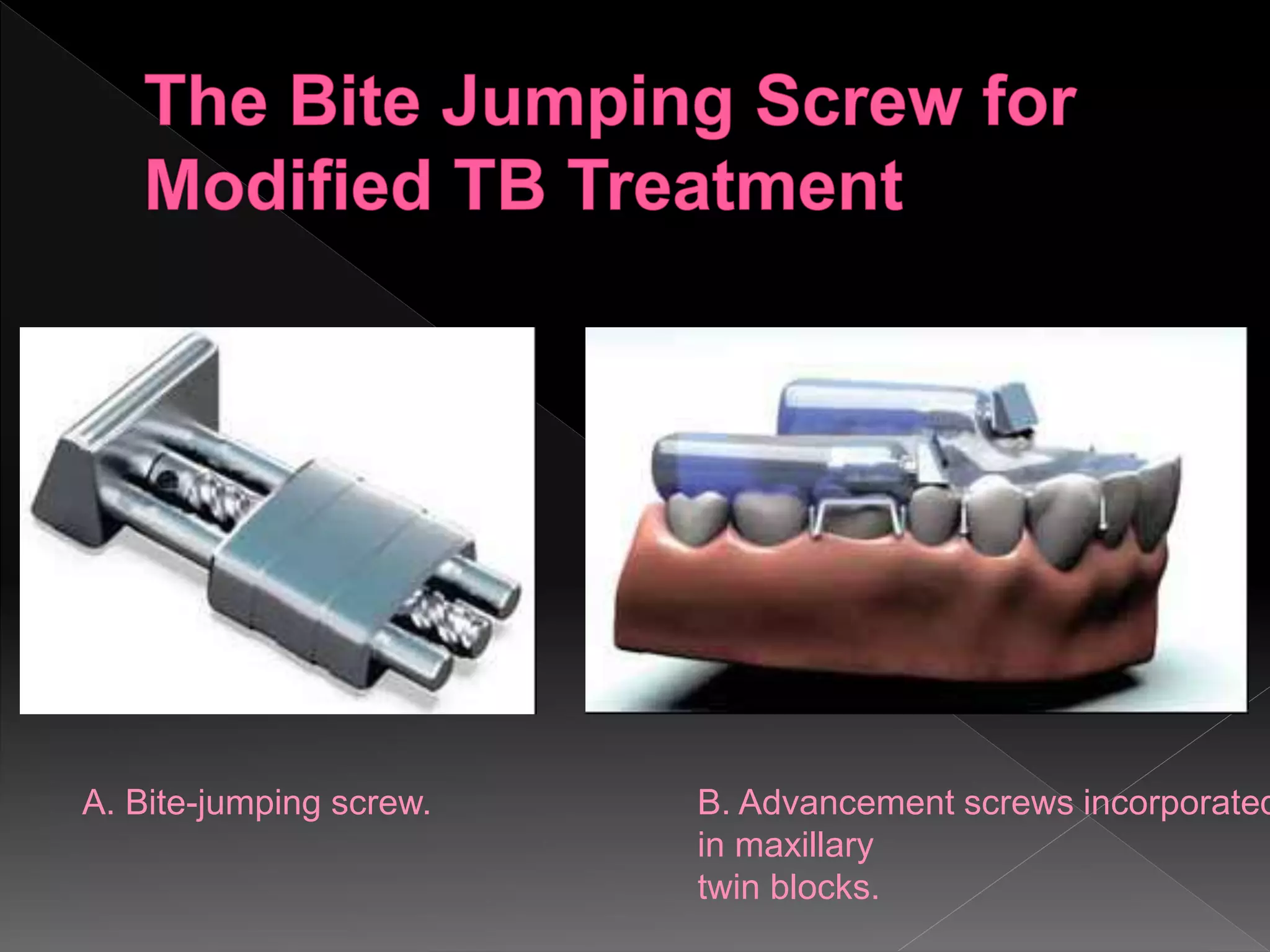
A. Bite-jumping screw. B. Advancement screws incorporated
in maxillary
twin blocks.
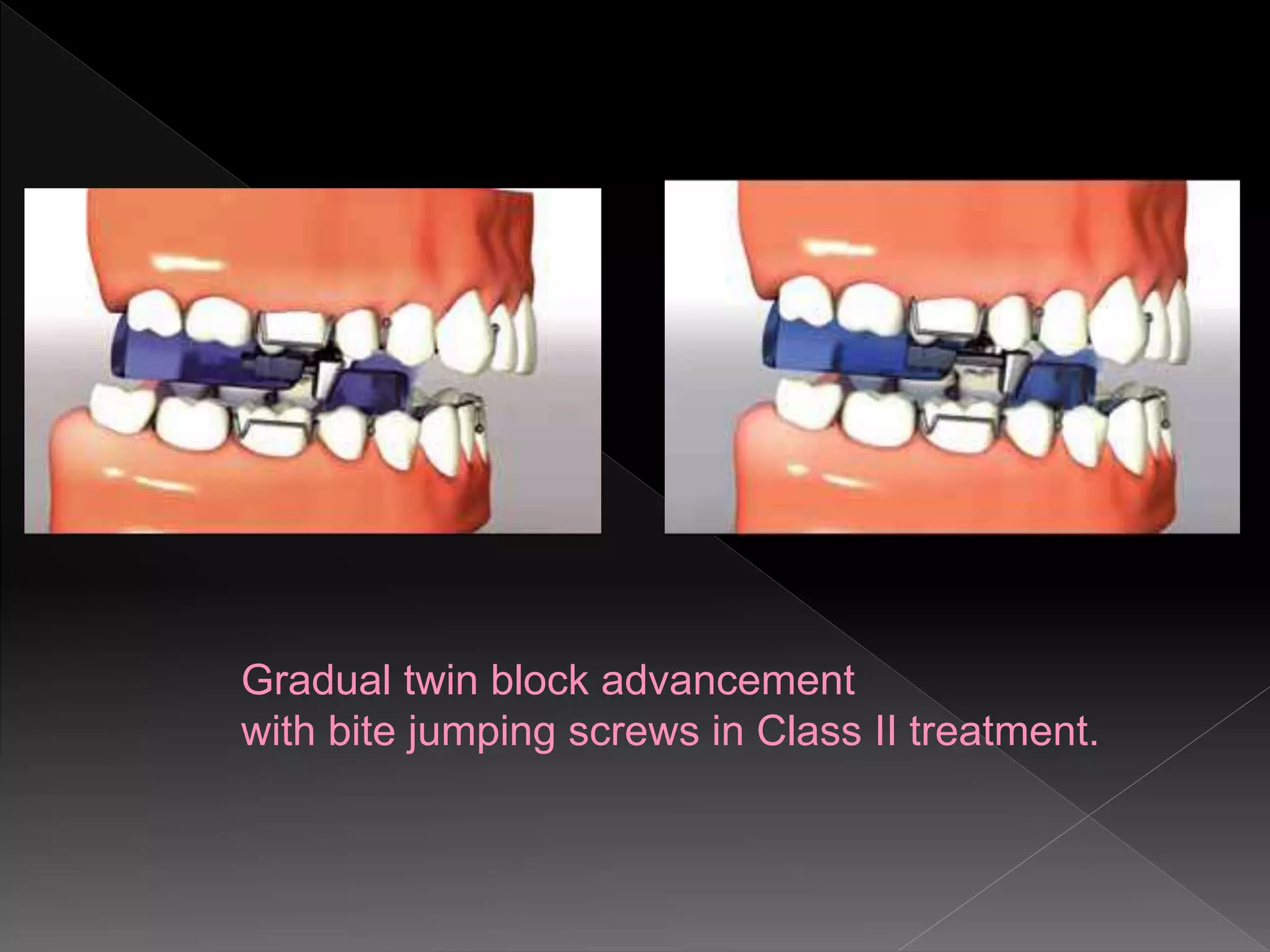
Gradual twin block advancement
with bite jumping screws in Class II treatment.
 The bite jumping screw was developed to
simplify progressive bite advancement with the
twin-block appliance.
 These screws are incorporated longitudinally in
the upper bite blocks, with the screw heads at
70° angles to the lower bite Blocks. (The
system allows a gradual,
6mm anteroposterior correction in either Class
II or Class III cases).
 Gradual advancement of the bite, produces a
more orthopedic effect and better patient
compliance by reducing tension in the
craniomandibular musculature.
 Also gradual bite advancement would improve
patient comfort at rest and during speech, and
that it would be more likely to maintain the
correct position of the appliance during sleep.
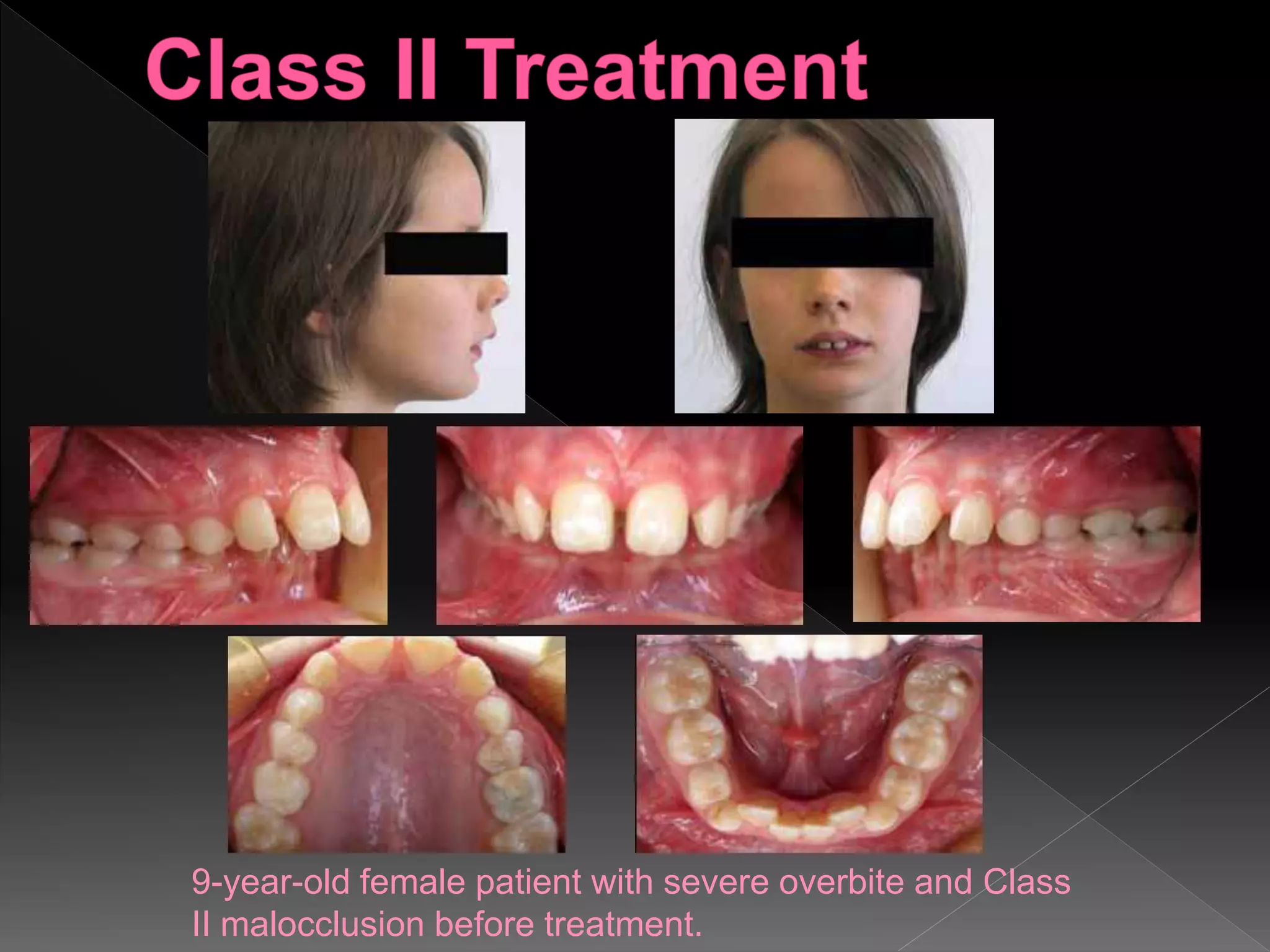
9-year-old female patient with severe overbite and Class
II malocclusion before treatment.
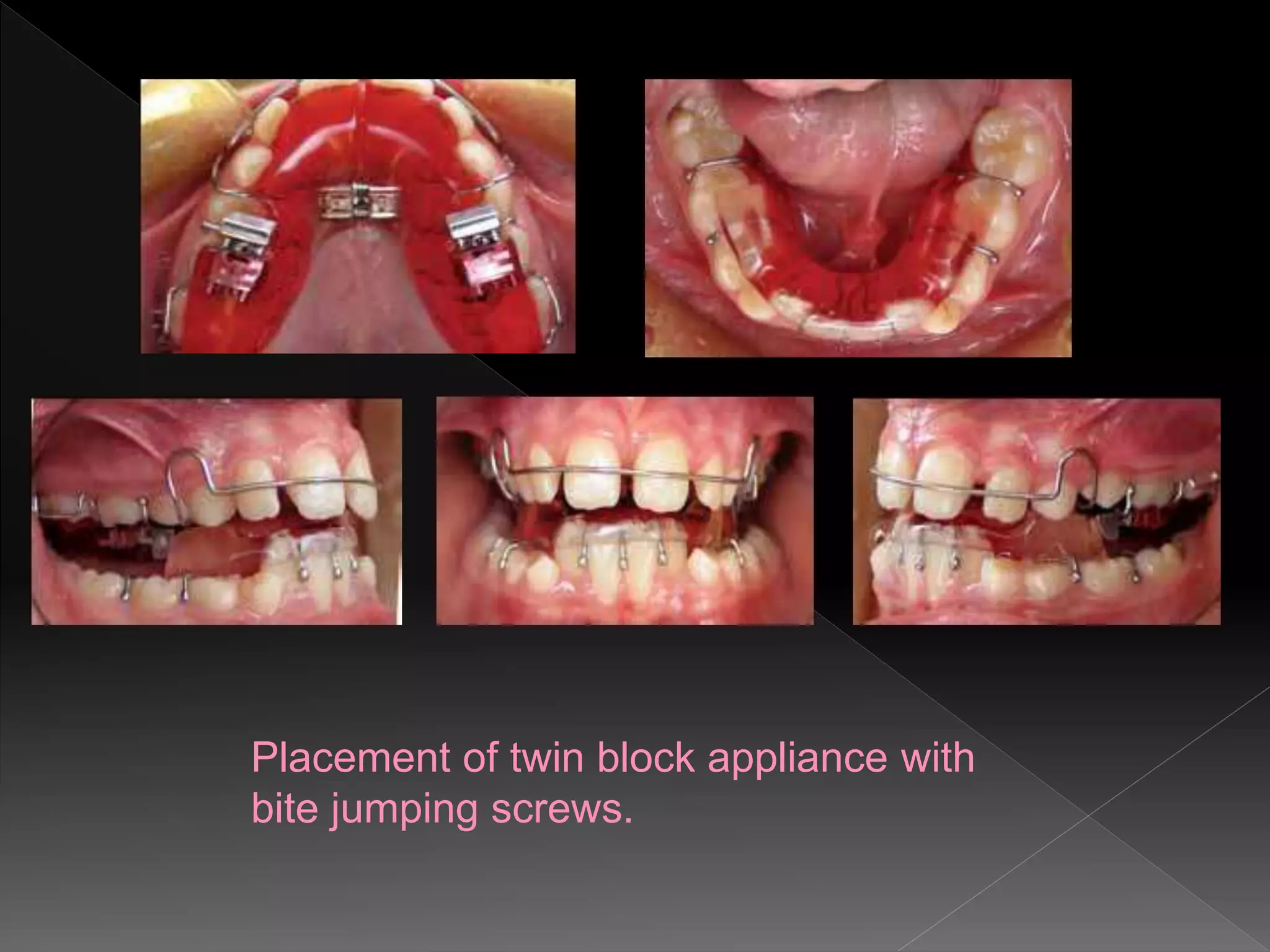
Placement of twin block appliance with
bite jumping screws.
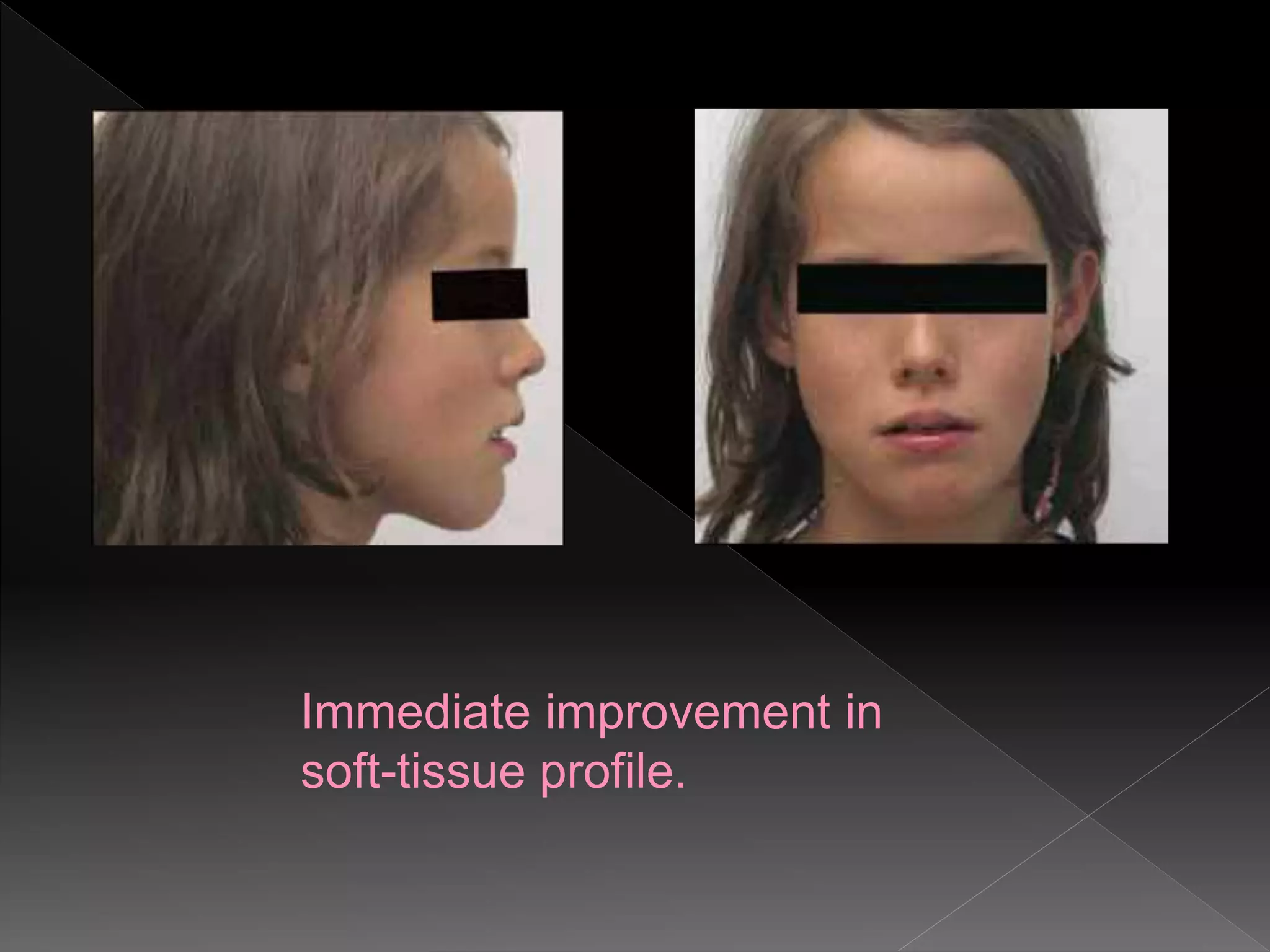
Immediate improvement in
soft-tissue profile.
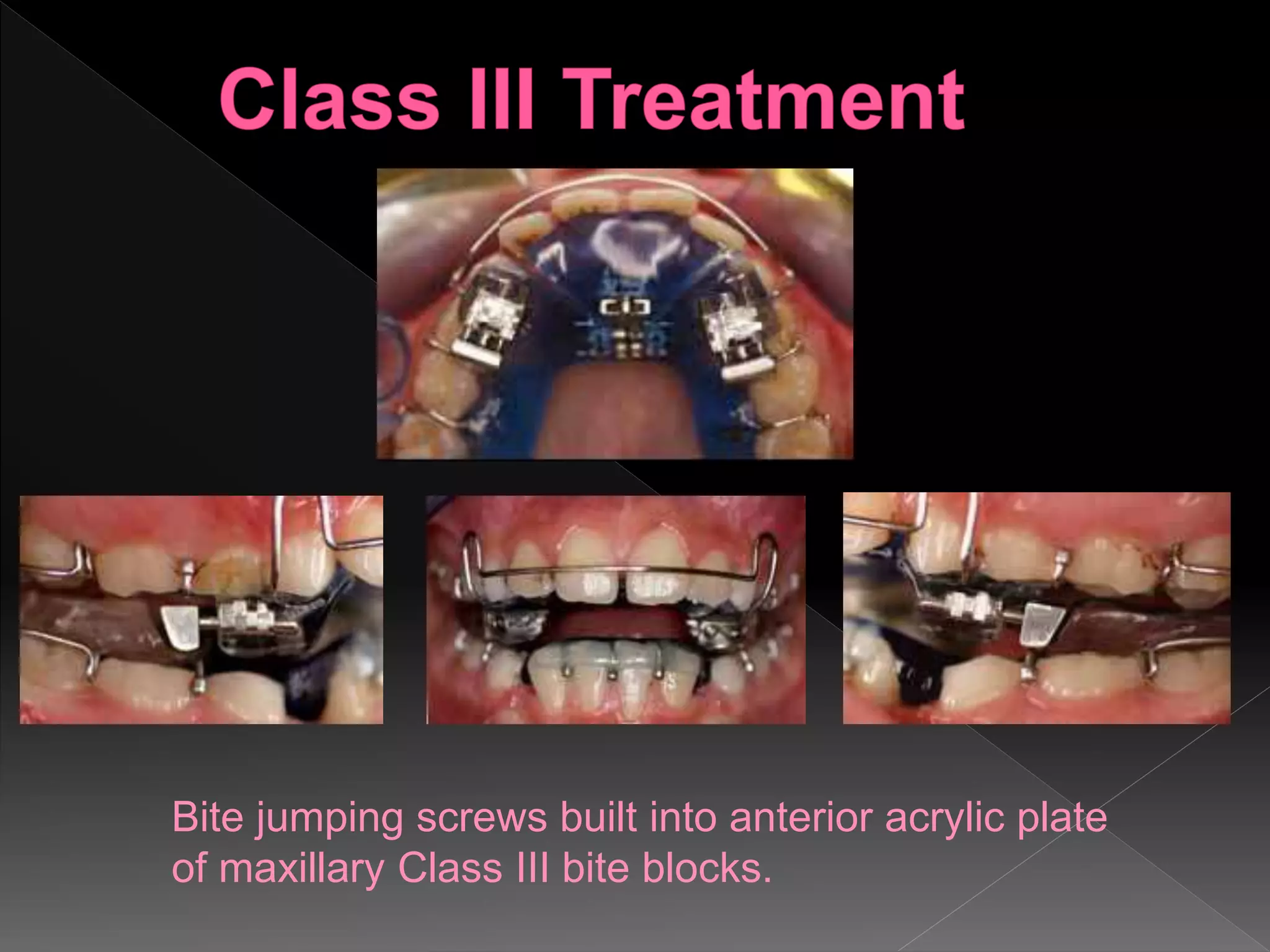
Bite jumping screws built into anterior acrylic plate
of maxillary Class III bite blocks.
 Conventional twin blocks are especially difficult
to reactivate in Class III cases.
Bite jumping screws built into the anterior
acrylic plate of the maxillary Class III bite blocks
allow easy gradual advancement.
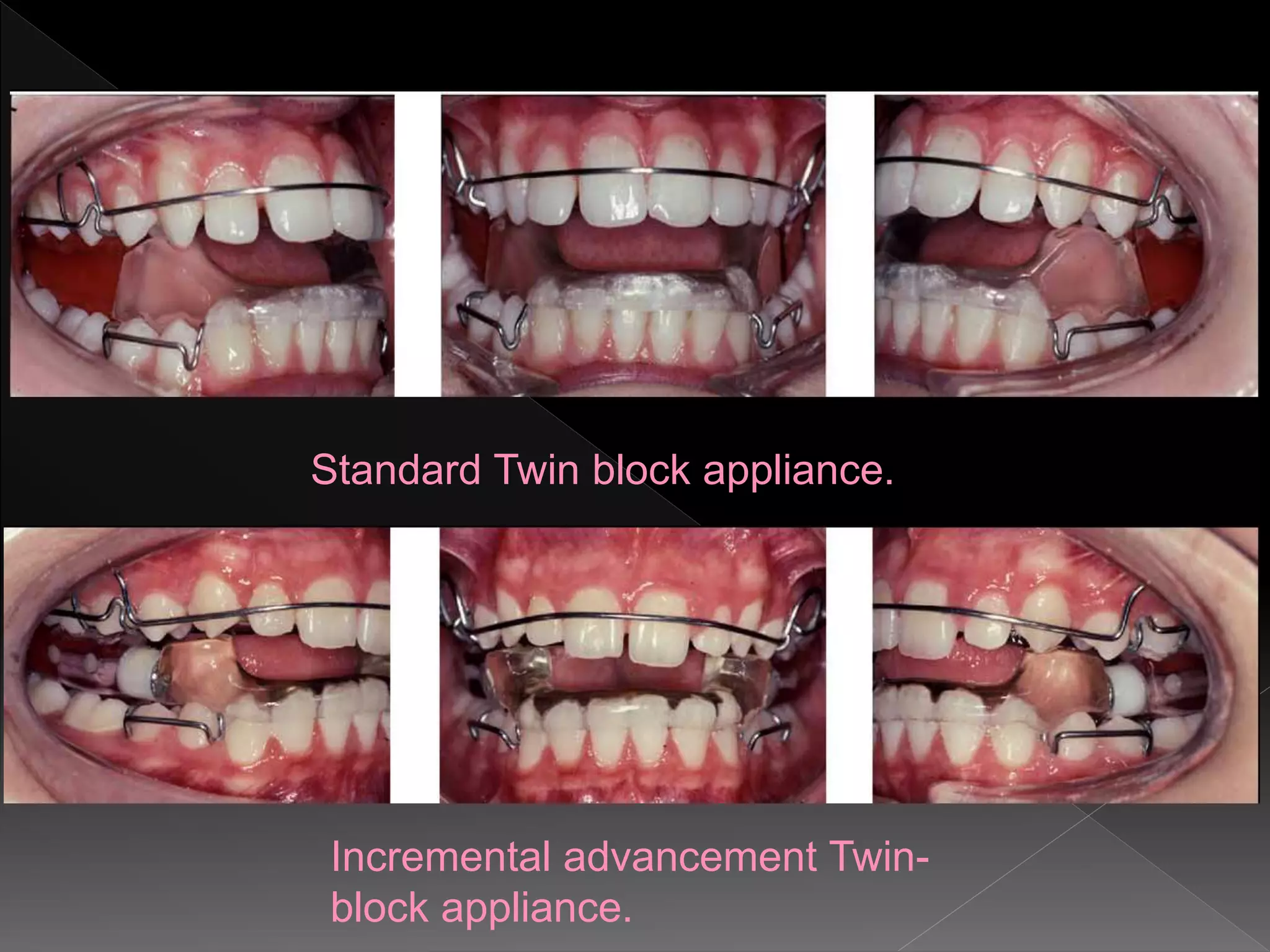
 The only design difference was the
incorporation of advancement screws and
housings into the maxillary appliance blocks.
 Further chair side bite advancements were
produced by the bilateral addition of 2-mm
thick acetal spacers to the maxillary block
advancement screws at 6 weekly intervals.
Standard Twin block appliance.
Incremental advancement Twin-
block appliance.
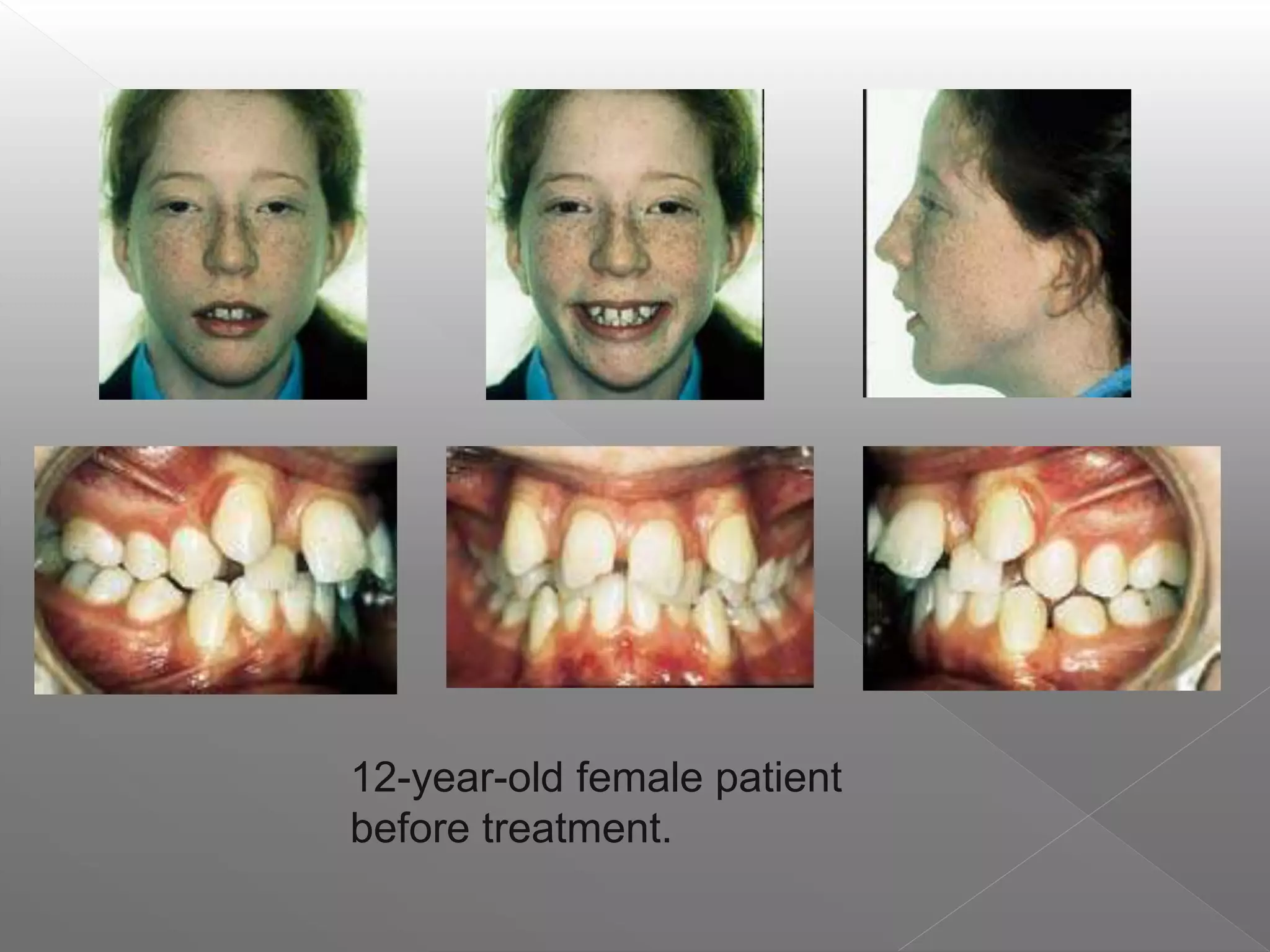
12-year-old female patient
before treatment.
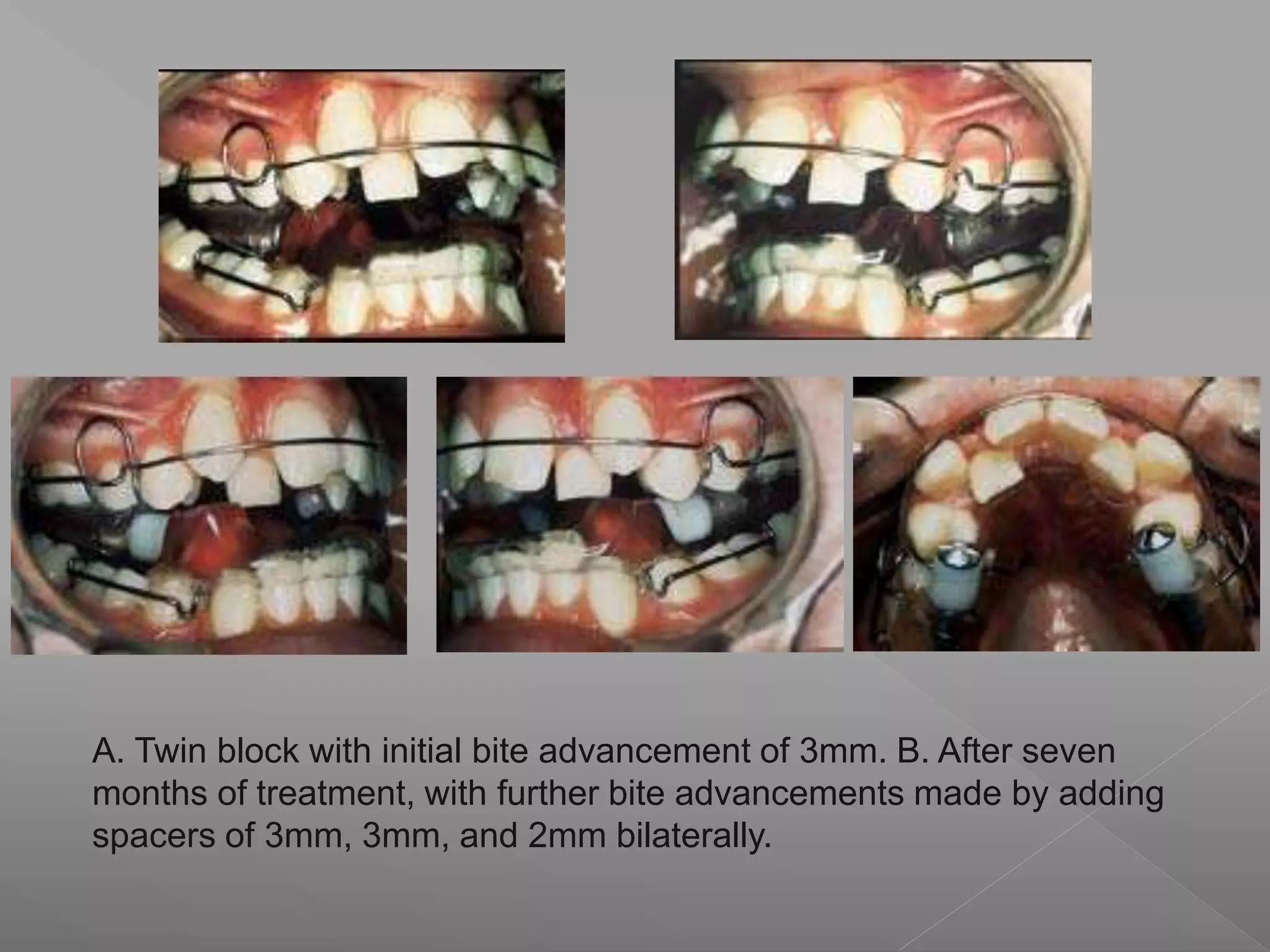
A. Twin block with initial bite advancement of 3mm. B. After seven
months of treatment, with further bite advancements made by adding
spacers of 3mm, 3mm, and 2mm bilaterally.
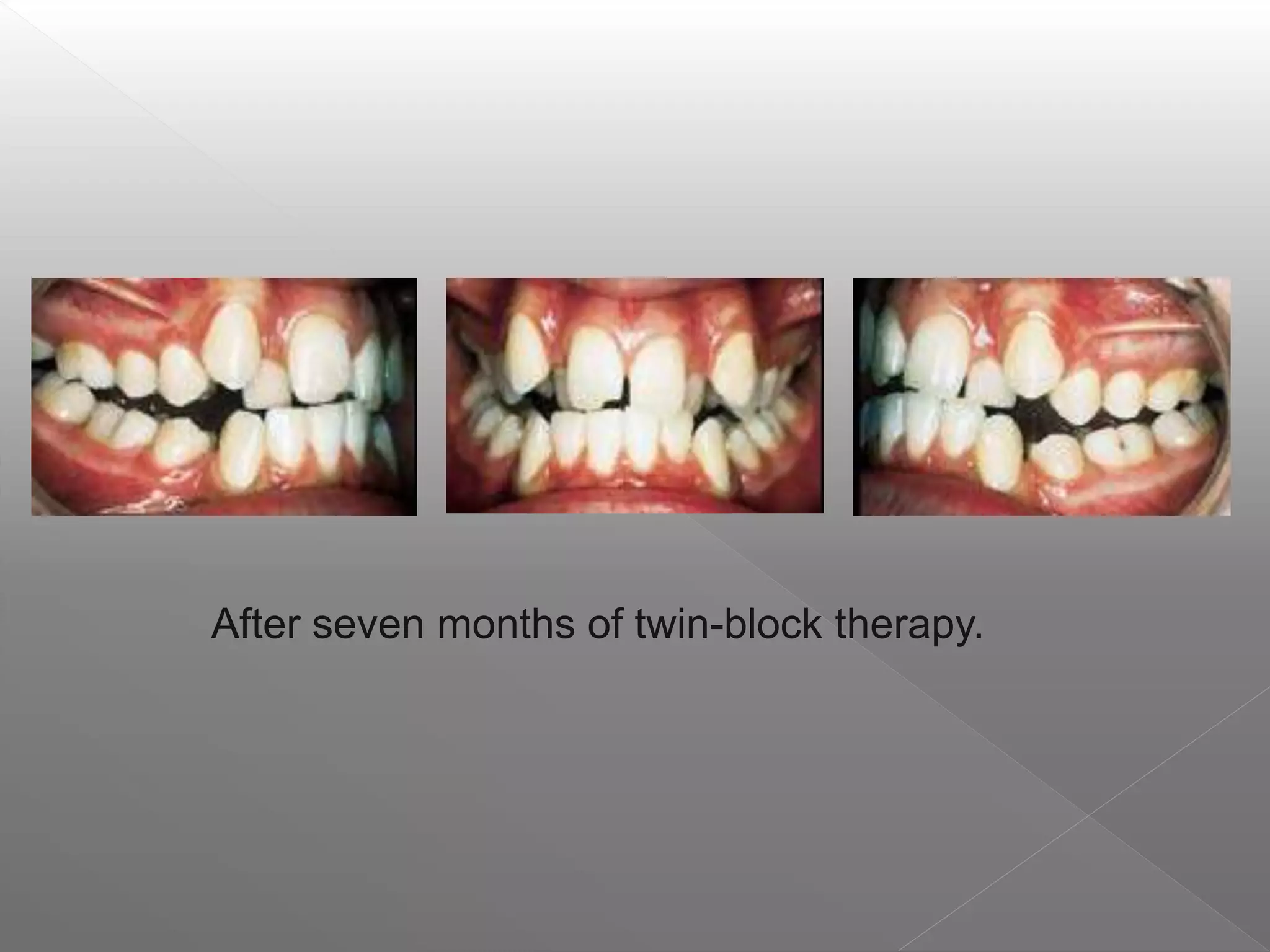
After seven months of twin-block therapy.
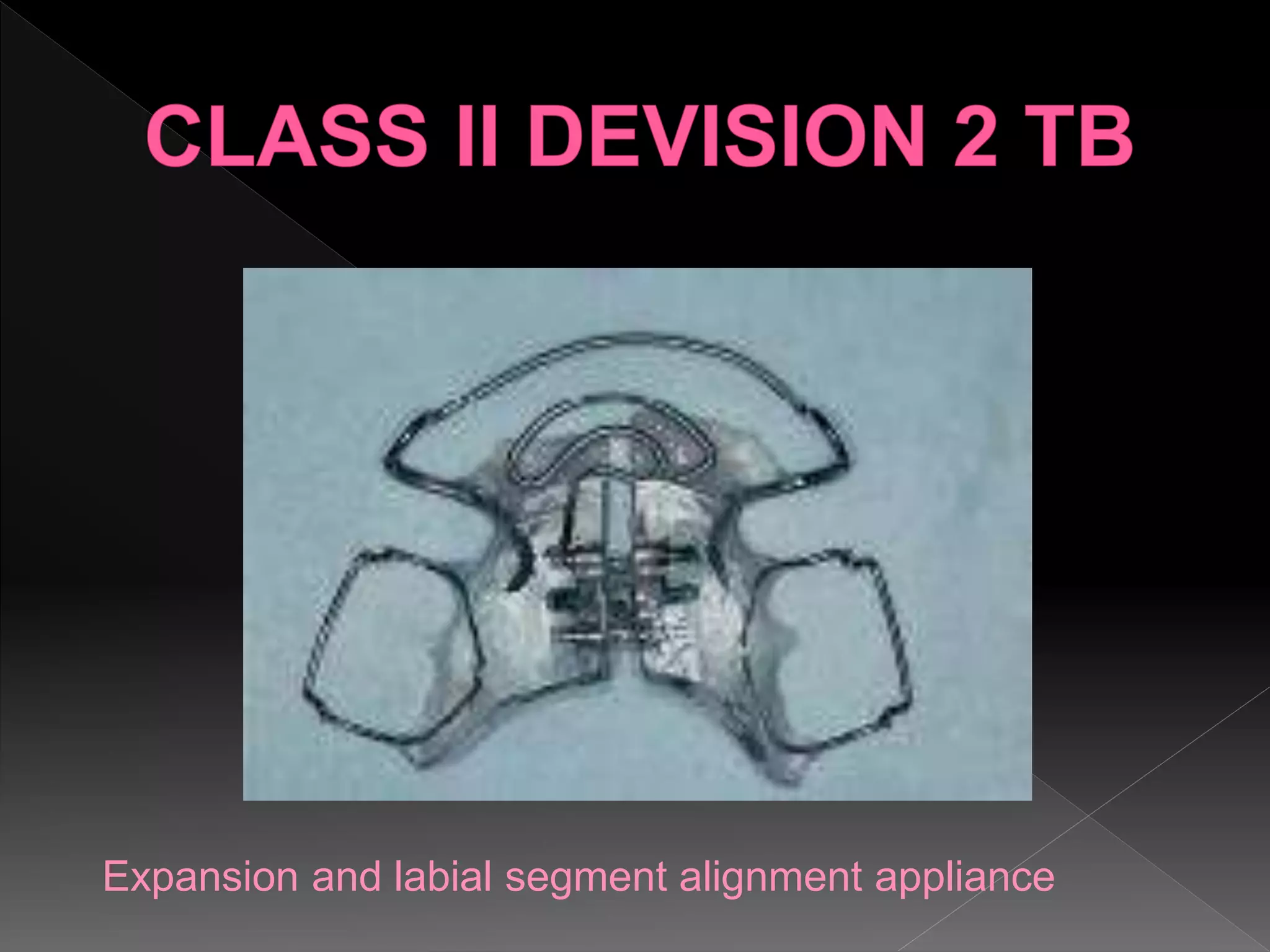
Expansion and labial segment alignment appliance
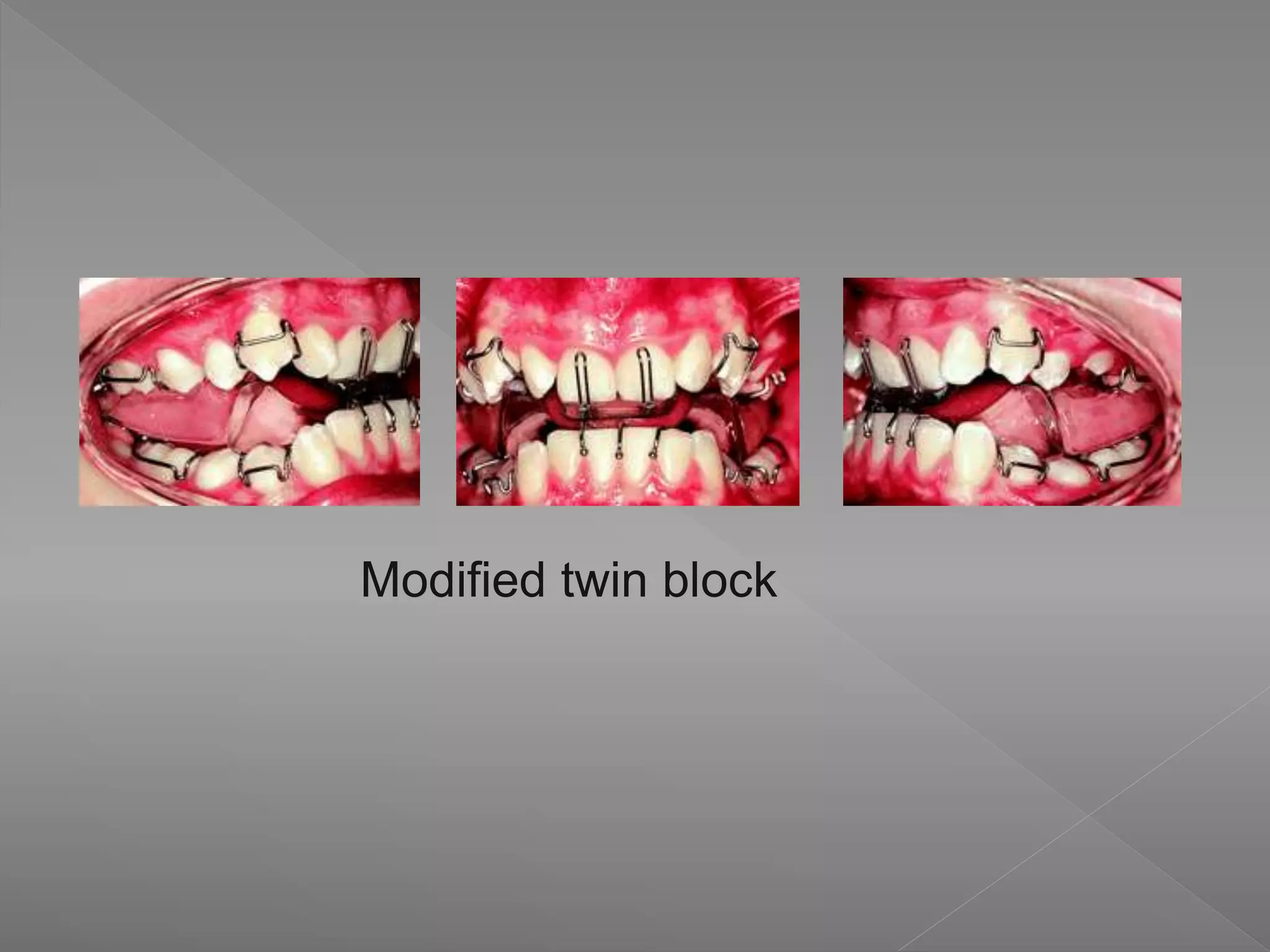
 Amodified TB appliance can used to
treatment of class II division 2 malocclusions
.
 This avoids the need for an initial period of
upper labial segment alignment, which would
increase the overall length of treatment.
 Sagittal correction of the retroclined upper
labial segment.
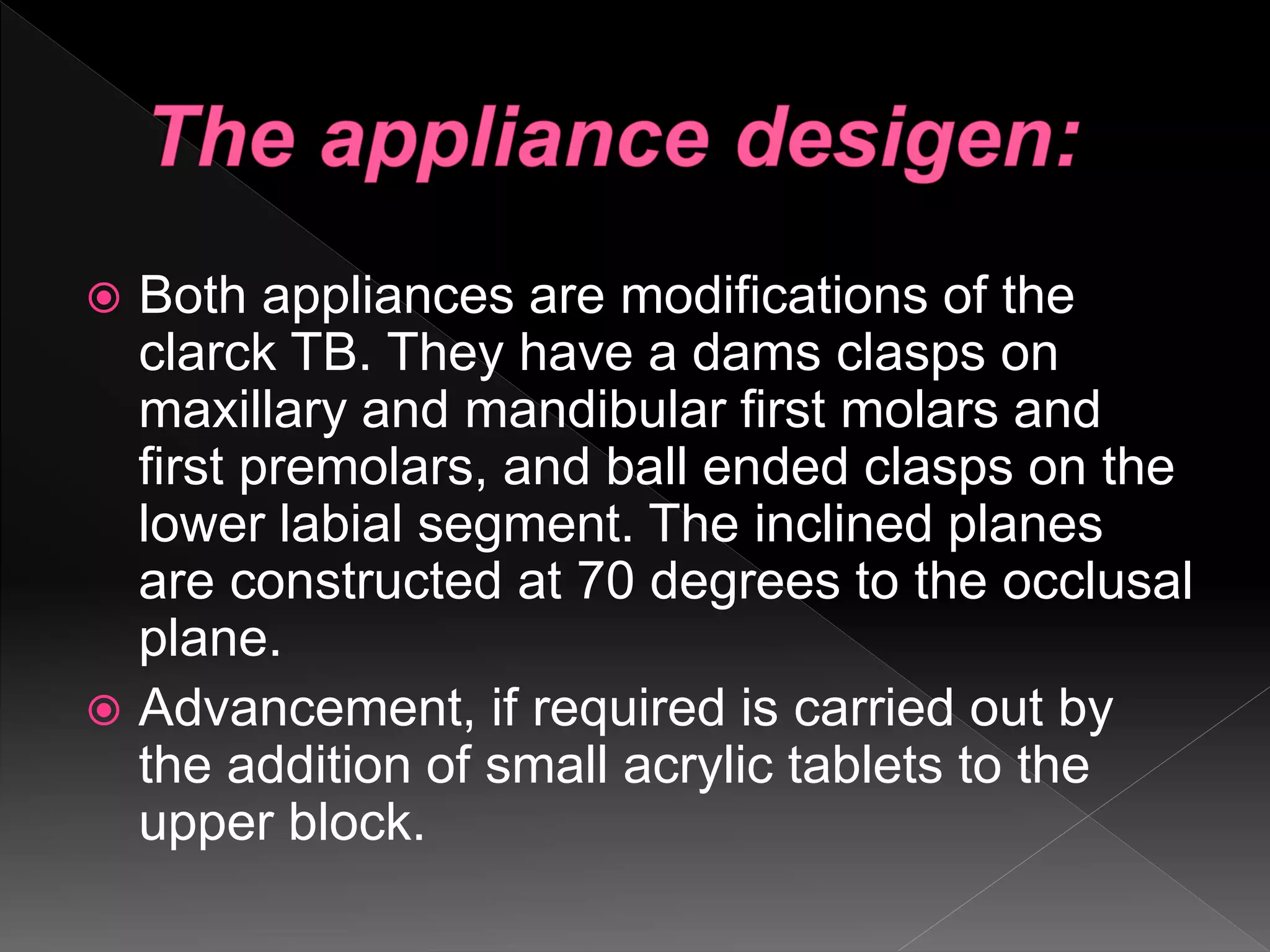
 Both appliances are modifications of the
clarck TB. They have a dams clasps on
maxillary and mandibular first molars and
first premolars, and ball ended clasps on the
lower labial segment. The inclined planes
are constructed at 70 degrees to the occlusal
plane.
 Advancement, if required is carried out by
the addition of small acrylic tablets to the
upper block.
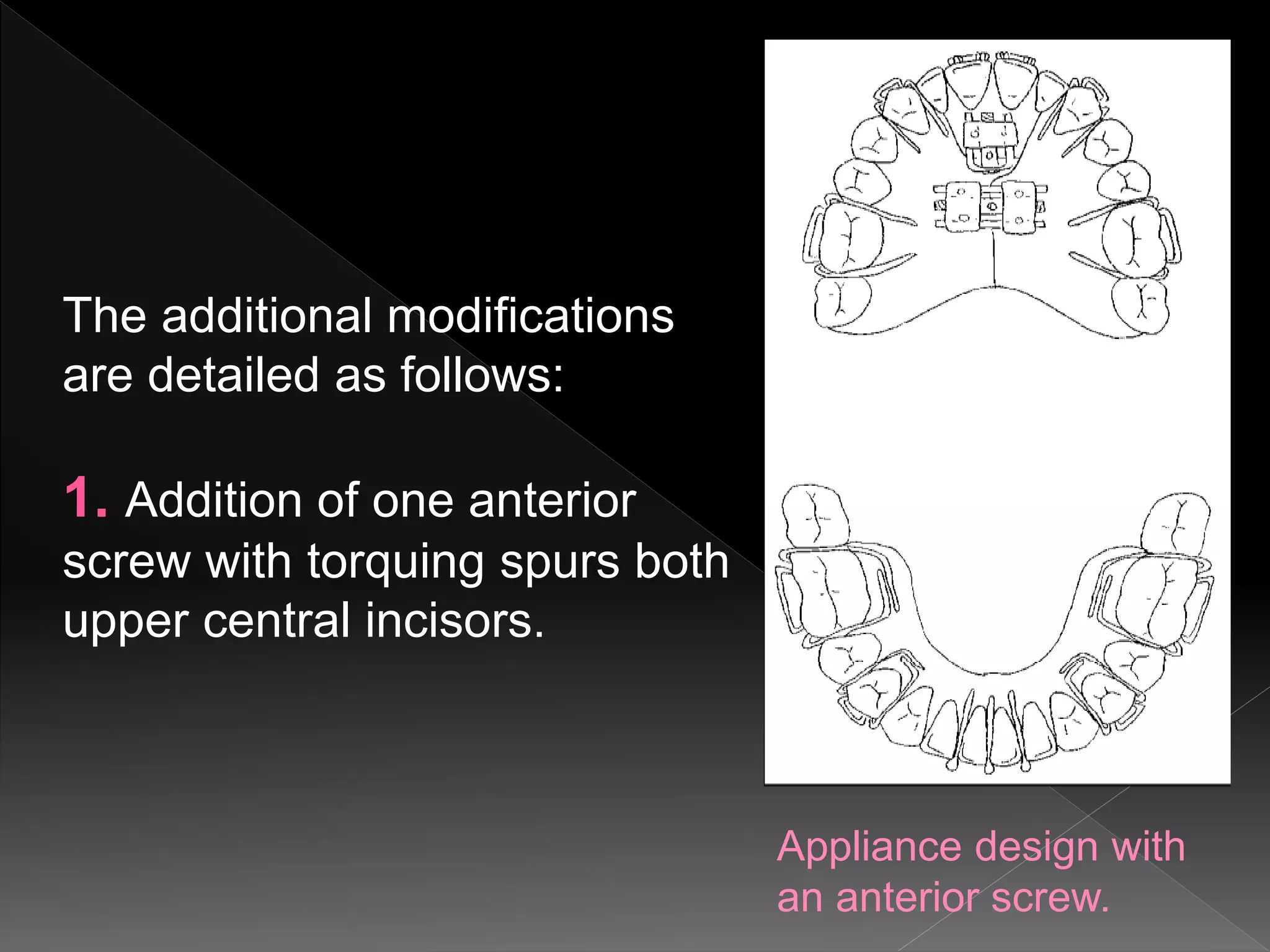
Appliance design with
an anterior screw.
The additional modifications
are detailed as follows:
1. Addition of one anterior
screw with torquing spurs both
upper central incisors.
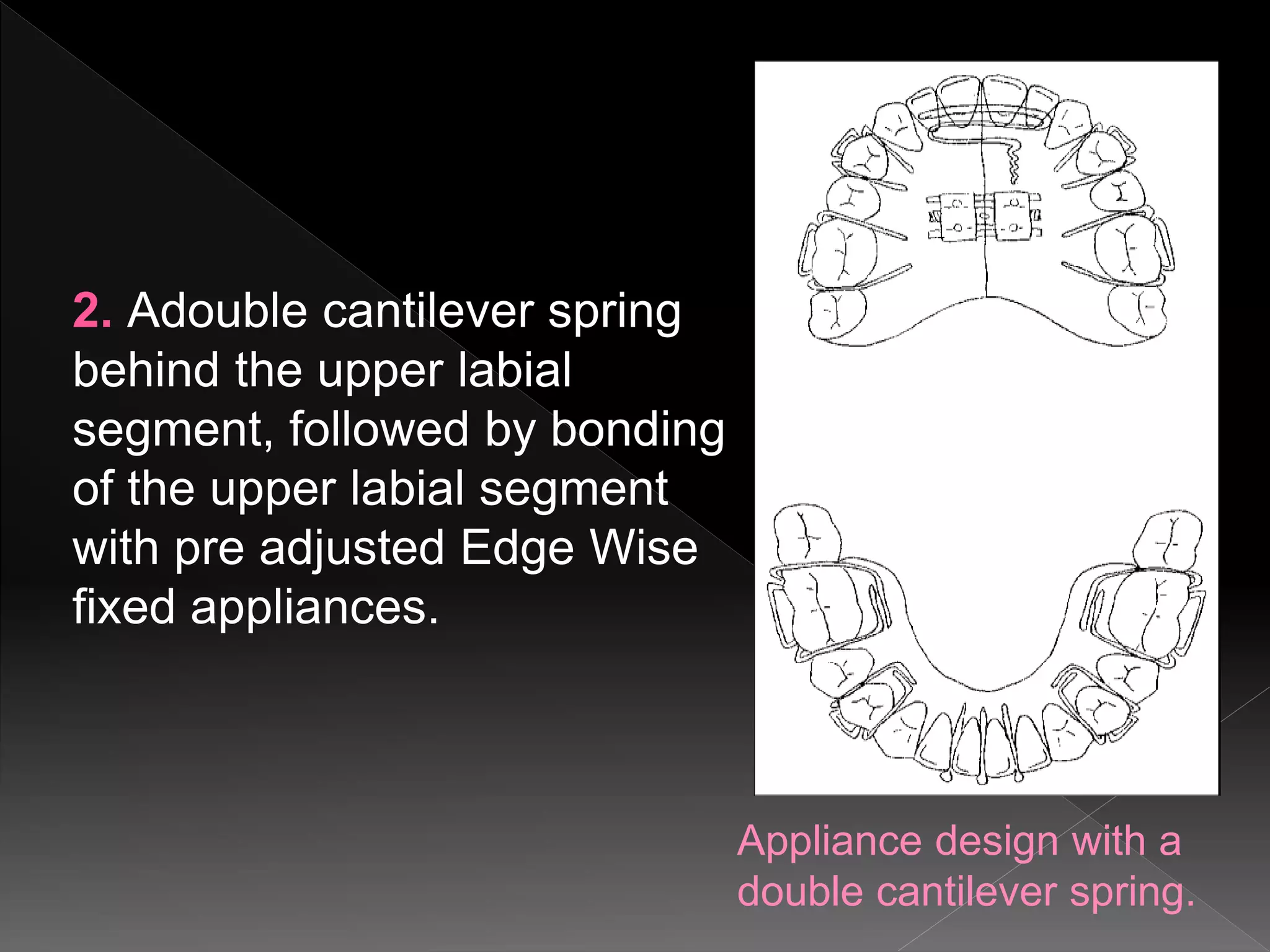
Appliance design with a
double cantilever spring.
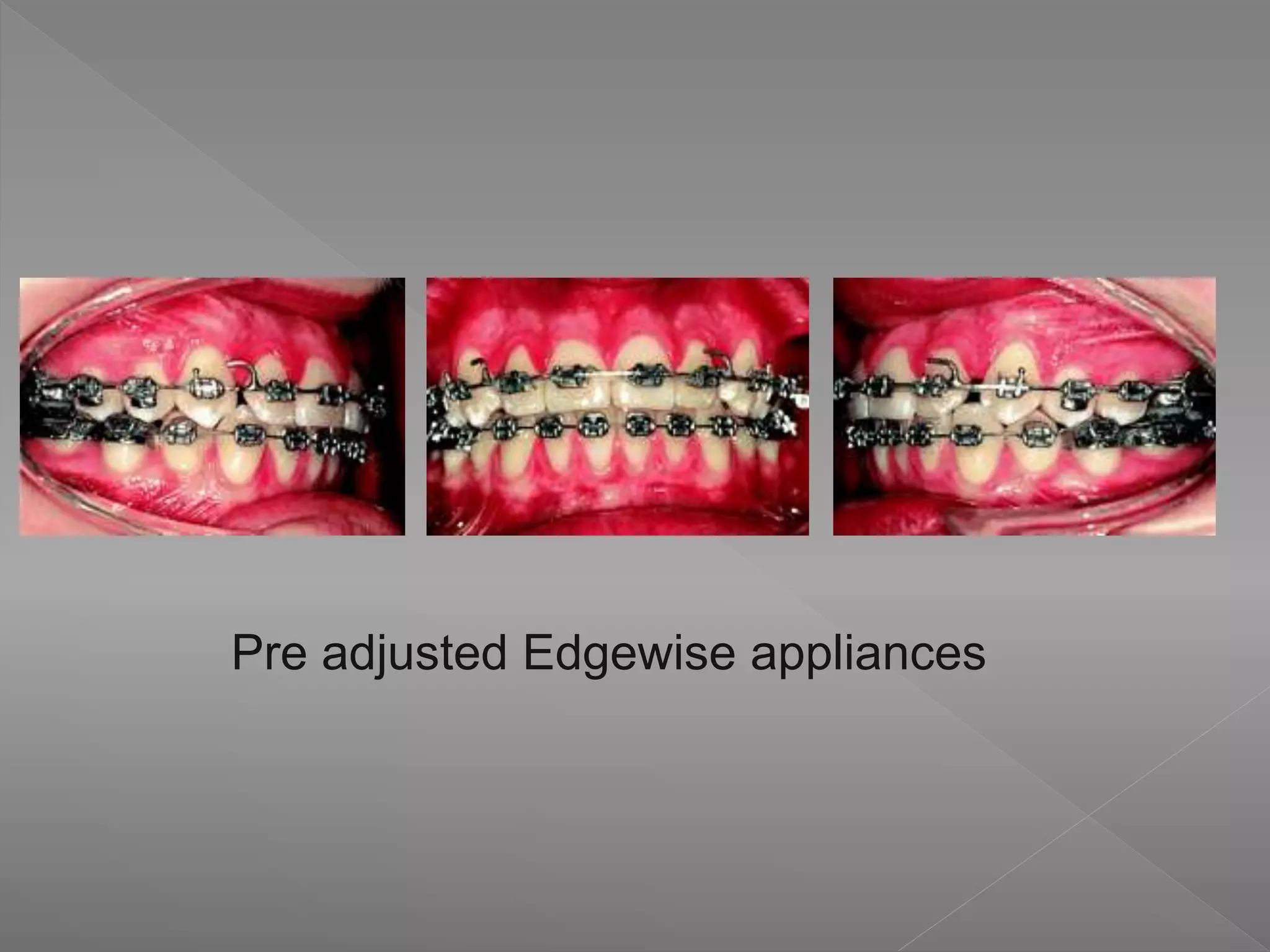
2. Adouble cantilever spring
behind the upper labial
segment, followed by bonding
of the upper labial segment
with pre adjusted Edge Wise
fixed appliances.
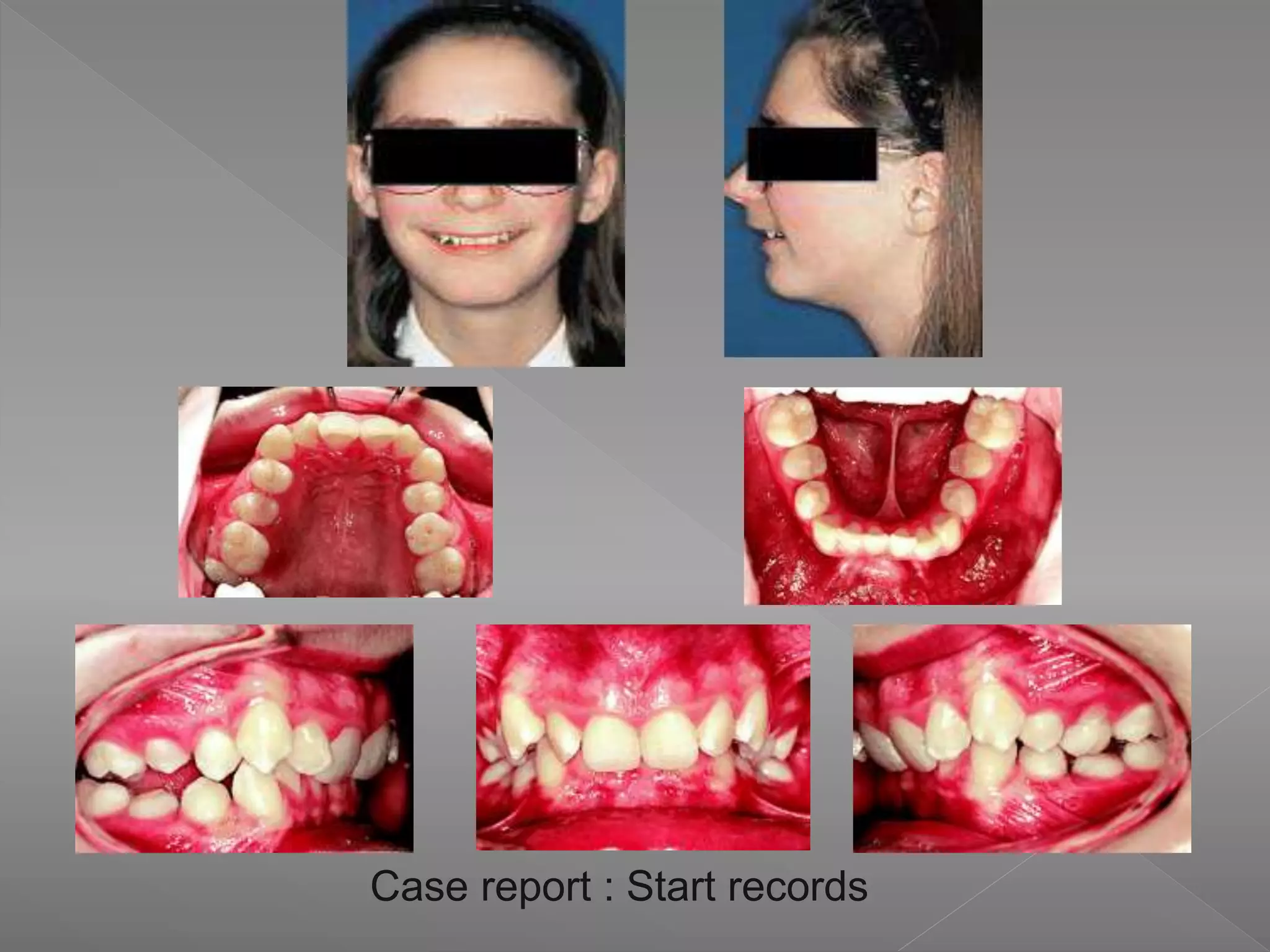
Case report : Start records
Modified twin block
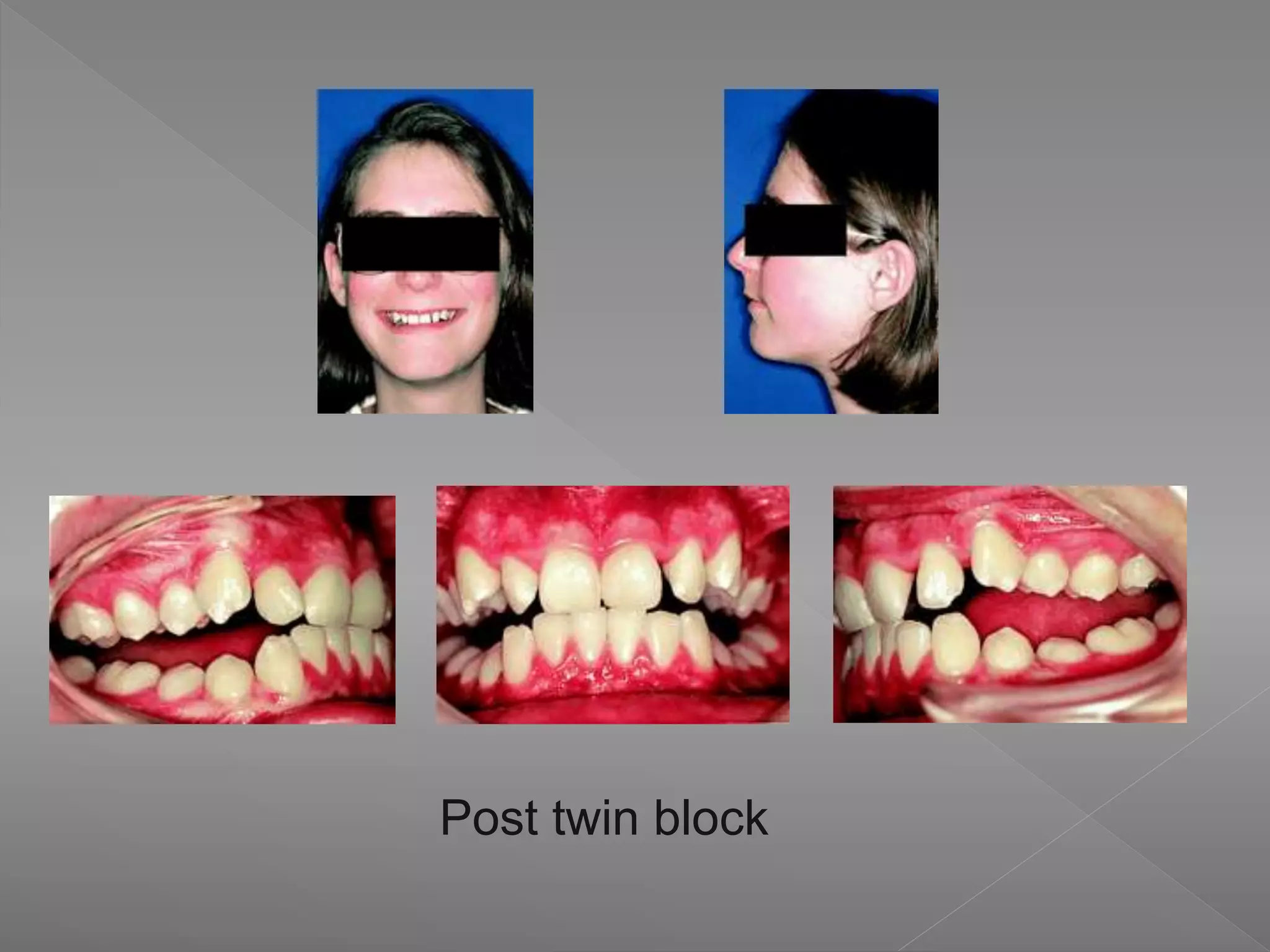
Post twin block
Pre adjusted Edgewise appliances
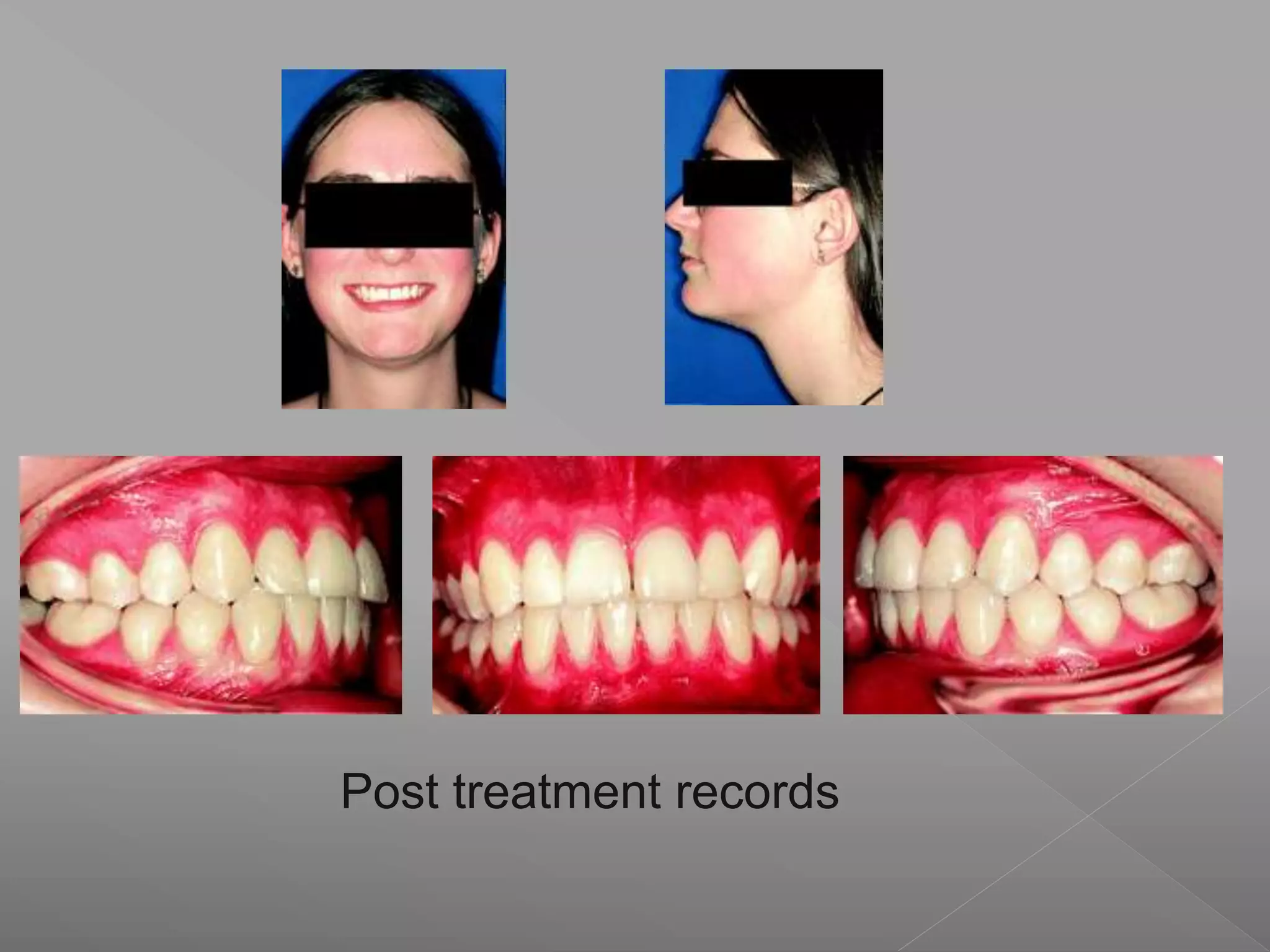
Post treatment records
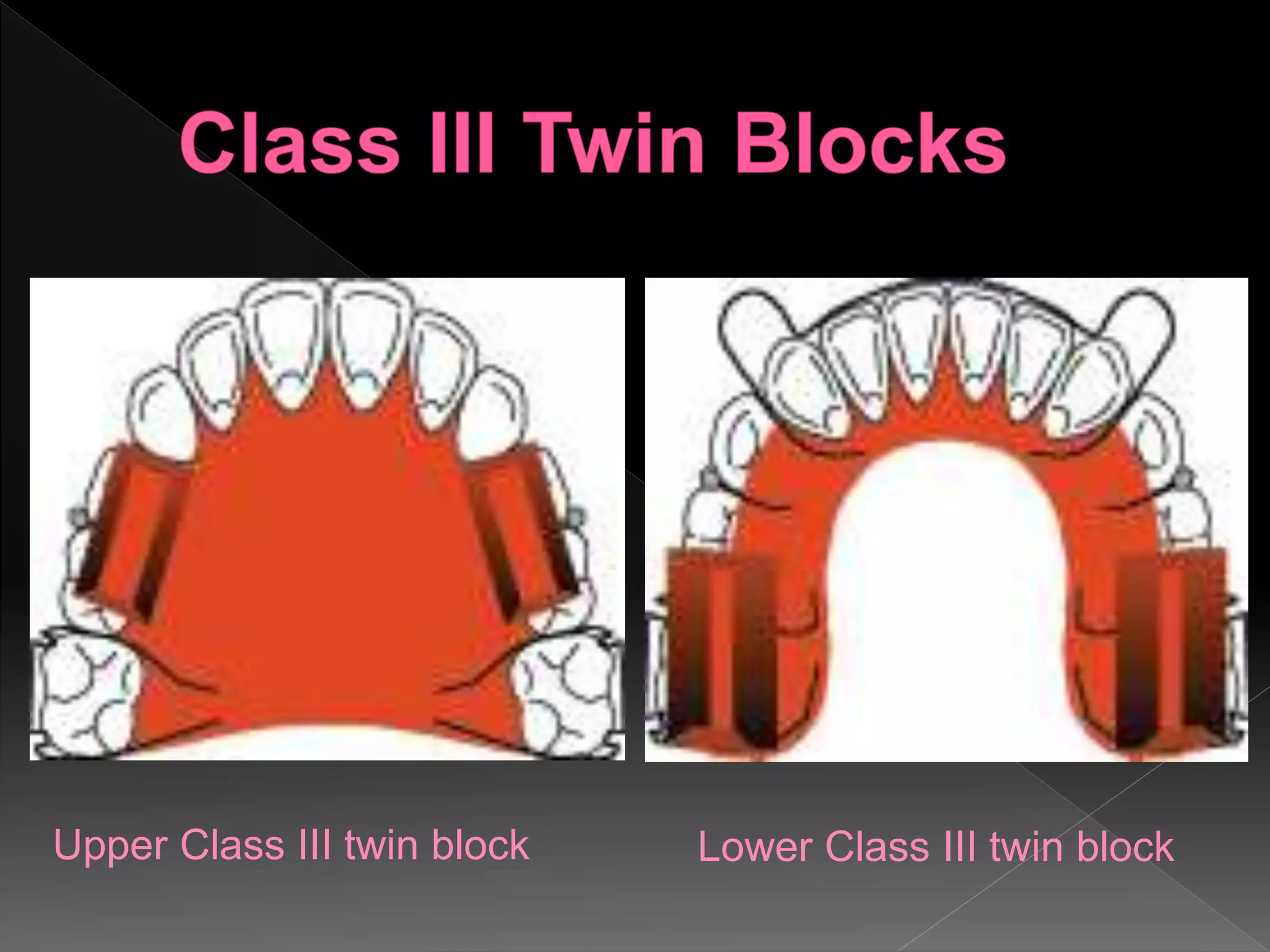
Upper Class III twin block Lower Class III twin block
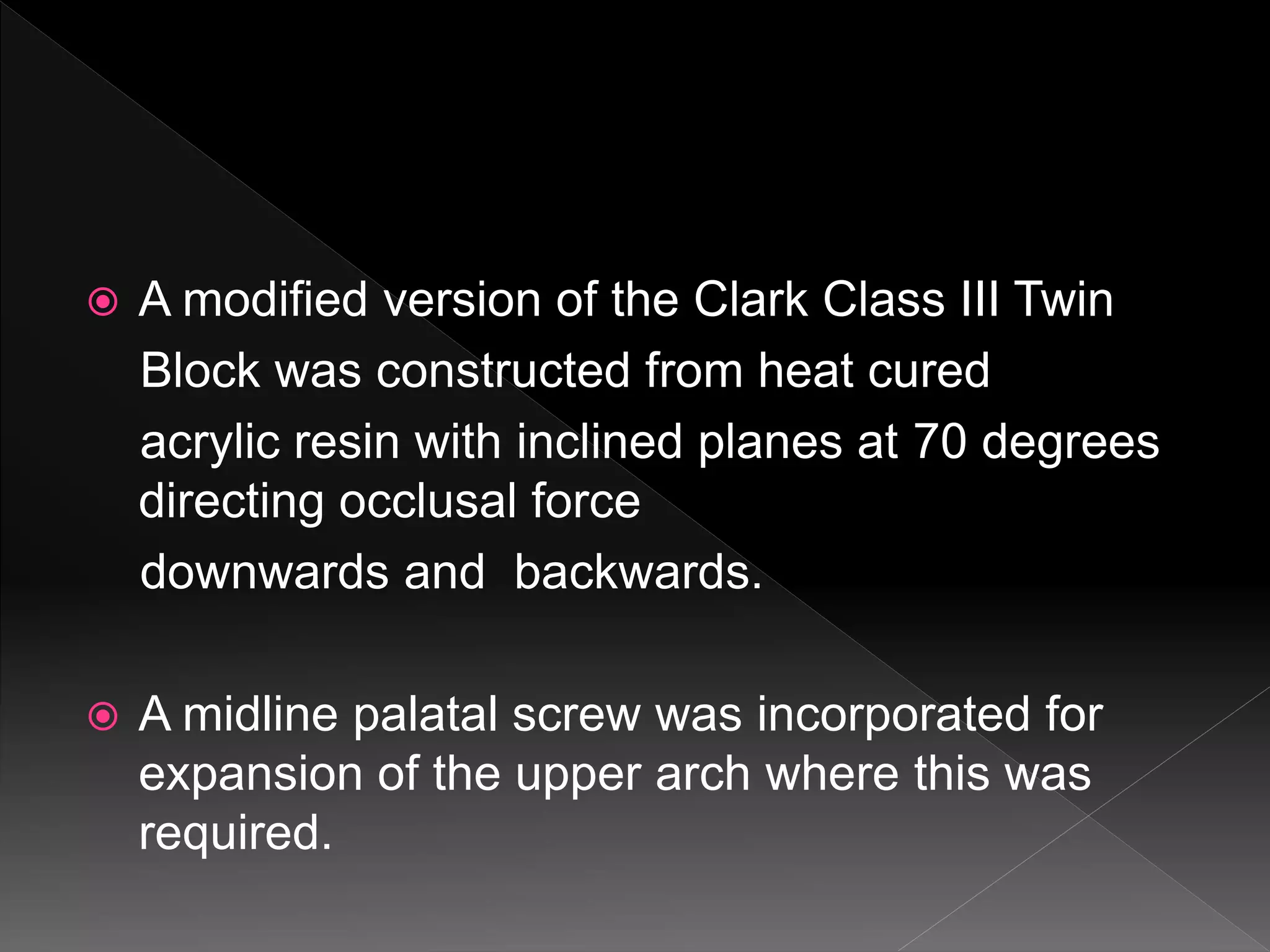
 A modified version of the Clark Class III Twin
Block was constructed from heat cured
acrylic resin with inclined planes at 70 degrees
directing occlusal force
downwards and backwards.
 A midline palatal screw was incorporated for
expansion of the upper arch where this was
required.
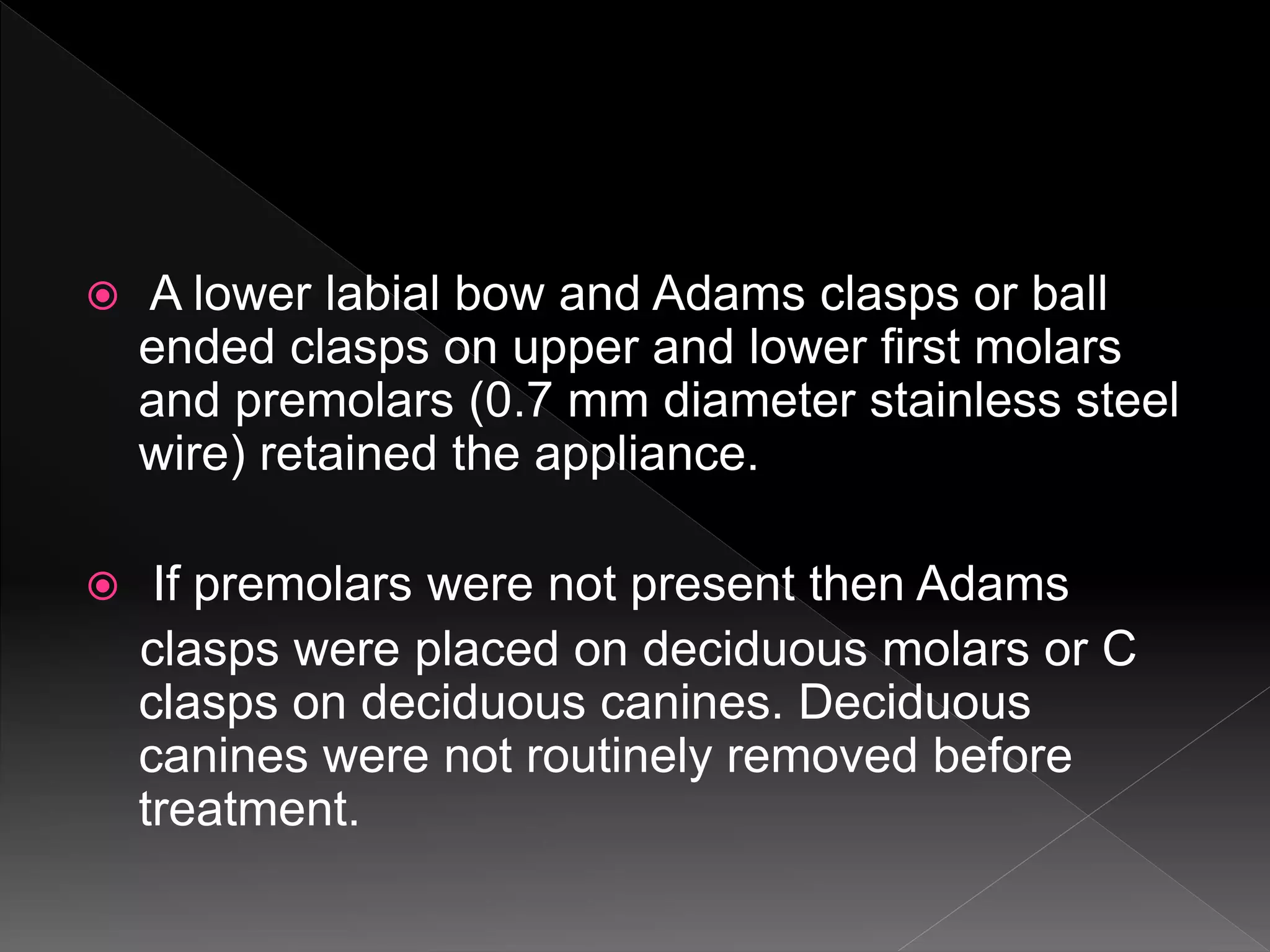
 A lower labial bow and Adams clasps or ball
ended clasps on upper and lower first molars
and premolars (0.7 mm diameter stainless steel
wire) retained the appliance.
 If premolars were not present then Adams
clasps were placed on deciduous molars or C
clasps on deciduous canines. Deciduous
canines were not routinely removed before
treatment.
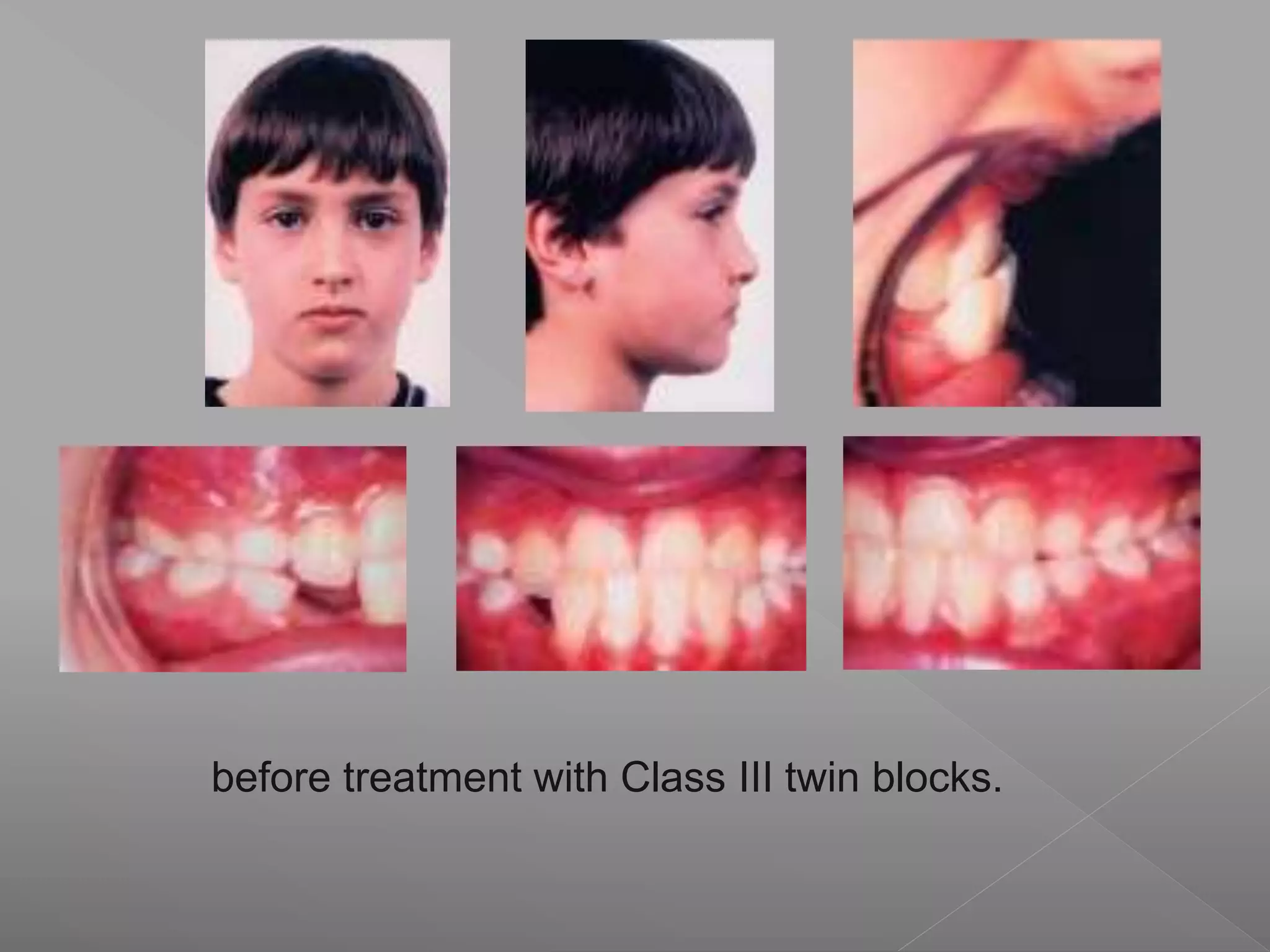
before treatment with Class III twin blocks.
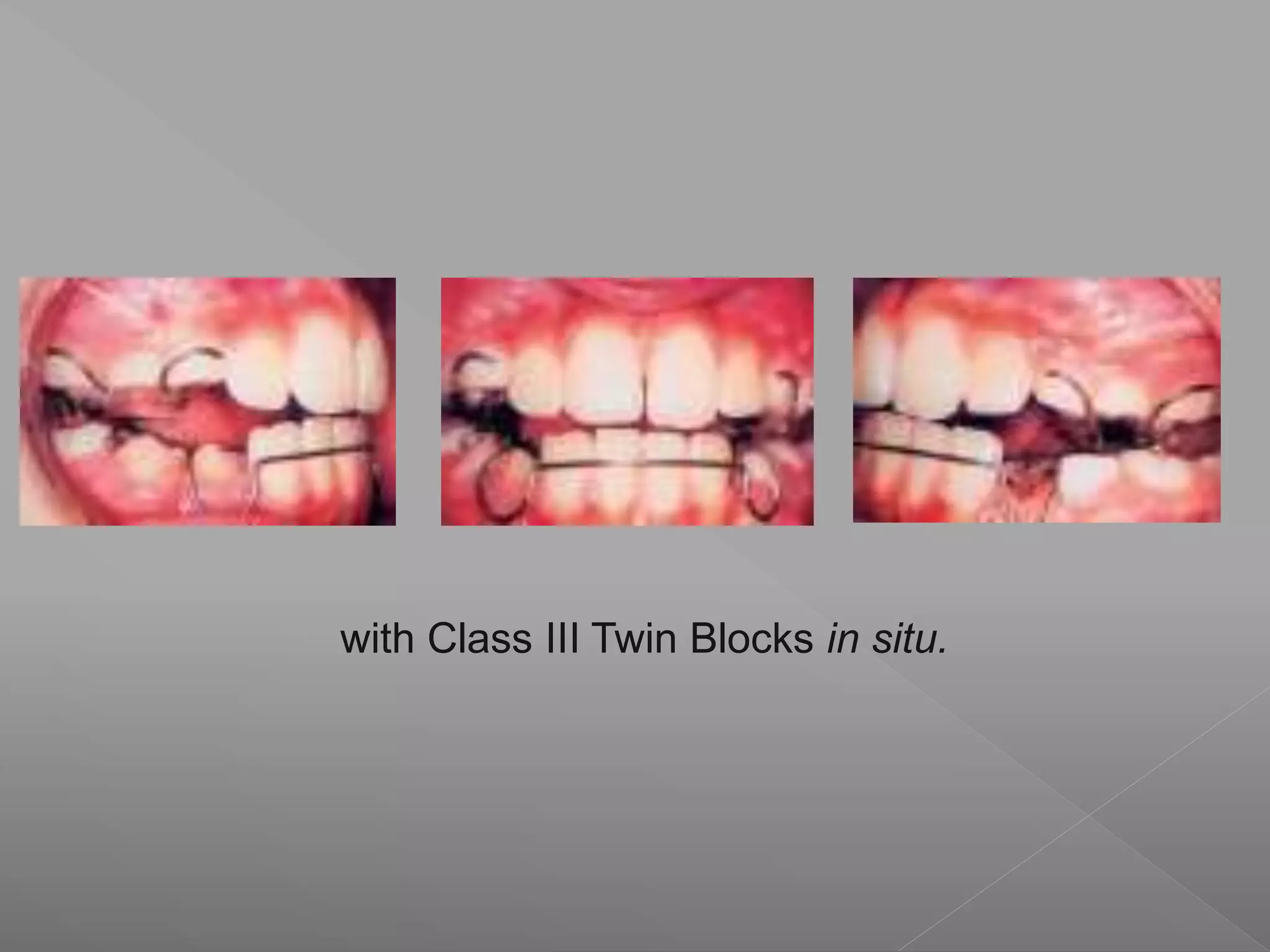
with Class III Twin Blocks in situ.
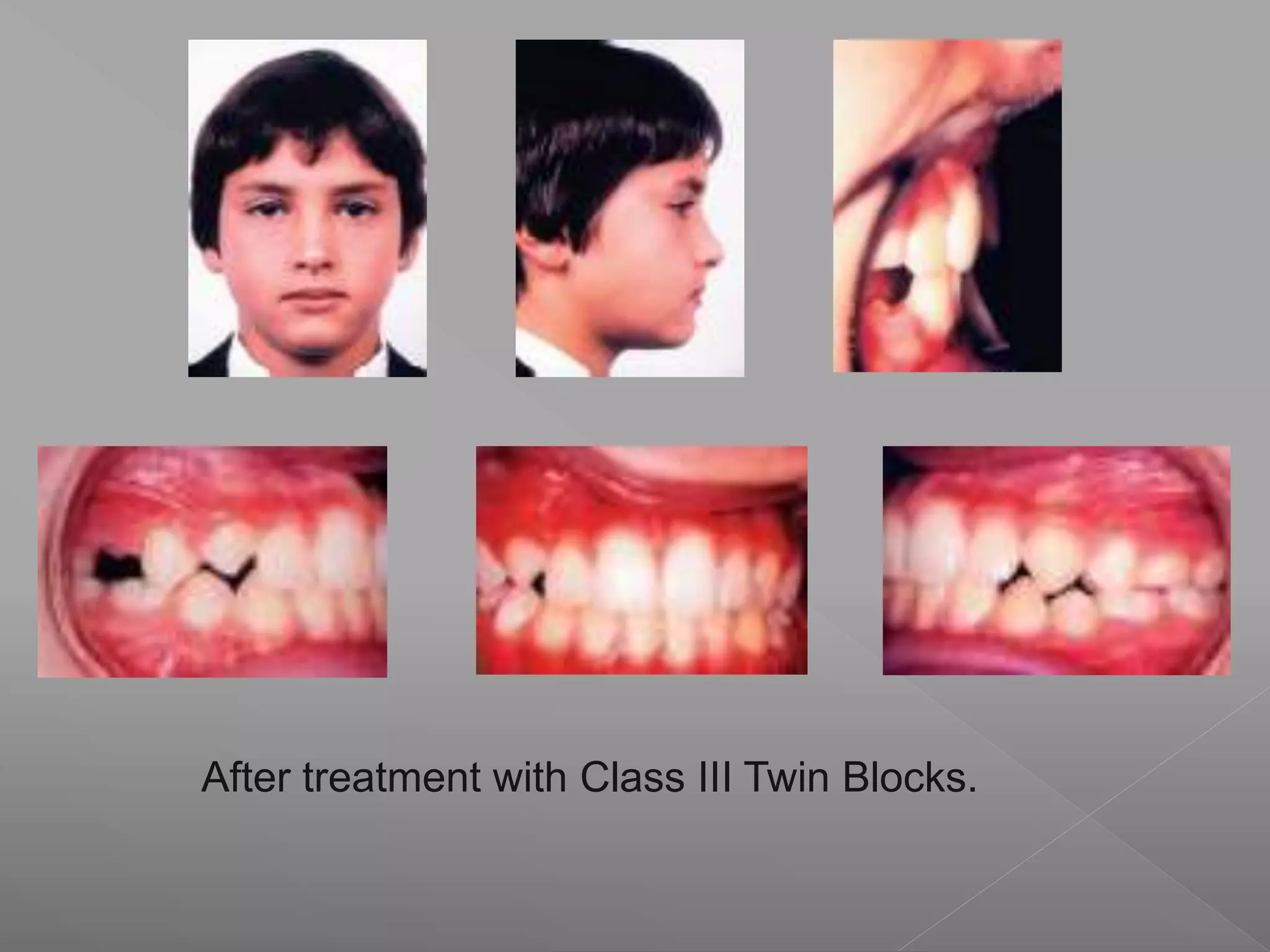
After treatment with Class III Twin Blocks.
 Class III Twin Blocks can be used successfully
for early treatment of Class IIImalocclusions.
 The appliance is easily fabricated and well
tolerated.
 Treatment changes shown in this case series
were proclination of the upper and retroclination
of the lower incisors. There is some decrease in
SNB with an increase in anterior vertical
dimension.
Modification of twin block functional appliance

Modification of twin block functional appliance

  • 1.
    By : Dr. Eithar Sharif supervision Prof dr Maher FOUDA
  • 3.
  • 4.
     The Twin-block(TB) appliance, originally developed by Clarke, is a widely used functional appliance for the management of Class II malocclusion.  Its popularity is attributable to its high patient acceptability and its ability to produce rapid treatment changes.
  • 6.
     Consists ofseparate upper & lower appliances.  More comfortable & aesthetic.  Pt able to eat & speak without restriction of tongue, lip & mandible movements.  Pt able to cooperate to wear appliance to 24hrs.
  • 8.
     Constructed toa protrusive bite.  With appliances in mouth, pt not able to occlude in former distal position.  Mandible forced to adopt protrusive bite.
  • 10.
     Block ~5-6 mm thick between molars (mouth open beyond freeway space) so that pt cannot return to former distal occlusion.
  • 11.
  • 12.
     To standardizethe appliance activation vertically, the construction bite was taken with an Exactobite stick (Forestadent, Milton Keynes, United Kingdom), with the incisors in an edge to edge position and separated by 4 mm.
  • 13.
    Construction bite registrationfor TB appliance taken in edge to edge position with Exactobite stick.
  • 15.
     Baseplate :Upper – up to 6s. Lower – up to ½ cusps of 5s.  Expansion screw : Necessary only when compensatory expansion needed to accommodate lower arch as the mandible translates forward.
  • 16.
     Retention :Upper - Adams clasps at upper 6s, 4s. Lower - Adams clasps at lower 4s. Ball clasps at lower anterior teeth
  • 17.
     Occlusal blocks: Upper - From 6s up to mesial of 5s. Lower - From mid cusp of lower 5s to mesial of lower 4s.  Occlusal inclined plane– 70.
  • 19.
    This Twin Blockdesign does not have an expansion screw, but labial acrylic on both upper and lower appliances.
  • 20.
    Upper and LowerTwin Block appliances featuring an expansion screw in the upper.
  • 21.
    Upper and lowerCrozat Twin Block appliances. The lower appliance is constructed with the crib assemblies on the bicuspid and wire mesh is attached at the end of fabrication to retain the acrylic pad.
  • 22.
    Here we haveupper and lower Helical design Twin Blocks. The wire mesh retention is added over the bands after fabrication of the upper Quad and lower Bi Helix.
  • 24.
    1 st stage–To correct anteroposterior relationship from skeletal Class II to Class I. 2nd stage – Settling of posterior teeth into occlusion from Class II molar relation ship to Class I. Upper bite blocks trimmed to allow eruption of lower posterior teeth. Lower bite blocks trimmed to level occlusal plane.
  • 26.
     In deepbite cases, trim blocks  In reduced or open bite cases, do not trim blocks.
  • 27.
  • 28.
     Full timewear for first 6 months , Worn at all times including eating and sleeping. Removed only for brushing of teeth, Not to be worn during sporting activities.  Night time wear for next 6-9 months. Finishing may be undertaken with fixed appliances.
  • 30.
     Comfortable ––ptable to eat and speak .  Aesthetic ––appliance not obvious .  Mandible able to move freely.  Compliance ––can be removable or temporarily cemented.  Improved facial appearance.  Normal speech.
  • 31.
     Easy tomanage clinically.  Not easily breakable.  Allows independent arch development.  Improvement of vertical height.  Allows for asymmetrical correction.  Rapid & efficient correction of skeletal discrepancy & malocclusion.
  • 32.
     Can beundertaken from childhood to early adulthood.  May be integrated with fixed appliances.  TB of TMJ dysfunction––splint allows displaced disc to be recaptured.  TB of sleep apnoea––increases airway space.
  • 35.
    MB appliance, showingmaxillary incisor torquing spur with incisor capping.
  • 36.
     Modifications incorporatedinto this appliance include a facility to incrementally advance the mandible, the use of bite blocks of reduced vertical dimension, and the incorporation of a maxillary incisor torquing spring
  • 37.
    MB appliance. Progressivemandibular advancement achieved by addition of 2-mm Perspex spacers to front of maxillary blocks.
  • 39.
     In thismodified appliance the acrylic blocks are attached to bands placed on the maxillary first molars and the mandibular premolars.  The blocks are attached by Wilson attachments on the lingual/palatal surface of the bands.
  • 40.
     On thebuccal side, a retaining wire (0.7 mm, stainless steel) is fitted into the maxillary molar band headgear tube, and a similar wire is fitted into a tube soldered onto the wings of the edgewise bracket on the mandibular band . The appliance cannot be removed by the patient, and the small gap between the blocks and the occlusal surface is filled with glass ionomer cement.  Reactivation of the blocks was carried out when necessary by adding acrylic to the inclined surface of the maxillary block.
  • 41.
    A, Buccal viewof maxillary fixed TB component; B, palatal view of maxillary fixed TB component; C, buccal view of mandibular fixed TB appliance; D, lingual view of mandibular fixed TB appliance.
  • 42.
  • 43.
    Clip on fixedfunctional appliance in place.
  • 44.
  • 46.
     Dr. Gerberhas modified his Twin Block design to improve stability and neuromuscular treatment.  He has also extended the acrylic and eliminated all sharp edges to create a tighter fitting appliance.
  • 47.
     The appliancescan be modified as the case requires and designs may be used in any combination. For example, upper and lower expansion screws may be used for lateral development, an upper sagittal type appliance may be used with a basic lower appliance, and a face bow, or reverse headgear, may be incorporated in the case design.
  • 48.
    For non-compliant patients,Dr. Gerber prescribes his "Banded Block" shown above.
  • 50.
    Torquing springs wereused to prevent unwanted retroclination of the upper labial segment. High-pull headgear directed at the center of resistance of the maxilla was used in an attempt to control the vertical position of the maxilla.
  • 52.
     This modificationwas introduced to reduce the incidence of midline fracture in the lower block, which was found to be the most common removable appliance breakage.
  • 54.
    A. Bite-jumping screw.B. Advancement screws incorporated in maxillary twin blocks.
  • 55.
    Gradual twin blockadvancement with bite jumping screws in Class II treatment.
  • 56.
     The bitejumping screw was developed to simplify progressive bite advancement with the twin-block appliance.  These screws are incorporated longitudinally in the upper bite blocks, with the screw heads at 70° angles to the lower bite Blocks. (The system allows a gradual, 6mm anteroposterior correction in either Class II or Class III cases).
  • 57.
     Gradual advancementof the bite, produces a more orthopedic effect and better patient compliance by reducing tension in the craniomandibular musculature.  Also gradual bite advancement would improve patient comfort at rest and during speech, and that it would be more likely to maintain the correct position of the appliance during sleep.
  • 58.
    9-year-old female patientwith severe overbite and Class II malocclusion before treatment.
  • 59.
    Placement of twinblock appliance with bite jumping screws.
  • 60.
  • 61.
    Bite jumping screwsbuilt into anterior acrylic plate of maxillary Class III bite blocks.
  • 62.
     Conventional twinblocks are especially difficult to reactivate in Class III cases. Bite jumping screws built into the anterior acrylic plate of the maxillary Class III bite blocks allow easy gradual advancement.
  • 64.
     The onlydesign difference was the incorporation of advancement screws and housings into the maxillary appliance blocks.  Further chair side bite advancements were produced by the bilateral addition of 2-mm thick acetal spacers to the maxillary block advancement screws at 6 weekly intervals.
  • 65.
    Standard Twin blockappliance. Incremental advancement Twin- block appliance.
  • 66.
  • 67.
    A. Twin blockwith initial bite advancement of 3mm. B. After seven months of treatment, with further bite advancements made by adding spacers of 3mm, 3mm, and 2mm bilaterally.
  • 68.
    After seven monthsof twin-block therapy.
  • 70.
    Expansion and labialsegment alignment appliance
  • 71.
     Amodified TBappliance can used to treatment of class II division 2 malocclusions .  This avoids the need for an initial period of upper labial segment alignment, which would increase the overall length of treatment.  Sagittal correction of the retroclined upper labial segment.
  • 72.
     Both appliancesare modifications of the clarck TB. They have a dams clasps on maxillary and mandibular first molars and first premolars, and ball ended clasps on the lower labial segment. The inclined planes are constructed at 70 degrees to the occlusal plane.  Advancement, if required is carried out by the addition of small acrylic tablets to the upper block.
  • 73.
    Appliance design with ananterior screw. The additional modifications are detailed as follows: 1. Addition of one anterior screw with torquing spurs both upper central incisors.
  • 74.
    Appliance design witha double cantilever spring. 2. Adouble cantilever spring behind the upper labial segment, followed by bonding of the upper labial segment with pre adjusted Edge Wise fixed appliances.
  • 75.
    Case report :Start records
  • 76.
  • 77.
  • 78.
  • 79.
  • 80.
    Upper Class IIItwin block Lower Class III twin block
  • 81.
     A modifiedversion of the Clark Class III Twin Block was constructed from heat cured acrylic resin with inclined planes at 70 degrees directing occlusal force downwards and backwards.  A midline palatal screw was incorporated for expansion of the upper arch where this was required.
  • 82.
     A lowerlabial bow and Adams clasps or ball ended clasps on upper and lower first molars and premolars (0.7 mm diameter stainless steel wire) retained the appliance.  If premolars were not present then Adams clasps were placed on deciduous molars or C clasps on deciduous canines. Deciduous canines were not routinely removed before treatment.
  • 83.
    before treatment withClass III twin blocks.
  • 84.
    with Class IIITwin Blocks in situ.
  • 85.
    After treatment withClass III Twin Blocks.
  • 86.
     Class IIITwin Blocks can be used successfully for early treatment of Class IIImalocclusions.  The appliance is easily fabricated and well tolerated.  Treatment changes shown in this case series were proclination of the upper and retroclination of the lower incisors. There is some decrease in SNB with an increase in anterior vertical dimension.