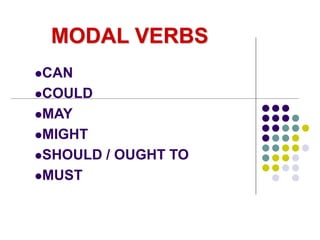
MODAL VERBS
CAN
COULD
MAY
MIGHT
SHOULD / OUGHT TO
MUST
MODAL VERBS
Todos os modais são usados sem
alteração de forma com qualquer
sujeito,
não recebem a partícula "to" antes
deles
os verbos colocados depois deles
devem ficar no infinitivo sem "to "
exceto com ought to
MODAL VERBS
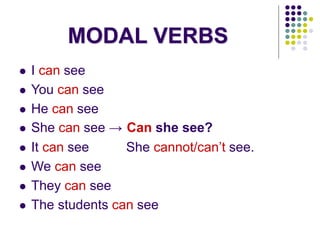
 I can see
 You can see
 He can see
 She can see → Can she see?
 It can see She cannot/can’t see.
 We can see
 They can see
 The students can see
MODAL VERBS
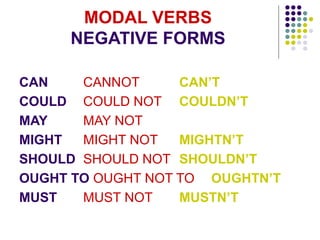
NEGATIVE FORMS
CAN CANNOT CAN’T
COULD COULD NOT COULDN’T
MAY MAY NOT
MIGHT MIGHT NOT MIGHTN’T
SHOULD SHOULD NOT SHOULDN’T
OUGHT TO OUGHT NOT TO OUGHTN’T
MUST MUST NOT MUSTN’T
MODAL VERBS
CAN → posso, pode...
(present / future)
INDICA:
habilidade
capacidade (TO BE ABLE TO)
permissão informal
possibilidade
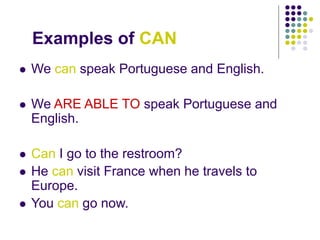
Examples of CAN
 We can speak Portuguese and English.
 We ARE ABLE TO speak Portuguese and
English.
 Can I go to the restroom?
 He can visit France when he travels to
Europe.
 You can go now.
COULD → podia, poderia...
INDICA
passado de CAN
capacidade ou habilidade no
passado (TO BE ABLE TO)
pedido educado (FORMAL)
Examples of COULD
 My brother could run 10 kilometers every
other day when he was young.
 He WAS ABLE TO run 10 kilometers...
 The pilot couldn’t land because of the fog.
 They could have visited France when they
went to Europe.
 Could you help me carry the baggage
please?
MAY →posso, pode...
(present / future)
INDICA
Permissão FORMAL
(TO BE ALLOWED / TO BE
PERMITTED)
Probabilidade - GRANDE
Examples of MAY
 May I come in?
 You may leave the room when you finish the
test.
 You ARE ALLOWED TO leave the room ...
 We may see many important people at the
international conference.
 There may be many homeless people after
the earthquake.
MIGHT→posso, podia
INDICA
 passado de MAY
 permissão FORMAL no passado
(TO BE ALLOWED / TO BE
PERMITTED)
 Probabilidade – PEQUENA (present)
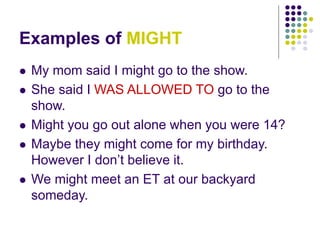
Examples of MIGHT
 My mom said I might go to the show.
 She said I WAS ALLOWED TO go to the
show.
 Might you go out alone when you were 14?
 Maybe they might come for my birthday.
However I don’t believe it.
 We might meet an ET at our backyard
someday.
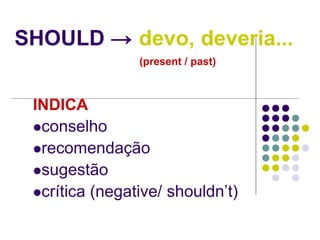
SHOULD → devo, deveria...
(present / past)
INDICA
conselho
recomendação
sugestão
crítica (negative/ shouldn’t)
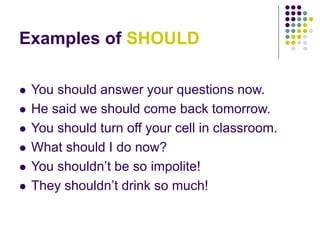
Examples of SHOULD
 You should answer your questions now.
 He said we should come back tomorrow.
 You should turn off your cell in classroom.
 What should I do now?
 You shouldn’t be so impolite!
 They shouldn’t drink so much!
OUGHT TO→devo, deveria...
único dos modais a usar "to" depois
dele,
Sinônimo de SHOULD
conselho
recomendação
sugestão
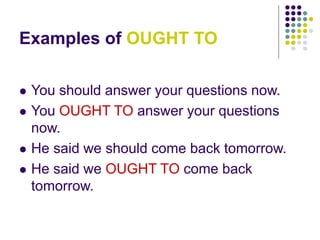
Examples of OUGHT TO
 You should answer your questions now.
 You OUGHT TO answer your questions
now.
 He said we should come back tomorrow.
 He said we OUGHT TO come back
tomorrow.
MUST → tenho que, devo...
INDICA
obrigação
forte necessidade
dedução lógica
sinônimo: HAVE TO
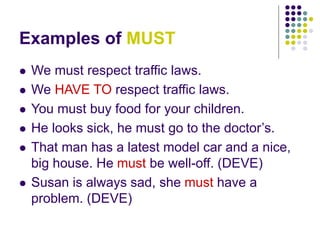
Examples of MUST
 We must respect traffic laws.
 We HAVE TO respect traffic laws.
 You must buy food for your children.
 He looks sick, he must go to the doctor’s.
 That man has a latest model car and a nice,
big house. He must be well-off. (DEVE)
 Susan is always sad, she must have a
problem. (DEVE)
MUST - negative forms
 You must study for your tests.
 You MUSTN’T study for you tests.
MUSTN’T = PROHIBITION
 You MUSTN’T scream in a hospital.
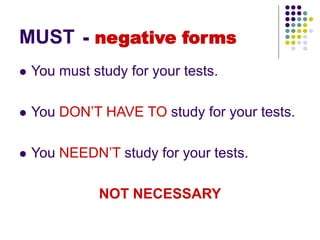
MUST - negative forms
 You must study for your tests.
 You DON’T HAVE TO study for your tests.
 You NEEDN’T study for your tests.
NOT NECESSARY

modal verbs

  • 1.
  • 2.
    MODAL VERBS Todos osmodais são usados sem alteração de forma com qualquer sujeito, não recebem a partícula "to" antes deles os verbos colocados depois deles devem ficar no infinitivo sem "to " exceto com ought to
  • 3.
    MODAL VERBS  Ican see  You can see  He can see  She can see → Can she see?  It can see She cannot/can’t see.  We can see  They can see  The students can see
  • 4.
    MODAL VERBS NEGATIVE FORMS CANCANNOT CAN’T COULD COULD NOT COULDN’T MAY MAY NOT MIGHT MIGHT NOT MIGHTN’T SHOULD SHOULD NOT SHOULDN’T OUGHT TO OUGHT NOT TO OUGHTN’T MUST MUST NOT MUSTN’T
  • 5.
    MODAL VERBS CAN →posso, pode... (present / future) INDICA: habilidade capacidade (TO BE ABLE TO) permissão informal possibilidade
  • 6.
    Examples of CAN We can speak Portuguese and English.  We ARE ABLE TO speak Portuguese and English.  Can I go to the restroom?  He can visit France when he travels to Europe.  You can go now.
  • 7.
    COULD → podia,poderia... INDICA passado de CAN capacidade ou habilidade no passado (TO BE ABLE TO) pedido educado (FORMAL)
  • 8.
    Examples of COULD My brother could run 10 kilometers every other day when he was young.  He WAS ABLE TO run 10 kilometers...  The pilot couldn’t land because of the fog.  They could have visited France when they went to Europe.  Could you help me carry the baggage please?
  • 9.
    MAY →posso, pode... (present/ future) INDICA Permissão FORMAL (TO BE ALLOWED / TO BE PERMITTED) Probabilidade - GRANDE
  • 10.
    Examples of MAY May I come in?  You may leave the room when you finish the test.  You ARE ALLOWED TO leave the room ...  We may see many important people at the international conference.  There may be many homeless people after the earthquake.
  • 11.
    MIGHT→posso, podia INDICA  passadode MAY  permissão FORMAL no passado (TO BE ALLOWED / TO BE PERMITTED)  Probabilidade – PEQUENA (present)
  • 12.
    Examples of MIGHT My mom said I might go to the show.  She said I WAS ALLOWED TO go to the show.  Might you go out alone when you were 14?  Maybe they might come for my birthday. However I don’t believe it.  We might meet an ET at our backyard someday.
  • 13.
    SHOULD → devo,deveria... (present / past) INDICA conselho recomendação sugestão crítica (negative/ shouldn’t)
  • 14.
    Examples of SHOULD You should answer your questions now.  He said we should come back tomorrow.  You should turn off your cell in classroom.  What should I do now?  You shouldn’t be so impolite!  They shouldn’t drink so much!
  • 15.
    OUGHT TO→devo, deveria... únicodos modais a usar "to" depois dele, Sinônimo de SHOULD conselho recomendação sugestão
  • 16.
    Examples of OUGHTTO  You should answer your questions now.  You OUGHT TO answer your questions now.  He said we should come back tomorrow.  He said we OUGHT TO come back tomorrow.
  • 17.
    MUST → tenhoque, devo... INDICA obrigação forte necessidade dedução lógica sinônimo: HAVE TO
  • 18.
    Examples of MUST We must respect traffic laws.  We HAVE TO respect traffic laws.  You must buy food for your children.  He looks sick, he must go to the doctor’s.  That man has a latest model car and a nice, big house. He must be well-off. (DEVE)  Susan is always sad, she must have a problem. (DEVE)
  • 19.
    MUST - negativeforms  You must study for your tests.  You MUSTN’T study for you tests. MUSTN’T = PROHIBITION  You MUSTN’T scream in a hospital.
  • 20.
    MUST - negativeforms  You must study for your tests.  You DON’T HAVE TO study for your tests.  You NEEDN’T study for your tests. NOT NECESSARY