Weekly report
Project- Image
Classification using
OpenCV
Dataset info:
Dataset loaded using keras library namely
mnist dataset.
• Problem Statement:
This project aims to develop an
accurate image classification
system using OpenCV to categorize
unseen images into predefined
classes, potentially leveraging
deep learning for improved
performance. The challenge lies in
balancing data acquisition,
processing speed for real-time
applications (if applicable), and
achieving a desired level of
classification accuracy.
 Data Introduction:
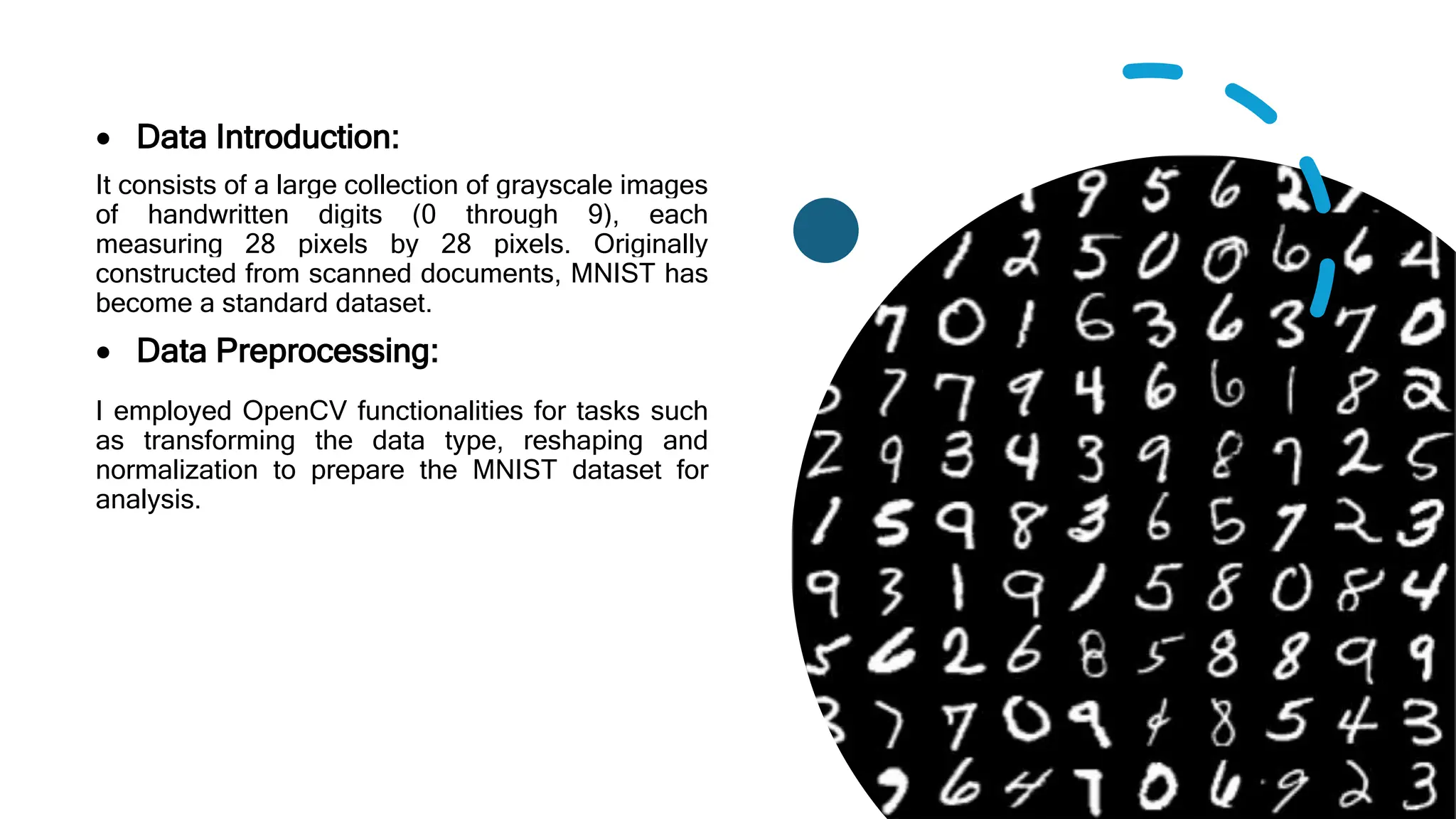
It consists of a large collection of grayscale images
of handwritten digits (0 through 9), each
measuring 28 pixels by 28 pixels. Originally
constructed from scanned documents, MNIST has
become a standard dataset.
 Data Preprocessing:
I employed OpenCV functionalities for tasks such
as transforming the data type, reshaping and
normalization to prepare the MNIST dataset for
analysis.
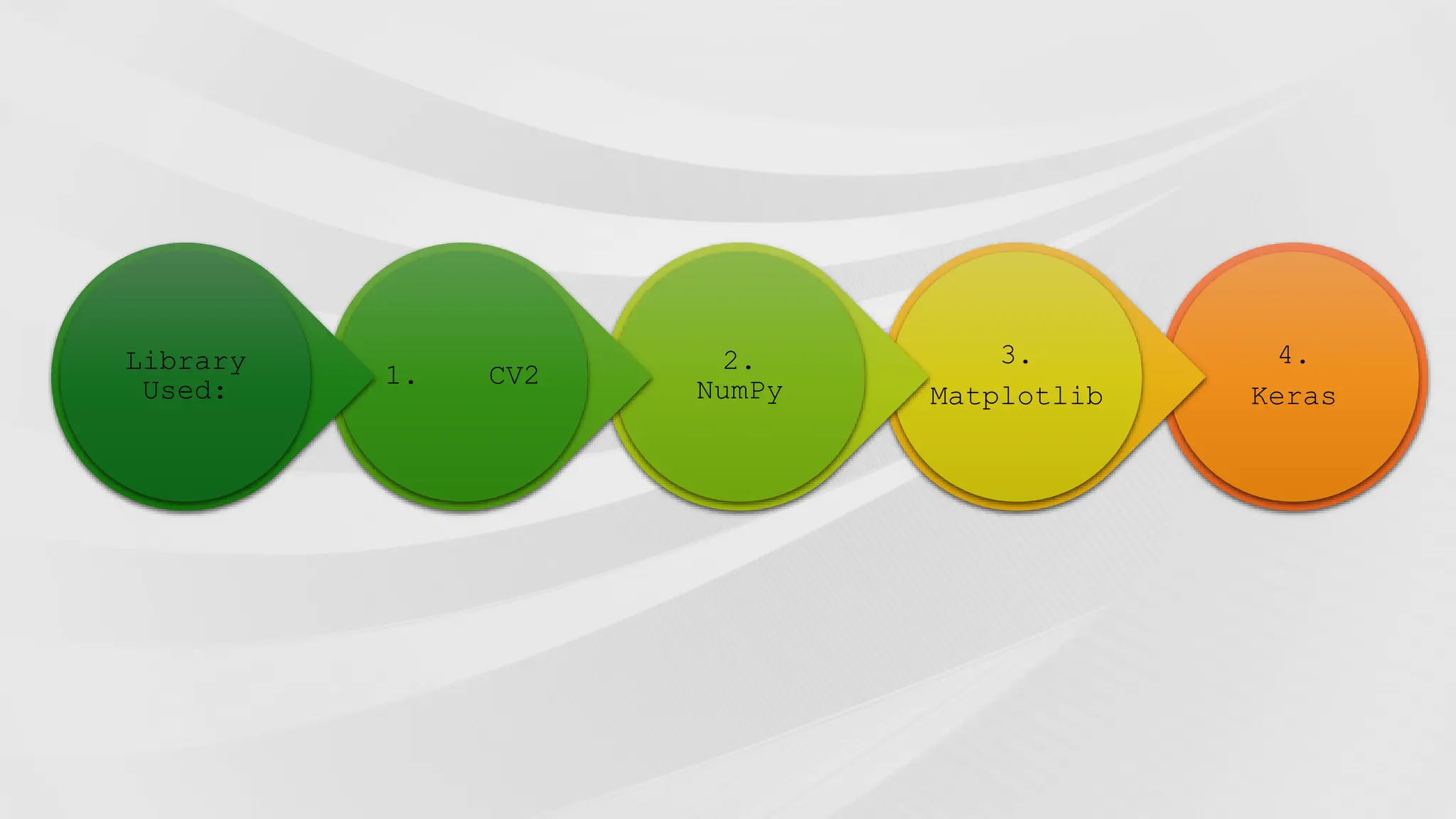
4.
Keras
3.
Matplotlib
2.
NumPy
1. CV2
Library
Used:
• Data Visualization
I have also visualized
digits by using imshow
 Model Training:
Implemented machine learning
models, leveraging OpenCV's
integration with frameworks like
Support vector classifier to classify
handwritten digits with high accuracy.
 Evaluation and Results:
Evaluated the performance of the
trained models using appropriate
metrics and approximate accuracy is
98 percent wit recall and precision of
almost 99 percent and 98 percent.
Correctly classified class
by model
Incorrectly classified class
by model
There is total 10,000 classes data in testing phase and model predicted
9833 classes correctly.

Mnist dataset_Image Classification using Opencv.pptx

  • 1.
  • 2.
    Dataset info: Dataset loadedusing keras library namely mnist dataset. • Problem Statement: This project aims to develop an accurate image classification system using OpenCV to categorize unseen images into predefined classes, potentially leveraging deep learning for improved performance. The challenge lies in balancing data acquisition, processing speed for real-time applications (if applicable), and achieving a desired level of classification accuracy.
  • 3.
     Data Introduction: Itconsists of a large collection of grayscale images of handwritten digits (0 through 9), each measuring 28 pixels by 28 pixels. Originally constructed from scanned documents, MNIST has become a standard dataset.  Data Preprocessing: I employed OpenCV functionalities for tasks such as transforming the data type, reshaping and normalization to prepare the MNIST dataset for analysis.
  • 4.
  • 5.
    • Data Visualization Ihave also visualized digits by using imshow
  • 6.
     Model Training: Implementedmachine learning models, leveraging OpenCV's integration with frameworks like Support vector classifier to classify handwritten digits with high accuracy.  Evaluation and Results: Evaluated the performance of the trained models using appropriate metrics and approximate accuracy is 98 percent wit recall and precision of almost 99 percent and 98 percent.
  • 7.
    Correctly classified class bymodel Incorrectly classified class by model There is total 10,000 classes data in testing phase and model predicted 9833 classes correctly.