MLA content map
Medical Licensing Assessment
gmc-uk.org/mla
MLA content map
The Medical Licensing Assessment content map is annexed to - and forms part of –
Assuring readiness for practice: a framework for the MLA
Explanatory narrative 2
MLA content map 6
Areas of clinical practice 6
Areas of professional knowledge 7
Clinical and professional capabilities 8
Practical skills and procedures 9
A-Z list of presentations 10
A-Z list of conditions 13
Appendix 1: Presentations and conditions mapped to areas of clinical
practice
17
2
About the MLA content map
Background
The Medical Licensing Assessment
The purpose of the Medical Licensing Assessment (MLA) is to ensure that doctors seeking
registration with a licence to practise medicine in the UK have met a common threshold
for safe practice that is appropriate to their point of entry to the medical register.
The MLA has two components: the applied knowledge test (AKT) and the clinical and
professional skills assessment (CPSA), through which candidates can demonstrate they are
ready for safe practice, able to manage uncertainty, and deliver patient centred care.
These are the three themes underpinning the MLA content map, which sets out the core
knowledge, skills and behaviours needed for UK practice.
The AKT is a written assessment of applied clinical knowledge. The CPSA is a
performance-based assessment*
of clinical and professional skills, knowledge and
behaviours. It is set and delivered by:
◼ UK medical schools†
for medical students in their penultimate or final year of
undergraduate education, and
◼ the GMC for those international medical graduates (IMGs) who wish to practise
medicine in the UK and must demonstrate their knowledge and skills through
taking the MLA.
What is the MLA content map for?
The MLA content map sets out the core knowledge, skills and behaviours needed for UK
practice. All AKT and CPSA content derives from the content map.
It serves a range of purposes for different audiences:
◼ For medical schools and the GMC, it provides the basis for the sampling strategy
that will determine how AKT papers are constructed.
◼ For medical schools and the GMC, it provides a reference point for developing
CPSAs (all CPSA providers must show how their sampling strategy relates to the
MLA content map).
*
Irrespective of the format that each assessment provider has chosen to use (eg Objective Structured
Clinical Examination (OSCE), Objective Structured Long Examination Record (OSLER), Practical Assessment
of Clinical Examination Skills (PACES)).
†
Under section 4.4 of the Medical Act 1983 medical schools may, with GMC approval, unite or cooperate to
design, construct, and deliver the Applied Knowledge Test for UK medical students.
3
◼ For MLA candidates, it indicates which content areas could possibly be covered by
the questions in their MLA AKT or the scenarios in their CPSA.
◼ For employers and postgraduate training providers, the MLA content map is a
summary of the range of professional knowledge, skills and behaviours expected
of doctors entering the UK Foundation Programme.
◼ For patients and special interest groups, it sets out the professional skills,
knowledge and behaviours linked to the underlying purpose of the MLA: assuring
newly registered doctors have met a common threshold.
How was what appears in the MLA content map decided?
The MLA content map is based on:
◼ The GMC’s Outcomes for graduates (2018), which sets out what newly qualified
doctors from UK medical schools must know and be able to do.
◼ The GMC’s Generic professional capabilities framework (2017), which details the
capabilities needed for safe, effective and high quality medical care in the UK.
◼ The situations typically faced by doctors working in the UK Foundation
Programme and relevant parts of the Foundation Programme curriculum.
The MLA content map doesn’t exactly replicate Outcomes for graduates because not all
the values and behaviours expected of a new doctor can be tested in an exam. For
example, engaging in induction and orientation activities or maintaining a professional
development portfolio.
Because the MLA focuses on areas that doctors are likely to encounter during the UK
Foundation Programme, not all specialty areas are covered equally in the content map.
The content map concentrates on the professional skills, knowledge and behaviours that
are essential for safe practice – for example, effective communication, recognising risk and
the diagnosis and management of common or acute presentations and conditions.
The MLA won’t test knowledge of the NHS and its local arrangements. Employers are
responsible for the local induction and support given to newly registered and licensed
doctors they appoint to their organisation. The GMC supports non-UK doctors preparing to
work in the UK through the Welcome to UK practice programme.
4
Three themes guided what to include in the MLA content map, which reflect the
overarching outcome*
specified in Outcomes for graduates:
a Readiness for safe practice: the ability to manage emergencies and acute
health issues, as well as common chronic health and wellbeing issues
b Managing uncertainty: the ability to cope with uncertainty over diagnosis,
prognosis, response to therapeutic interventions; medical science; and when to
call for help
c Delivering person-centred care: listening and hearing patients’ values; taking
account of comorbidities and frailty and social context; working effectively within a
multi-professional and multi-disciplinary team and across multiple care settings;
and demonstrating shared decision-making that takes account of patients’
expectations and wishes.
Medical education must respond continually to changes in the health of the population,
healthcare systems and the methods and technologies used to diagnose, treat and
manage illness and wellbeing. The GMC will keep the MLA content map up to date with
timely revisions to make sure it reflects real life day-to-day medical practice.
How is the MLA content map organised?
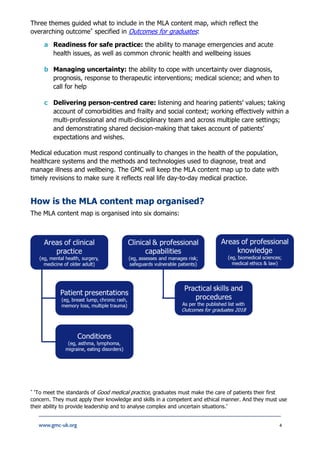
The MLA content map is organised into six domains:
*
‘To meet the standards of Good medical practice, graduates must make the care of patients their first
concern. They must apply their knowledge and skills in a competent and ethical manner. And they must use
their ability to provide leadership and to analyse complex and uncertain situations.’
5
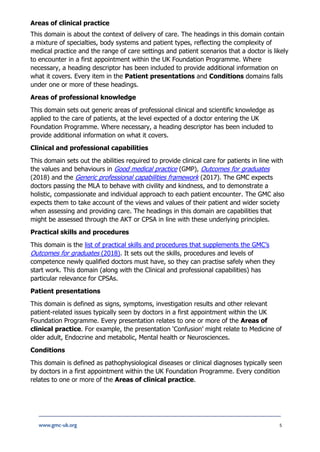
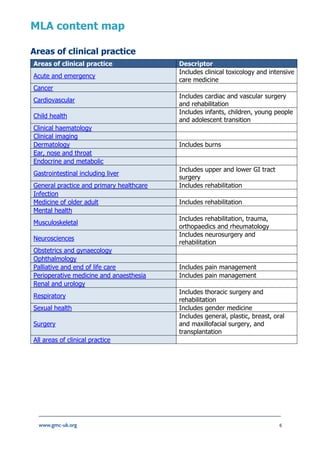
Areas of clinical practice
This domain is about the context of delivery of care. The headings in this domain contain
a mixture of specialties, body systems and patient types, reflecting the complexity of
medical practice and the range of care settings and patient scenarios that a doctor is likely
to encounter in a first appointment within the UK Foundation Programme. Where
necessary, a heading descriptor has been included to provide additional information on
what it covers. Every item in the Patient presentations and Conditions domains falls
under one or more of these headings.
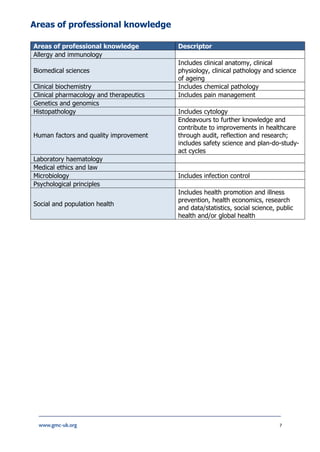
Areas of professional knowledge
This domain sets out generic areas of professional clinical and scientific knowledge as
applied to the care of patients, at the level expected of a doctor entering the UK
Foundation Programme. Where necessary, a heading descriptor has been included to
provide additional information on what it covers.
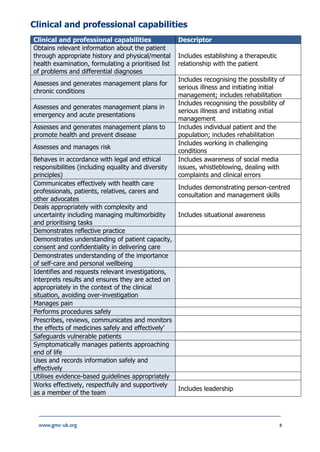
Clinical and professional capabilities
This domain sets out the abilities required to provide clinical care for patients in line with
the values and behaviours in Good medical practice (GMP), Outcomes for graduates
(2018) and the Generic professional capabilities framework (2017). The GMC expects
doctors passing the MLA to behave with civility and kindness, and to demonstrate a
holistic, compassionate and individual approach to each patient encounter. The GMC also
expects them to take account of the views and values of their patient and wider society
when assessing and providing care. The headings in this domain are capabilities that
might be assessed through the AKT or CPSA in line with these underlying principles.
Practical skills and procedures
This domain is the list of practical skills and procedures that supplements the GMC’s
Outcomes for graduates (2018). It sets out the skills, procedures and levels of
competence newly qualified doctors must have, so they can practise safely when they
start work. This domain (along with the Clinical and professional capabilities) has
particular relevance for CPSAs.
Patient presentations
This domain is defined as signs, symptoms, investigation results and other relevant
patient-related issues typically seen by doctors in a first appointment within the UK
Foundation Programme. Every presentation relates to one or more of the Areas of
clinical practice. For example, the presentation ‘Confusion’ might relate to Medicine of
older adult, Endocrine and metabolic, Mental health or Neurosciences.
Conditions
This domain is defined as pathophysiological diseases or clinical diagnoses typically seen
by doctors in a first appointment within the UK Foundation Programme. Every condition
relates to one or more of the Areas of clinical practice.
6
MLA content map
Areas of clinical practice
Areas of clinical practice Descriptor
Acute and emergency
Includes clinical toxicology and intensive
care medicine
Cancer
Cardiovascular
Includes cardiac and vascular surgery
and rehabilitation
Child health
Includes infants, children, young people
and adolescent transition
Clinical haematology
Clinical imaging
Dermatology Includes burns
Ear, nose and throat
Endocrine and metabolic
Gastrointestinal including liver
Includes upper and lower GI tract
surgery
General practice and primary healthcare Includes rehabilitation
Infection
Medicine of older adult Includes rehabilitation
Mental health
Musculoskeletal
Includes rehabilitation, trauma,
orthopaedics and rheumatology
Neurosciences
Includes neurosurgery and
rehabilitation
Obstetrics and gynaecology
Ophthalmology
Palliative and end of life care Includes pain management
Perioperative medicine and anaesthesia Includes pain management
Renal and urology
Respiratory
Includes thoracic surgery and
rehabilitation
Sexual health Includes gender medicine
Surgery
Includes general, plastic, breast, oral
and maxillofacial surgery, and
transplantation
All areas of clinical practice
7
Areas of professional knowledge
Areas of professional knowledge Descriptor
Allergy and immunology
Biomedical sciences
Includes clinical anatomy, clinical
physiology, clinical pathology and science
of ageing
Clinical biochemistry Includes chemical pathology
Clinical pharmacology and therapeutics Includes pain management
Genetics and genomics
Histopathology Includes cytology
Human factors and quality improvement
Endeavours to further knowledge and
contribute to improvements in healthcare
through audit, reflection and research;
includes safety science and plan-do-study-
act cycles
Laboratory haematology
Medical ethics and law
Microbiology Includes infection control
Psychological principles
Social and population health
Includes health promotion and illness
prevention, health economics, research
and data/statistics, social science, public
health and/or global health
8
Clinical and professional capabilities
Clinical and professional capabilities Descriptor
Obtains relevant information about the patient
through appropriate history and physical/mental
health examination, formulating a prioritised list
of problems and differential diagnoses
Includes establishing a therapeutic
relationship with the patient
Assesses and generates management plans for
chronic conditions
Includes recognising the possibility of
serious illness and initiating initial
management; includes rehabilitation
Assesses and generates management plans in
emergency and acute presentations
Includes recognising the possibility of
serious illness and initiating initial
management
Assesses and generates management plans to
promote health and prevent disease
Includes individual patient and the
population; includes rehabilitation
Assesses and manages risk
Includes working in challenging
conditions
Behaves in accordance with legal and ethical
responsibilities (including equality and diversity
principles)
Includes awareness of social media
issues, whistleblowing, dealing with
complaints and clinical errors
Communicates effectively with health care
professionals, patients, relatives, carers and
other advocates
Includes demonstrating person-centred
consultation and management skills
Deals appropriately with complexity and
uncertainty including managing multimorbidity
and prioritising tasks
Includes situational awareness
Demonstrates reflective practice
Demonstrates understanding of patient capacity,
consent and confidentiality in delivering care
Demonstrates understanding of the importance
of self-care and personal wellbeing
Identifies and requests relevant investigations,
interprets results and ensures they are acted on
appropriately in the context of the clinical
situation, avoiding over-investigation
Manages pain
Performs procedures safely
Prescribes, reviews, communicates and monitors
the effects of medicines safely and effectively’
Safeguards vulnerable patients
Symptomatically manages patients approaching
end of life
Uses and records information safely and
effectively
Utilises evidence-based guidelines appropriately
Works effectively, respectfully and supportively
as a member of the team
Includes leadership
9
Practical skills and procedures
Please visit our website for the Practical skills and procedures supplement to Outcomes for
graduates.
10
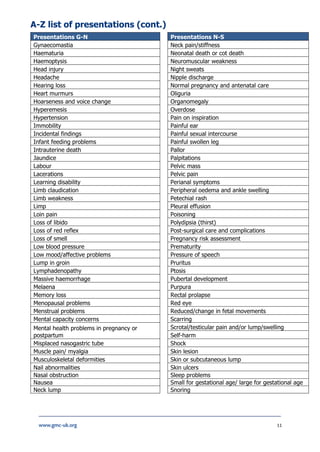
A-Z list of presentations
Presentations A-C Presentations C-G
Abdominal distension Cold, painful, pale, pulseless leg/foot
Abdominal mass Complications of labour
Abnormal cervical smear result Confusion
Abnormal development/ developmental delay Congenital abnormalities
Abnormal eating or exercising behaviour Constipation
Abnormal involuntary movements Contraception request/advice
Abnormal urinalysis Cough
Acute abdominal pain Crying baby
Acute and chronic pain management Cyanosis
Acute change in or loss of vision Death and dying
Acute joint pain/swelling Decreased appetite
Acute kidney injury Decreased/loss of consciousness
Acute rash Dehydration
Addiction Deteriorating patient
Allergies Diarrhoea
Altered sensation, numbness and tingling Difficulty with breast feeding
Amenorrhoea Diplopia
Anaphylaxis Dizziness
Anosmia Driving advice
Anxiety, phobias, OCD Dysmorphic child
Ascites Ear and nasal discharge
Auditory hallucinations Elation/elated mood
Back pain Elder abuse
Behaviour/personality change Electrolyte abnormalities
Behavioural difficulties in childhood End of life care/ symptoms of terminal illness
Bites and stings Epistaxis
Blackouts and faints Erectile dysfunction
Bleeding antepartum Eye pain/discomfort
Bleeding from lower GI tract Eye trauma
Bleeding from upper GI tract Facial pain
Bleeding postpartum Facial weakness
Bone pain Facial/periorbital swelling
Breast lump Faecal incontinence
Breast tenderness/pain Falls
Breathlessness Family history of possible genetic disorder
Bruising Fasciculation
Burns Fatigue
Cardiorespiratory arrest Fever
Change in bowel habit Fit notes
Change in stool colour Fits/seizures
Chest pain Fixed abnormal beliefs
Child abuse Flashes and floaters in visual fields
Chronic abdominal pain Food intolerance
Chronic joint pain/stiffness Foreign body in eye
Chronic kidney disease Frailty
Chronic rash Gradual change in or loss of vision
11
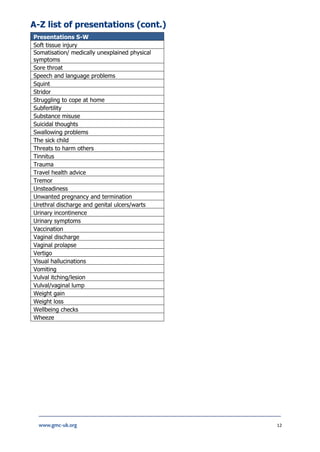
A-Z list of presentations (cont.)
Presentations G-N Presentations N-S
Gynaecomastia Neck pain/stiffness
Haematuria Neonatal death or cot death
Haemoptysis Neuromuscular weakness
Head injury Night sweats
Headache Nipple discharge
Hearing loss Normal pregnancy and antenatal care
Heart murmurs Oliguria
Hoarseness and voice change Organomegaly
Hyperemesis Overdose
Hypertension Pain on inspiration
Immobility Painful ear
Incidental findings Painful sexual intercourse
Infant feeding problems Painful swollen leg
Intrauterine death Pallor
Jaundice Palpitations
Labour Pelvic mass
Lacerations Pelvic pain
Learning disability Perianal symptoms
Limb claudication Peripheral oedema and ankle swelling
Limb weakness Petechial rash
Limp Pleural effusion
Loin pain Poisoning
Loss of libido Polydipsia (thirst)
Loss of red reflex Post-surgical care and complications
Loss of smell Pregnancy risk assessment
Low blood pressure Prematurity
Low mood/affective problems Pressure of speech
Lump in groin Pruritus
Lymphadenopathy Ptosis
Massive haemorrhage Pubertal development
Melaena Purpura
Memory loss Rectal prolapse
Menopausal problems Red eye
Menstrual problems Reduced/change in fetal movements
Mental capacity concerns Scarring
Mental health problems in pregnancy or
postpartum
Scrotal/testicular pain and/or lump/swelling
Self-harm
Misplaced nasogastric tube Shock
Muscle pain/ myalgia Skin lesion
Musculoskeletal deformities Skin or subcutaneous lump
Nail abnormalities Skin ulcers
Nasal obstruction Sleep problems
Nausea Small for gestational age/ large for gestational age
Neck lump Snoring
12
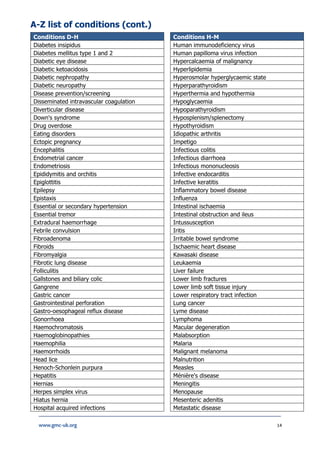
A-Z list of presentations (cont.)
Presentations S-W
Soft tissue injury
Somatisation/ medically unexplained physical
symptoms
Sore throat
Speech and language problems
Squint
Stridor
Struggling to cope at home
Subfertility
Substance misuse
Suicidal thoughts
Swallowing problems
The sick child
Threats to harm others
Tinnitus
Trauma
Travel health advice
Tremor
Unsteadiness
Unwanted pregnancy and termination
Urethral discharge and genital ulcers/warts
Urinary incontinence
Urinary symptoms
Vaccination
Vaginal discharge
Vaginal prolapse
Vertigo
Visual hallucinations
Vomiting
Vulval itching/lesion
Vulval/vaginal lump
Weight gain
Weight loss
Wellbeing checks
Wheeze
13
A-Z list of conditions
Conditions A-B Conditions B-D
Acid-base abnormality Brain abscess
Acne vulgaris Brain metastases
Acoustic neuroma Breast abscess/ mastitis
Acute bronchitis Breast cancer
Acute cholangitis Breast cysts
Acute coronary syndromes Bronchiectasis
Acute glaucoma Bronchiolitis
Acute kidney injury Bursitis
Acute pancreatitis Candidiasis
Acute stress reaction Cardiac arrest
Addison's disease Cardiac failure
Adverse drug effects Cataracts
Alcoholic hepatitis Cellulitis
Allergic disorder Central retinal arterial occlusion
Anaemia Cerebral palsy and hypoxic-ischaemic
encephalopathy
Anal fissure
Anaphylaxis Cervical cancer
Aneurysms, ischaemic limb and occlusions Cervical screening (HPV)
Ankylosing spondylitis Chlamydia
Anxiety disorder: generalised Cholecystitis
Anxiety disorder: post-traumatic stress disorder Chronic fatigue syndrome
Anxiety, phobias, OCD Chronic glaucoma
Aortic aneurysm Chronic kidney disease
Aortic dissection Chronic obstructive pulmonary disease
Aortic valve disease Cirrhosis
Appendicitis Coeliac disease
Arrhythmias Colorectal tumours
Arterial thrombosis Compartment syndrome
Arterial ulcers Conjunctivitis
Asbestos-related lung disease Constipation
Ascites Contact dermatitis
Asthma Cord prolapse
Asthma COPD overlap syndrome Covid-19
Atopic dermatitis and eczema Croup
Atrophic vaginitis Crystal arthropathy
Attention deficit hyperactivity disorder Cushing’s syndrome
Autism spectrum disorder Cutaneous fungal infection
Bacterial vaginosis Cutaneous warts
Basal cell carcinoma Cystic fibrosis
Bell's palsy Deep vein thrombosis
Benign eyelid disorders Dehydration
Benign paroxysmal positional vertigo Delirium
Benign prostatic hyperplasia Dementias
Biliary atresia Depression
Bipolar affective disorder Developmental delay
Bladder cancer Diabetes in pregnancy (gestational and pre-
existing)
Blepharitis
14
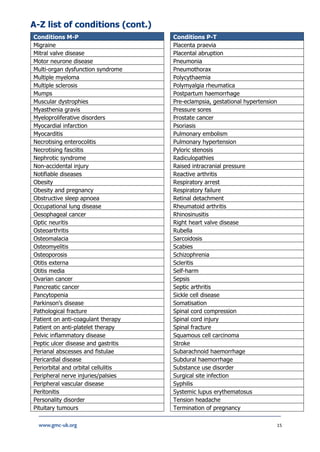
A-Z list of conditions (cont.)
Conditions D-H Conditions H-M
Diabetes insipidus Human immunodeficiency virus
Diabetes mellitus type 1 and 2 Human papilloma virus infection
Diabetic eye disease Hypercalcaemia of malignancy
Diabetic ketoacidosis Hyperlipidemia
Diabetic nephropathy Hyperosmolar hyperglycaemic state
Diabetic neuropathy Hyperparathyroidism
Disease prevention/screening Hyperthermia and hypothermia
Disseminated intravascular coagulation Hypoglycaemia
Diverticular disease Hypoparathyroidism
Down's syndrome Hyposplenism/splenectomy
Drug overdose Hypothyroidism
Eating disorders Idiopathic arthritis
Ectopic pregnancy Impetigo
Encephalitis Infectious colitis
Endometrial cancer Infectious diarrhoea
Endometriosis Infectious mononucleosis
Epididymitis and orchitis Infective endocarditis
Epiglottitis Infective keratitis
Epilepsy Inflammatory bowel disease
Epistaxis Influenza
Essential or secondary hypertension Intestinal ischaemia
Essential tremor Intestinal obstruction and ileus
Extradural haemorrhage Intussusception
Febrile convulsion Iritis
Fibroadenoma Irritable bowel syndrome
Fibroids Ischaemic heart disease
Fibromyalgia Kawasaki disease
Fibrotic lung disease Leukaemia
Folliculitis Liver failure
Gallstones and biliary colic Lower limb fractures
Gangrene Lower limb soft tissue injury
Gastric cancer Lower respiratory tract infection
Gastrointestinal perforation Lung cancer
Gastro-oesophageal reflux disease Lyme disease
Gonorrhoea Lymphoma
Haemochromatosis Macular degeneration
Haemoglobinopathies Malabsorption
Haemophilia Malaria
Haemorrhoids Malignant melanoma
Head lice Malnutrition
Henoch-Schonlein purpura Measles
Hepatitis Ménière's disease
Hernias Meningitis
Herpes simplex virus Menopause
Hiatus hernia Mesenteric adenitis
Hospital acquired infections Metastatic disease
15
A-Z list of conditions (cont.)
Conditions M-P Conditions P-T
Migraine Placenta praevia
Mitral valve disease Placental abruption
Motor neurone disease Pneumonia
Multi-organ dysfunction syndrome Pneumothorax
Multiple myeloma Polycythaemia
Multiple sclerosis Polymyalgia rheumatica
Mumps Postpartum haemorrhage
Muscular dystrophies Pre-eclampsia, gestational hypertension
Myasthenia gravis Pressure sores
Myeloproliferative disorders Prostate cancer
Myocardial infarction Psoriasis
Myocarditis Pulmonary embolism
Necrotising enterocolitis Pulmonary hypertension
Necrotising fasciitis Pyloric stenosis
Nephrotic syndrome Radiculopathies
Non-accidental injury Raised intracranial pressure
Notifiable diseases Reactive arthritis
Obesity Respiratory arrest
Obesity and pregnancy Respiratory failure
Obstructive sleep apnoea Retinal detachment
Occupational lung disease Rheumatoid arthritis
Oesophageal cancer Rhinosinusitis
Optic neuritis Right heart valve disease
Osteoarthritis Rubella
Osteomalacia Sarcoidosis
Osteomyelitis Scabies
Osteoporosis Schizophrenia
Otitis externa Scleritis
Otitis media Self-harm
Ovarian cancer Sepsis
Pancreatic cancer Septic arthritis
Pancytopenia Sickle cell disease
Parkinson's disease Somatisation
Pathological fracture Spinal cord compression
Patient on anti-coagulant therapy Spinal cord injury
Patient on anti-platelet therapy Spinal fracture
Pelvic inflammatory disease Squamous cell carcinoma
Peptic ulcer disease and gastritis Stroke
Perianal abscesses and fistulae Subarachnoid haemorrhage
Pericardial disease Subdural haemorrhage
Periorbital and orbital cellulitis Substance use disorder
Peripheral nerve injuries/palsies Surgical site infection
Peripheral vascular disease Syphilis
Peritonitis Systemic lupus erythematosus
Personality disorder Tension headache
Pituitary tumours Termination of pregnancy
16
A-Z list of conditions (cont.)
Conditions T-W
Testicular cancer
Testicular torsion
Thyroid eye disease
Thyroid nodules
Thyrotoxicosis
Tonsillitis
Toxic shock syndrome
Transfusion reactions
Transient ischaemic attacks
Trichomonas vaginalis
Trigeminal neuralgia
Tuberculosis
Unstable angina
Upper limb fractures
Upper limb soft tissue injury
Upper respiratory tract infection
Urinary incontinence
Urinary tract calculi
Urinary tract infection
Urticaria
Uveitis
Varicella zoster
Varicose veins
Vasa praevia
Vasovagal syncope
Venous ulcers
Viral exanthema
Viral gastroenteritis
Viral hepatitides
Visual field defects
Vitamin B12 and/or folate deficiency
Volvulus
VTE in pregnancy and puerperium
Wernicke's encephalopathy
Whooping cough
17
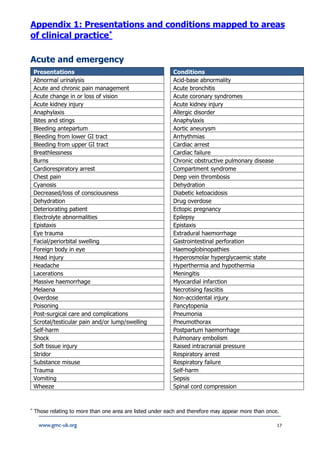
Appendix 1: Presentations and conditions mapped to areas
of clinical practice*
Acute and emergency
Presentations Conditions
Abnormal urinalysis Acid-base abnormality
Acute and chronic pain management Acute bronchitis
Acute change in or loss of vision Acute coronary syndromes
Acute kidney injury Acute kidney injury
Anaphylaxis Allergic disorder
Bites and stings Anaphylaxis
Bleeding antepartum Aortic aneurysm
Bleeding from lower GI tract Arrhythmias
Bleeding from upper GI tract Cardiac arrest
Breathlessness Cardiac failure
Burns Chronic obstructive pulmonary disease
Cardiorespiratory arrest Compartment syndrome
Chest pain Deep vein thrombosis
Cyanosis Dehydration
Decreased/loss of consciousness Diabetic ketoacidosis
Dehydration Drug overdose
Deteriorating patient Ectopic pregnancy
Electrolyte abnormalities Epilepsy
Epistaxis Epistaxis
Eye trauma Extradural haemorrhage
Facial/periorbital swelling Gastrointestinal perforation
Foreign body in eye Haemoglobinopathies
Head injury Hyperosmolar hyperglycaemic state
Headache Hyperthermia and hypothermia
Lacerations Meningitis
Massive haemorrhage Myocardial infarction
Melaena Necrotising fasciitis
Overdose Non-accidental injury
Poisoning Pancytopenia
Post-surgical care and complications Pneumonia
Scrotal/testicular pain and/or lump/swelling Pneumothorax
Self-harm Postpartum haemorrhage
Shock Pulmonary embolism
Soft tissue injury Raised intracranial pressure
Stridor Respiratory arrest
Substance misuse Respiratory failure
Trauma Self-harm
Vomiting Sepsis
Wheeze Spinal cord compression
*
Those relating to more than one area are listed under each and therefore may appear more than once.
18
Acute and emergency (cont.)
Presentations Conditions
Spinal cord injury
Spinal fracture
Stroke
Subarachnoid haemorrhage
Subdural haemorrhage
Substance use disorder
Testicular torsion
Toxic shock syndrome
Transfusion reactions
Unstable angina
Cancer
Presentations Conditions
Abdominal distension Basal cell carcinoma
Abdominal mass Bladder cancer
Acute and chronic pain management Brain metastases
Ascites Breast cancer
Bleeding from lower GI tract Cervical cancer
Bleeding from upper GI tract Colorectal tumours
Bone pain Endometrial cancer
Breast lump Gastric cancer
Breathlessness Hypercalcaemia of malignancy
Change in bowel habit Leukaemia
Cough Lung cancer
Decreased appetite Lymphoma
Electrolyte abnormalities Malignant melanoma
Fatigue Metastatic disease
Haematuria Multiple myeloma
Haemoptysis Oesophageal cancer
Headache Ovarian cancer
Jaundice Pancreatic cancer
Limb weakness Pathological fracture
Lump in groin Patient on anti-coagulant therapy
Lymphadenopathy Prostate cancer
Neck lump Spinal cord compression
Pain on inspiration Squamous cell carcinoma
Painful swollen leg Testicular cancer
Pelvic mass
Pleural effusion
Scrotal/testicular pain and/or lump/swelling
Swallowing problems
Weight loss
19
Cardiovascular
Presentations Conditions
Acute abdominal pain Acute coronary syndromes
Acute change in or loss of vision Aneurysms, ischaemic limb and occlusions
Blackouts and faints Aortic aneurysm
Breathlessness Aortic dissection
Cardiorespiratory arrest Aortic valve disease
Chest pain Arrhythmias
Cold, painful, pale, pulseless leg/foot Arterial thrombosis
Cough Arterial ulcers
Cyanosis Cardiac arrest
Dizziness Cardiac failure
Driving advice Deep vein thrombosis
Erectile dysfunction Essential or secondary hypertension
Fever Gangrene
Heart murmurs Haemochromatosis
Hypertension Infective endocarditis
Limb claudication Intestinal ischaemia
Limb weakness Ischaemic heart disease
Low blood pressure Mitral valve disease
Pain on inspiration Myocarditis
Painful swollen leg Pericardial disease
Palpitations Peripheral vascular disease
Peripheral oedema and ankle swelling Pulmonary embolism
Pregnancy risk assessment Pulmonary hypertension
Skin ulcers Right heart valve disease
Wheeze Stroke
Transient ischaemic attacks
Vasovagal syncope
Venous ulcers
Child health
Presentations Conditions
Abdominal mass Acute kidney injury
Abnormal development/ developmental delay Anaemia
Abnormal involuntary movements Anaphylaxis
Acute abdominal pain Appendicitis
Acute joint pain/swelling Asthma
Acute kidney injury Atopic dermatitis and eczema
Acute rash Attention deficit hyperactivity disorder
Allergies Autism spectrum disorder
Behavioural difficulties in childhood Biliary atresia
Breathlessness Bronchiectasis
Bruising Bronchiolitis
Child abuse Candidiasis
Chronic abdominal pain Cardiac arrest
Chronic kidney disease Cellulitis
20
Child health (cont.)
Presentations Conditions
Chronic rash Cerebral palsy and hypoxic-ischaemic
encephalopathy
Congenital abnormalities
Constipation Chronic kidney disease
Cough Coeliac disease
Crying baby Conjunctivitis
Cyanosis Constipation
Decreased/loss of consciousness Croup
Dehydration Cushing’s syndrome
Deteriorating patient Cystic fibrosis
Diarrhoea Dehydration
Difficulty with breast feeding Developmental delay
Dysmorphic child Diabetic ketoacidosis
Fever Diabetes mellitus type 1 and 2
Fits/seizures Disseminated intravascular coagulation
Food intolerance Down's syndrome
Haematuria Drug overdose
Headache Eating disorders
Infant feeding problems Epididymitis and orchitis
Jaundice Epiglottitis
Learning disability Epilepsy
Limp Febrile convulsion
Lymphadenopathy Gastro-oesophageal reflux disease
Musculoskeletal deformities Henoch-Schonlein purpura
Neonatal death or cot death Hepatitis
Overdose Hernias
Pallor Herpes simplex virus
Peripheral oedema and ankle swelling Human papilloma virus infection
Poisoning Hypoglycaemia
Polydipsia (thirst) Hyposplenism/splenectomy
Prematurity Hypothyroidism
Pubertal development Idiopathic arthritis
Scrotal/testicular pain and/or lump/swelling Impetigo
Self-harm Inflammatory bowel disease
Shock Influenza
Speech and language problems Intestinal obstruction and ileus
Squint Intussusception
Stridor Kawasaki disease
Substance misuse Leukaemia
Suicidal thoughts Lower respiratory tract infection
The sick child Lymphoma
Trauma Malaria
Urinary incontinence Malnutrition
Urinary symptoms Measles
Vaccination Meningitis
Vomiting Migraine
Wheeze Mumps
21
Child health (cont.)
Presentations Conditions
Muscular dystrophies
Non-accidental injury
Obesity
Obstructive sleep apnoea
Otitis media
Pancytopenia
Peptic ulcer disease and gastritis
Periorbital and orbital cellulitis
Peripheral nerve injuries/palsies
Peritonitis
Pyloric stenosis
Pneumothorax
Raised intracranial pressure
Reactive arthritis
Respiratory arrest
Rubella
Self-harm
Septic arthritis
Sickle cell disease
Subarachnoid haemorrhage
Subdural haemorrhage
Substance use disorder
Tension headache
Testicular torsion
Thyrotoxicosis
Tonsillitis
Toxic shock syndrome
Tuberculosis
Upper respiratory tract infection
Urinary tract infection
Urticaria
Viral exanthema
Viral gastroenteritis
Visual field defects
Volvulus
22
Clinical haematology
Presentations Conditions
Bleeding from lower GI tract Anaemia
Bone pain Deep vein thrombosis
Bruising Disseminated intravascular coagulation
Epistaxis Epistaxis
Fatigue Haemochromatosis
Fever Haemoglobinopathies
Jaundice Haemophilia
Lump in groin Hyposplenism/splenectomy
Lymphadenopathy Leukaemia
Massive haemorrhage Lymphoma
Neck lump Multiple myeloma
Organomegaly Myeloproliferative disorders
Pallor Pancytopenia
Petechial rash Pathological fracture
Purpura Patient on anti-coagulant therapy
Patient on anti-platelet therapy
Polycythaemia
Pulmonary embolism
Sickle cell disease
Transfusion reactions
Clinical imaging
Presentations Conditions
Misplaced nasogastric tube Aneurysms, ischaemic limb and occlusions
Trauma Bladder cancer
Breast cancer
Bronchiectasis
Cardiac failure
Colorectal tumours
Extradural haemorrhage
Intestinal ischaemia
Intestinal obstruction and ileus
Intussusception
Lower limb fractures
Lower limb soft tissue injury
Lung cancer
Osteomyelitis
Pathological fracture
Placenta praevia
Pneumonia
Pneumothorax
Pulmonary embolism
Raised intracranial pressure
Spinal cord compression
23
Clinical imaging (cont.)
Presentations Conditions
Spinal cord injury
Spinal fracture
Stroke
Subarachnoid haemorrhage
Subdural haemorrhage
Surgical site infection
Upper limb fractures
Upper limb soft tissue injury
Volvulus
Dermatology
Presentations Conditions
Acute rash Acne vulgaris
Bites and stings Arterial ulcers
Burns Atopic dermatitis and eczema
Chronic rash Basal cell carcinoma
Nail abnormalities Cellulitis
Pruritus Contact dermatitis
Scarring Cutaneous fungal infection
Skin lesion Cutaneous warts
Skin or subcutaneous lump Folliculitis
Skin ulcers Head lice
Impetigo
Malignant melanoma
Pressure sores
Psoriasis
Scabies
Squamous cell carcinoma
Urticaria
24
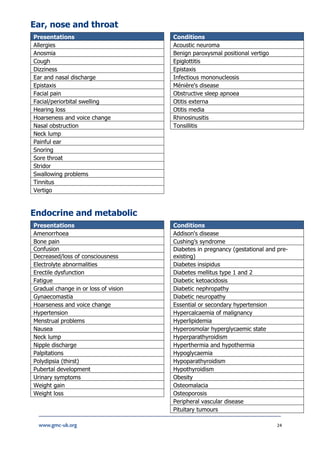
Ear, nose and throat
Presentations Conditions
Allergies Acoustic neuroma
Anosmia Benign paroxysmal positional vertigo
Cough Epiglottitis
Dizziness Epistaxis
Ear and nasal discharge Infectious mononucleosis
Epistaxis Ménière's disease
Facial pain Obstructive sleep apnoea
Facial/periorbital swelling Otitis externa
Hearing loss Otitis media
Hoarseness and voice change Rhinosinusitis
Nasal obstruction Tonsillitis
Neck lump
Painful ear
Snoring
Sore throat
Stridor
Swallowing problems
Tinnitus
Vertigo
Endocrine and metabolic
Presentations Conditions
Amenorrhoea Addison's disease
Bone pain Cushing’s syndrome
Confusion Diabetes in pregnancy (gestational and pre-
existing)
Decreased/loss of consciousness
Electrolyte abnormalities Diabetes insipidus
Erectile dysfunction Diabetes mellitus type 1 and 2
Fatigue Diabetic ketoacidosis
Gradual change in or loss of vision Diabetic nephropathy
Gynaecomastia Diabetic neuropathy
Hoarseness and voice change Essential or secondary hypertension
Hypertension Hypercalcaemia of malignancy
Menstrual problems Hyperlipidemia
Nausea Hyperosmolar hyperglycaemic state
Neck lump Hyperparathyroidism
Nipple discharge Hyperthermia and hypothermia
Palpitations Hypoglycaemia
Polydipsia (thirst) Hypoparathyroidism
Pubertal development Hypothyroidism
Urinary symptoms Obesity
Weight gain Osteomalacia
Weight loss Osteoporosis
Peripheral vascular disease
Pituitary tumours
25
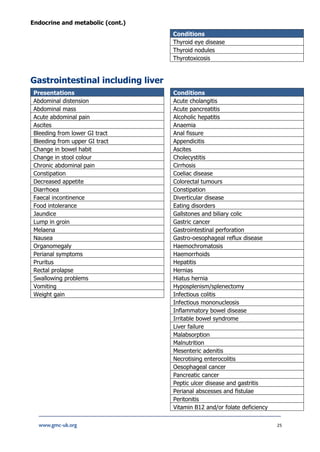
Endocrine and metabolic (cont.)
Conditions
Thyroid eye disease
Thyroid nodules
Thyrotoxicosis
Gastrointestinal including liver
Presentations Conditions
Abdominal distension Acute cholangitis
Abdominal mass Acute pancreatitis
Acute abdominal pain Alcoholic hepatitis
Ascites Anaemia
Bleeding from lower GI tract Anal fissure
Bleeding from upper GI tract Appendicitis
Change in bowel habit Ascites
Change in stool colour Cholecystitis
Chronic abdominal pain Cirrhosis
Constipation Coeliac disease
Decreased appetite Colorectal tumours
Diarrhoea Constipation
Faecal incontinence Diverticular disease
Food intolerance Eating disorders
Jaundice Gallstones and biliary colic
Lump in groin Gastric cancer
Melaena Gastrointestinal perforation
Nausea Gastro-oesophageal reflux disease
Organomegaly Haemochromatosis
Perianal symptoms Haemorrhoids
Pruritus Hepatitis
Rectal prolapse Hernias
Swallowing problems Hiatus hernia
Vomiting Hyposplenism/splenectomy
Weight gain Infectious colitis
Infectious mononucleosis
Inflammatory bowel disease
Irritable bowel syndrome
Liver failure
Malabsorption
Malnutrition
Mesenteric adenitis
Necrotising enterocolitis
Oesophageal cancer
Pancreatic cancer
Peptic ulcer disease and gastritis
Perianal abscesses and fistulae
Peritonitis
Vitamin B12 and/or folate deficiency
26
General practice and primary healthcare
Presentations Conditions
Abdominal distension Acne vulgaris
Abnormal eating or exercising behaviour Acute bronchitis
Abnormal urinalysis Acute stress reaction
Acute abdominal pain Allergic disorder
Acute and chronic pain management Anaemia
Acute joint pain/swelling Anal fissure
Acute rash Anaphylaxis
Allergies Anxiety disorder: generalised
Anxiety, phobias, OCD Anxiety, phobias, OCD
Back pain Arrhythmias
Behaviour/personality change Asthma
Bites and stings Atopic dermatitis and eczema
Bleeding from lower GI tract Atrophic vaginitis
Breast lump Bacterial vaginosis
Breast tenderness/pain Bell's palsy
Breathlessness Benign eyelid disorders
Change in bowel habit Benign paroxysmal positional vertigo
Chest pain Benign prostatic hyperplasia
Chronic abdominal pain Breast abscess/ mastitis
Chronic joint pain/stiffness Bronchiolitis
Chronic kidney disease Bursitis
Chronic rash Candidiasis
Constipation Chlamydia
Contraception request/advice Chronic fatigue syndrome
Cough Chronic kidney disease
Crying baby Chronic obstructive pulmonary disease
Deteriorating patient Conjunctivitis
Diarrhoea Constipation
Dizziness Contact dermatitis
Driving advice Croup
Ear and nasal discharge Crystal arthropathy
Erectile dysfunction Cutaneous fungal infection
Eye pain/discomfort Cutaneous warts
Facial/periorbital swelling Dementias
Falls Depression
Fatigue Diabetes mellitus type 1 and 2
Fever Disease prevention/screening
Fit notes Diverticular disease
Frailty Essential or secondary hypertension
Haematuria Fibromyalgia
Haemoptysis Folliculitis
Headache Gastro-oesophageal reflux disease
Hypertension Gonorrhoea
Infant feeding problems Haemorrhoids
Loss of libido Herpes simplex virus
Low mood/affective problems Hiatus hernia
27
General practice and primary healthcare (cont.)
Presentations Conditions
Lymphadenopathy Hypothyroidism
Menopausal problems Impetigo
Menstrual problems Infectious mononucleosis
Muscle pain/ myalgia Influenza
Painful ear Irritable bowel syndrome
Painful sexual intercourse Lower limb soft tissue injury
Painful swollen leg Lyme disease
Pelvic pain Measles
Perianal symptoms Menopause
Peripheral oedema and ankle swelling Migraine
Sleep problems Mumps
Soft tissue injury Obesity
Somatisation/ medically unexplained physical
symptoms
Osteoarthritis
Osteoporosis
Sore throat Otitis externa
Struggling to cope at home Otitis media
Subfertility Parkinson's disease
Substance misuse Pelvic inflammatory disease
Swallowing problems Peripheral vascular disease
The sick child Polymyalgia rheumatica
Tinnitus Prostate cancer
Trauma Psoriasis
Travel health advice Radiculopathies
Tremor Reactive arthritis
Unwanted pregnancy and termination Rhinosinusitis
Urinary symptoms Substance use disorder
Vaccination Syphilis
Vaginal discharge Tension headache
Vertigo Tonsillitis
Weight gain Trichomonas vaginalis
Wellbeing checks Trigeminal neuralgia
Wheeze Upper limb soft tissue injury
Urinary incontinence
Urinary tract infection
Urticaria
Varicella zoster
Varicose veins
Vasovagal syncope
Venous ulcers
Viral exanthema
Viral gastroenteritis
Whooping cough
28
Infection
Presentations Conditions
Acute rash Acute cholangitis
Anosmia Brain abscess
Chest pain Breast abscess/ mastitis
Diarrhoea Candidiasis
Facial/periorbital swelling Cellulitis
Fever Chlamydia
Haematuria Conjunctivitis
Haemoptysis Covid-19
Loss of smell Croup
Neck pain/stiffness Cutaneous fungal infection
Night sweats Cutaneous warts
Painful swollen leg Encephalitis
Petechial rash Epididymitis and orchitis
Pleural effusion Folliculitis
Sore throat Gangrene
Stridor Gonorrhoea
Travel health advice Head lice
Urethral discharge and genital ulcers/warts Herpes simplex virus
Urinary symptoms Hospital acquired infections
Vaccination Human immunodeficiency virus
Vaginal discharge Human papilloma virus infection
Vomiting Impetigo
Vulval itching/lesion Infectious colitis
Vulval/vaginal lump Infectious diarrhoea
Weight loss Infectious mononucleosis
Infective endocarditis
Influenza
Lower respiratory tract infection
Lyme disease
Malaria
Measles
Meningitis
Mumps
Necrotising fasciitis
Notifiable diseases
Osteomyelitis
Otitis media
Perianal abscesses and fistulae
Periorbital and orbital cellulitis
Peritonitis
Pneumonia
Sepsis
Septic arthritis
Surgical site infection
Syphilis
Tonsillitis
29
Infection (cont.)
Presentations Conditions
Toxic shock syndrome
Trichomonas vaginalis
Tuberculosis
Upper respiratory tract infection
Urinary tract infection
Varicella zoster
Viral exanthema
Viral gastroenteritis
Viral hepatitides
Whooping cough
Medicine of older adult
Presentations Conditions
Abnormal involuntary movements Benign paroxysmal positional vertigo
Auditory hallucinations Cardiac failure
Blackouts and faints Delirium
Chest pain Dementias
Confusion Hyperthermia and hypothermia
Constipation Lower limb fractures
Dizziness Malnutrition
Driving advice Non-accidental injury
Elder abuse Osteoporosis
Electrolyte abnormalities Parkinson's disease
Faecal incontinence Pressure sores
Falls Stroke
Frailty Urinary incontinence
Hearing loss
Hypertension
Immobility
Memory loss
Mental capacity concerns
Peripheral oedema and ankle swelling
Skin ulcers
Struggling to cope at home
Trauma
Urinary incontinence
Urinary symptoms
Vertigo
Visual hallucinations
30
Mental health
Presentations Conditions
Abnormal eating or exercising behaviour Acute stress reaction
Addiction Alcoholic hepatitis
Anxiety, phobias, OCD Anxiety disorder: generalised
Auditory hallucinations Anxiety disorder: post-traumatic stress disorder
Behaviour/personality change Anxiety, phobias, OCD
Behavioural difficulties in childhood Attention deficit hyperactivity disorder
Child abuse Autism spectrum disorder
Chronic abdominal pain Bipolar affective disorder
Confusion Delirium
Decreased appetite Dementias
Driving advice Depression
Elation/elated mood Drug overdose
Elder abuse Eating disorders
End of life care/symptoms of terminal illness Personality disorder
Fatigue Schizophrenia
Fixed abnormal beliefs Self-harm
Learning disability Somatisation
Loss of libido Substance use disorder
Low mood/affective problems Tension headache
Memory loss Wernicke's encephalopathy
Mental capacity concerns
Mental health problems in pregnancy or
postpartum
Overdose
Palpitations
Pressure of speech
Self-harm
Sleep problems
Somatisation/ medically unexplained physical
symptoms
Struggling to cope at home
Substance misuse
Suicidal thoughts
Threats to harm others
Visual hallucinations
Weight gain
Weight loss
31
Musculoskeletal
Presentations Conditions
Acute joint pain/swelling Ankylosing spondylitis
Back pain Bursitis
Bone pain Compartment syndrome
Bruising Crystal arthropathy
Chronic joint pain/stiffness Fibromyalgia
Congenital abnormalities Idiopathic arthritis
Eye pain/discomfort Inflammatory bowel disease
Fever Lower limb fractures
Limp Lower limb soft tissue injury
Muscle pain/ myalgia Lyme disease
Musculoskeletal deformities Metastatic disease
Neck pain/stiffness Non-accidental injury
Red eye Osteoarthritis
Soft tissue injury Osteomalacia
Trauma Osteomyelitis
Osteoporosis
Pathological fracture
Polymyalgia rheumatica
Psoriasis
Radiculopathies
Reactive arthritis
Rheumatoid arthritis
Sarcoidosis
Septic arthritis
Spinal cord compression
Spinal cord injury
Spinal fracture
Systemic lupus erythematosus
Upper limb fractures
Upper limb soft tissue injury
32
Neurosciences
Presentations Conditions
Abnormal development/ developmental delay Acoustic neuroma
Abnormal involuntary movements Bell's palsy
Acute and chronic pain management Brain abscess
Acute change in or loss of vision Brain metastases
Altered sensation, numbness and tingling Cerebral palsy and hypoxic-ischaemic
encephalopathy
Anosmia
Back pain Chronic fatigue syndrome
Behaviour/personality change Dementias
Blackouts and faints Diabetic neuropathy
Breathlessness Encephalitis
Confusion Epilepsy
Decreased/loss of consciousness Essential tremor
Diplopia Extradural haemorrhage
Dizziness Febrile convulsion
Driving advice Malaria
Eye pain/discomfort Ménière's disease
Facial pain Meningitis
Facial weakness Metastatic disease
Fasciculation Migraine
Fits/seizures Motor neurone disease
Head injury Multiple sclerosis
Headache Muscular dystrophies
Limb weakness Myasthenia gravis
Limp Parkinson's disease
Memory loss Peripheral nerve injuries/palsies
Muscle pain/ myalgia Radiculopathies
Neck pain/stiffness Raised intracranial pressure
Neuromuscular weakness Spinal cord compression
Ptosis Spinal cord injury
Sleep problems Spinal fracture
Speech and language problems Stroke
Swallowing problems Subarachnoid haemorrhage
Trauma Subdural haemorrhage
Tremor Tension headache
Urinary symptoms Transient ischaemic attacks
Unsteadiness Trigeminal neuralgia
Vertigo Wernicke's encephalopathy
33
Obstetrics and gynaecology
Presentations Conditions
Abdominal distension Anaemia
Abdominal mass Atrophic vaginitis
Abnormal cervical smear result Bacterial vaginosis
Abnormal urinalysis Cervical cancer
Acute abdominal pain Cervical screening (HPV)
Acute and chronic pain management Chlamydia
Amenorrhoea Cord prolapse
Bleeding antepartum Depression
Bleeding postpartum Diabetes in pregnancy (gestational and pre-
existing)
Breast tenderness/pain
Breathlessness Ectopic pregnancy
Chest pain Endometrial cancer
Complications of labour Endometriosis
Contraception request/advice Epilepsy
Difficulty with breast feeding Essential or secondary hypertension
Fits/seizures Fibroids
Headache Gonorrhoea
Hypertension Menopause
Hyperemesis Obesity and pregnancy
Intrauterine death Ovarian cancer
Jaundice Pelvic inflammatory disease
Labour Placenta praevia
Loss of libido Placental abruption
Menopausal problems Postpartum haemorrhage
Menstrual problems Pre-eclampsia, gestational hypertension
Mental health problems in pregnancy or
postpartum
Sepsis
Substance use disorder
Nipple discharge Syphilis
Normal pregnancy and antenatal care Termination of pregnancy
Painful sexual intercourse Trichomonas vaginalis
Painful swollen leg Urinary incontinence
Pelvic mass Urinary tract infection
Pelvic pain Varicella zoster
Pregnancy risk assessment Vasa praevia
Pruritus VTE in pregnancy and puerperium
Reduced/change in fetal movements
Shock
Small for gestational age/ large for gestational
age
Subfertility
Substance misuse
Unwanted pregnancy and termination
Urethral discharge and genital ulcers/warts
Urinary incontinence
Urinary symptoms
Vaginal discharge
34
Obstetrics and gynaecology (cont.)
Presentations
Vaginal prolapse
Vulval itching/lesion
Vulval/vaginal lump
Ophthalmology
Presentations Conditions
Acute change in or loss of vision Acute glaucoma
Allergies Benign eyelid disorders
Diplopia Blepharitis
Eye pain/discomfort Cataracts
Eye trauma Central retinal arterial occlusion
Facial/periorbital swelling Chronic glaucoma
Flashes and floaters in visual fields Conjunctivitis
Foreign body in eye Diabetic eye disease
Gradual change in or loss of vision Infective keratitis
Loss of red reflex Iritis
Red eye Macular degeneration
Squint Optic neuritis
Periorbital and orbital cellulitis
Retinal detachment
Scleritis
Thyroid eye disease
Uveitis
Visual field defects
Palliative and end of life care
Presentations Conditions
Acute and chronic pain management Cardiac failure
End of life care/symptoms of terminal illness Metastatic disease
Nausea Multi-organ dysfunction syndrome
Neuromuscular weakness
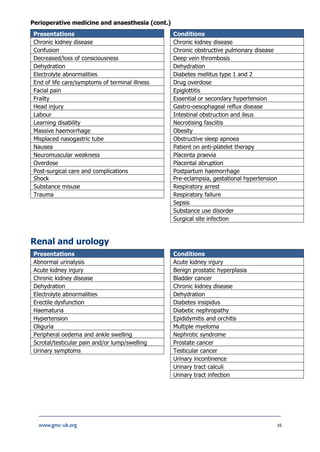
Perioperative medicine and anaesthesia
Presentations Conditions
Acute and chronic pain management Acute kidney injury
Acute kidney injury Anaemia
Back pain Anaphylaxis
Bleeding antepartum Aortic valve disease
Bleeding postpartum Arrhythmias
Bone pain Asthma
Breathlessness Cardiac arrest
Cardiorespiratory arrest Cardiac failure
35
Perioperative medicine and anaesthesia (cont.)
Presentations Conditions
Chronic kidney disease Chronic kidney disease
Confusion Chronic obstructive pulmonary disease
Decreased/loss of consciousness Deep vein thrombosis
Dehydration Dehydration
Electrolyte abnormalities Diabetes mellitus type 1 and 2
End of life care/symptoms of terminal illness Drug overdose
Facial pain Epiglottitis
Frailty Essential or secondary hypertension
Head injury Gastro-oesophageal reflux disease
Labour Intestinal obstruction and ileus
Learning disability Necrotising fasciitis
Massive haemorrhage Obesity
Misplaced nasogastric tube Obstructive sleep apnoea
Nausea Patient on anti-platelet therapy
Neuromuscular weakness Placenta praevia
Overdose Placental abruption
Post-surgical care and complications Postpartum haemorrhage
Shock Pre-eclampsia, gestational hypertension
Substance misuse Respiratory arrest
Trauma Respiratory failure
Sepsis
Substance use disorder
Surgical site infection
Renal and urology
Presentations Conditions
Abnormal urinalysis Acute kidney injury
Acute kidney injury Benign prostatic hyperplasia
Chronic kidney disease Bladder cancer
Dehydration Chronic kidney disease
Electrolyte abnormalities Dehydration
Erectile dysfunction Diabetes insipidus
Haematuria Diabetic nephropathy
Hypertension Epididymitis and orchitis
Oliguria Multiple myeloma
Peripheral oedema and ankle swelling Nephrotic syndrome
Scrotal/testicular pain and/or lump/swelling Prostate cancer
Urinary symptoms Testicular cancer
Urinary incontinence
Urinary tract calculi
Urinary tract infection
36
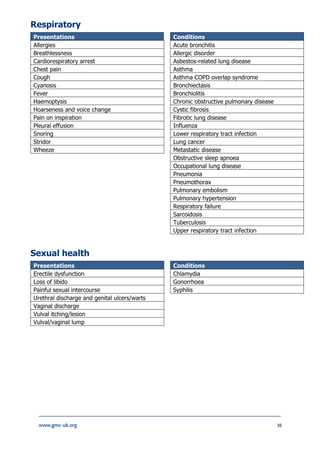
Respiratory
Presentations Conditions
Allergies Acute bronchitis
Breathlessness Allergic disorder
Cardiorespiratory arrest Asbestos-related lung disease
Chest pain Asthma
Cough Asthma COPD overlap syndrome
Cyanosis Bronchiectasis
Fever Bronchiolitis
Haemoptysis Chronic obstructive pulmonary disease
Hoarseness and voice change Cystic fibrosis
Pain on inspiration Fibrotic lung disease
Pleural effusion Influenza
Snoring Lower respiratory tract infection
Stridor Lung cancer
Wheeze Metastatic disease
Obstructive sleep apnoea
Occupational lung disease
Pneumonia
Pneumothorax
Pulmonary embolism
Pulmonary hypertension
Respiratory failure
Sarcoidosis
Tuberculosis
Upper respiratory tract infection
Sexual health
Presentations Conditions
Erectile dysfunction Chlamydia
Loss of libido Gonorrhoea
Painful sexual intercourse Syphilis
Urethral discharge and genital ulcers/warts
Vaginal discharge
Vulval itching/lesion
Vulval/vaginal lump
37
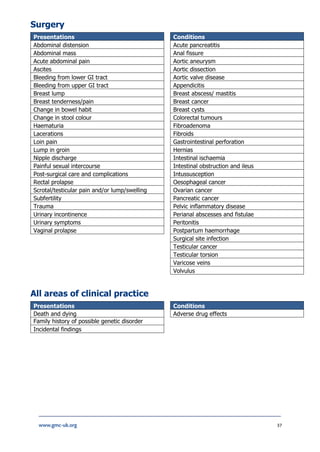
Surgery
Presentations Conditions
Abdominal distension Acute pancreatitis
Abdominal mass Anal fissure
Acute abdominal pain Aortic aneurysm
Ascites Aortic dissection
Bleeding from lower GI tract Aortic valve disease
Bleeding from upper GI tract Appendicitis
Breast lump Breast abscess/ mastitis
Breast tenderness/pain Breast cancer
Change in bowel habit Breast cysts
Change in stool colour Colorectal tumours
Haematuria Fibroadenoma
Lacerations Fibroids
Loin pain Gastrointestinal perforation
Lump in groin Hernias
Nipple discharge Intestinal ischaemia
Painful sexual intercourse Intestinal obstruction and ileus
Post-surgical care and complications Intussusception
Rectal prolapse Oesophageal cancer
Scrotal/testicular pain and/or lump/swelling Ovarian cancer
Subfertility Pancreatic cancer
Trauma Pelvic inflammatory disease
Urinary incontinence Perianal abscesses and fistulae
Urinary symptoms Peritonitis
Vaginal prolapse Postpartum haemorrhage
Surgical site infection
Testicular cancer
Testicular torsion
Varicose veins
Volvulus
All areas of clinical practice
Presentations Conditions
Death and dying Adverse drug effects
Family history of possible genetic disorder
Incidental findings
Email: gmc@gmc-uk.org
Website: gmc-uk.org
Telephone: 0161 923 6602
Published September 2019 | Updated March 2021
© 2021 General Medical Council
The text of this document may be reproduced free of charge in any format or medium providing it is reproduced accurately
and not in a misleading context. The material must be acknowledged as GMC copyright and the document title specified.
The GMC is a charity registered in England and Wales (1089278) and Scotland (SC037750) GMC/MLACM/0321
@gmcuk
linkd.in/gmcuk
facebook.com/gmcuk
youtube.com/gmcuktv
To ask for this publication in another format or language, please
call us on 0161 923 6602 or email us at publications@gmc-uk.org.
Textphone: please dial the prefix 18001 then
0161 923 6602 to use the Text Relay service
Join the conversation

MLA-content-map-_pdf-85707770.pdf

  • 1.
    MLA content map MedicalLicensing Assessment gmc-uk.org/mla
  • 2.
    MLA content map TheMedical Licensing Assessment content map is annexed to - and forms part of – Assuring readiness for practice: a framework for the MLA Explanatory narrative 2 MLA content map 6 Areas of clinical practice 6 Areas of professional knowledge 7 Clinical and professional capabilities 8 Practical skills and procedures 9 A-Z list of presentations 10 A-Z list of conditions 13 Appendix 1: Presentations and conditions mapped to areas of clinical practice 17
  • 3.
    2 About the MLAcontent map Background The Medical Licensing Assessment The purpose of the Medical Licensing Assessment (MLA) is to ensure that doctors seeking registration with a licence to practise medicine in the UK have met a common threshold for safe practice that is appropriate to their point of entry to the medical register. The MLA has two components: the applied knowledge test (AKT) and the clinical and professional skills assessment (CPSA), through which candidates can demonstrate they are ready for safe practice, able to manage uncertainty, and deliver patient centred care. These are the three themes underpinning the MLA content map, which sets out the core knowledge, skills and behaviours needed for UK practice. The AKT is a written assessment of applied clinical knowledge. The CPSA is a performance-based assessment* of clinical and professional skills, knowledge and behaviours. It is set and delivered by: ◼ UK medical schools† for medical students in their penultimate or final year of undergraduate education, and ◼ the GMC for those international medical graduates (IMGs) who wish to practise medicine in the UK and must demonstrate their knowledge and skills through taking the MLA. What is the MLA content map for? The MLA content map sets out the core knowledge, skills and behaviours needed for UK practice. All AKT and CPSA content derives from the content map. It serves a range of purposes for different audiences: ◼ For medical schools and the GMC, it provides the basis for the sampling strategy that will determine how AKT papers are constructed. ◼ For medical schools and the GMC, it provides a reference point for developing CPSAs (all CPSA providers must show how their sampling strategy relates to the MLA content map). * Irrespective of the format that each assessment provider has chosen to use (eg Objective Structured Clinical Examination (OSCE), Objective Structured Long Examination Record (OSLER), Practical Assessment of Clinical Examination Skills (PACES)). † Under section 4.4 of the Medical Act 1983 medical schools may, with GMC approval, unite or cooperate to design, construct, and deliver the Applied Knowledge Test for UK medical students.
  • 4.
    3 ◼ For MLAcandidates, it indicates which content areas could possibly be covered by the questions in their MLA AKT or the scenarios in their CPSA. ◼ For employers and postgraduate training providers, the MLA content map is a summary of the range of professional knowledge, skills and behaviours expected of doctors entering the UK Foundation Programme. ◼ For patients and special interest groups, it sets out the professional skills, knowledge and behaviours linked to the underlying purpose of the MLA: assuring newly registered doctors have met a common threshold. How was what appears in the MLA content map decided? The MLA content map is based on: ◼ The GMC’s Outcomes for graduates (2018), which sets out what newly qualified doctors from UK medical schools must know and be able to do. ◼ The GMC’s Generic professional capabilities framework (2017), which details the capabilities needed for safe, effective and high quality medical care in the UK. ◼ The situations typically faced by doctors working in the UK Foundation Programme and relevant parts of the Foundation Programme curriculum. The MLA content map doesn’t exactly replicate Outcomes for graduates because not all the values and behaviours expected of a new doctor can be tested in an exam. For example, engaging in induction and orientation activities or maintaining a professional development portfolio. Because the MLA focuses on areas that doctors are likely to encounter during the UK Foundation Programme, not all specialty areas are covered equally in the content map. The content map concentrates on the professional skills, knowledge and behaviours that are essential for safe practice – for example, effective communication, recognising risk and the diagnosis and management of common or acute presentations and conditions. The MLA won’t test knowledge of the NHS and its local arrangements. Employers are responsible for the local induction and support given to newly registered and licensed doctors they appoint to their organisation. The GMC supports non-UK doctors preparing to work in the UK through the Welcome to UK practice programme.
  • 5.
    4 Three themes guidedwhat to include in the MLA content map, which reflect the overarching outcome* specified in Outcomes for graduates: a Readiness for safe practice: the ability to manage emergencies and acute health issues, as well as common chronic health and wellbeing issues b Managing uncertainty: the ability to cope with uncertainty over diagnosis, prognosis, response to therapeutic interventions; medical science; and when to call for help c Delivering person-centred care: listening and hearing patients’ values; taking account of comorbidities and frailty and social context; working effectively within a multi-professional and multi-disciplinary team and across multiple care settings; and demonstrating shared decision-making that takes account of patients’ expectations and wishes. Medical education must respond continually to changes in the health of the population, healthcare systems and the methods and technologies used to diagnose, treat and manage illness and wellbeing. The GMC will keep the MLA content map up to date with timely revisions to make sure it reflects real life day-to-day medical practice. How is the MLA content map organised? The MLA content map is organised into six domains: * ‘To meet the standards of Good medical practice, graduates must make the care of patients their first concern. They must apply their knowledge and skills in a competent and ethical manner. And they must use their ability to provide leadership and to analyse complex and uncertain situations.’
  • 6.
    5 Areas of clinicalpractice This domain is about the context of delivery of care. The headings in this domain contain a mixture of specialties, body systems and patient types, reflecting the complexity of medical practice and the range of care settings and patient scenarios that a doctor is likely to encounter in a first appointment within the UK Foundation Programme. Where necessary, a heading descriptor has been included to provide additional information on what it covers. Every item in the Patient presentations and Conditions domains falls under one or more of these headings. Areas of professional knowledge This domain sets out generic areas of professional clinical and scientific knowledge as applied to the care of patients, at the level expected of a doctor entering the UK Foundation Programme. Where necessary, a heading descriptor has been included to provide additional information on what it covers. Clinical and professional capabilities This domain sets out the abilities required to provide clinical care for patients in line with the values and behaviours in Good medical practice (GMP), Outcomes for graduates (2018) and the Generic professional capabilities framework (2017). The GMC expects doctors passing the MLA to behave with civility and kindness, and to demonstrate a holistic, compassionate and individual approach to each patient encounter. The GMC also expects them to take account of the views and values of their patient and wider society when assessing and providing care. The headings in this domain are capabilities that might be assessed through the AKT or CPSA in line with these underlying principles. Practical skills and procedures This domain is the list of practical skills and procedures that supplements the GMC’s Outcomes for graduates (2018). It sets out the skills, procedures and levels of competence newly qualified doctors must have, so they can practise safely when they start work. This domain (along with the Clinical and professional capabilities) has particular relevance for CPSAs. Patient presentations This domain is defined as signs, symptoms, investigation results and other relevant patient-related issues typically seen by doctors in a first appointment within the UK Foundation Programme. Every presentation relates to one or more of the Areas of clinical practice. For example, the presentation ‘Confusion’ might relate to Medicine of older adult, Endocrine and metabolic, Mental health or Neurosciences. Conditions This domain is defined as pathophysiological diseases or clinical diagnoses typically seen by doctors in a first appointment within the UK Foundation Programme. Every condition relates to one or more of the Areas of clinical practice.

  • 7.
    6 MLA content map Areasof clinical practice Areas of clinical practice Descriptor Acute and emergency Includes clinical toxicology and intensive care medicine Cancer Cardiovascular Includes cardiac and vascular surgery and rehabilitation Child health Includes infants, children, young people and adolescent transition Clinical haematology Clinical imaging Dermatology Includes burns Ear, nose and throat Endocrine and metabolic Gastrointestinal including liver Includes upper and lower GI tract surgery General practice and primary healthcare Includes rehabilitation Infection Medicine of older adult Includes rehabilitation Mental health Musculoskeletal Includes rehabilitation, trauma, orthopaedics and rheumatology Neurosciences Includes neurosurgery and rehabilitation Obstetrics and gynaecology Ophthalmology Palliative and end of life care Includes pain management Perioperative medicine and anaesthesia Includes pain management Renal and urology Respiratory Includes thoracic surgery and rehabilitation Sexual health Includes gender medicine Surgery Includes general, plastic, breast, oral and maxillofacial surgery, and transplantation All areas of clinical practice
  • 8.
    7 Areas of professionalknowledge Areas of professional knowledge Descriptor Allergy and immunology Biomedical sciences Includes clinical anatomy, clinical physiology, clinical pathology and science of ageing Clinical biochemistry Includes chemical pathology Clinical pharmacology and therapeutics Includes pain management Genetics and genomics Histopathology Includes cytology Human factors and quality improvement Endeavours to further knowledge and contribute to improvements in healthcare through audit, reflection and research; includes safety science and plan-do-study- act cycles Laboratory haematology Medical ethics and law Microbiology Includes infection control Psychological principles Social and population health Includes health promotion and illness prevention, health economics, research and data/statistics, social science, public health and/or global health
  • 9.
    8 Clinical and professionalcapabilities Clinical and professional capabilities Descriptor Obtains relevant information about the patient through appropriate history and physical/mental health examination, formulating a prioritised list of problems and differential diagnoses Includes establishing a therapeutic relationship with the patient Assesses and generates management plans for chronic conditions Includes recognising the possibility of serious illness and initiating initial management; includes rehabilitation Assesses and generates management plans in emergency and acute presentations Includes recognising the possibility of serious illness and initiating initial management Assesses and generates management plans to promote health and prevent disease Includes individual patient and the population; includes rehabilitation Assesses and manages risk Includes working in challenging conditions Behaves in accordance with legal and ethical responsibilities (including equality and diversity principles) Includes awareness of social media issues, whistleblowing, dealing with complaints and clinical errors Communicates effectively with health care professionals, patients, relatives, carers and other advocates Includes demonstrating person-centred consultation and management skills Deals appropriately with complexity and uncertainty including managing multimorbidity and prioritising tasks Includes situational awareness Demonstrates reflective practice Demonstrates understanding of patient capacity, consent and confidentiality in delivering care Demonstrates understanding of the importance of self-care and personal wellbeing Identifies and requests relevant investigations, interprets results and ensures they are acted on appropriately in the context of the clinical situation, avoiding over-investigation Manages pain Performs procedures safely Prescribes, reviews, communicates and monitors the effects of medicines safely and effectively’ Safeguards vulnerable patients Symptomatically manages patients approaching end of life Uses and records information safely and effectively Utilises evidence-based guidelines appropriately Works effectively, respectfully and supportively as a member of the team Includes leadership
  • 10.
    9 Practical skills andprocedures Please visit our website for the Practical skills and procedures supplement to Outcomes for graduates.
  • 11.
    10 A-Z list ofpresentations Presentations A-C Presentations C-G Abdominal distension Cold, painful, pale, pulseless leg/foot Abdominal mass Complications of labour Abnormal cervical smear result Confusion Abnormal development/ developmental delay Congenital abnormalities Abnormal eating or exercising behaviour Constipation Abnormal involuntary movements Contraception request/advice Abnormal urinalysis Cough Acute abdominal pain Crying baby Acute and chronic pain management Cyanosis Acute change in or loss of vision Death and dying Acute joint pain/swelling Decreased appetite Acute kidney injury Decreased/loss of consciousness Acute rash Dehydration Addiction Deteriorating patient Allergies Diarrhoea Altered sensation, numbness and tingling Difficulty with breast feeding Amenorrhoea Diplopia Anaphylaxis Dizziness Anosmia Driving advice Anxiety, phobias, OCD Dysmorphic child Ascites Ear and nasal discharge Auditory hallucinations Elation/elated mood Back pain Elder abuse Behaviour/personality change Electrolyte abnormalities Behavioural difficulties in childhood End of life care/ symptoms of terminal illness Bites and stings Epistaxis Blackouts and faints Erectile dysfunction Bleeding antepartum Eye pain/discomfort Bleeding from lower GI tract Eye trauma Bleeding from upper GI tract Facial pain Bleeding postpartum Facial weakness Bone pain Facial/periorbital swelling Breast lump Faecal incontinence Breast tenderness/pain Falls Breathlessness Family history of possible genetic disorder Bruising Fasciculation Burns Fatigue Cardiorespiratory arrest Fever Change in bowel habit Fit notes Change in stool colour Fits/seizures Chest pain Fixed abnormal beliefs Child abuse Flashes and floaters in visual fields Chronic abdominal pain Food intolerance Chronic joint pain/stiffness Foreign body in eye Chronic kidney disease Frailty Chronic rash Gradual change in or loss of vision
  • 12.
    11 A-Z list ofpresentations (cont.) Presentations G-N Presentations N-S Gynaecomastia Neck pain/stiffness Haematuria Neonatal death or cot death Haemoptysis Neuromuscular weakness Head injury Night sweats Headache Nipple discharge Hearing loss Normal pregnancy and antenatal care Heart murmurs Oliguria Hoarseness and voice change Organomegaly Hyperemesis Overdose Hypertension Pain on inspiration Immobility Painful ear Incidental findings Painful sexual intercourse Infant feeding problems Painful swollen leg Intrauterine death Pallor Jaundice Palpitations Labour Pelvic mass Lacerations Pelvic pain Learning disability Perianal symptoms Limb claudication Peripheral oedema and ankle swelling Limb weakness Petechial rash Limp Pleural effusion Loin pain Poisoning Loss of libido Polydipsia (thirst) Loss of red reflex Post-surgical care and complications Loss of smell Pregnancy risk assessment Low blood pressure Prematurity Low mood/affective problems Pressure of speech Lump in groin Pruritus Lymphadenopathy Ptosis Massive haemorrhage Pubertal development Melaena Purpura Memory loss Rectal prolapse Menopausal problems Red eye Menstrual problems Reduced/change in fetal movements Mental capacity concerns Scarring Mental health problems in pregnancy or postpartum Scrotal/testicular pain and/or lump/swelling Self-harm Misplaced nasogastric tube Shock Muscle pain/ myalgia Skin lesion Musculoskeletal deformities Skin or subcutaneous lump Nail abnormalities Skin ulcers Nasal obstruction Sleep problems Nausea Small for gestational age/ large for gestational age Neck lump Snoring
  • 13.
    12 A-Z list ofpresentations (cont.) Presentations S-W Soft tissue injury Somatisation/ medically unexplained physical symptoms Sore throat Speech and language problems Squint Stridor Struggling to cope at home Subfertility Substance misuse Suicidal thoughts Swallowing problems The sick child Threats to harm others Tinnitus Trauma Travel health advice Tremor Unsteadiness Unwanted pregnancy and termination Urethral discharge and genital ulcers/warts Urinary incontinence Urinary symptoms Vaccination Vaginal discharge Vaginal prolapse Vertigo Visual hallucinations Vomiting Vulval itching/lesion Vulval/vaginal lump Weight gain Weight loss Wellbeing checks Wheeze
  • 14.
    13 A-Z list ofconditions Conditions A-B Conditions B-D Acid-base abnormality Brain abscess Acne vulgaris Brain metastases Acoustic neuroma Breast abscess/ mastitis Acute bronchitis Breast cancer Acute cholangitis Breast cysts Acute coronary syndromes Bronchiectasis Acute glaucoma Bronchiolitis Acute kidney injury Bursitis Acute pancreatitis Candidiasis Acute stress reaction Cardiac arrest Addison's disease Cardiac failure Adverse drug effects Cataracts Alcoholic hepatitis Cellulitis Allergic disorder Central retinal arterial occlusion Anaemia Cerebral palsy and hypoxic-ischaemic encephalopathy Anal fissure Anaphylaxis Cervical cancer Aneurysms, ischaemic limb and occlusions Cervical screening (HPV) Ankylosing spondylitis Chlamydia Anxiety disorder: generalised Cholecystitis Anxiety disorder: post-traumatic stress disorder Chronic fatigue syndrome Anxiety, phobias, OCD Chronic glaucoma Aortic aneurysm Chronic kidney disease Aortic dissection Chronic obstructive pulmonary disease Aortic valve disease Cirrhosis Appendicitis Coeliac disease Arrhythmias Colorectal tumours Arterial thrombosis Compartment syndrome Arterial ulcers Conjunctivitis Asbestos-related lung disease Constipation Ascites Contact dermatitis Asthma Cord prolapse Asthma COPD overlap syndrome Covid-19 Atopic dermatitis and eczema Croup Atrophic vaginitis Crystal arthropathy Attention deficit hyperactivity disorder Cushing’s syndrome Autism spectrum disorder Cutaneous fungal infection Bacterial vaginosis Cutaneous warts Basal cell carcinoma Cystic fibrosis Bell's palsy Deep vein thrombosis Benign eyelid disorders Dehydration Benign paroxysmal positional vertigo Delirium Benign prostatic hyperplasia Dementias Biliary atresia Depression Bipolar affective disorder Developmental delay Bladder cancer Diabetes in pregnancy (gestational and pre- existing) Blepharitis
  • 15.
    14 A-Z list ofconditions (cont.) Conditions D-H Conditions H-M Diabetes insipidus Human immunodeficiency virus Diabetes mellitus type 1 and 2 Human papilloma virus infection Diabetic eye disease Hypercalcaemia of malignancy Diabetic ketoacidosis Hyperlipidemia Diabetic nephropathy Hyperosmolar hyperglycaemic state Diabetic neuropathy Hyperparathyroidism Disease prevention/screening Hyperthermia and hypothermia Disseminated intravascular coagulation Hypoglycaemia Diverticular disease Hypoparathyroidism Down's syndrome Hyposplenism/splenectomy Drug overdose Hypothyroidism Eating disorders Idiopathic arthritis Ectopic pregnancy Impetigo Encephalitis Infectious colitis Endometrial cancer Infectious diarrhoea Endometriosis Infectious mononucleosis Epididymitis and orchitis Infective endocarditis Epiglottitis Infective keratitis Epilepsy Inflammatory bowel disease Epistaxis Influenza Essential or secondary hypertension Intestinal ischaemia Essential tremor Intestinal obstruction and ileus Extradural haemorrhage Intussusception Febrile convulsion Iritis Fibroadenoma Irritable bowel syndrome Fibroids Ischaemic heart disease Fibromyalgia Kawasaki disease Fibrotic lung disease Leukaemia Folliculitis Liver failure Gallstones and biliary colic Lower limb fractures Gangrene Lower limb soft tissue injury Gastric cancer Lower respiratory tract infection Gastrointestinal perforation Lung cancer Gastro-oesophageal reflux disease Lyme disease Gonorrhoea Lymphoma Haemochromatosis Macular degeneration Haemoglobinopathies Malabsorption Haemophilia Malaria Haemorrhoids Malignant melanoma Head lice Malnutrition Henoch-Schonlein purpura Measles Hepatitis Ménière's disease Hernias Meningitis Herpes simplex virus Menopause Hiatus hernia Mesenteric adenitis Hospital acquired infections Metastatic disease
  • 16.
    15 A-Z list ofconditions (cont.) Conditions M-P Conditions P-T Migraine Placenta praevia Mitral valve disease Placental abruption Motor neurone disease Pneumonia Multi-organ dysfunction syndrome Pneumothorax Multiple myeloma Polycythaemia Multiple sclerosis Polymyalgia rheumatica Mumps Postpartum haemorrhage Muscular dystrophies Pre-eclampsia, gestational hypertension Myasthenia gravis Pressure sores Myeloproliferative disorders Prostate cancer Myocardial infarction Psoriasis Myocarditis Pulmonary embolism Necrotising enterocolitis Pulmonary hypertension Necrotising fasciitis Pyloric stenosis Nephrotic syndrome Radiculopathies Non-accidental injury Raised intracranial pressure Notifiable diseases Reactive arthritis Obesity Respiratory arrest Obesity and pregnancy Respiratory failure Obstructive sleep apnoea Retinal detachment Occupational lung disease Rheumatoid arthritis Oesophageal cancer Rhinosinusitis Optic neuritis Right heart valve disease Osteoarthritis Rubella Osteomalacia Sarcoidosis Osteomyelitis Scabies Osteoporosis Schizophrenia Otitis externa Scleritis Otitis media Self-harm Ovarian cancer Sepsis Pancreatic cancer Septic arthritis Pancytopenia Sickle cell disease Parkinson's disease Somatisation Pathological fracture Spinal cord compression Patient on anti-coagulant therapy Spinal cord injury Patient on anti-platelet therapy Spinal fracture Pelvic inflammatory disease Squamous cell carcinoma Peptic ulcer disease and gastritis Stroke Perianal abscesses and fistulae Subarachnoid haemorrhage Pericardial disease Subdural haemorrhage Periorbital and orbital cellulitis Substance use disorder Peripheral nerve injuries/palsies Surgical site infection Peripheral vascular disease Syphilis Peritonitis Systemic lupus erythematosus Personality disorder Tension headache Pituitary tumours Termination of pregnancy
  • 17.
    16 A-Z list ofconditions (cont.) Conditions T-W Testicular cancer Testicular torsion Thyroid eye disease Thyroid nodules Thyrotoxicosis Tonsillitis Toxic shock syndrome Transfusion reactions Transient ischaemic attacks Trichomonas vaginalis Trigeminal neuralgia Tuberculosis Unstable angina Upper limb fractures Upper limb soft tissue injury Upper respiratory tract infection Urinary incontinence Urinary tract calculi Urinary tract infection Urticaria Uveitis Varicella zoster Varicose veins Vasa praevia Vasovagal syncope Venous ulcers Viral exanthema Viral gastroenteritis Viral hepatitides Visual field defects Vitamin B12 and/or folate deficiency Volvulus VTE in pregnancy and puerperium Wernicke's encephalopathy Whooping cough
  • 18.
    17 Appendix 1: Presentationsand conditions mapped to areas of clinical practice* Acute and emergency Presentations Conditions Abnormal urinalysis Acid-base abnormality Acute and chronic pain management Acute bronchitis Acute change in or loss of vision Acute coronary syndromes Acute kidney injury Acute kidney injury Anaphylaxis Allergic disorder Bites and stings Anaphylaxis Bleeding antepartum Aortic aneurysm Bleeding from lower GI tract Arrhythmias Bleeding from upper GI tract Cardiac arrest Breathlessness Cardiac failure Burns Chronic obstructive pulmonary disease Cardiorespiratory arrest Compartment syndrome Chest pain Deep vein thrombosis Cyanosis Dehydration Decreased/loss of consciousness Diabetic ketoacidosis Dehydration Drug overdose Deteriorating patient Ectopic pregnancy Electrolyte abnormalities Epilepsy Epistaxis Epistaxis Eye trauma Extradural haemorrhage Facial/periorbital swelling Gastrointestinal perforation Foreign body in eye Haemoglobinopathies Head injury Hyperosmolar hyperglycaemic state Headache Hyperthermia and hypothermia Lacerations Meningitis Massive haemorrhage Myocardial infarction Melaena Necrotising fasciitis Overdose Non-accidental injury Poisoning Pancytopenia Post-surgical care and complications Pneumonia Scrotal/testicular pain and/or lump/swelling Pneumothorax Self-harm Postpartum haemorrhage Shock Pulmonary embolism Soft tissue injury Raised intracranial pressure Stridor Respiratory arrest Substance misuse Respiratory failure Trauma Self-harm Vomiting Sepsis Wheeze Spinal cord compression * Those relating to more than one area are listed under each and therefore may appear more than once.
  • 19.
    18 Acute and emergency(cont.) Presentations Conditions Spinal cord injury Spinal fracture Stroke Subarachnoid haemorrhage Subdural haemorrhage Substance use disorder Testicular torsion Toxic shock syndrome Transfusion reactions Unstable angina Cancer Presentations Conditions Abdominal distension Basal cell carcinoma Abdominal mass Bladder cancer Acute and chronic pain management Brain metastases Ascites Breast cancer Bleeding from lower GI tract Cervical cancer Bleeding from upper GI tract Colorectal tumours Bone pain Endometrial cancer Breast lump Gastric cancer Breathlessness Hypercalcaemia of malignancy Change in bowel habit Leukaemia Cough Lung cancer Decreased appetite Lymphoma Electrolyte abnormalities Malignant melanoma Fatigue Metastatic disease Haematuria Multiple myeloma Haemoptysis Oesophageal cancer Headache Ovarian cancer Jaundice Pancreatic cancer Limb weakness Pathological fracture Lump in groin Patient on anti-coagulant therapy Lymphadenopathy Prostate cancer Neck lump Spinal cord compression Pain on inspiration Squamous cell carcinoma Painful swollen leg Testicular cancer Pelvic mass Pleural effusion Scrotal/testicular pain and/or lump/swelling Swallowing problems Weight loss
  • 20.
    19 Cardiovascular Presentations Conditions Acute abdominalpain Acute coronary syndromes Acute change in or loss of vision Aneurysms, ischaemic limb and occlusions Blackouts and faints Aortic aneurysm Breathlessness Aortic dissection Cardiorespiratory arrest Aortic valve disease Chest pain Arrhythmias Cold, painful, pale, pulseless leg/foot Arterial thrombosis Cough Arterial ulcers Cyanosis Cardiac arrest Dizziness Cardiac failure Driving advice Deep vein thrombosis Erectile dysfunction Essential or secondary hypertension Fever Gangrene Heart murmurs Haemochromatosis Hypertension Infective endocarditis Limb claudication Intestinal ischaemia Limb weakness Ischaemic heart disease Low blood pressure Mitral valve disease Pain on inspiration Myocarditis Painful swollen leg Pericardial disease Palpitations Peripheral vascular disease Peripheral oedema and ankle swelling Pulmonary embolism Pregnancy risk assessment Pulmonary hypertension Skin ulcers Right heart valve disease Wheeze Stroke Transient ischaemic attacks Vasovagal syncope Venous ulcers Child health Presentations Conditions Abdominal mass Acute kidney injury Abnormal development/ developmental delay Anaemia Abnormal involuntary movements Anaphylaxis Acute abdominal pain Appendicitis Acute joint pain/swelling Asthma Acute kidney injury Atopic dermatitis and eczema Acute rash Attention deficit hyperactivity disorder Allergies Autism spectrum disorder Behavioural difficulties in childhood Biliary atresia Breathlessness Bronchiectasis Bruising Bronchiolitis Child abuse Candidiasis Chronic abdominal pain Cardiac arrest Chronic kidney disease Cellulitis
  • 21.
    20 Child health (cont.) PresentationsConditions Chronic rash Cerebral palsy and hypoxic-ischaemic encephalopathy Congenital abnormalities Constipation Chronic kidney disease Cough Coeliac disease Crying baby Conjunctivitis Cyanosis Constipation Decreased/loss of consciousness Croup Dehydration Cushing’s syndrome Deteriorating patient Cystic fibrosis Diarrhoea Dehydration Difficulty with breast feeding Developmental delay Dysmorphic child Diabetic ketoacidosis Fever Diabetes mellitus type 1 and 2 Fits/seizures Disseminated intravascular coagulation Food intolerance Down's syndrome Haematuria Drug overdose Headache Eating disorders Infant feeding problems Epididymitis and orchitis Jaundice Epiglottitis Learning disability Epilepsy Limp Febrile convulsion Lymphadenopathy Gastro-oesophageal reflux disease Musculoskeletal deformities Henoch-Schonlein purpura Neonatal death or cot death Hepatitis Overdose Hernias Pallor Herpes simplex virus Peripheral oedema and ankle swelling Human papilloma virus infection Poisoning Hypoglycaemia Polydipsia (thirst) Hyposplenism/splenectomy Prematurity Hypothyroidism Pubertal development Idiopathic arthritis Scrotal/testicular pain and/or lump/swelling Impetigo Self-harm Inflammatory bowel disease Shock Influenza Speech and language problems Intestinal obstruction and ileus Squint Intussusception Stridor Kawasaki disease Substance misuse Leukaemia Suicidal thoughts Lower respiratory tract infection The sick child Lymphoma Trauma Malaria Urinary incontinence Malnutrition Urinary symptoms Measles Vaccination Meningitis Vomiting Migraine Wheeze Mumps
  • 22.
    21 Child health (cont.) PresentationsConditions Muscular dystrophies Non-accidental injury Obesity Obstructive sleep apnoea Otitis media Pancytopenia Peptic ulcer disease and gastritis Periorbital and orbital cellulitis Peripheral nerve injuries/palsies Peritonitis Pyloric stenosis Pneumothorax Raised intracranial pressure Reactive arthritis Respiratory arrest Rubella Self-harm Septic arthritis Sickle cell disease Subarachnoid haemorrhage Subdural haemorrhage Substance use disorder Tension headache Testicular torsion Thyrotoxicosis Tonsillitis Toxic shock syndrome Tuberculosis Upper respiratory tract infection Urinary tract infection Urticaria Viral exanthema Viral gastroenteritis Visual field defects Volvulus
  • 23.
    22 Clinical haematology Presentations Conditions Bleedingfrom lower GI tract Anaemia Bone pain Deep vein thrombosis Bruising Disseminated intravascular coagulation Epistaxis Epistaxis Fatigue Haemochromatosis Fever Haemoglobinopathies Jaundice Haemophilia Lump in groin Hyposplenism/splenectomy Lymphadenopathy Leukaemia Massive haemorrhage Lymphoma Neck lump Multiple myeloma Organomegaly Myeloproliferative disorders Pallor Pancytopenia Petechial rash Pathological fracture Purpura Patient on anti-coagulant therapy Patient on anti-platelet therapy Polycythaemia Pulmonary embolism Sickle cell disease Transfusion reactions Clinical imaging Presentations Conditions Misplaced nasogastric tube Aneurysms, ischaemic limb and occlusions Trauma Bladder cancer Breast cancer Bronchiectasis Cardiac failure Colorectal tumours Extradural haemorrhage Intestinal ischaemia Intestinal obstruction and ileus Intussusception Lower limb fractures Lower limb soft tissue injury Lung cancer Osteomyelitis Pathological fracture Placenta praevia Pneumonia Pneumothorax Pulmonary embolism Raised intracranial pressure Spinal cord compression
  • 24.
    23 Clinical imaging (cont.) PresentationsConditions Spinal cord injury Spinal fracture Stroke Subarachnoid haemorrhage Subdural haemorrhage Surgical site infection Upper limb fractures Upper limb soft tissue injury Volvulus Dermatology Presentations Conditions Acute rash Acne vulgaris Bites and stings Arterial ulcers Burns Atopic dermatitis and eczema Chronic rash Basal cell carcinoma Nail abnormalities Cellulitis Pruritus Contact dermatitis Scarring Cutaneous fungal infection Skin lesion Cutaneous warts Skin or subcutaneous lump Folliculitis Skin ulcers Head lice Impetigo Malignant melanoma Pressure sores Psoriasis Scabies Squamous cell carcinoma Urticaria
  • 25.
    24 Ear, nose andthroat Presentations Conditions Allergies Acoustic neuroma Anosmia Benign paroxysmal positional vertigo Cough Epiglottitis Dizziness Epistaxis Ear and nasal discharge Infectious mononucleosis Epistaxis Ménière's disease Facial pain Obstructive sleep apnoea Facial/periorbital swelling Otitis externa Hearing loss Otitis media Hoarseness and voice change Rhinosinusitis Nasal obstruction Tonsillitis Neck lump Painful ear Snoring Sore throat Stridor Swallowing problems Tinnitus Vertigo Endocrine and metabolic Presentations Conditions Amenorrhoea Addison's disease Bone pain Cushing’s syndrome Confusion Diabetes in pregnancy (gestational and pre- existing) Decreased/loss of consciousness Electrolyte abnormalities Diabetes insipidus Erectile dysfunction Diabetes mellitus type 1 and 2 Fatigue Diabetic ketoacidosis Gradual change in or loss of vision Diabetic nephropathy Gynaecomastia Diabetic neuropathy Hoarseness and voice change Essential or secondary hypertension Hypertension Hypercalcaemia of malignancy Menstrual problems Hyperlipidemia Nausea Hyperosmolar hyperglycaemic state Neck lump Hyperparathyroidism Nipple discharge Hyperthermia and hypothermia Palpitations Hypoglycaemia Polydipsia (thirst) Hypoparathyroidism Pubertal development Hypothyroidism Urinary symptoms Obesity Weight gain Osteomalacia Weight loss Osteoporosis Peripheral vascular disease Pituitary tumours
  • 26.
    25 Endocrine and metabolic(cont.) Conditions Thyroid eye disease Thyroid nodules Thyrotoxicosis Gastrointestinal including liver Presentations Conditions Abdominal distension Acute cholangitis Abdominal mass Acute pancreatitis Acute abdominal pain Alcoholic hepatitis Ascites Anaemia Bleeding from lower GI tract Anal fissure Bleeding from upper GI tract Appendicitis Change in bowel habit Ascites Change in stool colour Cholecystitis Chronic abdominal pain Cirrhosis Constipation Coeliac disease Decreased appetite Colorectal tumours Diarrhoea Constipation Faecal incontinence Diverticular disease Food intolerance Eating disorders Jaundice Gallstones and biliary colic Lump in groin Gastric cancer Melaena Gastrointestinal perforation Nausea Gastro-oesophageal reflux disease Organomegaly Haemochromatosis Perianal symptoms Haemorrhoids Pruritus Hepatitis Rectal prolapse Hernias Swallowing problems Hiatus hernia Vomiting Hyposplenism/splenectomy Weight gain Infectious colitis Infectious mononucleosis Inflammatory bowel disease Irritable bowel syndrome Liver failure Malabsorption Malnutrition Mesenteric adenitis Necrotising enterocolitis Oesophageal cancer Pancreatic cancer Peptic ulcer disease and gastritis Perianal abscesses and fistulae Peritonitis Vitamin B12 and/or folate deficiency
  • 27.
    26 General practice andprimary healthcare Presentations Conditions Abdominal distension Acne vulgaris Abnormal eating or exercising behaviour Acute bronchitis Abnormal urinalysis Acute stress reaction Acute abdominal pain Allergic disorder Acute and chronic pain management Anaemia Acute joint pain/swelling Anal fissure Acute rash Anaphylaxis Allergies Anxiety disorder: generalised Anxiety, phobias, OCD Anxiety, phobias, OCD Back pain Arrhythmias Behaviour/personality change Asthma Bites and stings Atopic dermatitis and eczema Bleeding from lower GI tract Atrophic vaginitis Breast lump Bacterial vaginosis Breast tenderness/pain Bell's palsy Breathlessness Benign eyelid disorders Change in bowel habit Benign paroxysmal positional vertigo Chest pain Benign prostatic hyperplasia Chronic abdominal pain Breast abscess/ mastitis Chronic joint pain/stiffness Bronchiolitis Chronic kidney disease Bursitis Chronic rash Candidiasis Constipation Chlamydia Contraception request/advice Chronic fatigue syndrome Cough Chronic kidney disease Crying baby Chronic obstructive pulmonary disease Deteriorating patient Conjunctivitis Diarrhoea Constipation Dizziness Contact dermatitis Driving advice Croup Ear and nasal discharge Crystal arthropathy Erectile dysfunction Cutaneous fungal infection Eye pain/discomfort Cutaneous warts Facial/periorbital swelling Dementias Falls Depression Fatigue Diabetes mellitus type 1 and 2 Fever Disease prevention/screening Fit notes Diverticular disease Frailty Essential or secondary hypertension Haematuria Fibromyalgia Haemoptysis Folliculitis Headache Gastro-oesophageal reflux disease Hypertension Gonorrhoea Infant feeding problems Haemorrhoids Loss of libido Herpes simplex virus Low mood/affective problems Hiatus hernia
  • 28.
    27 General practice andprimary healthcare (cont.) Presentations Conditions Lymphadenopathy Hypothyroidism Menopausal problems Impetigo Menstrual problems Infectious mononucleosis Muscle pain/ myalgia Influenza Painful ear Irritable bowel syndrome Painful sexual intercourse Lower limb soft tissue injury Painful swollen leg Lyme disease Pelvic pain Measles Perianal symptoms Menopause Peripheral oedema and ankle swelling Migraine Sleep problems Mumps Soft tissue injury Obesity Somatisation/ medically unexplained physical symptoms Osteoarthritis Osteoporosis Sore throat Otitis externa Struggling to cope at home Otitis media Subfertility Parkinson's disease Substance misuse Pelvic inflammatory disease Swallowing problems Peripheral vascular disease The sick child Polymyalgia rheumatica Tinnitus Prostate cancer Trauma Psoriasis Travel health advice Radiculopathies Tremor Reactive arthritis Unwanted pregnancy and termination Rhinosinusitis Urinary symptoms Substance use disorder Vaccination Syphilis Vaginal discharge Tension headache Vertigo Tonsillitis Weight gain Trichomonas vaginalis Wellbeing checks Trigeminal neuralgia Wheeze Upper limb soft tissue injury Urinary incontinence Urinary tract infection Urticaria Varicella zoster Varicose veins Vasovagal syncope Venous ulcers Viral exanthema Viral gastroenteritis Whooping cough
  • 29.
    28 Infection Presentations Conditions Acute rashAcute cholangitis Anosmia Brain abscess Chest pain Breast abscess/ mastitis Diarrhoea Candidiasis Facial/periorbital swelling Cellulitis Fever Chlamydia Haematuria Conjunctivitis Haemoptysis Covid-19 Loss of smell Croup Neck pain/stiffness Cutaneous fungal infection Night sweats Cutaneous warts Painful swollen leg Encephalitis Petechial rash Epididymitis and orchitis Pleural effusion Folliculitis Sore throat Gangrene Stridor Gonorrhoea Travel health advice Head lice Urethral discharge and genital ulcers/warts Herpes simplex virus Urinary symptoms Hospital acquired infections Vaccination Human immunodeficiency virus Vaginal discharge Human papilloma virus infection Vomiting Impetigo Vulval itching/lesion Infectious colitis Vulval/vaginal lump Infectious diarrhoea Weight loss Infectious mononucleosis Infective endocarditis Influenza Lower respiratory tract infection Lyme disease Malaria Measles Meningitis Mumps Necrotising fasciitis Notifiable diseases Osteomyelitis Otitis media Perianal abscesses and fistulae Periorbital and orbital cellulitis Peritonitis Pneumonia Sepsis Septic arthritis Surgical site infection Syphilis Tonsillitis
  • 30.
    29 Infection (cont.) Presentations Conditions Toxicshock syndrome Trichomonas vaginalis Tuberculosis Upper respiratory tract infection Urinary tract infection Varicella zoster Viral exanthema Viral gastroenteritis Viral hepatitides Whooping cough Medicine of older adult Presentations Conditions Abnormal involuntary movements Benign paroxysmal positional vertigo Auditory hallucinations Cardiac failure Blackouts and faints Delirium Chest pain Dementias Confusion Hyperthermia and hypothermia Constipation Lower limb fractures Dizziness Malnutrition Driving advice Non-accidental injury Elder abuse Osteoporosis Electrolyte abnormalities Parkinson's disease Faecal incontinence Pressure sores Falls Stroke Frailty Urinary incontinence Hearing loss Hypertension Immobility Memory loss Mental capacity concerns Peripheral oedema and ankle swelling Skin ulcers Struggling to cope at home Trauma Urinary incontinence Urinary symptoms Vertigo Visual hallucinations
  • 31.
    30 Mental health Presentations Conditions Abnormaleating or exercising behaviour Acute stress reaction Addiction Alcoholic hepatitis Anxiety, phobias, OCD Anxiety disorder: generalised Auditory hallucinations Anxiety disorder: post-traumatic stress disorder Behaviour/personality change Anxiety, phobias, OCD Behavioural difficulties in childhood Attention deficit hyperactivity disorder Child abuse Autism spectrum disorder Chronic abdominal pain Bipolar affective disorder Confusion Delirium Decreased appetite Dementias Driving advice Depression Elation/elated mood Drug overdose Elder abuse Eating disorders End of life care/symptoms of terminal illness Personality disorder Fatigue Schizophrenia Fixed abnormal beliefs Self-harm Learning disability Somatisation Loss of libido Substance use disorder Low mood/affective problems Tension headache Memory loss Wernicke's encephalopathy Mental capacity concerns Mental health problems in pregnancy or postpartum Overdose Palpitations Pressure of speech Self-harm Sleep problems Somatisation/ medically unexplained physical symptoms Struggling to cope at home Substance misuse Suicidal thoughts Threats to harm others Visual hallucinations Weight gain Weight loss
  • 32.
    31 Musculoskeletal Presentations Conditions Acute jointpain/swelling Ankylosing spondylitis Back pain Bursitis Bone pain Compartment syndrome Bruising Crystal arthropathy Chronic joint pain/stiffness Fibromyalgia Congenital abnormalities Idiopathic arthritis Eye pain/discomfort Inflammatory bowel disease Fever Lower limb fractures Limp Lower limb soft tissue injury Muscle pain/ myalgia Lyme disease Musculoskeletal deformities Metastatic disease Neck pain/stiffness Non-accidental injury Red eye Osteoarthritis Soft tissue injury Osteomalacia Trauma Osteomyelitis Osteoporosis Pathological fracture Polymyalgia rheumatica Psoriasis Radiculopathies Reactive arthritis Rheumatoid arthritis Sarcoidosis Septic arthritis Spinal cord compression Spinal cord injury Spinal fracture Systemic lupus erythematosus Upper limb fractures Upper limb soft tissue injury
  • 33.
    32 Neurosciences Presentations Conditions Abnormal development/developmental delay Acoustic neuroma Abnormal involuntary movements Bell's palsy Acute and chronic pain management Brain abscess Acute change in or loss of vision Brain metastases Altered sensation, numbness and tingling Cerebral palsy and hypoxic-ischaemic encephalopathy Anosmia Back pain Chronic fatigue syndrome Behaviour/personality change Dementias Blackouts and faints Diabetic neuropathy Breathlessness Encephalitis Confusion Epilepsy Decreased/loss of consciousness Essential tremor Diplopia Extradural haemorrhage Dizziness Febrile convulsion Driving advice Malaria Eye pain/discomfort Ménière's disease Facial pain Meningitis Facial weakness Metastatic disease Fasciculation Migraine Fits/seizures Motor neurone disease Head injury Multiple sclerosis Headache Muscular dystrophies Limb weakness Myasthenia gravis Limp Parkinson's disease Memory loss Peripheral nerve injuries/palsies Muscle pain/ myalgia Radiculopathies Neck pain/stiffness Raised intracranial pressure Neuromuscular weakness Spinal cord compression Ptosis Spinal cord injury Sleep problems Spinal fracture Speech and language problems Stroke Swallowing problems Subarachnoid haemorrhage Trauma Subdural haemorrhage Tremor Tension headache Urinary symptoms Transient ischaemic attacks Unsteadiness Trigeminal neuralgia Vertigo Wernicke's encephalopathy
  • 34.
    33 Obstetrics and gynaecology PresentationsConditions Abdominal distension Anaemia Abdominal mass Atrophic vaginitis Abnormal cervical smear result Bacterial vaginosis Abnormal urinalysis Cervical cancer Acute abdominal pain Cervical screening (HPV) Acute and chronic pain management Chlamydia Amenorrhoea Cord prolapse Bleeding antepartum Depression Bleeding postpartum Diabetes in pregnancy (gestational and pre- existing) Breast tenderness/pain Breathlessness Ectopic pregnancy Chest pain Endometrial cancer Complications of labour Endometriosis Contraception request/advice Epilepsy Difficulty with breast feeding Essential or secondary hypertension Fits/seizures Fibroids Headache Gonorrhoea Hypertension Menopause Hyperemesis Obesity and pregnancy Intrauterine death Ovarian cancer Jaundice Pelvic inflammatory disease Labour Placenta praevia Loss of libido Placental abruption Menopausal problems Postpartum haemorrhage Menstrual problems Pre-eclampsia, gestational hypertension Mental health problems in pregnancy or postpartum Sepsis Substance use disorder Nipple discharge Syphilis Normal pregnancy and antenatal care Termination of pregnancy Painful sexual intercourse Trichomonas vaginalis Painful swollen leg Urinary incontinence Pelvic mass Urinary tract infection Pelvic pain Varicella zoster Pregnancy risk assessment Vasa praevia Pruritus VTE in pregnancy and puerperium Reduced/change in fetal movements Shock Small for gestational age/ large for gestational age Subfertility Substance misuse Unwanted pregnancy and termination Urethral discharge and genital ulcers/warts Urinary incontinence Urinary symptoms Vaginal discharge
  • 35.
    34 Obstetrics and gynaecology(cont.) Presentations Vaginal prolapse Vulval itching/lesion Vulval/vaginal lump Ophthalmology Presentations Conditions Acute change in or loss of vision Acute glaucoma Allergies Benign eyelid disorders Diplopia Blepharitis Eye pain/discomfort Cataracts Eye trauma Central retinal arterial occlusion Facial/periorbital swelling Chronic glaucoma Flashes and floaters in visual fields Conjunctivitis Foreign body in eye Diabetic eye disease Gradual change in or loss of vision Infective keratitis Loss of red reflex Iritis Red eye Macular degeneration Squint Optic neuritis Periorbital and orbital cellulitis Retinal detachment Scleritis Thyroid eye disease Uveitis Visual field defects Palliative and end of life care Presentations Conditions Acute and chronic pain management Cardiac failure End of life care/symptoms of terminal illness Metastatic disease Nausea Multi-organ dysfunction syndrome Neuromuscular weakness Perioperative medicine and anaesthesia Presentations Conditions Acute and chronic pain management Acute kidney injury Acute kidney injury Anaemia Back pain Anaphylaxis Bleeding antepartum Aortic valve disease Bleeding postpartum Arrhythmias Bone pain Asthma Breathlessness Cardiac arrest Cardiorespiratory arrest Cardiac failure
  • 36.
    35 Perioperative medicine andanaesthesia (cont.) Presentations Conditions Chronic kidney disease Chronic kidney disease Confusion Chronic obstructive pulmonary disease Decreased/loss of consciousness Deep vein thrombosis Dehydration Dehydration Electrolyte abnormalities Diabetes mellitus type 1 and 2 End of life care/symptoms of terminal illness Drug overdose Facial pain Epiglottitis Frailty Essential or secondary hypertension Head injury Gastro-oesophageal reflux disease Labour Intestinal obstruction and ileus Learning disability Necrotising fasciitis Massive haemorrhage Obesity Misplaced nasogastric tube Obstructive sleep apnoea Nausea Patient on anti-platelet therapy Neuromuscular weakness Placenta praevia Overdose Placental abruption Post-surgical care and complications Postpartum haemorrhage Shock Pre-eclampsia, gestational hypertension Substance misuse Respiratory arrest Trauma Respiratory failure Sepsis Substance use disorder Surgical site infection Renal and urology Presentations Conditions Abnormal urinalysis Acute kidney injury Acute kidney injury Benign prostatic hyperplasia Chronic kidney disease Bladder cancer Dehydration Chronic kidney disease Electrolyte abnormalities Dehydration Erectile dysfunction Diabetes insipidus Haematuria Diabetic nephropathy Hypertension Epididymitis and orchitis Oliguria Multiple myeloma Peripheral oedema and ankle swelling Nephrotic syndrome Scrotal/testicular pain and/or lump/swelling Prostate cancer Urinary symptoms Testicular cancer Urinary incontinence Urinary tract calculi Urinary tract infection
  • 37.
    36 Respiratory Presentations Conditions Allergies Acutebronchitis Breathlessness Allergic disorder Cardiorespiratory arrest Asbestos-related lung disease Chest pain Asthma Cough Asthma COPD overlap syndrome Cyanosis Bronchiectasis Fever Bronchiolitis Haemoptysis Chronic obstructive pulmonary disease Hoarseness and voice change Cystic fibrosis Pain on inspiration Fibrotic lung disease Pleural effusion Influenza Snoring Lower respiratory tract infection Stridor Lung cancer Wheeze Metastatic disease Obstructive sleep apnoea Occupational lung disease Pneumonia Pneumothorax Pulmonary embolism Pulmonary hypertension Respiratory failure Sarcoidosis Tuberculosis Upper respiratory tract infection Sexual health Presentations Conditions Erectile dysfunction Chlamydia Loss of libido Gonorrhoea Painful sexual intercourse Syphilis Urethral discharge and genital ulcers/warts Vaginal discharge Vulval itching/lesion Vulval/vaginal lump
  • 38.
    37 Surgery Presentations Conditions Abdominal distensionAcute pancreatitis Abdominal mass Anal fissure Acute abdominal pain Aortic aneurysm Ascites Aortic dissection Bleeding from lower GI tract Aortic valve disease Bleeding from upper GI tract Appendicitis Breast lump Breast abscess/ mastitis Breast tenderness/pain Breast cancer Change in bowel habit Breast cysts Change in stool colour Colorectal tumours Haematuria Fibroadenoma Lacerations Fibroids Loin pain Gastrointestinal perforation Lump in groin Hernias Nipple discharge Intestinal ischaemia Painful sexual intercourse Intestinal obstruction and ileus Post-surgical care and complications Intussusception Rectal prolapse Oesophageal cancer Scrotal/testicular pain and/or lump/swelling Ovarian cancer Subfertility Pancreatic cancer Trauma Pelvic inflammatory disease Urinary incontinence Perianal abscesses and fistulae Urinary symptoms Peritonitis Vaginal prolapse Postpartum haemorrhage Surgical site infection Testicular cancer Testicular torsion Varicose veins Volvulus All areas of clinical practice Presentations Conditions Death and dying Adverse drug effects Family history of possible genetic disorder Incidental findings
  • 39.
    Email: gmc@gmc-uk.org Website: gmc-uk.org Telephone:0161 923 6602 Published September 2019 | Updated March 2021 © 2021 General Medical Council The text of this document may be reproduced free of charge in any format or medium providing it is reproduced accurately and not in a misleading context. The material must be acknowledged as GMC copyright and the document title specified. The GMC is a charity registered in England and Wales (1089278) and Scotland (SC037750) GMC/MLACM/0321 @gmcuk linkd.in/gmcuk facebook.com/gmcuk youtube.com/gmcuktv To ask for this publication in another format or language, please call us on 0161 923 6602 or email us at publications@gmc-uk.org. Textphone: please dial the prefix 18001 then 0161 923 6602 to use the Text Relay service Join the conversation