MIS
MANAGEMENT INFORMATION SYSTEM
OBJECTIVES
• We want to inform our audience about
Management Information System(MIS). And
It’s Characteristics, Components, Types, Aim
of MIS, Elements, Outputs and Benefits of
MIS.
SEQUENCES OF OUR PRESENTATION ARE
• Management Information System(MIS).
• Characteristics of a Management Information System
• Components of MIS
• Types of MIS
• Aim of Management Information System
• Elements of MIS
• Outputs Of a MIS
• Benefits of MIS
INTRODUCTION
• Management Information System (MIS) provides
information for the managerial activities in an
organization.
• Management Information System (MIS) is
basically concerned with processing data into
information and is then communicated to the
various Departments in an organization for
appropriate decision-making.
MANAGEMENT INFORMATION
SYSTEM (MIS)
• The MIS is defined as a system based on the database of the evolved for
the purpose of providing information to the people in the organization.
• The MIS is defined as an integrated system of man and
machine for providing the information to support the
operations, the management and the decision making
function in the organization.
CHARACTERISTICS OF A
MANAGEMENT INFORMATION
SYSTEM
• Provides reports with fixed and standard formats -
Hard-copy and soft-copy reports
• Uses internal data stored in the computer system
• End users can develop custom reports
• Requires formal requests from users
COMPONENTS OF MIS
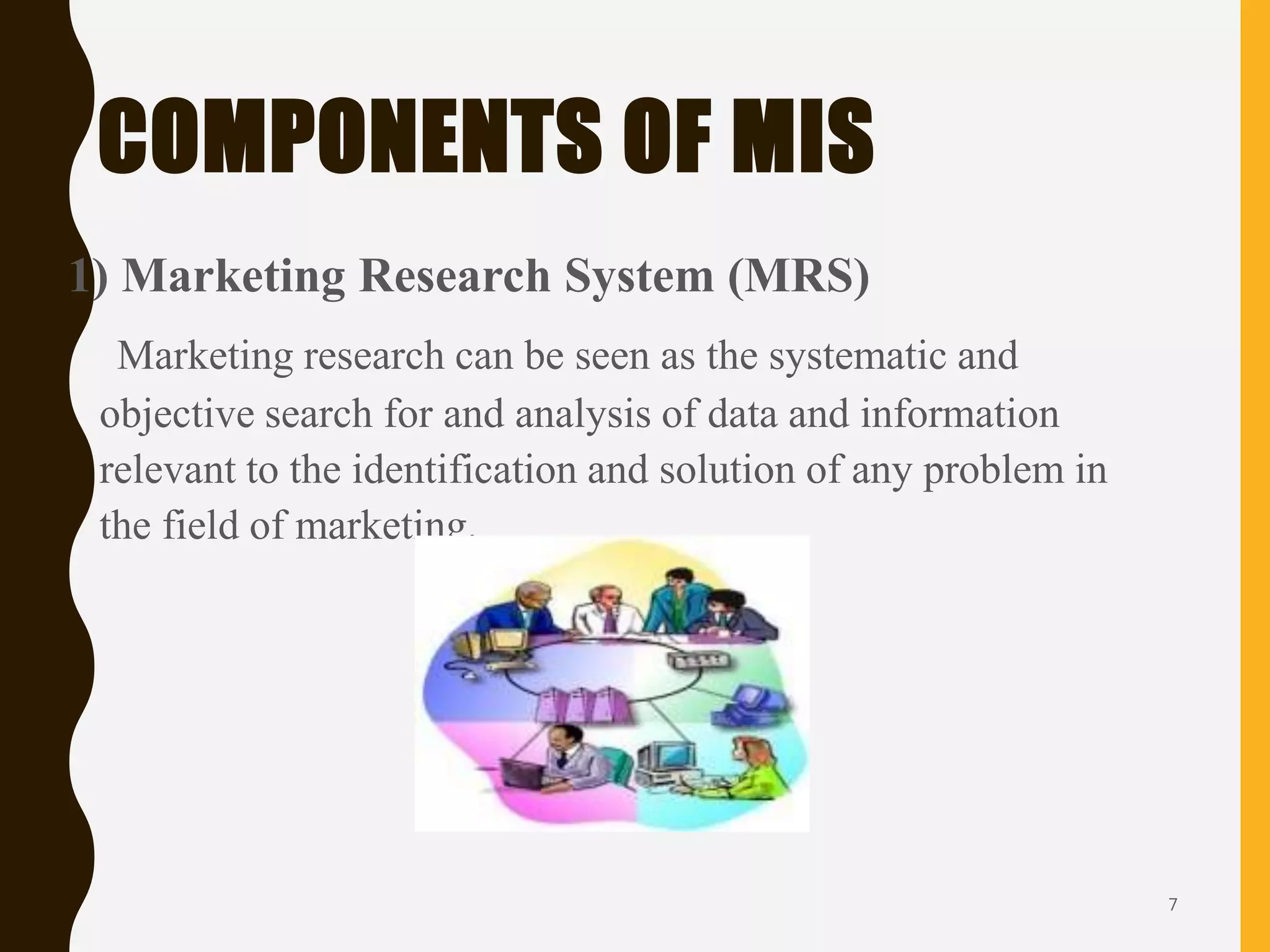
1) Marketing Research System (MRS)
Marketing research can be seen as the systematic and
objective search for and analysis of data and information
relevant to the identification and solution of any problem in
the field of marketing.
7
2) Marketing Intelligence System (MIS)
The process of acquiring and analyzing information in order to
understand the market (both existing and potential customers);
to determine the current and future needs and preferences,
attitudes and behavior of the market; and to assess changes in
the business environment that may affect the size and nature of
the market in the future.
8
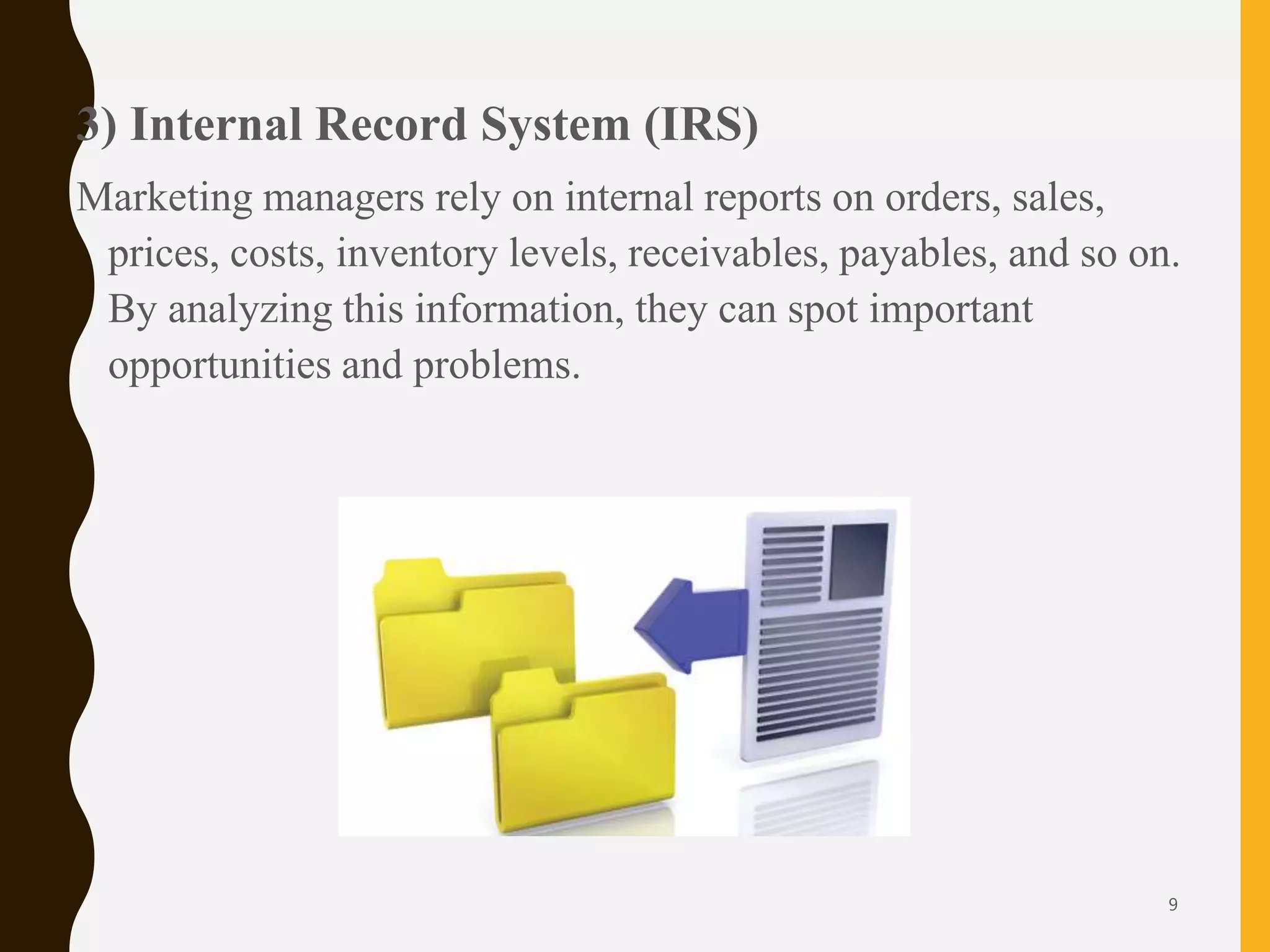
3) Internal Record System (IRS)
Marketing managers rely on internal reports on orders, sales,
prices, costs, inventory levels, receivables, payables, and so on.
By analyzing this information, they can spot important
opportunities and problems.
9
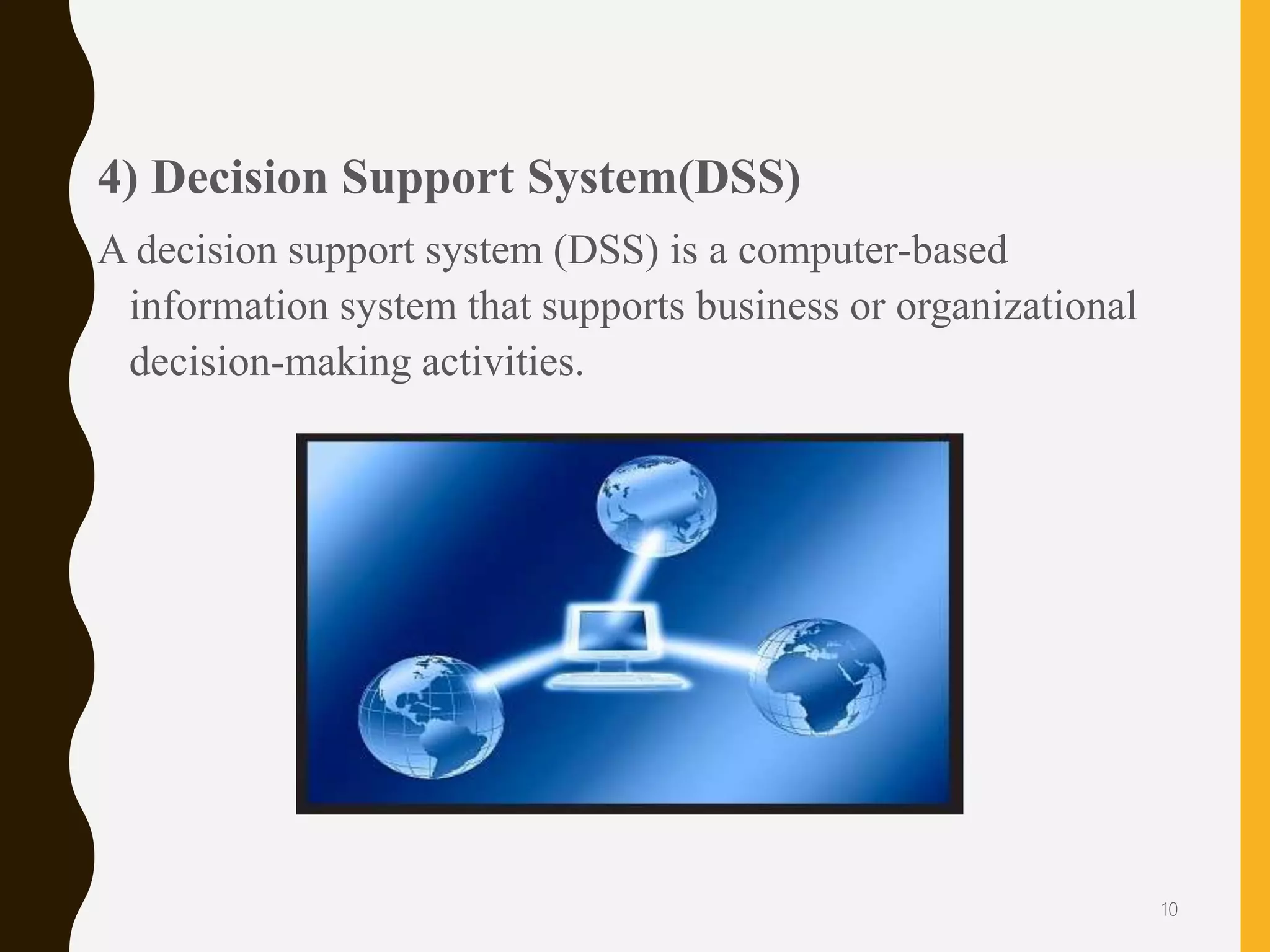
4) Decision Support System(DSS)
A decision support system (DSS) is a computer-based
information system that supports business or organizational
decision-making activities.
10
VARIOUS TYPES OF MIS
• transaction processing systems
• Decision support systems (DSS
• Executive information systems (EIS
• Marketing information systems
• Office automation systems (OAS)
• School management information systems (MIS)
AIM OF MANAGEMENT
INFORMATION SYSTEM
• The main aim of MIS is to inform management and help them
make informed decisions about management and the way the
business is run.
ELEMENTS OF MIS
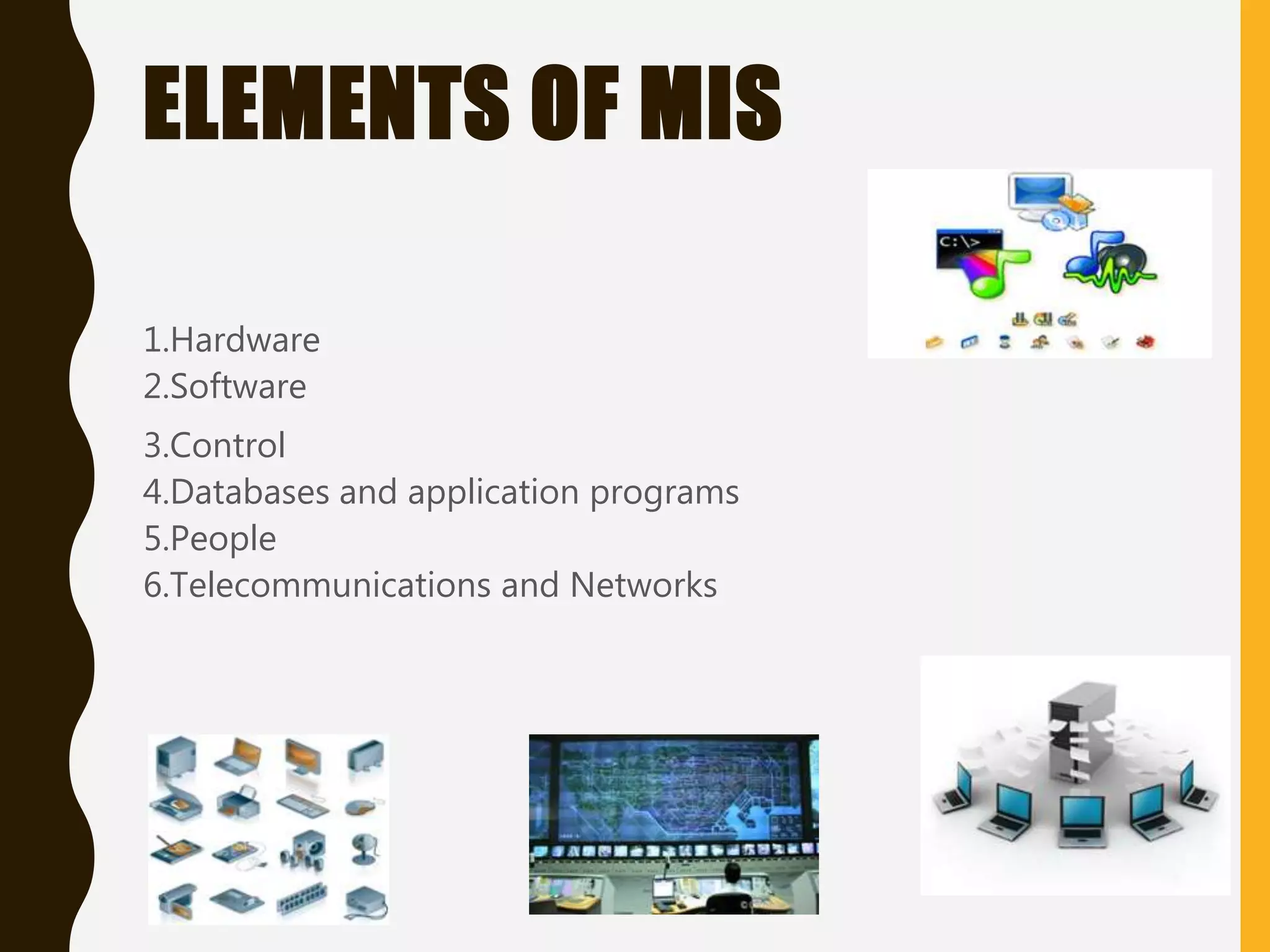
1.Hardware
2.Software
3.Control
4.Databases and application programs
5.People
6.Telecommunications and Networks
OUTPUTS OF A MIS
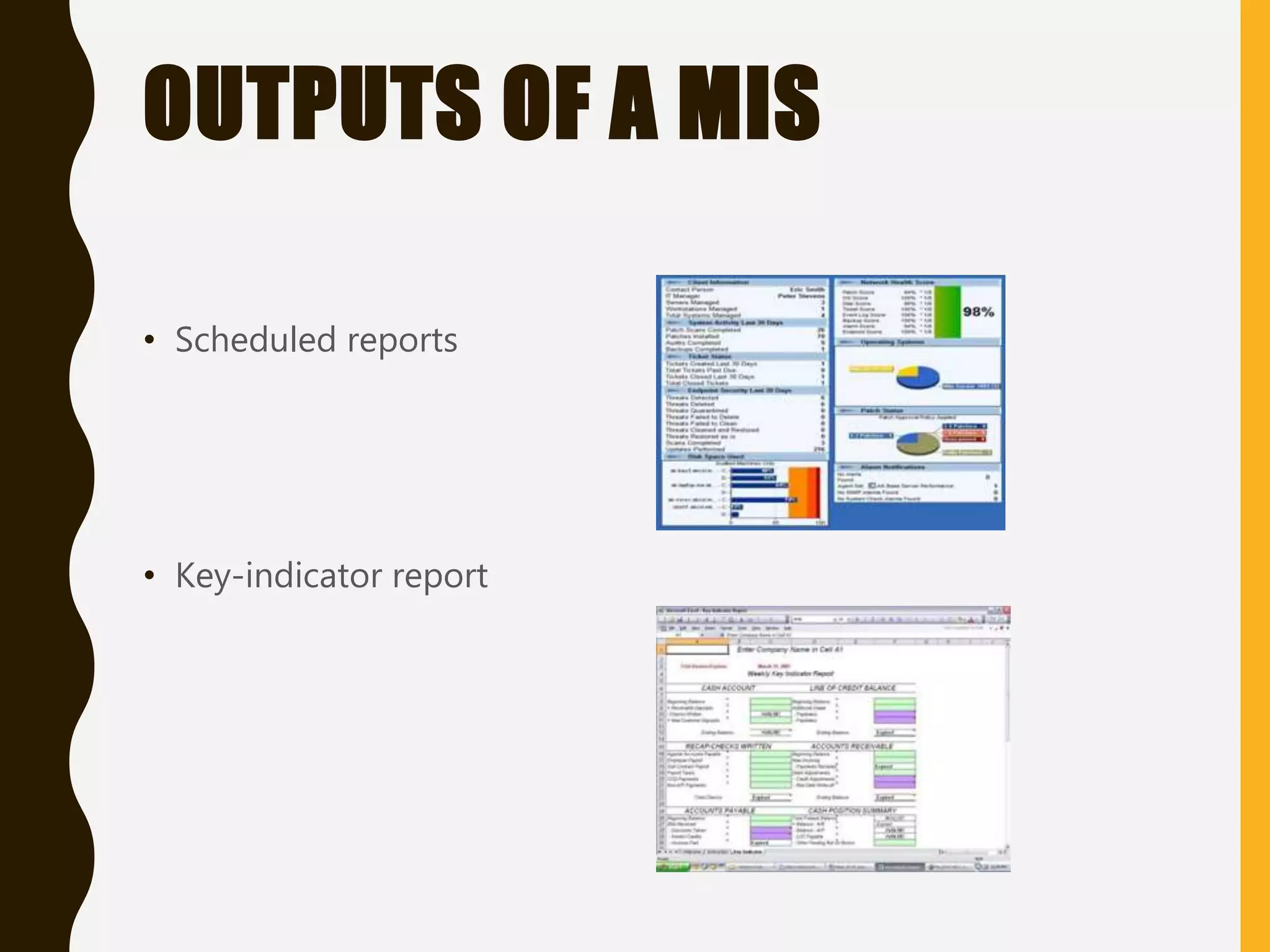
• Scheduled reports
• Key-indicator report
OUTPUTS OF A MIS (CONT….)
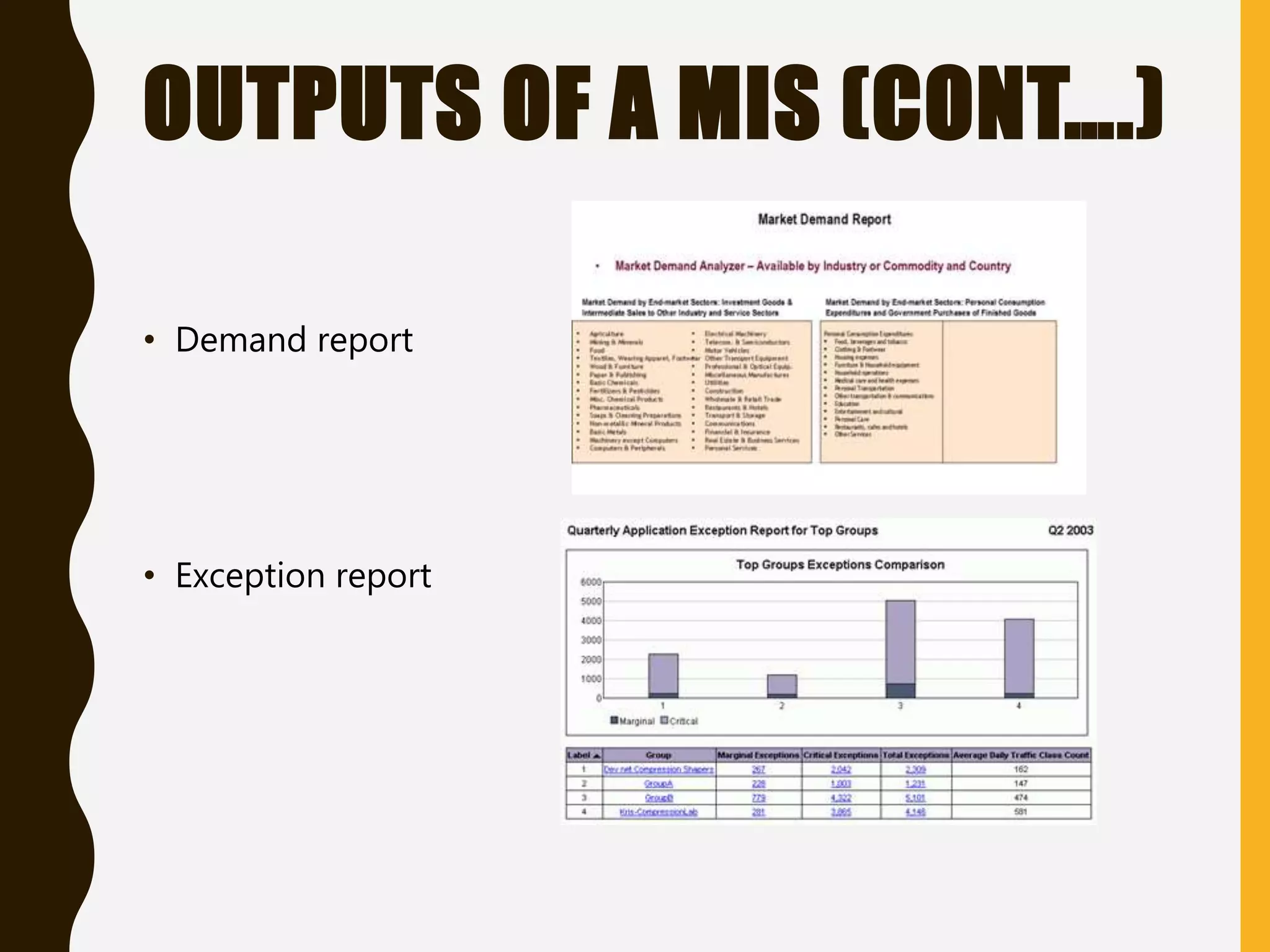
• Demand report
• Exception report
BENEFITS OF MIS
• It improves personal efficiency.
• It facilitates interpersonal communication
• It promotes learning or training.
• It increases organizational control.
• It generates new evidence in support of a decision.
• It creates a competitive advantage over competition.
• It helps automate the Managerial processes.
CONCLUSION
• MIS differ from regular information systems because the primary
objectives of these systems are to analyze other systems dealing with
the operational activities in the organization. In this way, MIS is a
subset of the overall planning and control activities covering the
application of humans, technologies, and procedures of the
organization.
• As organizations grow, MIS allows information to move between
functional areas and departments instantly, reducing the need for face-
to-face communications among employees, thus increasing the
responsiveness of the organization.
MIS.pptx
MIS.pptx

MIS.pptx

  • 1.
  • 2.
    OBJECTIVES • We wantto inform our audience about Management Information System(MIS). And It’s Characteristics, Components, Types, Aim of MIS, Elements, Outputs and Benefits of MIS.
  • 3.
    SEQUENCES OF OURPRESENTATION ARE • Management Information System(MIS). • Characteristics of a Management Information System • Components of MIS • Types of MIS • Aim of Management Information System • Elements of MIS • Outputs Of a MIS • Benefits of MIS
  • 4.
    INTRODUCTION • Management InformationSystem (MIS) provides information for the managerial activities in an organization. • Management Information System (MIS) is basically concerned with processing data into information and is then communicated to the various Departments in an organization for appropriate decision-making.
  • 5.
    MANAGEMENT INFORMATION SYSTEM (MIS) •The MIS is defined as a system based on the database of the evolved for the purpose of providing information to the people in the organization. • The MIS is defined as an integrated system of man and machine for providing the information to support the operations, the management and the decision making function in the organization.
  • 6.
    CHARACTERISTICS OF A MANAGEMENTINFORMATION SYSTEM • Provides reports with fixed and standard formats - Hard-copy and soft-copy reports • Uses internal data stored in the computer system • End users can develop custom reports • Requires formal requests from users
  • 7.
    COMPONENTS OF MIS 1)Marketing Research System (MRS) Marketing research can be seen as the systematic and objective search for and analysis of data and information relevant to the identification and solution of any problem in the field of marketing. 7
  • 8.
    2) Marketing IntelligenceSystem (MIS) The process of acquiring and analyzing information in order to understand the market (both existing and potential customers); to determine the current and future needs and preferences, attitudes and behavior of the market; and to assess changes in the business environment that may affect the size and nature of the market in the future. 8
  • 9.
    3) Internal RecordSystem (IRS) Marketing managers rely on internal reports on orders, sales, prices, costs, inventory levels, receivables, payables, and so on. By analyzing this information, they can spot important opportunities and problems. 9
  • 10.
    4) Decision SupportSystem(DSS) A decision support system (DSS) is a computer-based information system that supports business or organizational decision-making activities. 10
  • 11.
    VARIOUS TYPES OFMIS • transaction processing systems • Decision support systems (DSS • Executive information systems (EIS • Marketing information systems • Office automation systems (OAS) • School management information systems (MIS)
  • 12.
    AIM OF MANAGEMENT INFORMATIONSYSTEM • The main aim of MIS is to inform management and help them make informed decisions about management and the way the business is run.
  • 13.
    ELEMENTS OF MIS 1.Hardware 2.Software 3.Control 4.Databasesand application programs 5.People 6.Telecommunications and Networks
  • 14.
    OUTPUTS OF AMIS • Scheduled reports • Key-indicator report
  • 15.
    OUTPUTS OF AMIS (CONT….) • Demand report • Exception report
  • 16.
    BENEFITS OF MIS •It improves personal efficiency. • It facilitates interpersonal communication • It promotes learning or training. • It increases organizational control. • It generates new evidence in support of a decision. • It creates a competitive advantage over competition. • It helps automate the Managerial processes.
  • 17.
    CONCLUSION • MIS differfrom regular information systems because the primary objectives of these systems are to analyze other systems dealing with the operational activities in the organization. In this way, MIS is a subset of the overall planning and control activities covering the application of humans, technologies, and procedures of the organization. • As organizations grow, MIS allows information to move between functional areas and departments instantly, reducing the need for face- to-face communications among employees, thus increasing the responsiveness of the organization.