PRESENTATION
ON
MINERAL PROCESSING TECHNOLOGY
Submitted To:
Dr. Rachna Soni
Associate Professor
Head of Deptt.(Comp Sci & App)
Submitted By:
Yukta
M.S.C(Computer Sci)-4th sem
College Roll No.- 20211610022
DHE Roll No.- 221253177021
Introduction
Components
Working
Types
Advantages
Disadvantages
Conclusion
The forms in which metals are found in the crust of the
earth and as seabed deposits depend on their reactivity
with their environment, particularly with oxygen, sulfur,
and carbon dioxide. Gold and platinum metals are found
principally in the native or metallic form. Silver, copper,
and mercury are found native as well as in the form of
sulfides, carbonates, and chlorides. The more reactive
metals are always in compound form, such as the oxides
and sulfides of iron and the oxides and silicates of
aluminum and beryllium.
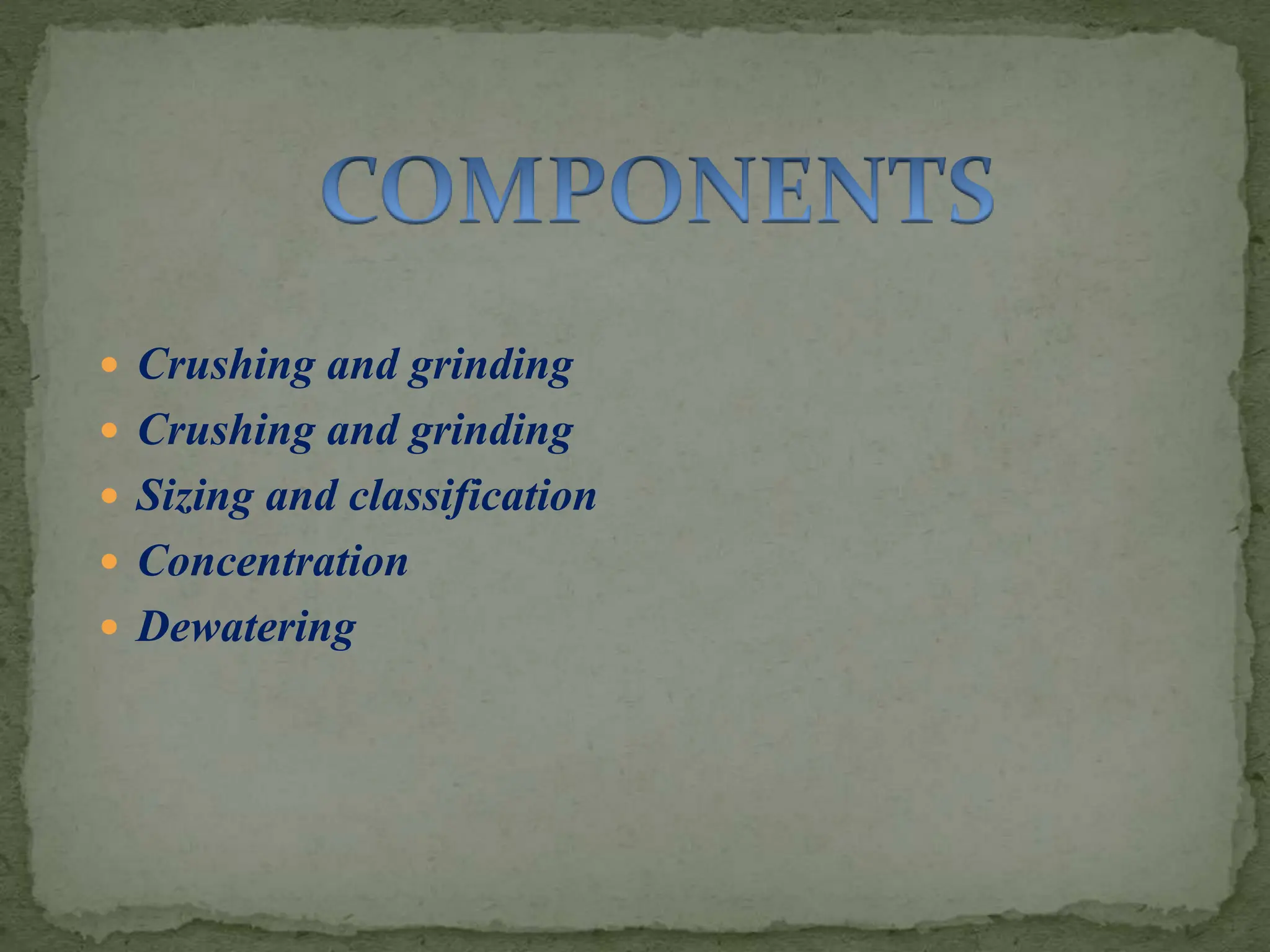
 Crushing and grinding
 Sizing and classification
 Concentration
 Dewatering
 Hardness
 Luster
 Color
 Streak
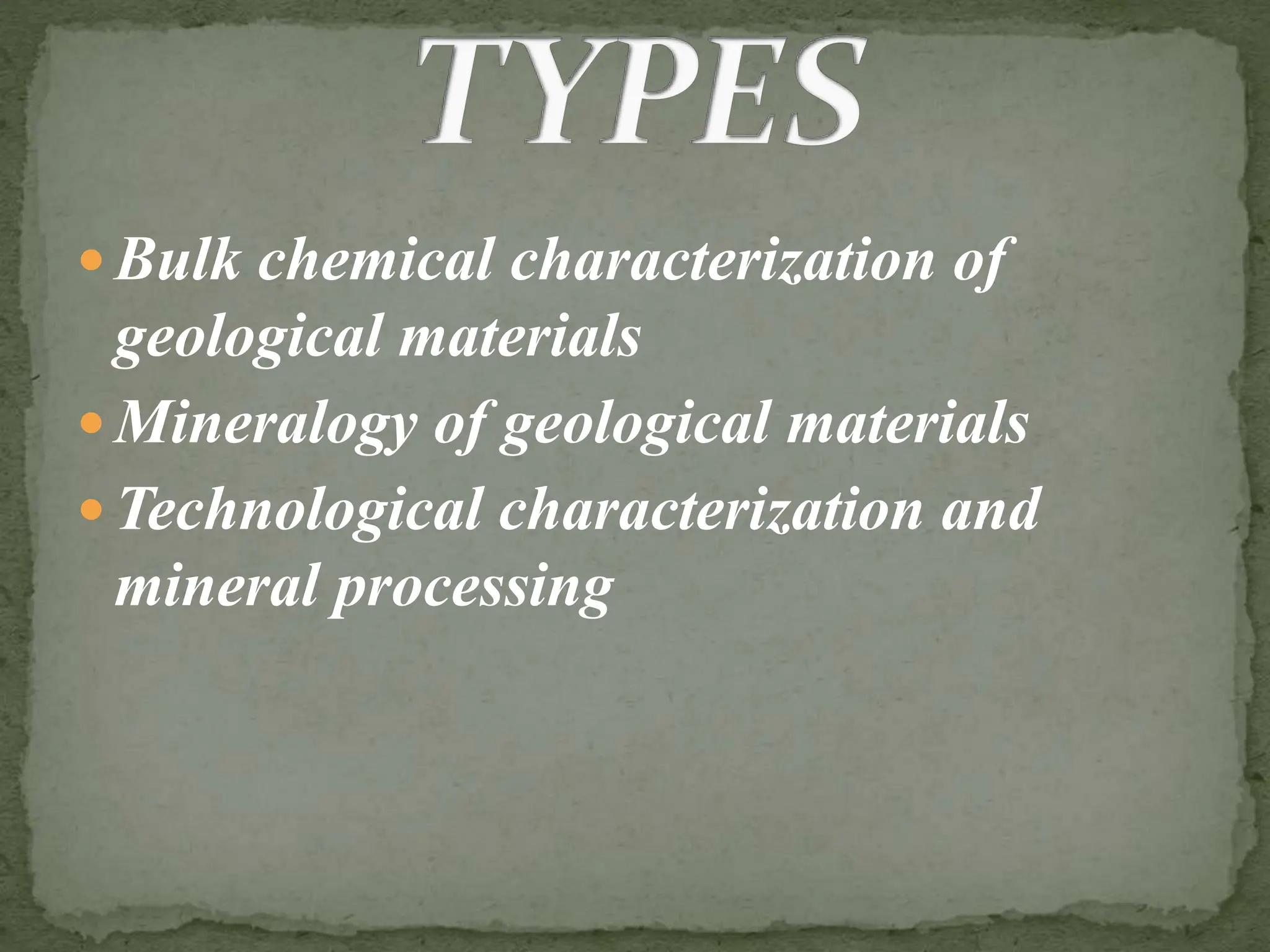
 Bulk chemical characterization of
geological materials
 Mineralogy of geological materials
 Technological characterization and
mineral processing
 It makes mineral resources profitable.
 It increases the value of the ore by
removing gangue.
 It allows for increased mining
production.
 It supports the extractive metallurgy
industry by minimizing metallurgical
losses.
 It’s less costly (when compared to direct purification of
mineral ore).
 If done mechanically (by crushing, grinding, agitation,
screening, gravity separation, magnetic separation, or
electrostatic separation) it’s eco-friendly.
 It recycles old mines tailings products.
 It produces contaminant-free, clean, industrial
materials.
Destruction of Land:
Subsidence
Noise
Energy
Impact on the Biological Environment
Long-term Supplies of Mineral
Resources
This very brief outline of the applications of ore microscopy in mineral
technology serves only to illust rate the great importance of this area of
application. The increasing world demand for metals necessitates the
economic extraction of metals from ores of lower and lower grades, which
requires efficient. skilled beneficiation . Thus, careful study under the
reflected-light microscope of the ore and of the products of various
commination and separation processes is necessary. If, following initial
disco very; exploratory drilling to determine overall size,grade, and geo
logical setting mineralogical analysis to establish feasibility of metal
extraction; and pilot testing of the extraction processes, it is decided to
proceed with a mining ope ration, the ore micro scopist is still needed to
monitor variations in the mineralogy of the ore and the effects of such
variations on processing.
Mineral Processing Tech ppt.pptx

Mineral Processing Tech ppt.pptx

  • 1.
    PRESENTATION ON MINERAL PROCESSING TECHNOLOGY SubmittedTo: Dr. Rachna Soni Associate Professor Head of Deptt.(Comp Sci & App) Submitted By: Yukta M.S.C(Computer Sci)-4th sem College Roll No.- 20211610022 DHE Roll No.- 221253177021
  • 2.
  • 3.
    The forms inwhich metals are found in the crust of the earth and as seabed deposits depend on their reactivity with their environment, particularly with oxygen, sulfur, and carbon dioxide. Gold and platinum metals are found principally in the native or metallic form. Silver, copper, and mercury are found native as well as in the form of sulfides, carbonates, and chlorides. The more reactive metals are always in compound form, such as the oxides and sulfides of iron and the oxides and silicates of aluminum and beryllium.
  • 5.
     Crushing andgrinding  Crushing and grinding  Sizing and classification  Concentration  Dewatering
  • 6.
  • 8.
     Bulk chemicalcharacterization of geological materials  Mineralogy of geological materials  Technological characterization and mineral processing
  • 9.
     It makesmineral resources profitable.  It increases the value of the ore by removing gangue.  It allows for increased mining production.  It supports the extractive metallurgy industry by minimizing metallurgical losses.
  • 10.
     It’s lesscostly (when compared to direct purification of mineral ore).  If done mechanically (by crushing, grinding, agitation, screening, gravity separation, magnetic separation, or electrostatic separation) it’s eco-friendly.  It recycles old mines tailings products.  It produces contaminant-free, clean, industrial materials.
  • 11.
    Destruction of Land: Subsidence Noise Energy Impacton the Biological Environment Long-term Supplies of Mineral Resources
  • 12.
    This very briefoutline of the applications of ore microscopy in mineral technology serves only to illust rate the great importance of this area of application. The increasing world demand for metals necessitates the economic extraction of metals from ores of lower and lower grades, which requires efficient. skilled beneficiation . Thus, careful study under the reflected-light microscope of the ore and of the products of various commination and separation processes is necessary. If, following initial disco very; exploratory drilling to determine overall size,grade, and geo logical setting mineralogical analysis to establish feasibility of metal extraction; and pilot testing of the extraction processes, it is decided to proceed with a mining ope ration, the ore micro scopist is still needed to monitor variations in the mineralogy of the ore and the effects of such variations on processing.