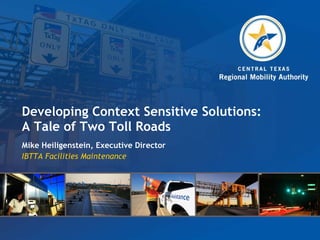
Developing Context Sensitive Solutions: A Tale of Two Toll Roads Mike Heiligenstein, Executive Director IBTTA Facilities Maintenance
Tale 1: 183A
183A Project Built using a comprehensive development agreement Design-build Guaranteed price and completion date Original contractor aesthetics/ landscape commitment 2.5%; raised to 4%  Context sensitive solutions process to be contractor’s responsibility  “ Context Sensitive Design is thinking beyond the pavement.”  US Department of Highways   Federal Highway Administration
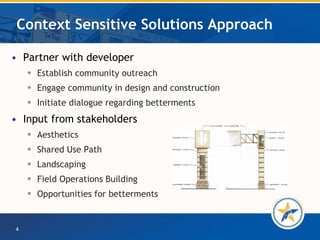
Context Sensitive Solutions Approach Partner with developer  Establish community outreach  Engage community in design and construction Initiate dialogue regarding betterments Input from stakeholders Aesthetics Shared Use Path  Landscaping Field Operations Building Opportunities for betterments
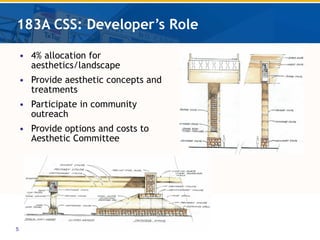
183A CSS: Developer’s Role 4% allocation for aesthetics/landscape Provide aesthetic concepts and treatments  Participate in community outreach Provide options and costs to Aesthetic Committee
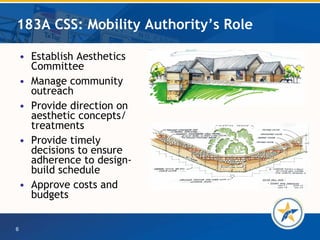
183A CSS: Mobility Authority’s Role Establish Aesthetics Committee Manage community outreach Provide direction on aesthetic concepts/ treatments  Provide timely decisions to ensure adherence to design-build schedule Approve costs and budgets
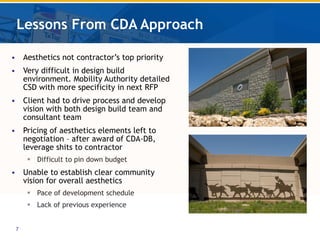
Lessons From CDA Approach Aesthetics not contractor’s top priority Very difficult in design build environment. Mobility Authority detailed CSD with more specificity in next RFP Client had to drive process and develop vision with both design build team and consultant team Pricing of aesthetics elements left to negotiation – after award of CDA-DB, leverage shits to contractor Difficult to pin down budget Unable to establish clear community vision for overall aesthetics Pace of development schedule Lack of previous experience
Tale 2: 290E
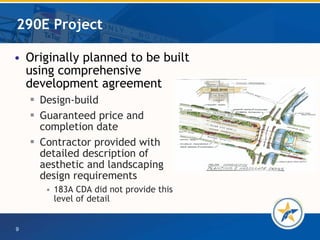
290E Project Originally planned to be built using comprehensive development agreement Design-build Guaranteed price and completion date Contractor provided with detailed description of aesthetic and landscaping design requirements 183A CDA did not provide this level of detail
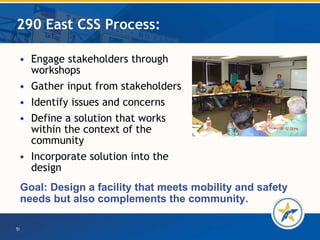
290 East CSS Process: Engage stakeholders through workshops Gather input from stakeholders Identify issues and concerns Define a solution that works within the context of the community  Incorporate solution into the design Goal: Design a facility that meets mobility and safety needs but also complements the community.
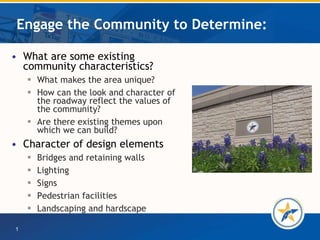
Engage the Community to Determine: What are some existing community characteristics? What makes the area unique? How can the look and character of the roadway reflect the values of the community? Are there existing themes upon which we can build? Character of design elements  Bridges and retaining walls Lighting Signs Pedestrian facilities Landscaping and hardscape
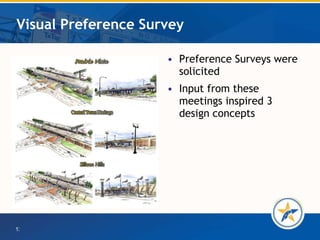
Visual Preference Survey Preference Surveys were solicited Input from these meetings inspired 3 design concepts
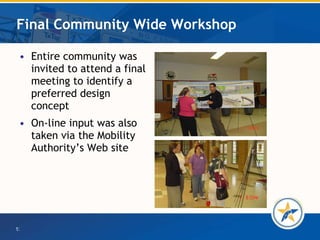
Final Community Wide Workshop Entire community was invited to attend a final meeting to identify a preferred design concept On-line input was also taken via the Mobility Authority’s Web site
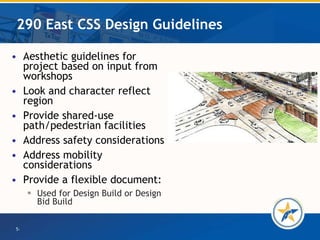
290 East CSS Design Guidelines Aesthetic guidelines for project based on input from workshops Look and character reflect region Provide shared-use path/pedestrian facilities Address safety considerations Address mobility considerations  Provide a flexible document:  Used for Design Build or Design Bid Build
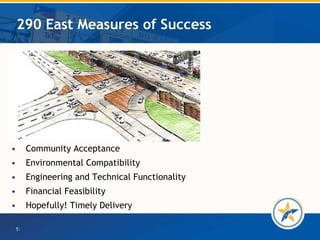
290 East Measures of Success Community Acceptance Environmental Compatibility Engineering and Technical Functionality Financial Feasibility  Hopefully! Timely Delivery
Developing Context Sensitive Solutions: A Tale of Two Toll Roads Mike Heiligenstein, Executive Director IBTTA Facilities Maintenance

Mike Heiligenstein: Developing Context Sensitive Solutions

  • 1.
    Developing Context SensitiveSolutions: A Tale of Two Toll Roads Mike Heiligenstein, Executive Director IBTTA Facilities Maintenance
  • 2.
  • 3.
    183A Project Builtusing a comprehensive development agreement Design-build Guaranteed price and completion date Original contractor aesthetics/ landscape commitment 2.5%; raised to 4% Context sensitive solutions process to be contractor’s responsibility “ Context Sensitive Design is thinking beyond the pavement.” US Department of Highways Federal Highway Administration
  • 4.
    Context Sensitive SolutionsApproach Partner with developer Establish community outreach Engage community in design and construction Initiate dialogue regarding betterments Input from stakeholders Aesthetics Shared Use Path Landscaping Field Operations Building Opportunities for betterments
  • 5.
    183A CSS: Developer’sRole 4% allocation for aesthetics/landscape Provide aesthetic concepts and treatments Participate in community outreach Provide options and costs to Aesthetic Committee
  • 6.
    183A CSS: MobilityAuthority’s Role Establish Aesthetics Committee Manage community outreach Provide direction on aesthetic concepts/ treatments Provide timely decisions to ensure adherence to design-build schedule Approve costs and budgets
  • 7.
    Lessons From CDAApproach Aesthetics not contractor’s top priority Very difficult in design build environment. Mobility Authority detailed CSD with more specificity in next RFP Client had to drive process and develop vision with both design build team and consultant team Pricing of aesthetics elements left to negotiation – after award of CDA-DB, leverage shits to contractor Difficult to pin down budget Unable to establish clear community vision for overall aesthetics Pace of development schedule Lack of previous experience
  • 8.
  • 9.
    290E Project Originallyplanned to be built using comprehensive development agreement Design-build Guaranteed price and completion date Contractor provided with detailed description of aesthetic and landscaping design requirements 183A CDA did not provide this level of detail
  • 10.
    290 East CSSProcess: Engage stakeholders through workshops Gather input from stakeholders Identify issues and concerns Define a solution that works within the context of the community Incorporate solution into the design Goal: Design a facility that meets mobility and safety needs but also complements the community.
  • 11.
    Engage the Communityto Determine: What are some existing community characteristics? What makes the area unique? How can the look and character of the roadway reflect the values of the community? Are there existing themes upon which we can build? Character of design elements Bridges and retaining walls Lighting Signs Pedestrian facilities Landscaping and hardscape
  • 12.
    Visual Preference SurveyPreference Surveys were solicited Input from these meetings inspired 3 design concepts
  • 13.
    Final Community WideWorkshop Entire community was invited to attend a final meeting to identify a preferred design concept On-line input was also taken via the Mobility Authority’s Web site
  • 14.
    290 East CSSDesign Guidelines Aesthetic guidelines for project based on input from workshops Look and character reflect region Provide shared-use path/pedestrian facilities Address safety considerations Address mobility considerations Provide a flexible document: Used for Design Build or Design Bid Build
  • 15.
    290 East Measuresof Success Community Acceptance Environmental Compatibility Engineering and Technical Functionality Financial Feasibility Hopefully! Timely Delivery
  • 16.
    Developing Context SensitiveSolutions: A Tale of Two Toll Roads Mike Heiligenstein, Executive Director IBTTA Facilities Maintenance