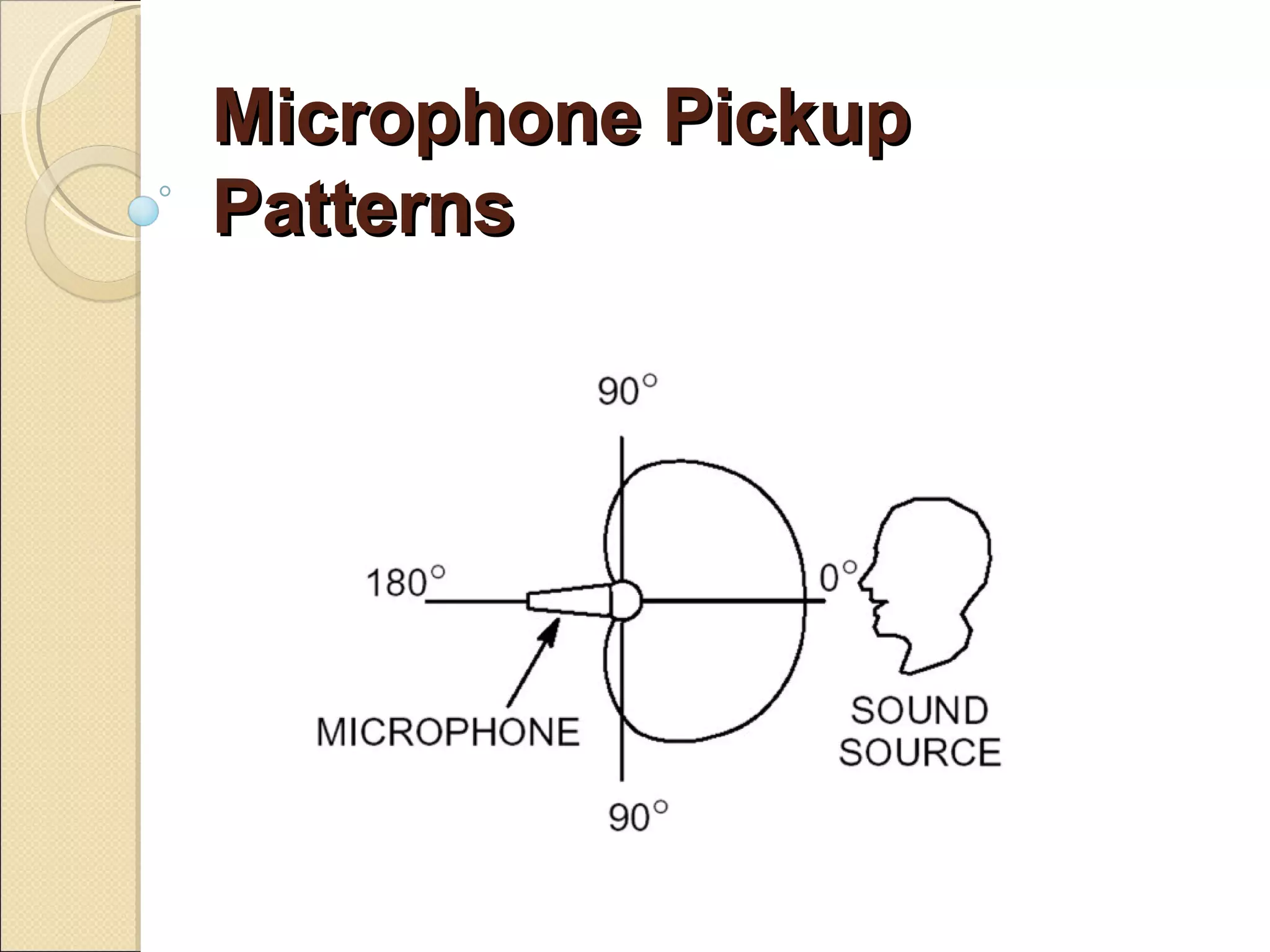
Microphone Pickup
Patterns
Pickup Patterns
   Microphones can be designed to be
    sensitive to sounds from given directions
    while they reject sounds from others.

   The directional characteristics, or pickup
    patterns, are defined by noting the direction
    from which a microphone is optimally
    sensitive to sound waves.

   The most common patterns are
    omnidirectional, cardioid, hyper or super
    cardioid, and bi-directional.
Omnidirectional
   Omnidirectional microphones pick up sound
    from all directions equally - with a slight
    preference for sounds coming from the
    direction in which they are pointed.

   Omni-directional microphones are typically
    used for recording and group pick-up.
Cardioid
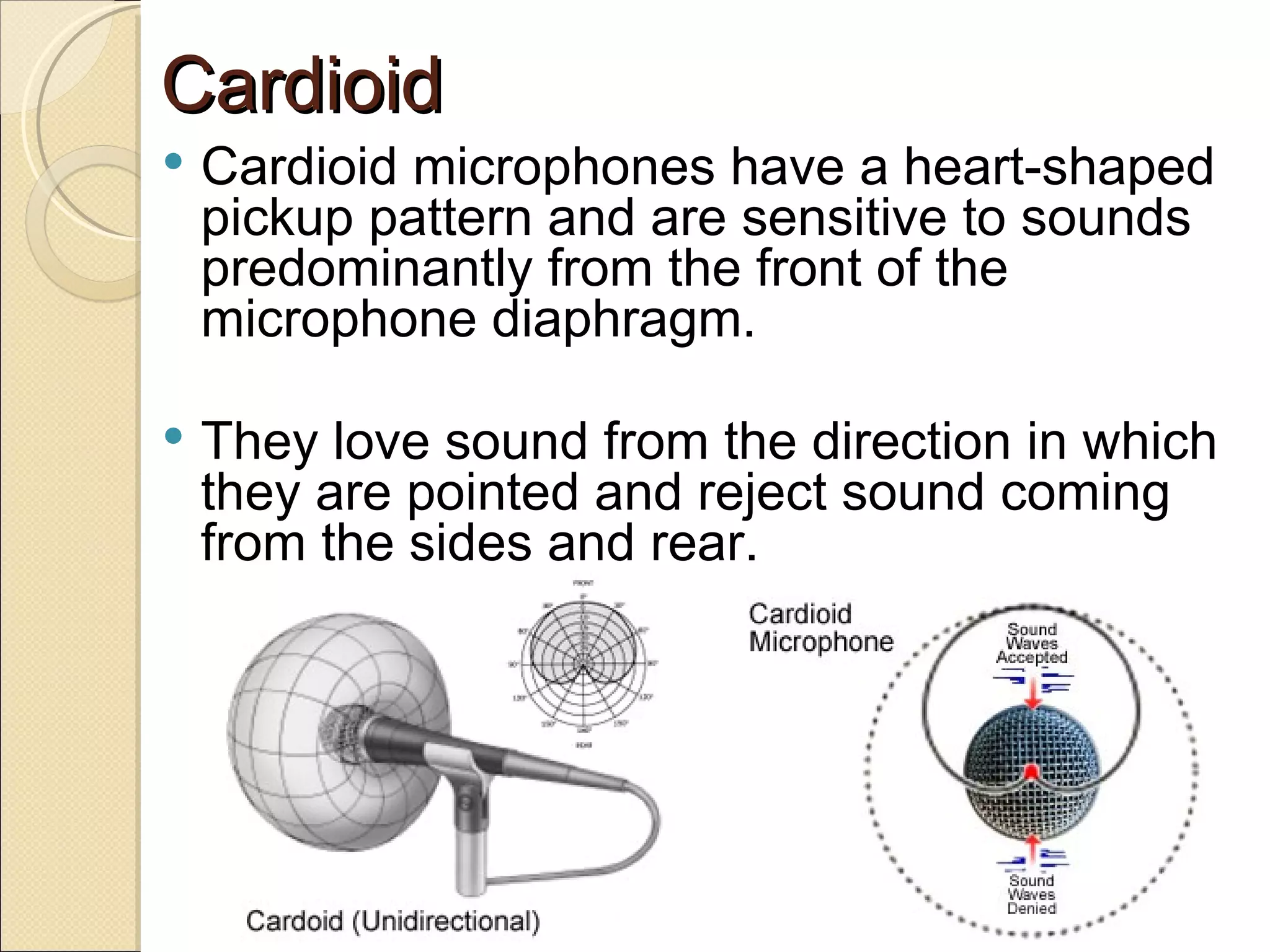
   Cardioid microphones have a heart-shaped
    pickup pattern and are sensitive to sounds
    predominantly from the front of the
    microphone diaphragm.

   They love sound from the direction in which
    they are pointed and reject sound coming
    from the sides and rear.
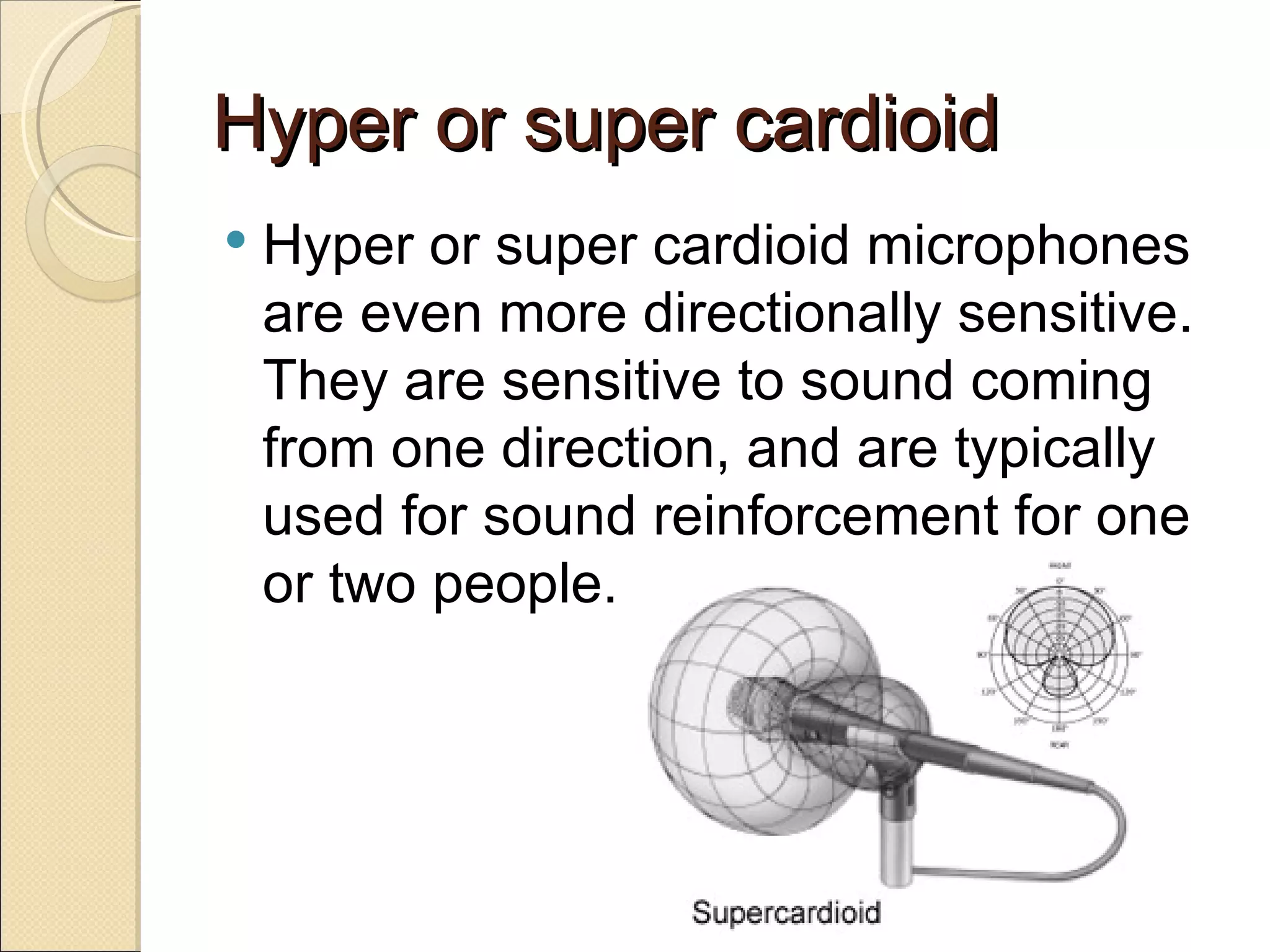
Hyper or super cardioid
   Hyper or super cardioid microphones
    are even more directionally sensitive.
    They are sensitive to sound coming
    from one direction, and are typically
    used for sound reinforcement for one
    or two people.
Bi-directional
   Bi-directional microphones are
    Sensitive to sounds from the sides
    180 degrees apart, while rejecting
    sound from all other directions
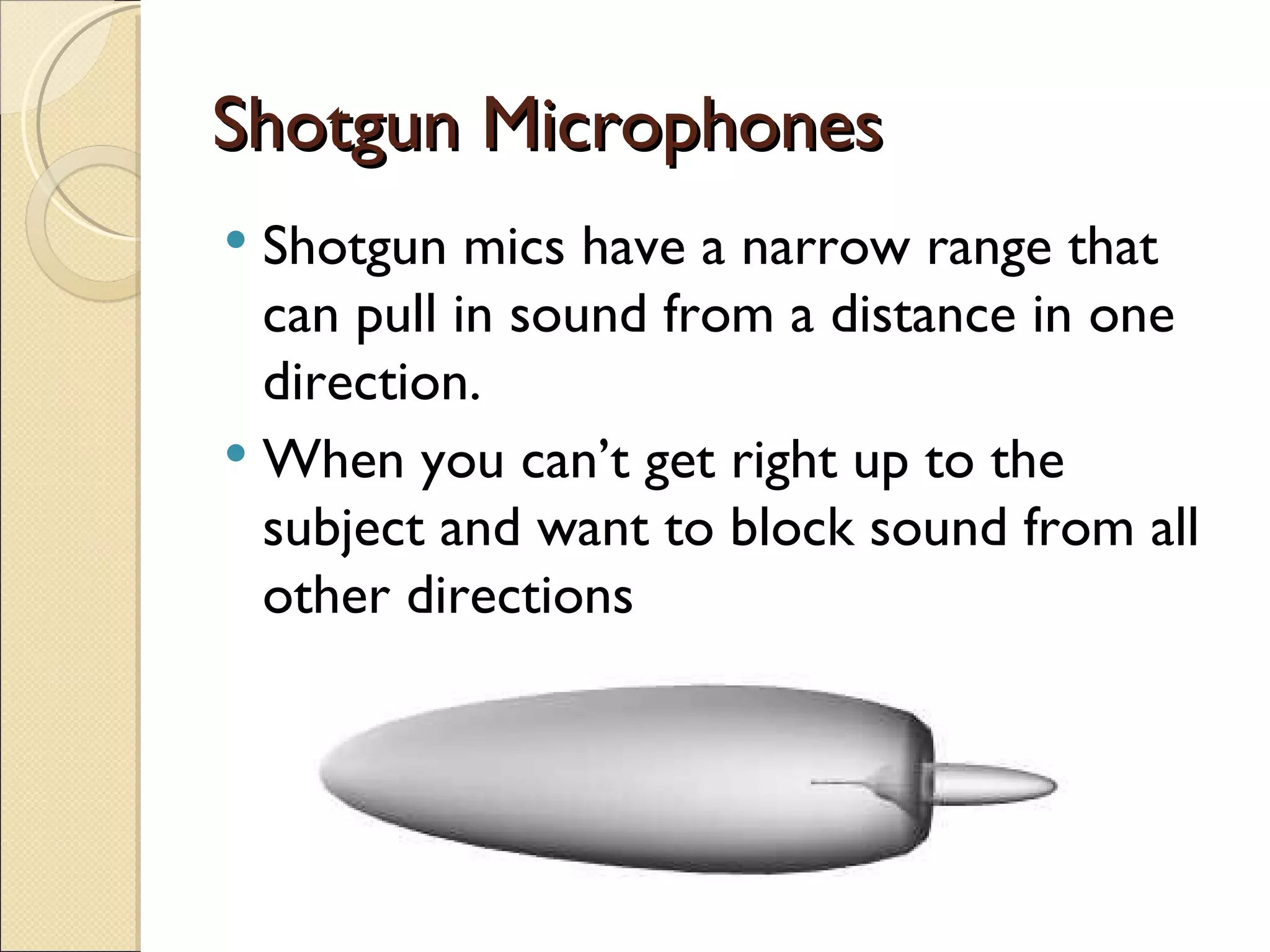
Shotgun Microphones
 Shotgun mics have a narrow range that
  can pull in sound from a distance in one
  direction.
 When you can’t get right up to the
  subject and want to block sound from all
  other directions
Identifying a Microphone's
Pickup Pattern
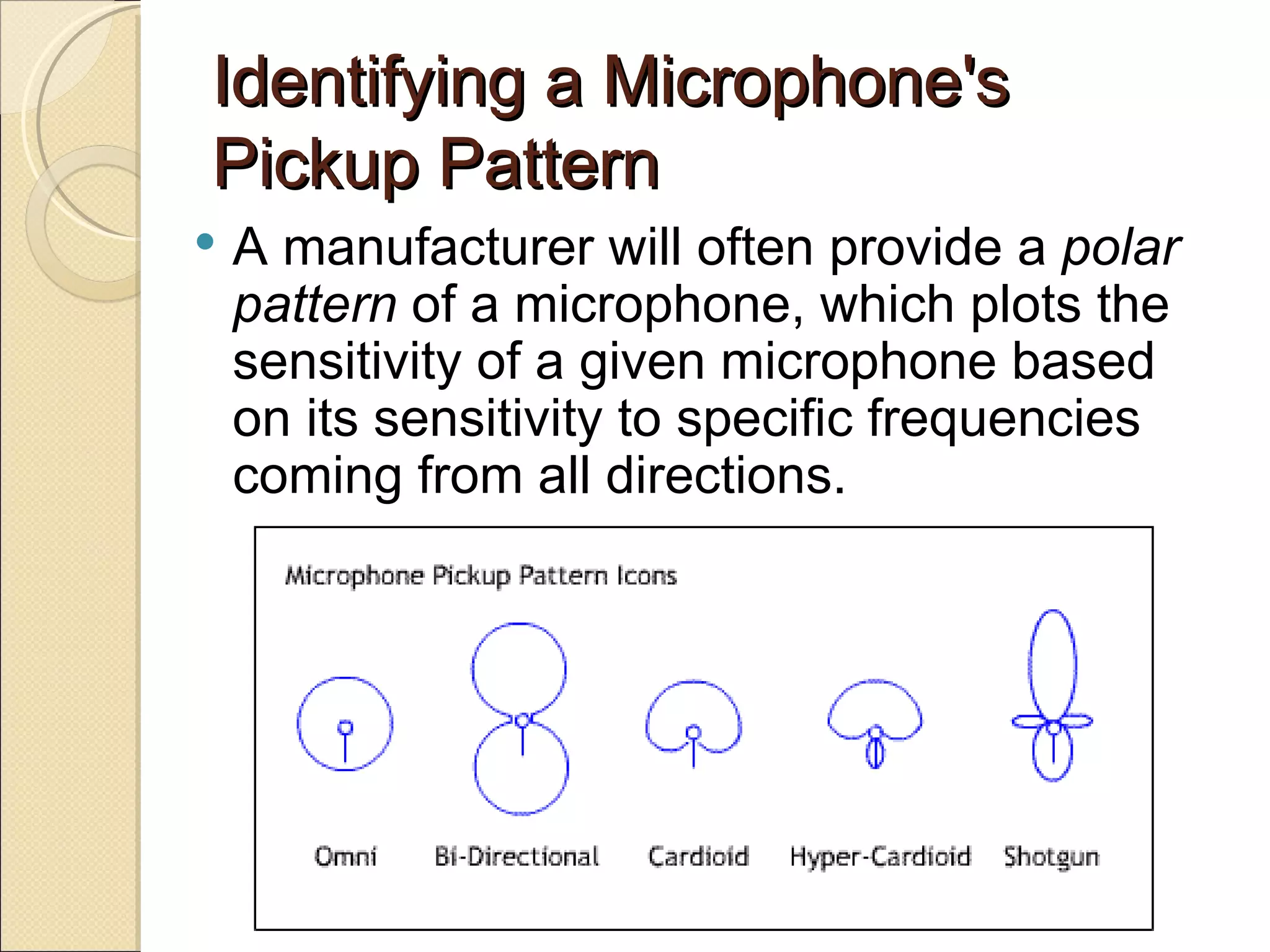
   A manufacturer will often provide a polar
    pattern of a microphone, which plots the
    sensitivity of a given microphone based
    on its sensitivity to specific frequencies
    coming from all directions.
Identifying a Microphone's
Pickup Pattern
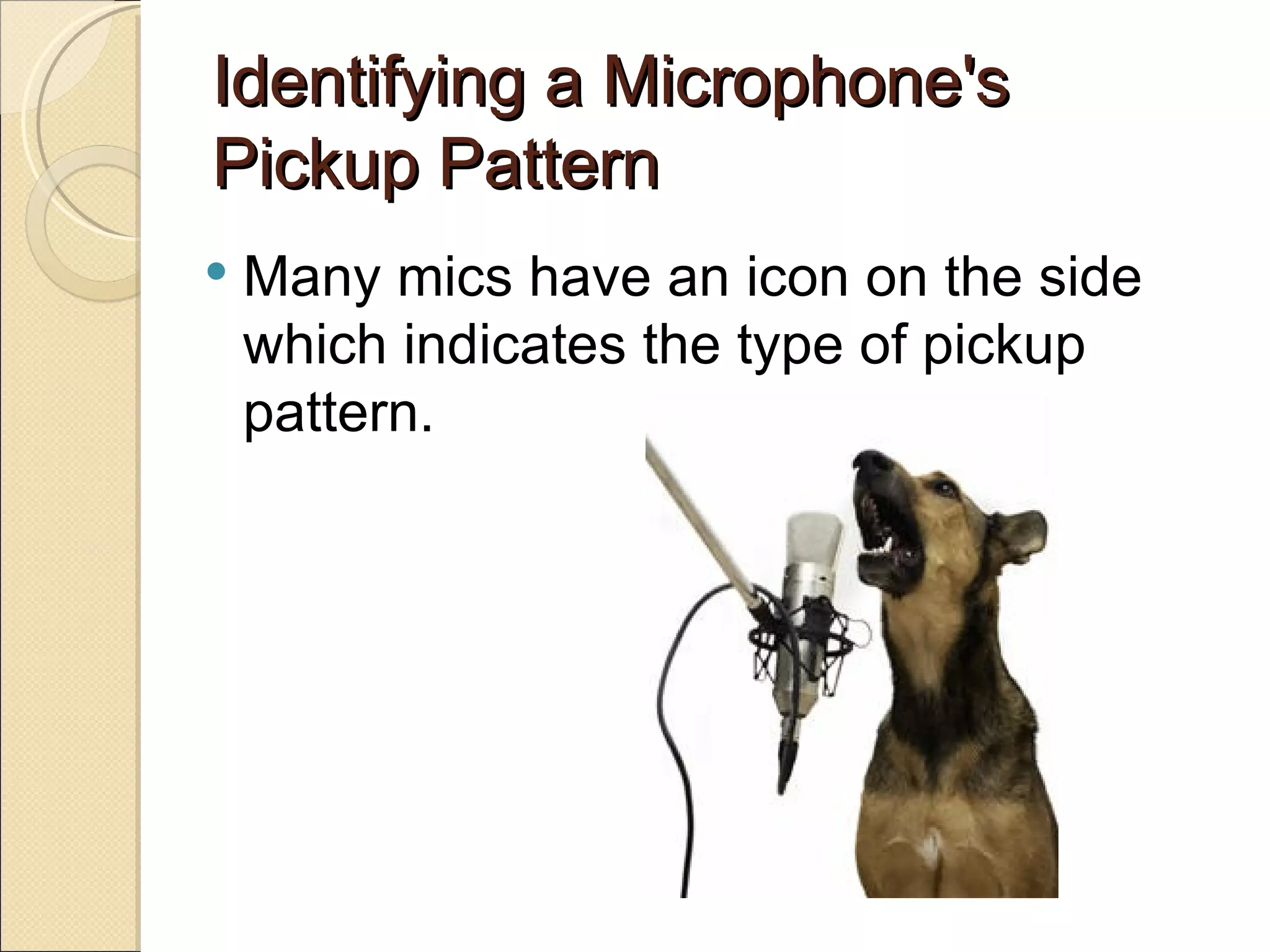
   Many mics have an icon on the side
    which indicates the type of pickup
    pattern.

Microphone pickup patterns g

  • 1.
  • 2.
    Pickup Patterns  Microphones can be designed to be sensitive to sounds from given directions while they reject sounds from others.  The directional characteristics, or pickup patterns, are defined by noting the direction from which a microphone is optimally sensitive to sound waves.  The most common patterns are omnidirectional, cardioid, hyper or super cardioid, and bi-directional.
  • 3.
    Omnidirectional  Omnidirectional microphones pick up sound from all directions equally - with a slight preference for sounds coming from the direction in which they are pointed.  Omni-directional microphones are typically used for recording and group pick-up.
  • 4.
    Cardioid  Cardioid microphones have a heart-shaped pickup pattern and are sensitive to sounds predominantly from the front of the microphone diaphragm.  They love sound from the direction in which they are pointed and reject sound coming from the sides and rear.
  • 5.
    Hyper or supercardioid  Hyper or super cardioid microphones are even more directionally sensitive. They are sensitive to sound coming from one direction, and are typically used for sound reinforcement for one or two people.
  • 6.
    Bi-directional  Bi-directional microphones are Sensitive to sounds from the sides 180 degrees apart, while rejecting sound from all other directions
  • 7.
    Shotgun Microphones  Shotgunmics have a narrow range that can pull in sound from a distance in one direction.  When you can’t get right up to the subject and want to block sound from all other directions
  • 8.
    Identifying a Microphone's PickupPattern  A manufacturer will often provide a polar pattern of a microphone, which plots the sensitivity of a given microphone based on its sensitivity to specific frequencies coming from all directions.
  • 9.
    Identifying a Microphone's PickupPattern  Many mics have an icon on the side which indicates the type of pickup pattern.