blog.oio.de news.trivadis.com/blog@Trivadis
MicroFrontends für Microservices
Marius Hilleke – marius.hilleke@trivadis.com
Thomas Bröll - thomas.broell@trivadis.com
Micro-Frontends –
MicroServices im Browser
Was sind MicroFrontends?
Definitionsversuche
– The idea behind Micro Frontends is to think about a website or web app as a composition of
features which are owned by independent teams. Each team has a distinct area of
business or mission it cares about and specialises in. A team is cross functional and develops its
features end-to-end, from database to user interface. – [1]
– In this approach, a web application is broken up by its pages and features, with each feature being
owned end-to-end by a single team. Multiple techniques exist to bring the application features—some
old and some new—together as a cohesive user experience, but the goal remains to allow each feature
to be developed, tested and deployed independently from others. – [2]
[1] Michael Geers: https://micro-frontends.org/
[2] ThoughtWorks: https://www.thoughtworks.com/radar/techniques/micro-frontends
Unabhängigkeit End-To-Endfeature-basierte Modularisierung
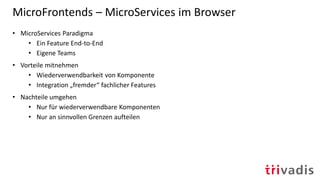
MicroFrontends – MicroServices im Browser
• MicroServices Paradigma
• Ein Feature End-to-End
• Eigene Teams
• Vorteile mitnehmen
• Wiederverwendbarkeit von Komponente
• Integration „fremder“ fachlicher Features
• Nachteile umgehen
• Nur für wiederverwendbare Komponenten
• Nur an sinnvollen Grenzen aufteilen
Angular?
• „Angular is ideal for building complete applications,
and our tooling, documentation and infrastructure
are primarily aimed at this case.“
• Rob Wormald, Angular Team
Angular?
• „[…] but is quite challenging to use in scenarios that
don‘t fit that specific Single Page application model.“
• Rob Wormald, Angular Team
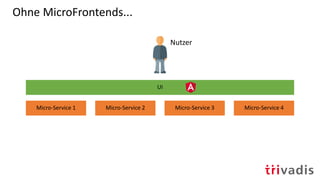
UI
Micro-Service 1
Ohne MicroFrontends...
Nutzer
Micro-Service 2 Micro-Service 3 Micro-Service 4
Welche Möglichkeiten zur technischen Umsetzung von
MicroFrontends gibt es?
[1] https://martinfowler.com/articles/micro-frontends.html
Server-seitige
Komposition via
Templates
Integration zum
Build-Zeitpunkt
via iframes
via JavaScript
via Web Components
Laufzeit-
integration
Kombinationen
der Ansätze
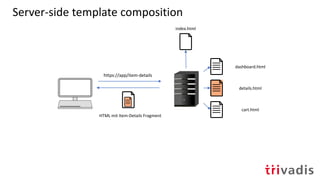
Server-side template composition
https://app/item-details
HTML mit Item-Details Fragment
details.html
dashboard.html
cart.html
u
index.html
u
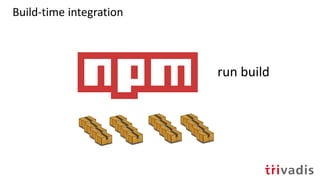
Build-time integration
run build
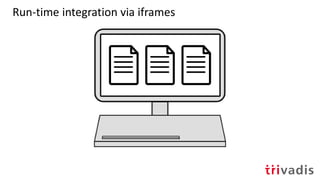
Run-time integration via iframes
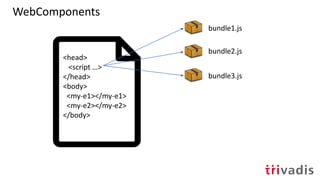
WebComponents
u
<head>
<script …>
</head>
<body>
<my-e1></my-e1>
<my-e2></my-e2>
</body>
bundle1.js
bundle2.js
bundle3.js
Web-Components
Web components are a set of web platform APIs that allow you to create
new custom, reusable, encapsulated HTML tags to use in web pages and
web apps. Custom components and widgets build on the Web Component
standards, will work across modern browsers, and can be used with any
JavaScript library or framework that works with HTML.
Web components are based on existing web standards. Features to support
web components are currently being added to the HTML and DOM specs,
letting web developers easily extend HTML with new elements with
encapsulated styling and custom behavior. – [1]
[1] webcomponents.org: https://www.webcomponents.org/introduction
Definition
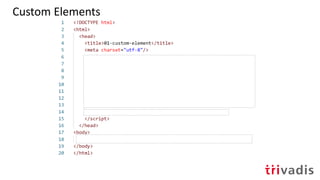
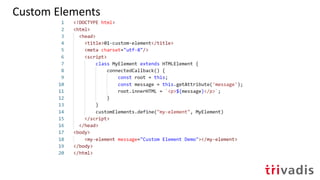
Custom Elements
Custom Elements
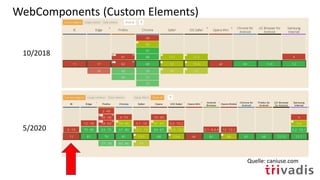
WebComponents (Custom Elements)
Quelle: caniuse.com
10/2018
5/2020
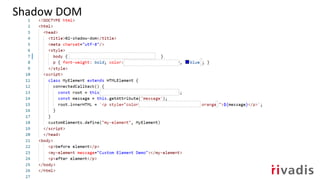
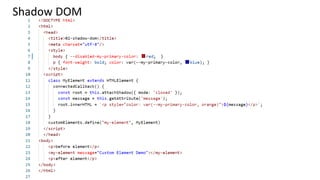
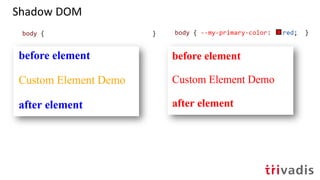
Shadow DOM
Shadow DOM
Shadow DOM
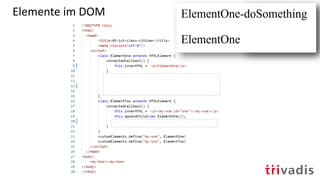
Elemente im DOM
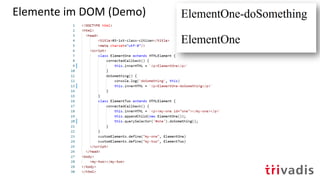
Elemente im DOM (Demo)
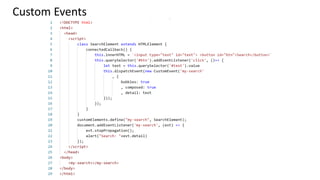
Custom Events
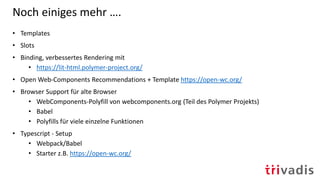
Noch einiges mehr ….
• Templates
• Slots
• Binding, verbessertes Rendering mit
• https://lit-html.polymer-project.org/
• Open Web-Components Recommendations + Template https://open-wc.org/
• Browser Support für alte Browser
• WebComponents-Polyfill von webcomponents.org (Teil des Polymer Projekts)
• Babel
• Polyfills für viele einzelne Funktionen
• Typescript - Setup
• Webpack/Babel
• Starter z.B. https://open-wc.org/
Angular Elements
Angular?
• „[…] but is quite challenging to use in scenarios that
don‘t fit that specific Single Page application model.“
Rob Wormald, Angular Team
Wie kann ein MicroFrontend mit AngularElements umgesetzt werden?
[1] https://www.webcomponents.org/introduction
Demo
Anwendungsfälle
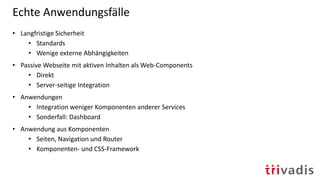
Echte Anwendungsfälle
• Langfristige Sicherheit
• Standards
• Wenige externe Abhängigkeiten
• Passive Webseite mit aktiven Inhalten als Web-Components
• Direkt
• Server-seitige Integration
• Anwendungen
• Integration weniger Komponenten anderer Services
• Sonderfall: Dashboard
• Anwendung aus Komponenten
• Seiten, Navigation und Router
• Komponenten- und CSS-Framework
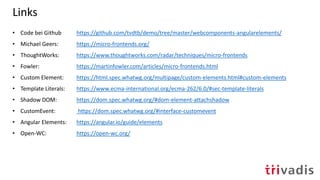
Links
• Code bei Github https://github.com/tvdtb/demo/tree/master/webcomponents-angularelements/
• Michael Geers: https://micro-frontends.org/
• ThoughtWorks: https://www.thoughtworks.com/radar/techniques/micro-frontends
• Fowler: https://martinfowler.com/articles/micro-frontends.html
• Custom Element: https://html.spec.whatwg.org/multipage/custom-elements.html#custom-elements
• Template Literals: https://www.ecma-international.org/ecma-262/6.0/#sec-template-literals
• Shadow DOM: https://dom.spec.whatwg.org/#dom-element-attachshadow
• CustomEvent: https://dom.spec.whatwg.org/#interface-customevent
• Angular Elements: https://angular.io/guide/elements
• Open-WC: https://open-wc.org/
MicroFrontends für Microservices

MicroFrontends für Microservices

  • 1.
    blog.oio.de news.trivadis.com/blog@Trivadis MicroFrontends fürMicroservices Marius Hilleke – marius.hilleke@trivadis.com Thomas Bröll - thomas.broell@trivadis.com
  • 2.
  • 3.
    Was sind MicroFrontends? Definitionsversuche –The idea behind Micro Frontends is to think about a website or web app as a composition of features which are owned by independent teams. Each team has a distinct area of business or mission it cares about and specialises in. A team is cross functional and develops its features end-to-end, from database to user interface. – [1] – In this approach, a web application is broken up by its pages and features, with each feature being owned end-to-end by a single team. Multiple techniques exist to bring the application features—some old and some new—together as a cohesive user experience, but the goal remains to allow each feature to be developed, tested and deployed independently from others. – [2] [1] Michael Geers: https://micro-frontends.org/ [2] ThoughtWorks: https://www.thoughtworks.com/radar/techniques/micro-frontends Unabhängigkeit End-To-Endfeature-basierte Modularisierung
  • 4.
    MicroFrontends – MicroServicesim Browser • MicroServices Paradigma • Ein Feature End-to-End • Eigene Teams • Vorteile mitnehmen • Wiederverwendbarkeit von Komponente • Integration „fremder“ fachlicher Features • Nachteile umgehen • Nur für wiederverwendbare Komponenten • Nur an sinnvollen Grenzen aufteilen
  • 5.
    Angular? • „Angular isideal for building complete applications, and our tooling, documentation and infrastructure are primarily aimed at this case.“ • Rob Wormald, Angular Team
  • 6.
    Angular? • „[…] butis quite challenging to use in scenarios that don‘t fit that specific Single Page application model.“ • Rob Wormald, Angular Team
  • 7.
  • 8.
    Welche Möglichkeiten zurtechnischen Umsetzung von MicroFrontends gibt es? [1] https://martinfowler.com/articles/micro-frontends.html Server-seitige Komposition via Templates Integration zum Build-Zeitpunkt via iframes via JavaScript via Web Components Laufzeit- integration Kombinationen der Ansätze
  • 9.
    Server-side template composition https://app/item-details HTMLmit Item-Details Fragment details.html dashboard.html cart.html u index.html u
  • 10.
  • 11.
  • 12.
  • 13.
  • 14.
    Web components area set of web platform APIs that allow you to create new custom, reusable, encapsulated HTML tags to use in web pages and web apps. Custom components and widgets build on the Web Component standards, will work across modern browsers, and can be used with any JavaScript library or framework that works with HTML. Web components are based on existing web standards. Features to support web components are currently being added to the HTML and DOM specs, letting web developers easily extend HTML with new elements with encapsulated styling and custom behavior. – [1] [1] webcomponents.org: https://www.webcomponents.org/introduction Definition
  • 15.
  • 16.
  • 17.
    WebComponents (Custom Elements) Quelle:caniuse.com 10/2018 5/2020
  • 18.
  • 19.
  • 20.
  • 21.
  • 22.
  • 23.
  • 24.
    Noch einiges mehr…. • Templates • Slots • Binding, verbessertes Rendering mit • https://lit-html.polymer-project.org/ • Open Web-Components Recommendations + Template https://open-wc.org/ • Browser Support für alte Browser • WebComponents-Polyfill von webcomponents.org (Teil des Polymer Projekts) • Babel • Polyfills für viele einzelne Funktionen • Typescript - Setup • Webpack/Babel • Starter z.B. https://open-wc.org/
  • 25.
  • 26.
    Angular? • „[…] butis quite challenging to use in scenarios that don‘t fit that specific Single Page application model.“ Rob Wormald, Angular Team
  • 27.
    Wie kann einMicroFrontend mit AngularElements umgesetzt werden? [1] https://www.webcomponents.org/introduction
  • 28.
  • 29.
  • 30.
    Echte Anwendungsfälle • LangfristigeSicherheit • Standards • Wenige externe Abhängigkeiten • Passive Webseite mit aktiven Inhalten als Web-Components • Direkt • Server-seitige Integration • Anwendungen • Integration weniger Komponenten anderer Services • Sonderfall: Dashboard • Anwendung aus Komponenten • Seiten, Navigation und Router • Komponenten- und CSS-Framework
  • 31.
    Links • Code beiGithub https://github.com/tvdtb/demo/tree/master/webcomponents-angularelements/ • Michael Geers: https://micro-frontends.org/ • ThoughtWorks: https://www.thoughtworks.com/radar/techniques/micro-frontends • Fowler: https://martinfowler.com/articles/micro-frontends.html • Custom Element: https://html.spec.whatwg.org/multipage/custom-elements.html#custom-elements • Template Literals: https://www.ecma-international.org/ecma-262/6.0/#sec-template-literals • Shadow DOM: https://dom.spec.whatwg.org/#dom-element-attachshadow • CustomEvent: https://dom.spec.whatwg.org/#interface-customevent • Angular Elements: https://angular.io/guide/elements • Open-WC: https://open-wc.org/