Karen Hunt
Ahmed
Forthcoming:
Culture &
Psychology
FINDING A JEWEL:
IDENTITY AND
GENDERED SPACE IN
ISLAMIC FINANCE
 Globalization, Identity and Islamic Finance
 Fieldwork and interviews
 Johara Dubai
 Findings
FINDING A JEWEL
 Constant motion: objects, persons, images, discourses and
capital (Appadurai)
 Modern process of constructing self-identity is an ongoing and
dialogic process (Giddens)
 Cultural psychology finds that humans have a strong need for
positive self-evaluation (Heine et al.)
 Multiple cultural identifications (Shweder et al.; Bell and Das)
 Most prevalent way: group identification (Kinnvall)
 In the past: geographic
 Current research: links culture, identity and space (Sparkes et
al.; Low)
 Institution as “culture broker” (Mazzarella)
GLOBALIZATION AND IDENTITY
 Piety: inner feelings and outward practices (Mahmood; Kuran;
Mawdudi)
 Islamic moral values with normative capitalist business
practices
 Identity politics (Henry and Wilson; Mandaville; Smith)
 Institution: physical and psychological space
 How do Islamic finance practitioners negotiate identity
formation within the context of modern globalizing processes?
 Gender identity in stand alone women’s branch
WHAT DOES THIS MEAN FOR ISLAMIC
FINANCE?
 Conventional
 Often separate entrances
 Rarely separate branches
 Johara = first women’s branch
BANKING IN THE GCC
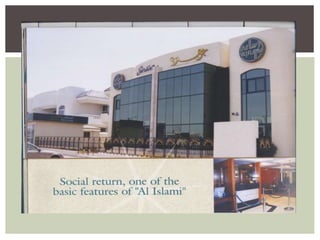
 Field site: Johara (Dubai Islamic Bank)
 Observations: 6 months
 Interviews:
 Rania: Branch Manager
 Sadia: Assistant Manager
 Miss Lutfi: Information Technology Manager
FIELDWORK: DUBAI, UAE
 Gender segregation reflects cultural values
Culturally it is like that, whereas Islam never has prohibited
women from interacting, within decent limits is required,
keeping your values and culture in mind, it has never prevented
them from meeting. You learn the roles; it is a part of life. But
in here it is the minimum interaction with male counterparts.
That’s the culture…
Rania
FINDINGS: RANIA
 Gender segregation primary to decision and ability to work
outside the home
 Miss Lutfi
 Unmarried
 Family objects to working alongside men
 Working increases economic independence
FINDINGS: MISS LUTFI
 Morally preferable
You feel more comfortable, it’s my point of view, in an Islamic
place since we are Muslims. In an Islamic place…whatever
thing which is going in this bank it is per Shari’a. And you feel
like whatever money you are earning, it is like halal.
Sadia
FINDINGS: SADIA
 Renegotiate local identifications and practices through
institutional structure
 Upholds local values related to gender
 Economic independence for females
 Upholds morality in the workplace
So…
Normative global financial practices and local moral gender
practices advance both: Islamic finance as a culture broker:
Identity is formed in a gendered space, but experienced in the
context of a global financial industry.
CONCLUSIONS
 Karen Hunt Ahmed
 khuntahm@depaul.edu
 Forthcoming: Culture & Psychology 2012
THANK YOU!

MFA 2012 New Orleans KHA

  • 1.
    Karen Hunt Ahmed Forthcoming: Culture & Psychology FINDINGA JEWEL: IDENTITY AND GENDERED SPACE IN ISLAMIC FINANCE
  • 2.
     Globalization, Identityand Islamic Finance  Fieldwork and interviews  Johara Dubai  Findings FINDING A JEWEL
  • 3.
     Constant motion:objects, persons, images, discourses and capital (Appadurai)  Modern process of constructing self-identity is an ongoing and dialogic process (Giddens)  Cultural psychology finds that humans have a strong need for positive self-evaluation (Heine et al.)  Multiple cultural identifications (Shweder et al.; Bell and Das)  Most prevalent way: group identification (Kinnvall)  In the past: geographic  Current research: links culture, identity and space (Sparkes et al.; Low)  Institution as “culture broker” (Mazzarella) GLOBALIZATION AND IDENTITY
  • 4.
     Piety: innerfeelings and outward practices (Mahmood; Kuran; Mawdudi)  Islamic moral values with normative capitalist business practices  Identity politics (Henry and Wilson; Mandaville; Smith)  Institution: physical and psychological space  How do Islamic finance practitioners negotiate identity formation within the context of modern globalizing processes?  Gender identity in stand alone women’s branch WHAT DOES THIS MEAN FOR ISLAMIC FINANCE?
  • 5.
     Conventional  Oftenseparate entrances  Rarely separate branches  Johara = first women’s branch BANKING IN THE GCC
  • 6.
     Field site:Johara (Dubai Islamic Bank)  Observations: 6 months  Interviews:  Rania: Branch Manager  Sadia: Assistant Manager  Miss Lutfi: Information Technology Manager FIELDWORK: DUBAI, UAE
  • 8.
     Gender segregationreflects cultural values Culturally it is like that, whereas Islam never has prohibited women from interacting, within decent limits is required, keeping your values and culture in mind, it has never prevented them from meeting. You learn the roles; it is a part of life. But in here it is the minimum interaction with male counterparts. That’s the culture… Rania FINDINGS: RANIA
  • 9.
     Gender segregationprimary to decision and ability to work outside the home  Miss Lutfi  Unmarried  Family objects to working alongside men  Working increases economic independence FINDINGS: MISS LUTFI
  • 10.
     Morally preferable Youfeel more comfortable, it’s my point of view, in an Islamic place since we are Muslims. In an Islamic place…whatever thing which is going in this bank it is per Shari’a. And you feel like whatever money you are earning, it is like halal. Sadia FINDINGS: SADIA
  • 11.
     Renegotiate localidentifications and practices through institutional structure  Upholds local values related to gender  Economic independence for females  Upholds morality in the workplace So… Normative global financial practices and local moral gender practices advance both: Islamic finance as a culture broker: Identity is formed in a gendered space, but experienced in the context of a global financial industry. CONCLUSIONS
  • 12.
     Karen HuntAhmed  khuntahm@depaul.edu  Forthcoming: Culture & Psychology 2012 THANK YOU!