METHODS OR
FUNCTIONS IN C#
METHODS OR FUNCTIONS
• A method is a group of statements that together perform a task.
• Methods are functions declared in a class and may be used to perform
operations on class variables.
• They are blocks of code that can take parameters and may or may not
return a value.
• It is used to perform specific task.
• Methods are reusable.
• Every C# program has at least one class with a method named Main.
METHODS OR FUNCTIONS
• Conventions to be followed for naming methods state that a
method name:
• The following syntax is used to create a method:
• Cannot be a C# keyword, cannot contain spaces, and cannot begin
with a digit Can begin with a letter, underscore, or the “@”
character
• Some examples of valid method names are: Add(), Sum_Add(), and
@Add().
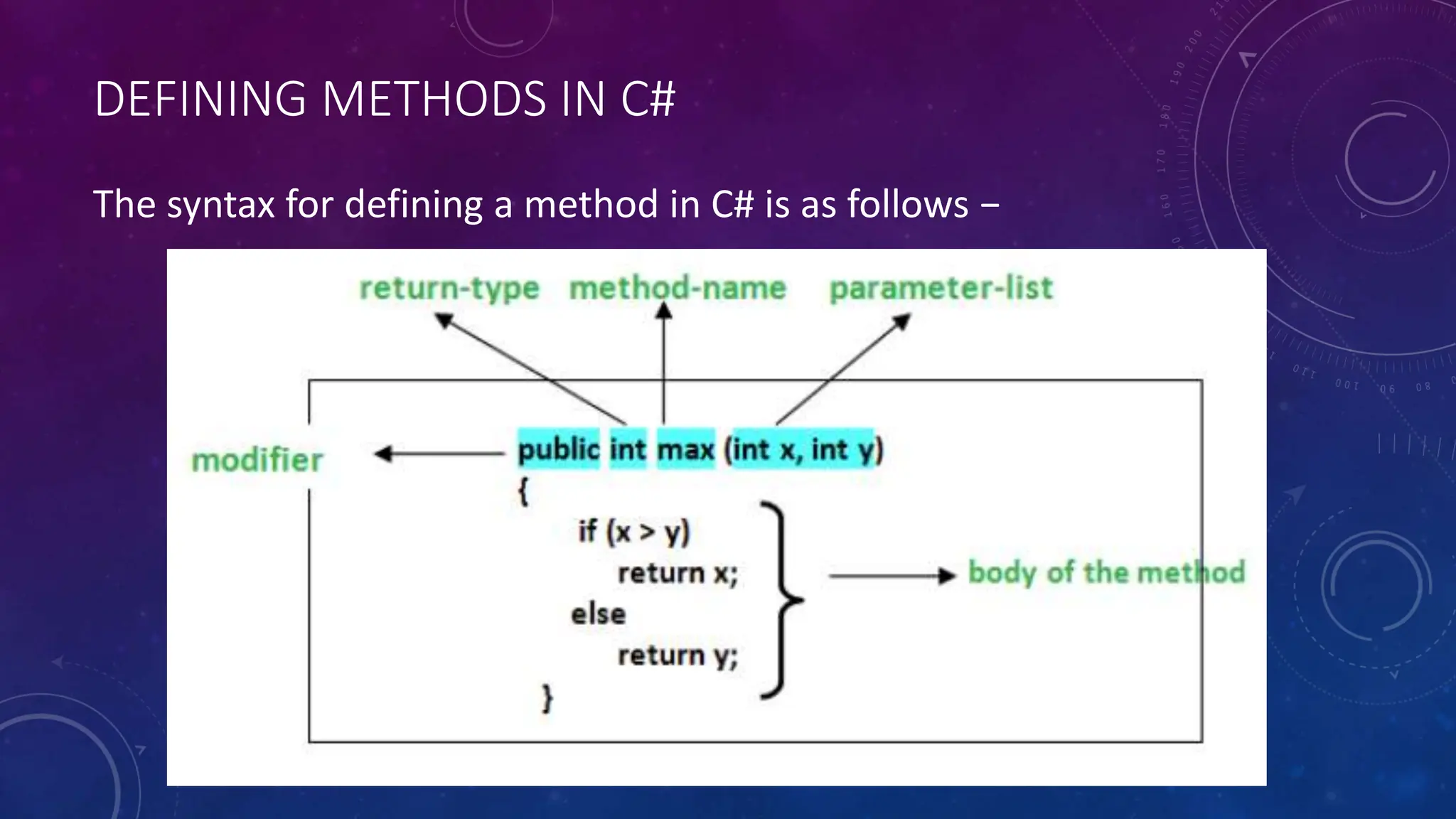
DEFINING METHODS IN C#
The syntax for defining a method in C# is as follows −
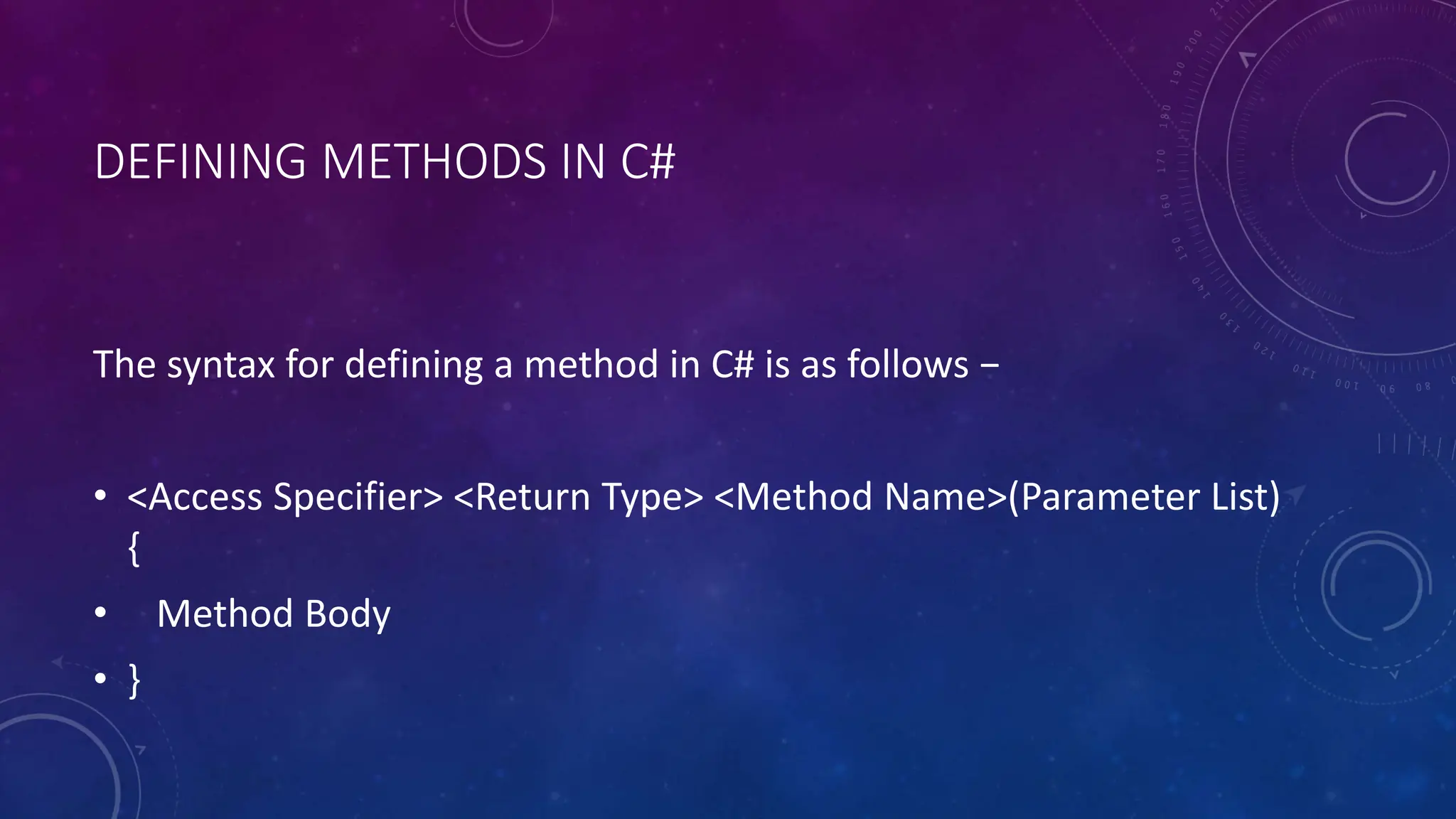
DEFINING METHODS IN C#
The syntax for defining a method in C# is as follows −
• <Access Specifier> <Return Type> <Method Name>(Parameter List)
{
• Method Body
• }
INVOKING METHODS
• To use a method, you need to −
• Define the method
• Call the method
• A method can be invoked in a class by creating an object of the class
where the object name is followed by a period (.) and the name of the
method followed by parentheses.
• In C#, a method is always invoked from another method.
• This is referred to as the calling method and the invoked method is
referred to as the called method
INVOKING METHODS
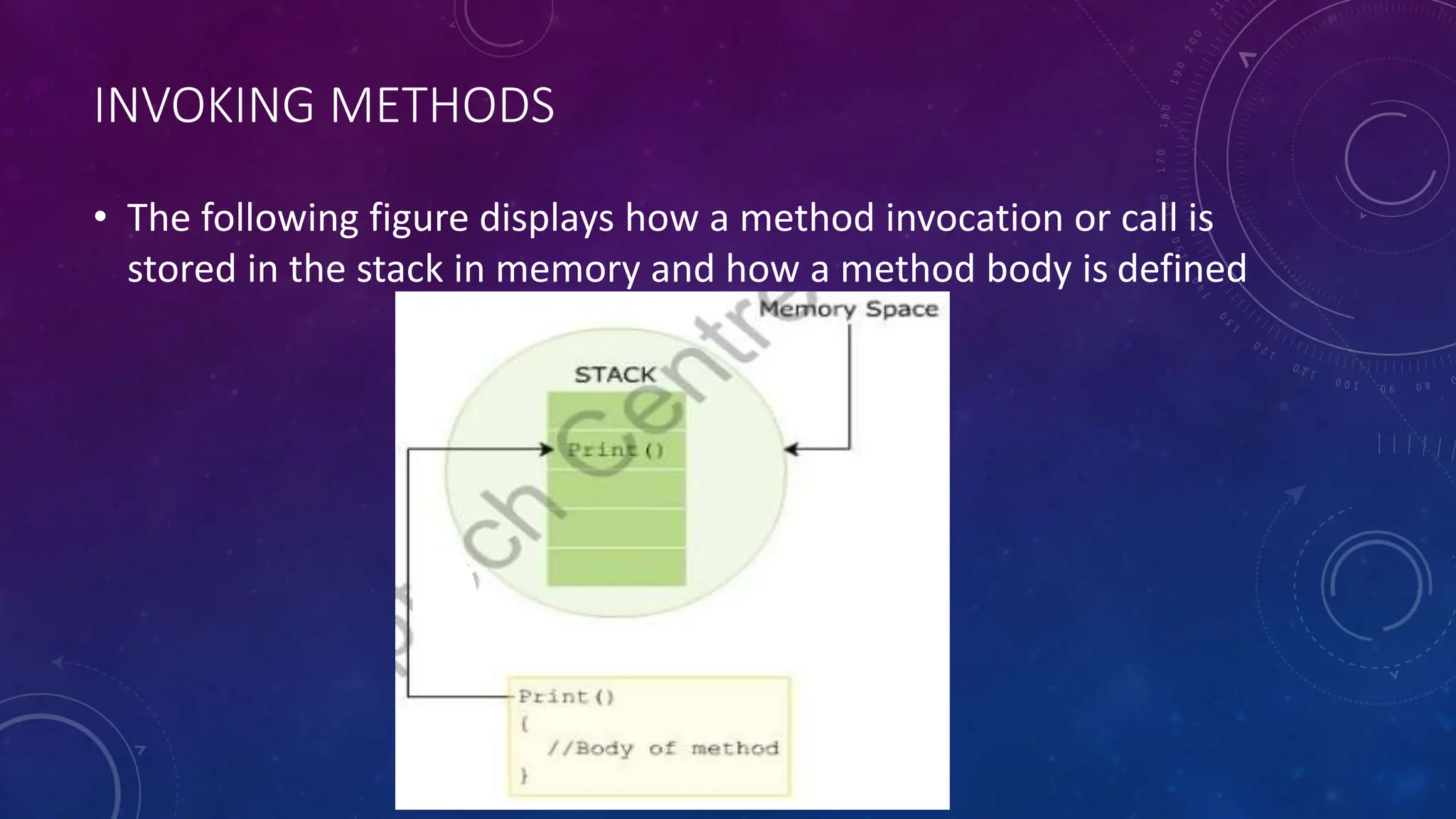
• The following figure displays how a method invocation or call is
stored in the stack in memory and how a method body is defined
METHODS OR FUNCTIONS
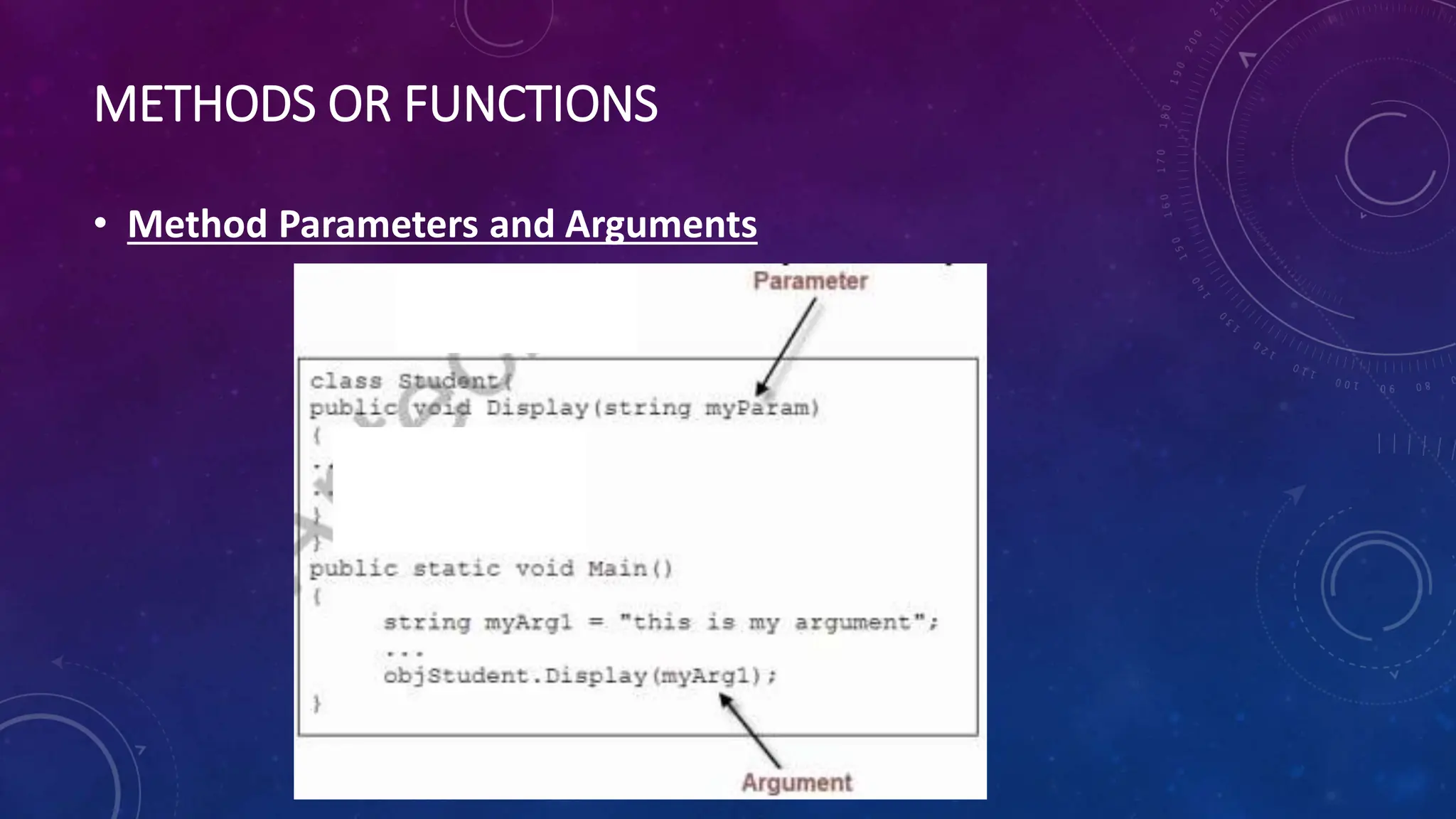
• Method Parameters and Arguments
• Parameters: The variables included in a method definition are called
parameters.
• Which may have zero or more parameters, enclosed in parentheses and
separated by commas.
• If the method takes no parameters, it is indicated by empty parentheses.
• Arguments:
• When the method is called, the data that you send into the
Arguments method's parameters are called arguments
METHODS OR FUNCTIONS
• Method Parameters and Arguments
METHODS
• There are 2 types of methods.
• 1. Static methods
• 2. Non-Static / Instance methods
METHODS
• According to parameters there are 2 types of methods.
• 1. Parameterized methods
• 2. Non-Parameterized methods
NAMED AND OPTIONAL ARGUMENTS
• A method in a C# program can accept multiple arguments that are
passed based on the position of the parameters in the method
signature.
• A method caller can explicitly name one or more arguments being
passed to the method instead of passing the arguments based on
their position.
• An argument passed by its name instead of its position is called a
named argument.
NAMED AND OPTIONAL ARGUMENTS
• While passing named arguments, the order of the arguments
declared in the method does not matter.
• Named arguments are beneficial because you do not have to
remember the exact order of parameters in the parameter list of
methods.
RETURN KEYWORD IN C#
• The return statement is used to return value.
• When a program calls a function, the program control is
transferred to the called function.
ADVANTAGES OF USING THE METHODS :
There are many advantages of using methods. Some of them are listed
below:
• It makes the program well structured.
• Methods enhance the readability of the code.
• It provides an effective way for the user to reuse the existing code.
• It optimizes the execution time and memory space.

METHODS OR FUNCTIONS IN C for dotnet.pptx

  • 1.
  • 2.
    METHODS OR FUNCTIONS •A method is a group of statements that together perform a task. • Methods are functions declared in a class and may be used to perform operations on class variables. • They are blocks of code that can take parameters and may or may not return a value. • It is used to perform specific task. • Methods are reusable. • Every C# program has at least one class with a method named Main.
  • 3.
    METHODS OR FUNCTIONS •Conventions to be followed for naming methods state that a method name: • The following syntax is used to create a method: • Cannot be a C# keyword, cannot contain spaces, and cannot begin with a digit Can begin with a letter, underscore, or the “@” character • Some examples of valid method names are: Add(), Sum_Add(), and @Add().
  • 4.
    DEFINING METHODS INC# The syntax for defining a method in C# is as follows −
  • 5.
    DEFINING METHODS INC# The syntax for defining a method in C# is as follows − • <Access Specifier> <Return Type> <Method Name>(Parameter List) { • Method Body • }
  • 6.
    INVOKING METHODS • Touse a method, you need to − • Define the method • Call the method • A method can be invoked in a class by creating an object of the class where the object name is followed by a period (.) and the name of the method followed by parentheses. • In C#, a method is always invoked from another method. • This is referred to as the calling method and the invoked method is referred to as the called method
  • 7.
    INVOKING METHODS • Thefollowing figure displays how a method invocation or call is stored in the stack in memory and how a method body is defined
  • 8.
    METHODS OR FUNCTIONS •Method Parameters and Arguments • Parameters: The variables included in a method definition are called parameters. • Which may have zero or more parameters, enclosed in parentheses and separated by commas. • If the method takes no parameters, it is indicated by empty parentheses. • Arguments: • When the method is called, the data that you send into the Arguments method's parameters are called arguments
  • 9.
    METHODS OR FUNCTIONS •Method Parameters and Arguments
  • 10.
    METHODS • There are2 types of methods. • 1. Static methods • 2. Non-Static / Instance methods
  • 11.
    METHODS • According toparameters there are 2 types of methods. • 1. Parameterized methods • 2. Non-Parameterized methods
  • 12.
    NAMED AND OPTIONALARGUMENTS • A method in a C# program can accept multiple arguments that are passed based on the position of the parameters in the method signature. • A method caller can explicitly name one or more arguments being passed to the method instead of passing the arguments based on their position. • An argument passed by its name instead of its position is called a named argument.
  • 13.
    NAMED AND OPTIONALARGUMENTS • While passing named arguments, the order of the arguments declared in the method does not matter. • Named arguments are beneficial because you do not have to remember the exact order of parameters in the parameter list of methods.
  • 14.
    RETURN KEYWORD INC# • The return statement is used to return value. • When a program calls a function, the program control is transferred to the called function.
  • 15.
    ADVANTAGES OF USINGTHE METHODS : There are many advantages of using methods. Some of them are listed below: • It makes the program well structured. • Methods enhance the readability of the code. • It provides an effective way for the user to reuse the existing code. • It optimizes the execution time and memory space.