Methodological Approaches 1stEdition Ruth Evans
download
https://textbookfull.com/product/methodological-approaches-1st-
edition-ruth-evans/
Download full version ebook from https://textbookfull.com
2.
Geographies of Childrenand
Young People 2
Methodological
Approaches
Ruth Evans
Louise Holt Editors
Tracey Skelton Editor-in-Chief
3.
Geographies of Childrenand Young People
Volume 2
Editor-in-Chief
Tracey Skelton
Department of Geography
National University of Singapore
Singapore, Singapore
4.
Geographies of Childrenand Young People is a Major Reference Work comprising
12 volumes that pulls together the best international reflective and innovative
scholarship focusing on younger people. Volumes 1 and 2 establish and critically
engage with the theoretical, conceptual, and methodological groundings of this
geographical sub-discipline. Volumes 3–11 provide in depth thematic analysis of
key topical areas pertinent to children’s and young people’s lives: space, place and
environment; identities and subjectivities; families and peer groups; movement and
mobilities; politics and citizenship; global issues and change; play and well-being;
learning and labouring; conflict and peace. Volume 12 connects both academic,
policy, and practitioner based work around protection and provision.
Series Titles
1. Establishing Geographies of Children and Young People
2. Methodological Approaches
3. Space, Place, and Environment
4. Identities and Subjectivities
5. Families, Intergenerationality, and Peer Group Relations
6. Movement, Mobilities, and Journeys
7. Politics, Citizenship and Rights
8. Geographies of Global Issues: Change and Threat
9. Play and Recreation, Health and Wellbeing
10. Laboring and Learning
11. Conflict, Violence and Peace
12. Risk, Protection, Provision and Policy
More information about this series at http://www.springer.com/series/13414
5.
Ruth Evans •Louise Holt
Editors
Tracey Skelton
Editor-in-Chief
Methodological
Approaches
With 44 Figures and 2 Tables
6.
Editors
Ruth Evans
Department ofGeography and
Environmental Science
University of Reading
Whiteknights, Reading, UK
Louise Holt
Department of Geography
Loughborough University
Leicestershire, UK
Editor-in-Chief
Tracey Skelton
Department of Geography
National University of Singapore
Singapore, Singapore
ISBN 978-981-287-019-3 ISBN 978-981-287-020-9 (eBook)
ISBN 978-981-287-021-6 (print and electronic bundle)
DOI 10.1007/978-981-287-020-9
Library of Congress Control Number: 2016962309
# Springer Nature Singapore Pte Ltd. 2017
This work is subject to copyright. All rights are reserved by the Publisher, whether the whole or part of the
material is concerned, specifically the rights of translation, reprinting, reuse of illustrations, recitation,
broadcasting, reproduction on microfilms or in any other physical way, and transmission or information
storage and retrieval, electronic adaptation, computer software, or by similar or dissimilar methodology
now known or hereafter developed.
The use of general descriptive names, registered names, trademarks, service marks, etc. in this publication
does not imply, even in the absence of a specific statement, that such names are exempt from the relevant
protective laws and regulations and therefore free for general use.
The publisher, the authors and the editors are safe to assume that the advice and information in this book
are believed to be true and accurate at the date of publication. Neither the publisher nor the authors or the
editors give a warranty, express or implied, with respect to the material contained herein or for any errors
or omissions that may have been made.
Printed on acid-free paper
This Springer imprint is published by Springer Nature
The registered company is Springer Nature Singapore Pte Ltd.
The registered company address is: 152 Beach Road, #21-01/04 Gateway East, Singapore 189721,
Singapore
7.
Series Preface
Geographies ofChildren and Young People now constitutes a major subdiscipline
within Geography. This is a very exciting and influential time in its development.
Hence, it is important to capture the dynamism, depth, and breadth of the sub-
discipline within a Major Reference Work (MRW). Springer Major Reference Works
are produced in such a way that updating and editing of the online version can be
done every few years. This means that the publication does not fix the data, debates,
and delivery but rather moves and evolves with the subdiscipline itself. The intention
and expectation of this MRW is that this substantive collection will be the go-to
resource for scholars, educators, and practitioners working with children and young
people.
While founding scholarship was published in the 1970s and 1980s, the dramatic
expansion of research and publication in the field really began in the late 1990s and
has continued exponentially. The last decade has witnessed a substantive increase in
graduate student research projects and a surge in university-level teaching related to
children’s and young people’s geographies. It is therefore extremely timely that this
12-volume major reference work has been produced. Together as Editor-in-Chief,
Volume Editors, and Authors, we have developed the largest single collection of
geographic work focusing on children and young people in the world. Intellectually,
the work reaches beyond geography to the wider social and behavioral sciences;
many of the authors in the series are not geographers, and so, the collection is
healthily and engagingly transdisciplinary. Anyone working with children and
young people will find chapters that connect very effectively with their own inter-
ests. Specialists as well as graduate and tertiary education students will find relevant
work distributed throughout the MRW or locate everything they might need within
one thematic volume.
This Series was founded on certain key intellectual and political principles.
Working with young people and children within the academy has not always been
easy nor a straightforward pathway for academics. It has taken time for scholars to
convince their colleagues of the following: that children and young people really
matter; that they should not be marginalized by the academy; that they have
competency and agency and play important roles in society; and that they should
be taken seriously as people regardless of age or size. This 12-volume collection is
material evidence of the academic importance of children and young people in our
v
8.
world. The MRWis determinedly international in approach, in authorship, and in
content. The huge diversity of nations and territories explored in the collection as
well as the geographic locations of author contributors is a real testament to the
commitment of the Editor-in-Chief and Volume Editors to be genuinely interna-
tional. Children and young people are everywhere on the planet, hence it is imper-
ative that this Series reflects that ubiquity. Drawing from scholars and scholarship
from within and about the majority world has been a key achievement for each
volume. Another aspect of inclusivity relates to authorship. Foundational, well-
established, and early career scholars are all well represented throughout the
volumes.
The 12 volumes work collectively as a series and also stand alone as single books.
The volumes are lengthy and contain between 25 and 35 full chapters; each volume
is an excellent resource of expertise, content, and analysis. Volume 1, Establishing
Geographies of Children and Young People, is designed to pull together some of the
foundational work in the sub discipline; demonstrate the emergence and establish-
ment of particular philosophical, theoretical, and conceptual themes; and capture the
diversity of geographic work on children and young people as it connects with other
sub- and disciplinary approaches. This volume presents the key founding elements
of the sub discipline. Volume 2, Methodological Approaches, explores the grand
array of methodological approaches and tools that children’s and young people’s
geographers, and other social and behavioral scientists, have worked with, adapted,
and invented. Chapters explore research practices, techniques, data analysis, and/or
interpretation. Working with younger people in research demands different ways of
doing research and hence addressing the complexities of power relations. Method-
ologically, innovation and experimentation have been very important. Space, Place,
and Environment (Vol. 3) takes these three central geographic concepts and debates
and extends them. The volume is structured around five subsections: Indigenous
Youth – Space and Place; Children, Nature, and Environmental Education; Urban
Spaces; Home Spaces and Homeless Spaces; and Border Spaces. Several of these
themes are explored in fuller depth in subsequent specialized volumes. Volumes
1 and 3 will be particularly useful starting points for readers less familiar with
geography as a discipline. Volume 4, Identities and Subjectivities, is designed to
focus on the stuff of life and living for younger people. The chapters examine who
young people and children are and what their social identities and subjectivities
mean in the context of their spatial experiences. The volume explores identity
formation and the spatial meaning of identities and subjectivities in relation to a
broad range of social relations. The chapters explore how young people’s senses of
selfhood and belonging emerge through complex processes of inclusion, exclusion,
and marginalization and the important role played by representation, discourse, and
creativity. In Vol. 5, Families, Intergenerationality, and Peer Group Relations, the
focus is on the ways in which children and young people are relationally connected
with others. Section I demonstrates that familial relationships and the spatiality of the
home are extremely important in all children’s and young people’s lives, even
though the patterns and structures of families and the spaces/places of home vary
geographically and temporally. Section II innovatively examines the complexities
vi Series Preface
9.
and spatialities ofextrafamilial intergenerational relationships and the complex
meanings of age relationality. Section III emphasizes children’s and young people’s
relationships with one another. This includes work on geographies of emotion and
affect, bodies and embodiment.
The mobility turn in geography has been highly influential in the social sciences.
Children’s and young people’s geographers have been significant in the paradigmatic
shift around mobilities and immobilities. In Vol. 6, Movement, Mobilities, and
Journeys, contributors examine the role children and young people play in these
“travels” in a range of diverse global contexts. The chapters collectively provide
theoretical, empirical, and methodological insights and examples of actual move-
ment combined with analysis of a range of complex contexts, spatialities, and
temporalities that facilitate or hamper mobility. Volume 7 takes us into the realm
of children and young people as political beings. Politics, Citizenship and Rights
explores the political geographies of younger people in order to bring analytical
attention to intricacies of the policies that specifically affect young people and
children, alongside the politics at play in their everyday lives. Divided into four
sections, the volume interrogates the spatialities of the rights of the child, children
and young people’s agency in politics, youthful practices and political resistance,
and active youth citizenship. Volume 8, Geographies of Global Issues: Change and
Threat, unites three broad research themes that are often examined separately:
economic globalization and cultural change; international development; and children
and young people’s connections with climate change, natural hazards, and environ-
mental issues. What pulls these themes together is the recognition that younger
people are important actors and agents within these processes and that their engage-
ment/disengagement is crucial for the planet’s future. In Vol. 9, Play and Recreation,
Health and Wellbeing, important, well-established, but often contentious foci of
children’s and young people’s lives are examined conceptually, temporally, spatially,
in practice, and through representation. Many of the debates about children’s
embodiment revolving around obesity, unfitness, wellness, and neglect are relatively
new in the social sciences, and geographers have played important roles in their
closer scrutiny. Volume 10, Laboring and Learning, provides an integrated and
multidimensional approach to understanding what learning and laboring mean to
children and young people. The two concepts are explored in depth and breadth in
order to capture the variance of what work and education mean and how they are
practiced in different places and at different times through childhood and youth. Key
thematic areas for this volume include social reproduction, transitions, aspirations,
and social and cultural capital. In Conflict, Violence and Peace (Vol. 11), the
emphasis is on the ways in which children are impacted and affected by, and
involved with, highly problematic and fragile conditions of war, violence, conflict,
and peace. As more and more younger people experience a range of conflicts and
social, economic, and political violence, it is essential to examine what happens to
them and what roles they play in processes such as asylum, child soldiering,
terrorism, counterterrorism, ending conflict, and building peace. Volume 12, Risk,
Protection, Provision and Policy, serves to connect academic research and policy
and planning that affects children and young people. Policy, planning, and provision
Series Preface vii
10.
are often purportedlyabout reducing risk and offering protection but are also
associated with the control and containment of younger people, particularly spatially.
The chapters explore the ways in which policies at different scales affect children
and young people in terms of their access to space and their life chances.
This Series is an extremely rich, varied, and vibrant collection of work centered
on geographies of children and young people. Just as children and young people
bring vibrancy, diversity, and complexity to our worlds, so this MRW is designed to
showcase, deepen, and develop the geographic scholarship that captures, albeit
partially, the fascinating social heterogeneity and diverse spatialities of children’s
and young people’s lives.
National University of Singapore, Singapore Tracey Skelton
May 20, 2015 MA Oxon, Ph.D.
Editor-in-Chief
viii Series Preface
11.
Editorial: Geographies ofChildren and Young
People. Methodological Approaches
Introduction
How to go about doing research with children and young people has presented many
challenges and generated much debate within the field of geographies of children
and young people. Since its inception as a field of enquiry, there have been three key
pillars around which critical geographies of children and young people coalesce: the
importance of children’s agency, that childhood is a socio-spatial construction, and
the need to include children’s voices in research. This general consensus underpins
the ways in which research with young people has been conducted within the field,
and these remain critical to methodological approaches. The emergence of the field
of geographies of children and youth has been tied to the new social studies of
childhood (Christiansen and James 2000; Punch 2002) and increasing interests in the
rights and participation of young people (Alderson 2001; Skelton 2007). As
Holloway (2015) points out, these were not the only points of origin of geographies
of children and youth. Participatory action research (Kindon et al. 2007), with its
roots in Participatory Rural Appraisal in the Global South, has also played a role in
influencing the methodological approaches and tools used to engage young people
as active participants in the research process. Similarly, feminist methodological
debates about ethical dilemmas and the positionality of the researcher have also
shaped how geographers research with young people (Scheyvens and Leslie 2000;
Morrow 2008). Nevertheless, the three central pillars outlined above, alongside
concerns about participation and ethics, permeate the methodological approaches
discussed in this volume.
The chapters in the volume demonstrate the range, creativity, reflexivity, and
diversity of methodological approaches in geographies of children and young
people. They present frank and honest accounts of how to engage young people in
theoretically informed and creative ways. The valuable insights presented in the
volume have potential resonances beyond the field of geographies of children and
youth to geographies and social sciences more generally, by presenting critical
evaluations and creative approaches. There is no reason why such a critical, reflec-
tive, and creative approach to methods and methodologies should not be used with a
ix
12.
range of participants,and this volume sets out what we, as a subdiscipline, can
contribute to geography and the broader social sciences in terms of lively methodolo-
gies. A key feature of geographies of children and young people is the astounding
diversity of spaces, places, and contexts in which young people’s lives are explored.
This volume demonstrates this diversity, which offers rich insights into methodo-
logical approaches. Often, the creative approaches discussed in the chapters arise
from methodological challenges posed by researching young people and young
people in specific contexts, such as in the past, young people on the move in various
ways, or young people living on the streets. A theme which permeates the chapters is
an endeavor to “go beyond” researching “with” children and young people to
encouraging children and young people to be equal partners, with equal rights. A
notion of transformation or transforming young people’s lives is also present in
many of the chapters. The chapters presented in the volume reflect the current state
of methodologies and methods in geographies of children and youth and provide a
timely and useful snapshot. There is an impressive array of approaches, tools, and
techniques.
The volume is divided into two sections. The first set of 11 chapters present
“Methodological Approaches,” an endeavor to survey the overall epistemological
and ontological approaches to research undertaken. The second set of nine chapters,
“Methods, Tools, and Techniques,” discuss in detail specific techniques and tools
which have been developed to conduct research with children and young people in
particular contexts. Of course, in many ways this is a clumsy and artificial division.
There are clearly many links between methodology and tools and techniques used,
and few of the chapters fit exclusively into one section or the other. However, readers
can expect from the first section a leaning towards methodological, epistemological,
and even ontological debate, whereas the chapters in the second section all provide
the reader with some useful tools and techniques to apply, try, and introduce as
options when working with young research partners, although this is not all they do.
Methodological Approaches
The first two chapters in this section throw out interesting methodological and
epistemological questions, from divergent perspectives. Priscilla Alderson’s chapter
presents a valuable insight into critical realism as an approach which can resolve
some of the central, epistemological tensions in social science, and therefore,
geographies of children and young people, between positivist and interpretive
approaches. Along with presenting a way of solving some enduring tensions and
dichotomies in social science, such as structure and agency, Alderson argues that
critical realism can serve as an approach which allows dialogue beyond academia
and beyond geographies of children and youth by producing research which may be
perceived to be “valid” across different academic perspectives and in the public and
policy-making arena.
In writing about the possibilities and pitfalls of autoethnography as an insight into
past childhoods, and an awareness of how our childhood memories remain an
x Editorial: Geographies of Children and Young People. Methodological Approaches
13.
embodied part ofwho we currently are, Peter Kraftl also raises some key epistemo-
logical questions about the nature of valid or valuable knowledge. His chapter
discusses ontological questions about the nature of childhood and indeed the
on-goingness of our childhood in our adult bodies. Kraftl confronts challenges
directed at the “validity” of autoethnography. He emphasizes that autoethnography
is a creative method and one which certainly does not produce replicable results
which can be validated. Kraftl usefully reminds us that claims for validity, objectiv-
ity, and so on emerge from particular, masculinist and contested positivist perspec-
tives. Kraftl emphasizes the potential of autoethnography to offer insights into the
relational geographies of age, citing Hopkins and Pain (2007).
The following chapters by Hughes and Cooper, and Ruth Evans, provide critical,
reflective, and honest accounts of the learning experiences involved in participatory
action research. They open the box of ethical and methodological complexities,
power-relations, and conflicts, which often go underreported in discussions of
participatory research. Hughes and Cooper detail their project with young people
living with Austerity in the UK, whereas Ruth Evans draws upon research in East
and West Africa. Collectively, these chapters emphasize the potential limits and
constraints on participatory video, when anonymity and confidentiality can be
compromised. Ruth Evans suggests that participatory dissemination can be a way
to bring together more and less powerful groups in “communities” in order to affect
social change. Both chapters give insights into how participants can participate fully
in all stages of the research, from inception to analysis and dissemination.
The chapter by Christina Ergler questions what it means to include primary
school aged children as active partners in all stages of the research process, which
is often heralded as the ideal approach. Drawing on her experience of a project in
which children became the researchers, she suggests an approach which engages
with children’s and young people’s own ways of knowing, capabilities, and prefer-
ences. Participation, Ergler argues, should be constantly negotiated and reframed
through children’s active involvement in deciding in which stages of research they
want to participate.
Reflecting that young people’s lives are characterized by mobility at smaller and
larger scales (Holt and Costello 2011), researchers have begun to develop mobile
methods. Three chapters in the volume detail researching with young people “on the
move.” Heli Ponto reflects on young people’s micro-movements around the city of
Helsinki, Daniela Sime considers how the voices and experiences of young migrants
can be more fully incorporated into academic debates, and Van Blerk, Shand, and
Shanahan explore the mobile geographies of young street people in Africa. Heli
Ponto moves the lens fully onto the specific ethical dilemmas of research on the
move. She suggests that the mobile research setting is unpredictable, and it is
relatively difficult to control or plan for ethical dilemmas that arise. Such situations
may include encountering people who threaten or make the child/young person feel
uncomfortable and the need for researchers to recognize and facilitate their right to
terminate the research encounter at any point, especially if the meeting is happening
at a distance from the child’s home or school.
Editorial: Geographies of Children and Young People. Methodological Approaches xi
14.
Daniela Sime reflectsupon ethical dilemmas of researching with migrant children
and young people who moved from Eastern Europe to Britain. Concerns of ethical
responsibility, access, and gatekeepers are discussed, along with the complex and
uncertain power-relations tied to gender, ethnicity, and language. Sime also points to
the importance of critical awareness of the ways in which migrant children’s lives are
tied to, constrained by, and contextualized within powerful broader familial and
community relations, themes which resonate with Evans’ chapter. Sime, like Evans,
and Hughes and Cooper, critically reflect upon the need to balance attempts to
encourage young people’s full participation in all elements of the project with ethical
concerns to protect anonymity, confidentiality, and an awareness of power relations
within “communities.”
Van Blerk, Shand, and Shanahan explore the methodological challenges of
employing young street people as researchers to maximize participation in all stages
of the research. They point to the spatial and temporary complexities of life on the
streets. They emphasize the need to research with young street people, whose
experiences are often outside of academic debate, as well as often being positioned
outside the decision-making process and enactment of policies.
By contrast to these methods “on the move,” the geographies of the children in
White and Tyrrell’s chapter, which discusses ethical and methodological concerns of
researching migrant children seeking asylum in Ireland, seem surprisingly static. The
fraught mobilities of their asylum journeys stand in sharp contrast to the seemingly
bounded place of the Direct Provision Centre. In amongst methodological and
ethical attempts to “listen to” children’s voices or “give voice” to children and
young people, White and Tyrrell emphasize the importance of interrogating silences,
which are often overlooked but are powerful and full of meaning and insight, as they
demonstrate through examples from their research.
Space, place, and the socio-spatial relations that characterize them also frame the
chapter by Samantha Punch and Elizabeth Graham, which discusses the methodo-
logical and ethical concerns of researching with children at home. In addition to
reflecting upon the methodological and ethical practicalities and challenges, such as
the ways in which interviews can be a forum for reproducing sibling rivalry or
support, the chapter details some pragmatic tools for use with young people in the
home, such as: interviews and task-based activities and group or individual
interviews.
The section ends with Sharon Bessell’s chapter, which focuses on the methodo-
logical, political, and ethical imperatives to foreground and preserve children’s
rights. Bessell argues that children’s rights agendas point to the importance of
preserving the rights and dignities of children and young people who participate in
research, rather than simply suggesting the right to be included in research. Detailing
some of the origins of rights-based research, this chapter also highlights how
academics outside of critical geographies and social studies of children and youth
continue to conduct research on children in ways that do not foreground their
capabilities as actors and can deny children their rights. The section ends with this
chapter, which is a salutary reminder of how much geographies and social studies of
children and young people have achieved but also how much still needs to be done to
xii Editorial: Geographies of Children and Young People. Methodological Approaches
15.
challenge the waychildren are conceptualized and positioned in research in many
academic disciplines.
Methods, Tools, and Techniques
One of the great strengths of this volume, arguably, is the honesty and reflexivity
with which authors discuss the practicalities of researching with young people. In the
second section of the volume, authors move on from discussing more methodolog-
ical concerns towards addressing the specific techniques and tools that can be used to
research young people’s lives. Taken as a whole, this section highlights the diversity
and creativity of methods developed to take seriously the endeavor to research with
rather than on children and young people. Most of the chapters in this section detail
methodological concerns along with a specific account of tools and techniques that
can be used for researching children and young people.
Multiple methods that seek to go “beyond the representational” and engage with
specific ways of knowing typify many of the chapters in this second section,
although authors frequently also consider how these can be used alongside more
traditional methods. In the first chapter of the section, Matej Blazek details the
development and use of participatory video as a technique to work in equal partner-
ship with young people. The chapter also reflects upon some ethical and political
dilemmas, many of which have resonance to the foregoing chapters, particularly
those by Ruth Evans, and Hughes and Cooper. In particular, he emphasizes the
careful role negotiation of the researcher as s/he moves from being a researcher to a
partner, a facilitator, and sometimes even a counsellor and community negotiator.
Similarly, Thomas Grant’s chapter develops a “tool-kit” of participatory methods,
aimed at helping researchers to develop participatory approaches and methods which
more fully engage with young people’s ways of knowing. He discusses specific
tools, ranging from Visual Techniques through Video and Film Techniques –
Participatory Video, Diagram Techniques, Mapping, Matrixes, Ranking, and Scor-
ing – Creative Techniques to Written Techniques. Grant reflects upon the potentials,
possibilities, and problems of all of these techniques.
Reflecting upon the challenges of conducting research with young disabled
people in Ghana, Stefanie Gregorius also provides a reflective account of a multiple
method approach. She assesses using Participant Observation, Life Story Interviews,
Focus Groups, Solicited Diaries, Participant-Directed Photography, and Participa-
tory Video. Her detailed account provides insight into both how to use the tools she
discusses and how to go about researching with groups who can be marginalized in
challenging contexts. Gregorius reminds us to ensure that the “different preferences
and varying abilities of young people with different impairments are taken into
account” and “a multi-method approach can be inclusive and empowering,”
highlighting that disabled young people are not a homogeneous group.
Farmer and Cepin reflect upon using visual methods to research mobility and
transnationalism with young people in Canadian school spaces, using “multisited
visual ethnography.” Specific techniques developed, which the authors describe as
Editorial: Geographies of Children and Young People. Methodological Approaches xiii
16.
“enabling methods,” includingobservation, language biographies, personalized
body maps, and digital photography. The complexities of analysis and dissemination
are also discussed, concerns which are often “quiet” in debates about participatory
methods. The chapter details how qualitative methods such as group interviews
become spaces in which children and young people take on the role of researchers,
questioning each other and also the academics.
Like the majority of geographical studies of children and young people, most of
the contributions to this volume detail research approaches for children in middle
childhood or youth (see also Holt 2013). However, in an important contribution,
Johnson, Hart, and Colwell outline methodological challenges and techniques for
involving young children in research. Young children’s voices have been somewhat
sidelined in the field, and this chapter provides a helpful entrée into conducting
research with young children. Johnson et al. succinctly express the importance of
including young children in our social and geographical research by detailing the
negative consequences of their exclusion. They outline some useful techniques to
engage young children, including interviews and discussion; in situ methods and
child-led tours; visual methods including mapping; performance and narrative; play;
and games.
Many of the examples drawn upon by Johnson et al. detail endeavors to include
young people’s voices in broader community projects, mostly in the Global South.
This stands in contrast to much of the field, where researching with children and
young people is often the specific aim of the project. In a different context – Reading
in the UK – Sally Lloyd Evans similarly reflects upon involving young people in a
broader participatory project in a neighborhood somewhat “left behind” by the
processes of global capitalism. Her detailed discussions of methods used to include
young people within broader participatory projects have the potential to remind
social scientists of the importance of including children and young people’s per-
spectives in all elements of community-based research.
The chapter by Smørholm and Simonsen provides insight into the possibilities of
using children’s own drawings to encounter their emotional worlds, as part of a
broader ethnographic approach. In particular, they consider how drawings can help
to engage with troubling emotions, such as bereavement, drawing upon research in
Zambia, Africa. Their detailed discussions of the intersections between drawing and
conversation highlight how drawings can provide insight into the more-than-repre-
sentational world of emotions. They point out, however, the importance of involving
young people in the analysis of their drawings, by teasing out examples of when their
initial interpretations were disrupted and challenged by conversations with the
young people.
Time is a uniting theme in the next two chapters. In common with Peter Kraftl’s
chapter, Sarah Mills invites geographers of children and young people to explore
past childhoods. Specifically, she introduces geographers of children and young
people to the methodological possibilities of archives. Along with simply (and
helpfully) highlighting what archives are and how they can be used to explore past
childhoods, Mills explicitly engages with methodological and ethical complexities
of researching past young people’s lives and the implications of digital technology.
xiv Editorial: Geographies of Children and Young People. Methodological Approaches
17.
The chapter byGina Crivello discusses the methodological importance of incor-
porating time as well as space into our research with children and young people and
details Longitudinal Qualitative Methods (LQM). Drawing upon three examples of
studies that have used LQM, the chapter outlines specific methodological tools that
can be used to conduct LQM and provides an excellent insight into how, practically,
researchers can conduct LQM. This chapter provides insight into the way in which
researchers can follow children’s life trajectories as they move from childhood to
youth and adulthood. It throws open many questions about the continuities between
researching with children and adults and with children as they become adults, which
could generate much future discussion and deliberation.
Concluding Thoughts
In sum, this collection showcases the diversity of geographical research conducted
with young people in a variety of locations across the increasingly globalized world.
It demonstrates the methodological reflexivity and integrity, and the creativity, of
research in geographies of children and young people. It provides a useful compan-
ion for researchers new to the field, along with presenting learning opportunities and
issues of debate and reflection for established scholars of geographies of children
and young people and of the social studies of childhood and youth more broadly.
However, some gaps in the way we do children’s geographies are apparent from
this volume, both from the chapters that are present and from what is missing. First,
there is a far greater tendency to listen to children’s voices, exploring the agency of
childhood rather than examining more fully the way childhoods are represented,
which has resonance to how they are experienced (Jones 2013). Second, the research
presented is overwhelmingly qualitative, with little large-scale quantitative analysis
(see also, Holt 2006). Third, the chapters detail research with children and young
people at a variety of ages, but there is little research conducted with very young
children (although see Johnson et al.). Fourth, reading many of the chapters reminds
us to consider how social differences of gender, class, ethnicity, race, disability, and
so on shape young people’s experiences (see also Evans and Holt 2011). Young
people have different “preferences and varying abilities” (Gregorius), and we should
not assume an able norm in our research design. Fifth, reading Bessell’s and Lloyd-
Evans’ chapters reminds us of the need to engage beyond the subdisciplinary bound-
aries of children geographies and critical social studies of childhood. Disciplines and
perspectives abound where young people’s voices are little considered or when
research continues to adopt a model in which children are treated as objects and
their broader rights are disregarded. There is still more work to be done to challenge
these approaches.
Finally, it is important to celebrate the many achievements, the diversity of
approaches, and the critical, reflective, and creative nature of the methods and
methodologies presented in this volume. This collection of chapters provides excit-
ing epistemological, ontological, and practical insights into social research
Editorial: Geographies of Children and Young People. Methodological Approaches xv
18.
methodologies, methods, andtools when researching geographies of children and
young people.
Louise Holt
Ruth Evans
References
Alderson, P. (2001). Research by children. International Journal of Social Research
Methodology, 4(2), 139–153.
Evans, R., & Holt, L. (2011). Diverse spaces of childhood and youth: Gender and
other socio-cultural differences. Children’s Geographies, 9(3–4), 277–284.
Holloway, S. L. (2014). Changing children’s geographies. Children’s Geographies,
12(4), 377–392.
Holt, L. (2013). Exploring the emergence of the subject in power: Infant geogra-
phies. Environment and Planning D: Society and Space, 31, 645–663.
Holt, L., & Costello, L. (2011). Beyond otherness: Exploring diverse spatialities
and mobilities of childhood and youth populations. Population, Space and Place,
17(4), 299–303.
Hopkins, P., & Pain, R. (2007). Geographies of age: Thinking relationally. Area,
39(3), 287–294.
Jones, O. (2013). “I was born but. . .”: Children as other/nonrepresentational subjects
in emotional and affective registers as depicted in film. Emotion, Space and
Society, 9(0), 4–12.
Kindon, S., Pain, R., & Kesby, M. (Eds.). (2007). Participatory action research
approaches and methods: Connecting people, participation and place. London:
Routledge.
Morrow, V. (2008). Ethical dilemmas in research with children and young people
about their social environments. Children’s Geographies, 6(1), 49–61.
Punch, S. (2002). Research with children. The same or different from research with
adults? Childhood, 9(3), 321–341.
Scheyvens, R., & Leslie, H. (2000). Gender, ethics and empowerment: Dilemmas of
development fieldwork. Women’s Studies International Forum, 23, 119–130.
Skelton, T. (2007). Children, young people, UNICEF and participation. Children’s
Geographies, 5(1–2), 165–181.
xvi Editorial: Geographies of Children and Young People. Methodological Approaches
19.
Acknowledgments
We wish tothank all the authors, and the young people who were involved in their
research, for the insightful, reflective contributions which demonstrate the diverse,
innovative methodological approaches and research methods that underpin geogra-
phies of children and young people. Thanks also go to Tracey Skelton for her vision
and hard work in bringing together this collection of scholarship about geographies
of children and young people. We express grateful thanks to the Springer team for
their support, hard work and assistance in bringing this volume to fruition as an
essential component of the series.
xvii
20.
Contents
Part I MethodologicalApproaches . . . . . . . . . . . . . . . . . . . . . . . . . . 1
1 Critical Realism and Research Design and Analysis in
Geographies of Children and Young People . . . . . . . . . . . . . . . . . . 3
Priscilla Alderson
2 Memory and Autoethnographic Methodologies in Children's
Geographies: Recalling Past and Present Childhoods . . . . . . . . . . 23
Peter Kraftl
3 Critical Pedagogy and the Risks Associated with Performing
Lifeworlds . . . . . . . . . . . . . . . . . . . . . . . . . . . . . . . . . . . . . . . . . . . . 47
Gill Hughes and Charlie Cooper
4 Critical Reflections on Participatory Dissemination:
Coproducing Research Messages with Young People . . . . . . . . . . . 67
Ruth Evans
5 Beyond Passive Participation: From Research on to Research
by Children . . . . . . . . . . . . . . . . . . . . . . . . . . . . . . . . . . . . . . . . . . . 97
Christina Ergler
6 Ethical Complexities of Mobile Interviews with Young People . . . . 117
Heli Ponto
7 Challenging Barriers to Participation: Doing Research with
Migrant Children and Young People . . . . . . . . . . . . . . . . . . . . . . . 135
Daniela Sime
8 Street Children as Researchers: Critical Reflections on a
Participatory Methodological Process in the “Growing Up on
the Streets” Research Project in Africa . . . . . . . . . . . . . . . . . . . . . 159
Lorraine van Blerk, Wayne Shand, and Patrick Shanahan
9 Research with Children Seeking Asylum in Ireland: Reflecting
on Silences and Hushed Voices . . . . . . . . . . . . . . . . . . . . . . . . . . . . 179
Allen White and Naomi Tyrrell
xix
21.
10 Interviewing Childrenat Home: Exploring the Use of
Individual and Focus Group Interviews . . . . . . . . . . . . . . . . . . . . . 199
Samantha Punch and Elizabeth Graham
11 Rights-Based Research with Children: Principles and
Practice . . . . . . . . . . . . . . . . . . . . . . . . . . . . . . . . . . . . . . . . . . . . . . 223
Sharon Bessell
Part II Methods, Tools, and Techniques . . . . . . . . . . . . . . . . . . . . . 241
12 Participatory Video with Children and Young People . . . . . . . . . . 243
Matej Blazek
13 Participatory Research with Children and Young People: Using
Visual, Creative, Diagram, and Written Techniques . . . . . . . . . . . 261
Thomas Grant
14 Combining Multiple Qualitative Methods in Research on Young
Disabled People in the Global South . . . . . . . . . . . . . . . . . . . . . . . . 285
Stefanie Gregorius
15 Creative Visual Methods in Research with Children and Young
People . . . . . . . . . . . . . . . . . . . . . . . . . . . . . . . . . . . . . . . . . . . . . . . 303
Diane Farmer and Jeanette Cepin
16 International Innovative Methods for Engaging Young Children
in Research . . . . . . . . . . . . . . . . . . . . . . . . . . . . . . . . . . . . . . . . . . . 335
Vicky Johnson, Roger Hart, and Jennifer Colwell
17 Focus Groups, Community Engagement, and Researching with
Young People . . . . . . . . . . . . . . . . . . . . . . . . . . . . . . . . . . . . . . . . . . 357
Sally Lloyd-Evans
18 Children’s Drawings in Ethnographic Explorations: Analysis
and Interpretations . . . . . . . . . . . . . . . . . . . . . . . . . . . . . . . . . . . . . 381
Sesilie Smørholm and Jan Ketil Simonsen
19 Archival Fieldwork and Children’s Geographies . . . . . . . . . . . . . . 405
Sarah Mills
20 Qualitative Longitudinal Research with Children and
Young People . . . . . . . . . . . . . . . . . . . . . . . . . . . . . . . . . . . . . . . . . . 423
Gina Crivello
Index . . . . . . . . . . . . . . . . . . . . . . . . . . . . . . . . . . . . . . . . . . . . . . . . . . . . 451
xx Contents
22.
About the Editors
RuthEvans is an Associate Professor in Human Geogra-
phy at the University of Reading, UK. Her research focuses
on care ethics, intergenerationality, and family geographies
in relation to chronic illness, bereavement, inheritance, and
migration. Her recent research explored caring relations
following the death of a relative in diverse families in urban
Senegal (funded by The Leverhulme Trust), and she is
currentlyconductingresearchwithrefugeefamiliesaffected
by chronic illness and bereavement in the UK. Her mono-
graphfocusesonchildrencaringforparentslivingwithHIV
in global perspective (with Saul Becker, The Policy Press).
Ruth is particularly interested in participatory action
research, emotions in research, care ethics, and achieving social impacts. She is leader
of the Participation Lab at the University of Reading, an innovative initiative which
aims to coproduce knowledge with policymakers, practitioners, and community mem-
bers. Recent publications have reflected on care ethics and developing an “impact”
case study for her institution (Area) and on women’s and young people’s land rights
and inheritance in Senegal (Gender, Place & Culture) and Ghana (Geoforum). Ruth
teaches social, cultural, and development geography and is a coauthor of the text book,
Key Concepts in Development Geography (with Robert Potter, Dennis Conway, and
Sally Lloyd-Evans, SAGE). She is an editorial board member of the journals Gender,
Place & Culture and Social & Cultural Geography and was Awards Officer of the
Geographies of Children, Youth and Families Research Group of the Royal Geograph-
ical Society (with IBG).
xxi
23.
Dr. Louise Holtis Reader in Human Geography at
Loughborough University, UK. Louise leads the Geogra-
phies of Children, Youth and Families Research Cluster
at Loughborough and from January 2017 will be coeditor
of the journal Children’s Geographies. Louise is a scholar
of geographies of children, young people, and families
and has an enduring interest in how inequalities are
reproduced and/or transformed at a variety of intersecting
spatial scales, including through the everyday social
practices of young people and the adults around them.
Louise is intrigued by the ways in which everyday practices in specific spaces/places
are connected to, reproduce, and can potentially transform, broader-scale inequalities
that coalesce around intersecting bodily morphologies (particularly childhood and
disability, but also class, ethnicity, and gender). Recent research explores the material
everyday geographies of infant feeding practices, taking seriously the inter-subjective
agency/subjectivity of infants, and the (re)production of disability and ability through
everyday practices in schools, homes, and leisure spaces and the interconnection with
broader processes of social exclusion/inclusion. Among other works, Louise is editor
of Geographies of Children Youth and Families: An International Perspective. Louise
established the International Conferences of Geographies of Children, Youth and
Families, which have continued to grow and thrive as a collaborative effort.
xxii About the Editors
24.
Editor-in-Chief
Tracy Skelton isAssociate Professor of Human Geog-
raphy in the Department of Geography at the National
University of Singapore. She was previously Professor
of Critical Geographies at the University of Loughbor-
ough in the UK. The essential elements of her research
career focus on people who are socially, politically,
and intellectually excluded. Her early work focused on
the Caribbean and issues of gender and racial inequal-
ity, feminist geographies, and methodological analysis.
She has contributed to culture and development
debates, particularly through her longitudinal research
on the island of Montserrat. Recently, A/P Skelton returned to this field of scholar-
ship through research with volunteers and host organizations in Cambodia as part of
a major comparative and collaborative project on development partnerships. She was
the principal investigator of a major comparative urbanism research project on the
livability, sustainability, and diversity of four Asian cities: Busan in South Korea,
Hyderabad in India, Kunming in China, and Singapore.
A/P Skelton is a recognized international leader in the subdiscipline of children’s
and young people’s geographies. In particular, her work has served to challenge the
invisibility and marginalization of young people from geographic academic research
at the same time as it has demonstrated the rich and varied ways in which young
people live their lives both spatially and temporally alongside, but differently from,
adults. Her research work has been funded by key research institutions such as the
Economic and Social Research Council and the Arts and Humanities Research
Council of the UK; the Faculty of Arts and Social Science Academic Research
Fund and the Global Asia Institute, both of the National University of Singapore; the
Australian Research Council; and the Social Science and Humanities Research
Council of Canada.
A/P Skelton was a founding editorial board member of the international journal
Children’s Geographies and has been the Viewpoints Editor since 2005 and became
the Commissioning Editor for Asia in 2010. She is on the editorial boards of the
following journals: Geoforum, the Singapore Journal of Tropical Geography, Geog-
raphy Compass, and ACME: International Journal of Critical Geographies (open
xxiii
25.
access). She hascoauthored 2 books, edited 3 collections, guest-edited 2 special
journal issues, and published more than 70 journal articles and chapters. She is a
passionate teacher and graduate supervisor. She is committed to the politics of
research dissemination in accessible formats, in particular to enable the participants
in her research projects to understand and recognize their coproduction of knowl-
edge whether through specialized small-scale workshops, translation of reports into
local languages, or production of audiovisual materials.
xxiv Editor-in-Chief
26.
Contributors
Priscilla Alderson Instituteof Education, University College London, London, UK
Sharon Bessell Crawford School of Public Policy, The Australian National Uni-
versity, Canberra, Australia
Matej Blazek Department of Geography, Loughborough University, Leicester-
shire, UK
Jeanette Cepin Department of Social Justice Education, OISE of the University of
Toronto, Toronto, ON, Canada
Jennifer Colwell University of Brighton, Falmer, UK
Charlie Cooper School of Social Sciences, University of Hull, Hull Yorkshire, UK
Gina Crivello Oxford Department of International Development, University of
Oxford, Oxford, UK
Christina Ergler Geography Department, University of Otago, Dunedin,
New Zealand
Ruth Evans Department of Geography and Environmental Science, University of
Reading, Whiteknights, Reading, UK
Diane Farmer Department of Social Justice Education, OISE of the University of
Toronto, Toronto, ON, Canada
Elizabeth Graham Faculty of Social Sciences, University of Stirling, Stirling,
Scotland, UK
Thomas Grant Department of Geography, University of Leicester, Leicester, UK
Stefanie Gregorius Department of International Public Health, Liverpool School
of Tropical Medicine, Liverpool, UK
Roger Hart Graduate Center of the City University of New York, New York, NY,
USA
Gill Hughes School of Social Sciences, University of Hull, Hull Yorkshire, UK
xxv
27.
Vicky Johnson EducationResearch Centre, University of Brighton, Falmer,
Brighton, UK
Peter Kraftl School of Geography, Earth and Environmental Sciences, University
of Birmingham, Birmingham, West Midlands, UK
Sally Lloyd-Evans Department of Geography and Environmental Science,
University of Reading, Reading, Berkshire, UK
Sarah Mills Department of Geography, Loughborough University, Leicestershire,
UK
Heli Ponto Department of Geosciences and Geography, University of Helsinki,
Helsinki, Finland
Samantha Punch Faculty of Social Sciences, University of Stirling, Stirling,
Scotland, UK
Patrick Shanahan StreetInvest, London, UK
Wayne Shand Global Development Institute, University of Manchester, Manches-
ter, UK
Daniela Sime School of Social Work and Social Policy, University of Strathclyde,
Glasgow, UK
Jan Ketil Simonsen Department of Social Anthropology, Norwegian University of
Science and Technology (NTNU), Trondheim, Norway
Sesilie Smørholm Norwegian Centre for Child Research (NOSEB), Norwegian
University of Science and Technology (NTNU), Trondheim, Norway
Naomi Tyrrell School of Geography, Earth and Environmental Sciences, Plymouth
University, Plymouth, UK
Lorraine van Blerk Human Geography, School of the Environment, University of
Dundee, Dundee, UK
Allen White Institute for Social Sciences in the 21st Century and College of Arts,
Celtic Studies and Social Sciences, UCC, Cork, Ireland
xxvi Contributors
somewhat-unlike physiological unitsis liable to go on to an
appreciable extent; whereas in organisms which do not continuously
subject their component units to constant forces, there will be much
less of this assimilation. And where the assimilation is not
considerable, the segregation of mixed units may cause the sperm-
cells and germ-cells developed in the same individual, to be
sufficiently different to produce, by their union, fertile germs; and
several generations of self-fertilizing descendants may succeed one
another, before the two orders of units have had their unlikenesses
so far diminished that they will no longer do this. The same
principles explain for us the variable results of union between nearly-
related organisms. According to the contrasts among the
physiological units they inherit from parents and ancestors;
according to the unlike proportions of the contrasted units which
they severally inherit; and according to the degrees of segregation of
such units in different sperm-cells and germ-cells; it may happen
that two kindred individuals will produce the ordinary number of
offspring or will produce none; or will at one time be fertile and at
another not; or will at one time have offspring of tolerable strength
and at another time feeble offspring.
To the like causes are also ascribable the phenomena of Variation.
These are unobtrusive while the tolerably-uniform conditions of a
species maintain tolerable uniformity among the physiological units
of its members; but they become obtrusive when differences of
conditions, entailing considerable functional differences, have
entailed decided differences among the physiological units, and
when the different physiological units, differently mingled in every
individual, come to be variously segregated and variously combined.
Did space permit, it might be shown that this hypothesis is a key to
many further facts—to the fact that mixed races are comparatively
plastic under new conditions; to the fact that pure races show
predominant influences in the offspring when crossed with mixed
races; to the fact that while mixed breeds are often of larger growth,
30.
pure breeds arethe more hardy—have functions less-easily thrown
out of balance. But without further argument it will, I think, be
admitted that the power of this hypothesis to explain so many
phenomena, and to bring under a common bond phenomena which
seem so little allied, is strong evidence of its truth. And such
evidence gains greatly in strength on observing that this hypothesis
brings the facts of Genesis, Heredity, and Variation into harmony
with first principles. We see that these plastic physiological units,
which we find ourselves obliged to assume, are just such more
integrated, more heterogeneous, more unstable, and more multiform
molecules, as would result from continuance of the steps through
which organic matter is reached. We see that the differentiations of
them assumed to occur in differently-conditioned aggregates, and
the equilibrations of them assumed to occur in aggregates which
maintain constant conditions, are but corollaries from those universal
principles implied by the persistence of force. We see that the
maintenance of life in the successive generations of a species,
becomes a consequence of the continual incidence of new forces on
the species, to replace the forces that are ever being rhythmically
equilibrated in the propagation of the species. And we thus see that
these apparently-exceptional phenomena displayed in the
multiplication of organic beings, fall into their places as results of the
general laws of Evolution. We have, therefore, weighty reasons for
entertaining the hypothesis which affords us this interpretation.
31.
CHAPTER XA.
GENESIS, HEREDITY,AND VARIATION
CONCLUDED.
§ 97a. Since the foregoing four chapters were written, thirty-four
years ago, the topics with which they deal have been widely
discussed and many views propounded. Ancient hypotheses have
been abandoned, and other hypotheses, referring tacitly or avowedly
to the cell-doctrine, have been set forth. Before proceeding it will be
well to describe the chief among these.
Most if not all of them proceed on the assumption, shown in § 66 to
be needful, that the structural characters of organisms are
determined by the special natures of units which are intermediate
between the chemical units and the morphological units—between
the invisible molecules of proteid-substances and the visible tissue-
components called cells.
Four years after the first edition of this volume was published,
appeared Mr. Darwin's work, The Variation of Animals and Plants
under Domestication; and in this he set forth his doctrine of
Pangenesis. Referring to the doctrine of physiological units which the
preceding chapters work out, he at first expressed a doubt whether
his own was or was not the same, but finally concluded that it was
different. He was right in so concluding. Throughout my argument
the implication everywhere is that the physiological units are all of
one kind; whereas Mr. Darwin regards his component units, or
"gemmules," as being of innumerable unlike kinds. He supposes that
every cell of every tissue gives off gemmules special to itself, and
capable of developing into similar cells. We may here, in passing,
note that this view implies a fundamental distinction between
unicellular organisms and the component cells of multicellular
32.
organisms, which areotherwise homologous with them. For while in
their essential structures, their essential internal changes, and their
essential processes of division, the Protozoa and the component
units of the Metazoa are alike, the doctrine of Pangenesis implies
that though the units when separate do not give off invisible
gemmules the grouped units do.
Much more recently have been enunciated the hypotheses of Prof.
Weismann, differing from the foregoing hypotheses in two respects.
In the first place it is assumed that the fragment of matter out of
which each organism arises consists of two portions—one of them,
the germ-plasm, reserved within the generative organ of the
incipient individual, representing in its components the structure of
the species, and gives origin to the germs of future individuals; and
the other of them, similarly representative of the specific structure,
giving origin to the rest of the body, or soma, but contains in its
components none of those latent powers possessed by those of the
germ-plasm. In the second place the germ-plasm, in common with
the soma-plasm, consists of multitudinous kinds of units portioned
out to originate the various organs. Of these there are groups, sub-
groups, and sub-sub-groups. The largest of them, called "idants,"
are supposed each to contain a number of "ids"; within each id there
are numerous "determinants"; and each determinant is made up of
many "biophors"—the smallest elements possessing vitality. Passing
over details, the essential assumption is that there exists a separate
determinant for each part of the organism capable of independent
variation; and Prof. Weismann infers that while there may be but one
for the blood and but one for a considerable area of skin (as a stripe
of the zebra) there must be a determinant for each scale on a
butterfly's wing: the number on the four wings being over two
hundred thousand. And then each cluster of biophors composing a
determinant has to find its way to the place where there is to be
formed the part it represents.
33.
Here it isneedless to specify the modifications of these hypotheses
espoused by various biologists—all of them assuming that the
structural traits of each species are expressed in certain units
intermediate between morphological units and chemical units.
§ 97b. A true theory of heredity must be one which recognizes the
relevant phenomena displayed by all classes of organism. We cannot
assume two kinds of heredity, one for plants and another for
animals. Hence a theory of heredity may be first tested by observing
whether it is equally applicable to both kingdoms of living things.
Genesis, heredity, and variation, as seen in plants, are simpler and
more accessible than as seen in animals. Let us then note what
these imply.
Already in § 77 I have illustrated the power which some plants
possess of developing new individuals from mere fragments of
leaves and even from detached scales. Striking as are the facts there
instanced, they are scarcely more significant than some which are
familiar. The formation of cauline buds, presently growing into
shoots, shows us a kind of inheritance which a true theory must
explain. As described by Kerner, such buds arise in Pimpernel, Toad-
flax, etc., below the seed-leaves, even while yet there are no axils in
which buds usually grow; and in many plants they arise from
intermediate places on the stem: that is, without definite relations to
pre-existing structures. How fortuitous is their origin is shown when
a branch is induced to bud by keeping it wrapped round with a wet
cloth. Even still better proved is the absence of any relation between
cauline buds and normal germs by the frequent growth of them out
of "callus"—the tissue which spreads over wounds and the cut ends
of branches. It is not easy to reconcile these facts with Mr. Darwin's
hypothesis of gemmules. We have to assume that where a cauline
bud emerges there are present in due proportions gemmules of all
the parts which will presently arise from it—leaves, stipules, bracts,
petals, stamens, anthers, etc. We have to assume this though, at the
34.
time the budoriginates, sundry of these organs, as the parts of
flowers, do not exist on the plant or tree. And we have to assume
that the gemmules of such parts are duly provided in a portion of
adventitious callus, far away from the normal places of fructification.
Moreover, the resulting shoot may or may not produce all the parts
which the gemmules represent; and when, perhaps after years,
flowers are produced on its side shoots, there must exist at each
point the needful proportion of the required gemmules; though there
have been no cells continually giving them off.
Still less does the hypothesis of Prof. Weismann harmonize with the
evidence as plants display it. Plant-embryogeny yields no sign of
separation between germ-plasm and soma-plasm; and, indeed, the
absence of such separation is admitted. After instancing cases
among certain of the lower animals, in which no differentiation of
the two arises in the first generation resulting from a fertilized ovum,
Prof. Weismann continues:—
"The same is true as regards the higher plants, in which the first
shoot arising from the seed never contains germ-cells, or even
cells which subsequently become differentiated into germ cells.
In all these last-mentioned cases the germ-cells are not present
in the first person arising by embryogeny as special cells, but are
only formed in much later cell-generations from the offspring of
certain cells of which this first person was composed." (Germ-
Plasm, p. 185.)
How this admission consists with the general theory it is difficult to
understand. The units of the soma-plasm are here recognized as
having the same generative powers as the units of the germ-plasm.
In so far as one organic kingdom and a considerable part of the
other are concerned the doctrine is relinquished. Relinquishment is,
indeed, necessitated even by the ordinary facts, and still more by
the facts just instanced. Defence of it involves the assertion that
35.
where buds arise,normal or cauline, there exist in due proportion
the various ids with their contained determinants—that these are
diffused throughout the growing part of the soma; and this implies
that the somatic tissue does not differ in generative power from the
germ-plasm.
The hypothesis of physiological units, then, remains outstanding. For
cauline buds imply that throughout the plant-tissue, where not
unduly differentiated, the local physiological units have a power of
arranging themselves into the structure of the species.
But this hypothesis, too, as it now stands, is inadequate. Under the
form thus far given to it, it fails to explain some accompanying facts.
For if the branch just instanced as producing a cauline bud be cut off
and its end stuck in the ground, or if it be bent down and a portion
of it covered with earth, there will grow from it rootlets and
presently roots. The same portion of tissue which otherwise would
have produced a shoot with all its appendages, constituting an
individual, now produces only a special part of an individual.
§ 97c. Certain kindred facts of animal development may now be
considered. Similar insufficiencies are disclosed.
The often-cited reproduction of a crab's lost claw or a lizard's tail, Mr.
Darwin thought explicable by his hypothesis of diffused gemmules,
representing all organs or their component cells. But though, after
simple amputation, regrowth of the proximate part of the tail is
conceivable as hence resulting, it is not easy to understand how the
remoter part, the components of which are now absent from the
organism, can arise afresh from gemmules no longer originated in
due proportion. Prof. Weismann's hypothesis, again, implies that
there must exist at the place of separation, a ready-provided supply
of determinants, previously latent, able to reproduce the missing tail
36.
in all itsdetails—nay, even to do this several times over: a strong
supposition! The hypothesis of physiological units, as set forth in
preceding chapters, appears less incompetent: reproduction of the
lost part would seem to be a normal result of the proclivity towards
the form of the entire organism. But now what are we to say when,
instead of being cut off transversely, the tail is divided longitudinally
and each half becomes a complete tail? What are we to say when, if
these two tails are similarly dealt with, the halves again complete
themselves; and so until as many as sixteen tails have been formed?
Here the hypothesis of physiological units appears to fail utterly; for
the tendency it implies is to complete the specific form, by
reproducing a single tail only.
Various annulose animals display anomalies of development difficult
to explain on any hypothesis. We have creatures like the fresh-water
Nais which, though it has advanced structures, including a vascular
system, branchiæ, and a nervous cord ending with cephalic ganglia,
nevertheless shows us an ability like that of the Hydra to reproduce
the whole from a small part: nearly forty pieces into which a Nais
was cut having severally grown into complete animals. Again we
have, in the order Polychætæ, types like Myrianida, in which by
longitudinal budding a string of individuals, sometimes numbering
even thirty, severally develop certain segments into heads, while
increasing their segments in number. In yet other types there occurs
not longitudinal gemmation only, but lateral gemmation: a segment
will send out sideways a bud which presently becomes a complete
worm. Once more, Syllis ramosa is a species in which the individual
worms growing from lateral buds, while remaining attached to the
parent, themselves give origin to buds; and so produce a branched
aggregate of worms. How shall we explain the reparative and
reproductive powers thus exemplified? It seems undeniable that
each portion has an ability to produce, according to circumstances,
the whole creature or a missing part of the creature. When we read
of Sir J. Dalyell that he "cut a Dasychone into three pieces; the
hindermost produced a head, the anterior piece developed an anus,
37.
and the middleportion formed both a head and a tail" we are not
furnished with an explanation by the hypothesis of gemmules or by
the hypothesis of determinants; for we cannot arbitrarily assume
that wherever a missing organ has to be produced there exists the
needful supply of gemmules or of determinants representing that
organ. The hypothesis that physiological units have everywhere a
proclivity towards the organic form of the species, appears more
congruous with the facts; but even this does not cover the cases in
which a new worm grows from a lateral bud. The tendency to
complete the individual structure might be expected rather to
restrain this breaking of the lines of complete structure.
Still less explicable in any way thus far proposed are certain remedial
actions seen in animals. An example of them was furnished in § 67,
where "false joints" were described—joints formed at places where
the ends of a broken bone, failing to unite, remain moveable one
upon the other. According to the character of the habitual motions
there results a rudely formed hinge-joint or a ball-and-socket joint,
either having the various constituent parts—periosteum, fibrous
tissue, capsule, ligaments. Now Mr. Darwin's hypothesis,
contemplating only normal structures, fails to account for this
formation of an abnormal structure. Neither can we ascribe this local
development to determinants: there were no appropriate ones in the
germ-plasm, since no such structure was provided for. Nor does the
hypothesis of physiological units, as presented in preceding
chapters, yield an interpretation. These could have no other
tendency than to restore the normal form of the limb, and might be
expected to oppose the genesis of these new parts.
Thus we have to seek, if not another hypothesis, then some such
qualification of an existing hypothesis as will harmonize it with
various exceptional phenomena.
38.
§ 97d. InPart II of the Principles of Sociology, published in 1876,
will be found elaborated in detail that analogy between individual
organization and social organization which was briefly sketched out
in an essay on "The Social Organism" published in 1860. In §§ 241-3
a parallel is drawn between the developments of the sustaining
systems of the two; and it is pointed out how, in the one case as in
the other, the components—here organic units and there citizens—
have their activities and arrangements mainly settled by local
conditions. One leading example is that the parts constituting the
alimentary canal, while jointly fitted to the nature of the food, are
severally adapted to the successive stages at which the food arrives
in its progress; and that in an analogous way the industries carried
on by peoples forming different parts of a society, are primarily
determined by the natures of things around—agriculture, pastoral
and arable, special manufactures and minings, ship-building and
fishing: the respective groups falling into fit combinations and
becoming partially modified to suit their work. The implication is that
while the organization of a society as a whole depends on the
characters of its units, in such way that by some types of men
despotisms are always evolved while by other types there are
evolved forms of government partially free—forms which repeat
themselves in colonies—there is, on the other hand, in every case a
local power of developing appropriate structures. And it might have
been pointed out that similarly in types of creatures not showing
much consolidation, as the Annelida, many of the component
divisions, largely independent in their vitalities, are but little affected
in their structures by the entire aggregate.
My purpose at that time being the elucidation of sociological truths,
it did not concern me to carry further the biological half of this
comparison. Otherwise there might have been named the case in
which a supernumerary finger, beginning to bud out, completes itself
as a local organ with bones, muscles, skin, nail, etc., in defiance of
central control: even repeating itself when cut off. There might also
have been instanced the above-named formation of a false joint with
39.
its appurtenances. Forthe implication in both cases is that a local
group of units, determined by circumstances towards a certain
structure, coerces its individual units into that structure.
Now let us contemplate the essential fact in the analogy. The men in
an Australian mining-camp, as M. Pierre Leroy Beaulieu points out,
fall into Anglo-Saxon usages different from those which would
characterize a French mining-camp. Emigrants to a far West
settlement in America quickly establish post-office, bank, hotel,
newspaper, and other urban institutions. We are thus shown that
along with certain traits leading to a general type of social
organization, there go traits which independently produce fit local
organizations. Individuals are led into occupations and official posts,
often quite new to them, by the wants of those around—are now
influenced and now coerced into social arrangements which, as
shown perhaps by gambling saloons, by shootings at sight, and by
lynchings, are scarcely at all affected by the central government.
Now the physiological units in each species appear to have a similar
combination of capacities. Besides their general proclivity towards
the specific organization, they show us abilities to organize
themselves locally; and these abilities are in some cases displayed in
defiance of the general control, as in the supernumerary finger or
the false joint. Apparently each physiological unit, while having in a
manner the whole organism as the structure which, along with the
rest, it tends to form, has also an aptitude to take part in forming
any local structure, and to assume its place in that structure under
the influence of adjacent physiological units.
A familiar fact supports this conclusion. Everyone has at hand, not
figuratively but literally, an illustration. Let him compare the veins on
the backs of his two hands, either with one another or with the veins
on another person's hands, and he will see that the branchings and
inosculations do not correspond: there is no fixed pattern. But on
progressing inwards from the extremities, the distribution of the
veins becomes settled—there is a pattern-arrangement common to
40.
all persons. Thesefacts imply a predominating control by adjacent
parts where control by the aggregate is less easy. A constant
combination of forces which, towards the centre, produces a typical
structure, fails to do this at the periphery where, during
development, the play of forces is less settled. This peripheral
vascular structure, not having become fixed because one
arrangement is as good as another, is in each determined by the
immediately surrounding influences.
§ 97e. And now let us contemplate the verifications which recent
experiments have furnished—experiments made by Prof. G. Born of
Breslau, confirming results earlier reached by Vulpian and adding
more striking results of kindred nature. They leave no longer
doubtful the large share taken by local organizing power as
distinguished from central organizing power.
The independent vitality shown by separated portions of ventral skin
from frog-larvæ may be named as the first illustration. With their
attached yolk-cells these lived for days, and underwent such
transformations as proved some structural proclivity, though of
course the product was amorphous. Detached portions of tails of
larvæ went on developing their component parts in much the same
ways as they would have done if remaining attached. More striking
still was the evidence furnished by experiments in grafting. These
proved that the undifferentiated rudiment of an organ will, when cut
off and joined to a non-homologous place in another individual,
develop itself as it would have done if left in its original place. In
brief, then, we may say that each part is in chief measure
autogenous.
These strange facts presented by small aggregates of organic
matter, which are the seats of extremely complex forces, will seem
less incomprehensible if we observe what has taken place in a vast
aggregate of inorganic matter which is the seat of very simple forces
41.
—the Solar System.Transcendently different as this is in all other
respects, it is analogous in the respect that, as factors of local
structures, local influences predominate over the influences of the
aggregate. For while the members of the Solar System, considered
as a whole, are subordinate to the totality of its forces, the
arrangements in each part of it are produced almost wholly by the
play of forces in that part. Though the Sun affects the motions of the
Moon, and though during the evolution of the Earth-and-Moon
system the Sun exercised an influence, yet the relations of our world
and its satellite in respect of masses and motions were in the main
locally determined. Still more clearly was it thus with Jupiter and his
satellites or Saturn with his rings and satellites. Remembering that
the ultimate units of matter of which the Solar System is composed
are of the same kinds, and that they act on one another in
conformity with the same laws, we see that, remote as the case is
from the one we are considering in all other respects, it is similar in
the respect that during organization the energies in each locality
work effects which are almost independent of the effects worked by
the general energies. In this vast aggregate, as in the minute
aggregates now in question, the parts are practically autogenous.
Having thus seen that in a way we have not hitherto recognized the
same general principles pervade inorganic and organic evolution, let
us revert to the case of super-organic evolution from which a parallel
was drawn above. As analogous to the germinal mass of units out of
which a new organism is to evolve, let us take an assemblage of
colonists not yet socially organized but placed in a fertile region—
men derived from a society (or rather a succession of societies) of
long-established type, who have in their adapted natures the
proclivity towards that type. In passing from its wholly unorganized
state to an organized state, what will be the first step? Clearly this
assemblage, though it may have within the constitutions of its units
the potentialities of a specific structure, will not develop forthwith
the details of that structure. The inherited natures of its units will
first show themselves by separating into large groups devoted to
42.
strongly-distinguished occupations. Thegreat mass, dispersing over
promising lands, will make preparations for farming. Another
considerable portion, prompted by the general needs, will begin to
form a cluster of habitations and a trading centre. Yet a third group,
recognizing the demand for wood, alike for agricultural and building
purposes, will betake themselves to the adjacent forests. But in no
case will the primary assemblage, before these separations, settle
the arrangements and actions of each group: it will leave each group
to settle them for itself. So, too, after these divisions have arisen.
The agricultural division will not as a whole prescribe the doings of
its members. Spontaneous segregation will occur: some going to a
pastoral region and some to a tract which promises good crops. Nor
within each of these bodies will the organization be dictated by the
whole. The pastoral group will separate itself into clusters who tend
sheep on the hills and clusters who feed cattle on the plains.
Meanwhile those who have gravitated towards urban occupations
will some of them make bricks or quarry stone, while others fall into
classes who build walls, classes who prepare fittings, classes who
supply furniture. Then along with completion of the houses will go
occupation of them by men who bake bread, who make clothing,
who sell liquors, and so on. Thus each great group will go on
organizing itself irrespective of the rest; the sub-groups within each
will do the same; and so will the sub-sub-groups. Quite
independently of the people on the hills and the plains and in the
town, those in the forest will divide spontaneously into parties who
cut down trees, parties who trim and saw them, parties who carry
away the timbers; while every party forms for itself an organization
of "butty" or "boss," and those who work under him. Similarly with
the ultimate divisions—the separate families: the arrangements and
apportionments of duties in each are internally determined. Mark the
fact which here chiefly concerns us. This formation of a
heterogeneous aggregate with its variously adapted parts, which
while influenced by the whole are mainly self-formed, goes on
among units of essentially the same natures, inherited from units
who belonged to similar societies. And now, carrying this conception
with us, we may dimly perceive how, in a developing embryo, there
43.
may take placethe formation, first of the great divisions—the
primary layers—then of the outlines of systems, then of component
organs, and so on continually with the minor structures contained in
major structures; and how each of these progressively smaller
divisions develops its own organization, irrespective of the changes
going on throughout the rest of the embryo. So that though all parts
are composed of physiological units of the same nature, yet
everywhere, in virtue of local conditions and the influence of its
neighbours, each unit joins in forming the particular structure
appropriate to the place. Thus conceiving the matter, we may in a
vague way understand the strange facts of autogenous development
disclosed by the above named experiments.
§ 97f. "But how immeasurably complex must be the physiological
units which can behave thus!" will be remarked by the reader. "To be
able to play all parts, alike as members of the whole and as
members of this or that organ, they must have an unimaginable
variety of potentialities in their natures. Each must, indeed, be
almost a microcosm within a microcosm."
Doubtless this is true. Still we have a consensus of proofs that the
component units of organisms have constitutions of extremely
involved kinds. Contemplate the facts and their implications. (1)
Here is some large division of the animal kingdom—say the
Vertebrata. The component units of all its members have certain
fundamental traits in common: all of them have proclivities towards
formation of a vertebral column. Leaving behind the great
assemblage of Fishes with its multitudinous types, each having
special units of composition, we pass to the Amphibia, in the units of
which there exist certain traits superposed upon the traits they have
in common with those of Fishes. Through unknown links we ascend
to incipient Mammalian types and then to developed Mammalian
types, the units of which must have further superposed traits.
Additional traits distinguish the units of each Mammalian order; and,
44.
again, those ofevery genus included in it; while others severally
characterize the units of each species. Similarly with the varieties in
each species, and the stirps in each variety. Now the ability of any
component unit to carry within itself the traits of the sub-kingdom,
class, order, genus, species, variety, and at the same time to bear
the traits of immediate ancestors, can exist only in a something
having multitudinous proximate elements arranged in innumerable
ways. (2) Again, these units must be at once in some respects fixed
and in other respects plastic. While their fundamental traits,
expressing the structure of the type, must be unchangeable, their
superficial traits must admit of modification without much difficulty;
and the modified traits, expressing variations in the parents and
immediate ancestors, though unstable, must be considered as
capable of becoming stable in course of time. (3) Once more we
have to think of these physiological units (or constitutional units as I
would now re-name them) as having such natures that while a
minute modification, representing some small change of local
structure, is inoperative on the proclivities of the units throughout
the rest of the system, it becomes operative in the units which fall
into the locality where that change occurs.
But unimaginable as all this is, the facts may nevertheless in some
way answer to it. As before remarked, progressing science reveals
complexity within complexity—tissues made up of cells, cells
containing nuclei and cytoplasm, cytoplasm formed of a protoplasmic
matrix containing granules; and if now we conclude that the unit of
protoplasm is itself an inconceivably elaborate structure, we do but
recognize the complexity as going still deeper. Further, if we must
assume that these component units are in every part of the body
acting on one another by extremely complicated sets of forces
(ethereal undulations emanating from each of the constituent
molecules) determining their relative positions and actions, we are
warranted by the discoveries which every day disclose more of the
marvellous properties of matter. When to such examples as were
given in § 36e we add the example yielded by recent experiments,
45.
showing that evena piece of bread, after subjection to pressure,
exhibits diamagnetic properties unlike those it previously exhibited,
we cannot doubt that these complex units composing living bodies
are all of them seats of energies diffused around, enabling them to
act and re-act so as to modify one another's states and positions.
We are shown, too, that whatever be the natures of the complex
forces emanating from each, it will, as a matter of course, happen
that the power of each will be relatively great in its own
neighbourhood and become gradually smaller in parts increasingly
remote: making more comprehensible the autogenous character of
each local structure.
Whatever be their supposed natures we are compelled to ascribe
extreme complexity to these unknown somethings which have the
power of organizing themselves into a structure of this or that
species. If gemmules be alleged, then the ability of every organ and
part of an organ to vary, implies that the gemmules it gives off are
severally capable of receiving minute modifications of their ordinary
structures: they must have many parts admitting of innumerable
relations. Supposing determinants be assumed, then in addition to
the complexity which each must have to express in itself the
structure of the part evolved from it, it must have the further
complexity implied by every superposed modification which causes a
variation of that part. And, as we have just seen, the hypothesis of
physiological units does not relieve us from the need for kindred
suppositions.
One more assumption seems necessary if we are to imagine how
changes of structure caused by changes of function can be
transmitted. Reverting to § 54d, where an unceasing circulation of
protoplasm throughout an organism was inferred, we must conceive
that the complex forces of which each constitutional unit is the
centre, and by which it acts on other units while it is acted on by
them, tend continually to remould each unit into congruity with the
structures around: superposing on it modifications answering to the
46.
modifications which havearisen in those structures. Whence is to be
drawn the corollary that in course of time all the circulating units,—
physiological, or constitutional if we prefer so to call them—visiting
all parts of the organism, are severally made bearers of traits
expressing local modifications; and that those units which are
eventually gathered into sperm-cells and germ-cells also bear these
superposed traits.
If against all this it be urged that such a combination of structures
and forces and processes is inconceivably involved, then the reply is
that so astonishing a transformation as that which an unfolding
organism displays cannot possibly be effected by simple agencies.
§ 97g. But now let it be confessed that none of these hypotheses
serves to render the phenomena really intelligible; and that probably
no hypothesis which can be framed will do this. Many problems
beyond those which embryology presents have to be solved; and no
solution is furnished.
What are we to say of the familiar fact that certain small organs
which, with the approach to maturity, become active, entail changes
of structure in remote parts—that after the testes have undergone
certain final developments, the hairs on the chin grow and the voice
deepens? It has been contended that certain concomitant
modifications in the fluids throughout the body may produce
correlated sexual traits; and there is proof that in many of the lower
animals the period of sexual activity is accompanied by a special
bodily state—sometimes such that the flesh becomes unwholesome
and even poisonous. But a change of this kind can hardly account
for a structural change in the vocal organs in Man. No hypothesis of
gemmules or determinants or physiological units enables us to
understand how removal of the testes prevents those developments
of the larynx and vocal cords which take place if they remain.
47.
The inadequacy ofour explanations we at once see in presence of a
structure like a peacock's tail-feather. Mr. Darwin's hypothesis is that
all parts of every organ are continually giving off gemmules, which
are consequently everywhere present in their due proportions. But a
completed feather is an inanimate product and, once formed, can
add to the circulating fluids no gemmules representing all its parts. If
we follow Prof. Weismann we are led into an astounding supposition.
He admits that every variable part must have a special determinant,
and that this results in the assumption of over two hundred
thousand for the four wings of a butterfly. Let us ask what must
happen in the case of a peacock's feather. On looking at the eye
near its end, we see that the minute processes on the edge of each
lateral thread must have been in some way exactly adjusted, in
colour and position, so as to fall into line with the processes on
adjacent threads: otherwise the symmetrical arrangement of
coloured rings would be impossible. Each of these processes, then,
being an independent variable, must have had its particular
determinant. Now there are about 300 threads on the shaft of a
large feather, and each of them bears on the average 1,600
processes, making for the whole feather 480,000 of these processes.
For one feather alone there must have been 480,000 determinants,
and for the whole tail many millions. And these, along with the
determinants for the detailed parts of all the other feathers, and for
the variable components of all organs forming the body at large,
must have been contained in the microscopic head of a
spermatozoon! Hardly a credible supposition. Nor is it easy to see
how we are helped by the hypothesis of constitutional units. Take
the feather in its budding state and ask how the group of such units,
alike in structure and perpetually multiplying while the unfolding
goes on, can be supposed by their mutual actions so to affect one
another as eventually to produce the symmetrically-adjusted
processes which constitute the terminal eye. Imagination, whatever
licence may be given, utterly fails us.
48.
At last thenwe are obliged to admit that the actual organizing
process transcends conception. It is not enough to say that we
cannot know it; we must say that we cannot even conceive it. And
this is just the conclusion which might have been drawn before
contemplating the facts. For if, as we saw in the chapter on "The
Dynamic Element in Life," it is impossible for us to understand the
nature of this element—if even the ordinary manifestations of it
which a living body yields from moment to moment are at bottom
incomprehensible; then, still more incomprehensible must be that
astonishing manifestation of it which we have in the initiation and
unfolding of a new organism.
Thus all we can do is to find some way of symbolizing the process so
as to enable us most conveniently to generalize its phenomena; and
the only reason for adopting the hypothesis of physiological units or
constitutional units is that it best serves this purpose.
50.
CHAPTER XI.
CLASSIFICATION.
§ 98.That orderly arrangement of objects called Classification has two purposes,
which, though not absolutely distinct, are distinct in great part. It may be
employed to facilitate identification, or it may be employed to organize our
knowledge. If a librarian places his books in the alphabetical succession of the
author's names, he places them in such way that any particular book may easily be
found, but not in such way that books of a given nature stand together. When,
otherwise, he makes a distribution of books according to their subjects, he neglects
various superficial similarities and distinctions, and groups them according to
certain primary and secondary and tertiary attributes, which severally imply many
other attributes—groups them so that any one volume being inspected, the general
characters of all the neighbouring volumes may be inferred. He puts together in
one great division all works on History; in another all Biographical works; in
another all works that treat of Science; in another Voyages and Travels; and so on.
Each of his great groups he separates into sub-groups; as when he puts different
kinds of Literature under the heads of Fiction, Poetry, and the Drama. In some
cases he makes sub-sub-groups; as when, having divided his Scientific treatises
into abstract and concrete, putting in the one Logic and Mathematics and in the
other Physics, Astronomy, Geology, Chemistry, Physiology, &c.; he goes on to sub-
divide his books on Physics, into those which treat of Mechanical Motion, those
which treat of Heat, those which treat of Light, of Electricity, of Magnetism.
Between these two modes of classification note the essential distinctions.
Arrangement according to any single conspicuous attribute is comparatively easy,
and is the first that suggests itself: a child may place books in the order of their
sizes, or according to the styles of their bindings. But arrangement according to
combinations of attributes which, though fundamental, are not conspicuous,
requires analysis; and does not suggest itself till analysis has made some progress.
Even when aided by the information which the author gives on his title page, it
requires considerable knowledge to classify rightly an essay on Polarization; and in
the absence of a title page it requires much more knowledge. Again, classification
by a single attribute, which the objects possess in different degrees, may be more
or less serial, or linear. Books may be put in the order of their dates, in single file;
or if they are grouped as works in one volume, works in two volumes, works in
three volumes, &c., the groups may be placed in an ascending succession. But
groups severally formed of things distinguished by some common attribute which
implies many other attributes, do not admit of serial arrangement. You cannot
rationally say either that Historical Works should come before Biographical Works,
51.
or Biographical Worksbefore Historical Works; nor of the sub-divisions of creative
Literature, into Fiction, Poetry, and the Drama, can you give a good reason why
any one should take precedence of the others.
Hence this grouping of the like and separation of the unlike which constitutes
Classification, can reach its complete form only by slow steps. I have shown
(Essays, Vol. II., pp. 145-7) that, other things equal, the relations among
phenomena are recognized in the order of their conspicuousness; and that, other
things equal, they are recognized in the order of their simplicity. The first
classifications are sure, therefore, to be groupings of objects which resemble one
another in external or easily-perceived attributes, and attributes that are not of
complex characters. Those likenesses among things which are due to their
possession in common of simple obvious properties, may or may not coexist with
further likenesses among them. When geometrical figures are classed as
curvilinear and rectilinear, or when the rectilinear are divided into trilateral,
quadrilateral, &c., the distinctions made connote various other distinctions with
which they are necessarily bound up; but if liquids be classed according to their
visible characters—if water, alcohol, sulphuret of carbon, &c., be grouped as
colourless and transparent, we have things placed together which are unlike in
their essential natures. Thus, where the objects classed have numerous attributes,
the probabilities are that the early classifications, based on simple and manifest
attributes, unite under the same head many objects that have no resemblance in
the majority of their attributes. As the knowledge of objects increases, it becomes
possible to make groups of which the members have more numerous properties in
common; and to ascertain what property, or combination of properties, is most
characteristic of each group. And the classification eventually arrived at is of such
kind that the objects in each group have more attributes in common with one
another than they have in common with any excluded objects; one in which the
groups of such groups are integrated on the same principle; and one in which the
degrees of differentiation and integration are proportioned to the degrees of
intrinsic unlikeness and likeness. And this ultimate classification, while it serves to
identify the things completely, serves also to express the greatest amount of
knowledge concerning the things—enables us to predicate the greatest number of
facts about each thing; and by so doing implies the most precise correspondence
between our conceptions and the realities.
§ 99. Biological classifications illustrate well these phases through which
classifications in general pass. In early attempts to arrange organisms in some
systematic manner, we see at first a guidance by conspicuous and simple
characters, and a tendency towards arrangement in linear order. In successively
later attempts, we see more regard paid to combinations of characters which are
52.
essential but ofteninconspicuous, and an abandonment of a linear arrangement
for an arrangement in divergent groups and re-divergent sub-groups.
In the popular mind, plants are still classed under the heads of Trees, Shrubs, and
Herbs; and this serial classing according to the single attribute of magnitude,
swayed the earliest observers. They would have thought it absurd to call a
bamboo, thirty feet high, a kind of grass; and would have been incredulous if told
that the Hart's-tongue should be placed in the same great division with the Tree-
ferns. The zoological classifications current before Natural History became a
science, had divisions similarly superficial and simple. Beasts, Birds, Fishes, and
Creeping-things are names of groups marked off from one another by conspicuous
differences of appearance and modes of life—creatures that walk and run,
creatures that fly, creatures that live in the water, creatures that crawl. And these
groups were thought of in the order of their importance.
The first arrangements made by naturalists were based either on single characters
or on very simple combinations of characters; as that of Clusius, and afterwards
the more scientific system of Cesalpino, recognizing the importance of
inconspicuous structures. Describing plant-classifications, Lindley says:—"Rivinus
invented, in 1690, a system depending upon the formation of the corolla; Kamel, in
1693, upon the fruit alone; Magnol, in 1720, on the calyx and corolla; and finally,
Linnæus, in 1731, on variations in the stamens and pistil." In this last system,
which has been for so long current as a means of identification (regarded by its
author as transitional), simple external attributes are still depended on; and an
arrangement, in great measure serial, is based on the degrees in which these
attributes are possessed. In 1703, some thirty years before the time of Linnæus,
our countryman Ray had sketched the outlines of a more advanced system. He
said that—
Plants are either
Flowerless, or
Flowering; and these are
Dicotyledones, or
Monocotyledones.
Among the minor groups which he placed under these general heads, "were Fungi,
Mosses, Ferns, Composites, Cichoraceæ, Umbellifers, Papilionaceous plants,
Conifers, Labiates, &c., under other names, but with limits not very different from
those now assigned to them." Being much in advance of his age, Ray's ideas
remained dormant until the time of Jussieu; by whom they were developed into
what has become known as the Natural System: a system subsequently improved
53.
Welcome to ourwebsite – the ideal destination for book lovers and
knowledge seekers. With a mission to inspire endlessly, we offer a
vast collection of books, ranging from classic literary works to
specialized publications, self-development books, and children's
literature. Each book is a new journey of discovery, expanding
knowledge and enriching the soul of the reade
Our website is not just a platform for buying books, but a bridge
connecting readers to the timeless values of culture and wisdom. With
an elegant, user-friendly interface and an intelligent search system,
we are committed to providing a quick and convenient shopping
experience. Additionally, our special promotions and home delivery
services ensure that you save time and fully enjoy the joy of reading.
Let us accompany you on the journey of exploring knowledge and
personal growth!
textbookfull.com


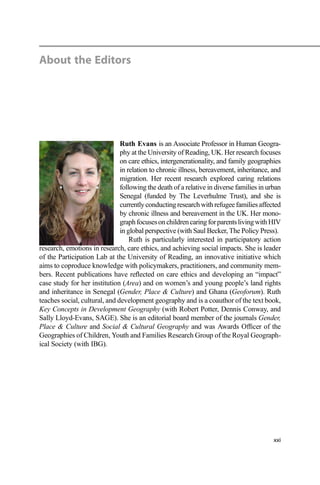
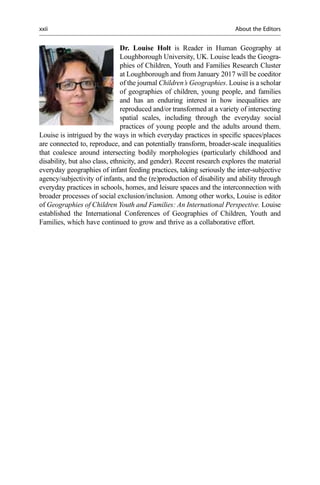
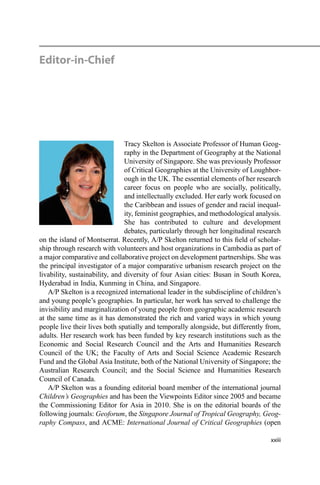






![Introto geography[1]](https://cdn.slidesharecdn.com/ss_thumbnails/introtogeography1-130411124640-phpapp02-thumbnail.jpg?width=640&height=640&fit=bounds)


