Metamorphism, Metamorphic
Rocks, and Hydrothermal
Rocks
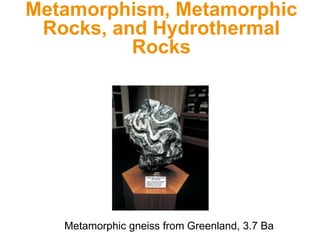
Metamorphic gneiss from Greenland, 3.7 Ba
© 2008, John Wiley and Sons, Inc.
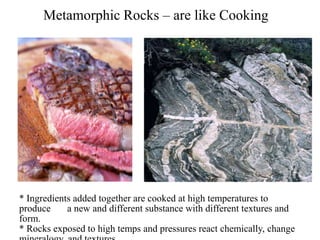
Metamorphic Rocks – are like Cooking
* Ingredients added together are cooked at high temperatures to
produce a new and different substance with different textures and
form.
* Rocks exposed to high temps and pressures react chemically, change
© 2008, John Wiley and Sons, Inc.
Metamorphic Rocks
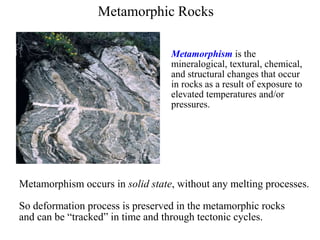
Metamorphism is the
mineralogical, textural, chemical,
and structural changes that occur
in rocks as a result of exposure to
elevated temperatures and/or
pressures.
Metamorphism occurs in solid state, without any melting processes.
So deformation process is preserved in the metamorphic rocks
and can be “tracked” in time and through tectonic cycles.
© 2008, John Wiley and Sons, Inc.
Metamorphic Rocks
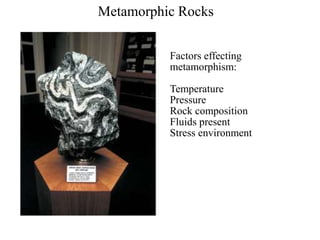
Factors effecting
metamorphism:
Temperature
Pressure
Rock composition
Fluids present
Stress environment
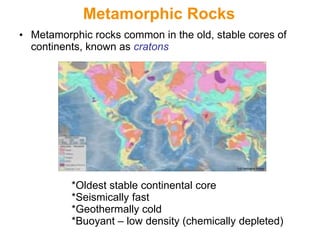
• Metamorphic rocks common in the old, stable cores of
continents, known as cratons
Metamorphic Rocks
*Oldest stable continental core
*Seismically fast
*Geothermally cold
*Buoyant – low density (chemically depleted)
© 2008, John Wiley and Sons, Inc.
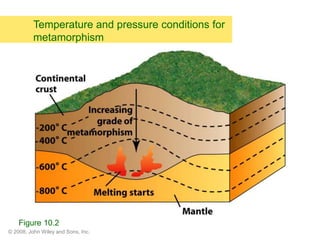
Temperature and pressure conditions for
metamorphism
Figure 10.2
© 2008, John Wiley and Sons, Inc.
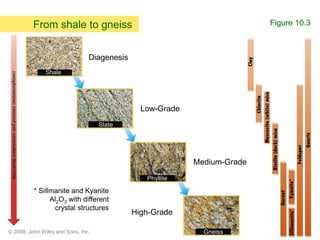
From shale to gneiss Figure 10.3
Shale
Slate
Phyllite
Gneiss
Diagenesis
Low-Grade
Medium-Grade
High-Grade
* Sillmanite and Kyanite
Al2O3 with different
crystal structures
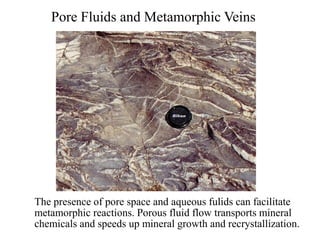
Pore Fluids and Metamorphic Veins
The presence of pore space and aqueous fulids can facilitate
metamorphic reactions. Porous fluid flow transports mineral
chemicals and speeds up mineral growth and recrystallization.
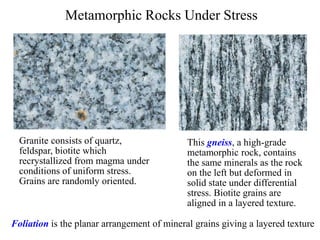
Metamorphic Rocks Under Stress
Granite consists of quartz,
feldspar, biotite which
recrystallized from magma under
conditions of uniform stress.
Grains are randomly oriented.
This gneiss, a high-grade
metamorphic rock, contains
the same minerals as the rock
on the left but deformed in
solid state under differential
stress. Biotite grains are
aligned in a layered texture.
Foliation is the planar arrangement of mineral grains giving a layered texture
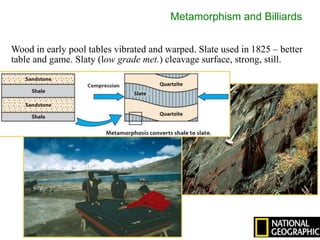
Metamorphism and Billiards
© 2008, John Wiley and Sons, Inc.
Wood in early pool tables vibrated and warped. Slate used in 1825 – better
table and game. Slaty (low grade met.) cleavage surface, strong, still.
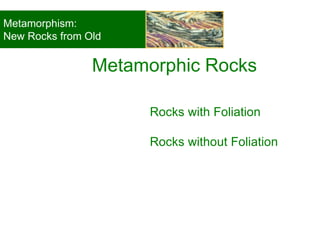
Rocks with Foliation
Rocks without Foliation
Metamorphic Rocks
© 2008, John Wiley and Sons, Inc.
Metamorphism:
New Rocks from Old
© 2008, John Wiley and Sons, Inc.
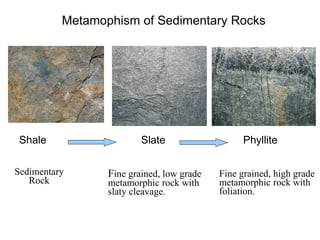
Metamophism of Sedimentary Rocks
Shale Slate Phyllite
Sedimentary
Rock
Fine grained, low grade
metamorphic rock with
slaty cleavage.
Fine grained, high grade
metamorphic rock with
foliation.
Metamophism of Sedimentary Rocks
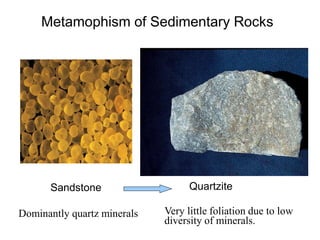
Sandstone Quartzite
Dominantly quartz minerals Very little foliation due to low
diversity of minerals.
© 2008, John Wiley and Sons, Inc.
Metamorphism of Volcanic Rocks
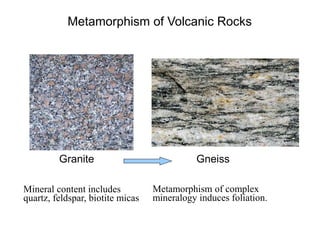
Granite Gneiss
Mineral content includes
quartz, feldspar, biotite micas
Metamorphism of complex
mineralogy induces foliation.
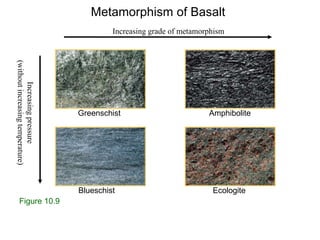
Figure 10.9
Greenschist Amphibolite
Blueschist Ecologite
Increasing grade of metamorphism
Increasing
pressure
(without
increasing
temperature) Metamorphism of Basalt
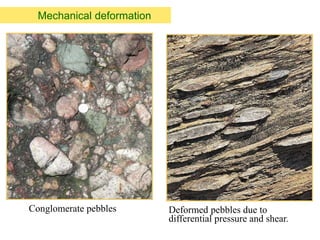
Mechanical deformation
Conglomerate pebbles Deformed pebbles due to
differential pressure and shear.
Types of Metamorphism
Metamorphic Processes
Metamorphism:
New Rocks from Old
© 2008, John Wiley and Sons, Inc.
Types of
Metamorphism
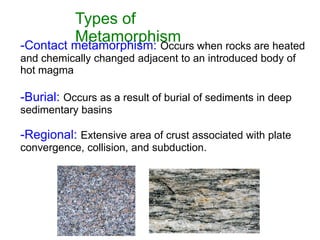
-Contact metamorphism: Occurs when rocks are heated
and chemically changed adjacent to an introduced body of
hot magma
-Burial: Occurs as a result of burial of sediments in deep
sedimentary basins
-Regional: Extensive area of crust associated with plate
convergence, collision, and subduction.
© 2008, John Wiley and Sons, Inc.
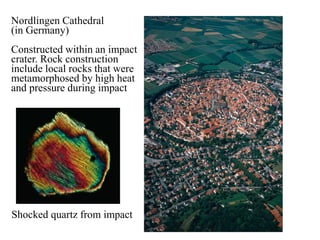
Nordlingen Cathedral
(in Germany)
Constructed within an impact
crater. Rock construction
include local rocks that were
metamorphosed by high heat
and pressure during impact
Shocked quartz from impact

metamorphism

  • 1.
    Metamorphism, Metamorphic Rocks, andHydrothermal Rocks Metamorphic gneiss from Greenland, 3.7 Ba
  • 2.
    © 2008, JohnWiley and Sons, Inc. Metamorphic Rocks – are like Cooking * Ingredients added together are cooked at high temperatures to produce a new and different substance with different textures and form. * Rocks exposed to high temps and pressures react chemically, change
  • 3.
    © 2008, JohnWiley and Sons, Inc. Metamorphic Rocks Metamorphism is the mineralogical, textural, chemical, and structural changes that occur in rocks as a result of exposure to elevated temperatures and/or pressures. Metamorphism occurs in solid state, without any melting processes. So deformation process is preserved in the metamorphic rocks and can be “tracked” in time and through tectonic cycles.
  • 4.
    © 2008, JohnWiley and Sons, Inc. Metamorphic Rocks Factors effecting metamorphism: Temperature Pressure Rock composition Fluids present Stress environment
  • 5.
    • Metamorphic rockscommon in the old, stable cores of continents, known as cratons Metamorphic Rocks *Oldest stable continental core *Seismically fast *Geothermally cold *Buoyant – low density (chemically depleted)
  • 6.
    © 2008, JohnWiley and Sons, Inc. Temperature and pressure conditions for metamorphism Figure 10.2
  • 7.
    © 2008, JohnWiley and Sons, Inc. From shale to gneiss Figure 10.3 Shale Slate Phyllite Gneiss Diagenesis Low-Grade Medium-Grade High-Grade * Sillmanite and Kyanite Al2O3 with different crystal structures
  • 8.
    Pore Fluids andMetamorphic Veins The presence of pore space and aqueous fulids can facilitate metamorphic reactions. Porous fluid flow transports mineral chemicals and speeds up mineral growth and recrystallization.
  • 9.
    Metamorphic Rocks UnderStress Granite consists of quartz, feldspar, biotite which recrystallized from magma under conditions of uniform stress. Grains are randomly oriented. This gneiss, a high-grade metamorphic rock, contains the same minerals as the rock on the left but deformed in solid state under differential stress. Biotite grains are aligned in a layered texture. Foliation is the planar arrangement of mineral grains giving a layered texture
  • 10.
    Metamorphism and Billiards ©2008, John Wiley and Sons, Inc. Wood in early pool tables vibrated and warped. Slate used in 1825 – better table and game. Slaty (low grade met.) cleavage surface, strong, still.
  • 11.
    Rocks with Foliation Rockswithout Foliation Metamorphic Rocks © 2008, John Wiley and Sons, Inc. Metamorphism: New Rocks from Old
  • 12.
    © 2008, JohnWiley and Sons, Inc. Metamophism of Sedimentary Rocks Shale Slate Phyllite Sedimentary Rock Fine grained, low grade metamorphic rock with slaty cleavage. Fine grained, high grade metamorphic rock with foliation.
  • 13.
    Metamophism of SedimentaryRocks Sandstone Quartzite Dominantly quartz minerals Very little foliation due to low diversity of minerals.
  • 14.
    © 2008, JohnWiley and Sons, Inc. Metamorphism of Volcanic Rocks Granite Gneiss Mineral content includes quartz, feldspar, biotite micas Metamorphism of complex mineralogy induces foliation.
  • 15.
    Figure 10.9 Greenschist Amphibolite BlueschistEcologite Increasing grade of metamorphism Increasing pressure (without increasing temperature) Metamorphism of Basalt
  • 16.
    Mechanical deformation Conglomerate pebblesDeformed pebbles due to differential pressure and shear.
  • 17.
    Types of Metamorphism MetamorphicProcesses Metamorphism: New Rocks from Old © 2008, John Wiley and Sons, Inc.
  • 18.
    Types of Metamorphism -Contact metamorphism:Occurs when rocks are heated and chemically changed adjacent to an introduced body of hot magma -Burial: Occurs as a result of burial of sediments in deep sedimentary basins -Regional: Extensive area of crust associated with plate convergence, collision, and subduction.
  • 19.
    © 2008, JohnWiley and Sons, Inc. Nordlingen Cathedral (in Germany) Constructed within an impact crater. Rock construction include local rocks that were metamorphosed by high heat and pressure during impact Shocked quartz from impact