Alex school of Medicine ( ASM team )
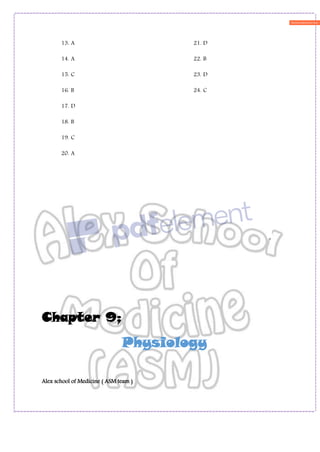
13. A
14. A
15. C
16. B
17. D
18. B
19. C
20. A
21. D
22. B
23. D
24. C
Chapter 9;
Physiology
Alex school of Medicine ( ASM team )
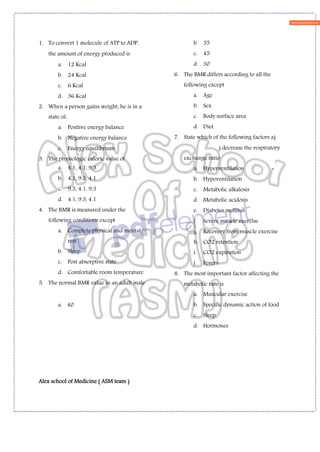
1. To convert 1 molecule of ATP to ADP,
the amount of energy produced is
a. 12 Kcal
b. 24 Kcal
c. 6 Kcal
d. 36 Kcal
2. When a person gains weight, he is in a
state of:
a. Positive energy balance
b. Negative energy balance
c. Energy equilibrium
3. The physiologic caloric value of
a. 4.1, 4.1, 9.3
b. 4.1, 9.3, 4.1
c. 9.3, 4.1, 9.3
d. 4.1, 9.3, 4.1
4. The BMR is measured under the
following conditions except
a. Complete physical and mental
rest
b. Sleep
c. Post absorptive state
d. Comfortable room temperature
5. The normal BMR value in an adult male
a. 40
b. 35
c. 45
d. 30
6. The BMR differs according to all the
following except
a. Age
b. Sex
c. Body surface area
d. Diet
7. State which of the following factors a)
) decrease the respiratory
exchange ratio
a. Hyperventilation
b. Hypoventilation
c. Metabolic alkalosis
d. Metabolic acidosis
e. Diabetes mellitus
f. Severe muscle exercise
g. Recovery from muscle exercise
h. CO2 retention
i. CO2 expiration
j. Fevers
8. The most important factor affecting the
metabolic rate is
a. Muscular exercise
b. Specific dynamic action of food
c. Sleep
d. Hormones
Alex school of Medicine ( ASM team )
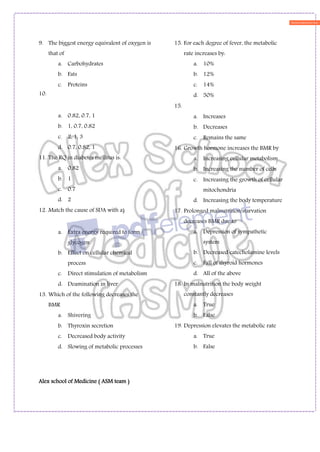
9. The biggest energy equivalent of oxygen is
that of
a. Carbohydrates
b. Fats
c. Proteins
10.
a. 0.82, 0.7, 1
b. 1, 0.7, 0.82
c. 2, 1, 3
d. 0.7, 0.82, 1
11. The RQ in diabetes mellitus is:
a. 0.82
b. 1
c. 0.7
d. 2
12. Match the cause of SDA with a)
a. Extra energy required to form
glycogen
b. Effect on cellular chemical
process
c. Direct stimulation of metabolism
d. Deamination in liver
13. Which of the following decreases the
BMR
a. Shivering
b. Thyroxin secretion
c. Decreased body activity
d. Slowing of metabolic processes
15. For each degree of fever, the metabolic
rate increases by:
a. 10%
b. 12%
c. 14%
d. 50%
15.
a. Increases
b. Decreases
c. Remains the same
16. Growth hormone increases the BMR by
a. Increasing cellular metabolism
b. Increasing the number of cells
c. Increasing the growth of cellular
mitochondria
d. Increasing the body temperature
17. Prolonged malnutrition/starvation
decreases BMR due to
a. Depression of sympathetic
system
b. Decreased catecholamine levels
c. Fall of thyroid hormones
d. All of the above
18. In malnutrition the body weight
constantly decreases
a. True
b. False
19. Depression elevates the metabolic rate
a. True
b. False
Alex school of Medicine ( ASM team )
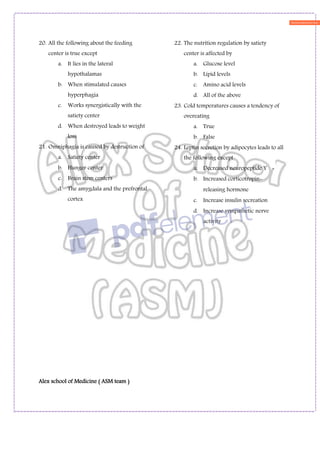
20. All the following about the feeding
center is true except
a. It lies in the lateral
hypothalamas
b. When stimulated causes
hyperphagia
c. Works synergistically with the
satiety center
d. When destroyed leads to weight
loss
21. Omniphagia is caused by destruction of
a. Satiety center
b. Hunger center
c. Brain stem centers
d. The amygdala and the prefrontal
cortex
22. The nutrition regulation by satiety
center is affected by
a. Glucose level
b. Lipid levels
c. Amino acid levels
d. All of the above
23. Cold temperatures causes a tendency of
overeating
a. True
b. False
24. Leptin secretion by adipocytes leads to all
the following except
a. Decreased neuropeptide Y
b. Increased corticotropin-
releasing hormone
c. Increase insulin secreation
d. Increase sympathetic nerve
activity
Alex school of Medicine ( ASM team )
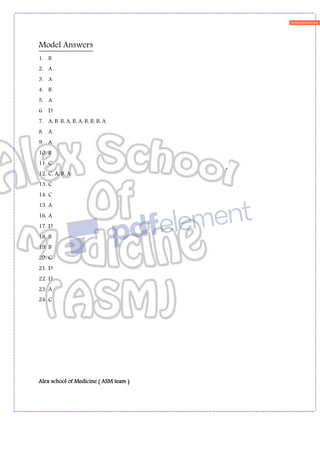
Model Answers
1. B
2. A
3. A
4. B
5. A
6. D
7. A, B, B, A, B, A, B, B, B, A
8. A
9. A
10. B
11. C
12. C, A, B, A
13. C
14. C
15. A
16. A
17. D
18. B
19. B
20. C
21. D
22. D
23. A
24. C

Metabolic rate

  • 1.
    Alex school ofMedicine ( ASM team ) 13. A 14. A 15. C 16. B 17. D 18. B 19. C 20. A 21. D 22. B 23. D 24. C Chapter 9; Physiology
  • 2.
    Alex school ofMedicine ( ASM team ) 1. To convert 1 molecule of ATP to ADP, the amount of energy produced is a. 12 Kcal b. 24 Kcal c. 6 Kcal d. 36 Kcal 2. When a person gains weight, he is in a state of: a. Positive energy balance b. Negative energy balance c. Energy equilibrium 3. The physiologic caloric value of a. 4.1, 4.1, 9.3 b. 4.1, 9.3, 4.1 c. 9.3, 4.1, 9.3 d. 4.1, 9.3, 4.1 4. The BMR is measured under the following conditions except a. Complete physical and mental rest b. Sleep c. Post absorptive state d. Comfortable room temperature 5. The normal BMR value in an adult male a. 40 b. 35 c. 45 d. 30 6. The BMR differs according to all the following except a. Age b. Sex c. Body surface area d. Diet 7. State which of the following factors a) ) decrease the respiratory exchange ratio a. Hyperventilation b. Hypoventilation c. Metabolic alkalosis d. Metabolic acidosis e. Diabetes mellitus f. Severe muscle exercise g. Recovery from muscle exercise h. CO2 retention i. CO2 expiration j. Fevers 8. The most important factor affecting the metabolic rate is a. Muscular exercise b. Specific dynamic action of food c. Sleep d. Hormones
  • 3.
    Alex school ofMedicine ( ASM team ) 9. The biggest energy equivalent of oxygen is that of a. Carbohydrates b. Fats c. Proteins 10. a. 0.82, 0.7, 1 b. 1, 0.7, 0.82 c. 2, 1, 3 d. 0.7, 0.82, 1 11. The RQ in diabetes mellitus is: a. 0.82 b. 1 c. 0.7 d. 2 12. Match the cause of SDA with a) a. Extra energy required to form glycogen b. Effect on cellular chemical process c. Direct stimulation of metabolism d. Deamination in liver 13. Which of the following decreases the BMR a. Shivering b. Thyroxin secretion c. Decreased body activity d. Slowing of metabolic processes 15. For each degree of fever, the metabolic rate increases by: a. 10% b. 12% c. 14% d. 50% 15. a. Increases b. Decreases c. Remains the same 16. Growth hormone increases the BMR by a. Increasing cellular metabolism b. Increasing the number of cells c. Increasing the growth of cellular mitochondria d. Increasing the body temperature 17. Prolonged malnutrition/starvation decreases BMR due to a. Depression of sympathetic system b. Decreased catecholamine levels c. Fall of thyroid hormones d. All of the above 18. In malnutrition the body weight constantly decreases a. True b. False 19. Depression elevates the metabolic rate a. True b. False
  • 4.
    Alex school ofMedicine ( ASM team ) 20. All the following about the feeding center is true except a. It lies in the lateral hypothalamas b. When stimulated causes hyperphagia c. Works synergistically with the satiety center d. When destroyed leads to weight loss 21. Omniphagia is caused by destruction of a. Satiety center b. Hunger center c. Brain stem centers d. The amygdala and the prefrontal cortex 22. The nutrition regulation by satiety center is affected by a. Glucose level b. Lipid levels c. Amino acid levels d. All of the above 23. Cold temperatures causes a tendency of overeating a. True b. False 24. Leptin secretion by adipocytes leads to all the following except a. Decreased neuropeptide Y b. Increased corticotropin- releasing hormone c. Increase insulin secreation d. Increase sympathetic nerve activity
  • 5.
    Alex school ofMedicine ( ASM team ) Model Answers 1. B 2. A 3. A 4. B 5. A 6. D 7. A, B, B, A, B, A, B, B, B, A 8. A 9. A 10. B 11. C 12. C, A, B, A 13. C 14. C 15. A 16. A 17. D 18. B 19. B 20. C 21. D 22. D 23. A 24. C