MENTAL HEALTH
Created by APRIL JEANE T. LIGTAS
A PRESENTATION ABOUT
•What is Health and Wellness?
• The World Health Organization (WHO) defines health
as the state of complete physical, mental, and social well-being
and not just merely the absence of disease. Having a good
health enables a person to lead a socially and economically
productive life.
• Wellness is the quality of life or state of being healthy
physically, mentally, emotionally, socially, spiritually. A healthy
and balanced mind, body, and spirit translate into good well-
being.
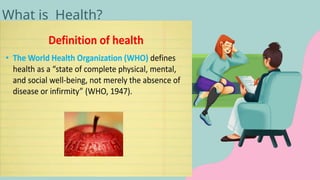
What is Health?
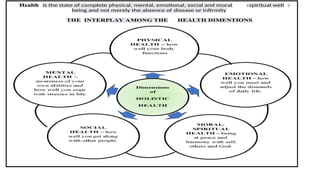
Health is the state of complete physical, mental, emotional, social and moral -spiritual well -
being and not merely the absence of disease or infirmity
THE INTERPLAY AMONG THE HEALTH DIMENTIONS
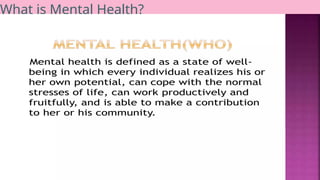
What is Mental Health?
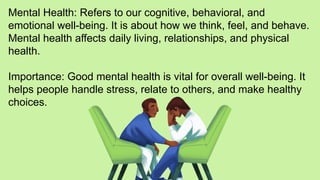
Mental Health: Refers to our cognitive, behavioral, and
emotional well-being. It is about how we think, feel, and behave.
Mental health affects daily living, relationships, and physical
health.
Importance: Good mental health is vital for overall well-being. It
helps people handle stress, relate to others, and make healthy
choices.
• Mental Health vs. Mental Illness:
Mental Health: A state of well-being in which an individual
realizes their abilities, can cope with normal stresses, work
productively, and contribute to their community.
Mental Illness: A diagnosable condition that affects a
person’s thinking, emotional state, and behavior, disrupting
their ability to work or carry out daily activities.
Characteristics of a Mentally Healthy
Adolescent
• t
1. Positive Self-Esteem: Feels good about themselves.
2. Emotional Stability: Can handle emotions without getting overwhelmed.
3. Resilience: Bounces back from setbacks.
4. Healthy Relationships: Maintains good relationships with others.
5. Effective Communication: Expresses themselves clearly and listens to
others.
6. Empathy: Understands and cares about others' feelings.
7. Healthy Lifestyle: Eats well, exercises regularly, and gets enough sleep.
8. Responsible Decision-Making: Makes thoughtful and responsible choices.
Characteristics of a Mentally Healthy Adolescent
9.Active Participation: Engages in activities and hobbies they enjoy.
10. Problem-Solving Skills: Can find solutions to challenges.
11. Seeks Help When Needed: Knows when to ask for support from
others.
12. Stress Management: Uses healthy ways to manage stress.
13. Sense of Identity: Knows who they are and what they value.
14. Adaptability: Can adjust to changes and new situations.
15. Self-Efficacy: Believes in their ability to succeed.
16. Ethical Behavior: Acts in a morally responsible way.
17. Respect for Others: Treats others with kindness and consideration
•If stress is prolonged and you are not able to
manage it well, you may develop a mental
illness;
Mental Illness is a disorder that disrupts thinking,
feeling, mood, behavior and impairs daily
functioning. Triggers are events, conditions or
situations that may “activate” a person’s tendency
to experience symptoms of mental disorders.
Triggers:
• childhood abuse
• trauma or neglect
• social isolation
• experiencing discrimination
• poverty/debt
• bereavement (losing someone close on you)
•Warning Signs:
•• feeling sad or down
•• excessive fears or worries
•• extreme mood changes
•• significant tiredness
•• problems sleeping
•• suicidal thinking
•Common Misconceptions:
Mental health issues are rare. (Reality: They are
common and affect many people at some point in
their lives.)
People with mental health problems can "snap out
of it" if they try hard enough. (Reality: Mental
health disorders are medical conditions that often
require treatment.)
THANK YOU!
@
Mental Health presentation for Grade 7 class

Mental Health presentation for Grade 7 class

  • 1.
    MENTAL HEALTH Created byAPRIL JEANE T. LIGTAS A PRESENTATION ABOUT
  • 2.
    •What is Healthand Wellness? • The World Health Organization (WHO) defines health as the state of complete physical, mental, and social well-being and not just merely the absence of disease. Having a good health enables a person to lead a socially and economically productive life. • Wellness is the quality of life or state of being healthy physically, mentally, emotionally, socially, spiritually. A healthy and balanced mind, body, and spirit translate into good well- being.
  • 3.
  • 4.
    Health is thestate of complete physical, mental, emotional, social and moral -spiritual well - being and not merely the absence of disease or infirmity THE INTERPLAY AMONG THE HEALTH DIMENTIONS
  • 5.
  • 6.
    Mental Health: Refersto our cognitive, behavioral, and emotional well-being. It is about how we think, feel, and behave. Mental health affects daily living, relationships, and physical health. Importance: Good mental health is vital for overall well-being. It helps people handle stress, relate to others, and make healthy choices.
  • 7.
    • Mental Healthvs. Mental Illness: Mental Health: A state of well-being in which an individual realizes their abilities, can cope with normal stresses, work productively, and contribute to their community. Mental Illness: A diagnosable condition that affects a person’s thinking, emotional state, and behavior, disrupting their ability to work or carry out daily activities.
  • 11.
    Characteristics of aMentally Healthy Adolescent • t 1. Positive Self-Esteem: Feels good about themselves. 2. Emotional Stability: Can handle emotions without getting overwhelmed. 3. Resilience: Bounces back from setbacks. 4. Healthy Relationships: Maintains good relationships with others. 5. Effective Communication: Expresses themselves clearly and listens to others. 6. Empathy: Understands and cares about others' feelings. 7. Healthy Lifestyle: Eats well, exercises regularly, and gets enough sleep. 8. Responsible Decision-Making: Makes thoughtful and responsible choices.
  • 12.
    Characteristics of aMentally Healthy Adolescent 9.Active Participation: Engages in activities and hobbies they enjoy. 10. Problem-Solving Skills: Can find solutions to challenges. 11. Seeks Help When Needed: Knows when to ask for support from others. 12. Stress Management: Uses healthy ways to manage stress. 13. Sense of Identity: Knows who they are and what they value. 14. Adaptability: Can adjust to changes and new situations. 15. Self-Efficacy: Believes in their ability to succeed. 16. Ethical Behavior: Acts in a morally responsible way. 17. Respect for Others: Treats others with kindness and consideration
  • 13.
    •If stress isprolonged and you are not able to manage it well, you may develop a mental illness; Mental Illness is a disorder that disrupts thinking, feeling, mood, behavior and impairs daily functioning. Triggers are events, conditions or situations that may “activate” a person’s tendency to experience symptoms of mental disorders.
  • 14.
    Triggers: • childhood abuse •trauma or neglect • social isolation • experiencing discrimination • poverty/debt • bereavement (losing someone close on you)
  • 15.
    •Warning Signs: •• feelingsad or down •• excessive fears or worries •• extreme mood changes •• significant tiredness •• problems sleeping •• suicidal thinking
  • 16.
    •Common Misconceptions: Mental healthissues are rare. (Reality: They are common and affect many people at some point in their lives.) People with mental health problems can "snap out of it" if they try hard enough. (Reality: Mental health disorders are medical conditions that often require treatment.)
  • 18.