MENOPAUSE
AND
NUTRITION
Shifa Kumpariya
Roll no: 116
Mentor: Dr. Vasudha Agrawal Ma’am
Slide:1
What is Menopause?
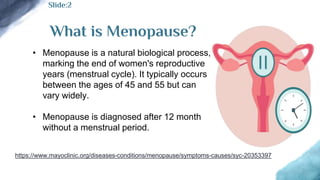
• Menopause is a natural biological process,
marking the end of women's reproductive
years (menstrual cycle). It typically occurs
between the ages of 45 and 55 but can
vary widely.
• Menopause is diagnosed after 12 month
without a menstrual period.
Slide:2
https://www.mayoclinic.org/diseases-conditions/menopause/symptoms-causes/syc-20353397
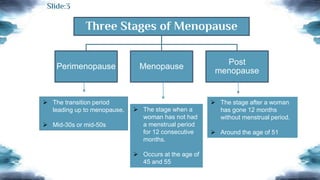
Three Stages of Menopause
Perimenopause Menopause
Post
menopause
 The transition period
leading up to menopause.
 Mid-30s or mid-50s
 The stage when a
woman has not had
a menstrual period
for 12 consecutive
months.
 Occurs at the age of
45 and 55
 The stage after a woman
has gone 12 months
without menstrual period.
 Around the age of 51
Slide:3
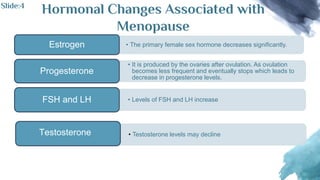
Hormonal Changes Associated with
Menopause
• The primary female sex hormone decreases significantly.
Estrogen
• It is produced by the ovaries after ovulation. As ovulation
becomes less frequent and eventually stops which leads to
decrease in progesterone levels.
Progesterone
• Levels of FSH and LH increase
FSH and LH
• Testosterone levels may decline
Testosterone
Slide:4
Signs and Symptoms
Slide:5
https://images.app.goo.gl/Vy8DEL3E8RinpzBm6
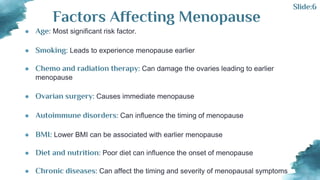
● Age: Most significant risk factor.
● Smoking: Leads to experience menopause earlier
● Chemo and radiation therapy: Can damage the ovaries leading to earlier
menopause
● Ovarian surgery: Causes immediate menopause
● Autoimmune disorders: Can influence the timing of menopause
● BMI: Lower BMI can be associated with earlier menopause
● Diet and nutrition: Poor diet can influence the onset of menopause
● Chronic diseases: Can affect the timing and severity of menopausal symptoms
Factors Affecting Menopause
Slide:6
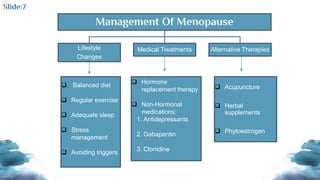
Management Of Menopause
Lifestyle
Changes
Medical Treatments Alternative Therapies
 Balanced diet
 Regular exercise
 Adequate sleep
 Stress
management
 Avoiding triggers
 Hormone
replacement therapy
 Non-Hormonal
medications:
1. Antidepressants
2. Gabapentin
3. Clonidine
 Acupuncture
 Herbal
supplements
 Phytoestrogen
Slide:7
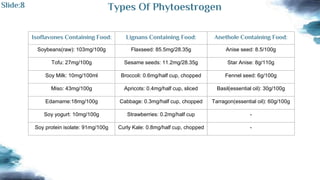
Slide:8 Types Of Phytoestrogen
Lignans Containing Food: Anethole Containing Food:
Soybeans(raw): 103mg/100g Flaxseed: 85.5mg/28.35g Anise seed: 8.5/100g
Tofu: 27mg/100g Sesame seeds: 11.2mg/28.35g Star Anise: 8g/110g
Soy Milk: 10mg/100ml Broccoli: 0.6mg/half cup, chopped Fennel seed: 6g/100g
Miso: 43mg/100g Apricots: 0.4mg/half cup, sliced Basil(essential oil): 30g/100g
Edamame:18mg/100g Cabbage: 0.3mg/half cup, chopped Tarragon(essential oil): 60g/100g
Soy yogurt: 10mg/100g Strawberries: 0.2mg/half cup -
Soy protein isolate: 91mg/100g Curly Kale: 0.8mg/half cup, chopped -
Isoflavones Containing Food:
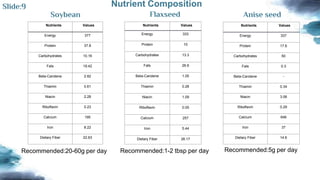
Nutrients Values
Energy 377
Protein 37.8
Carbohydrates 10.16
Fats 19.42
Beta-Carotene 2.82
Thiamin 0.61
Niacin 2.28
Riboflavin 0.23
Calcium 195
Iron 8.22
Dietary Fiber 22.63
Soybean
Nutrients Values
Energy 333
Protein 10
Carbohydrates 13.3
Fats 26.6
Beta-Carotene 1.05
Thiamin 0.28
Niacin 1.09
Riboflavin 0.05
Calcium 257
Iron 5.44
Dietary Fiber 26.17
Flaxseed
Nutrients Values
Energy 337
Protein 17.6
Carbohydrates 50
Fats 0.3
Beta-Carotene -
Thiamin 0.34
Niacin 3.06
Riboflavin 0.29
Calcium 646
Iron 37
Dietary Fiber 14.6
Anise seed
Nutrient Composition
Slide:9
Recommended:20-60g per day Recommended:1-2 tbsp per day Recommended:5g per day
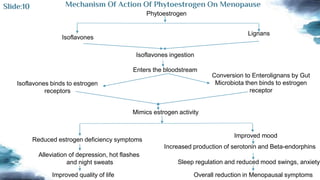
Phytoestrogen
Isoflavones
Lignans
Isoflavones ingestion
Enters the bloodstream
Isoflavones binds to estrogen
receptors
Conversion to Enterolignans by Gut
Microbiota then binds to estrogen
receptor
Reduced estrogen deficiency symptoms
Alleviation of depression, hot flashes
and night sweats
Improved quality of life
Increased production of serotonin and Beta-endorphins
Improved mood
Sleep regulation and reduced mood swings, anxiety
Overall reduction in Menopausal symptoms
Mimics estrogen activity
Mechanism Of Action Of Phytoestrogen On Menopause
Slide:10
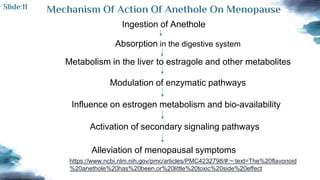
Mechanism Of Action Of Anethole On Menopause
Ingestion of Anethole
Absorption in the digestive system
Metabolism in the liver to estragole and other metabolites
Modulation of enzymatic pathways
Influence on estrogen metabolism and bio-availability
Activation of secondary signaling pathways
Alleviation of menopausal symptoms
Slide:11
https://www.ncbi.nlm.nih.gov/pmc/articles/PMC4232798/#:~:text=The%20flavonoid
%20anethole%20has%20been,or%20little%20toxic%20side%20effect
Phytoestrogen Supplements Available In The Market
Red Clover(100 capsules)
Recommended: 2 capsules daily
Cost: Rs.737
Evening Primrose Oil Supplement
(60 capsules)
Recommended: 1 capsule daily
Cost: Rs.499
Black Cohosh(100 capsules)
Recommended: 1 capsule daily
Cost: Rs.1.350
Wild Yam(100 capsules)
Recommended: 2 capsules daily
Cost: Rs.742
Slide:12
RESEARCH ARTICLE
Slide:13
Nutritional Supplement Prepared from Whole Meal Wheat
Flour, Soya Bean Flour, Flaxseed and Anise Seeds for
Alleviating the Menopausal Symptoms
Authors: Suzanne Fouad, Salwa Mostafa El Shebini, Maha Abdel-Moaty, Nihad Hassan Ahmed,
Ahmed Mohamed Saied Hussein, Aliaa El Gendy, Hend Abass Essa and Salwa Tawfic Tapozada
Published: February 22, 2019
Citation: Fouad, S., El, S. M., Abdel-Moat, M., Ahm, N. H., Sa, A. M., Gendy, A. E., Essa, H. A., &
Tap, S. T. (2018). Nutritional Supplement Prepared from Whole Meal Wheat Flour, Soya Bean
Flour, Flaxseed and Anise Seeds for Alleviating the Menopausal Symptoms. Journal of Biological
Sciences, 18(7), 381–388.
Journal: Journal of Biological Sciences
Slide:14
Objective:
 To help the female’s body to adapt to diminished estrogen hormone
around the time of the menopause.
 To ultimately take control of the symptoms to be relieved by natural safety
products.
Slide:15
Materials And Method:
 The study was conducted through a project funded by National Research Centre (NRC) Egypt, 2016-2019:
entitled "Dietary therapy and alternative medicine for alleviating the menopausal symptoms".
Subjects:
 This study was conducted in the nutrition and food science department of NRC from November 2016 to
May 2017.
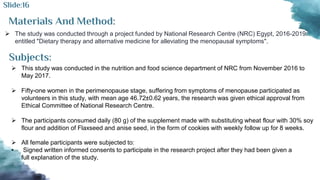
 Fifty-one women in the perimenopause stage, suffering from symptoms of menopause participated as
volunteers in this study, with mean age 46.72±0.62 years, the research was given ethical approval from
Ethical Committee of National Research Centre.
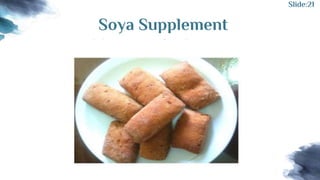
 The participants consumed daily (80 g) of the supplement made with substituting wheat flour with 30% soy
flour and addition of Flaxseed and anise seed, in the form of cookies with weekly follow up for 8 weeks.
Slide:16
 All female participants were subjected to:
• Signed written informed consents to participate in the research project after they had been given a
full explanation of the study.
• Full medical history and medical examination, detailed gynecological and obstetric history and blood
pressure measurement (it was measured 3 times and the mean was recorded).
• Abdominal obesity assessment by minimal waist and hip measurements.
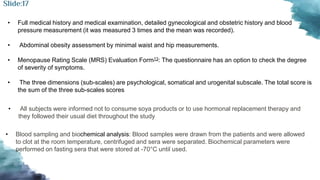
• Menopause Rating Scale (MRS) Evaluation Form13: The questionnaire has an option to check the degree
of severity of symptoms.
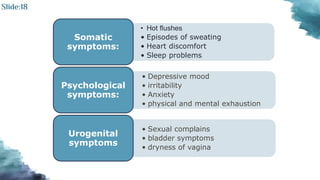
• The three dimensions (sub-scales) are psychological, somatical and urogenital subscale. The total score is
the sum of the three sub-scales scores
• All subjects were informed not to consume soya products or to use hormonal replacement therapy and
they followed their usual diet throughout the study
• Blood sampling and biochemical analysis: Blood samples were drawn from the patients and were allowed
to clot at the room temperature, centrifuged and sera were separated. Biochemical parameters were
performed on fasting sera that were stored at -70°C until used.
Slide:17
• Hot flushes
• Episodes of sweating
• Heart discomfort
• Sleep problems
Somatic
symptoms:
• Depressive mood
• irritability
• Anxiety
• physical and mental exhaustion
Psychological
symptoms:
• Sexual complains
• bladder symptoms
• dryness of vagina
Urogenital
symptoms
Slide:18
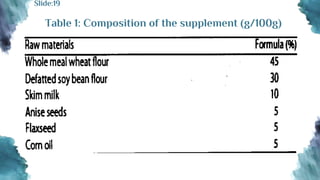
Table 1: Composition of the supplement (g/100g)
Slide:19
Chemical Composition Of The Supplement
Analytical Analysis:
 Formula was prepared by mixing the ingredients according to the table 1 and the suitable amount of
water were added.
 These formulas were baked in an electrical oven at 200 °C for about 20 mins.
 Weight, volume, diameter, specific volume, diameter, thickness, and spread ration of the cookies
were recorded.
 Moisture, ash, crude protein, fat and crude fiber contents were determined in raw materials [whole meal
wheat flour (WWF), defatted soybean flour (DSF), skim milk (SM), Flaxseed and anise] and the cookies.
 Carbohydrates were calculated: Carbohydrates = 100-Protein %+Fat %+Ash %+Crude fiber %
Statistical analysis:
 Data were analyzed using the Statistical Package for the Social Sciences version 16 (SPSS Inc.,
Chicago, IL). The categorical variables were expressed as rates (in percentage and frequency);
while numerical data were expressed as Mean±SD and SE. Two tailed student t-test was used to
compare the results before and after intervention. p-values less than 0.05 were considered
statistically significant.
Slide:20
Soya Supplement
Slide:21
Results
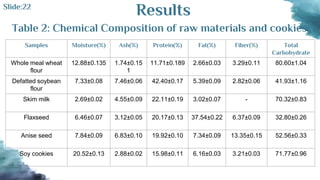
Table 2: Chemical Composition of raw materials and cookies
Samples Moisture(%) Ash(%) Protein(%) Fat(%) Fiber(%) Total
Carbohydrate
Whole meal wheat
flour
12.88±0.135 1.74±0.15
1
11.71±0.189 2.66±0.03 3.29±0.11 80.60±1.04
Defatted soybean
flour
7.33±0.08 7.46±0.06 42.40±0.17 5.39±0.09 2.82±0.06 41.93±1.16
Skim milk 2.69±0.02 4.55±0.09 22.11±0.19 3.02±0.07 - 70.32±0.83
Flaxseed 6.46±0.07 3.12±0.05 20.17±0.13 37.54±0.22 6.37±0.09 32.80±0.26
Anise seed 7.84±0.09 6.83±0.10 19.92±0.10 7.34±0.09 13.35±0.15 52.56±0.33
Soy cookies 20.52±0.13 2.88±0.02 15.98±0.11 6.16±0.03 3.21±0.03 71.77±0.96
Slide:22
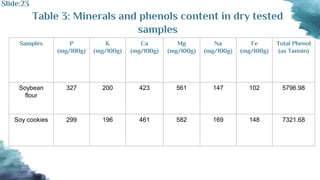
Table 3: Minerals and phenols content in dry tested
samples
Samples P
(mg/100g)
K
(mg/100g)
Ca
(mg/100g)
Mg
(mg/100g)
Na
(mg/100g)
Fe
(mg/100g)
Total Phenol
(as Tannin)
Soybean
flour
327 200 423 561 147 102 5796.98
Soy cookies 299 196 461 582 169 148 7321.68
Slide:23
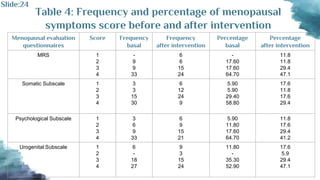
Table 4: Frequency and percentage of menopausal
symptoms score before and after intervention
Menopausal evaluation
questionnaires
Score Frequency
basal
Frequency
after intervention
Percentage
basal
Percentage
after intervention
MRS 1
2
3
4
-
9
9
33
6
6
15
24
-
17.60
17.60
64.70
11.8
11.8
29.4
47.1
Somatic Subscale 1
2
3
4
3
3
15
30
6
12
24
9
5.90
5.90
29.40
58.80
17.6
11.8
17.6
29.4
Psychological Subscale 1
2
3
4
3
6
9
33
6
9
15
21
5.90
11.80
17.60
64.70
11.8
17.6
29.4
41.2
Urogenital Subscale 1
2
3
4
6
-
18
27
9
3
15
24
11.80
-
35.30
52.90
17.6
5.9
29.4
47.1
Slide:24
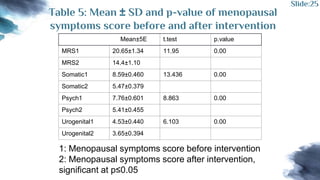
Table 5: Mean ± SD and p-value of menopausal
symptoms score before and after intervention
Mean±5E t.test p.value
MRS1 20.65±1.34 11.95 0.00
MRS2 14.4±1.10
Somatic1 8.59±0.460 13.436 0.00
Somatic2 5.47±0.379
Psych1 7.76±0.601 8.863 0.00
Psych2 5.41±0.455
Urogenital1 4.53±0.440 6.103 0.00
Urogenital2 3.65±0.394
1: Menopausal symptoms score before intervention
2: Menopausal symptoms score after intervention,
significant at p≤0.05
Slide:25
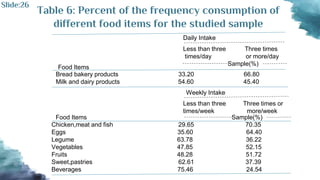
Daily Intake
Less than three Three times
times/day or more/day
Sample(%)
Food Items
Bread bakery products 33.20 66.80
Milk and dairy products 54.60 45.40
Weekly Intake
Less than three Three times or
times/week more/week
Sample(%)
Food Items
Chicken,meat and fish 29.65 70.35
Eggs 35.60 64.40
Legume 63.78 36.22
Vegetables 47.85 52.15
Fruits 48.28 51.72
Sweet,pastries 62.61 37.39
Beverages 75.46 24.54
Table 6: Percent of the frequency consumption of
different food items for the studied sample
Slide:26
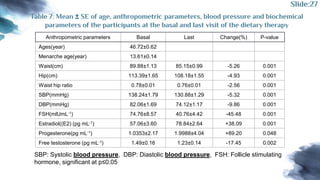
Table 7: Mean ± SE of age, anthropometric parameters, blood pressure and biochemical
parameters of the participants at the basal and last visit of the dietary therapy
Anthropometric parameters Basal Last Change(%) P-value
Ages(year) 46.72±0.62
Menarche age(year) 13.61±0.14
Waist(cm) 89.88±1.13 85.15±0.99 -5.26 0.001
Hip(cm) 113.39±1.65 108.18±1.55 -4.93 0.001
Waist hip ratio 0.78±0.01 0.76±0.01 -2.56 0.001
SBP(mmHg) 138.24±1.79 130.88±1.29 -5.32 0.001
DBP(mmHg) 82.06±1.69 74.12±1.17 -9.86 0.001
FSH(mlUmL-1) 74.76±8.57 40.76±4.42 -45.48 0.001
Estradiol((E2) (pg mL-1) 57.06±3.60 78.84±2.64 +38.09 0.001
Progesterone(pg mL-1) 1.0353±2.17 1.9988±4.04 +89.20 0.048
Free testosterone (pg mL-1) 1.49±0.16 1.23±0.14 -17.45 0.002
SBP: Systolic blood pressure, DBP: Diastolic blood pressure, FSH: Follicle stimulating
hormone, significant at p≤0.05
Slide:27
Discussion
•A study focused on enhancing the nutritional value of bakery products like biscuits and
cookies using soy flour, flaxseed, and anise seeds.
•These ingredients were chosen for their health benefits, including increased protein, fiber,
minerals, and phytoestrogens.
•Soy flour and flaxseed enriched the products with essential amino acids, vitamins (A and
D), and healthy fats (like linoleic acid).
•Improved bioavailability of nutrients such as carbohydrates, proteins, and vitamins.
•Participants experienced significant improvements: Decreased blood pressure, central obesity,
and menopause symptoms.
•Enhanced mental and physical well-being related to menopause.
Slide:28
•Soy-rich diets have shown lower incidences of heart disease and breast cancer in
Asian women compared to Western populations.
•Soy products, containing compounds like genistein and daidzein, help manage
menopausal symptoms and may have anti-aging effects.
•Previous research supports the benefits of soy products in managing hormonal levels
(FSH, estrogen, testosterone) and reducing symptoms related to menopause.
•Ground flaxseed can be easily integrated into various baked goods, cereals, and
nutritional bars.
•Combining soy flour and flaxseed in bakery products may enhance their health benefits
synergistically.
Slide:29
Conclusion
This study discovers the possible synergetic effect of soya
bean flour, flaxseed and anise combination to form a
natural bakery product in the form of cookies that can be
beneficial for alleviating the somatic, psychological and
urogenital symptoms after intervention, especially in
somatic and psychological subscales.
Slide:30
Bibliography
Slide:31
THANK YOU
Slide:32

Menopause and nutrition for students....

  • 1.
    MENOPAUSE AND NUTRITION Shifa Kumpariya Roll no:116 Mentor: Dr. Vasudha Agrawal Ma’am Slide:1
  • 2.
    What is Menopause? •Menopause is a natural biological process, marking the end of women's reproductive years (menstrual cycle). It typically occurs between the ages of 45 and 55 but can vary widely. • Menopause is diagnosed after 12 month without a menstrual period. Slide:2 https://www.mayoclinic.org/diseases-conditions/menopause/symptoms-causes/syc-20353397
  • 3.
    Three Stages ofMenopause Perimenopause Menopause Post menopause  The transition period leading up to menopause.  Mid-30s or mid-50s  The stage when a woman has not had a menstrual period for 12 consecutive months.  Occurs at the age of 45 and 55  The stage after a woman has gone 12 months without menstrual period.  Around the age of 51 Slide:3
  • 4.
    Hormonal Changes Associatedwith Menopause • The primary female sex hormone decreases significantly. Estrogen • It is produced by the ovaries after ovulation. As ovulation becomes less frequent and eventually stops which leads to decrease in progesterone levels. Progesterone • Levels of FSH and LH increase FSH and LH • Testosterone levels may decline Testosterone Slide:4
  • 5.
  • 6.
    ● Age: Mostsignificant risk factor. ● Smoking: Leads to experience menopause earlier ● Chemo and radiation therapy: Can damage the ovaries leading to earlier menopause ● Ovarian surgery: Causes immediate menopause ● Autoimmune disorders: Can influence the timing of menopause ● BMI: Lower BMI can be associated with earlier menopause ● Diet and nutrition: Poor diet can influence the onset of menopause ● Chronic diseases: Can affect the timing and severity of menopausal symptoms Factors Affecting Menopause Slide:6
  • 7.
    Management Of Menopause Lifestyle Changes MedicalTreatments Alternative Therapies  Balanced diet  Regular exercise  Adequate sleep  Stress management  Avoiding triggers  Hormone replacement therapy  Non-Hormonal medications: 1. Antidepressants 2. Gabapentin 3. Clonidine  Acupuncture  Herbal supplements  Phytoestrogen Slide:7
  • 8.
    Slide:8 Types OfPhytoestrogen Lignans Containing Food: Anethole Containing Food: Soybeans(raw): 103mg/100g Flaxseed: 85.5mg/28.35g Anise seed: 8.5/100g Tofu: 27mg/100g Sesame seeds: 11.2mg/28.35g Star Anise: 8g/110g Soy Milk: 10mg/100ml Broccoli: 0.6mg/half cup, chopped Fennel seed: 6g/100g Miso: 43mg/100g Apricots: 0.4mg/half cup, sliced Basil(essential oil): 30g/100g Edamame:18mg/100g Cabbage: 0.3mg/half cup, chopped Tarragon(essential oil): 60g/100g Soy yogurt: 10mg/100g Strawberries: 0.2mg/half cup - Soy protein isolate: 91mg/100g Curly Kale: 0.8mg/half cup, chopped - Isoflavones Containing Food:
  • 9.
    Nutrients Values Energy 377 Protein37.8 Carbohydrates 10.16 Fats 19.42 Beta-Carotene 2.82 Thiamin 0.61 Niacin 2.28 Riboflavin 0.23 Calcium 195 Iron 8.22 Dietary Fiber 22.63 Soybean Nutrients Values Energy 333 Protein 10 Carbohydrates 13.3 Fats 26.6 Beta-Carotene 1.05 Thiamin 0.28 Niacin 1.09 Riboflavin 0.05 Calcium 257 Iron 5.44 Dietary Fiber 26.17 Flaxseed Nutrients Values Energy 337 Protein 17.6 Carbohydrates 50 Fats 0.3 Beta-Carotene - Thiamin 0.34 Niacin 3.06 Riboflavin 0.29 Calcium 646 Iron 37 Dietary Fiber 14.6 Anise seed Nutrient Composition Slide:9 Recommended:20-60g per day Recommended:1-2 tbsp per day Recommended:5g per day
  • 10.
    Phytoestrogen Isoflavones Lignans Isoflavones ingestion Enters thebloodstream Isoflavones binds to estrogen receptors Conversion to Enterolignans by Gut Microbiota then binds to estrogen receptor Reduced estrogen deficiency symptoms Alleviation of depression, hot flashes and night sweats Improved quality of life Increased production of serotonin and Beta-endorphins Improved mood Sleep regulation and reduced mood swings, anxiety Overall reduction in Menopausal symptoms Mimics estrogen activity Mechanism Of Action Of Phytoestrogen On Menopause Slide:10
  • 11.
    Mechanism Of ActionOf Anethole On Menopause Ingestion of Anethole Absorption in the digestive system Metabolism in the liver to estragole and other metabolites Modulation of enzymatic pathways Influence on estrogen metabolism and bio-availability Activation of secondary signaling pathways Alleviation of menopausal symptoms Slide:11 https://www.ncbi.nlm.nih.gov/pmc/articles/PMC4232798/#:~:text=The%20flavonoid %20anethole%20has%20been,or%20little%20toxic%20side%20effect
  • 12.
    Phytoestrogen Supplements AvailableIn The Market Red Clover(100 capsules) Recommended: 2 capsules daily Cost: Rs.737 Evening Primrose Oil Supplement (60 capsules) Recommended: 1 capsule daily Cost: Rs.499 Black Cohosh(100 capsules) Recommended: 1 capsule daily Cost: Rs.1.350 Wild Yam(100 capsules) Recommended: 2 capsules daily Cost: Rs.742 Slide:12
  • 13.
  • 14.
    Nutritional Supplement Preparedfrom Whole Meal Wheat Flour, Soya Bean Flour, Flaxseed and Anise Seeds for Alleviating the Menopausal Symptoms Authors: Suzanne Fouad, Salwa Mostafa El Shebini, Maha Abdel-Moaty, Nihad Hassan Ahmed, Ahmed Mohamed Saied Hussein, Aliaa El Gendy, Hend Abass Essa and Salwa Tawfic Tapozada Published: February 22, 2019 Citation: Fouad, S., El, S. M., Abdel-Moat, M., Ahm, N. H., Sa, A. M., Gendy, A. E., Essa, H. A., & Tap, S. T. (2018). Nutritional Supplement Prepared from Whole Meal Wheat Flour, Soya Bean Flour, Flaxseed and Anise Seeds for Alleviating the Menopausal Symptoms. Journal of Biological Sciences, 18(7), 381–388. Journal: Journal of Biological Sciences Slide:14
  • 15.
    Objective:  To helpthe female’s body to adapt to diminished estrogen hormone around the time of the menopause.  To ultimately take control of the symptoms to be relieved by natural safety products. Slide:15
  • 16.
    Materials And Method: The study was conducted through a project funded by National Research Centre (NRC) Egypt, 2016-2019: entitled "Dietary therapy and alternative medicine for alleviating the menopausal symptoms". Subjects:  This study was conducted in the nutrition and food science department of NRC from November 2016 to May 2017.  Fifty-one women in the perimenopause stage, suffering from symptoms of menopause participated as volunteers in this study, with mean age 46.72±0.62 years, the research was given ethical approval from Ethical Committee of National Research Centre.  The participants consumed daily (80 g) of the supplement made with substituting wheat flour with 30% soy flour and addition of Flaxseed and anise seed, in the form of cookies with weekly follow up for 8 weeks. Slide:16  All female participants were subjected to: • Signed written informed consents to participate in the research project after they had been given a full explanation of the study.
  • 17.
    • Full medicalhistory and medical examination, detailed gynecological and obstetric history and blood pressure measurement (it was measured 3 times and the mean was recorded). • Abdominal obesity assessment by minimal waist and hip measurements. • Menopause Rating Scale (MRS) Evaluation Form13: The questionnaire has an option to check the degree of severity of symptoms. • The three dimensions (sub-scales) are psychological, somatical and urogenital subscale. The total score is the sum of the three sub-scales scores • All subjects were informed not to consume soya products or to use hormonal replacement therapy and they followed their usual diet throughout the study • Blood sampling and biochemical analysis: Blood samples were drawn from the patients and were allowed to clot at the room temperature, centrifuged and sera were separated. Biochemical parameters were performed on fasting sera that were stored at -70°C until used. Slide:17
  • 18.
    • Hot flushes •Episodes of sweating • Heart discomfort • Sleep problems Somatic symptoms: • Depressive mood • irritability • Anxiety • physical and mental exhaustion Psychological symptoms: • Sexual complains • bladder symptoms • dryness of vagina Urogenital symptoms Slide:18
  • 19.
    Table 1: Compositionof the supplement (g/100g) Slide:19
  • 20.
    Chemical Composition OfThe Supplement Analytical Analysis:  Formula was prepared by mixing the ingredients according to the table 1 and the suitable amount of water were added.  These formulas were baked in an electrical oven at 200 °C for about 20 mins.  Weight, volume, diameter, specific volume, diameter, thickness, and spread ration of the cookies were recorded.  Moisture, ash, crude protein, fat and crude fiber contents were determined in raw materials [whole meal wheat flour (WWF), defatted soybean flour (DSF), skim milk (SM), Flaxseed and anise] and the cookies.  Carbohydrates were calculated: Carbohydrates = 100-Protein %+Fat %+Ash %+Crude fiber % Statistical analysis:  Data were analyzed using the Statistical Package for the Social Sciences version 16 (SPSS Inc., Chicago, IL). The categorical variables were expressed as rates (in percentage and frequency); while numerical data were expressed as Mean±SD and SE. Two tailed student t-test was used to compare the results before and after intervention. p-values less than 0.05 were considered statistically significant. Slide:20
  • 21.
  • 22.
    Results Table 2: ChemicalComposition of raw materials and cookies Samples Moisture(%) Ash(%) Protein(%) Fat(%) Fiber(%) Total Carbohydrate Whole meal wheat flour 12.88±0.135 1.74±0.15 1 11.71±0.189 2.66±0.03 3.29±0.11 80.60±1.04 Defatted soybean flour 7.33±0.08 7.46±0.06 42.40±0.17 5.39±0.09 2.82±0.06 41.93±1.16 Skim milk 2.69±0.02 4.55±0.09 22.11±0.19 3.02±0.07 - 70.32±0.83 Flaxseed 6.46±0.07 3.12±0.05 20.17±0.13 37.54±0.22 6.37±0.09 32.80±0.26 Anise seed 7.84±0.09 6.83±0.10 19.92±0.10 7.34±0.09 13.35±0.15 52.56±0.33 Soy cookies 20.52±0.13 2.88±0.02 15.98±0.11 6.16±0.03 3.21±0.03 71.77±0.96 Slide:22
  • 23.
    Table 3: Mineralsand phenols content in dry tested samples Samples P (mg/100g) K (mg/100g) Ca (mg/100g) Mg (mg/100g) Na (mg/100g) Fe (mg/100g) Total Phenol (as Tannin) Soybean flour 327 200 423 561 147 102 5796.98 Soy cookies 299 196 461 582 169 148 7321.68 Slide:23
  • 24.
    Table 4: Frequencyand percentage of menopausal symptoms score before and after intervention Menopausal evaluation questionnaires Score Frequency basal Frequency after intervention Percentage basal Percentage after intervention MRS 1 2 3 4 - 9 9 33 6 6 15 24 - 17.60 17.60 64.70 11.8 11.8 29.4 47.1 Somatic Subscale 1 2 3 4 3 3 15 30 6 12 24 9 5.90 5.90 29.40 58.80 17.6 11.8 17.6 29.4 Psychological Subscale 1 2 3 4 3 6 9 33 6 9 15 21 5.90 11.80 17.60 64.70 11.8 17.6 29.4 41.2 Urogenital Subscale 1 2 3 4 6 - 18 27 9 3 15 24 11.80 - 35.30 52.90 17.6 5.9 29.4 47.1 Slide:24
  • 25.
    Table 5: Mean± SD and p-value of menopausal symptoms score before and after intervention Mean±5E t.test p.value MRS1 20.65±1.34 11.95 0.00 MRS2 14.4±1.10 Somatic1 8.59±0.460 13.436 0.00 Somatic2 5.47±0.379 Psych1 7.76±0.601 8.863 0.00 Psych2 5.41±0.455 Urogenital1 4.53±0.440 6.103 0.00 Urogenital2 3.65±0.394 1: Menopausal symptoms score before intervention 2: Menopausal symptoms score after intervention, significant at p≤0.05 Slide:25
  • 26.
    Daily Intake Less thanthree Three times times/day or more/day Sample(%) Food Items Bread bakery products 33.20 66.80 Milk and dairy products 54.60 45.40 Weekly Intake Less than three Three times or times/week more/week Sample(%) Food Items Chicken,meat and fish 29.65 70.35 Eggs 35.60 64.40 Legume 63.78 36.22 Vegetables 47.85 52.15 Fruits 48.28 51.72 Sweet,pastries 62.61 37.39 Beverages 75.46 24.54 Table 6: Percent of the frequency consumption of different food items for the studied sample Slide:26
  • 27.
    Table 7: Mean± SE of age, anthropometric parameters, blood pressure and biochemical parameters of the participants at the basal and last visit of the dietary therapy Anthropometric parameters Basal Last Change(%) P-value Ages(year) 46.72±0.62 Menarche age(year) 13.61±0.14 Waist(cm) 89.88±1.13 85.15±0.99 -5.26 0.001 Hip(cm) 113.39±1.65 108.18±1.55 -4.93 0.001 Waist hip ratio 0.78±0.01 0.76±0.01 -2.56 0.001 SBP(mmHg) 138.24±1.79 130.88±1.29 -5.32 0.001 DBP(mmHg) 82.06±1.69 74.12±1.17 -9.86 0.001 FSH(mlUmL-1) 74.76±8.57 40.76±4.42 -45.48 0.001 Estradiol((E2) (pg mL-1) 57.06±3.60 78.84±2.64 +38.09 0.001 Progesterone(pg mL-1) 1.0353±2.17 1.9988±4.04 +89.20 0.048 Free testosterone (pg mL-1) 1.49±0.16 1.23±0.14 -17.45 0.002 SBP: Systolic blood pressure, DBP: Diastolic blood pressure, FSH: Follicle stimulating hormone, significant at p≤0.05 Slide:27
  • 28.
    Discussion •A study focusedon enhancing the nutritional value of bakery products like biscuits and cookies using soy flour, flaxseed, and anise seeds. •These ingredients were chosen for their health benefits, including increased protein, fiber, minerals, and phytoestrogens. •Soy flour and flaxseed enriched the products with essential amino acids, vitamins (A and D), and healthy fats (like linoleic acid). •Improved bioavailability of nutrients such as carbohydrates, proteins, and vitamins. •Participants experienced significant improvements: Decreased blood pressure, central obesity, and menopause symptoms. •Enhanced mental and physical well-being related to menopause. Slide:28
  • 29.
    •Soy-rich diets haveshown lower incidences of heart disease and breast cancer in Asian women compared to Western populations. •Soy products, containing compounds like genistein and daidzein, help manage menopausal symptoms and may have anti-aging effects. •Previous research supports the benefits of soy products in managing hormonal levels (FSH, estrogen, testosterone) and reducing symptoms related to menopause. •Ground flaxseed can be easily integrated into various baked goods, cereals, and nutritional bars. •Combining soy flour and flaxseed in bakery products may enhance their health benefits synergistically. Slide:29
  • 30.
    Conclusion This study discoversthe possible synergetic effect of soya bean flour, flaxseed and anise combination to form a natural bakery product in the form of cookies that can be beneficial for alleviating the somatic, psychological and urogenital symptoms after intervention, especially in somatic and psychological subscales. Slide:30
  • 31.
  • 32.